

September 9, 2026
How to Care for Surgical Incisions Properly
Expert Guide to Proper Surgical Incision Care
Mar 20, 2026
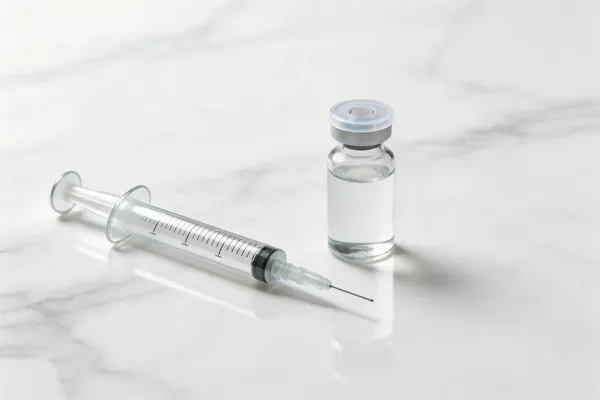
Dermal fillers are minimally invasive, gel‑like injectable substances placed just beneath the skin to restore lost volume, smooth wrinkles, and enhance facial contours. By adding structural support, they counteract age‑related tissue loss and improve the appearance of fine lines, deeper folds, and scar depressions. The most frequently treated regions include the nasolabial folds, marionette lines, under‑eye hollows, lips, cheeks, chin, jawline, and the dorsal hand—areas where volume depletion is most evident. A typical filler appointment lasts between 15 and 45 minutes, depending on the number of sites and the product used. The procedure begins with a thorough consultation, skin cleansing, and optional topical or local anesthesia. Precise injection of the selected filler is performed with a fine needle or blunt cannula, followed by an immediate post‑procedure assessment. Recovery is swift; most patients resume normal activities right away, although a brief pause from vigorous exercise and careful handling of the treated area for 24–48 hours is advised. Mild side effects such as bruising, swelling, or tenderness generally resolve within a few days, allowing patients to enjoy immediate, natural‑looking results.
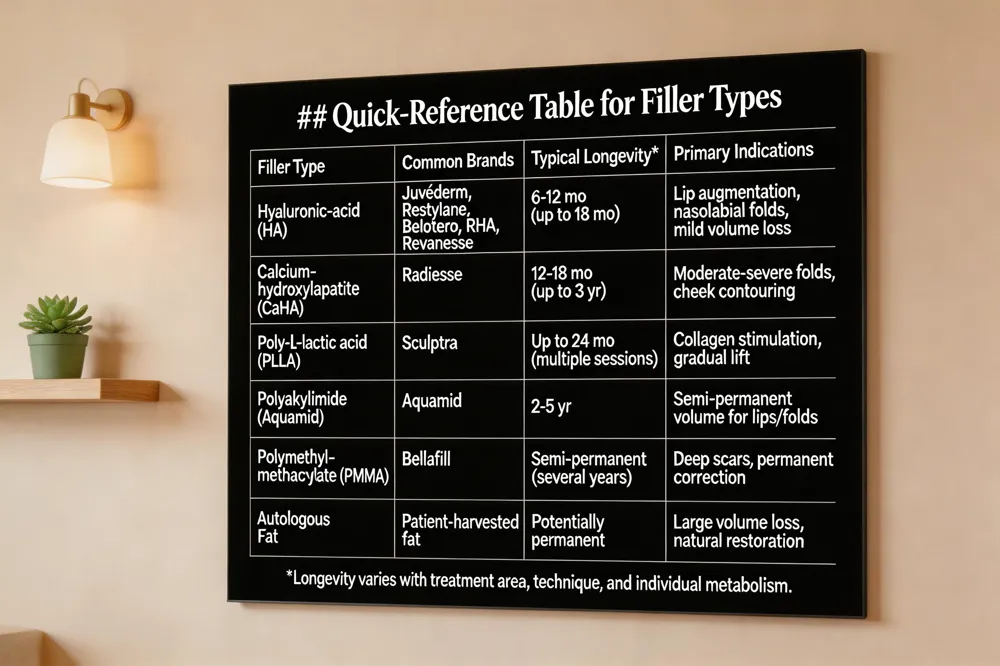 Hyaluronic‑acid (HA) fillers are the most widely used gels, adding instant volume and hydration while being reversible with hyaluronidase. Leading HA brands include Juvéderm (Ultra, Voluma, Volbella, VOLLURE, VOLUX), Restylane (Classic, Lyft, Kysse, Contour), Belotero, Revance RHA and Revanesse. Results generally last 6‑12 months, up to 18 months for newer formulations.
Calcium‑hydroxylapatite (CaHA) fillers, marketed as Radiesse, provide a sturdier lift for moderate‑to‑severe folds and cheek contouring. CaHA stimulates collagen and typically lasts 12‑18 months, with some deeper‑wrinkle treatments persisting up to three years.
Poly‑L‑lactic acid (PLLA) stimulators such as Sculptra work by gradual collagen production, delivering a natural, long‑lasting lift that can endure up to two years after a series of injections. Polyalkylimide (Aquamid) offers a semi‑permanent option for lips, nasolabial folds and facial volume loss, remaining for 2‑5 years.
Polymethyl‑methacrylate (PMMA) microsphere fillers (Bellafill) are semi‑permanent, ideal for deep scars and persistent lines, while autologous fat grafting uses the patient’s own harvested fat for durable, natural volume restoration.
Top‑selling brands used by board‑certified surgeons include Juvéderm, Restylane, Belotero, Teosyal, RHA Collection, Radiesse, Sculptra, Bellafill, Versa and Revanesse. For mature skin, CaHA (Radiesse) and PLLA (Sculptra) are often preferred because they provide structural support and longer durability than HA alone. Selecting the optimal filler depends on the treatment area, desired longevity (6 months‑2 years), and individual anatomy; a personalized plan with an experienced plastic surgeon ensures safe, natural‑looking results.
 Dermal fillers are among the safest nonsurgical aesthetic tools when administered by a board‑certified plastic surgeon who respects facial anatomy and uses FDA‑approved products. Common short‑term reactions include mild bruising, swelling, redness, tenderness or and a temporary feeling of pressure; these typically resolve within a few days to a week. Rare but serious adverse events involve vascular occlusion, tissue necrosis, infection, or vision loss—complications that demand immediate treatment with hyaluronidase (for HA fillers) and emergency protocols. Long‑term considerations focus on chronic inflammatory nodules, granulomas, filler migration, and rare delayed infections; permanent fillers such as PMMA may require surgical removal if problems arise. Reversibility of HA fillers is a key advantage: hyaluronidase can dissolve HA gels, allowing correction of over‑correction, lumps, or vascular compromise and returning the face to its baseline. Guidelines for safe practice include a thorough medical history, discontinuation of anticoagulants before treatment, use of sterile technique, precise injection depth, and post‑procedure instructions to avoid vigorous exercise and excessive heat for 24‑48 hours.
Do fillers ruin your face? No—when performed by a qualified surgeon with conservative volumes, fillers enhance natural contours without permanent damage; unwanted results can often be corrected, especially with HA fillers.
Dermal fillers side effects photos show temporary bruising and swelling that fade within weeks; reputable before‑and‑after galleries also illustrate how complications are managed.
Side effects of fillers long‑term may include persistent nodules or granulomas, which are uncommon but can be treated with steroids or surgical removal.
Cosmetic dermal fillers side effects are usually mild, but rare complications like vascular occlusion require prompt attention.
Is there a downside to dermal fillers? Yes—while most patients experience only brief swelling, there is a low‑frequency risk of serious events and the need for ongoing maintenance.
What is the riskiest filler? The most feared scenario is accidental intravascular injection, which can cause tissue necrosis or blindness regardless of filler type.
 Dermal filler outcomes evolve from an immediate post‑injection lift to a refined, natural look as the product settles. Immediate vs. final outcomes – Most patients notice a fuller contour within minutes, especially with hyaluronic‑acid (HA) gels such as Restylane® Silk for lips or Juvéderm® Voluma for cheeks. The final shape, however, becomes evident after swelling subsides (typically 1‑2 weeks).
Typical timelines for swelling and settling – Day 1 shows the most pronounced redness, swelling, and occasional bruising; cold compresses and head elevation help. Swelling peaks on day 2, then fades by days 3‑4. By days 5‑7 most edema resolves, and the filler begins to integrate with tissue. At the end of the second week the result is stable, and subtle refinements may continue for another 1‑2 weeks as HA hydrates the skin.
Longevity by product type – HA fillers last 6‑12 months (up to 18 months for newer formulations). Calcium hydroxylapatite (CaHA) such as Radiesse® provides 12‑18 months of volume and stimulates collagen. Poly‑L‑lactic acid (PLLA) like Sculptra® offers up to 2‑years of gradual improvement, while polymethyl‑methacrylate (PMMA) microspheres are semi‑permanent, lasting several years.
Before‑and‑after documentation – Visual proof is essential. Our clinic maintains a curated photo gallery showing transformations such as jawline definition, jowl reduction, and cheek volume restoration. Each image is taken before treatment (showing volume loss, shallow folds, thin lips) and after the product has settled, revealing smoother skin, fuller features, and a youthful appearance. Reviewing these photos helps set realistic expectations and demonstrates the lasting, safe results achieved by board‑certified injectors at Cape Cod Plastic Surgery.
 When you search for cosmetic dermal fillers near me, the first step is a thorough, personalized consultation. At Cape Cod Plastic Surgery in Hyannis, Dr. Marc Fater reviews your medical history, aesthetic goals, and facial anatomy to set realistic expectations and select the appropriate FDA‑approved filler—whether hyaluronic‑acid for lips, calcium hydroxylapatite for deeper folds, or poly‑L‑lactic acid for collagen stimulation. The procedure itself is quick, typically lasting less than an hour, and involves cleansing the treatment area, applying topical or local anesthesia, and precisely injecting the chosen gel with a fine needle or cannula. Immediate results are visible, though swelling and bruising may mask the final contour for 24‑72 hours; most of the filler settles over the next 1‑4 weeks, with optimal refinement usually seen by week 3‑4.
Post‑procedure care includes gentle ice application, hydration, and avoiding vigorous exercise or facial massage for 24‑48 hours. Follow‑up appointments allow the surgeon to assess healing, address any concerns such as mild bruising or tenderness, and plan maintenance treatments—most HA fillers last 6‑12 months, CaHA 12‑18 months, and PLLA up to two years.
Dermal filler what is it? It is a gel‑like injectable placed just beneath the skin to restore lost volume, smooth lines, and enhance contours. Results are immediate and can last months to years, depending on the product.
How long does it take for dermal filler results? Initial improvement appears right after injection, with the final, refined look emerging after 1‑2 weeks as swelling subsides.
Cosmetic dermal fillers before and after photos show subtle, natural enhancements—fuller lips, smoother nasolabial folds, and lifted cheeks—while preserving each patient’s unique facial harmony.
 Our patient‑centered philosophy begins with a thorough facial assessment and an open discussion of realistic outcomes. Because hyaluronic‑acid (HA) fillers are reversible with hyaluronidase, we emphasize materials that can be safely adjusted or dissolved should the result deviate from expectations.
Why are people moving away from fillers? Growing awareness of over‑filling, migration, and a cultural shift toward natural, subtle enhancement has led many to prefer temporary, reversible HA products that can be dissolved if needed.
Fillers ruined my face Over‑placement or excess volume can create lumps or a “pillow‑face” look. Most HA fillers are dissolvable with hyaluronidase; we correct irregularities using precise, anatomy‑based techniques and offer personalized retreatment plans.
What is the riskiest filler? Vascular occlusion—accidental injection into a blood vessel—poses the greatest danger, potentially causing tissue necrosis or vision loss; immediate hyaluronidase administration and emergency protocols are essential.
Cosmetic dermal fillers near me For residents of Hyannis and the broader Cape Cod area, Dr. Marc Fater at Cape Cod Plastic Surgery provides FDA‑approved fillers in a board‑certified, accredited setting. Schedule a consultation to determine the optimal product and achieve safe, natural‑looking results.
Balancing beauty goals with safety is the cornerstone of any successful filler plan. At our clinic, we start each journey with a thorough consultation that aligns your aesthetic aspirations with a realistic assessment of anatomy, skin quality, and medical history. Selecting a qualified professional—board‑certified in dermatology or plastic surgery—ensures that only FDA‑approved products are used, that injection techniques follow the highest standards, and that emergency protocols are in place for rare complications such as vascular occlusion. Finally, long‑term maintenance requires realistic expectations: most fillers provide visible improvement immediately, but full results settle over 1‑4 weeks and will gradually diminish over months to a few years depending on the product. Scheduled follow‑up appointments allow us to monitor durability, address subtle changes, and plan timely touch‑ups, preserving a natural, youthful appearance while safeguarding your health.
September 9, 2026
Expert Guide to Proper Surgical Incision Care

Master dermal fillers aftercare with do's and don'ts, swelling tips, activity limits and warning signs to protect your results and heal smoothly.

September 8, 2026
Ensuring Safety: Why Your Surgeon's Credentials Matter Most

Cape Cod Plastic Surgery offers expert cosmetic and reconstructive procedures in a safe, accredited setting. Led by Dr. Marc Fater, we combine advanced techniques with personalized care to help you look and feel your best.
Monday: 9:00 AM – 5:00 PM
Tuesday: 9:00 AM – 5:00 PM
Wednesday: 9:00 AM – 5:00 PM
Thursday: 9:00 AM – 5:00 PM
Friday: 9:00 AM – 5:00 PM