
September 9, 2026
How to Care for Surgical Incisions Properly
Expert Guide to Proper Surgical Incision Care
Dec 19, 2025
You're excited to see your new, refreshed look, and naturally, one of the first questions on your mind is, how long before Botox kicks in? It's a great question, and the answer is that it's a gradual process. Most of our patients start to see the first subtle signs of smoothing within 3 to 5 days, but the complete, final result takes about 10 to 14 days to fully settle in.
Waiting for your Botox results to appear isn't like flipping a switch; it’s more like watching a flower slowly bloom. The change happens gradually as the neuromodulator gets to work relaxing the targeted facial muscles. Understanding this progression is key to setting the right expectations and appreciating the subtle, natural-looking transformation.
Think of it less as an instant "off" button for wrinkles and more like a dimmer, gently turning down the intensity of the muscle movements that cause them. This soft, gradual onset is precisely what helps create a refreshed look, not a "frozen" one.
Let's walk through what you can typically expect, day by day.
Right after you leave the clinic, you won't see any immediate change in your expression lines. This is completely normal. For the first 24 to 48 hours, the product is settling into the muscle tissue, and the most important thing you can do is follow your aftercare instructions, like avoiding heavy exercise or lying flat.
Around days three to five, the first hints of change usually appear. You might notice it's a little harder to squint or frown as deeply as you could before. That slight resistance is the very first sign that the Botox is beginning to work its magic. This lines up with clinical data, which shows that most people first notice an effect around the third or fourth day. To get a better idea of what this looks like, you can see real patient results in these Botox before and after photos.
The timeline below maps out the key milestones as your results develop, from those initial subtle shifts all the way to the final, smooth outcome.
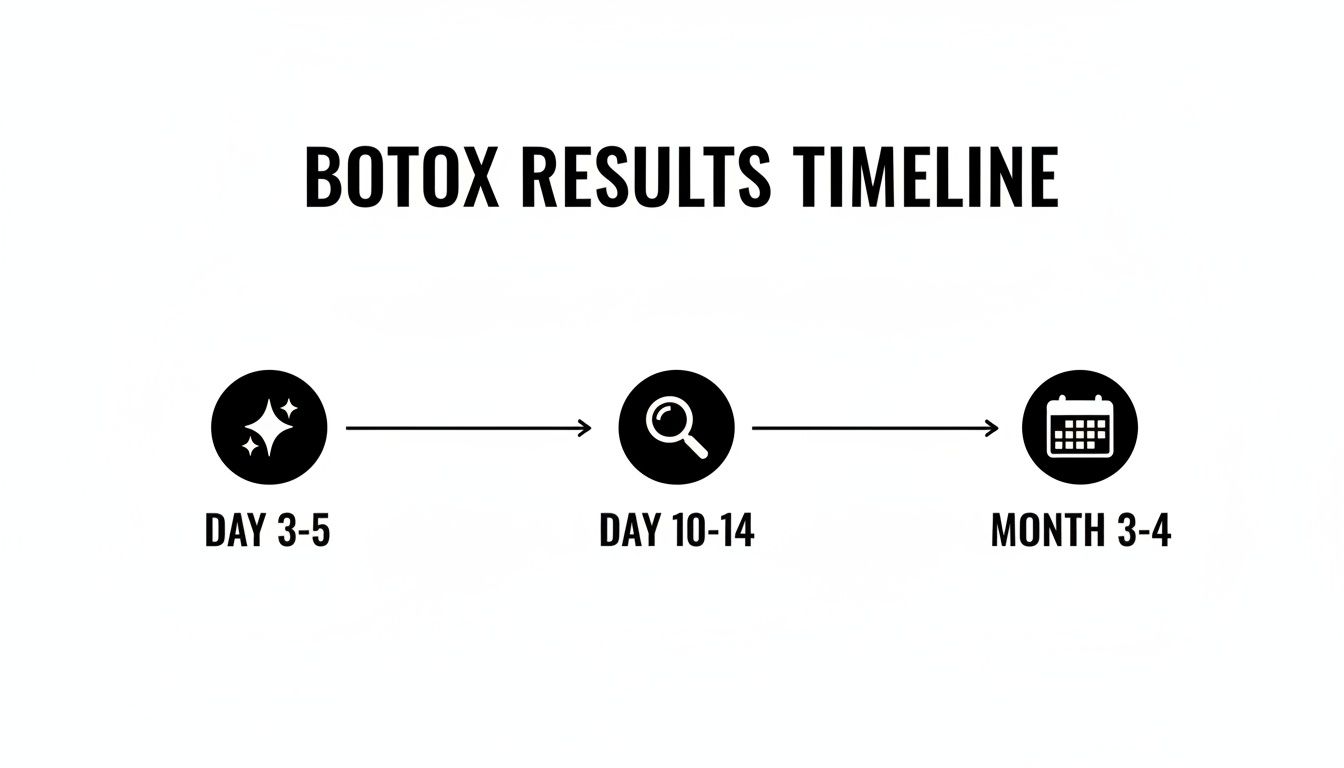
As the graphic illustrates, while the first signs appear quickly, the real payoff comes with a little patience.
The most noticeable transformation happens between day seven and the two-week mark. During this window, the smoothing effect really becomes apparent as the muscles reach their full state of relaxation. We tell our patients that the peak effect is almost always reached by day 10-14. This is the point when you'll see your final, optimal result—a naturally smoother and more rested appearance.
To give you an even clearer picture, here’s a simple breakdown of what to expect from the moment you get your injections to when the final results are revealed.
This day-by-day progression is typical for most patients. At your two-week follow-up appointment, we can assess your results and make any minor adjustments if needed to ensure you’re thrilled with your look.
If you've ever wondered why you don't walk out of the clinic with instantly smooth skin, the answer is fascinating. It all comes down to the clever biological process happening just beneath the surface. Botox isn’t like a filler that adds volume right away; it’s more like a skilled messenger that needs a little time to deliver its message.
At its core, Botox is a neuromodulator. It's a purified protein designed to work on the communication highway between your nerves and muscles. Every time you frown, squint, or smile, your brain sends a quick signal down a nerve. That signal releases a chemical messenger, acetylcholine, which then tells the muscle, "Contract!" This is what creates expression lines.
Think of it like a light switch. The nerve is the switch, and the muscle is the light bulb. Botox essentially steps in and prevents that switch from being flipped.
When we inject Botox, it gets to work finding the very specific nerve endings that communicate with the muscles we're targeting. Once there, it binds to proteins and blocks the release of acetylcholine. That "contract!" message from the brain never reaches the muscle.
By interrupting that signal, the muscle can finally relax. As it relaxes, the overlying skin smooths out, which is what softens and reduces the appearance of dynamic wrinkles like crow's feet and the "11s" between your brows.
This process isn't instant. It takes a few days for the Botox molecules to travel to the right spots and do their job. This is actually a good thing! The gradual onset ensures your results look natural and subtle, not like a sudden, drastic change.
That delay you experience is a completely normal—and necessary—part of the process. Here’s a quick look at what’s happening day by day:
Botox provides a fantastic, direct approach for those stubborn expression lines. Of course, it’s just one piece of the puzzle. It’s always helpful to understand how various anti-wrinkle solutions, from good skincare to healthy habits, all play a role in how we age. Knowing the science helps you appreciate why a little bit of patience after your appointment pays off in a big way.
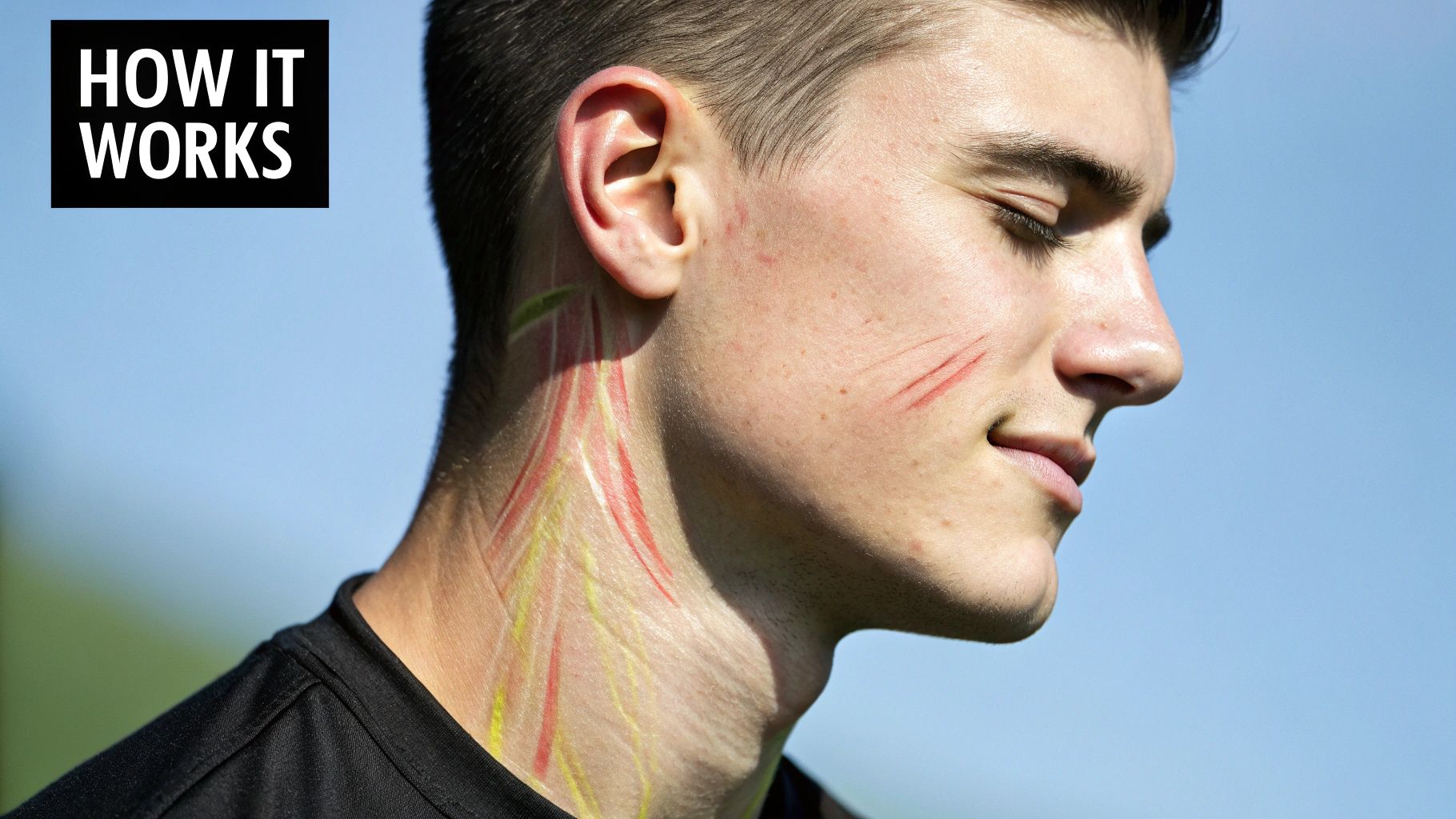
While that 3-to-5 day window is a great rule of thumb, your Botox timeline is ultimately your own. It's totally normal for you and a friend to get treated on the same day and see your results pop up at slightly different times. There's no one-size-fits-all answer, and that's because a few key things are at play.
Think of it this way: your body has its own unique way of doing things. How quickly your results appear all comes down to the interplay between the product and your personal physiology. Knowing what these factors are can help set realistic expectations for your own beautiful results.
First up is the dosage. A larger dose might kick in a bit faster, but the real art is in using the perfect dose for the specific muscle, not just flooding the area. An experienced injector knows this balance by heart.
The treatment area itself is a huge piece of the puzzle, too. Our facial muscles aren't all created equal—some are big and powerful, while others are small and delicate.
This is exactly why you might notice your crow's feet fading by day three, while your forehead lines need closer to a full week to catch up.
Your own biology plays a starring role. We all have a unique metabolism—it’s why your friend might be able to drink coffee after dinner and sleep like a baby while you'd be up all night. This same metabolic rate can influence how quickly your body takes up the Botox.
Your natural muscle strength is another big one. If you have very strong, expressive facial muscles, it might take a little longer for Botox to fully work its magic compared to someone whose muscles are less active.
Here's a cool thing we see all the time: If you get Botox regularly, you might notice it starts working faster with each visit. It's almost like the muscles get "trained" to stay relaxed, making them quicker to respond to the next treatment.
It’s also worth mentioning that in very rare cases—we’re talking maybe 1 in 10,000 patients—a person can develop antibodies that make Botox less effective. But for nearly everyone, any small difference in timing is just your body's unique and perfectly normal response.
When people talk about smoothing out wrinkles, the word "Botox" almost always comes up. It’s a bit like how we say "Kleenex" when we really just mean a facial tissue. While Botox is certainly the most famous brand name, it’s just one of several fantastic options in a family of treatments called neuromodulators.
Experienced injectors also rely on other excellent products like Dysport and Xeomin to create beautifully natural results. They all work by relaxing specific muscles to soften expression lines, but their unique properties mean they don't all work at the exact same speed.
So, how long before Botox kicks in compared to the others? Let's break down the subtle but important differences.
At their core, all three products use the same active ingredient: botulinum toxin type A. The real difference comes down to their molecular structure. Each one is formulated with different accessory proteins (or none at all), which can affect how quickly the product begins to work and how it spreads beneath the skin.
Dysport: This one is often the fastest of the bunch. Many patients start seeing results within 2-3 days. Dysport has smaller molecules that allow it to diffuse a little more easily, which can be a real plus for treating larger areas like forehead lines.
Botox: As the gold standard, Botox offers incredibly predictable results. Most people notice it starting to work within 3-5 days. Its track record is so extensive that injectors know exactly what to expect, making it a reliable choice.
Xeomin: Sometimes called the "naked" neuromodulator, Xeomin is unique because it's formulated without any accessory proteins. This pure form might lower the already small chance of the body developing resistance. Its onset is very similar to Botox, typically showing up around the 4-6 day mark.
Choosing the right neuromodulator often comes down to your specific goals and timeline. Here’s a quick comparison to help you see how these leading brands stack up.
It's also worth noting that the field is always advancing. Newer, longer-lasting alternatives are also becoming available. If you're curious, you can learn more in our detailed guide comparing Daxxify vs. Botox.
The Takeaway: While the active ingredient is the same, subtle formulation differences mean Dysport may kick in a day or two sooner. This often makes it a go-to for patients hoping to see a change as quickly as possible before an event.
Ultimately, you don't have to figure this out on your own. The choice between Botox, Dysport, and Xeomin is a collaborative one made with your provider.
During a proper consultation, an experienced injector will evaluate your facial anatomy, listen to your goals, and consider your muscle movement before recommending the best fit. At the end of the day, the person holding the syringe matters far more than the brand name on it. A true expert will know precisely which product to use to give you the safe, stunning, and natural-looking results you’re after.
Once you see your final, beautifully smooth results around the two-week mark, the natural next question is, how long do I get to enjoy this? Knowing what to expect helps you plan ahead and keep your look exactly where you want it.
On average, the effects of Botox last for three to four months. This timeframe isn't arbitrary; it's tied directly to how our bodies work. The treatment creates a temporary pause in the communication between a nerve and a muscle. Over the next few months, your body, being the amazing machine it is, gets to work building new connections to get the signal through again.
As these new pathways form, the muscle gradually regains its ability to contract. You'll notice those dynamic wrinkles slowly and subtly start to reappear. This is a completely normal and expected part of the process.
Just as everyone's body is unique, the duration of your results can be too. A few key things can play a role in how long you stay wrinkle-free:
Many of our long-term patients find that with consistent treatments, their results actually start to last a little longer over time. It’s as if the muscles get trained to relax, and they stay smoother for longer, even as the product naturally wears off.
The consensus across clinical studies is that Botox results last, on average, for about 3–4 months. You can dig into the science behind these neuromuscular junction findings on pmc.ncbi.nlm.nih.gov. This is why we, and most experienced providers, recommend booking your next appointment around that three-month mark.
Staying on top of your treatments is the key to seamless results. If you wait until the effects are completely gone, you're essentially starting over from square one each time. By keeping a regular schedule, you maintain that relaxed muscle state and prevent those deeper lines from ever fully coming back.
What you do after leaving the injector's chair is just as important as the treatment itself. The care you take in the hours and days following your appointment plays a huge role in how beautifully your results develop. Think of smart aftercare as protecting your investment.
The main goal is simple: keep the neuromodulator exactly where we placed it. We need to prevent it from migrating to nearby muscles where it isn't wanted. Following a few straightforward guidelines for the first 24 hours is the key to achieving that flawless, natural-looking result you’re looking for.
The most critical window is the first day. Your actions during this time can directly influence how well the product settles and works.
Here’s what you need to do:
Following these simple rules helps create the perfect environment for the neuromodulator to do its job precisely and effectively.
Remember, the goal is to let the Botox bind to the nerve receptors in the targeted muscles without any interference. Proper aftercare makes all the difference.
Patience is a virtue, especially when it comes to injectables! Your final, beautiful look will settle in over about 14 days, which is why we always schedule a follow-up appointment right around that two-week mark.
This visit is a vital part of your treatment plan. It gives us a chance to assess your results once they've fully developed and see exactly how your muscles responded. If there are any minor asymmetries or a little bit of unwanted movement still visible, we can perform a small touch-up to perfect the outcome.
This follow-up ensures you are completely happy with your refreshed appearance. It’s also the perfect time to chat about your long-term goals and learn more about how long Botox lasts so you can get your next visit on the calendar.

Even when you know the general timeline, it's completely normal to have more specific questions about your own treatment. We get it. Here are some of the most common things patients ask us about the process.
This is a popular question! While there isn't a secret shortcut to speed up the science, some injectors recommend doing gentle facial "exercises" for about an hour after your appointment. Think frowning, raising your brows, or smiling—whatever movements use the muscles we just treated.
The idea is that contracting the muscles helps them absorb the neuromodulator a bit more actively. Honestly, the most important thing you can do for a great result is to simply follow your provider's aftercare instructions to the letter. Patience is part of the process.
First, don't panic! It’s really important to give it the full two weeks before judging the final outcome. Different muscles can react on slightly different schedules. A little bit of asymmetry in that first week is totally normal and almost always sorts itself out.
If you're still seeing some unevenness after 14 days, that’s the time to give us a call. A quick follow-up appointment is usually all it takes to make a minor touch-up and get everything perfectly balanced.
You're not imagining it! This is something many of our regular patients notice and it makes perfect sense. When you get treatments consistently, the targeted muscles can weaken over time. They essentially get "retrained" to relax.
Since those muscles aren't working as hard to begin with, you'll often see the smoothing effects from your next treatment appear a day or two sooner. It's one of the fantastic long-term benefits of sticking to a regular treatment schedule.
Ready to see what a refreshed, natural look can do for you? At Cape Cod Plastic Surgery, our expert team is ready to build a treatment plan tailored to your unique goals. Schedule your consultation with us today!
September 9, 2026
Expert Guide to Proper Surgical Incision Care
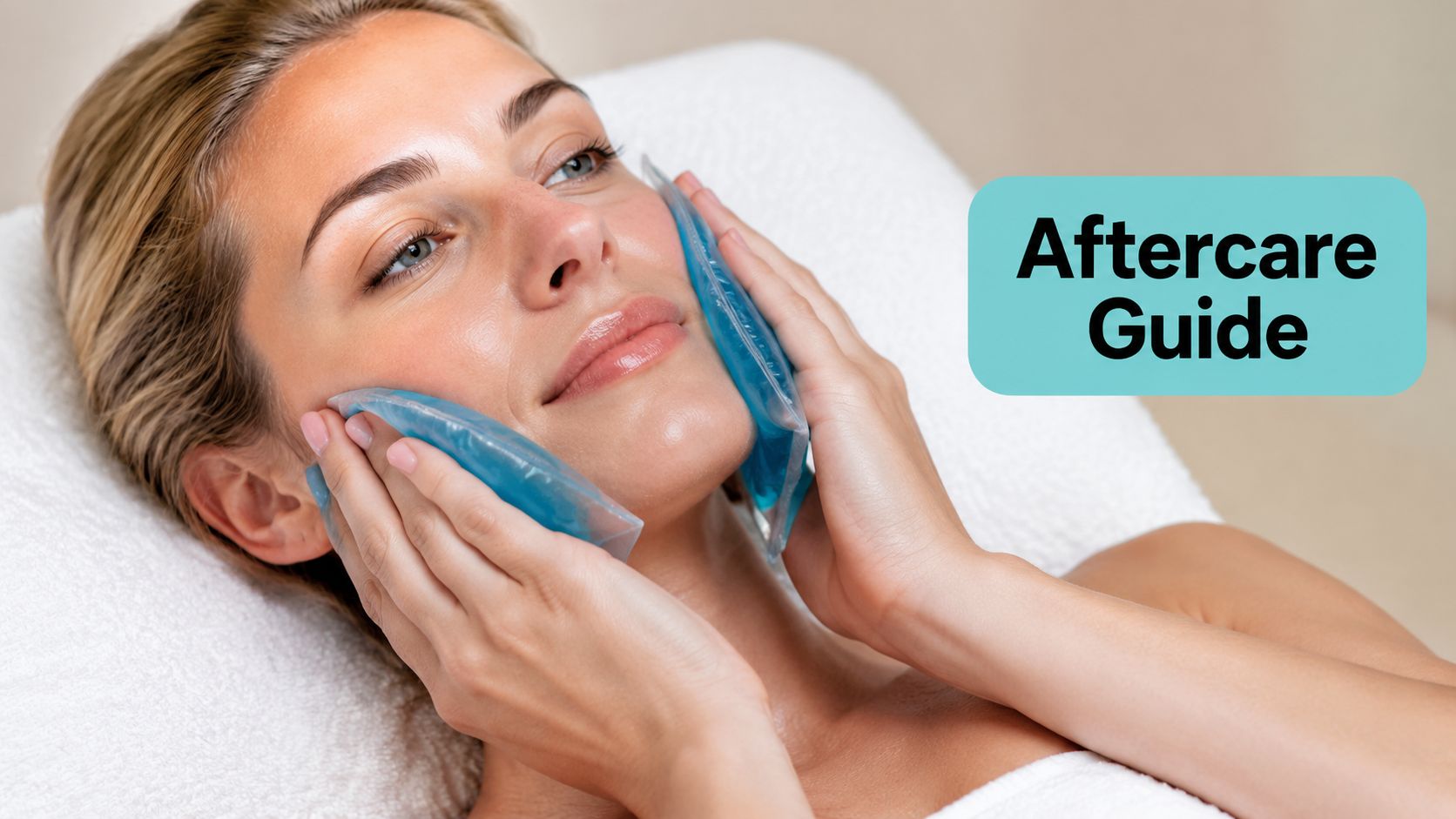
Master dermal fillers aftercare with do's and don'ts, swelling tips, activity limits and warning signs to protect your results and heal smoothly.

September 8, 2026
Ensuring Safety: Why Your Surgeon's Credentials Matter Most

Cape Cod Plastic Surgery offers expert cosmetic and reconstructive procedures in a safe, accredited setting. Led by Dr. Marc Fater, we combine advanced techniques with personalized care to help you look and feel your best.
Monday: 9:00 AM – 5:00 PM
Tuesday: 9:00 AM – 5:00 PM
Wednesday: 9:00 AM – 5:00 PM
Thursday: 9:00 AM – 5:00 PM
Friday: 9:00 AM – 5:00 PM