

September 9, 2026
How to Care for Surgical Incisions Properly
Expert Guide to Proper Surgical Incision Care
Jan 22, 2026
Welcome to your practical, no-nonsense guide for tackling forehead lines, brought to you by the clinical team here at Cape Cod Plastic Surgery. One of the most common things we hear from patients is frustration over these lines. The great news? Modern aesthetic medicine has given us some incredibly effective ways to smooth them out.
These lines usually come from a combination of factors, from repetitive muscle movements (like raising your eyebrows) and sun exposure to the simple, natural process of aging.

In this guide, we'll walk you through the best treatments available today. We’ll cover everything from non-invasive options like Botox and dermal fillers to more advanced surgical procedures that deliver significant, lasting results.
Our goal is to help you feel confident that safe, personalized treatments can give you a smoother, refreshed look that still feels completely like you. Let’s explore these options together, so you have the expert-backed insights needed to make a decision you feel great about.
Getting a handle on your choices is the first real step in figuring out how to remove forehead lines effectively. It's important to know that each treatment works differently because they target different causes and types of wrinkles.
For instance, some treatments are perfect for lines that only pop up with expression, while others are designed to address the deeper creases that stick around even when your face is at rest.
Here's a quick look at the most effective ways to treat forehead lines, from non-invasive injections to surgical solutions.
This table gives you a starting point, but the real magic happens when we tailor a plan specifically for your face and your goals.
Here’s a little more on the most common approaches we use at our practice:
The key to truly natural-looking results is almost always a personalized treatment plan. We often find that combining therapies—like using Botox for the dynamic lines and a touch of filler for a stubborn static one—delivers the most comprehensive and satisfying outcome.
Choosing the right path really depends on your unique facial anatomy, your skin's condition, and what you hope to achieve. In the sections ahead, we’ll dive much deeper into each of these solutions to help you understand which one might be the perfect fit for you.
To really get a handle on treating forehead lines, we first have to understand where they come from. It’s not just a simple matter of aging. It's a complex interplay of your facial muscles, natural skin changes, and your environment, all conspiring over time.
Think of your forehead like a well-worn piece of paper. Every time you show surprise, raise your brows in thought, or express concern, you're temporarily folding that paper. After thousands of folds along the same lines, some of those creases just don't smooth out anymore.
The very first step in our assessment is figuring out what kind of lines we're dealing with. This is a critical distinction because it points us directly to the most effective treatments for you.
Dynamic Lines: These are the lines of expression. They show up when you move your face, like when the horizontal lines appear as you raise your eyebrows. This is the frontalis muscle at work—the broad muscle that lets you lift your brows.
Static Lines: These are the lines that have stuck around. They’re visible even when your face is perfectly still and relaxed. Essentially, they started as dynamic lines but have become permanently etched into the skin as it lost its ability to bounce back.
The paper-folding analogy works perfectly here. Fold it once, it flattens out. Fold it a thousand times, and the crease becomes permanent. Those are your static wrinkles.
Understanding this difference is key. For dynamic lines caused by muscle movement, a treatment like Botox is often the best answer. But for static lines that are physically present in the skin, we might look at fillers or laser resurfacing to smooth them out.
The frontalis muscle is the main character in this story. Its job is to lift your eyebrows, but with every contraction, it pulls on the overlying skin, creating those horizontal lines. A lifetime of expressing yourself means this muscle has put a lot of wear and tear on your skin.
At the same time, your skin is undergoing its own journey. Two proteins are essential for keeping skin firm and supple: collagen and elastin.
Here's the kicker: starting in our late 20s, our bodies produce about 1% less collagen every single year. This slow-motion loss of structural support means the skin can’t rebound from facial expressions as well as it used to. This is how static lines get their chance to form and deepen.
Beyond the natural biology of muscle and skin, several external factors can hit the fast-forward button on wrinkle formation. Knowing what they are is your first line of defense.
Sun Exposure (Photoaging)
This is the big one. Unprotected time in the sun is the single greatest external cause of premature aging. UV radiation actively breaks down collagen and elastin, making skin weaker and far more prone to wrinkling. A daily sunscreen isn't just a good idea; it's non-negotiable for skin health.
Lifestyle Choices
Habits like smoking wreak havoc on the skin. Nicotine constricts blood vessels, choking off the flow of oxygen and vital nutrients. This severely impairs the skin's ability to repair itself and build new collagen.
It’s this combination of factors—expression, biology, and lifestyle—that brings so many people into our office. And you're not alone. Botulinum toxin type A injection is the number one non-surgical cosmetic procedure in the world, with an estimated 11 million people having used Botox. The most common demographic is the 40-54 age group, which is right around when static lines really start to bother people. You can discover more about these cosmetic treatment trends and see just how common it is to want to learn how to remove forehead lines.
If you're looking to smooth out forehead lines, you'll find a fantastic range of effective, minimally invasive treatments available today. These modern procedures are all about improving skin quality and softening wrinkles without the recovery time that comes with surgery. For many of our patients here at Cape Cod Plastic Surgery, this is the perfect place to start.
The real secret to getting great results is matching the right treatment to your specific concern. Whether you're bothered by lines that pop up when you raise your brows or deeper ones that stick around even at rest, there's a non-surgical solution that can help you achieve that natural, refreshed look you're after. Let’s walk through the most trusted options we use every day.
When it comes to dynamic wrinkles—those lines created by the frontalis muscle when you raise your eyebrows—neuromodulators are king. Botox is the brand name everyone knows, and it’s the go-to for a reason. Over years of making expressions, these repeated muscle movements cause creases to settle into the skin.
A neuromodulator works by simply relaxing this muscle. It temporarily blocks the nerve signals that tell the muscle to contract, allowing the skin on top to smooth out. This not only softens the lines you already have but also helps prevent them from getting deeper.
A lot of people worry about looking "frozen," but that’s not the goal at all. In the hands of an experienced injector like Dr. Fater, the art is in softening muscle activity just enough to reduce wrinkles while keeping your natural expressions intact.
Key Takeaway: The artistry of Botox isn't just about erasing lines—it's about preserving your unique expressions. The aim is to make you look rested and rejuvenated, not different.
The treatment itself is incredibly quick, usually taking less than 15 minutes. Using an ultra-fine needle, a series of small injections are made across the forehead. Most people tell us it feels like a tiny, brief pinch. You can get right back to your day with virtually zero downtime. Results start showing up in a few days, reach their full effect in one to two weeks, and typically last for three to four months.
Getting the dose right is crucial. Based on extensive clinical research and years of practice, we've found that 15-30 units of Botox is the sweet spot for the forehead. The exact amount depends on your unique anatomy, muscle strength, and what you want to achieve.
The proof is in the results. One major clinical study found that 30 days after injection, 100% of participants saw a reduction in their static forehead lines, and 96% saw improvement in dynamic ones. Even at day 120, those numbers held strong at 89% for static lines and 70% for dynamic lines. This data confirms just how effective a personalized approach can be.
What about those deeper lines that are visible even when your face is completely still? Those are called static lines, and they often need a different game plan. While Botox is brilliant for relaxing the underlying muscle, it can’t always completely fill a line that’s become etched into the skin. That’s where dermal fillers come in.
Most dermal fillers are made from hyaluronic acid, a substance your body produces naturally to keep skin hydrated and plump. They work by adding back lost volume. Think of a deep wrinkle as a tiny valley in your skin; a filler is carefully injected right beneath it, lifting the crease from below to make it level with the surrounding skin.
This is a fantastic strategy for those stubborn lines that stick around even after Botox. By combining the two treatments, we can tackle the problem from both sides: relaxing the muscle and filling the crease. If you want to dive deeper into how they complement each other, check out our guide on the difences between Botox and dermal fillers.
Filler appointments are also quick, and you'll see the results immediately. We often use a topical numbing cream to keep you comfortable. You might have some minor swelling or bruising, but there's very little downtime. Depending on the specific filler we use, your results can last anywhere from six to 18 months.
Sometimes, the concern isn't just a few specific lines, but the overall texture of the forehead skin. Fine lines, a crepey appearance, and sun damage can all contribute to an older look. To address these issues, we turn to treatments that wake up your skin’s own regenerative power.
Here's a quick look at the most common non-surgical options to give you a clearer picture of how they stack up.
Each of these treatments offers a unique benefit, and sometimes the very best results come from combining them for a comprehensive approach.
Two of our most powerful tools for improving overall skin quality are laser resurfacing and microneedling.
Laser Resurfacing: This treatment uses focused beams of light to remove damaged outer skin layers while gently heating the deeper layers. This kicks your body's healing response into high gear, stimulating the production of fresh collagen and elastin. The end result is smoother, firmer skin with a significant reduction in fine lines.
Microneedling: Also known as collagen induction therapy, this procedure uses a special device with tiny, sterile needles to create thousands of micro-channels in the skin. Your body sees these as tiny injuries and rushes to heal them by generating new, healthy collagen. It’s an amazing way to improve skin texture and soften fine lines.
Both treatments usually require a series of sessions to achieve the best outcome and may involve a few days of social downtime while your skin heals. They offer incredible improvements in skin quality that injectables can't achieve on their own, making them a perfect partner in any anti-aging plan.
Non-surgical treatments can work wonders, but sometimes they just can’t get the job done. If you're dealing with deep, etched-in forehead lines and your brows have started to sag—a condition we call brow ptosis—it might be time to think about a more direct approach.
When the brow itself droops with age and gravity, it can make you look tired, heavy, or even cross. At this point, treatments like Botox or lasers are only skimming the surface; they aren't addressing the underlying structure that's causing the issue. This is where a brow lift comes into the conversation.
A brow lift, or forehead lift, is a surgical procedure designed to do one primary thing: elevate your eyebrows back to a more natural, youthful position. By doing that, it automatically smooths the entire forehead. It’s a powerful way to address the root cause of severe horizontal lines by repositioning the very tissues and muscles that create them.
Dr. Fater focuses on modern techniques that deliver natural-looking results. The goal is never that "surprised" look—it's about restoring a refreshed, brighter appearance to the upper part of your face.
There are a few ways we can approach the surgery:
The right technique for you really comes down to your unique facial structure, how much sagging you have, and what you want to achieve. We figure all that out together during your consultation.
Surgery is a big decision, and it’s not the right fit for everyone. We typically find that the best candidates for a brow lift are people who are bothered by:
If you want to learn more, our detailed guide on brow lift surgery for brighter eyes is a great resource.
A brow lift is an outpatient procedure performed right here in our accredited surgical suite, so you’ll head home the same day.
You can expect some swelling and bruising, which peaks in the first few days and then starts to fade. Most of our patients are back to work and social activities within 10 to 14 days.
The results are built to last. While nothing can stop the clock entirely, a brow lift effectively resets it for your upper face, giving you a rejuvenated look that can last for years. For the right person, it's a truly elegant and definitive solution for a heavy brow and deep forehead lines.
You’ve decided you want to do something about your forehead lines—that’s a big step. But the next one is just as important: figuring out the right treatment for you and, crucially, finding the right person to perform it.
Your path to a smoother forehead really begins with an honest, in-depth consultation. This is more than just a quick chat; it's a chance for a skilled provider to get a good look at your unique facial anatomy and for you to understand all your options. After all, not all forehead lines are the same. The best approach depends entirely on whether your lines are dynamic (from movement), static (etched in), or if there's some brow sagging involved.
This simple decision tree can help you visualize the most common routes we take.
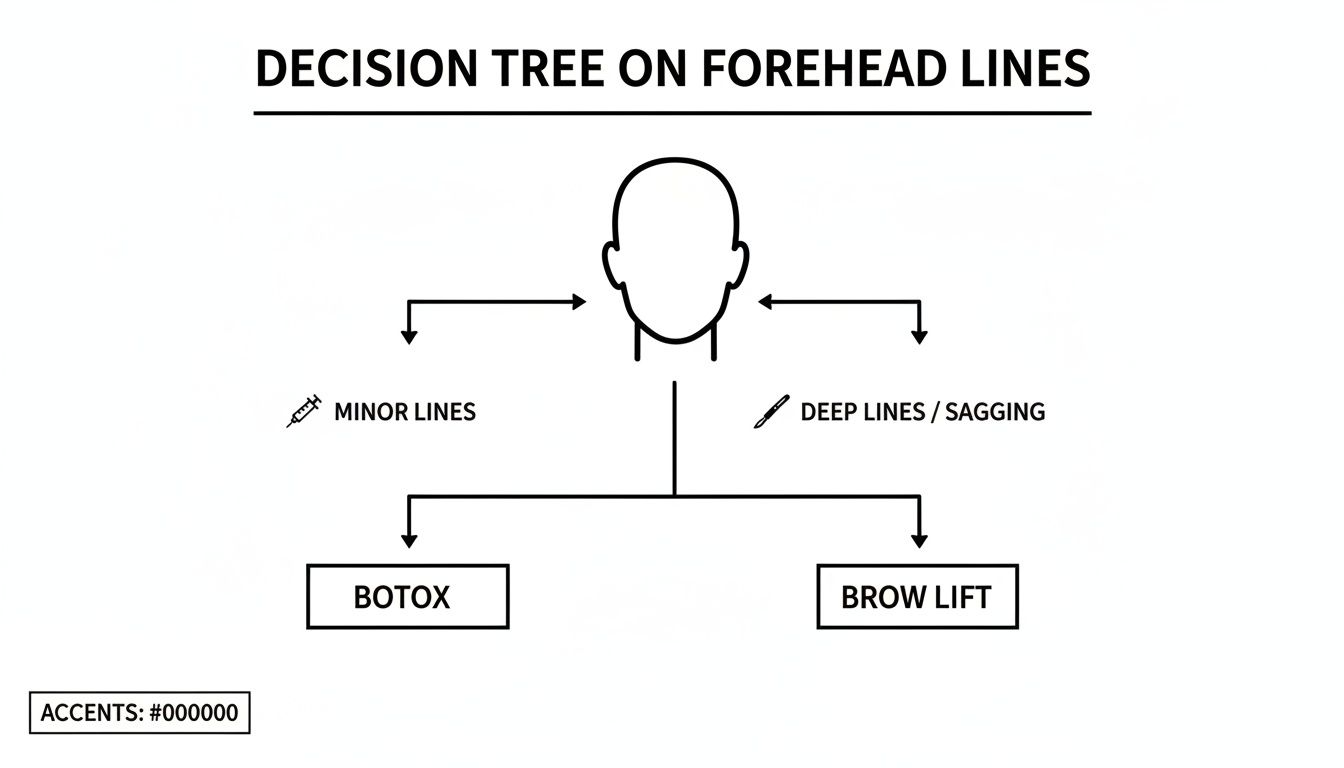
As you can see, the nature of the wrinkles points us in the right direction. Less invasive options like Botox work beautifully for those finer, dynamic lines. For deeper, set-in lines and sagging that create a heavy look, a surgical solution like a brow lift provides the structural support needed for a lasting result.
Walking into a consultation prepared with good questions makes you an active partner in your own care. This isn’t just about the procedure itself; it’s about making sure you and your provider are on the same page and building a foundation of trust.
Here are a few questions I always encourage patients to ask:
Your consultation should feel like a collaborative conversation, not a sales pitch. It’s your time to feel heard and for the provider to demonstrate their expertise, artistry, and commitment to your safety and satisfaction.
The popularity of treatments like Botox has absolutely exploded, which makes choosing a qualified injector more critical than ever. In 2022 alone, over 9.2 million Botox procedures were performed globally—a staggering 26.1% jump from the previous year. The United States is at the forefront of this trend, making up nearly 43% of all treatments. You can learn more about these stats and see how Botox usage has grown worldwide.
In a world filled with medspas and aesthetic clinics, your provider's credentials truly matter. A board-certified plastic surgeon, like our own Dr. Marc Fater, has completed years of intensive, specialized surgical training that goes far beyond what’s required for other practitioners.
This background provides a deep, almost intuitive, understanding of facial anatomy, how the muscles work, and the artistic principles of balance and proportion. This level of expertise isn't just a bonus—it's essential for your safety and for achieving the kind of beautiful, natural-looking results you want.
Whether you're thinking about a simple injection or a surgical procedure, a board-certified plastic surgeon brings a level of precision and care that ensures the best possible outcome. To help you feel confident in your choice, we put together a guide on how to choose the best plastic surgeon for your needs. Here at Cape Cod Plastic Surgery, that commitment to excellence is the foundation of everything we do.
It’s completely normal to have a list of questions when you’re thinking about a cosmetic treatment. In fact, we encourage it! Making sure you feel informed and confident is our top priority here at Cape Cod Plastic Surgery. An educated patient is an empowered patient.
To get the conversation started, we've put together answers to some of the most common questions we hear from patients during their initial consultations. Think of this as the beginning of our discussion.
This is easily one of the first things people ask, and thankfully, the answer is no, not really. Most of our patients describe the feeling as a very quick, tiny pinch. Honestly, it's often less noticeable than a mosquito bite.
We use incredibly fine needles, and the entire process for the forehead is over in just a couple of minutes. Your comfort is paramount, so if you're feeling a bit anxious, we can absolutely apply a topical numbing cream beforehand to make the whole experience a breeze.
That "frozen" look is a valid concern, but it’s entirely the result of improper technique or dosage. A skilled injector knows that the goal isn't to paralyze the muscle, but to relax it. Dr. Fater’s entire approach is built on creating natural, refreshed results that soften lines without erasing your ability to express yourself.
We tailor the dose and meticulously map out injection sites based on your specific facial anatomy. The result? You'll just look like a more rested, vibrant version of yourself—not like you've had "work done."
True expertise in cosmetic injectables isn't about making you look different—it's about restoring a natural, youthful smoothness that still feels authentically you. This subtle approach is what separates good results from great ones.
There's no single "right" age to start. It really comes down to your unique anatomy, how your skin is aging, and what you hope to achieve.
We generally see patients in two categories:
A great rule of thumb is this: when you notice your "eleven" lines or horizontal forehead creases sticking around after you've stopped frowning or raising your brows, it’s a good time to come in for a chat. A personalized consultation is the only way to know for sure.
Absolutely! In fact, combining treatments is often how we achieve the most comprehensive and beautiful results. Think of it like a puzzle—different pieces are needed to complete the picture.
For instance, a very popular and effective approach is to use Botox to relax the muscles creating the wrinkles, and then place a delicate dermal filler into any deep, static lines that remain. From there, we might add a laser treatment to improve the skin's overall texture and tone. This kind of multi-modal plan addresses the muscle, volume loss, and skin quality all at once.
During your consultation, Dr. Fater will design a personalized treatment plan that may weave together several different options to help you reach your aesthetic goals. This ensures we’re addressing the root cause of your concerns for the best possible outcome.
Ready to explore your options and find out which treatment is right for you? At Cape Cod Plastic Surgery, Dr. Fater and our team are here to provide expert guidance and personalized care. Schedule your consultation today to start your journey toward smoother, more refreshed skin. https://ccplasticsurgery.com
September 9, 2026
Expert Guide to Proper Surgical Incision Care
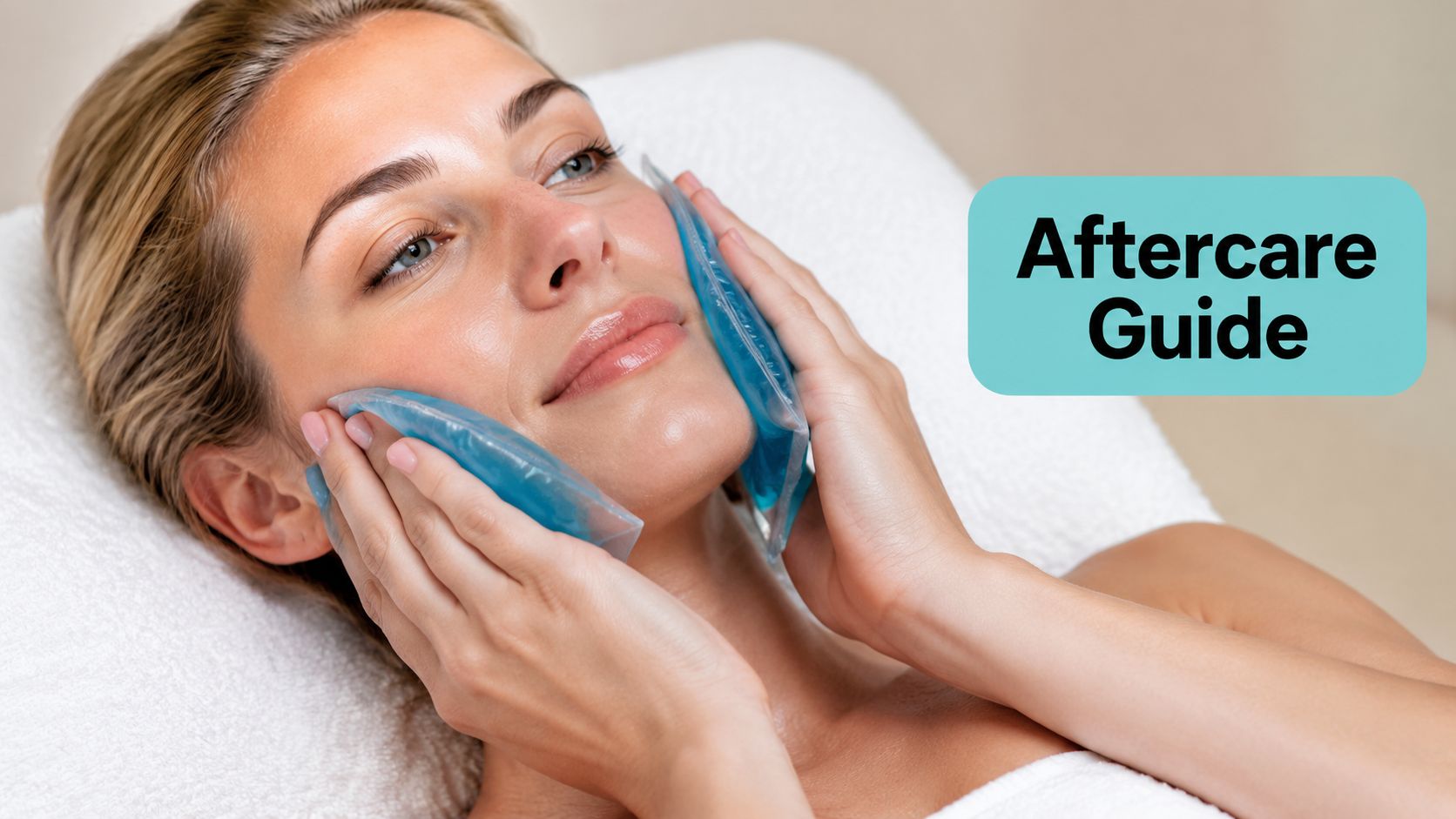
Master dermal fillers aftercare with do's and don'ts, swelling tips, activity limits and warning signs to protect your results and heal smoothly.

September 8, 2026
Ensuring Safety: Why Your Surgeon's Credentials Matter Most

Cape Cod Plastic Surgery offers expert cosmetic and reconstructive procedures in a safe, accredited setting. Led by Dr. Marc Fater, we combine advanced techniques with personalized care to help you look and feel your best.
Monday: 9:00 AM – 5:00 PM
Tuesday: 9:00 AM – 5:00 PM
Wednesday: 9:00 AM – 5:00 PM
Thursday: 9:00 AM – 5:00 PM
Friday: 9:00 AM – 5:00 PM