

October 6, 2026
How to Verify Your Surgeon Before Your Cosmetic Procedure
Your Safety Guide: What to Look for When Choosing a Plastic Surgeon
Feb 16, 2026

When you're trying to decide between Laser Genesis and IPL, it really boils down to one simple question: what are you trying to fix? Laser Genesis is your go-to for improving overall skin texture, softening fine lines, and calming down that all-over, diffuse redness. On the other hand, IPL is the champion for zapping distinct sun spots, freckles, and those tiny broken capillaries. Your primary concern—whether it's the big picture of your skin's quality or specific little spots—is what will ultimately guide you to the right treatment.
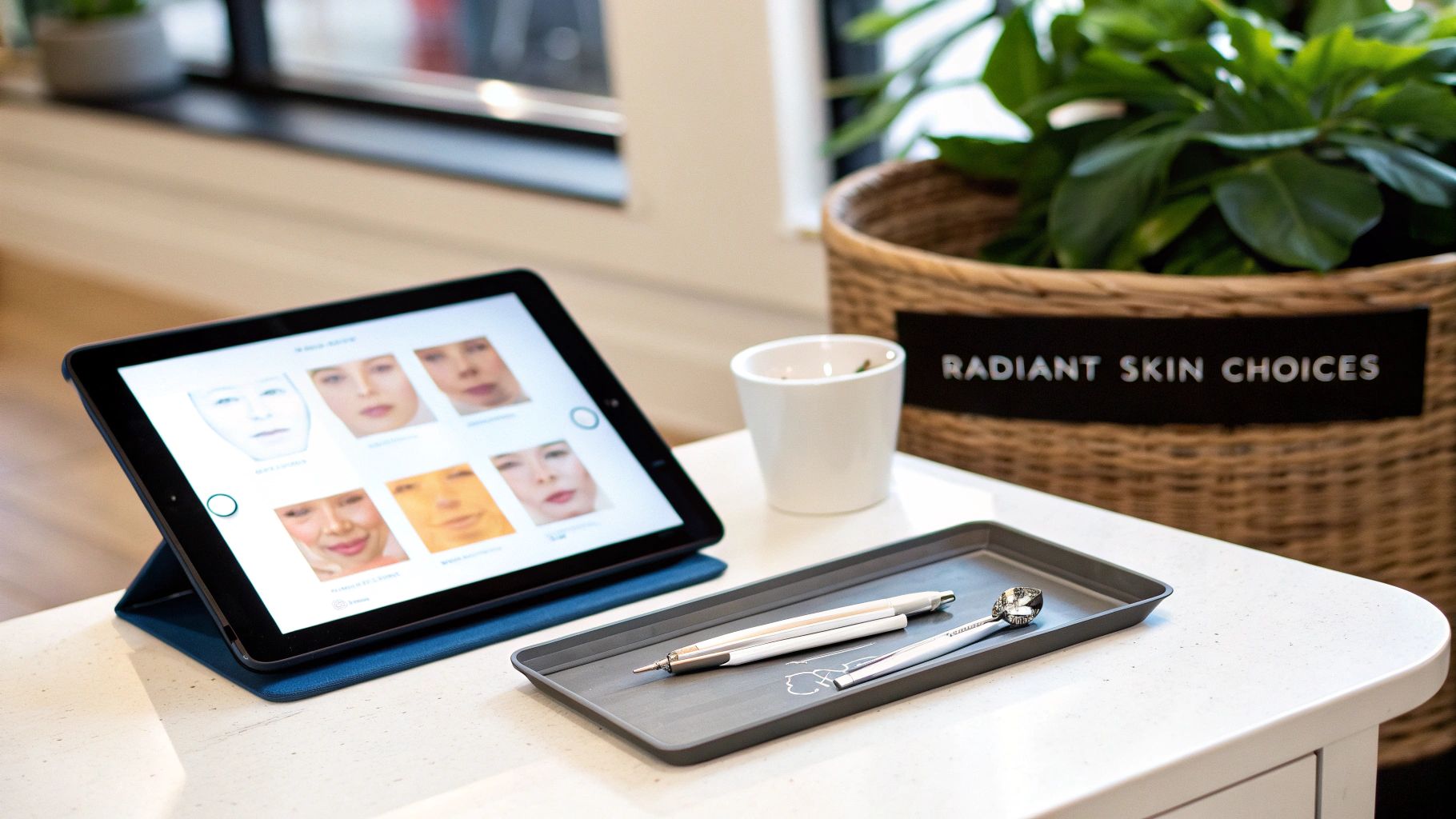
When patients start exploring non-invasive ways to rejuvenate their skin, the conversation almost always lands on two heavy hitters: Laser Genesis and IPL (Intense Pulsed Light). Both can give you clearer, more youthful-looking skin, but they get there in very different ways and are built to tackle different problems. Getting a handle on these differences is the most important first step you can take.
This guide is designed to give you a straightforward, patient-first comparison. We’ll look at the science behind each one, the skin issues they’re best at fixing, and what you can realistically expect to see in the mirror. Our aim is to give you the confidence to choose the treatment that truly matches your goals for healthier, glowing skin.
Here's a quick side-by-side look at what sets these two powerful light-based treatments apart.
Key Takeaway: The easiest way to think about it is this: Laser Genesis is like a workout for your skin, rebuilding its foundation to improve strength, texture, and overall health from the inside out. IPL, in contrast, is more like a spot treatment—a specialized eraser designed to remove specific, surface-level imperfections.
Whether you just want to hit the reset button on your complexion or go after years of sun damage, understanding these popular non-invasive and laser treatments is key. We’ll dive deeper into each aspect to help you figure out which one is the perfect match for you.
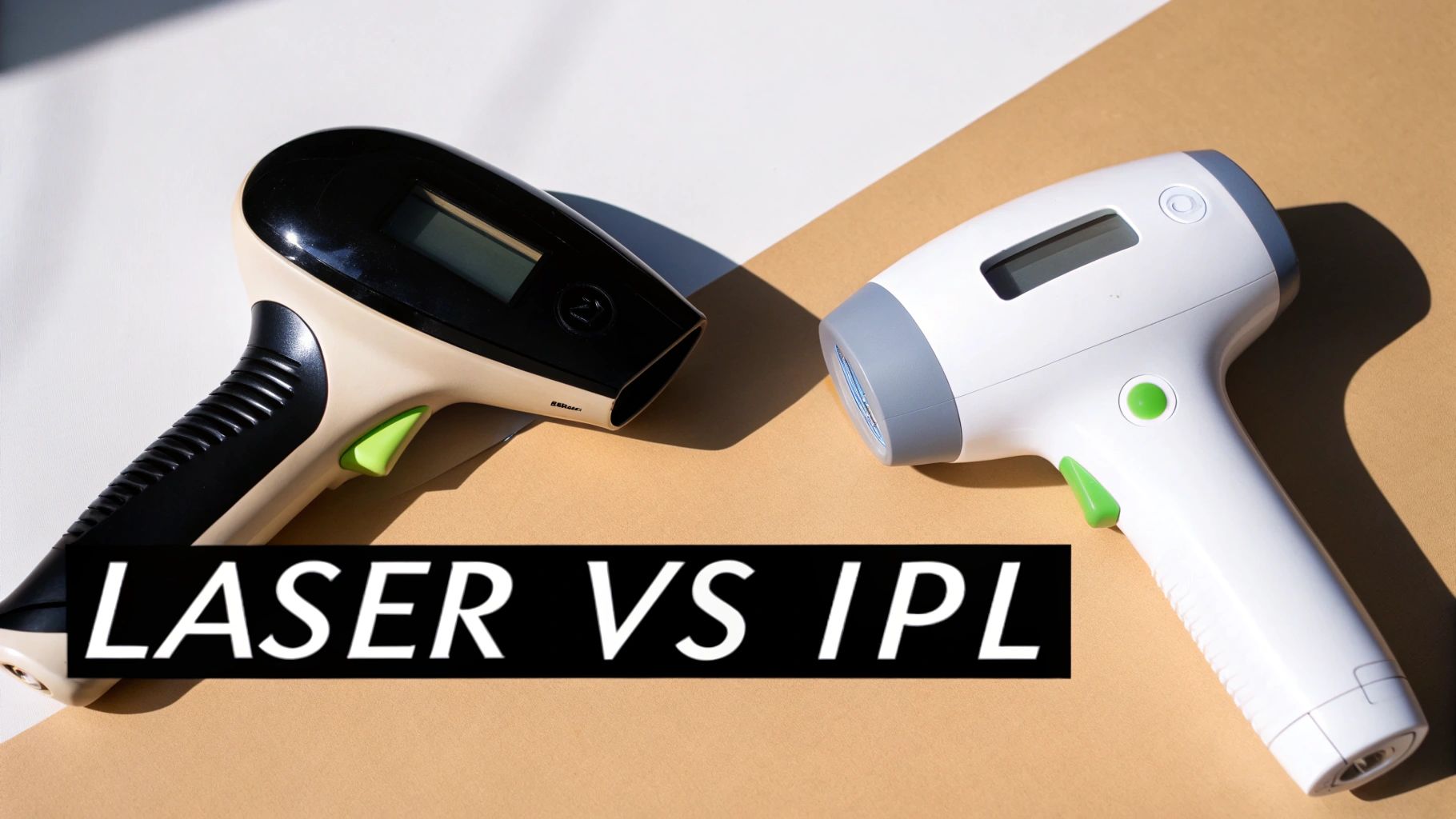
To really figure out if you're a better candidate for Laser Genesis or IPL, you have to understand what’s happening below the surface of your skin. Both treatments use light to get the job done, but how they use it couldn't be more different. One is a master of deep, foundational rebuilding, while the other is a specialist in clearing up surface-level discoloration.
Think of Laser Genesis as a highly focused beam of energy. It uses a very specific, single wavelength of light (1064nm) that travels right past the top layer of your skin without affecting it. Its real job is to deliver gentle, consistent heat deep into the dermis—the layer where your skin’s structural protein, collagen, is made.
This controlled heating creates a cascade effect. Your body senses the gentle warmth and kicks its natural repair mechanisms into high gear, telling your fibroblast cells to start churning out fresh, new collagen. This is precisely why it’s so effective at smoothing out skin texture, shrinking the appearance of pores, and softening fine lines from the inside out.
The 1064nm wavelength is incredibly precise, allowing it to also target tiny micro-capillaries to dial down diffuse redness. It's a subtle, cumulative process that builds healthier, more resilient skin with every single session. We find this approach is particularly popular with patients between 35 and 60 who want to proactively address the signs of aging without any downtime. For a deeper dive into how different light therapies work, this article on understanding the differences between Low-Level Laser Therapy and Red Light Therapy offers some great related insights.
A Simple Analogy: Think of Laser Genesis like slowly simmering a sauce. The low, consistent heat develops deep, rich flavors over time without scorching the surface. The goal isn't a quick fix but a fundamental improvement in the final result.
Now, let’s talk about IPL, which stands for Intense Pulsed Light. Unlike Laser Genesis with its single, focused beam, IPL is more like a powerful camera flash. It releases a broad spectrum of light across multiple wavelengths. We then use specialized filters to narrow down that light, allowing us to pinpoint very specific targets in the skin.
These targets, which we call chromophores, are essentially anything with color:
When the light hits these targets, its energy converts into heat. This heat essentially damages the unwanted pigment or collapses the wall of a visible capillary. From there, your body’s natural cleanup crew takes over, clearing away the damaged cells and revealing the clearer, more even-toned skin underneath. This is why IPL is the go-to for erasing distinct spots and splotches. You can learn about similar technologies in our popular guide to BBL laser treatment.
A Simple Analogy: IPL is like using a spot treatment on a stained carpet. You’re not trying to re-weave the entire carpet; you’re applying a specific solution to lift out a noticeable stain from the surface.
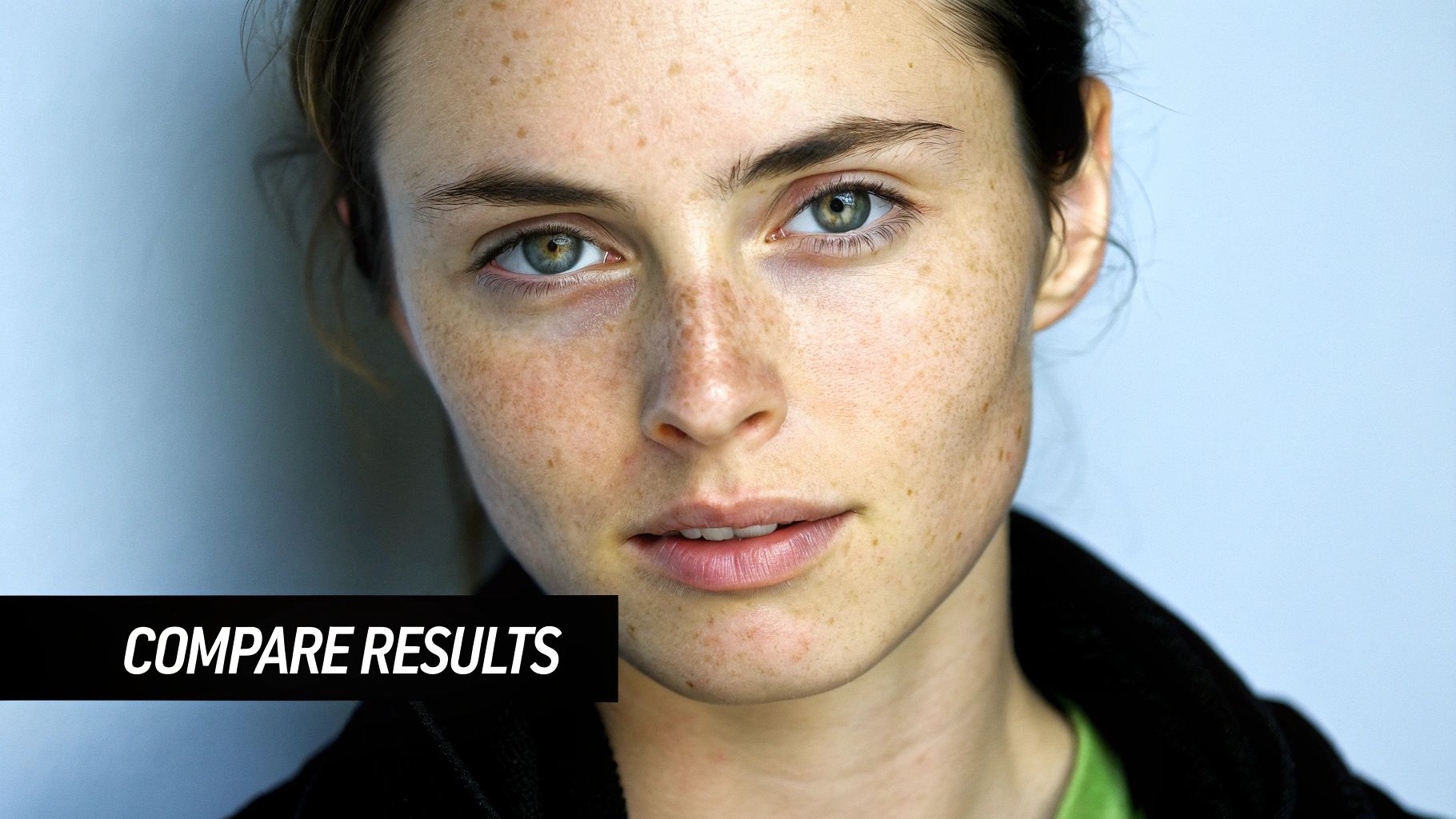
Alright, let's get past the technical jargon and talk about the one thing that really matters: what results can you actually expect? Choosing between Laser Genesis and IPL comes down to what you see in the mirror and want to change. One is a master at rebuilding the skin's foundation for a smoother, firmer look, while the other is a specialist at clearing away discoloration on the surface.
To figure out which is right for you, you need to get specific about your main concern. Is it a general lack of radiance and noticeable pores that bother you? Or are you more focused on getting rid of those distinct sun spots from years of enjoying the beach? Your answer will point you straight to the best tool for the job.
When your goal is to improve the fundamental quality of your skin, Laser Genesis is the undisputed champion. It works by gently heating the deeper layers of your skin, which kicks your body’s collagen production into high gear. This makes it the perfect choice for issues tied to skin structure, strength, and resilience.
Think of it like a workout for your skin. Each session builds on the last, creating a stronger, healthier foundation from the inside out. The results you see are more than just superficial—they’re a sign of genuinely healthier skin.
Key goals best addressed by Laser Genesis include:
Laser Genesis doesn't just erase one spot; it elevates the quality of the entire canvas. Patients often tell us their skin just looks and feels better—smoother, brighter, and more alive.
On the other hand, IPL is the go-to specialist for targeted "search-and-destroy" missions. Its broad-spectrum light is filtered to zero in on pigment, making it incredibly effective at zapping distinct spots and blemishes that live closer to the skin's surface.
Where Laser Genesis rebuilds, IPL clarifies. It acts like a precision eraser for the unwanted marks left behind by sun, time, and genetics.
IPL is the superior choice when your main complaints are:
IPL is truly a versatile workhorse in aesthetics. Its ability to use a broad spectrum of light means it can tackle several different issues in a single treatment—from age spots and freckles to the redness and broken capillaries associated with rosacea. If you'd like to discover more insights about these advanced laser procedures on inlandcosmetic.com, you can see just how powerful it is for comprehensive color correction.
Sometimes, seeing things side-by-side makes the choice crystal clear. This table gives you a direct comparison of key treatment characteristics to help you quickly identify the best option for your primary skin concerns.
In the end, it really is that simple. If you want to fundamentally improve your skin’s health, texture, and strength for a lasting, natural glow, Laser Genesis is your answer. If your top priority is to erase specific, visible spots and veins to get a clearer, more even skin tone, then IPL is the obvious winner.
Knowing what a treatment actually feels like—and what you'll look like in the days following—is just as critical as understanding the science behind it. This is where Laser Genesis and IPL really part ways. One lets you walk out and get right back to your day, while the other might have you clearing your social calendar for a few days. For many of my patients, that difference is everything.
There's a reason we call Laser Genesis the "lunchtime facial." It’s genuinely that easy. The experience itself is incredibly relaxing; most people just describe it as a gentle, pleasant warming of the skin. During the treatment, the laser handpiece hovers just above your skin, methodically heating the deeper layers.
There's no pain, no zapping, and no need for any numbing cream. It's a comfortable, soothing process.
A typical session takes about 30 minutes. Afterward, you might notice a slight pinkish glow to your skin, like you've just come in from a brisk walk. That subtle flush usually fades within a couple of hours.
Key Insight: Laser Genesis has absolutely no downtime. You can put on makeup and head straight back to work or out to dinner. No one will know you just had a laser treatment.
The results build up slowly and surely. You’ll likely see a healthy glow after your very first treatment, but the real improvements in skin texture, pore size, and firmness come from stimulating new collagen over time. That’s why we almost always recommend a series of 4 to 6 sessions, usually spaced 2 to 4 weeks apart, to achieve those lasting changes.
An IPL photofacial is a different story. The sensation is more active. We start by applying a cool gel to your skin and giving you protective eyewear to shield you from the intense flashes of light.
As the smooth glass tip of the IPL device is pressed against your skin, it delivers quick pulses of light. Most patients describe this as a "rubber band snap"—it’s a sharp, quick sting that's over in a second. It's not unbearable by any means, but it's definitely more noticeable than the gentle heat of Laser Genesis. A full-face treatment is quick, usually wrapping up in 20 to 30 minutes.
Right after the session, your skin will feel warm and look red, almost like a mild sunburn, which can last for a few hours up to a full day. But the most distinct part of IPL recovery is what happens to all those brown spots we targeted.
What to Expect After IPL:
Just like with Laser Genesis, the best results come from a series of treatments. A typical IPL plan includes 3 to 5 sessions, spaced about a month apart, to really tackle stubborn pigmentation and redness for good.
Figuring out whether Laser Genesis or IPL is right for you doesn’t have to be a headache. Once you get a feel for what each one actually does, the choice usually becomes pretty clear.
It really comes down to one core question: are you trying to rebuild your skin from the ground up for better texture and strength, or are you looking to erase specific spots and discoloration on the surface?
This simple flowchart breaks it down. Are you primarily concerned with texture (like pores and fine lines) or pigment (like sun spots and redness)? Your answer will point you in the right direction.
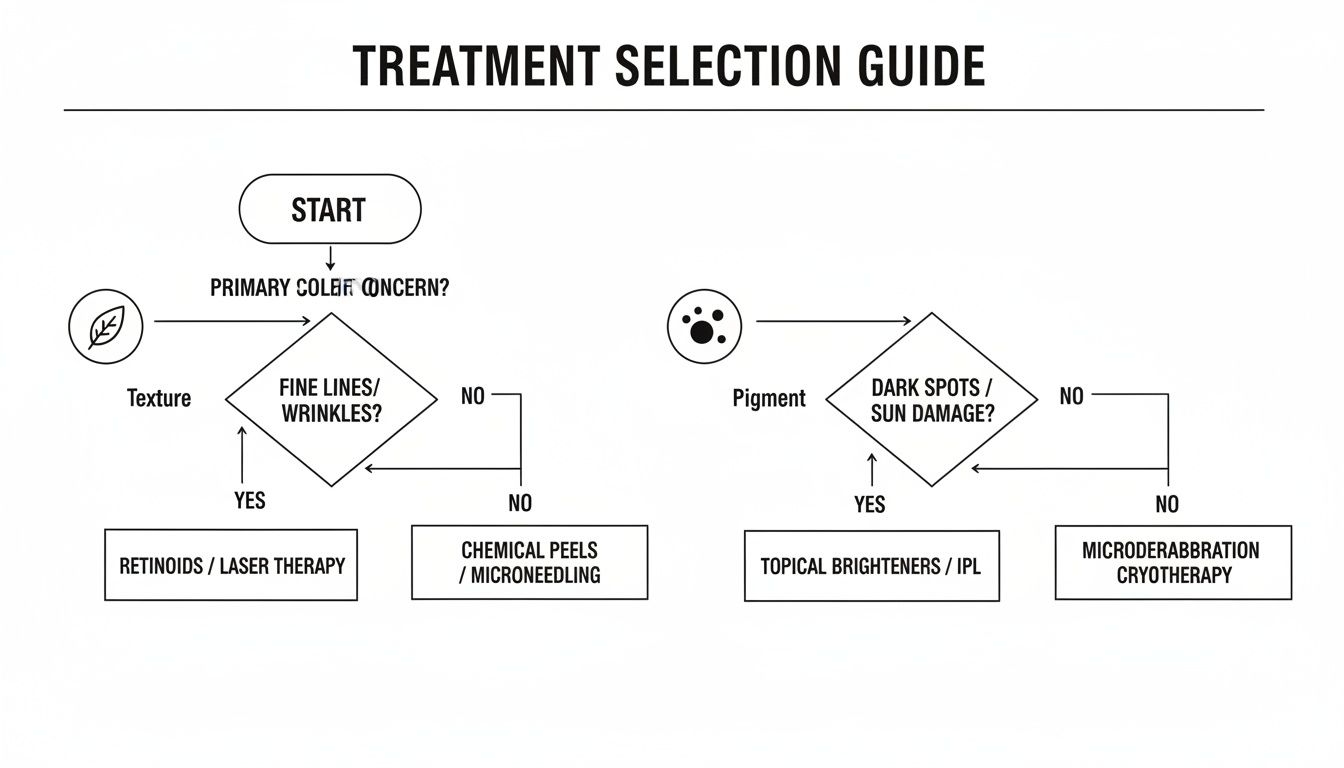
As you can see, your biggest frustration is the most important factor. It helps you invest your time and money into the treatment that’s actually designed to fix the problem you want to solve.
Think of Laser Genesis as a personal trainer for your skin. It’s the best choice when your goals are about improving overall quality, resilience, and texture. By gently heating the deeper layers of skin, it kickstarts long-term collagen production to build a healthier, stronger foundation from the inside out.
You should lean toward Laser Genesis if your main complaints are:
Real-World Example: A patient in her late 30s feels her skin looks "tired" and has lost its glow. Her primary issues are noticeable pores and a general lack of vibrancy, but she doesn't have a lot of distinct sun spots. For her, Laser Genesis is the clear winner.
IPL, on the other hand, is like a highly effective spot treatment for the entire face. It's a master of color correction, designed to seek out and destroy specific spots of pigment and redness sitting on the skin's surface. Think of it as an eraser for the marks left behind by the sun, genetics, and time.
IPL is your go-to treatment if you want to address:
One of the most important points in the Laser Genesis vs. IPL debate is safety for your skin tone. This is non-negotiable.
Laser Genesis uses a 1064nm wavelength that is incredibly safe for darker skin tones (Fitzpatrick types IV-VI). Its energy bypasses the melanin in the top layer of your skin, significantly reducing the risk of causing hyperpigmentation.
IPL uses a broad spectrum of light that is absorbed by all pigment, including the natural melanin in your skin. This makes it a much riskier choice for darker complexions, as it can trigger unwanted light or dark spots. Because of this, we almost always recommend IPL for those with lighter skin tones (Fitzpatrick I-III).
Ultimately, making the final call is a team effort. While this guide gives you a solid foundation, nothing replaces a one-on-one consultation where we can look at your skin up close. Here at Cape Cod Plastic Surgery, our experts will assess your unique needs and goals to map out a personalized plan.
Schedule your consultation with us today to discover the perfect path to your best skin ever.
Even with all the details, you probably have a few questions floating around. That’s a good thing. Deciding on the right path for your skin is a big deal, and feeling confident in your choice comes from being fully informed. Let's tackle some of the most common questions we hear from patients trying to choose between Laser Genesis and IPL.
We’ll get into the practical stuff—like combining treatments, tackling acne, and what to expect long-term. Think of this as the final conversation to clear up any lingering doubts before you move forward.
Absolutely. In fact, combining them is often how we get the most dramatic, comprehensive results. A seasoned practitioner can create a plan that plays to the unique strengths of each technology.
For example, we might start with a few IPL sessions to tackle the obvious stuff first—like distinct sun spots and visible broken capillaries. This first step is all about clearing the canvas and evening out your skin tone. Once that surface-level discoloration is gone, we can switch gears to Laser Genesis to work on a deeper level, building new collagen, refining texture, shrinking pores, and giving your skin that incredible, healthy glow. We always schedule these appointments weeks apart, giving your skin the time it needs to heal and respond. It's a strategic one-two punch for targeting both color and quality.
Expert Insight: Combining treatments lets you have the best of both worlds. We use IPL to fix the pigment and Laser Genesis to rebuild the structure. Together, they achieve a level of rejuvenation that neither can manage on its own.
When it comes to active acne and the scarring it leaves behind, Laser Genesis is almost always the better choice. It works in two key ways. First, the gentle, penetrating heat from the 1064nm laser calms inflammation and can help kill the P. acnes bacteria that causes breakouts in the first place.
Second, and maybe more importantly, Laser Genesis is a powerhouse for stimulating collagen. This is exactly what you need to improve the texture of atrophic scars—those little pits and indents. Over a series of treatments, it helps your skin rebuild from the inside out, gradually smoothing the surface and making those old scars much less noticeable.
IPL, on the other hand, is really for the aftermath of a breakout. It’s fantastic for zapping the red marks (post-inflammatory erythema) or brown spots (post-inflammatory hyperpigmentation) left behind, but it doesn’t do much for active pimples or textural scarring.
How long your results stick around really comes down to your lifestyle and aftercare, but the treatments themselves offer different kinds of longevity.
Laser Genesis: The new collagen your skin builds after a Laser Genesis treatment is yours to keep. The catch? The clock keeps ticking, and the natural aging process continues. To stay ahead of ongoing collagen loss and maintain that smooth, firm skin, most of our patients pop in for a single maintenance session every 6 to 12 months.
IPL (Intense Pulsed Light): Once IPL gets rid of a specific brown spot or tiny vessel, it’s gone for good. The problem is that your skin is fully capable of making new ones. This makes daily use of a broad-spectrum sunscreen with an SPF of 30 or higher completely non-negotiable. If you skimp on sun protection, new spots will show up, and you’ll be right back where you started.
The actual feeling of the treatment is one of the biggest differences between Laser Genesis and IPL. Patients describe them in completely different ways.
Laser Genesis is what I’d call genuinely comfortable. Most people say it feels like warm sunlight on their face—it's actually pretty relaxing. There’s no sting or zap, which is why we don’t need any numbing cream and why it's famously called a "lunchtime facial."
IPL is a bit more intense. We apply a cooling gel to your skin first, but each pulse of light feels like a quick, hot snap, kind of like a rubber band flicking your skin. It’s over in a flash and most people handle it just fine, but it’s definitely more jarring than the gentle warmth of Laser Genesis. For sensitive spots, we can always apply a topical anesthetic beforehand to make sure you’re comfortable.
Ready to stop wondering and get real answers for your skin? Our team at Cape Cod Plastic Surgery is here to give you a personalized assessment and map out a treatment plan that truly fits your goals.
Schedule your expert consultation at ccplasticsurgery.com and start your journey to radiant, healthier skin today.
October 6, 2026
Your Safety Guide: What to Look for When Choosing a Plastic Surgeon
October 5, 2026
Why Our On-Site Accredited Facility Matters for Your Safety
October 2, 2026
Beyond the Calendar: How to Know You’re Truly Ready for Plastic Surgery

Cape Cod Plastic Surgery offers expert cosmetic and reconstructive procedures in a safe, accredited setting. Led by Dr. Marc Fater, we combine advanced techniques with personalized care to help you look and feel your best.
Monday: 9:00 AM – 5:00 PM
Tuesday: 9:00 AM – 5:00 PM
Wednesday: 9:00 AM – 5:00 PM
Thursday: 9:00 AM – 5:00 PM
Friday: 9:00 AM – 5:00 PM