
September 9, 2026
How to Care for Surgical Incisions Properly
Expert Guide to Proper Surgical Incision Care
Feb 7, 2026

When you're thinking about using Botox to soften the fine lines around your eyes, one of the first questions that comes to mind is, "How much will I need?" For crow's feet, a typical starting point is 10 to 20 units per eye, but the exact amount is always fine-tuned to your specific facial anatomy and what you hope to achieve.
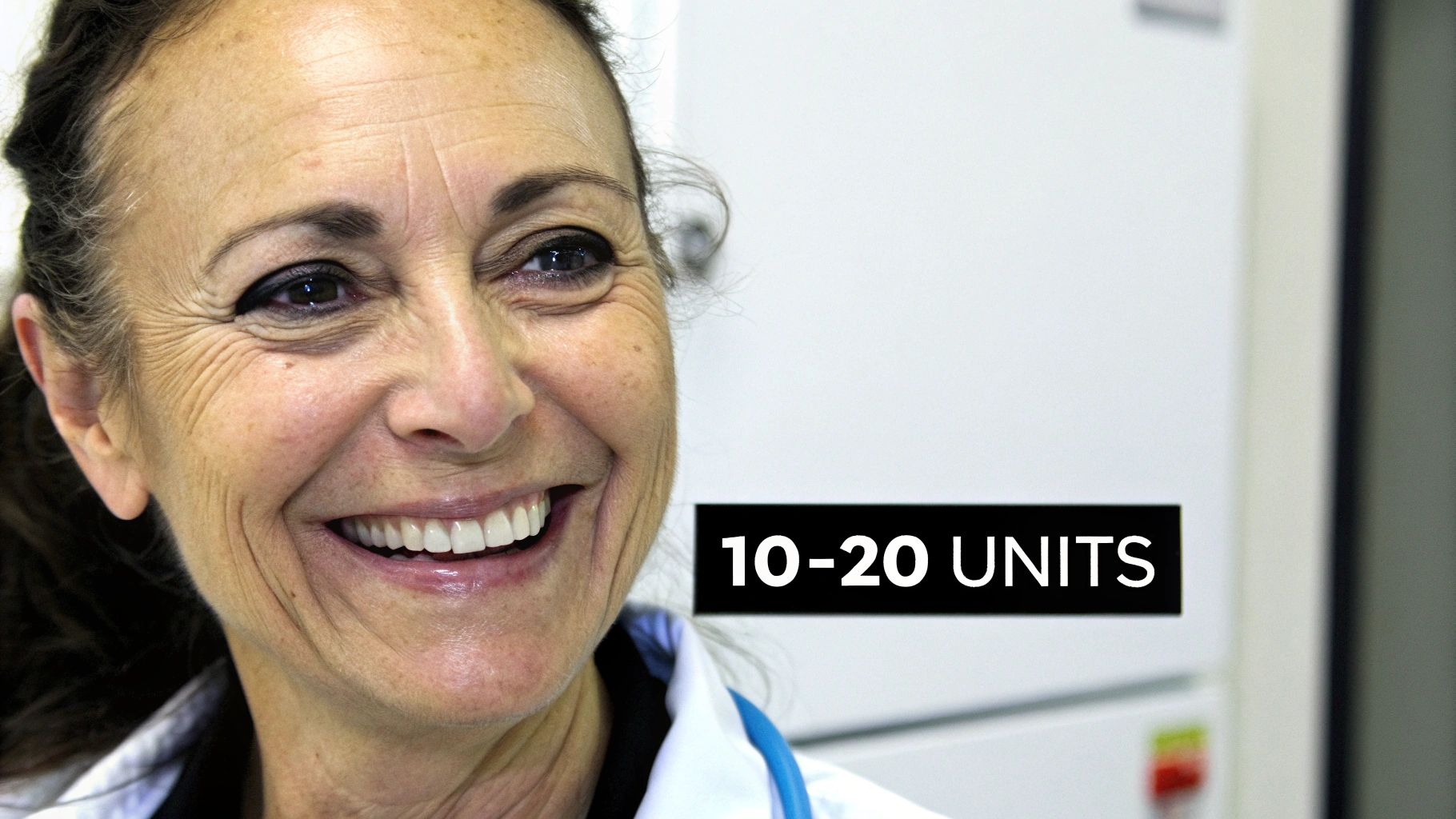
Those fan-like wrinkles that appear at the corners of your eyes when you laugh or smile have a name: crow's feet, or more technically, lateral canthal lines. They’re a perfect example of what we call dynamic wrinkles—lines that are etched into the skin from years of repeated muscle movements.
The muscle doing the work here is the orbicularis oculi, a circular muscle that encircles your eye. Every time you squint at the sun, laugh with a friend, or smile for a photo, this muscle contracts and crinkles the delicate skin around it. Over time, as our skin naturally loses some of its bounce-back ability, those temporary expression lines start to stick around for good.
That's where Botox steps in. It works by gently relaxing the orbicularis oculi muscle, preventing it from making those strong, wrinkle-forming contractions. The skin on top lays flatter and smoother, which dramatically reduces the appearance of crow's feet and gives you a wonderfully refreshed look.
To give you a quick reference, here's a summary of what a typical crow's feet treatment looks like.
Remember, these are just guidelines. Your treatment will be tailored specifically for you.
While the 10-20 unit range is a great starting point, a one-size-fits-all approach just doesn't work for achieving beautiful, natural results. An experienced injector like Dr. Marc Fater at Cape Cod Plastic Surgery will look at several key factors before deciding on the perfect dose for you.
Things like the natural strength of your muscles, the depth of the lines, and your personal aesthetic goals all play a role. The goal is always to create a plan that softens lines without freezing your expressions. A subtle, expert touch makes all the difference.
For a clearer picture of what that looks like, feel free to browse our gallery of Botox before and after photos.
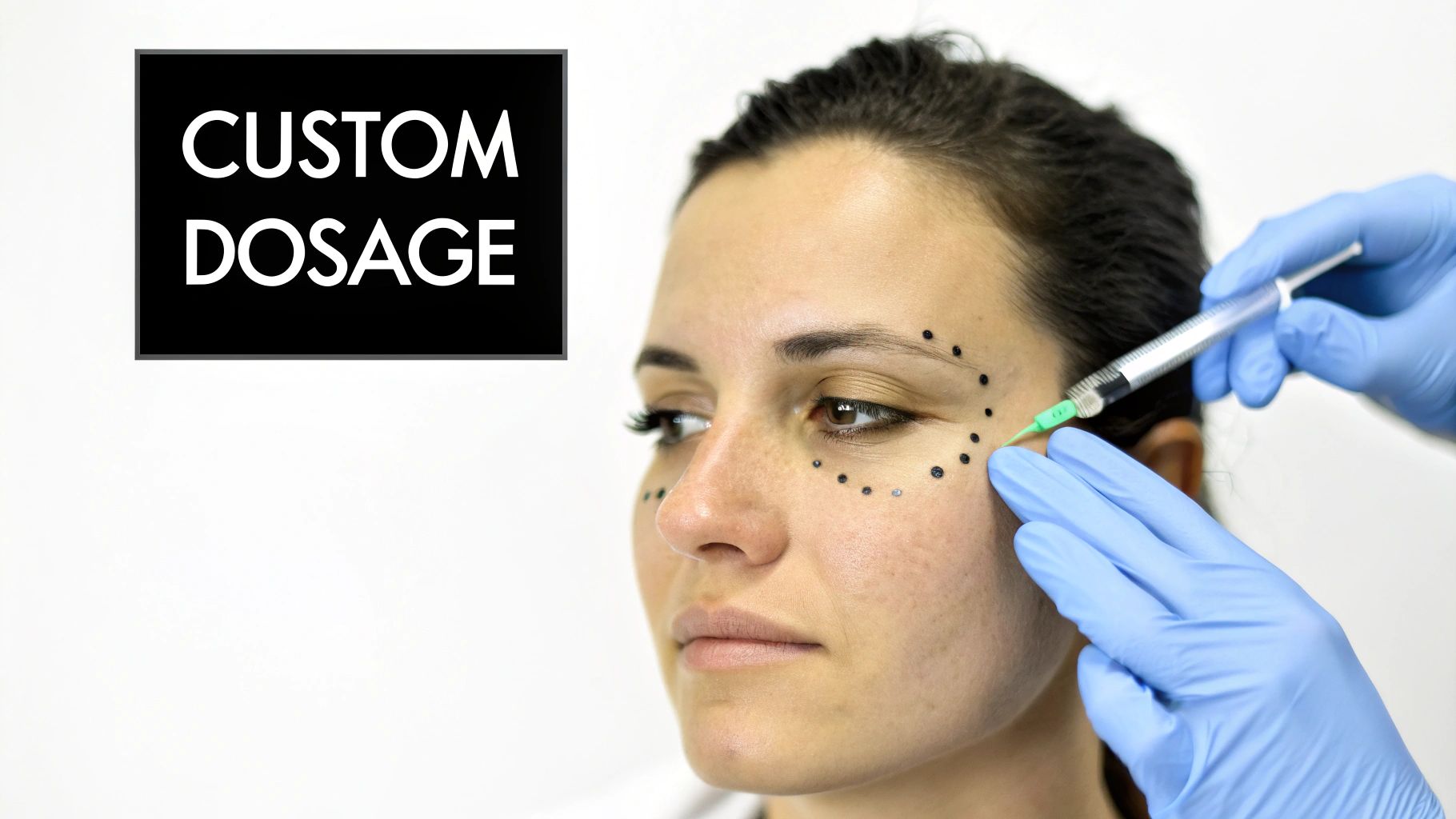
Think of Botox dosage like getting a suit custom-tailored versus buying one off the rack. Sure, the standard size might technically fit, but the one made just for you looks and feels infinitely better. It's built for your specific frame. The very same idea applies to getting beautiful, natural-looking results with Botox for crow's feet.
A "standard" dose is really just a starting point—a guideline, not a hard-and-fast rule. A seasoned injector knows your facial muscles have their own unique map and that a one-size-fits-all approach just won't cut it. They take the time to assess several key factors during your consultation to figure out the exact number of Botox units for your crow's feet.
This personalized strategy is what makes the difference between an okay result and an exceptional one. It’s how you get that refreshed, authentic look without ever looking "frozen."
The final number of units we use comes from a careful look at your unique anatomy and what you want to achieve. An experienced provider isn't just injecting; they're analyzing how your muscles move, the quality of your skin, and your personal aesthetic goals.
Here’s what we're looking at:
Your goals are the most important part of this conversation. Do you want a subtle softening or a more dramatic smoothing? We'll adjust the number of Botox units for crow's feet to perfectly match your vision.
At the end of the day, figuring out the right dosage is both a science and an art. It requires a deep, clinical understanding of facial anatomy, but it also takes an artist's eye to create balance and harmony.
This is exactly why a thorough consultation is so critical. It’s our chance to sit down and create a treatment plan that truly honors your unique features. The goal is never to erase your expressions, but to gently soften the signs of aging so you just look like the best possible version of yourself.
Walking into your first Botox appointment can feel like a big step, but the actual process for treating crow's feet is surprisingly quick and simple. It all starts with a good conversation.
During your consultation, we'll talk about what you're hoping to achieve. Are you looking for a subtle softening of those lines, or a more dramatic smoothing effect? This is the time to ask questions and share your goals so we can get on the same page.
To create the right plan for you, I'll need to see how your face moves. I’ll ask you to smile big, laugh, and squint—this shows me exactly how the muscle around your eye (the orbicularis oculi) works and creates your specific pattern of lines. This observation is key to mapping out the injections for a result that looks completely natural.
Once we have a plan, the treatment itself is fast. Seriously, it's often done in less than 15 minutes. While the thought of needles near your eyes might sound a bit unnerving, most people just feel a tiny, quick pinch. A skilled injector knows how to make the process as comfortable as possible.
The procedure isn't just about injecting Botox; it's about placing it with artistry and precision.
This careful approach ensures the muscle relaxes evenly, avoiding that "frozen" look. It’s all about looking refreshed and well-rested, not different.
From a clinical standpoint, the standard dose for treating crow's feet is typically 10 to 20 units per eye. These units are distributed across 3-5 injection sites along the outer orbital rim. This specific protocol has been refined over years to provide consistent, effective results while minimizing side effects. In fact, studies consistently show patient satisfaction rates over 80% for wrinkle reduction at these doses. For a deeper dive into the data, you can check out these market insights on botulinum toxin.
Knowing what happens step-by-step often helps take the mystery out of the process. It's a quick, meticulously planned procedure designed to give you a boost of confidence with virtually no downtime.
When it comes to smoothing out wrinkles, most people think of one name: Botox. It’s so common that the brand name has become a catch-all term, sort of like calling all tissues "Kleenex." But the truth is, Botox is just one of several fantastic FDA-approved products available to treat crow's feet. Two other major players you should know about are Dysport and Xeomin.
At their core, all three work on the same principle. They are all forms of purified botulinum toxin type A that temporarily relax the muscle responsible for creating wrinkles—in this case, the orbicularis oculi muscle around your eyes.
But here’s the key thing to understand: they aren't one-size-fits-all. Each has a unique formulation that can affect how quickly you see results, how it spreads under the skin, and how it’s dosed. This is where a skilled injector’s expertise really comes into play. They'll help you choose the best fit based on your specific facial anatomy and desired outcome.
Making the right choice is a collaborative decision between you and your provider. They’ll consider a few key factors to tailor your treatment perfectly.
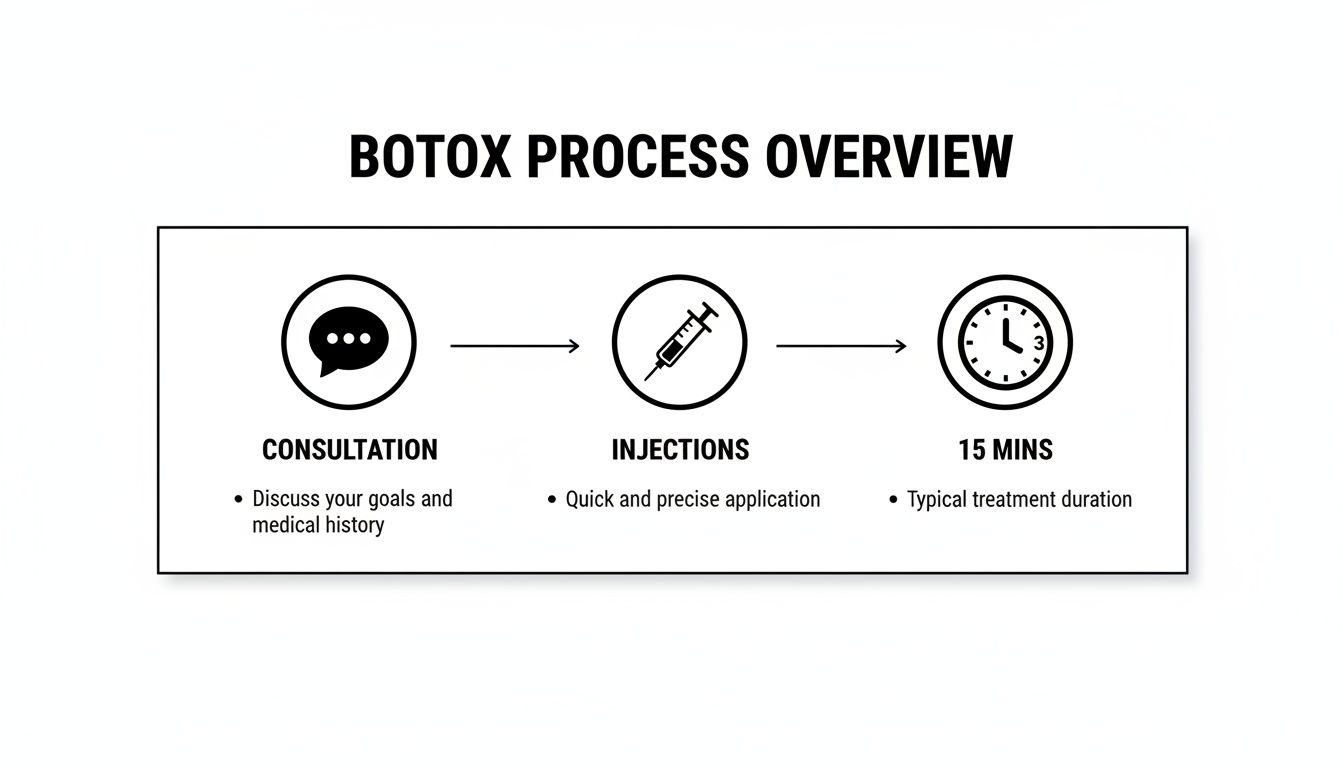
Regardless of the product you choose, the treatment itself is quick and straightforward. The entire appointment, including a chat with your injector and the injections, is usually over in about 15 minutes.
To make it easier to see the differences, here’s a simple table comparing the three most popular neuromodulators for crow's feet.
Ultimately, there isn't one "best" product—only the best product for you. Your injector at Cape Cod Plastic Surgery will assess your muscle movement, skin quality, and treatment history to recommend the neuromodulator that will give you the most natural and beautiful results.
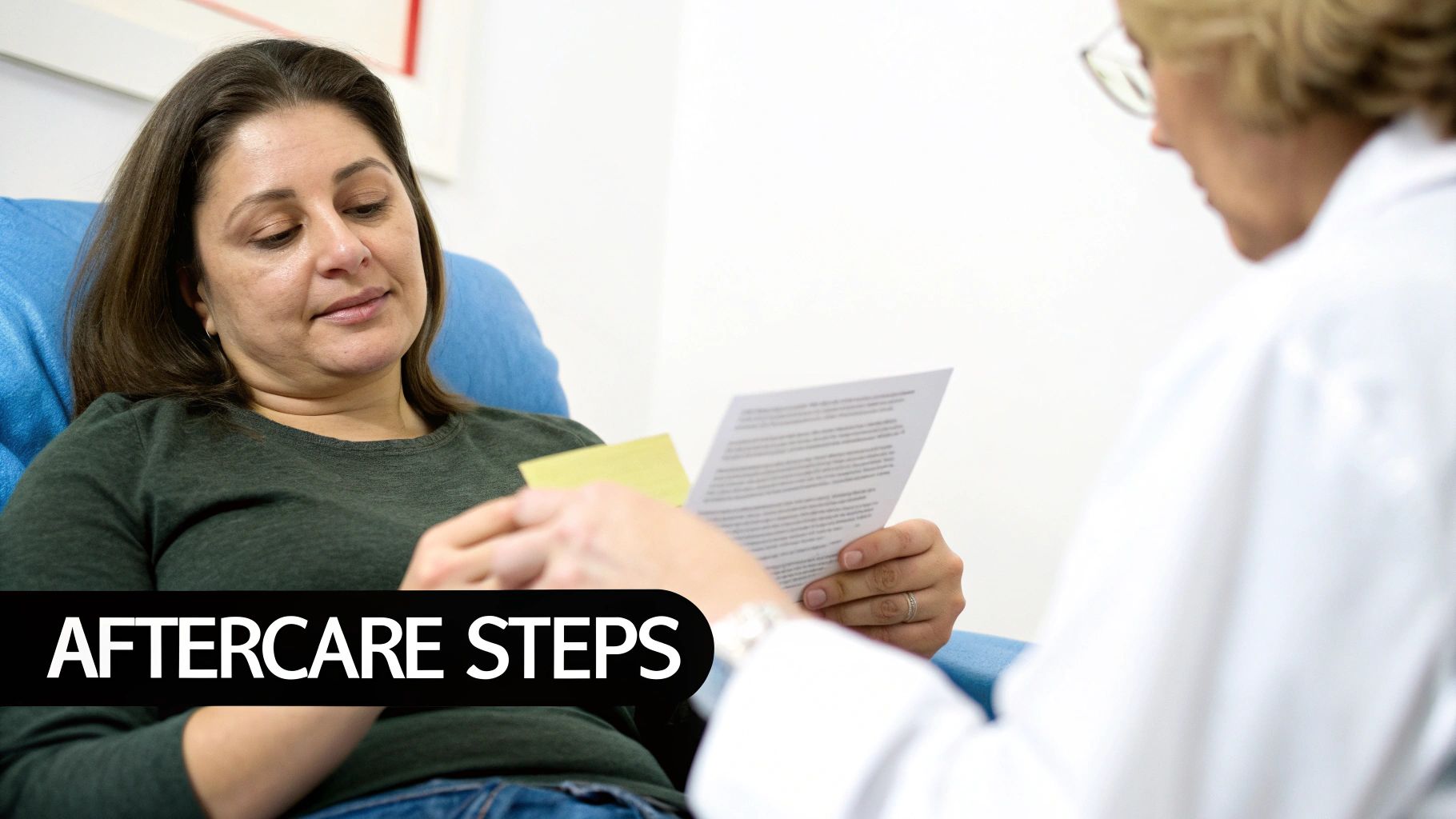
So, you’ve had your treatment—what happens now? Knowing what to expect is key to a great experience, and the good news is that the recovery process for crow's feet Botox is incredibly simple. You can get right back to your day with just a few small adjustments.
Immediately after your appointment, you’re free to resume most of your normal routine. We just have a handful of simple aftercare guidelines to ensure the product settles in perfectly and gives you the best possible result.
To get the most out of the Botox units for your crow's feet, we always advise our patients to follow these straightforward rules for the first few hours:
Following these tips is the best way to ensure the Botox works its magic on the specific muscles we targeted, leading to a fantastic, wrinkle-smoothing outcome.
One of the most common questions we get is, "When will I see the results?" It’s important to remember that Botox doesn’t work instantly; the effect unfolds gradually over the next few days.
While some people start noticing a change within 3-5 days, the final, smoothed-out result really shines through at about the two-week mark. This is when the muscles have fully relaxed, and the skin around your eyes looks its most refreshed and smooth.
It’s completely normal to see a little bit of redness or some tiny bruises at the injection sites. These are temporary and usually disappear within a few days. If you'd like, they can easily be covered with a bit of makeup.
Our goal is always a natural, rested look that you’ll love. You can expect your results to last for about 3 to 4 months. If you want a deeper dive into the timeline, check out our guide on how long it takes for Botox to kick in.
Let's talk about the cost of treating crow's feet with Botox. The pricing is actually quite simple: it’s the total number of Botox units for your crow's feet multiplied by the cost per unit. This means you're not paying a flat fee, but rather for a treatment that's customized specifically for you.
While it's always good to be mindful of your budget, choosing an injector based on the lowest price can be a serious mistake. A rock-bottom price might signal inexperience, a diluted product, or subpar safety standards. When it's your face, you want to prioritize quality and expertise above all else.
It helps to think of this as an investment in yourself. You aren't just buying the product; you're investing in the skill, advanced training, and artistic eye of your injector. At a place like Cape Cod Plastic Surgery, you’re paying for a board-certified professional in an accredited facility who puts your safety first and delivers the beautiful, natural-looking results you want.
A typical session for both eyes can range from $240 to $960. This is a fraction of what surgical options cost, making it a much more accessible way to maintain a refreshed look. This trend is part of a larger shift towards preventive aesthetics, where small, regular investments yield long-lasting results. You can read more about these trends in the botulinum toxin market report.
Ultimately, the number of Botox units for crow's feet is just one piece of the puzzle. The total cost covers everything—from the initial consultation and personalized treatment plan to the peace of mind that comes from knowing you're in truly expert hands.
For a more detailed explanation of pricing factors, you might be interested in our guide on how much Botox costs.
When you're considering a treatment like Botox for crow's feet, it's natural to have a few questions. We get it. Let’s walk through some of the most common ones so you can feel completely comfortable with the process.
A big one we hear all the time is, "Will I look frozen?" With an experienced injector, absolutely not. The real goal is to gently soften those lines, not to immobilize your expressions. It's less like an on/off switch and more like a dimmer, subtly dialing down the muscle activity.
A carefully placed, conservative dose of botox units for crow's feet is the key. It ensures you look rested and refreshed, but still completely like you when you smile.
This is a great question, and the answer for many people is yes. Starting "preventative Botox" in your late 20s or early 30s is becoming increasingly popular. The idea is simple: use smaller, targeted doses to relax the muscles responsible for creasing before those lines have a chance to etch themselves permanently into your skin.
By keeping the skin from folding over and over in the same spot, you can keep the area smoother for much longer. It can even mean you’ll need less product down the road. We can figure out if this proactive approach makes sense for you during a consultation.
What Happens if I Stop Getting Botox Treatments?
If you ever decide to stop, it's no big deal. Your muscles will just gradually go back to their old habits, and the lines will slowly return to how they were before you started. Botox doesn't make wrinkles worse if you discontinue it; your skin simply picks up its natural aging process right where it left off.
Remember, injectables are just one part of the equation. Taking great care of the delicate skin around your eyes is just as important. For some fantastic tips on making the most of your topical products, check out this guide on how to apply eye cream properly.
Ready to see how a treatment plan designed just for you can brighten your look? The team at Cape Cod Plastic Surgery is here to guide you, answer every question, and help you reach your goals. Book your consultation today.
September 9, 2026
Expert Guide to Proper Surgical Incision Care
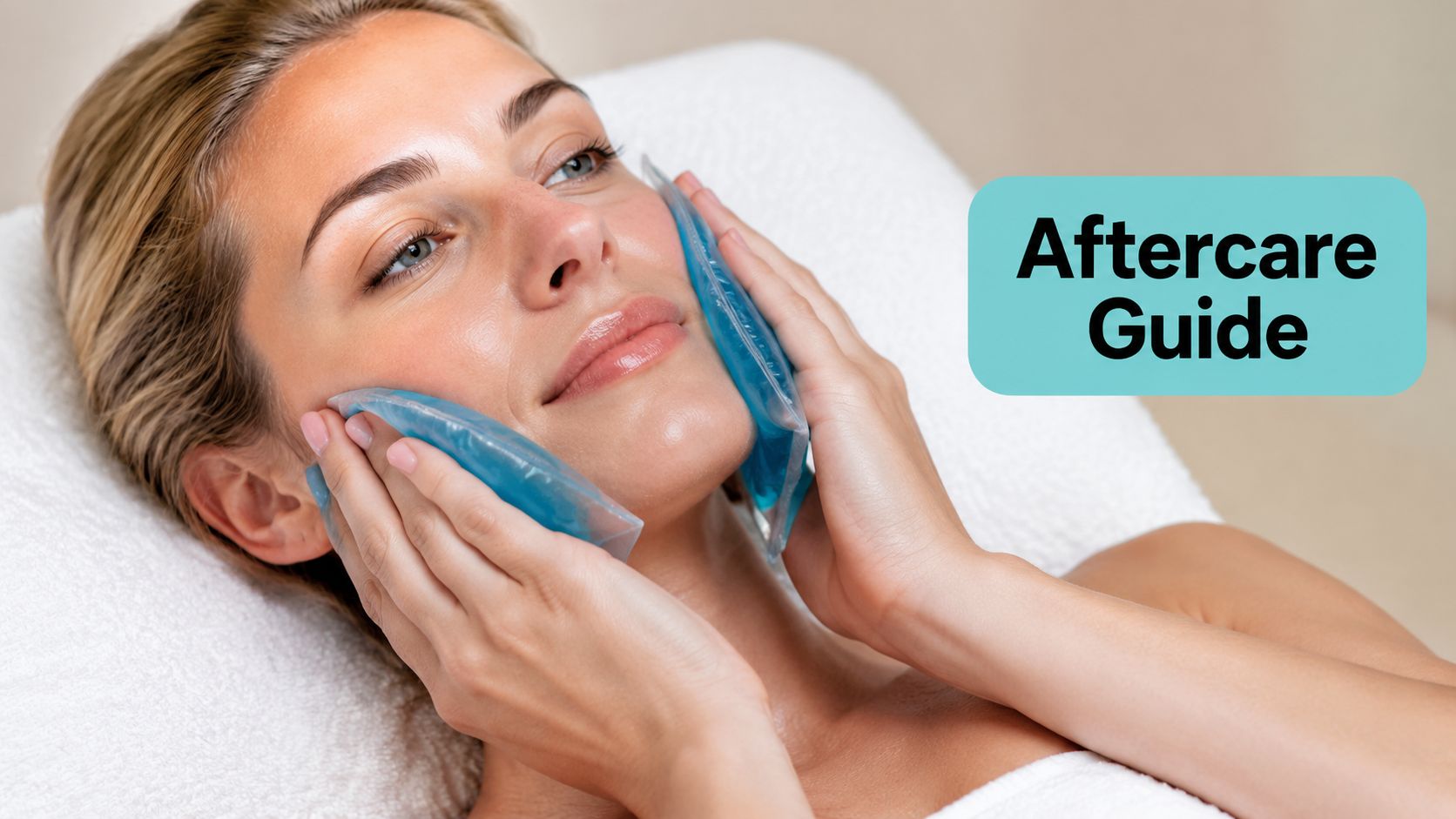
Master dermal fillers aftercare with do's and don'ts, swelling tips, activity limits and warning signs to protect your results and heal smoothly.

September 8, 2026
Ensuring Safety: Why Your Surgeon's Credentials Matter Most

Cape Cod Plastic Surgery offers expert cosmetic and reconstructive procedures in a safe, accredited setting. Led by Dr. Marc Fater, we combine advanced techniques with personalized care to help you look and feel your best.
Monday: 9:00 AM – 5:00 PM
Tuesday: 9:00 AM – 5:00 PM
Wednesday: 9:00 AM – 5:00 PM
Thursday: 9:00 AM – 5:00 PM
Friday: 9:00 AM – 5:00 PM