

October 5, 2026
The Value of an On Site Accredited Facility
Why Our On-Site Accredited Facility Matters for Your Safety
Dec 22, 2025

Yes, a chemical peel for dark circles can be incredibly effective, but it’s crucial to understand what kind of dark circles it can fix. If your under-eye circles are due to hyperpigmentation—that brownish tint from excess melanin—a peel can make a world of difference.
Think of it like delicately lifting a stain from a fine piece of silk. The peel works on the surface, removing the discolored top layers of skin to reveal the brighter, more evenly toned skin underneath. It’s a targeted solution that succeeds where so many under-eye creams just can't.
Dark circles are a notoriously stubborn problem. They’re one of the most common cosmetic complaints we hear, and they have a knack for making you look exhausted, no matter how much sleep you get. While countless products promise a quick fix, they often fall short because they don't tackle the real issue.
For a lot of people, the problem isn't just about being tired; it's hyperpigmentation. This is where your skin produces too much melanin, creating that persistent brown or gray shadow under the eyes.
This is exactly where a professional chemical peel for dark circles comes into play. Unlike creams that just sit on the skin's surface, a carefully chosen peel gets to work by speeding up your skin’s natural exfoliation process. It uses gentle acids to break down the "glue" holding those old, pigmented skin cells together, effectively clearing away the discoloration one layer at a time.

At its core, the process is all about controlled skin renewal. By whisking away that dull, outer layer, the treatment sends a signal to your body to kickstart the production of fresh, new skin cells. This not only lightens the existing pigment but also helps improve skin texture and can even trigger a subtle collagen boost over the course of your treatments.
That collagen boost is a fantastic secondary benefit. As your skin produces more of its own natural scaffolding, the delicate under-eye area can become a bit thicker and more resilient. This added thickness helps conceal the underlying blood vessels that often contribute to the shadowy look of dark circles, especially when skin is thin.
The goal of an under-eye peel isn't aggressive peeling but rather a gentle, progressive lightening. It’s a marathon, not a sprint, with each session building upon the last to restore a natural, even skin tone.
To give you a clearer picture, here’s a quick rundown of what to expect when using chemical peels for dark circles.
The table below breaks down the most important details about this treatment.
Essentially, it's a gradual process, but for the right candidate, the results can be a game-changer.
To see why a chemical peel for dark circles can be so effective, we first have to get past the old myth that they’re just a sign you're tired. While a bad night's sleep can definitely make them look worse, the real reasons are usually more complicated and fall into one of three buckets. Figuring out which one is causing yours is the first step toward getting the right treatment.
Think of the skin under your eyes as a canvas. A chemical peel is like a professional art restorer—fantastic at removing a surface stain. What it can't do is change the canvas's texture or fill in a dip that's casting a shadow. This little analogy is a great way to set realistic expectations for what this treatment can really do for you.
The most common cause of true dark circles is hyperpigmentation. This is simply an overproduction of melanin that creates a brown or grayish tint under the eyes. This is the "stain" on our canvas. It can be something you're born with (thanks, genetics!), a result of too much sun, or even from chronic inflammation caused by allergies—what we often call "allergic shiners."
When pigmentation is the issue, a chemical peel is a perfect match. It works by gently lifting away the outermost layers of skin where all that excess pigment is sitting, revealing the brighter, more evenly toned skin just below.
Sometimes, the darkness you see isn't from pigment at all. Instead, it's the blood vessels showing right through the very thin skin under your eyes. This usually shows up as a bluish or purplish color. As we get older, our skin naturally loses some of its collagen and fat, making this delicate area even more see-through.
This is one area where peels have their limits. While they can help thicken the skin a tiny bit over time by kickstarting collagen production, they can't directly hide the blood vessels. If you're curious about other factors, it's interesting to read about how ingredients like caffeine target dark circles and puffiness.
The third cause has nothing to do with skin color and everything to do with anatomy. A natural hollowing under the eye, often called a "tear trough," can create a shadow that looks just like a dark circle. This is the "valley" in our canvas analogy. It’s all about the shape of your facial bones and how the fat pads are arranged, which can shift as you age.
Here's a quick test you can do at home. Gently stretch the skin under your eye. If the darkness gets lighter or seems to move, it’s probably caused by thin skin or a shadow. If the color doesn’t budge, it's almost certainly pigmentation.
It's clear that chemical peels really shine when it comes to treating pigmentation, and the science backs this up. They have become a go-to treatment for periorbital hyperpigmentation, with clinical studies showing some seriously impressive results. A major review of 33 different studies involving 1320 patients found that peels on their own led to good or excellent improvement in 63% of cases. Another study found that over 90% of participants saw improvement using a specific blend of acids. You can dive into the full analysis of chemical peels for periorbital hyperpigmentation on Wiley Online Library.
The phrase "chemical peel for dark circles" can sound a bit intense, especially for the delicate skin around your eyes. But the reality is far more of a gentle persuasion than a forceful stripping. Think of it less as a "peel" and more as a controlled, highly specific refresh that works with your skin's own renewal cycle.
The whole idea is based on a process called controlled exfoliation. Let's use an analogy: imagine you have a beautiful piece of silver that's become tarnished over time. You wouldn't take sandpaper to it. Instead, you'd use a special polishing cream to gently dissolve the dull outer layer, revealing the bright, gleaming metal underneath. A superficial chemical peel for the under-eye area works on the exact same principle.
The very mild acid solution we use is like that specialized polish. It’s carefully applied to the skin, where it works to loosen the microscopic bonds holding onto old, dead, and pigmented skin cells. These are the very cells that often contribute to that stubborn brownish tint of dark circles.
Once those bonds are broken, the dull, discolored cells can easily be shed away. This is something your skin does naturally, but a peel encourages the process to happen more efficiently. This one simple step achieves two very important things:
This chart breaks down the different reasons for dark circles, which really helps clarify why a peel is the perfect tool for pigmentation issues.
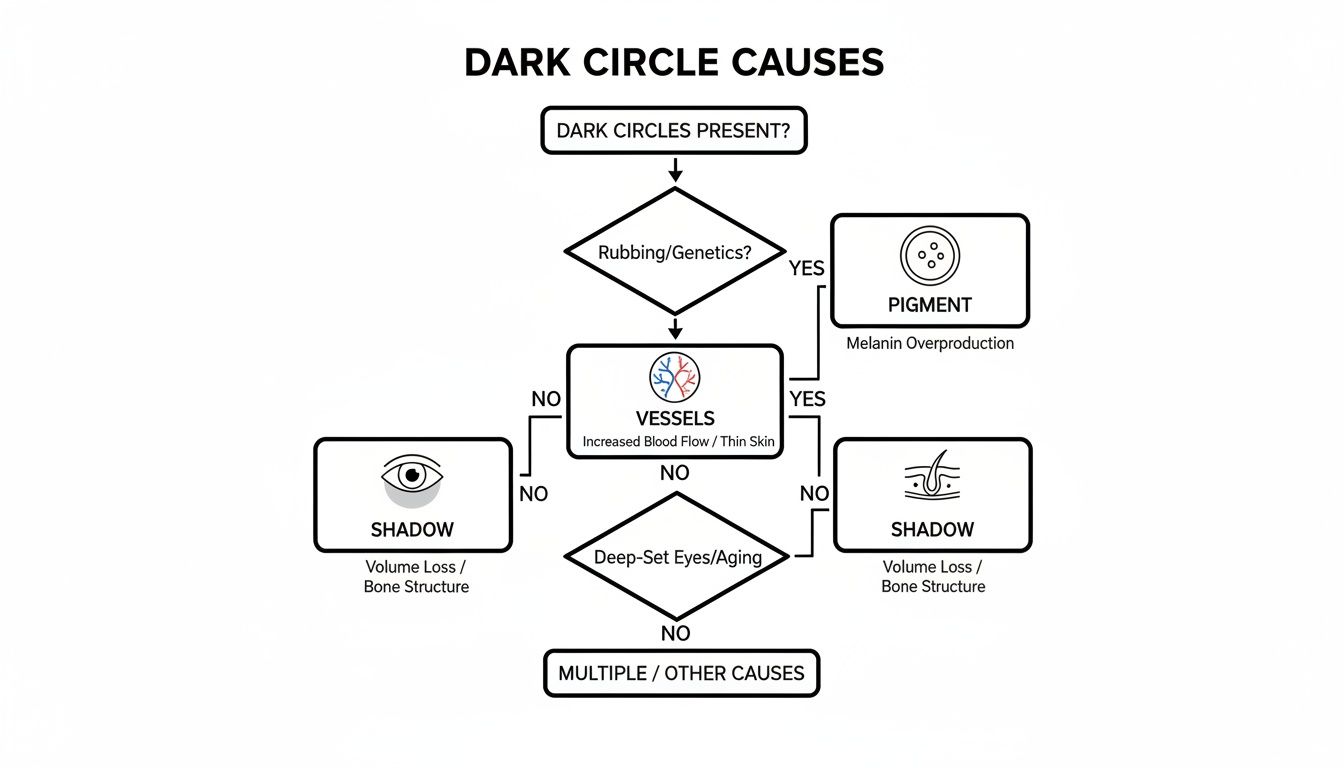
As you can see, peels are designed to zero in on the "pigment" problem. Circles caused by shadows from volume loss or visible blood vessels need entirely different solutions, like fillers or lasers.
But the benefits don't stop there. A chemical peel does more than just fade discoloration; it also gives your skin’s overall health and structure a subtle boost, making it stronger and more resilient down the road.
This gentle "workout" actually stimulates a low-level collagen response. As you probably know, collagen is the essential protein that gives your skin its bounce and firmness. Over a series of treatments, this slight increase in collagen can help thicken the notoriously thin under-eye skin.
Why does that matter? Thicker, healthier skin acts as a better shield, helping to mask the underlying blood vessels that can create a bluish or purple hue. So, while the peel’s main job is to tackle pigment, its bonus benefit is building a stronger foundation.
This two-pronged attack—clearing away old damage while promoting new, healthier skin—is what makes this treatment so effective for the right person. For a broader look at how peels work for different concerns and areas, you can check out our guide on what chemical peels do and who they're for.
The results are gradual, with each session building on the last. You won't see dramatic flaking, but rather a progressive brightening and a smoother texture that looks completely natural. While we’re focused on peels here, it’s also interesting to see how other modern approaches work, and you can learn about red light therapy uses for skin health for a wider perspective on skin rejuvenation.
Ultimately, our goal is to restore that clear, vibrant look to the eye area, helping you look as rested on the outside as you feel on the inside.
When it comes to treating dark circles with a chemical peel, the first and most important thing to know is that you can't use just any peel. The skin under your eyes is the thinnest on your entire body, making it incredibly delicate. This isn't the place for aggressive treatments—precision and a gentle touch are everything.
Think of it like choosing the right tool for a delicate job. You wouldn't use a sledgehammer to fix a wristwatch. Similarly, addressing under-eye pigmentation demands specialized, gentle acids that get the job done without causing irritation or damage. That’s why only superficial peels are ever used in this area.
The term "superficial" simply means these peels work on the very top layer of skin, the epidermis. They’re designed for a gentle, controlled exfoliation that gradually lifts away pigment without overwhelming the fragile skin underneath.
Let's look at the most common and effective options you and your practitioner will likely discuss. Each one has its own unique personality, making it suitable for different skin needs.
When we talk about "superficial peels" for the under-eyes, we're really talking about a few specific types of gentle acids. Each one works a little differently, and the best choice depends entirely on your skin type, sensitivity, and the nature of your dark circles.
Below is a quick comparison of the acids we trust most for this delicate work.
As you can see, there’s no single "best" peel—only the best peel for you. An experienced practitioner will carefully assess your skin to make the right recommendation.
Glycolic Acid (Low Strength): This is often called the workhorse of alpha-hydroxy acids (AHAs) because its small molecular size lets it get into the skin effectively. It's fantastic at breaking up pigment and encouraging fresh, new cells to come to the surface. For the under-eye area, we only use very low, carefully controlled concentrations.
Lactic Acid: Another AHA, lactic acid is known for being gentler and more hydrating than its cousin, glycolic acid. Its molecules are larger, so it doesn’t sink in as deeply or as quickly, making it an exceptionally safe choice for sensitive or dry under-eye skin. It exfoliates beautifully while helping the skin hold onto much-needed moisture.
Mandelic Acid: Derived from bitter almonds, mandelic acid is the gentle giant of the AHA family. Its large molecular structure means it penetrates the skin slowly and evenly, which dramatically reduces the risk of irritation. This makes it a go-to option for highly sensitive skin or for darker skin tones that can be more prone to post-treatment discoloration.
Low-Strength TCA Peels: Trichloroacetic acid (TCA) is a powerful acid usually reserved for medium-depth peels. However, in very low concentrations (around 7-10%), a skilled professional can use it to safely target stubborn under-eye pigment that hasn't responded to other treatments.
The key takeaway here is that the choice of acid is highly personalized. Your practitioner at Cape Cod Plastic Surgery will assess your specific type of dark circles, skin sensitivity, and overall skin tone to select the perfect agent for you.
A common question we get is whether lactic or glycolic acid is better for dark circles. While both are effective, recent studies suggest lactic acid often has a distinct advantage in this delicate area.
One head-to-head clinical trial found that a 30% lactic acid peel was more effective than a 20% glycolic acid peel for treating dark circles. The researchers noted that the lactic acid group not only saw better improvement but also experienced less post-treatment darkening, highlighting its superior safety profile. This makes perfect sense when you consider lactic acid’s hydrating properties, which help protect the fragile skin barrier. You can take a deeper look into these clinical findings regarding under-eye peels at IJORD.
While glycolic acid is a powerful tool, the gentler, hydrating nature of lactic acid often makes it the preferred starting point for the sensitive under-eye area, providing effective brightening with a lower risk of side effects.
This is especially true for anyone with easily irritated skin. If you have concerns about how your skin might react, our team is here to guide you. To learn more about gentle options, read our detailed guide on getting a chemical peel for sensitive skin. Your comfort and safety are our top priorities, and choosing the right acid is the first step toward achieving the bright, refreshed eyes you’re looking for.
Deciding to treat your dark circles with a chemical peel is a great step toward looking more rested and refreshed. But it's natural to have questions about what the process actually looks like. To put your mind at ease, let’s walk through the entire journey together, from the prep work at home to the final results.
Think of it like tending a garden. First, you prepare the soil, then you plant the seed, and finally, you nurture it as it grows. Each step is essential for a beautiful outcome.
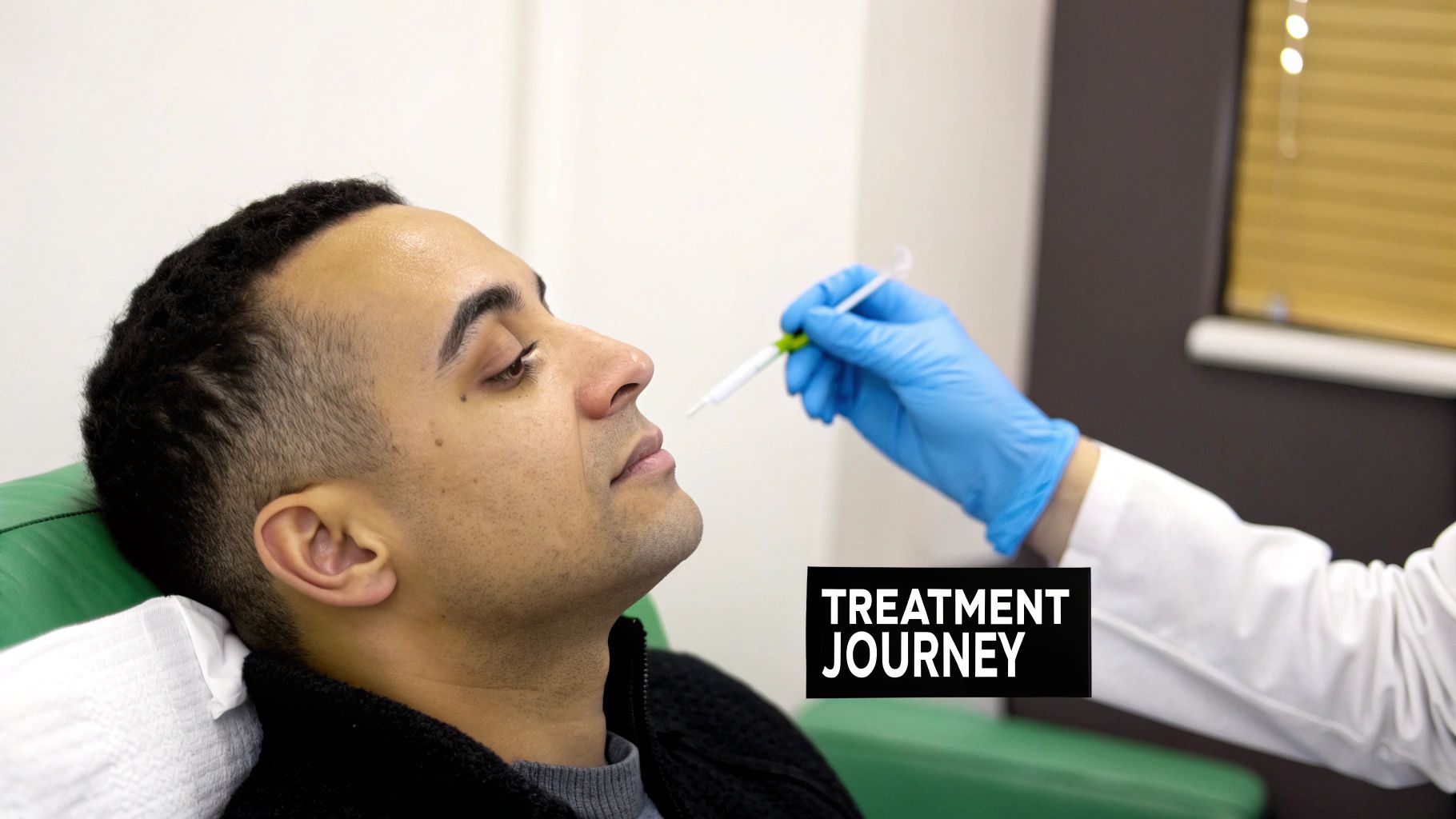
Great results don't start in the treatment room—they start at home. About two weeks before your appointment, we'll give you a simple pre-care routine. Following it is key to getting the best, safest outcome from your peel.
Your pre-treatment plan will likely involve a few key things:
Think of this as creating the perfect canvas. When your skin is properly prepped, the peel can work its magic much more effectively.
The day of your appointment is surprisingly quick and straightforward. The entire process usually takes only about 15-20 minutes. While the treatment isn't painful, you can expect to feel some distinct sensations as the solution gets to work.
Here’s a quick rundown of what happens:
And that's it! You can head out right after your appointment and get back to your day, armed with a few simple aftercare instructions.
The post-peel phase is where you become the most important part of the team. Following your aftercare instructions is crucial for protecting your healing skin and locking in those fantastic results.
Your skin is incredibly receptive right after a peel. Think of it as newly polished wood—it’s beautiful, but you need to protect it from sun and scratches to keep it looking its best.
Right after your peel, you might see some mild redness, almost like a light sunburn, which usually fades within hours. Over the next 2-5 days, you can expect some dryness and light flaking. It’s absolutely vital that you don't pick, pull, or scrub at this skin—just let it shed on its own timeline. Our detailed guide on TCA peel post-care has some excellent tips that are helpful for most types of peels.
Your number one job is sun protection. A mineral-based, broad-spectrum SPF 30+ sunscreen is non-negotiable, every single day. This is what stops the sun from creating new pigment and undoing all the good work from the peel. With each session, you'll start to see a gradual brightening and smoothing of your under-eye area, revealing a more vibrant you.
A chemical peel for dark circles is a fantastic tool, but like any specialized procedure, it delivers the best results when it’s the right tool for the job. Figuring out if it’s the perfect solution for you means we need to look deeper than just the dark circles themselves. We'll explore what’s causing them, your skin’s specific needs, and what the treatment process really involves.
First things first, the ideal candidate for an under-eye peel is someone whose dark circles are caused by hyperpigmentation. Here's a simple test: gently stretch the skin under your eye. If that brownish or grayish tint stays put, pigment is almost certainly the culprit. This treatment is designed to do one thing exceptionally well: lift and break down that excess melanin deposit.
Beyond the "why," your mindset is just as important. The best results are seen in patients who have realistic expectations. This isn't a one-and-done magic wand; it's a series of treatments that progressively lighten and brighten the area. And finally, a commitment to aftercare—especially daily, diligent sun protection—is completely non-negotiable. It’s how you protect your results and your investment.
So, how do you know if you're a strong candidate? You probably are if these points sound like you:
It’s just as crucial to know when this treatment isn’t the right move. Here at Cape Cod Plastic Surgery, your safety is everything. We will always guide you away from a chemical peel if certain red flags are present.
You should avoid an under-eye chemical peel if you have any of the following:
The only way to know for sure is through a one-on-one consultation. We'll review your medical history and carefully examine your skin to confirm if a chemical peel is a safe and effective path forward for you.
Treating dark circles on diverse skin tones isn’t a one-size-fits-all approach; it demands real expertise. A chemical peel for dark circles can work wonders for many, but we have to be particularly thoughtful with darker complexions (Fitzpatrick skin types IV-VI). Why? Because this skin has more active melanocytes—the cells that produce pigment.
This means the skin can be more reactive and has a higher risk of developing post-inflammatory hyperpigmentation (PIH). That’s a temporary darkening of the skin that can happen after an injury or inflammation if the treatment isn't handled correctly.
The good news is that this risk is dramatically reduced when you work with an experienced practitioner who truly understands the science of skin of color. We do this by selecting the right gentle acids, like Mandelic or Lactic acid, and carefully prepping the skin beforehand to ensure a beautiful, even-toned result without any unwanted side effects.
It's completely normal to have questions, even after you've learned the basics. When it comes to something as delicate as a chemical peel for your under-eyes, you deserve to feel completely confident and informed before moving forward.
Think of this section as our one-on-one chat, where we get into the practical details that are probably on your mind. From how many treatments you'll really need to what it actually feels like, we’ll cover the common questions we hear every day.
This is probably the number one question we get, and the short answer is: it’s a process. An under-eye peel isn't a one-and-done fix; it works progressively to give you the best, most lasting results.
For most people, a series of 3 to 6 treatments really hits the sweet spot. We space these appointments about 3 to 4 weeks apart. This rhythm is crucial—it gives your skin the perfect amount of time to heal, regenerate, and get ready for the next step, ensuring we lift that pigment safely without stressing the delicate skin.
The key here is patience. The brightening effect builds on itself, so each peel enhances the results of the one before it. It’s a cumulative journey toward a smoother, more even-toned look.
The word "peel" sounds a lot more intense than the actual experience. We're using very gentle, superficial peels that are specifically designed for the sensitive under-eye area, so comfort and safety are built right into the treatment.
Most of our patients don't use the word "painful" at all. What you'll likely feel is a mild tingling, itching, or a bit of a warming sensation while the solution is on your skin. This only lasts for a few minutes, and as soon as we neutralize the peel, that feeling is gone. We then apply a soothing cream to calm everything down.
Our goal is a controlled, comfortable refresh, not an aggressive procedure. The sensation should always be manageable, and if you ever feel more than a slight tingle, we can stop the process instantly.
When you’re in the hands of an experienced professional, a chemical peel for the under-eyes is a very safe procedure. Still, it's good to know what to expect afterward. Thankfully, the side effects are almost always minor and don't last long.
Here’s what you might notice:
The most serious risk, which is very rare with these gentle peels, is post-inflammatory hyperpigmentation (PIH). This is where the skin can actually darken after an inflammatory response. The risk is incredibly low, but it highlights just how critical your after-care is. Following our instructions—especially the diligent, daily use of a high-SPF, broad-spectrum sunscreen—is the single best thing you can do to protect your investment and ensure a beautiful result.
At Cape Cod Plastic Surgery, our experienced team is here to guide you through every step, ensuring your treatment is safe, comfortable, and effective. To find out if a chemical peel is the right solution for your dark circles, schedule your personalized consultation today at https://ccplasticsurgery.com.
October 5, 2026
Why Our On-Site Accredited Facility Matters for Your Safety

October 2, 2026
Beyond the Calendar: How to Know You’re Truly Ready for Plastic Surgery

October 2, 2026
Exploring Your Breast Augmentation Options: Implants, Shapes, and What to Expect

Cape Cod Plastic Surgery offers expert cosmetic and reconstructive procedures in a safe, accredited setting. Led by Dr. Marc Fater, we combine advanced techniques with personalized care to help you look and feel your best.
Monday: 9:00 AM – 5:00 PM
Tuesday: 9:00 AM – 5:00 PM
Wednesday: 9:00 AM – 5:00 PM
Thursday: 9:00 AM – 5:00 PM
Friday: 9:00 AM – 5:00 PM