
September 9, 2026
How to Care for Surgical Incisions Properly
Expert Guide to Proper Surgical Incision Care
Jan 26, 2026
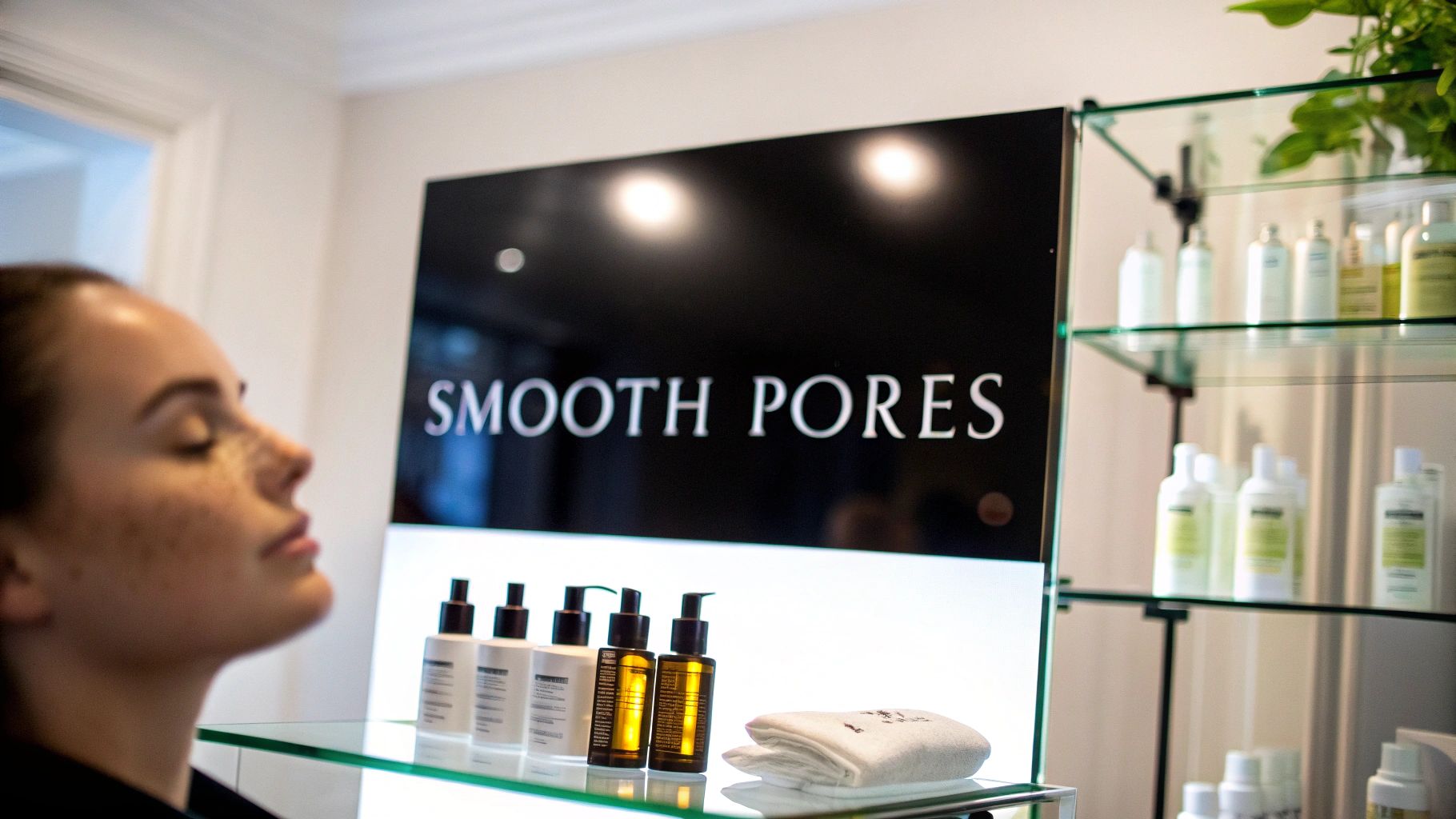
Absolutely. A chemical peel can make a huge difference in the appearance of large pores. By deeply exfoliating the skin and kicking collagen production into a higher gear, it accomplishes two key things: it clears out the gunk that physically stretches pores and helps firm up the surrounding skin, giving you a much smoother, more refined texture.

If you've ever found yourself staring in the mirror, convinced your pores are big enough to see from space, you're definitely not alone. Pores are simply tiny openings that let our skin release sweat and oil. And while you can't actually shrink them—their size is genetically set—you can absolutely make them look a whole lot smaller.
Think of each pore like a tiny basket. When these baskets get filled with debris or the structure around them weakens, they stretch out and become much more noticeable.
Several factors, some within our control and some not, contribute to how visible our pores are. Pinpointing the "why" is the first step toward finding a solution that really works, like a targeted chemical peel for large pores.
Here are the usual suspects:
This is exactly where a professional treatment can step in and change the game. To get a better feel for the process, take a look at our guide on what chemical peels do and who they're for.
A chemical peel tackles these issues head-on. It uses a carefully chosen acid solution to dissolve the bonds holding dead, dull skin cells together on the surface. This is like a deep clean that clears out all the debris clogging and stretching your pores.
But it doesn't stop there. By whisking away that top layer of damaged skin, a peel triggers the body’s natural healing response. This signals your skin to start building fresh, new collagen, which firms everything up from the inside out and helps tighten the pore walls.
It’s this one-two punch—clearing out the junk and rebuilding the skin’s support structure—that makes a chemical peel for large pores such a powerful and effective treatment. You’re not just masking the problem; you're actively creating smoother, clearer, more refined skin.
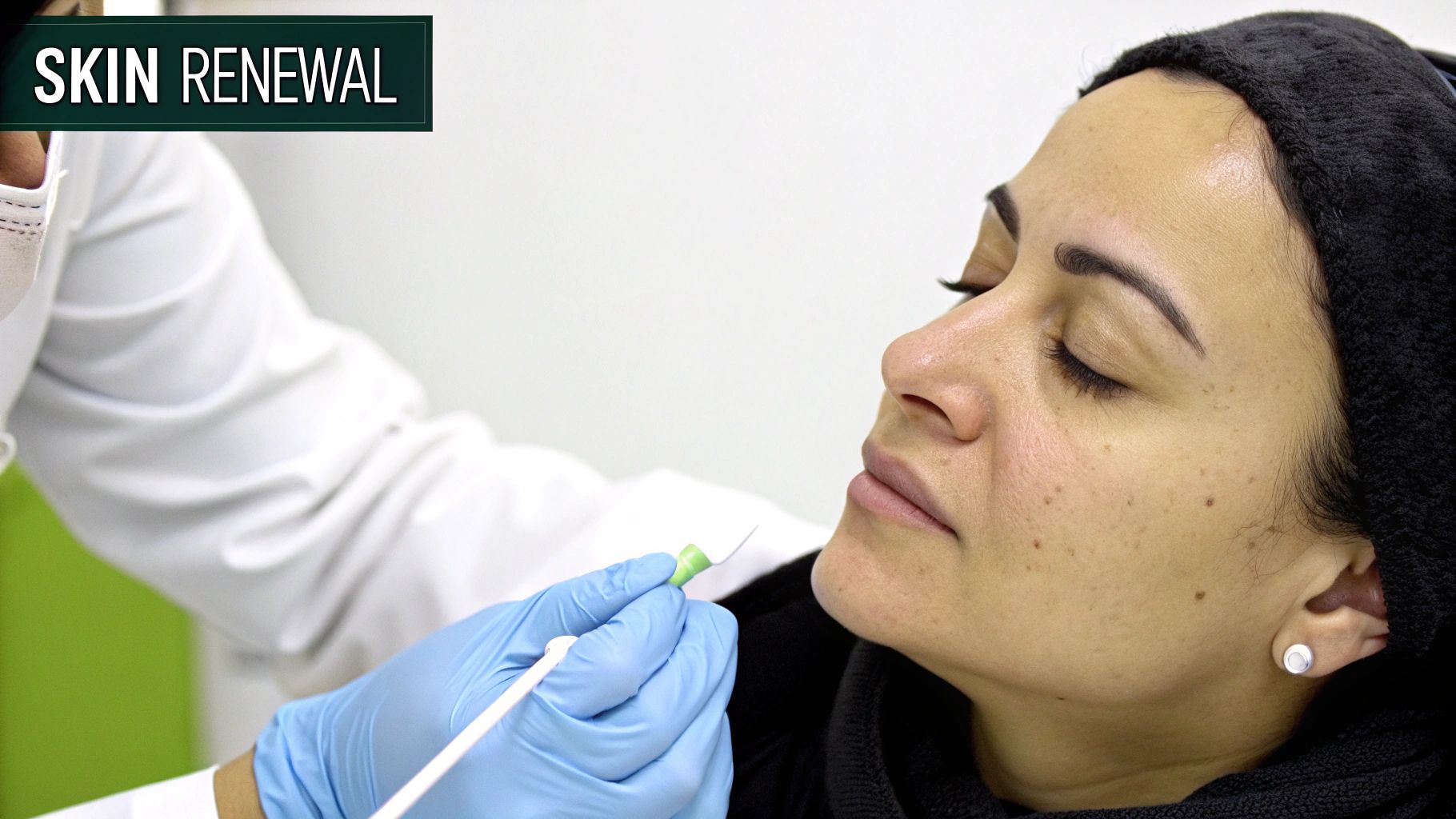
To really get how a chemical peel works, think about refinishing a piece of wood furniture. You have to start by sanding off the old, damaged varnish to get to the beautiful, smooth wood underneath. A chemical peel large pores treatment follows the same idea—it’s a controlled, scientific way to reveal the fresh, healthy skin hiding beneath the surface.
The whole process kicks off when a professional applies a specific acid solution to your skin. On a microscopic level, this solution gets to work dissolving the bonds holding all those dull, dead skin cells together. This isn't just scrubbing; it's a precise chemical reaction called chemoexfoliation.
What makes a chemical peel so effective for large pores is its two-pronged attack. It works on the surface and deep within the skin at the same time, leading to changes you can see and feel.
Surface Decongestion: First, you get an incredibly deep clean. As the peel lifts away that top layer of dead skin, it takes all the trapped oil, dirt, and old makeup with it. This instantly clears out the gunk that was physically stretching your pores open, so they immediately look smaller.
Dermal Remodeling: But the real long-term benefits happen below the surface. Removing that top layer triggers your skin’s natural healing response. It’s like a wake-up call for your fibroblasts—the tiny "factories" in your skin—to start churning out fresh collagen and elastin.
This new collagen is what rebuilds and firms up your skin's support structure. Imagine it reinforcing the very walls of each pore. With a stronger, tighter foundation, the pore openings are pulled inward, creating that much-desired smooth, refined texture.
The beauty of a chemical peel is that it doesn’t just clean your pores; it actively rebuilds the very structure of your skin. This makes it a proactive treatment for managing pore appearance, not just a temporary fix.
Let’s simplify it even more. Think of a garden hose nozzle that’s gotten clogged with mineral buildup. The water sputters out instead of spraying cleanly.
At the end of the day, a chemical peel does more than just empty out your pores. It strengthens them from the inside out, making them less likely to stretch and look enlarged in the future. It’s this combination of clearing the surface and rebuilding the foundation that makes peels a gold-standard treatment for a truly refined complexion.
Not all chemical peels are created equal. When your main goal is shrinking the appearance of large pores, you need to understand the key players on the field: AHAs, BHAs, and TCAs. Each one works a bit differently, bringing its own unique strengths to the table for specific skin types and issues.
Figuring out the right peel isn't a guessing game—it's a conversation between you and a skilled professional. We'll look at everything from your skin's oil production and sensitivity to its overall texture. It also helps to have a little background knowledge, and understanding chemical vs. natural ingredients can give you a solid foundation for making smart skincare choices.
Think of Alpha-Hydroxy Acids (AHAs) as expert polishers for your complexion. These acids are water-soluble, which means they do their best work right on the skin's surface. The most common one you'll see in professional treatments is glycolic acid.
Because they focus on the outermost layers, AHA peels are fantastic for:
And the results speak for themselves. One clinical trial showed that after a series of glycolic acid peels, 86% of people saw a major drop in visible facial pores, with an average improvement of 34.6%. You can dive into the details in the full study published in Skin Research and Technology.
Beta-Hydroxy Acids (BHAs) are the real heroes for anyone fighting oily skin and stubborn clogged pores. The star of this show is salicylic acid, and its superpower is that it's oil-soluble.
This unique property means that unlike AHAs, a BHA peel can dive deep into the pore lining itself. It gets right in there to dissolve that sticky mix of oil and dead skin that causes blackheads and stretches pores open in the first place. This makes BHA peels the number one choice for acne-prone or congested skin. If you have delicate skin, it's also worth reading our guide on finding a chemical peel for sensitive skin to see what gentle options are available.
A BHA peel is like calling in a specialized plumbing service for your pores. It doesn’t just wipe down the surface; it goes deep into the pipes to clear out the toughest clogs at their source, leading to a visible reduction in pore size.
Trichloroacetic Acid (TCA) is a more powerful, medium-depth peel we bring out for more significant skin concerns. A TCA peel goes deeper than your typical AHA or BHA peel, allowing it to tackle more stubborn issues head-on.
This kind of peel is an excellent choice when dealing with:
Because it works on a deeper level, a TCA peel delivers more dramatic, transformative results, but it also comes with more downtime. It's a fantastic solution for the right person looking for a major skin reset.
To make things a little clearer, this table breaks down the key differences between AHA, BHA, and TCA peels. It’s a great starting point for understanding which approach might be best suited for your skin and your goals.
Ultimately, the best chemical peel for your large pores is a decision made with an expert. During a professional consultation here at Cape Cod Plastic Surgery, we can properly analyze your skin and recommend the treatment that will give you the safest, most effective, and most beautiful results possible.
Walking into a clinic for a chemical peel can feel a bit daunting, especially the first time around. But knowing what to expect can turn that uncertainty into genuine excitement. The whole process is really a partnership, carefully designed around your comfort, safety, and ultimate skin goals.
Unlike just grabbing an at-home kit from the store, a professional peel is a precise and controlled procedure. It's the expertise of a board-certified professional that ensures you get a treatment powerful enough to deliver those pore-refining results safely. This is where clinical care truly makes a difference.
Your journey doesn’t start with the peel itself—it starts with a conversation. That initial consultation is probably the most important step. It's where we sit down, listen to your concerns (especially about large pores), and really get to know your skin. This isn't just a quick look; it's a deep dive into your skin type, tone, and overall condition.
We’ll talk through your medical history and what your current skincare routine looks like. All these details help us figure out the perfect type and strength of peel for you, making sure the treatment plan is tailored precisely to what your skin needs.
A well-run practice makes this whole experience smooth. For example, many top clinics use systems for efficient patient scheduling to make sure your appointments are seamless and your time is respected right from the start.
When you come in for your treatment, the first thing we'll do is thoroughly cleanse your skin. This removes any surface oils or debris, creating a perfectly prepped canvas for the peel solution. It’s a crucial step for making sure the acid penetrates evenly everywhere.
Next, your practitioner will skillfully apply the chemical solution. As it gets to work, you can expect to feel a mild tingling, a bit of warmth, or a slight stinging sensation. Don't worry—this is completely normal! It’s just a sign that the active ingredients are doing their job and starting the exfoliation process.
A professional meticulously controls how long the peel stays on, watching your skin’s reaction second by second. This expert oversight is what prevents complications and separates a clinical treatment from a risky DIY attempt.
After the perfect amount of time has passed, we’ll neutralize or remove the peel. Then, we’ll apply a calming, hydrating serum and—most importantly—a broad-spectrum sunscreen to protect your fresh, new skin. The whole application is surprisingly quick, often taking just 20 to 30 minutes.
The infographic below gives you a clear visual breakdown of the main types of peels—AHA, BHA, and TCA—and what they're best at treating.
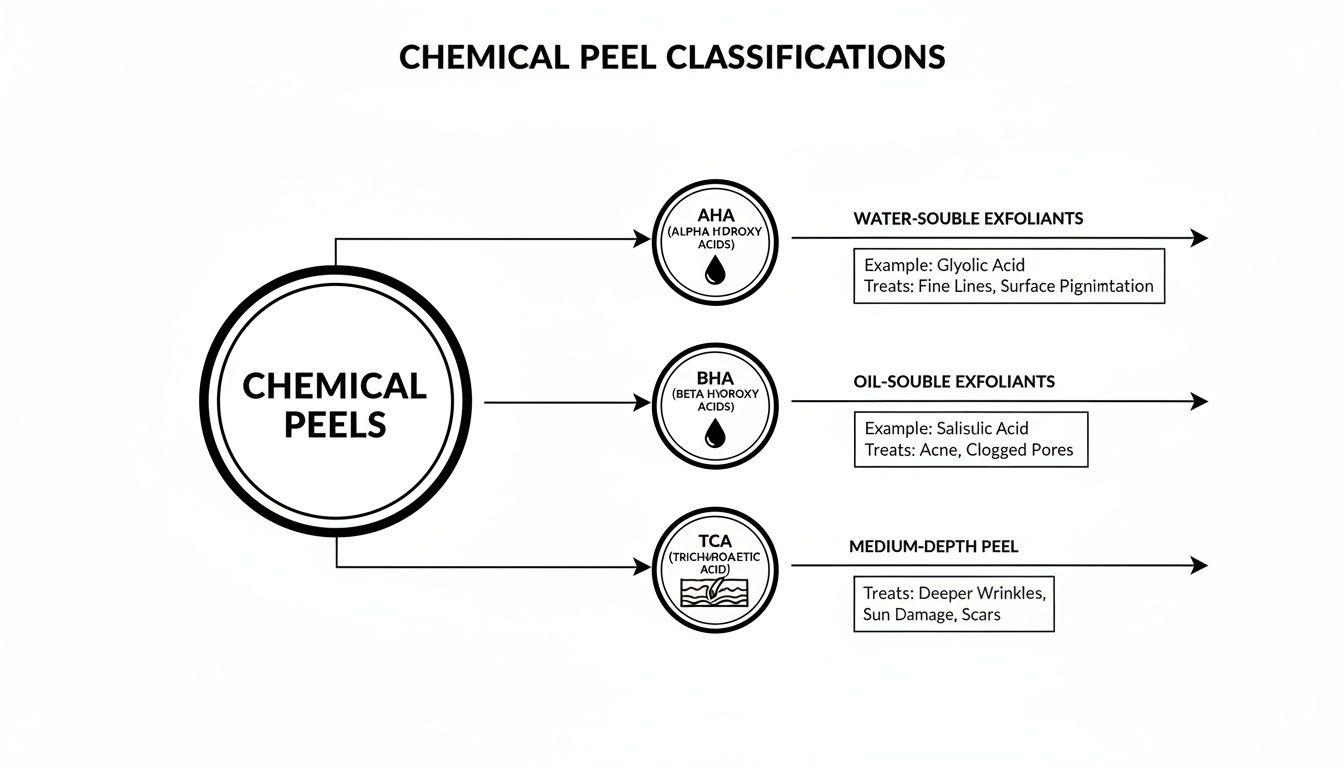
This guide helps show why we might choose one acid over another, whether the goal is brightening the surface (AHA), getting deep into the pores (BHA), or tackling more significant texture issues (TCA).
What we do in the clinic is only half the battle; your commitment to aftercare is the other half. You'll leave with very specific instructions on how to look after your skin for the next few days. Following this advice is non-negotiable if you want the best results and a smooth recovery.
Key aftercare usually involves:
Sticking to these steps will help soothe your skin, manage any peeling, and protect your investment. A professional peel is a team effort, and your aftercare is what locks in those beautiful, long-lasting results.
Knowing what’s coming after your chemical peel is just as important as the treatment itself. A little preparation goes a long way in making sure your skin heals beautifully and you get the fantastic results you're after. Think of it as a journey—not an overnight miracle—that ends with a much smoother, more refined complexion.
Right after your peel, your skin will likely feel a bit tight and look pink, almost like you got a little too much sun. This is completely normal! It’s just a sign that the peel is doing its job and kicking off the skin's renewal cycle. This feeling usually fades within a few hours for lighter peels, or a couple of days for deeper ones.
Over the next few days, you'll start to see some light flaking or peeling. This is the part everyone waits for—it’s the old, congested outer layer of skin giving way to the fresh, new skin underneath. The key here is to let it happen on its own time.
To set yourself up for a successful recovery, just follow a few simple rules:
For a more in-depth look at recovery, especially after a medium-depth peel, we’ve put together a full guide with our TCA peel post-care instructions.
While you’ll probably notice your skin feels softer and looks brighter as soon as the initial peeling stops, the real improvements to your pores happen over time. The journey to a truly refined texture unfolds as your skin rebuilds from the inside out.
You'll typically see a difference in your skin's overall tone and texture after just one or two sessions. The magic for pore size, though, comes from the new collagen your skin starts producing in the weeks that follow. It's this fresh collagen that firms up the skin and tightens the pore walls, making them visibly smaller.
The best and most lasting results from a chemical peel are cumulative. Each treatment builds on the one before it, steadily improving skin texture and encouraging that deep collagen remodeling for a genuinely smoother look.
The longevity of these results isn't just anecdotal. A major 2023 analysis in the Journal of Cosmetic Dermatology backed up the effectiveness of treatments for enlarged pores. It found that while light peels might need a touch-up every few months, the results from deeper peels can last for years. You can discover more insights about these pore treatment findings in the study.
In the end, how you care for your skin afterward is everything. Committing to proper aftercare and sticking with your treatment plan protects your investment and ensures you get—and keep—the beautiful, pore-refined skin you’re hoping for.
A professional chemical peel can do wonders for refining your pores, but it's rarely a one-and-done solution. To really tackle stubborn, enlarged pores and achieve that truly smooth, glass-like finish, we often need to think bigger. The best results almost always come from a well-rounded plan that combines different treatments.
It’s all about creating synergy—using procedures that complement each other to address the problem from multiple angles. Think of it as building a complete support system for your skin, where each treatment enhances the effects of the others.
One of my favorite pairings for a chemical peel is microneedling. They work beautifully together because they address different layers of the skin. A chemical peel works from the top down, resurfacing the skin and clearing out all that gunk from the pores.
Microneedling, on the other hand, works from the bottom up. It creates tiny, controlled micro-channels in the skin, which kicks your body’s natural healing process into high gear, stimulating a fresh wave of collagen and elastin. When spaced appropriately by your provider, you get a powerful one-two punch:
The combined firming effect is incredible. It provides better structural support for the pore walls, making them look significantly tighter and smaller.
Lasers are another fantastic tool in our arsenal for shrinking pores. While a peel uses a chemical solution to resurface the skin, lasers use focused light energy to do something similar, but with incredible precision. Depending on your skin's needs, lasers can be a great alternative to peels or a complementary part of a long-term maintenance plan.
Synergy in skincare means combining treatments that work together to create a result greater than the sum of its parts. A peel clears the canvas, while other treatments can rebuild the frame, ensuring a beautiful, lasting outcome.
The technology is getting better all the time. A fascinating 2022 study, for example, found that patients saw an average 30% reduction in pore size with advanced laser treatments. Six months later, 48% of patients maintained a 25–50% improvement, and an impressive 28% saw over 50% improvement in their pore appearance. You can read the full research on laser pore reduction to see the data for yourself.
In-office treatments are the heavy hitters, but what you do every day at home is what truly protects your results. For anyone serious about keeping large pores in check, a consistent retinoid routine is non-negotiable. Retinoids—whether it's prescription tretinoin or a quality over-the-counter retinol—are vitamin A derivatives that speed up cell turnover.
This gentle, ongoing exfoliation is key to preventing dead skin cells from piling up and re-clogging your pores between your professional chemical peel large pores appointments. They also keep that collagen-building engine humming, helping you hold onto the firm, smooth texture you worked so hard to get. Think of your home routine as the daily insurance policy on your professional investment.
It's completely normal to have questions when you're thinking about a new skincare treatment. Getting the right information is the first step toward feeling confident in your decision. To help with that, here are straightforward answers to the questions we hear most often about using chemical peels for large pores.
You'll be happy to know you won't be waiting long to see progress, but the journey is a bit different for everyone. It really depends on your skin's starting point and the type of peel we use. Think of it like a new fitness routine—the results build on each other over time.
For lighter, superficial peels (like those with glycolic acid), we usually recommend a series of 3 to 6 sessions. We space these out every two to four weeks. This steady, gentle approach gives your skin time to heal and regenerate between treatments, leading to the best long-term outcome without causing unnecessary stress to your skin.
On the other hand, medium-depth peels like TCA pack more of a punch. With these, you could see a major improvement in your pores after just one or two sessions. When you come in for a consultation, we’ll map out a plan tailored just for you, so you'll know exactly what to expect.
The word "peel" sounds a lot more intense than the actual experience. Most people tell us they feel a temporary tingling, itching, or warming sensation while the solution is on their skin. It’s a very active feeling, but it's brief and goes away as soon as the peel is neutralized.
Downtime really just depends on the strength of the peel.
We’ll walk you through the entire recovery process for your specific peel so you can plan your schedule accordingly. No surprises.
This is the million-dollar question. While a chemical peel can't change the pore size you were genetically programmed with, it can make a dramatic and long-lasting difference in how they look. The magic lies in its two-part action: it clears out all the gunk and—more importantly—it kicks your skin's collagen production into high gear.
By stimulating new collagen, the peel essentially rebuilds and strengthens the support structure around each pore. This tightens and firms up the pore walls, making the openings appear significantly smaller. The result is a much smoother, more refined skin texture.
To keep your skin looking this good, consistency is key. A solid at-home skincare routine and an occasional maintenance peel will help you stay ahead of the game. Pores will always try to fill back up over time, so ongoing care is the secret to preserving that smooth complexion.
You're not counted out—in fact, you might be a perfect candidate. We often recommend peels for people with sensitive and acne-prone skin, typically starting with gentler, carefully chosen formulas. Salicylic acid (a BHA) is a true hero for acne because it's oil-soluble, meaning it can dive deep into the pores to break up clogs and calm inflammation right at the source.
The most important step is a thorough skin analysis during your consultation. This is where we get to understand your skin's unique needs and history, allowing us to select the perfect peel that will deliver fantastic results without causing irritation.
Ready to take the next step toward a smoother, more refined complexion? The expert team at Cape Cod Plastic Surgery is here to guide you. Schedule your personalized consultation today and discover how a professional chemical peel can help you achieve your skincare goals. You can also call us anytime to learn more.
September 9, 2026
Expert Guide to Proper Surgical Incision Care
Master dermal fillers aftercare with do's and don'ts, swelling tips, activity limits and warning signs to protect your results and heal smoothly.

September 8, 2026
Ensuring Safety: Why Your Surgeon's Credentials Matter Most
Cape Cod Plastic Surgery offers expert cosmetic and reconstructive procedures in a safe, accredited setting. Led by Dr. Marc Fater, we combine advanced techniques with personalized care to help you look and feel your best.
Monday: 9:00 AM – 5:00 PM
Tuesday: 9:00 AM – 5:00 PM
Wednesday: 9:00 AM – 5:00 PM
Thursday: 9:00 AM – 5:00 PM
Friday: 9:00 AM – 5:00 PM