
October 2, 2026
When Is the Right Time for Plastic Surgery
Beyond the Calendar: How to Know You’re Truly Ready for Plastic Surgery
May 20, 2026
You're probably doing what many others do when they search cool peel near me. You've noticed sun damage, rough texture, or fine lines that makeup doesn't quite blur anymore. You want smoother skin, but you don't want to disappear for a long recovery or gamble on a treatment you don't fully understand.
That search usually means something more specific than “find a laser.” It means, “Is there a treatment nearby that works for the kind of skin issues I see in the mirror, and can it fit into real life?” On Cape Cod, that question often comes from people balancing work, family, outdoor time, and years of cumulative sun exposure.
Cape Cod life is hard on skin in a very particular way. Even people who are careful in the sun often develop a mix of concerns over time: scattered sun damage, uneven tone, pores that look more noticeable, and skin that no longer reflects light the way it once did. Many patients want improvement, but they don't want the kind of recovery older resurfacing treatments were known for.
That's where CoolPeel enters the conversation. It's become popular because it was designed to deliver the resurfacing benefits people associate with traditional ablative CO2 treatment while aiming for less disruption afterward. Instead of choosing between “do nothing” and “take significant downtime,” patients often see CoolPeel as a middle path with real resurfacing power and a more manageable healing period.
For local patients, convenience matters, but expertise matters more. A search for cool peel near me should end with more than the closest listing on a map. It should lead to a provider who can evaluate your skin quality, your pigment history, your tolerance for downtime, and your actual goals. Someone wanting a brighter glow before an event needs a different plan than someone trying to soften etched-in texture from years of sun.
What most patients are really asking: Can I improve texture and sun damage without putting normal life on hold for too long?
On Cape Cod, local context shapes treatment decisions. Salt air, wind, seasonal sun exposure, and an active lifestyle all affect how patients think about skin renewal. The right CoolPeel plan isn't just about the laser. It's about timing, skin preparation, recovery coaching, and knowing what result is realistic for your starting point.
The term CO2 laser can sound intimidating, especially if you've heard stories about older resurfacing treatments that required a lot of healing time. CoolPeel is easier to understand when you think about how energy is delivered, not just the name of the device.
CoolPeel uses the Tetra CO2 laser to deliver ultra-short pulses of energy, creating controlled surface ablation while minimizing heat spread. One clinic notes that a full-face session can take 5–15 minutes, with many patients having only 1–2 days of mild redness before getting back to normal activities, as described by Infinity MedSpa & Wellness.

A helpful way to picture it is to compare skin resurfacing to yard work.
Traditional aggressive resurfacing is closer to digging up the whole yard. CoolPeel is more like aerating a lawn. You create many precise treatment points that stimulate renewal, but you don't tear up everything around them. That's the “fractional” idea in simple terms. The skin gets a signal to repair and refresh, while untreated surrounding tissue helps speed healing.
This is also why patients hear phrases like controlled surface ablation and reduced thermal injury. In plain language, the laser treats the outer layer in a focused way without allowing excess heat to spread as broadly as older approaches often did.
With laser resurfacing, heat is one of the main reasons recovery can become intense. CoolPeel's very brief pulses are designed to limit how much heat lingers in the surrounding tissue. That doesn't mean it's a zero-recovery treatment. It means the treatment strategy is more controlled.
If you're comparing options, that difference is what places CoolPeel in a modern resurfacing category rather than the older “clear your calendar” category.
For patients reviewing broader laser treatment options, this is often the key distinction. CoolPeel isn't trying to be the deepest, most aggressive resurfacing available. It's trying to give meaningful surface renewal in a format many busy adults can realistically accept.
A good consultation should translate laser language into everyday expectations. What will improve, what will peel, and what will still be visible while you heal.
Individuals don't typically come in asking for “fractional superficial ablation.” They come in saying their skin looks tired, rough, weathered, or older than they feel. CoolPeel appeals to that group because it targets visible concerns that often show up together.
According to Glow Aesthetics, CoolPeel is ideal for treating fine lines, sun damage, acne scars, and texture irregularities, and while results may be visible after one session, treatment planning often involves 1–3 sessions for optimal collagen remodeling.

Some of the most common reasons people consider CoolPeel include:
CoolPeel tends to fit patients who want more than a gentle polish but aren't seeking the commitment of a more aggressive resurfacing plan.
A strong candidate often has a few things in common:
Not everyone searching cool peel near me is automatically a match. Some patients need a different approach because of skin sensitivity, active irritation, pigment concerns, or life circumstances that make any visible recovery hard to manage.
Decision rule: If you can't tolerate even temporary redness or peeling, a lighter treatment may be a better fit than laser resurfacing.
This is also where provider judgment matters. A person with primarily redness may need one path. A person with rough texture and sun damage may need another. The right answer isn't always the trendiest treatment. It's the one that matches the skin in front of you.
The patient experience matters as much as the device. Most anxiety around laser treatment comes from not knowing what the appointment will feel like, what the skin will look like afterward, and whether “minimal downtime” means a day of pinkness or a week of looking very obviously treated.
A proper consultation starts by narrowing the goal. Are you trying to brighten and refine? Are you chasing more meaningful texture correction? Are you treating broad sun damage from years of Cape Cod summers? Those are different conversations, and the treatment should reflect that.
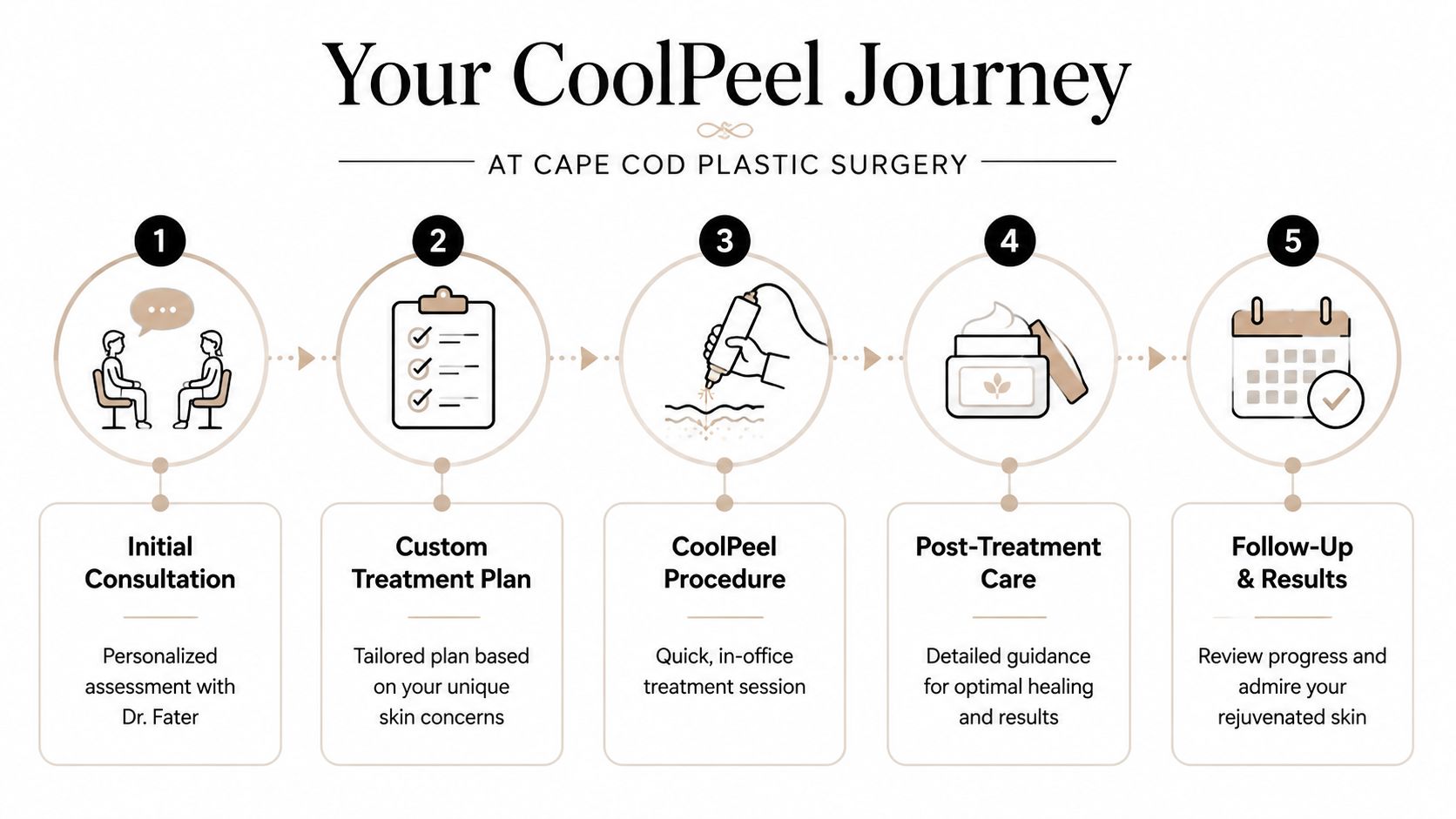
With Dr. Fater, the consultation should feel less like a sales pitch and more like a planning session. Your skin is assessed in person. Your concerns are prioritized. Your schedule matters too. If you have a wedding, travel, work presentations, or social events, that timing should shape the plan.
This is also when patients should ask the questions they often save for later:
A trustworthy consult doesn't promise that every patient heals the same way. It explains the range of normal.
On treatment day, many practices use topical numbing to make the session more comfortable. Patients often describe the sensation as warm, prickly, or like quick snaps of heat on the skin. The treatment itself is usually brief compared with what people expect from a resurfacing procedure.
For anyone who wants a visual overview before booking, this video gives context for how the treatment is presented in practice.
The immediate post-treatment look is often compared to a sunburn. That's helpful, but incomplete. It tells you about the color, not the texture. Patients should also be prepared for dryness and a rougher feel as the skin begins its shedding phase.
One of the most useful facts for patients comes from Revelus Dermatology, which notes that patients should realistically expect 3–10 days of recovery, typically including redness and peeling for about a week, with full recovery taking up to two weeks depending on treatment intensity.
That's the part many generic pages skip. “Minimal downtime” doesn't always mean “invisible recovery.”
A practical way to think about healing is this:
Plan your treatment around your real life, not your ideal calendar. If you have an event you can't hide from, schedule conservatively.
Aftercare usually centers on gentle cleansing, careful moisturizing, sun protection, and avoiding the urge to scrub or pick at peeling skin. That discipline matters. Healing skin doesn't respond well to impatience.
CoolPeel makes more sense when you compare it side by side with other resurfacing categories. Most patients aren't deciding whether to do “something” or “nothing.” They're deciding between options with different trade-offs in intensity, recovery, and scope.
| Treatment | Downtime | Best For | Typical Sessions |
|---|---|---|---|
| CoolPeel | Lower than traditional aggressive CO2, but still involves visible healing | Fine lines, texture, sun damage, superficial resurfacing goals | Often planned as a series for some goals |
| Traditional aggressive CO2 laser | More significant recovery | Deeper resurfacing needs and more advanced damage | Often fewer treatments because each session is more intensive |
| Microneedling | Usually lighter recovery than ablative resurfacing | Collagen support, mild texture issues, patients wanting less visible downtime | Often performed as a series |
| Medium-depth chemical peel | Variable recovery depending on depth | Pigment, tone, surface refresh, some textural concerns | Depends on peel depth and goals |
CoolPeel sits in an interesting middle lane. It offers more resurfacing power than very light treatments, but it usually asks less of recovery than older aggressive CO2 approaches. That balance is exactly why it attracts so much attention from people searching cool peel near me.
If your main concern is surface discoloration and you're also exploring skincare support at home, this overview of a potent AHA for dark spots can help you understand how exfoliating acids fit into pigment care. Topicals and procedures serve different roles, but patients often benefit from understanding both.
For people weighing laser versus peel decisions more directly, this comparison of laser resurfacing vs chemical peel is useful because it frames the choice around skin goals rather than trends.
Some patients need a stronger reset. Others need a controlled refresh. The best treatment is the one that fits both your skin and your schedule.
The key is not to compare names. Compare outcomes, healing, and whether the treatment matches the depth of the issue you want to correct.
Laser resurfacing is technique-sensitive. The device matters, but judgment matters more. That's why provider credentials should carry more weight than a catchy menu of services.
Dr. Marc Fater brings more than 30 years of experience and the background of a board-certified plastic surgeon. For patients, that matters because laser treatment isn't just about moving a handpiece across skin. It requires assessment of skin quality, healing behavior, facial anatomy, and the difference between what can be safely improved and what should be treated another way.

A board-certified plastic surgeon is also trained to think in complete aesthetic plans, not isolated treatments. That helps when a patient comes in asking for CoolPeel but may need a different resurfacing strategy, staged care, or a broader facial rejuvenation approach. You can learn more about Dr. Marc Fater and his background there.
The practice's on-site AAAASF-accredited surgical suite is another trust marker. Even when a treatment is performed in an office setting, patients should care about standards, safety systems, and the professionalism of the environment.
This is the one place where it makes sense to be selective. A search for cool peel near me shouldn't end with the nearest available appointment. It should end with a provider who can judge candidacy carefully, set realistic expectations, and guide recovery with the same attention they bring to the procedure itself.
Sometimes one session gives a nice improvement in brightness and texture. But for concerns like pores, fine lines, or more noticeable sun damage, a realistic plan may involve 3 to 6 sessions spaced about 4 weeks apart, as noted by WW Aesthetics.
Most patients describe it as tolerable rather than painful, especially when topical numbing is used. Warmth, prickling, and a sunburn-like feeling afterward are common ways people describe it.
You'll usually notice the skin changing as the surface heals and sheds. Some improvement becomes visible fairly early, but the final impression develops over time as the skin continues to remodel.
Cost depends on the treatment area, the intensity of treatment, and whether your goals call for one session or a series. That's why a consultation is the only useful way to price it accurately.
No. It may be lower downtime than traditional aggressive CO2 resurfacing, but you should still expect a visible healing period. For many patients, that honesty is what makes planning easier.
If you're searching for a thoughtful answer to cool peel near me on Cape Cod, a consultation with Cape Cod Plastic Surgery can help you understand whether CoolPeel matches your skin goals, your schedule, and your comfort with recovery. The right plan starts with a careful in-person assessment and clear expectations about what the treatment can, and can't, do.
October 2, 2026
Beyond the Calendar: How to Know You’re Truly Ready for Plastic Surgery

October 2, 2026
Exploring Your Breast Augmentation Options: Implants, Shapes, and What to Expect
October 1, 2026
Reshaping Your Silhouette: A Guide to Body Contouring
Cape Cod Plastic Surgery offers expert cosmetic and reconstructive procedures in a safe, accredited setting. Led by Dr. Marc Fater, we combine advanced techniques with personalized care to help you look and feel your best.
Monday: 9:00 AM – 5:00 PM
Tuesday: 9:00 AM – 5:00 PM
Wednesday: 9:00 AM – 5:00 PM
Thursday: 9:00 AM – 5:00 PM
Friday: 9:00 AM – 5:00 PM