
September 9, 2026
How to Care for Surgical Incisions Properly
Expert Guide to Proper Surgical Incision Care
Dec 17, 2025
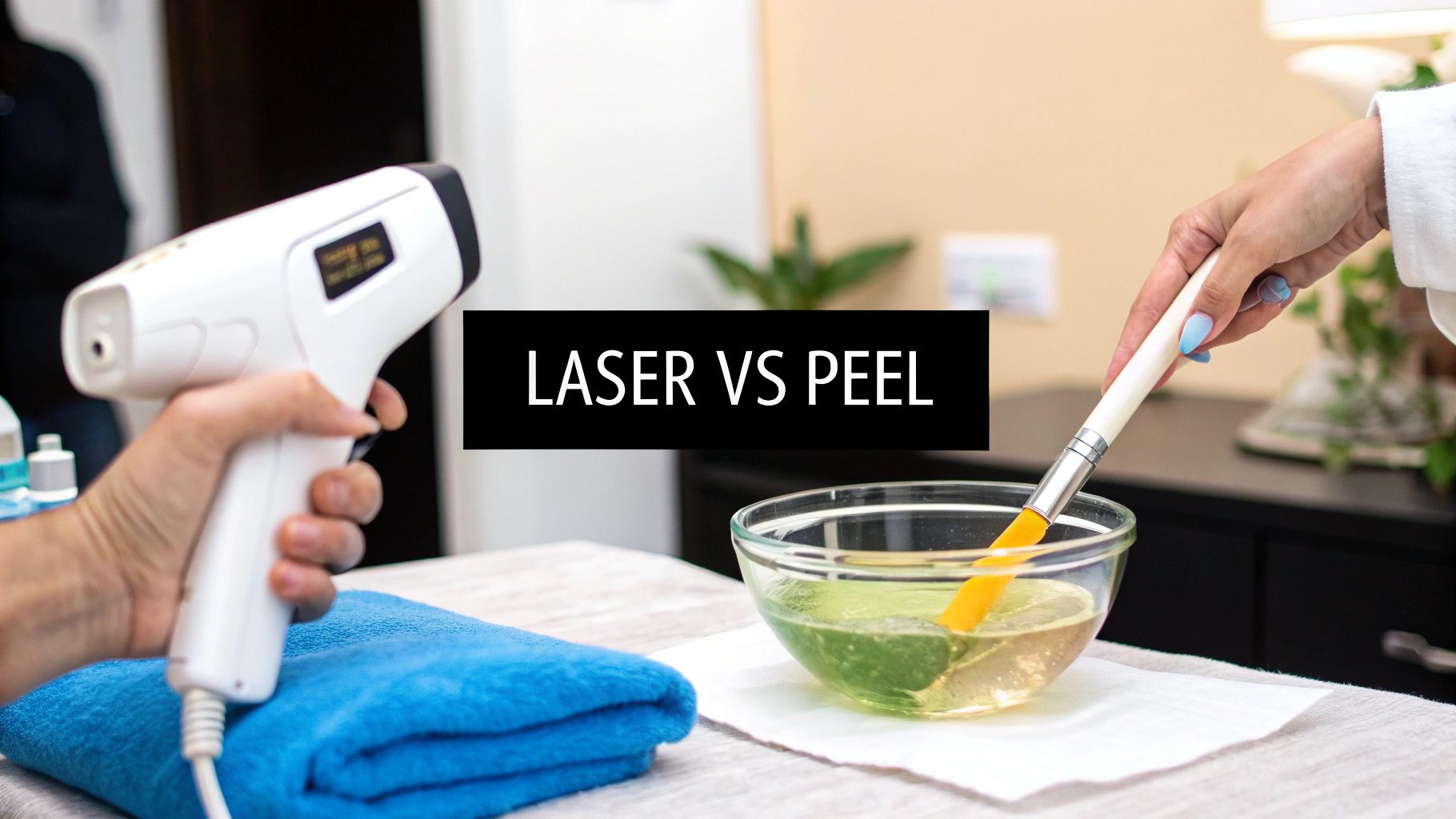
At the heart of it, the main difference between laser resurfacing and a chemical peel comes down to how they renew the skin. Lasers use precise, focused light energy to vaporize damaged skin cells and kickstart collagen production. On the other hand, chemical peels use carefully selected acidic solutions to create a controlled exfoliation.
The right choice for you really depends on whether your goals demand the targeted, architectural remodeling a laser can provide, or the broader, surface-level exfoliation of a peel.
Choosing between these two powerhouse treatments can feel a little daunting, but it gets much clearer once you frame the decision around your specific skin concerns, your lifestyle, and what you’re hoping to achieve. Both procedures are designed to remove damaged outer skin layers to reveal healthier, smoother skin underneath, but they take very different routes to get there.
Laser Resurfacing: Think of this as a highly precise, almost surgical approach to skin renewal. It uses concentrated beams of light to remove skin layer by meticulous layer, which makes it an incredible tool for targeting specific, stubborn issues like deep wrinkles, significant sun damage, or textural acne scars.
Chemical Peels: This method offers a more widespread chemical exfoliation. By applying a solution that dissolves the "glue" holding old skin cells together, it prompts them to shed. This is great for improving overall texture, tone, and superficial blemishes across the entire face.
To give you a clearer picture right from the start, I've put together a quick table that breaks down the key differences. This should help you get a sense of which treatment might align better with your needs before we dive deeper.
This high-level overview gives you a solid starting point. As you can see, the intensity and precision are major differentiators.
This decision tree gives you a visual guide for thinking through the process. It helps you map out a path based on your main concerns and how much downtime you can manage.
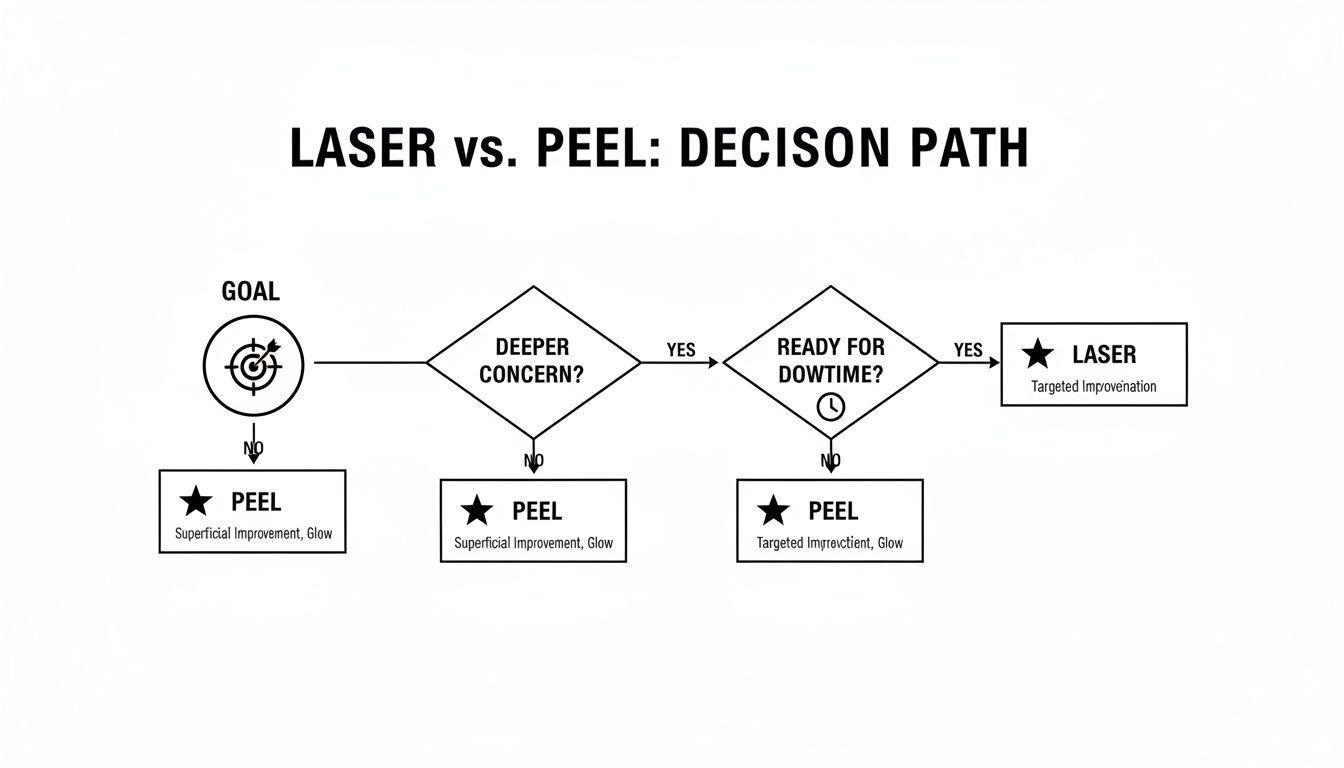
As the flowchart shows, more aggressive goals like correcting deep scars often point toward lasers. If you're more focused on improving overall tone and mild texture issues, a chemical peel is frequently the better fit.
While our focus here is on these two clinical treatments, it's always good to be aware of the full spectrum of options. For instance, it can be helpful in comparing chemical peels with other modern treatments like LED face masks to understand where they all fit. My goal is to give you all the information you need to make a truly informed decision.
To figure out whether laser resurfacing or a chemical peel is right for you, you first have to understand what’s happening beneath the surface. Both treatments are designed to give you fresher, healthier-looking skin by removing the damaged outer layers, but they get there in completely different ways. One uses light and heat, the other uses chemistry.
Think of it like this: a laser is a bit like a precision tool, an architect meticulously correcting specific flaws. A chemical peel is more like refinishing a surface, providing a broader, more uniform renewal. Knowing the "how" behind each one makes it much clearer why one might be a better fit for your skin goals.
Laser resurfacing is all about using focused beams of light energy to create a very controlled injury in the skin. It’s incredibly precise, which means a skilled provider like Dr. Fater can zero in on specific skin depths and problem areas with remarkable accuracy. We generally group lasers into two main camps: ablative and non-ablative.
Ablative Lasers (e.g., CO2, Erbium):These are the heavy hitters. Ablative lasers work by flash-vaporizing the outermost layer of your skin (the epidermis) while simultaneously heating the deeper layer (the dermis).
Non-Ablative Lasers (e.g., Fraxel):These lasers are a gentler alternative. They work by sending heat down into the dermis without actually removing the top layer of skin. The energy is delivered in a pixelated or "fractional" pattern, creating tiny columns of treatment while leaving the surrounding tissue untouched.
Key Takeaway: Lasers use controlled heat and light to either remove damaged surface layers or kickstart deep collagen production. This technical precision makes them the go-to choice for structural problems like deep-set wrinkles and acne scars.
If you'd like to get into the nitty-gritty, you can learn more about how laser skin resurfacing transforms skin texture in our detailed guide. It really helps to appreciate just how targeted this treatment can be.
Chemical peels take a completely different approach. Instead of using light, we apply a specialized acidic solution directly to the skin. This solution gets to work by dissolving the bonds—that intercellular "glue"—that hold dead, damaged skin cells together. Once those bonds are broken, the outer layers of the epidermis peel away, revealing the smoother, more vibrant skin waiting underneath.
The strength of a peel really depends on the type of acid used, its concentration, and how long it’s left on the skin. This allows us to customize the treatment, from a light "lunchtime" peel to a much more profound skin renewal.
Superficial Peels (e.g., AHAs like Glycolic Acid):These are the mildest peels available. They only work on the very outermost layer of skin, making them perfect for a quick refresh. They’re great for evening out mild discoloration and giving your skin a healthy glow with almost no downtime.
Medium Peels (e.g., Trichloroacetic Acid or TCA):TCA peels go a bit deeper, reaching the upper part of the dermis. This makes them highly effective for treating moderate sun damage, more noticeable fine lines, and stubborn hyperpigmentation. You can expect a few days of redness and visible peeling with these.
Deep Peels (e.g., Phenol):Phenol peels are the most powerful and aggressive option, penetrating all the way to the lower dermal layers. They can produce truly dramatic results for severe wrinkles, deep scars, and extensive sun damage, but they also come with the longest recovery period and require very careful patient selection.
Knowing how these treatments work in theory is one thing, but what really matters are the results you can see in the mirror and the trade-offs involved. When we compare the outcomes of laser resurfacing versus a chemical peel, the discussion moves past the general benefits and gets into the specific, real-world impact on different parts of the face—along with the risks that come with each approach.
The choice is rarely a simple one-size-fits-all decision. An expert practitioner like Dr. Fater makes strategic recommendations by considering how different facial zones respond to these treatments. This kind of nuanced approach is what ensures the method we choose is perfectly matched not just to the skin concern, but to the unique characteristics of the treatment area itself.
Not all skin is created equal. The thick, oil-producing skin on your chin and around your nose behaves very differently from the thin, delicate skin around your eyes. This is where the precision of lasers and the broader action of peels reveal their distinct pros and cons.
For instance, a CO2 laser can produce dramatically smoother results on thick skin, like in the nasolabial folds or on the chin, where deep lines and texture issues are common. Its ability to precisely vaporize tissue and kickstart collagen remodeling makes it the superior choice for these more resilient areas.
On the flip side, a deep phenol peel can achieve profound rejuvenation for fine wrinkles on the eyelids and cheeks. But its powerful chemical action means we have to be incredibly meticulous with patient selection and application to sidestep complications, especially in such sensitive spots.
Expert Insight: The best treatment is often zone-specific. A CO2 laser might be ideal for those stubborn vertical lip lines, while a peel could be a better fit for widespread, moderate sun damage across the cheeks. This is precisely why a personalized consultation is non-negotiable.
Landmark clinical studies give us an unbiased look at how these treatments perform side-by-side. Seminal research, including prospective split-face studies comparing full-strength phenol peels to CO2 laser resurfacing, offers invaluable data on both outcomes and potential complications.
One such study followed patients for 18 months, applying a peel to one side of the face and the laser to the other. Investigators found that while both treatments delivered uniform improvement in wrinkles on the eyelids and cheeks, the CO2 laser showed a moderate advantage in reducing rhytids (wrinkles) on the upper lip and forehead. It also achieved noticeably smoother results in thick-skinned areas like the chin.
However, those superior textural results came with a price. The same study noted that the laser treatment resulted in more intense hypopigmentation (a loss of skin color), longer-lasting postoperative redness (erythema), and a longer period of patient discomfort compared to the phenol peel. This research really underscores the critical balance between efficacy and recovery. You can review the detailed findings of this important split-face phenol vs CO2 laser study to better understand these clinical distinctions.
Every effective medical procedure comes with potential risks, and skin resurfacing is no exception. Understanding these possibilities is essential for making a safe and informed decision. The risk profile for each treatment is tied directly to its mechanism and how deeply it works.
Common Risks with Laser Resurfacing:
Common Risks with Chemical Peels:
Ultimately, the goal is to weigh the result you’re hoping for against the recovery timeline and potential side effects. A skilled practitioner at Cape Cod Plastic Surgery will thoroughly evaluate your skin and medical history to recommend the procedure that offers you the most benefit with the least amount of risk.
When you're deciding between laser resurfacing and a chemical peel, it's not about which one is "better." It’s about which one is the right tool for the job. Different skin issues respond to different technologies, and the secret to getting incredible results is matching the problem to the perfect solution.

This problem-first approach is exactly how a skilled practitioner like Dr. Fater develops a personalized plan. It moves the conversation beyond a simple "laser vs. peel" debate and into a strategic choice based on your unique skin and what you hope to achieve.
If we're talking about fixing significant textural problems—like deep, pitted acne scars—fractional lasers almost always have the upper hand. These atrophic scars are a structural problem deep in the dermis where collagen has been damaged or lost.
A laser gets right to the root of the problem. By creating microscopic columns of thermal injury deep within the skin, it triggers a powerful collagen remodeling response. This process essentially rebuilds your skin’s foundation from the inside out, gradually lifting the depressed scars and smoothing the surface in a way that surface-level treatments just can't replicate.
While a medium-depth TCA peel can certainly improve the look of shallow scars by exfoliating the top layers of skin, it doesn’t have the deep, targeted heating mechanism needed for real architectural change. The clinical data backs this up.
Recent comparative studies show that while medium-depth peels are a useful, lower-cost option, the results can be unpredictable. One clinical trial comparing a fractional erbium:YAG laser to a 20% TCA peel for acne scars found that in the TCA group, only 8% of patients had an excellent response. Fifty-two percent had a good response, but a full 40% had a poor one. In contrast, fractional laser studies consistently show a much higher rate of "good" or "excellent" outcomes for texture, making it a more reliable path to significant improvement. You can read more about the efficacy of lasers versus peels for scarring and pigmentation to dig into these clinical differences.
For patients dealing with the effects of extensive sun damage—deep wrinkles, a leathery texture, and significant discoloration—both ablative CO2 lasers and deep phenol peels are heavy hitters. The decision often hinges on the specific type of wrinkles and the patient's skin.
Ablative CO2 Lasers are brilliant for treating etched-in lines and thickened, sun-damaged skin. The laser's energy vaporizes damaged tissue with incredible precision, making it the go-to for stubborn wrinkles around the mouth (perioral rhytids) and eyes.
Deep Phenol Peels offer a profound and widespread rejuvenation. By penetrating deep into the dermis, a phenol peel can effectively "reset" severely photoaged skin, dramatically softening deep-set wrinkles and leaving behind a uniform, almost porcelain-like finish.
Key Differentiator: Think of the CO2 laser as a precise sculpting tool, perfect for targeting specific deep lines and roughness. A phenol peel is more like a complete refinishing of the entire surface, providing a dramatic, global improvement for severe, widespread wrinkling.
Tackling pigmentation issues like melasma and post-inflammatory hyperpigmentation demands a careful, strategic approach. This is especially true for those with darker skin tones who are more prone to pigmentary changes. Here, the choice between lasers and peels becomes highly nuanced.
Non-ablative fractional lasers and other pigment-targeting devices can be very effective. They work by delivering energy that shatters melanin deposits under the skin's surface without creating the kind of excessive heat that could trigger even more pigmentation.
On the other hand, a series of superficial chemical peels using gentle acids like glycolic or lactic acid can be an excellent and often safer strategy. These peels carefully lift away pigmented cells from the surface over time, gradually evening out skin tone with minimal risk of irritation. Consistency is everything here; you want to avoid a single, overly aggressive treatment. You can learn more about how chemical peels work and who they're for in our dedicated guide.
The right path really depends on how deep and stubborn the pigment is. For tough cases of melasma, some pooled analyses have found that laser treatments lead to a greater reduction in severity compared to peels. However, for many people, the slow-and-steady approach with light peels offers a highly effective and safer route to clearer, more even-toned skin.
Let's be practical. While the science behind lasers and peels is fascinating, the decision for most people comes down to two very real-world factors: cost and downtime. Your budget and how much time you can realistically take to recover will steer you toward one treatment or the other. Thinking through the entire process, from your first payment to the day you can show off your new skin, is the key to making a choice you'll be happy with.
Practices like ours spend a lot of time thinking about this entire experience. In the medical field, there's even a formal process for this called patient journey mapping, which helps us understand and improve every step from your point of view.
Right out of the gate, you'll notice a price difference between these two treatments. Laser resurfacing almost always has a higher price tag for a single session. This isn't arbitrary—it reflects the cost of the sophisticated technology itself and the deep, specialized training a surgeon needs to use it safely and get fantastic results.
Chemical peels, especially the lighter and medium-depth options, are much more approachable from a per-treatment cost perspective. But you have to look at the bigger picture. To get the results you really want from lighter peels, you'll likely need a whole series of them, and that cumulative cost can definitely start to climb.
The Financial Bottom Line: Think of it this way. One powerful laser session can be a more direct, one-and-done path to dramatic improvement, but it requires a larger upfront investment. On the other hand, a carefully planned series of chemical peels can get you to a great place with a cost that's spread out over time.
This is a big one. How much time can you truly step away from work, social events, and your daily routine? The recovery for lasers and peels isn't one-size-fits-all; it can be anything from a "weekend peel" with no real downtime to a recovery that requires you to lay low for a couple of weeks.
Downtime for Chemical Peels:
Downtime for Laser Resurfacing:
Knowing what to expect day by day is critical for planning your life around the treatment. To get a really clear idea of this process, we've put together a detailed timeline in our guide to laser skin resurfacing recovery.
From a clinical standpoint, these tradeoffs are what drive many decisions. Lasers command higher fees because of the investment in the device and the surgeon's expertise. At the same time, fractional lasers often deliver more noticeable results with less total downtime than a series of light peels might require, getting you back to your life much faster. Safety is also a factor; a deep phenol peel can cause significant dermal injury and even requires systemic monitoring, which is why many experts prefer fractional lasers for their predictable, reproducible improvements, despite the higher per-session cost.
It’s easy to get caught up in the details when you're deciding between laser resurfacing and a chemical peel. But here’s something I’ve learned over decades in practice: the most critical factor for your safety and results isn't the laser or the peel solution. It's the person performing the treatment.
The success of any skin resurfacing procedure comes down to the skill, training, and artistic judgment of your provider.

A top-tier, board-certified plastic surgeon or dermatologist does far more than just follow a protocol. They perform a deep diagnostic analysis of your skin—assessing its thickness, texture, and underlying health. This nuanced evaluation is what elevates a good result to an outstanding one.
Think of your consultation as an interview. You are hiring an expert to care for your face, and you should feel completely confident in their abilities. A great specialist will encourage your questions. Here’s what you should ask:
Asking these questions isn't about being difficult; it's about being safe. In the hands of an untrained operator, these procedures can lead to permanent scarring or pigmentation problems.
Provider Insight: The difference between a decent result and a phenomenal one lies in the details. An expert knows precisely how to adjust a laser's energy for the delicate skin under the eyes or feather the edges of a peel to create a seamless, natural-looking finish. That’s not something you learn from a manual.
At Cape Cod Plastic Surgery, Dr. Marc Fater’s philosophy is grounded in over 30 years of experience as a board-certified plastic surgeon. He knows that no two faces are the same. During your private consultation, he will personally assess your skin, listen carefully to your goals, and explain exactly why one treatment might deliver better, safer results for you than another.
Our dedication to personalized care in a fully accredited surgical facility means your treatment plan is designed for both beautiful results and your long-term skin health. Ultimately, choosing the right expert is the single most important decision you'll make on this journey.
Making the right choice between a laser and a peel can feel overwhelming, so let's clear up some of the most common questions we hear from patients. Having this information handy will help you feel more confident and prepared for your consultation.
Yes, but almost never during the same appointment. A skilled provider can build a long-term treatment plan that uses both. For instance, you might start with a fractional CO2 laser to tackle deep wrinkles and acne scars, then use a series of lighter chemical peels months later to maintain that fresh, bright complexion.
This layered approach lets you address different skin concerns at various depths over time. Trying to do both at once would simply be too aggressive and could seriously damage your skin.
This really comes down to two things: the intensity of the treatment you choose and how dedicated you are to your skincare afterward.
The Most Important Thing to Remember: No matter which procedure you get, daily, high-quality sun protection is the key to making your results last. The sun is the biggest culprit behind the very problems you’re trying to fix.
This is where extreme care and expertise are non-negotiable. Darker skin tones (classified as Fitzpatrick types IV-VI) have more active melanocytes, which means there's a greater risk of developing post-inflammatory hyperpigmentation (dark spots) or hypopigmentation (light spots) after a skin treatment.
For this reason, a series of superficial chemical peels with gentler ingredients like mandelic or lactic acid is often the safest starting point. When it comes to lasers, non-ablative fractional devices are generally a better choice than fully ablative ones, as they create less heat and injury, reducing the risk of pigment changes. Ultimately, the provider’s experience with treating skin of color is the most critical factor.
Without a doubt. The ideal time for either treatment is during the fall and winter months. After resurfacing, your skin is incredibly sensitive and vulnerable to UV rays.
Scheduling your treatment when the sun is less intense dramatically lowers your risk of complications like hyperpigmentation and protects the investment you've made in your skin. Healing during the sunny summer months, especially here on Cape Cod, makes a successful recovery much more difficult.
Your journey to rejuvenated skin begins with expert guidance. At Cape Cod Plastic Surgery, Dr. Marc Fater will create a personalized plan that prioritizes your safety and delivers beautiful, natural-looking results. Schedule your consultation today.
September 9, 2026
Expert Guide to Proper Surgical Incision Care
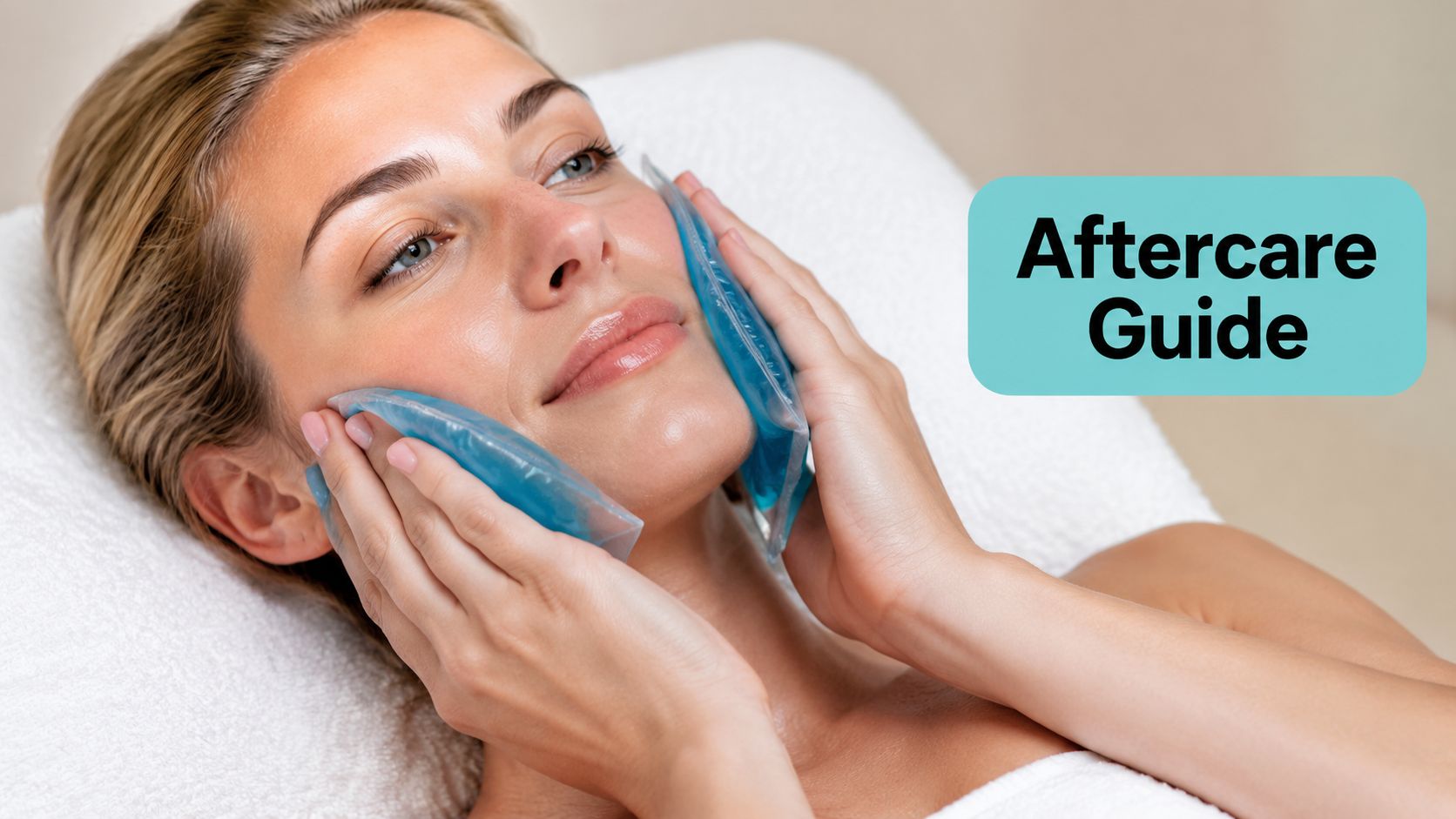
Master dermal fillers aftercare with do's and don'ts, swelling tips, activity limits and warning signs to protect your results and heal smoothly.

September 8, 2026
Ensuring Safety: Why Your Surgeon's Credentials Matter Most
Cape Cod Plastic Surgery offers expert cosmetic and reconstructive procedures in a safe, accredited setting. Led by Dr. Marc Fater, we combine advanced techniques with personalized care to help you look and feel your best.
Monday: 9:00 AM – 5:00 PM
Tuesday: 9:00 AM – 5:00 PM
Wednesday: 9:00 AM – 5:00 PM
Thursday: 9:00 AM – 5:00 PM
Friday: 9:00 AM – 5:00 PM