

October 7, 2026
What to Expect During Your Breast Surgery Recovery
A Practical Guide to Healing After Breast Surgery
Dec 2, 2025

Tightening the skin on your neck without turning to surgery is absolutely achievable, but it requires a smart, multi-pronged approach. The most effective strategies combine consistent at-home care with targeted, professional treatments. Think of it as a partnership: your daily habits support the powerful results we can achieve with non-invasive technologies like radiofrequency and ultrasound.
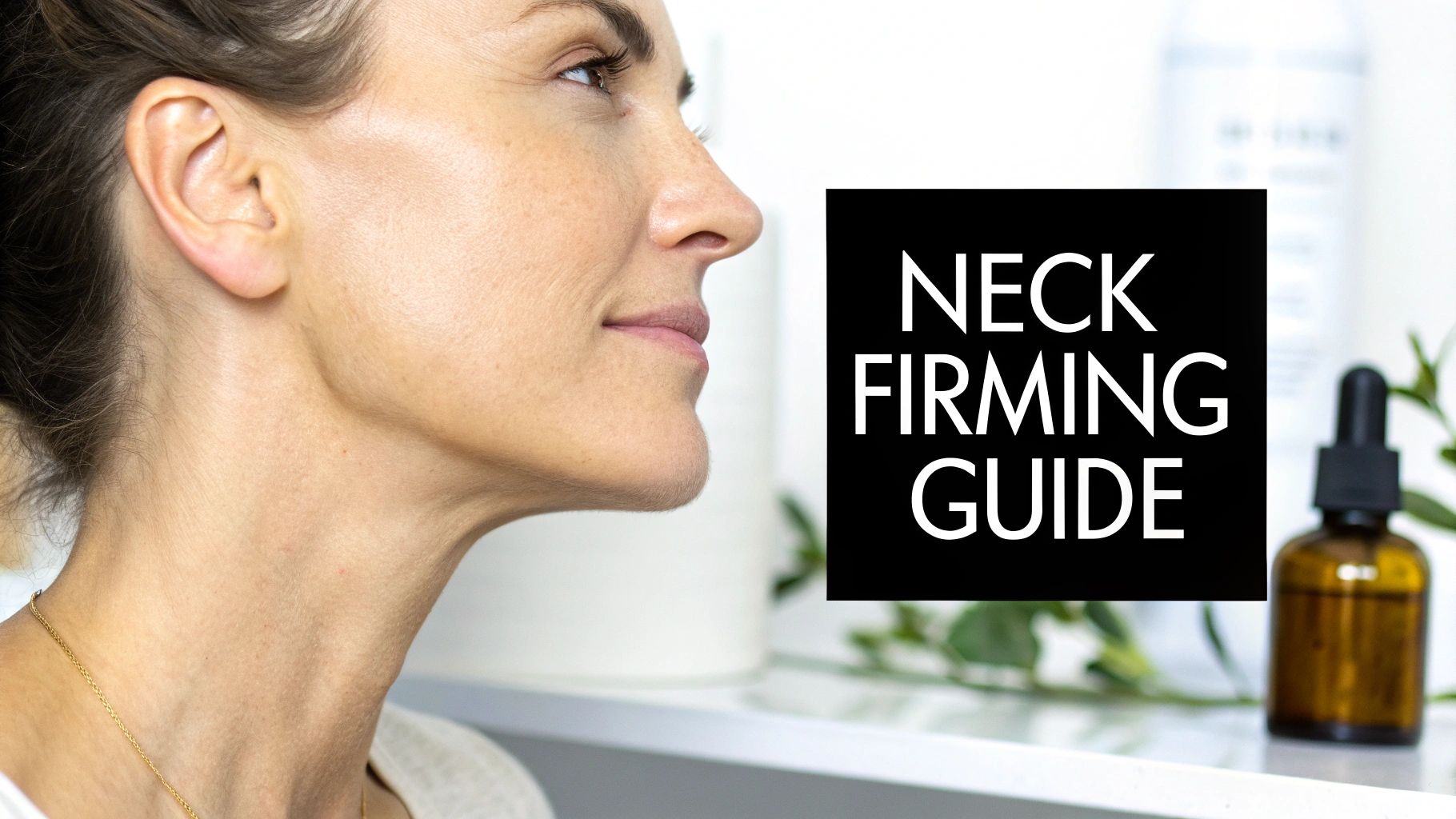
Ever feel like your neck is giving away your age faster than your face? There's a real biological reason for that. It’s not your imagination.
The skin on your neck is fundamentally different. It's much thinner, produces less of its own moisturizing oils, and has a weaker underlying support structure compared to the skin on your face. This delicate composition leaves it far more vulnerable to sun damage, environmental stress, and the simple pull of gravity over time.
Several factors conspire to accelerate the signs of aging in this specific area. When you understand what’s happening beneath the surface, you can choose treatments that actually address the root cause.
Before we jump into the solutions, it's helpful to grasp the basics of how our bodies age. Understanding what is cellular health gives you a deeper appreciation for why these skin changes happen and how non-surgical treatments work to reverse them.
The goal of non-surgical neck tightening is to stimulate your body's own regenerative processes. By encouraging new collagen growth, we can achieve a firmer, smoother, and more youthful-looking neck naturally and gradually.
This guide will walk you through proven, non-surgical strategies without the hype. We’ll cover everything from the best at-home skincare and exercises to the most effective in-office treatments, giving you a clear roadmap to the results you want.
To help you navigate the options, here’s a quick overview of the different approaches we'll discuss.
This table gives you a starting point for thinking about which path might be right for you based on your goals, budget, and lifestyle. Each of these methods plays a unique role, and often, the best results come from a thoughtful combination.
If you're serious about getting a firmer neck without surgery, you have to play the long game. Your daily habits are where the real power is. A consistent routine—built on the right skincare, specific exercises, and smart lifestyle choices—is the bedrock for any skin tightening journey.
Think of it this way: professional treatments can give you a fantastic boost, but what you do every day is what protects that investment and pushes your results further. It's the small, consistent things that add up to real, lasting change.
Walk down any beauty aisle, and you'll be bombarded with "miracle" neck creams. The truth is, most of them don't do much. To see a real difference, you have to ignore the hype and become an ingredient detective. You're looking for a few specific, science-backed actives that actually work to rebuild your skin's underlying structure.
Your first move should be to add retinoids to your routine. These vitamin A derivatives are the gold standard for a reason. They speed up cell turnover, shedding those dull, old cells and bringing fresh ones to the surface. More importantly, they've been proven time and again to kickstart collagen production, which is exactly what you need to fight sagging skin.
Next on the list are peptides. These are tiny protein fragments that act like little messengers, telling your skin cells to get busy making more collagen and elastin. Using a peptide-rich serum or cream is a great way to improve your skin’s firmness and bounce over time.
Finally, don't forget the fundamentals: antioxidants and hydration.
Pro Tip: How you apply your products matters. Always use gentle, upward strokes when applying anything to your neck. This works against gravity and avoids any unnecessary tugging on this delicate skin.
Just like any other muscle in your body, the ones in your neck can be toned to create a stronger, more supportive foundation for the skin. The main muscle we're targeting here is the platysma—a broad, thin sheet of muscle that runs from your collarbone up to your jawline.
Now, let's be realistic: these exercises won't magically erase loose skin. What they can do is improve muscle tone, which helps create a more sculpted and lifted look from underneath. The key is consistency. A few minutes a day is all it takes.
Simple Neck Firming Exercises
These simple movements engage those underlying muscles, contributing to a tighter overall appearance. It's a completely free way to support all your other efforts.
You can buy the most expensive creams in the world, but if your lifestyle is working against you, it's an uphill battle. Your daily habits have a massive impact on your skin's health.
Hydration is completely non-negotiable. When your skin is well-hydrated, it's plumper, more resilient, and can repair itself more effectively. Dehydration makes crepey skin look ten times worse, so aim for at least eight glasses of water a day.
What you eat shows up on your skin, too. Pack your diet with antioxidant-rich foods like berries, spinach, and other colorful veggies to fight off the free radicals that break down collagen. Lean proteins and healthy fats are also essential building blocks for healthy skin. We dive deeper into this in our guide on how to reduce wrinkles naturally.
Above all else, you must commit to daily sun protection. Sun damage is the #1 accelerator of skin aging, and the thin skin on your neck is incredibly vulnerable. Every single morning, rain or shine, apply a broad-spectrum sunscreen with an SPF of 30 or higher. This is the most important thing you can do to prevent future damage and protect the results you're working so hard to get.
When your at-home routine has taken you as far as it can, but you're still looking for more noticeable results, it’s time to explore professional non-invasive options. This is where we can really move the needle on skin laxity. These treatments use sophisticated energy-based technologies to work deep beneath the skin's surface, essentially waking up your body’s own collagen and elastin factories.
The real beauty of these procedures? They deliver significant improvements without the incisions, anesthesia, or extended recovery that come with surgery. Think of it as a powerful, targeted boost to what you're already doing—directly addressing the root cause of sagging skin by rebuilding its internal support structure.
The most effective non-surgical treatments all work on a similar principle: controlled heat. By delivering precise thermal energy into the deeper layers of your neck skin, these devices trigger a cascade of regenerative responses.
First, you get an immediate (though subtle) tightening effect as existing collagen fibers contract from the heat. But the real magic happens over the next few weeks and months. The gentle thermal stress signals your body's fibroblast cells to get to work, ramping up the production of new, strong collagen and elastin. This new network gradually firms and lifts the skin from the inside out, creating a naturally smoother, tighter neck.
The best results always come from a two-pronged approach: consistent at-home care supporting what we achieve in the clinic.

This synergy between your daily habits and professional treatments is what truly creates lasting, beautiful outcomes.
So, what are your choices when it comes to tightening neck skin without surgery? While the goal is always collagen stimulation, the methods for getting there vary.
Choosing the right path can feel overwhelming, so I've put together a simple table to compare the leading technologies at a glance. This should help you understand the core differences and start thinking about which approach might be the best fit for your specific concerns and goals.
Keep in mind that these are just starting points. A one-on-one consultation is the only way to truly determine the ideal treatment plan for your unique anatomy and desired outcome.
One of the biggest draws for these treatments is how easily they fit into a busy schedule. Most sessions take anywhere from 30 to 90 minutes.
We’ll start by cleansing your skin and applying a topical anesthetic to keep you comfortable. As the treatment begins, you'll likely feel a warm sensation as the energy is delivered into your skin, but it's generally very well-tolerated.
Afterward, you might have some slight redness or minor swelling, almost like a mild sunburn, but this typically fades within hours. You can put on makeup and head right back to your day—no downtime required. It’s why people often call them "lunchtime lifts."
Results aren't instant; they build gradually as your body produces new collagen. You'll start to see changes within a few weeks, with the full, most impressive results appearing two to six months after your final session. This slow, natural progression is a key reason why non-invasive skin tightening is such a popular choice for rejuvenation.
https://www.youtube.com/embed/steJh2lxHPs
Setting realistic expectations is probably the single most important part of being happy with your results. When you're looking into ways to tighten your neck skin without surgery, it's essential to understand that these treatments are a journey, not a quick fix. Unlike a surgical lift, non-invasive methods work with your body’s natural processes, and that takes a little patience.
Right after a treatment, many people get a pleasant surprise—a subtle, immediate plumping effect. This initial boost is usually just a bit of minor swelling and the instant contraction of existing collagen fibers. Think of it as a sneak peek of the real changes that are on their way.
The real magic of non-surgical neck tightening starts to show up over the following weeks and months. The energy delivered during your session basically sent a signal to your body to get to work building new, strong collagen. It’s a gradual process, but a powerful one.
I like to compare collagen production to planting a garden. First, you prepare the soil (that's the treatment), you plant the seeds, and then you have to give them time to grow. You don't get a full bloom overnight. In the same way, your skin needs time to build the new structural proteins that create that firmness and lift we’re after.
A typical timeline for results looks something like this:
Patience truly is your best friend here. The gradual nature of these results is what makes them look so incredibly natural. You just look like a more revitalized version of yourself—no sudden, dramatic changes.
This natural progression is something we see time and again in the clinic, and it's backed by clinical data. For instance, treatments using micro-focused ultrasound with visualization (MFU-V) consistently show durable, progressive improvements. One study found that investigators rated 53% improvement at two months, which jumped to 79% at three months and hit 93% by the six-month mark. You can learn more about the long-term efficacy of this ultrasound method in this study.
While that three-to-six-month window is a solid guideline, everyone's journey is a bit different. A few key factors can influence how quickly you see changes and just how significant they are.
Your Age and Skin Condition
Let's be honest, our body's ability to produce collagen naturally slows down as we get older. Someone in their late 30s or early 40s with just a little bit of looseness might see results faster and more dramatically than someone in their 60s with more significant sun damage. The healthier your skin is to begin with, the more robust its response will be.
The Treatment Technology Used
Different technologies work at different depths and with varying intensity. A deeper-reaching treatment like ultrasound can often produce a more noticeable lift, while radiofrequency might be better for improving overall texture and that crepey look. Quite often, we recommend a combination of treatments to address all layers of the skin for the best possible outcome.
Your Lifestyle Habits
What you do every day plays a huge role. Things like unprotected sun exposure, smoking, and a poor diet can actively work against your results by breaking down precious collagen. On the flip side, a healthy lifestyle—packed with a nutrient-rich diet, plenty of water, and diligent sunscreen use—will protect your investment and make your results last longer.
Once you've achieved the results you were hoping for, the game plan shifts to maintenance. The great news is that the new collagen your body has built is here to stay. The catch? The aging process, unfortunately, keeps on going.
To keep your neck looking firm and smooth for as long as possible, we generally recommend a maintenance treatment every 12 to 18 months. Think of these follow-up sessions as a way to stay ahead of the curve, stimulating new collagen before significant laxity has a chance to return.
Pairing this strategy with a dedicated at-home skincare routine and serious sun protection will ensure you enjoy your natural-looking, confidence-boosting results for years to come.

A dedicated at-home routine is a fantastic foundation for skin health, but there's a limit to what creams and exercises can achieve. At some point, you may find that topical products just can't deliver the structural changes needed for a truly noticeable improvement.
Knowing when to seek professional guidance is key. If you’ve been diligent with your skincare for six months or more and still aren’t seeing the firmness you want, it’s a good sign that the issue is deeper than the skin's surface. Serums are wonderful for texture and hydration, but they can't physically lift sagging tissue.
So, how do you know you've hit that wall? It's really about recognizing the limitations of your current routine. If any of these sound familiar, it’s probably time to get an expert opinion.
A consultation isn't a commitment to a procedure. Think of it as an educational session—a chance to get an unbiased, professional assessment and discover what's realistically achievable for you.
A great consultation is a partnership. We’ll start by taking a close look at your skin’s elasticity, thickness, and overall quality to understand the root cause of your concerns. This detailed evaluation helps us see if you're a good candidate to tighten neck skin without surgery.
From there, we’ll talk about your goals. What does a successful result look like to you? It’s an open conversation where we can explore which non-surgical technologies are best suited for your specific anatomy. We’ll break down the science, too. For example, clinical studies on monopolar radiofrequency show that patient satisfaction rates for neck laxity can exceed 95%, which is why it's such a reliable option. You can read the research on various non-surgical skin tightening methods to see the data for yourself.
Ultimately, this is about finding an expert you feel comfortable with. Take your time when finding a plastic surgeon, and make sure you partner with someone who is board-certified and has deep experience in non-surgical facial rejuvenation. Our goal is to give you all the information you need to make a confident, informed choice.
Making the decision to go with a professional treatment is a big one, so it's only natural to have a few questions swirling around. Getting a handle on the practical side of things—like comfort, cost, and how long you can expect to enjoy your results—is key to moving forward with confidence.
Let's dive into some of the most common questions we hear from patients exploring ways to tighten neck skin without going under the knife. My goal here is to give you clear, straight-ahead answers drawn from years of hands-on experience, so you feel completely ready for what's next.
This is almost always the first thing people ask, and I have good news for you: most patients find these treatments very easy to tolerate. We're not talking about surgery here—there are no incisions and no deep tissue manipulation.
The sensation is usually described as a deep, spreading warmth or maybe a light tingling as the energy gets to work. While some spots might feel a little more sensitive than others, it's rarely described as "painful." To make sure you're as comfortable as possible, we almost always start by applying a topical numbing cream.
Modern devices have come a long way. Many now include built-in cooling systems that protect the surface of your skin, which really helps minimize any discomfort. And the best part? Once we're done, that warm feeling fades quickly, and you can get right back to your day without any lingering pain.
Cost is obviously a huge factor, and it helps to think of non-surgical neck tightening as an investment in yourself. The final price tag can shift quite a bit depending on a few things:
For a rough idea, a single session can run anywhere from a few hundred to several thousand dollars. A full treatment plan usually ends up somewhere in the $2,000 to $5,000 range. While that's a significant investment, it’s a fraction of the cost of a surgical neck lift, which can easily be more than double that price once you factor in anesthesia and facility fees.
The only way to get a precise number is to come in for a one-on-one consultation. That’s when we can really look at your skin, understand your goals, and build a plan that works for you and your budget.
This is a great question because it gets right to the point. The new, stronger collagen your body builds after the treatment is permanent—it’s yours for good. But, and this is the important part, the natural aging process doesn't just stop in its tracks.
Most people find their results from a non-surgical neck lift last for a solid one to two years. How long your results stick around depends on the treatment you had, your age, your genetics, and—critically—your lifestyle. Being serious about sun protection and maintaining a healthy lifestyle are your best allies for making those results last.
To stay ahead of the game, a lot of our patients come back for a maintenance session every 12 to 18 months. It's a proactive way to keep stimulating that collagen production, ensuring your neck stays looking firm and smooth for years to come without having to start from square one.
Honestly, there’s no magic number here. It’s far more about the condition of your skin than the year you were born. The right time to start is simply when you begin to notice changes that you’d like to address.
We see many people starting to think about these treatments in their late 30s or early 40s. This is often when the very first hints of skin laxity appear. Catching it early is incredibly effective and acts as a fantastic preventative measure, often pushing back the need for more invasive procedures down the road.
That being said, we get excellent, meaningful results for patients in their 50s and 60s who are dealing with more moderate laxity. The key is having realistic expectations and reasonably good skin quality to begin with. The absolute best way to know if you're a good candidate and when to start is to have a professional take a look at your skin's health and elasticity.
Ready to learn what’s possible for you? The team at Cape Cod Plastic Surgery is here to provide a personalized assessment and create a treatment plan tailored to your unique goals. Schedule your consultation today and take the first step toward a firmer, more confident you.
October 7, 2026
A Practical Guide to Healing After Breast Surgery

October 6, 2026
Your Safety Guide: What to Look for When Choosing a Plastic Surgeon

October 5, 2026
Why Our On-Site Accredited Facility Matters for Your Safety

Cape Cod Plastic Surgery offers expert cosmetic and reconstructive procedures in a safe, accredited setting. Led by Dr. Marc Fater, we combine advanced techniques with personalized care to help you look and feel your best.
Monday: 9:00 AM – 5:00 PM
Tuesday: 9:00 AM – 5:00 PM
Wednesday: 9:00 AM – 5:00 PM
Thursday: 9:00 AM – 5:00 PM
Friday: 9:00 AM – 5:00 PM