

October 7, 2026
What to Expect During Your Breast Surgery Recovery
A Practical Guide to Healing After Breast Surgery
Mar 6, 2026

After you’ve put in the incredible work to lose a significant amount of weight, you might find your skin hasn’t quite kept up with your new, healthier body. This is where a lower body lift comes in. It’s a comprehensive surgical procedure designed to remove that frustrating belt of loose skin and fat that often hangs around the abdomen, hips, outer thighs, and buttocks.
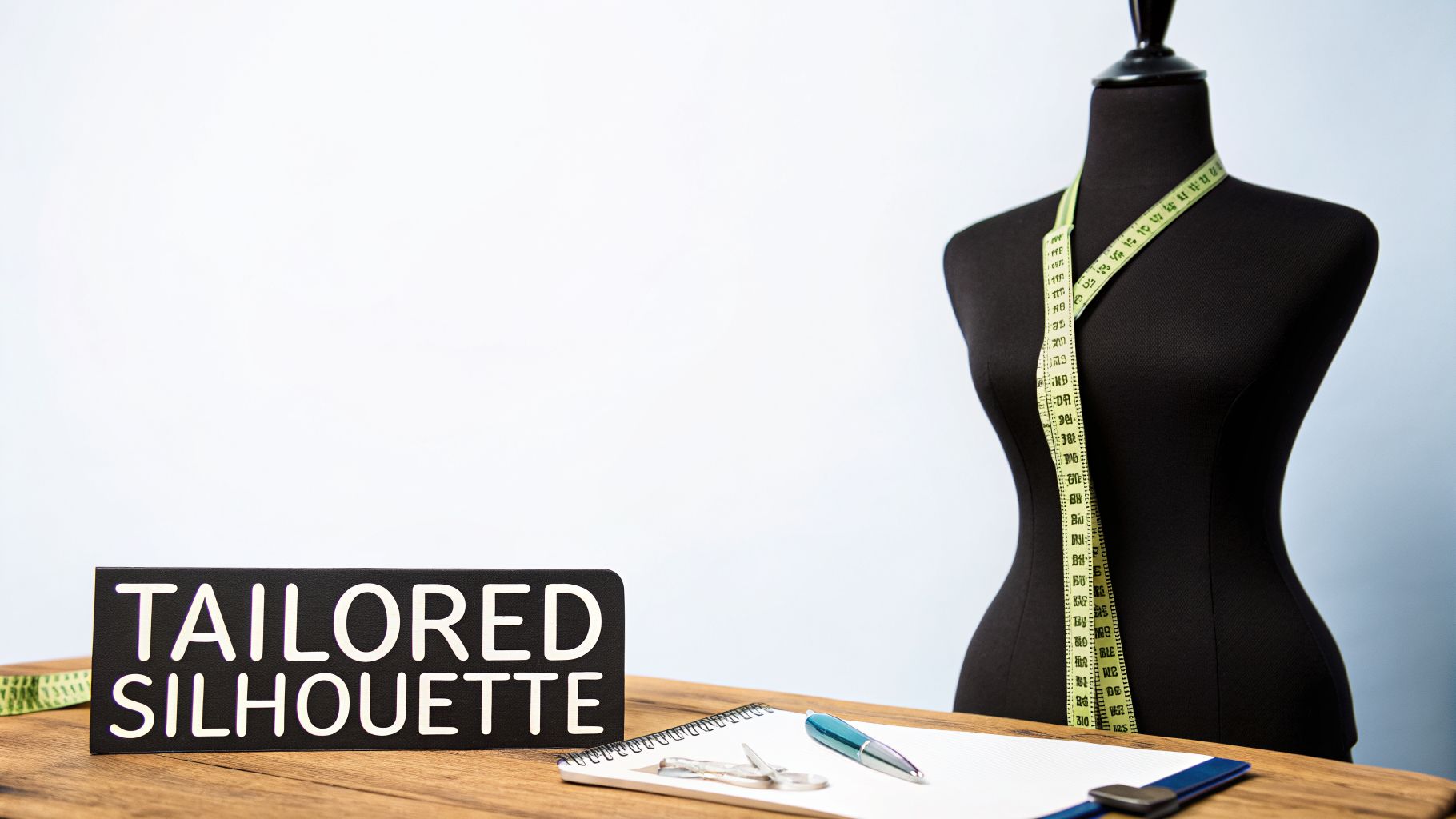
A lower body lift, which surgeons sometimes call a belt lipectomy, is much more than a simple nip and tuck. The best way to think of it is like having a master tailor expertly alter a suit that's several sizes too big. The goal isn't just to remove tissue; it's to re-drape and reshape your skin to create a smoother, firmer, and more natural contour that matches your slimmer frame.
This procedure is very often the final, rewarding step for people who have completed a massive weight loss journey. When you lose 100 pounds or more, the skin that was stretched for so long simply doesn't have the elasticity to bounce back. This can leave behind heavy folds of skin that not only affect your confidence but can cause real physical problems like rashes, chafing, and difficulty finding clothes that fit well.
To give you a clearer picture, here's a quick summary of what the procedure entails.
This table provides a high-level overview, but understanding what happens during the surgery helps clarify its comprehensive nature.
A lower body lift is actually a combination of several procedures, all performed together to ensure the final result is seamless and proportional. It’s a 360-degree approach.
It typically brings together these key components:
At its core, the power of a lower body lift lies in its circumferential design. The surgeon makes an incision that goes all the way around the lower torso—like a low-slung beltline. This allows for the removal of an entire "belt" of excess skin and underlying fatty tissue, creating a dramatic improvement from every angle.
This isn't a niche procedure; it has become a trusted solution for weight loss patients around the world. In 2023, data from the International Society of Aesthetic Plastic Surgery showed that 128,998 lower body lift procedures were performed globally.
In the United States, the procedure’s popularity continues to rise, with the number of surgeries growing by 5% to 10,947 in that same year. This growth underscores just how effective it is for people ready to complete their weight loss journey. If you'd like to explore this topic further, this detailed Lower Body Lift Surgery Guide offers a great deal of additional information.
Figuring out if a lower body lift is the right next step for you is probably the most critical part of this entire process. Let's be clear about one thing from the start: this surgery isn't a weight loss method. It's the final, contouring step for people who have already put in the incredible work of losing a significant amount of weight.
The perfect candidate is someone who is ready to finally address the loose, excess skin that often remains after a successful weight loss journey. This isn't for someone trying to drop the last 20 pounds. It’s for those who have often lost 100 pounds or more and are now left with skin that has lost its elasticity.
The single most important factor I look for in a potential candidate is a stable weight. Before we can even begin to talk about surgery, I need to see that you've maintained your goal weight for at least 6 to 12 months. There’s absolutely no wiggle room on this, and for a very good reason.
I often tell my patients to think of their skin like a custom-tailored suit. During a lower body lift, I am meticulously trimming and tightening that "suit" to fit your new, slimmer frame perfectly. If your weight changes dramatically after the fact—up or down—it will stretch the skin out again or create new pockets of looseness. This completely undermines the beautiful result you've worked so hard for. Stability is key to a lasting outcome.
This has become a particularly popular procedure for women, especially after bariatric surgery. The numbers back this up; in 2023, men made up only 5% of all lower body lift patients in the United States. It's a powerful tool for addressing the physical aftermath of massive weight loss, and surgeons will often pair it with other procedures like gluteal augmentation for a more comprehensive result. If you're interested in the data, these plastic surgery statistics from 2023 offer a fascinating look at the current trends.
Beyond your weight, your overall health is paramount. This is a major operation, and being in good physical shape is non-negotiable for a safe procedure and a smooth recovery.
A few key health markers we’ll discuss are:
A lower body lift is a huge commitment, and your mental and emotional readiness is just as crucial as your physical health. You need to be prepared for a significant surgery and the recovery that follows, which will require a lot of patience and a solid support system at home.
The happiest patients are those who understand that the goal is improvement, not perfection. They are looking to feel more comfortable, to fit into clothes better, and to move freely without being hindered by excess skin. They also understand and accept that a permanent scar is part of the trade-off for a truly dramatic new body contour.
If you’ve been on a major weight loss journey and are now grappling with what comes next, you might find our guide on body contouring after weight loss to be a great resource. It walks through more of the options available to put the finishing touches on your transformation. An honest conversation with yourself about your health and your goals is the best place to begin.
Thinking about a lower body lift can feel overwhelming, but understanding exactly what happens can make all the difference, replacing any anxiety you might have with confidence. Your path doesn't begin on the operating table. It starts with a conversation.
During your initial consultation, we'll sit down and talk everything through. This is our chance to get to know each other. I'll listen to what you want to achieve, review your medical history, and assess your body's unique contours. This is a partnership, and my goal is to create a surgical plan that truly fits your vision and is safe for you.
Once we’ve settled on a shared goal, we can get down to the technical details. A lower body lift revolves around a circumferential incision that goes all the way around your torso. Think of it like the line where a low-slung belt would sit.
I carefully plan this incision so the eventual scar can be hidden by most underwear and swimsuits. This marking becomes the blueprint for the surgery, guiding the removal of a whole "belt" of loose skin and fat. This 360-degree approach is what allows us to create such a dramatic and balanced improvement.
The flowchart below shows the simple, non-negotiable criteria for anyone considering this procedure.
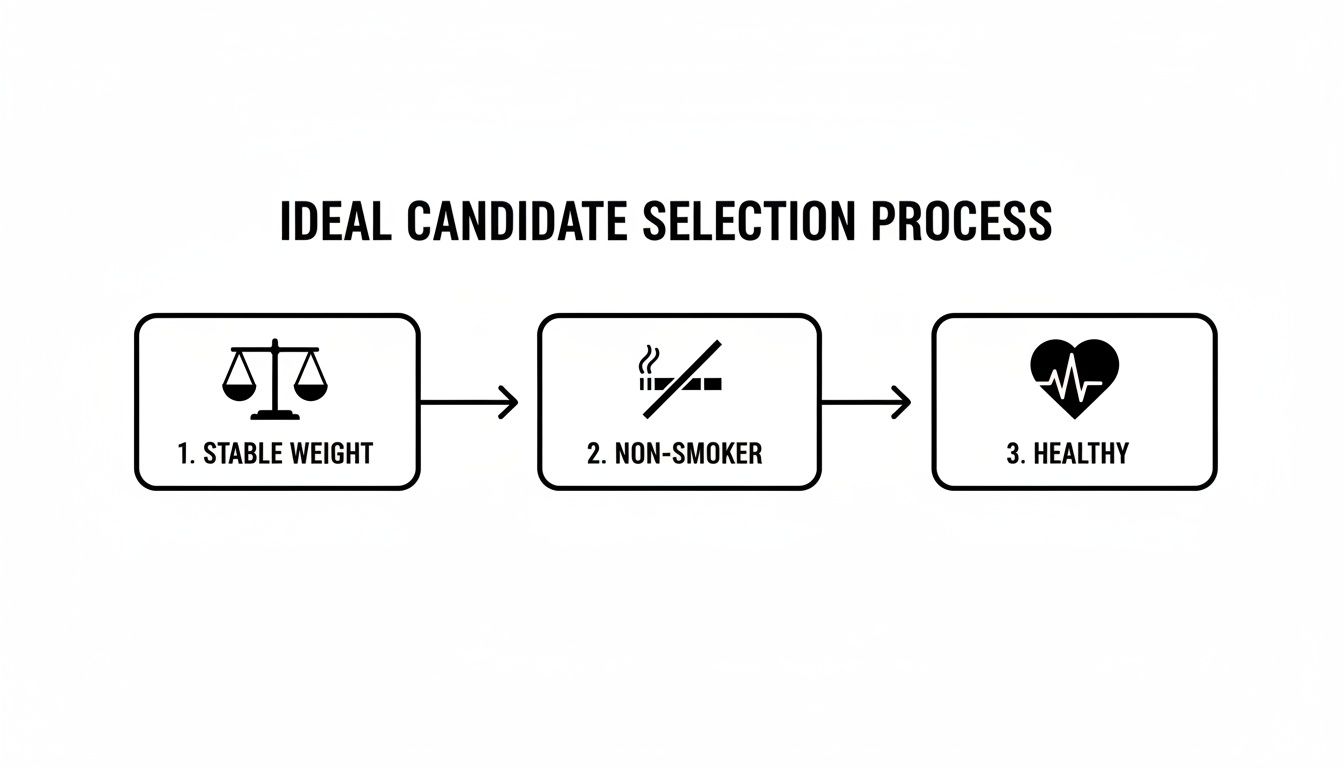
As you can see, a stable weight, being a non-smoker, and having good overall health are the cornerstones of a successful outcome.
When you arrive for your surgery, you'll be made comfortable and placed under general anesthesia, ensuring you'll be completely asleep for the entire procedure. Once you're resting peacefully, I’ll begin by following the markings we made during your consultation.
The main work involves removing that pre-planned "belt" of excess skin and underlying fat from your abdomen, hips, outer thighs, and lower back. This is what gets rid of the sagging and looseness that brought you here.
After the excess tissue is gone, the next step is about re-draping and tightening what remains. I'll lift the skin of your abdomen, thighs, and buttocks, repositioning everything to give you a smoother, firmer, and more youthful shape. It’s like tailoring a piece of clothing to fit perfectly.
A lower body lift isn't just one operation. It’s a carefully orchestrated combination of procedures—like a tummy tuck, outer thigh lift, and buttock lift—all performed in a single session to reshape your entire lower torso.
This combined technique is key to achieving a result that looks natural and proportional from every angle. It avoids the awkwardness of fixing one area while leaving another untouched. In fact, research shows that combining procedures is not only common but also highly effective. One study found that 80% of patients chose to add liposuction to their lift for even better shaping. You can learn more about these techniques by reviewing the full research findings.
Once the new contours are sculpted, I'll meticulously close the incisions with sutures. In some cases, I might place a few small surgical drains under the skin. These are temporary tubes that prevent fluid from building up and are usually removed in a week or two.
Finally, you’ll be fitted into a medical-grade compression garment. This snug-fitting garment is absolutely crucial for your recovery. It helps control swelling, provides support to your healing tissues, and ensures everything heals smoothly. From here, your recovery journey begins, leading you toward your beautiful, final results.

While the surgery itself happens in a single day, your recovery is a journey that unfolds in stages. Knowing what to expect makes all the difference, helping you prepare mentally and physically for the path to your final results.
It’s important to understand that a lower body lift recovery is more intensive than that of a standard tummy tuck. Because we are addressing the entire 360-degree circumference of your midsection, your body needs significant time to heal. Your patience during this period is genuinely one of the most critical parts of achieving a fantastic outcome.
Those first two days after your surgery are all about rest and letting our team take care of you. You’ll feel groggy coming out of anesthesia, and your only job is to let your body begin its healing in a safe, monitored setting.
You'll be snug in your compression garment, and you will likely have a few small surgical drains in place. These thin tubes are essential, as they prevent fluid from building up near your incisions. We’ll manage your comfort with pain medication, and our nursing staff will be right there to help with anything you need.
Swelling is a normal and expected part of healing, but it can be uncomfortable. Understanding the strategies for managing post-operative swelling through effective rehabilitation can give you valuable tools for a smoother recovery.
Once you’re home, your role in the healing process becomes much more active. These first two weeks are absolutely crucial. You’ll need to wear your compression garment around the clock, as this is your best tool for controlling swelling and supporting your new contours.
We will send you home with detailed instructions for caring for your incisions and managing the drains. You must take it extremely easy—no bending, lifting, or straining whatsoever. Short, slow walks around the house are great for circulation, but rest is your top priority.
Think of this time as a direct investment in your final look. The care and patience you show now will directly influence how well you heal, how your scars mature, and the quality of your long-term results. Rushing things is the biggest mistake you can make.
After the first couple of weeks, you'll really start to feel more like yourself again. Once your drains are removed, you can begin to slowly and carefully increase your activity levels, always following your surgeon's specific advice. Most people feel ready to return to a desk job and light daily routines within 2 to 3 weeks.
Here are some key milestones you can expect during this phase:
For more general advice on navigating the healing process, our guide to recovery after plastic surgery has some excellent tips.
You will see a dramatic change in your figure right away, but it’s important to remember that this isn't the final result. Swelling is significant and can take a long time to fully go away. The final, refined shape you’ve been waiting for will continue to emerge over 6 to 12 months as that last bit of swelling subsides and your skin settles beautifully.
Scars are an inevitable trade-off for removing the excess skin, but we are meticulous about their placement. The incision runs along a low "beltline," allowing the scar to be easily hidden by most underwear and bikini bottoms. With proper care, the scar line will fade over time, changing from red to pink and eventually to a thin, pale line—a quiet reminder of the incredible transformation you’ve achieved.
With so many body contouring options out there, it's easy to feel overwhelmed. Let's clear up the confusion by comparing a lower body lift to other common procedures. Understanding what each surgery is designed to do is the key to figuring out which one truly matches your goals.
Think of it this way: if you have a single leaky faucet, you fix that one spot. But if the pipes are failing throughout the whole house, you need a more comprehensive overhaul. For significant, circumferential loose skin, a lower body lift is that complete, whole-house solution.
An abdominoplasty, better known as a tummy tuck, is a fantastic procedure with a very specific job: it addresses the front of the abdomen. It’s designed to remove a flap of loose skin and fat while also tightening up separated abdominal muscles, giving you a flatter, firmer stomach.
But that’s where its reach ends. A tummy tuck won't do anything for sagging skin on your hips, outer thighs, or buttocks. It’s the perfect choice for someone whose main issue is a loose belly, often after pregnancy or more moderate weight changes.
Liposuction is another incredibly popular procedure, but it plays a completely different role. Its one and only purpose is to remove stubborn pockets of fat. It does not, and simply cannot, tighten or remove loose, sagging skin.
In fact, if you have poor skin elasticity, performing liposuction can sometimes make the skin look even looser once the underlying fat is gone. It's an excellent tool for sculpting and refining areas that already have good skin tone, but it's not the answer for the widespread excess skin that often comes after massive weight loss.
Just like a tummy tuck, thigh lifts and buttock lifts are zone-specific procedures. A thigh lift focuses on removing excess skin from the inner or outer thighs. A buttock lift elevates and reshapes the rear by removing a crescent of sagging skin from where the lower back meets the top of the buttocks.
These are wonderful options if you have isolated sagging in just those spots. For the post-weight loss patient, however, treating only the thighs or buttocks can create an unbalanced look, leaving behind loose skin on the abdomen and hips that suddenly looks out of place.
To make the differences even clearer, it helps to see these procedures side-by-side. This table breaks down what each surgery is best for.
As you can see, each procedure has a distinct purpose. The best choice always comes down to the specific nature and location of your concerns.
A lower body lift is the only procedure that integrates a tummy tuck, outer thigh lift, and buttock lift into one harmonious surgery. It addresses the entire lower torso in a single, 360-degree approach, creating a smooth and natural transition from your back all the way to your front.
This comprehensive technique prevents that tell-tale "before and after" look, where a tight, flat abdomen meets loose, sagging hips. It’s about restoring balance and proportion to your entire lower body.
If you’re trying to decide what’s right for you, our guide on the best body contouring procedures offers even more great insights. Ultimately, it all boils down to where your excess skin is. If it's confined to your stomach, a tummy tuck might be all you need. But if it wraps all the way around your body like a belt, only a lower body lift can deliver that truly complete and satisfying result.
It’s completely understandable to have questions about the financial side of a lower body lift. When you start your research, it’s important to know that the final price tag isn't just one single figure—it's a comprehensive total that covers every aspect of your safety and care.
A personalized quote is the only way to get an exact number, but let's break down what goes into that total so you can see the complete picture.
When a practice provides a quote, it should be a clear, itemized list. Seeing everything broken down helps you understand exactly where your money is going and why each element is crucial for a successful outcome.
You'll typically see these components on your quote:
While national averages can give you a general idea—often falling in the $15,000 to $25,000 range—this can vary quite a bit. Your specific surgical plan and individual needs will determine the final cost, which is why a one-on-one consultation is so important.
I often encourage patients to think of this not just as a cost, but as a profound investment in themselves. After the incredible effort of major weight loss, a lower body lift is often the final, empowering step.
This procedure is about more than just aesthetics. It’s an investment in being able to exercise without painful chafing, wear the clothes you’ve always wanted to, and finally feel at home in your own body after a long and difficult weight loss journey.
For so many people, the ability to move freely and feel confident in their own skin is a priceless return. It's about truly getting to enjoy the healthy life you've worked so hard to achieve.
We know this is a significant decision. To help patients move forward, many practices offer financing options that can make the procedure more manageable.
These plans allow you to break down the total into predictable monthly payments, putting your goals within reach without creating a financial burden. It’s definitely something worth asking about during your consultation.
It's completely normal to have a lot of questions when you're considering a procedure like a lower body lift. In fact, it's a sign you're taking this important decision seriously. To help you feel more informed, we’ve compiled the questions we hear most often from our patients right here in our office.
No, and this is a crucial point to understand. Think of a lower body lift as the final, sculpting step of your weight loss journey, not a way to lose the weight itself. This is a body contouring procedure designed for people who have already done the hard work of losing a significant amount of weight but are now left with loose, hanging skin.
We require our candidates to be at a stable, healthy weight for at least six months before even considering surgery. While we do remove some weight along with the excess skin and stubborn fat, the real goal isn't to change the number on the scale—it's to reshape your body and restore its natural contours.
You can definitely expect some discomfort for the first few days, but it's very manageable. We use a combination of long-acting local anesthetics during the surgery itself and provide you with prescription pain medication to keep you comfortable at home.
Most of our patients find the pain drops off significantly after the first week. After that, the feeling is usually described more as soreness and a deep tightness, especially when you start moving around more.
A common patient concern is the level of post-operative pain, but it's often more manageable than anticipated. The most critical factor for a comfortable recovery is diligently following your surgeon's instructions for rest, activity, and medication.
Scars are an unavoidable reality of a lower body lift, but the good news is that a skilled surgeon knows exactly where to place them. The main incision creates a circumferential line that runs around your torso, almost like a low-slung belt.
We strategically place this incision so the resulting scar is easily hidden by most underwear and swimsuits. While your scar will look red and prominent at first, it will fade beautifully over time, typically over 12-18 months. It will transition from red to pink, and finally settle into a thin, pale line. Following a proper scar care routine can make a world of difference in its final appearance.
Just like any major operation, a lower body lift has potential risks. These can include things like bleeding, infection, fluid collection (seroma), and issues with wound healing. However, choosing a board-certified plastic surgeon who operates in a fully accredited surgical facility is the single best way to minimize these risks.
In our experience, the most common complications are minor wound healing delays. These are seen most often in patients who smoke or don't follow their post-operative instructions to the letter. We will go over your personal risk factors and our extensive safety measures in detail during your consultation, ensuring you feel confident and fully informed.
Are you ready to see how a lower body lift could complete your transformation? At Cape Cod Plastic Surgery, Dr. Marc Fater provides expert guidance and exceptional results. Schedule your personalized consultation today and take the final step in your journey.
October 7, 2026
A Practical Guide to Healing After Breast Surgery

October 6, 2026
Your Safety Guide: What to Look for When Choosing a Plastic Surgeon
October 5, 2026
Why Our On-Site Accredited Facility Matters for Your Safety

Cape Cod Plastic Surgery offers expert cosmetic and reconstructive procedures in a safe, accredited setting. Led by Dr. Marc Fater, we combine advanced techniques with personalized care to help you look and feel your best.
Monday: 9:00 AM – 5:00 PM
Tuesday: 9:00 AM – 5:00 PM
Wednesday: 9:00 AM – 5:00 PM
Thursday: 9:00 AM – 5:00 PM
Friday: 9:00 AM – 5:00 PM