

October 7, 2026
What to Expect During Your Breast Surgery Recovery
A Practical Guide to Healing After Breast Surgery
Dec 3, 2025

Preventing blood clots after surgery is a shared responsibility between you and your surgical team, and it all starts well before your procedure day. We combine a detailed look at your personal risk factors with specific, proactive steps—like medication and early movement—to create a plan that’s built just for you. This personalized approach is truly the gold standard for a safe and smooth recovery.
The very first step is acknowledging that every patient is different. There's no cookie-cutter prevention plan here. Instead, your surgical team will conduct a thorough preoperative risk assessment to build a strategy tailored to your specific situation.
This process is a deep dive into your health and history. Think of it less as a simple questionnaire and more as the essential foundation for your surgical safety.
To figure out your individual risk level, we look at a combination of factors. These can be both temporary things related to the surgery and permanent aspects of your health that might influence how your body forms clots.
Here's a look at what we'll be discussing:
Your honesty and thoroughness during this preoperative phase are your first line of defense. Providing a complete medical history allows your surgeon to create the most effective and safest plan for your specific needs.
With all this information, surgeons often use a scoring system, like the Caprini score, to get a clear, objective measure of a patient's risk. This tool assigns points to different risk factors, and the final score helps us decide on the right level of prevention, a strategy we call thromboprophylaxis.
For someone with a low-risk score, the plan might be as simple as getting up and walking frequently right after surgery. On the other hand, a patient with a higher-risk score might need a combination of compression devices and an anticoagulant (blood-thinning) medication.
This personalized strategy isn't just a good idea—it's backed by solid evidence. Matching the intensity of preventive measures to an individual’s risk profile has proven to be incredibly successful in improving patient safety. Research shows that patients who get prevention tailored to their specific VTE risk have a major reduction in postoperative blood clots.
This entire assessment is a crucial part of how to prepare for surgery safely. It empowers our team here at Cape Cod Plastic Surgery to protect you from day one, ensuring every preventive step we take is based on your unique profile.
From the moment you're wheeled into the operating room, your surgical team is already working to keep you safe. Preventing blood clots is a massive priority, and those protective measures start long before you open your eyes in the recovery room.
These aren't afterthoughts; they're standard protocols built into your care to protect you when you're most vulnerable. Think of it as a one-two punch against blood clots, using two distinct but complementary approaches: mechanical and pharmacological. One uses physical force to keep your blood moving, while the other uses medication to stop clots from even thinking about forming.
One of the first things you’ll likely notice after surgery are the puffy sleeves wrapped around your lower legs. These are sequential compression devices (SCDs), though you’ll often hear nurses call them "leg squeezers" or compression boots. They’re connected by tubes to a small pump at your bedside.
That pump rhythmically inflates and deflates air pockets inside the sleeves, gently squeezing and then releasing your calf muscles. This isn’t just for comfort—it’s actively mimicking the muscle contractions that happen when you walk.
By stimulating your calf muscles, SCDs essentially do the walking for you while you rest. They push blood up and out of the deep veins in your legs, preventing it from getting sluggish and pooling. This constant, gentle movement is one of the most effective ways to combat clot formation right after your procedure.
Think of SCDs as a personal walking assistant while you're in bed. They keep your circulation humming along even when you can't, providing around-the-clock protection during that initial recovery period.
You'll be instructed to keep these on anytime you're resting in bed. It might seem like a small thing, but their consistent use is a simple, powerful tool for preventing blood clots after surgery.
While SCDs are great for keeping blood moving, your surgeon might also decide you need an extra layer of defense from the inside. This is where pharmacological support—medications often called blood thinners—comes in.
It's a bit of a misnomer; these drugs don't actually "thin" your blood. Instead, they work on a chemical level to interrupt the complex clotting cascade, making it much harder for a dangerous clot to form. The most common medications used for this in the hospital are injectables like Heparin or Lovenox (enoxaparin), usually given as a small shot under the skin of your belly or thigh.
The decision to use these medications is tailored specifically to you, based on your pre-op risk assessment and Caprini score. For many patients, especially those undergoing longer or more complex procedures, they are an essential part of the safety plan. You might start them just before surgery or right after, and they may continue throughout your hospital stay.
To give you a clearer picture, here’s a quick breakdown of how these two hospital-based methods compare.
Pairing these methods gives us the best of both worlds.
The data on this is compelling. Studies have repeatedly shown that using low-dose anticoagulants can slash the risk of venous thromboembolism (VTE) by 50–80% in surgical patients. This is especially critical for preventing a fatal pulmonary embolism, which is the most feared complication of a DVT. If you're curious, you can learn more about how all of this fits into the bigger picture by reading about the different types of anesthesia for surgery and how they relate to your overall surgical plan.
Once you’re home, the ball is in your court. Your surgical team has done everything to set you up for success, but now you become the most important person on your recovery team. What you do over the next few weeks is absolutely critical for preventing blood clots.
Your recovery at home really boils down to three key things: moving your body, staying hydrated, and following our specific instructions for you. Getting these right will do more than just prevent complications—it will make your entire healing process smoother and more comfortable.
I know the last thing you might feel like doing after surgery is moving around, but it’s one of the most powerful things you can do for your recovery. When you stay still for too long, blood can pool in your legs, creating the perfect setup for a clot. Gentle, consistent movement is the answer.
We’re not talking about running errands or heading back to the gym. The focus is on small, easy activities that get your calf muscles working. Think of them as the "second heart" for your lower body.
For some procedures, a more formal plan is necessary. For instance, after major joint surgery, a structured physiotherapy protocol is essential for regaining function and keeping circulation strong. The principle is the same: deliberate movement is key.
The real secret is consistency. Just move a little, but do it often.
Staying hydrated is always important, but it takes on a whole new level of significance after surgery. When you get dehydrated, your blood can actually become thicker, which makes it more prone to clotting.
Imagine your blood vessels are like rivers. When you're well-hydrated, the river flows freely. When you're dehydrated, it turns into slow-moving sludge, making it much easier for a logjam—or a clot—to form.
Your goal is to drink plenty of clear fluids all day long. Water is always the best choice, but things like broth or diluted juice count, too. Try to steer clear of too much caffeine or alcohol, as they can actually work against you by causing dehydration. A great way to check your hydration level is to look at your urine—it should be a light, pale color.
Pro Tip: Keep a water bottle right next to you at all times. It's a simple visual reminder. Every time you get up for one of your short walks, take a few sips when you sit back down.
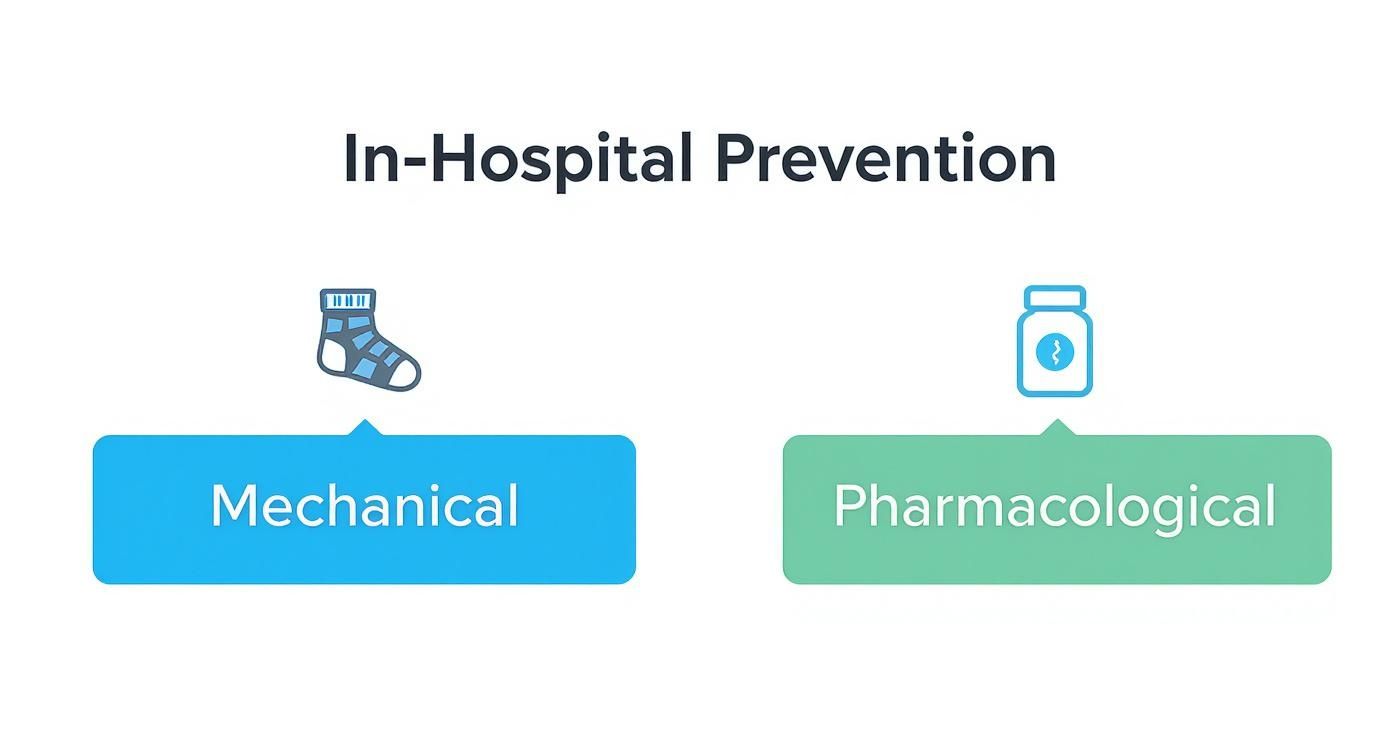
This image shows the two main ways we protect you in the hospital. The mechanical methods (like compression devices) and the pharmacological ones (medication) work together to create a safety net during that initial, critical period.
Before you head home, we’ll give you a detailed set of instructions. This isn’t a one-size-fits-all handout; it’s a plan created just for you. We base it on the specific surgery you had, your personal medical history, and your unique risk factors.
Think of this plan as your roadmap to a safe recovery. It will cover a few crucial areas:
Consider these instructions a direct continuation of the care you received with us. For more practical advice on setting yourself up for success at home, check out our guide on effective post-surgery recovery and care tips. Your commitment to this plan is the single biggest factor in achieving a great, safe outcome.
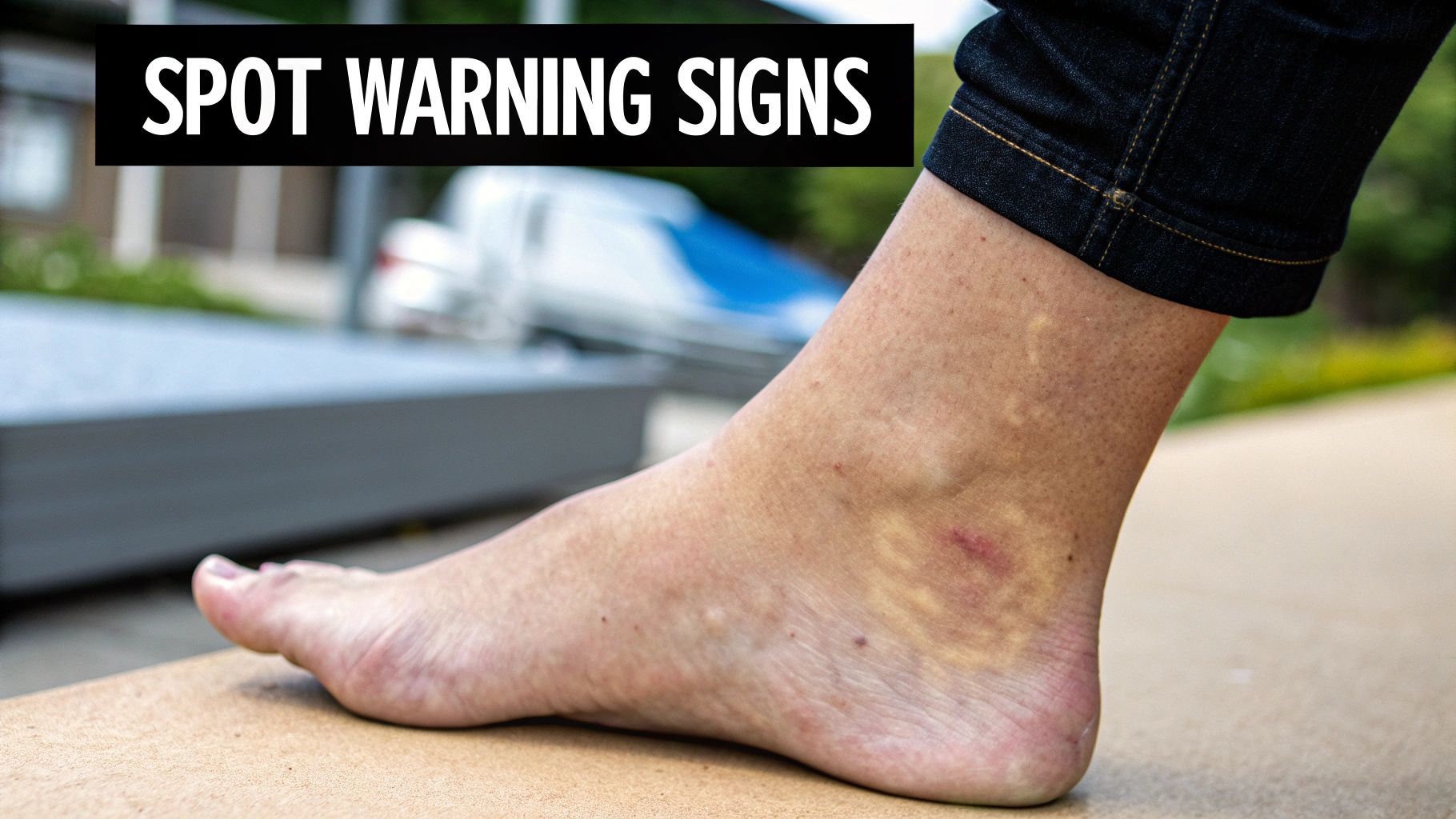
While we take every precaution possible, your most powerful tool during recovery is knowing your own body. Being aware of potential red flags—and knowing exactly what to do if you see one—is what empowers you to act fast. Always trust your gut. If something feels off, it's always better to get it checked out.
Post-surgery blood clots are a serious but very treatable complication, especially when we catch them early. The medical term is venous thromboembolism (VTE), which is an umbrella term for both deep vein thrombosis (DVT) in the leg and pulmonary embolism (PE) in the lungs. VTE is a real concern; it affects up to 900,000 people in the U.S. every year, with many of those cases happening after a patient has already gone home from a recent surgery.
A DVT is a blood clot that forms in a deep vein, most often in the leg. Picture it as a traffic jam in your circulatory system. The symptoms are almost always one-sided, meaning you’ll notice them in just one leg, not both.
Keep an eye out for these specific signs:
It’s important to know that sometimes a DVT can develop with very subtle symptoms, or even none at all. This is exactly why we stress the importance of gentle, consistent movement during your recovery—it helps keep things flowing and prevents these silent issues from cropping up.
If you spot any of these signs, especially swelling or pain in just one leg, this isn't a "wait and see" situation. Call our office right away for instructions.
The biggest risk with a DVT is that a piece of the clot can break free, travel through the bloodstream, and get stuck in the lungs. This is a pulmonary embolism (PE), and it is a true medical emergency that needs immediate attention.
A PE can strike suddenly, sometimes without any of the DVT warning signs appearing first. Knowing what to look for is critical.
To make it crystal clear, here’s a breakdown of how the symptoms differ between a DVT in the leg and a PE in the lungs.
Recognizing these PE symptoms is non-negotiable. It’s a life-threatening situation where every second counts.
Do not hesitate. Call 911 or go to the nearest emergency room if you experience any signs of a PE.
If you ever experience symptoms that worry you but don't seem to be a 911-level emergency, it's good to know your local options, like urgent care services. Having a plan for immediate care can save precious time and give you peace of mind.
While the fundamental strategies for preventing blood clots apply to all surgical patients, cosmetic procedures often come with their own set of rules. Plastic surgery, particularly body contouring, is more than just skin deep—it involves extensive tissue work and can temporarily limit your mobility in very specific ways.
This is especially true for major procedures like an abdominoplasty (a "tummy tuck"), a body lift, or a combination surgery such as a mommy makeover. These surgeries can last several hours, and recovery often requires you to maintain a bent-at-the-waist position to protect the incisions. This posture, while crucial for healing, can impact blood flow in the large veins of your legs and pelvis, making a proactive prevention plan non-negotiable.
The core of a tummy tuck procedure is the repair and tightening of the abdominal muscles. This is what creates that flat, strong result, but it also means your core is going to be sore and temporarily weakened. Understandably, this can make taking deep breaths a bit uncomfortable and might make you hesitant to get up and walk around—two factors that can lead to sluggish circulation.
At Cape Cod Plastic Surgery, we’ve built our safety protocols with this reality in mind. Dr. Fater’s process starts with a thorough preoperative screening, but he also pays close attention to the specific physical demands of your surgery. From there, we map out a personalized recovery plan that directly addresses these challenges.
We don't just tell you to "walk around." We show you how to move safely and effectively while protecting your incisions and your newly tightened core muscles. The goal is to encourage circulation without putting any strain on your surgical results.
Our customized plans are all about encouraging safe, early movement that respects your body's healing process. We will show you exactly how to do gentle leg exercises while you're resting and the proper way to get in and out of bed to avoid straining your abdomen.
For our local Cape Cod patients, we also offer practical tips on how to set up your home for a smooth recovery. A little bit of prep work can make a huge difference in your ability to stay mobile and safe, which is the cornerstone of preventing blood clots after surgery.
Think of it as creating a "recovery nest" where moving around is simple and intuitive. Here are a few things we always recommend:
When you prepare your space thoughtfully, you remove the mental and physical barriers to gentle movement. If it’s easy to get up for a short stroll to the kitchen, you’re far more likely to do it often. This simple, proactive step is a key part of your home care, empowering you to actively lower your risk and focus on a comfortable healing journey.
It's completely normal to have questions as you navigate your recovery. Even with the most detailed instructions, new concerns can pop up once you're back home. We've compiled some of the questions we hear most often from our patients to give you clear, straightforward answers and help you feel more confident about your healing process.
This is a fantastic and critical question. The period of highest risk is definitely in the first few days and weeks right after your surgery, which makes sense since that’s when you’re moving around the least. But the risk doesn't just vanish after that initial phase.
Research has shown the risk remains elevated for up to 90 days following a procedure. That's why we emphasize the importance of sticking with your prevention plan. Continuing with light, gentle movement and staying on top of your hydration for several weeks is crucial, even after you start to feel more like your old self. It's easy to let your guard down, but consistency is key here.
We know they aren't the most fashionable accessory, but those compression stockings are a cornerstone of your at-home care. They apply a specific, graduated pressure to your legs that keeps blood from getting stagnant and pooling in your calves—a major risk factor for clots. It’s absolutely essential to wear them for the full amount of time we recommend.
Think of them as your silent partner in recovery. You won't necessarily "feel" them working, but they are providing constant, passive protection. We'll give you a very specific timeline for when you can safely stop wearing them. Please don't make that call on your own; follow our guidance precisely.
If you have a personal or close family history of DVT or PE, that is one of the single most important things you can tell us during your consultation. This information immediately signals that you're in a higher-risk category, and it allows us to build a more aggressive prevention strategy just for you.
For our patients with a known history of clotting, the plan will be more robust. This often means:
A history of clotting doesn't mean you can't have a safe and successful surgery. It just means we take extra, specific precautions to ensure your well-being.
Your health history isn't just a checklist—it's the foundation of your personalized safety plan. The more open and thorough you are with us, the stronger we can make your defense against potential complications.
A healthy diet is always important for healing, but you might wonder if certain foods are off-limits. Generally, there aren't specific foods that cause blood clots, but some can interact with the anticoagulant medications we might prescribe.
For instance, foods loaded with Vitamin K—think leafy greens like kale, spinach, and broccoli—can sometimes interfere with how certain blood thinners work. If we prescribe a medication that's affected by this, we'll give you clear dietary instructions. It's also vital to tell us about every supplement you take, as some herbal remedies can also impact clotting.
The best advice for everyone? Focus on a balanced diet and, most importantly, stay incredibly well-hydrated. Dehydration can make your blood thicker and more prone to clotting, so drinking plenty of water and clear fluids is one of the easiest and most effective things you can do for yourself. Your commitment to these simple steps is your most powerful tool for a smooth, safe recovery.
At Cape Cod Plastic Surgery, your safety guides every decision we make, from our first conversation to your final post-op visit. If you have any questions at all about your procedure or what to expect during recovery, we’re here to give you the answers and support you deserve. Contact us today to schedule your personalized consultation.
October 7, 2026
A Practical Guide to Healing After Breast Surgery

October 6, 2026
Your Safety Guide: What to Look for When Choosing a Plastic Surgeon

October 5, 2026
Why Our On-Site Accredited Facility Matters for Your Safety

Cape Cod Plastic Surgery offers expert cosmetic and reconstructive procedures in a safe, accredited setting. Led by Dr. Marc Fater, we combine advanced techniques with personalized care to help you look and feel your best.
Monday: 9:00 AM – 5:00 PM
Tuesday: 9:00 AM – 5:00 PM
Wednesday: 9:00 AM – 5:00 PM
Thursday: 9:00 AM – 5:00 PM
Friday: 9:00 AM – 5:00 PM