

October 5, 2026
The Value of an On Site Accredited Facility
Why Our On-Site Accredited Facility Matters for Your Safety
Dec 14, 2025
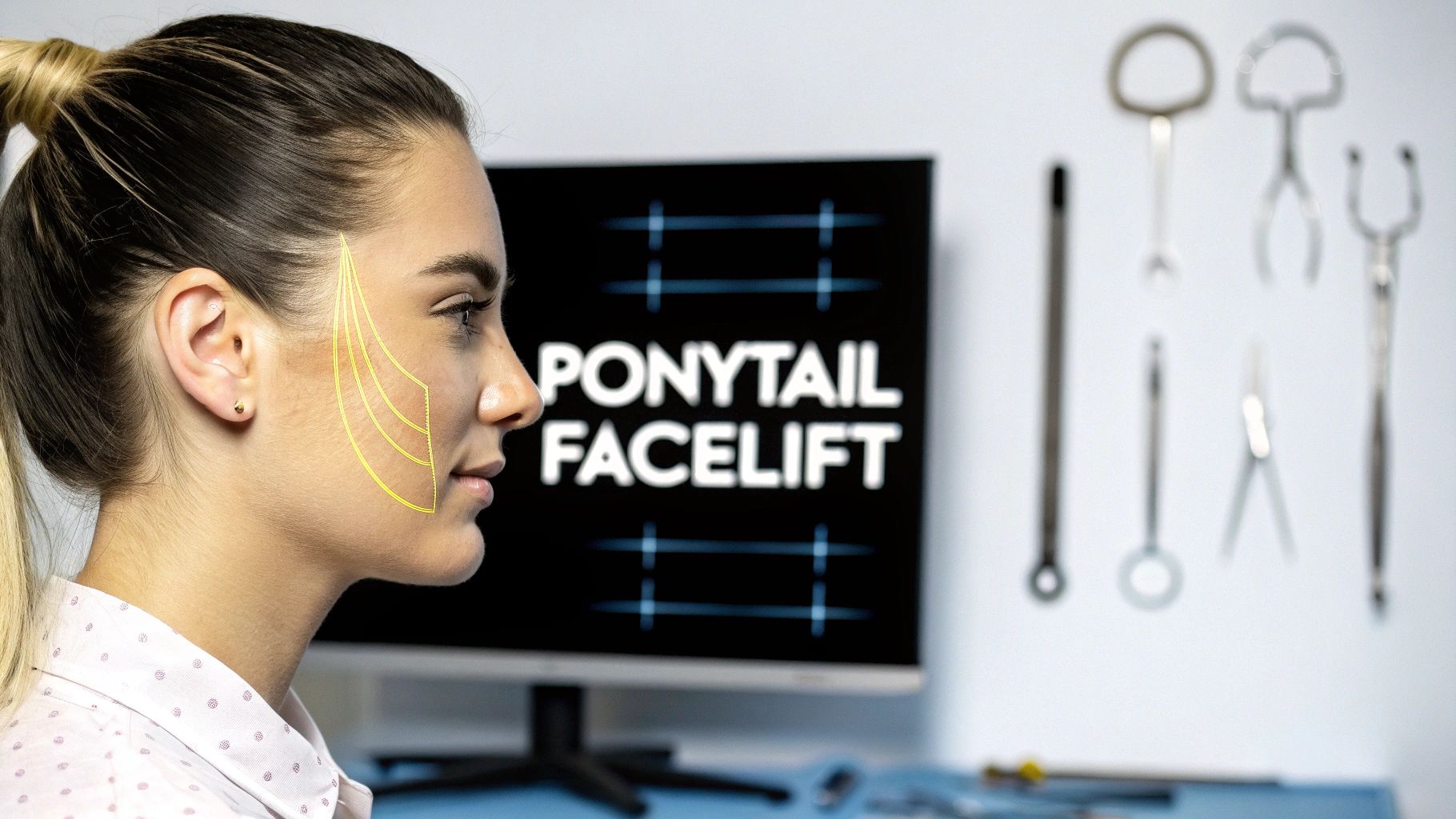
You know that fresh, lifted feeling you get from a high, tight ponytail? The ponytail facelift is a brilliant surgical technique that captures that exact effect—and makes it last. It's a modern, less invasive approach that works by repositioning the deeper facial tissues in a vertical direction, giving you a natural-looking lift with very little scarring and a quicker recovery.
Let's break it down. Think of the ponytail facelift less as a traditional facelift and more like a skillful restoration of your face's natural, youthful architecture.
Older facelift methods often pulled the skin horizontally, which could sometimes create that tell-tale "windswept" or tight look. This technique is completely different. It focuses on a pure vertical lift.
This upward lift primarily targets the upper and mid-face, addressing the very first signs of aging right where they tend to show up. It’s perfect for tackling issues like:
The goal here isn't to change your fundamental features. It's about making you look like the best, most well-rested version of yourself. To see how this compares to other approaches, you can explore different types of facelift services.
The name is more than just clever marketing—it perfectly describes the direction and goal of the lift. Surgeons make tiny, well-hidden incisions, usually tucked away in the hairline at the temples and sometimes behind the ears.
From there, they work their magic on the deeper layers.
The real secret is repositioning the underlying SMAS layer—the muscle and connective tissue foundation of your face. By lifting this layer vertically, the results are genuine and long-lasting, not just a temporary stretch of the skin.
For a quick overview, this table breaks down the essentials of the procedure.
This at-a-glance summary highlights why the ponytail facelift is such a sought-after procedure for those looking for subtle yet meaningful results.
Technically speaking, the ponytail facelift (often called a PTFL) is an advanced type of endoscopic deep plane facelift. The whole procedure is designed to refresh the face with virtually no visible scarring.
Because it’s done with an endoscope—a tiny camera on a thin tube—the surgeon can see and work on the deep structures of your face with incredible precision. This is what allows for a result that is both subtle and impactful.
It’s an excellent choice for people who want a significant refresh without the lengthy downtime of a full, traditional facelift. The focus is always on achieving a vibrant, natural appearance that simply turns back the clock a few years.
To really get what a ponytail facelift is all about, you have to look past the catchy name and see the surgical skill behind it. This isn't just a simple skin-tightening procedure; it's a sophisticated blend of art and technology that lifts the face from the inside out for a result that looks completely natural.
We're not just stretching skin here. This is a deep-plane technique, which means we’re going underneath the muscle to reposition the very foundation of your facial structures. The goal is to put everything back where it used to be, restoring your youthful contours in a way that truly lasts.
It all starts with the incisions, and this is where the ponytail facelift has a major advantage. Traditional facelifts often involve incisions right in front of the ear, which can be difficult to hide. This technique is different.
Your surgeon will make a few small, discreet incisions that are carefully hidden within the hairline at your temples and sometimes behind your ears. This placement is absolutely key. It ensures that once everything heals, the scars are so well concealed that you can pull your hair back or wear it any way you like without a second thought.
This meticulous approach helps preserve your natural hairline and completely avoids that "pulled" look that people often worry about. The whole point is to look refreshed, not like you've had surgery.
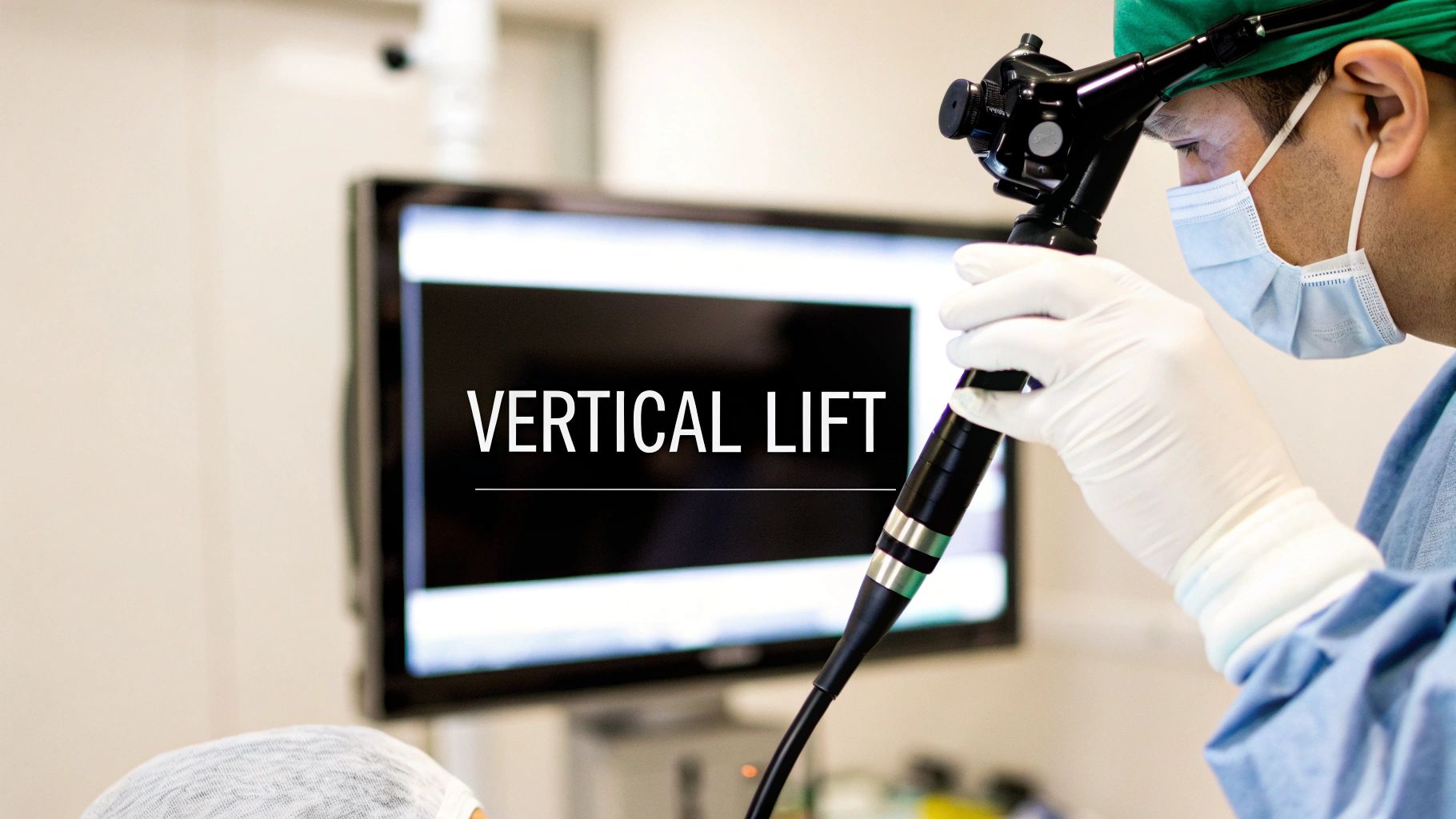
With the incisions made, the surgeon introduces an endoscope—a very thin tube with a tiny high-definition camera and light on the end. This little tool is what makes the procedure so precise and minimally invasive.
Think of it like a mechanic using a tiny camera to see inside an engine without taking the whole thing apart. The endoscope gives your surgeon a magnified, crystal-clear view of the deep tissues of your face on a monitor, all without needing to make a large opening. This provides incredible control.
The endoscope is a true game-changer. It lets us release and reposition ligaments and deep facial tissues with incredible precision and minimal trauma. For the patient, this means less swelling, less bruising, and a much faster recovery.
This technology is what allows the surgeon to do the delicate work on the deeper facial anatomy, which is where the real lifting and rejuvenation happens.
This is the heart of the ponytail facelift. Your surgeon will work on a deep layer of tissue known as the SMAS (Superficial Musculoaponeurotic System). This isn't skin; it's the strong, fibrous network that supports your facial muscles and fat pads.
As we get older, this SMAS layer starts to sag, which is what causes cheeks to look hollow and jowls to form. A ponytail facelift tackles this problem head-on by lifting the SMAS in a purely vertical direction. This is a huge departure from many older facelift methods.
Imagine you're restoring the frame of a building. By hoisting the deep foundation (the SMAS) back into its original, higher position, the outer walls (your skin) naturally fall back into place smoothly and without any tension. This vertical lift is what creates that hallmark refreshed, elevated look that defines the ponytail facelift.
Figuring out if a ponytail facelift is the right move really comes down to a careful look at your own face, your skin, and what you’re hoping to accomplish. This isn't a one-size-fits-all fix for aging; it’s a specific tool designed for a particular kind of patient. The whole key is matching what the procedure does best with the results you're dreaming of.
The perfect candidate is usually someone just starting to see those first, stubborn signs of aging. You might look in the mirror and feel like your cheeks have lost some of that high, youthful volume, or maybe your jawline just isn't as sharp as it used to be. These are typically mild to moderate changes—not quite enough to warrant the full-scale correction of a traditional facelift.
Generally, the best candidates are in their late 30s to early 50s. At this age, you likely still have what surgeons call good skin elasticity. Think of it like a brand-new rubber band: when you stretch it, it snaps right back into place without getting saggy.
That quality is absolutely essential for a ponytail facelift. The surgeon is lifting the deeper, foundational tissues of your face, and your skin needs to be able to shrink-wrap smoothly over those newly lifted contours. Good elasticity is what gives you that clean, natural-looking finish without any tell-tale pulling or bunching.
On the flip side, this technique probably isn't the best choice if you're dealing with more advanced signs of aging. If you have significant loose skin, especially on the neck (the classic "turkey neck"), or deep, heavy jowls, you'll likely need a more powerful procedure like a traditional deep plane facelift to get the results you want.
Years of sun damage can also take a toll on skin elasticity, making it less responsive to the subtle redraping of the ponytail technique. During your consultation, a good surgeon will take a close look at your skin's tone and texture to guide you toward the most effective approach.
A ponytail facelift is brilliant for vertical lifting—it helps restore that refreshed, heart-shaped look to the face. But its main focus is the mid-face and temples. It isn’t designed to tackle significant neck sagging or heavy jowls, which really require other surgical solutions.
Your personal goals are just as important as your physical anatomy. The right candidate for a ponytail facelift is usually looking for a few specific things:
This procedure has a surprisingly broad appeal. Data from a 22-year study covering over 600 facelifts revealed that even younger patients, some under 35, opt for a basic ponytail lift to get ahead of the very earliest signs of aging. It’s often seen as a great intermediate step, with results from the endoscopic versions lasting three to five years, while more involved methods can last eight to ten years. You can explore more about patient demographics in this complete guide to the ponytail lift.
When you start exploring facial rejuvenation, the number of choices can feel a little overwhelming. There seems to be a procedure for every line and concern. The key is understanding that the ponytail facelift isn't meant to replace every other technique; it's a highly specific tool for a particular set of goals.
Its real strength is the focused, vertical lift it provides for the upper and mid-face. Think of it as the perfect solution for tackling those early signs of aging with a more subtle, less invasive touch. While other procedures do an excellent job with extensive correction in the lower face and neck, the ponytail lift is all about elevating and refreshing the cheeks and temples.
To really get a feel for where it fits, let's put it side-by-side with the most common alternatives.
This decision tree gives you a peek into how a surgeon thinks when evaluating if a facelift is the right path for a patient, considering everything from aging signs to skin quality.
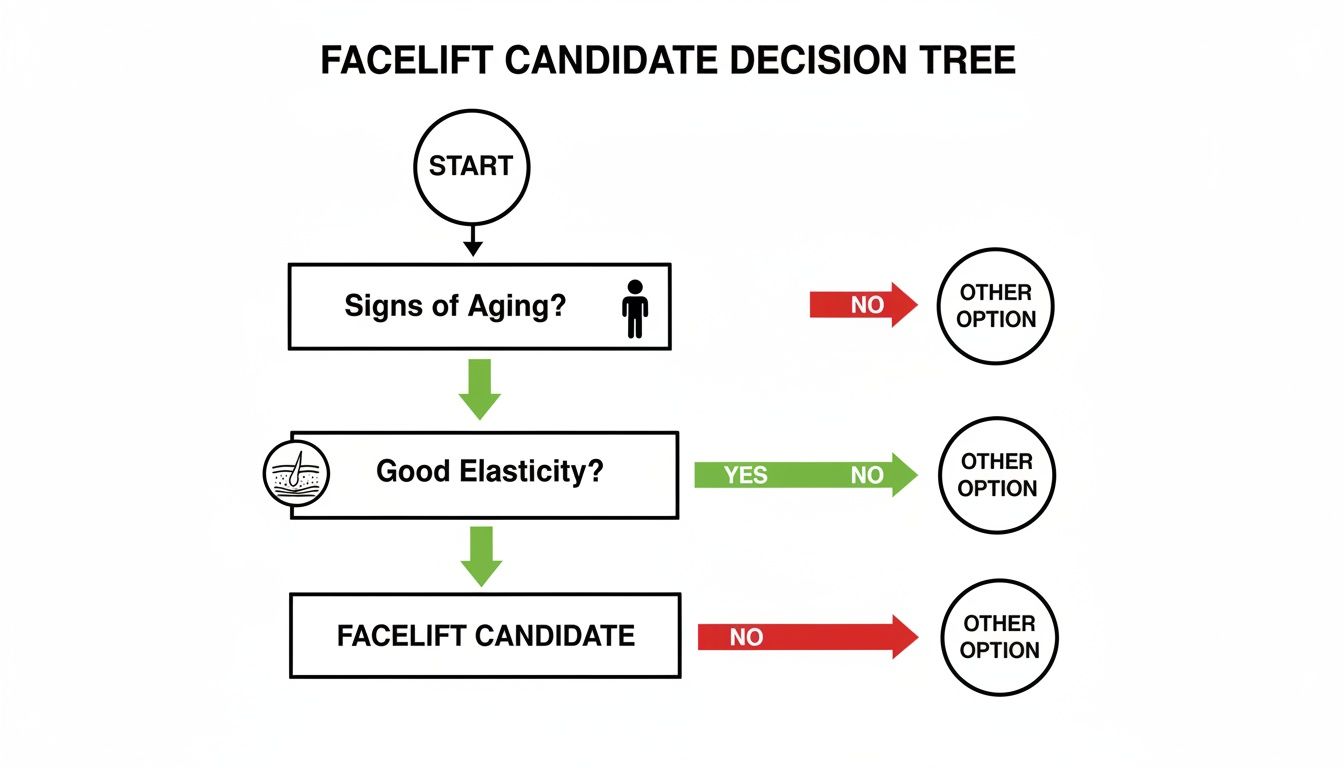
As the graphic shows, the journey starts with identifying what you want to address and making sure your skin has good elasticity—both are crucial for a successful outcome.
For comprehensive, dramatic rejuvenation, the traditional deep plane facelift is often considered the gold standard. It’s a powerful procedure designed to correct more advanced aging, like significant sagging, deep facial folds, and heavy jowls.
A traditional facelift delivers a powerful, long-lasting transformation for the lower face, with results that can last for a decade or more. The ponytail facelift provides a more subtle, refreshing lift, and its results typically hold for three to five years, making it an excellent match for those with earlier signs of aging.
The mini facelift is another go-to option for people who don't quite need a full facelift yet. It might sound similar to the ponytail technique, but they have some very important differences in what they aim to achieve.
A mini facelift is all about addressing mild jowling and sagging along the lower face and jawline. It uses shorter incisions than a full facelift, but they are still typically placed in front of the ears. If you want to dive deeper, our guide on https://www.ccplasticsurgery.com/blog/mini-facelift-vs-full-facelift-key-differences provides a great breakdown.
The ponytail facelift, on the other hand, isn't focused on the jawline. Its whole purpose is to create a vertical lift for the mid-face. The goal is to elevate the cheeks and temples, which is perfect for someone whose primary concern is sagging or lost volume in the cheek area, not jowls.
For those who want to avoid surgery entirely, thread lifts have become a very popular choice. These treatments use absorbable sutures, or threads, to give the skin a temporary lift from within.
When weighing their options, some people look into treatments like those described in Understanding PDO Threads: The Lifting Procedure and Age-Defying Benefits. A thread lift is a quick, in-office procedure with almost no downtime. The trade-off is that the results are far more subtle and much less permanent than any surgical lift, usually lasting between one and three years.
A ponytail facelift provides a much more significant and durable result because it’s not just pulling the skin taut; it’s repositioning the deep, foundational tissues of the face. While a thread lift can give you a nice temporary boost, a ponytail facelift delivers true structural rejuvenation.
To help you see everything at a glance, this table breaks down the key differences between these popular facial rejuvenation methods.
Ultimately, the right choice depends entirely on your unique anatomy, your specific concerns, and how long-lasting you want the results to be.
Knowing what to expect after your ponytail facelift is key to a calm, successful healing process. Even though this procedure is less invasive than a traditional facelift, giving your body the time it needs to recover is absolutely essential. A well-managed recovery is what ultimately gets you those beautiful, refreshed results you're hoping for.

The first couple of days are all about rest. Seriously. This initial period really sets the stage for the rest of your healing, so it's critical to take it easy and follow your surgeon's instructions to the letter.
Right after your surgery, you’re going to feel tired from the anesthesia and will have some soreness. Your only job during this time is to rest with your head propped up on pillows to help keep swelling down.
You'll be wearing a compression garment or some bandages to support the area. Any discomfort you feel is usually handled easily with the pain medication your surgeon prescribes. Focus on eating light meals, drinking plenty of water, and letting someone else take care of you.
The first week is when you’ll notice the most swelling and bruising—this is a completely normal part of your body's healing response. The small incisions, cleverly hidden up in your hairline, will start their healing journey.
During this week, your activity level needs to be very, very low. No bending, lifting, or any kind of strenuous movement. Short, gentle walks around the house are great for circulation, but your main focus is still rest.
Following your surgeon’s aftercare instructions during this first week is paramount. This means taking care of your incisions, taking your medications on schedule, and showing up for your first follow-up appointment so we can make sure everything is healing just as it should.
By the end of the week, you'll probably start feeling a bit more like yourself, even though you can still see the visible signs of your procedure.
This period is a real turning point. Swelling and bruising will go down dramatically, and you'll start to see the early contours of your final result. Most patients feel comfortable heading back to work and re-engaging with their social lives around this time.
Your surgeon will likely clear you for light activities, but hold off on strenuous exercise and heavy lifting for now. Here’s a general idea of what you can expect to reintroduce:
After about a month, the vast majority of swelling is gone, and your results become much more obvious. The incision sites, which were already well-hidden, will continue to fade and become less and less noticeable over time.
You can typically get back to your full exercise routine around the four-to-six-week mark, but this is a conversation you must have with your surgeon. They’ll give you the official go-ahead based on how you’re personally healing. From here, your refreshed, natural-looking lift will continue to settle and refine over the next several months.
Of all the decisions you'll make, this one is by far the most important. Choosing the right surgeon for your ponytail facelift will shape everything—your safety, your experience, and of course, the final result.
This isn't just about finding a good doctor; it's about finding an artist who specializes in this exact, nuanced procedure. The ponytail facelift demands a very particular set of skills, and putting your trust in the right hands makes all the difference.
Your absolute first step? Confirm they are a board-certified plastic surgeon. Think of this as the non-negotiable foundation. Board certification means a surgeon has gone through years of extensive, specialized training and has passed rigorous exams covering patient safety and surgical excellence.
A ponytail facelift isn’t a standard procedure that every plastic surgeon performs regularly. It relies heavily on endoscopic techniques—using tiny cameras and instruments through small incisions. This requires a level of finesse that's different from a traditional facelift.
So, you need someone who isn't just board-certified, but who has deep, hands-on experience with this specific approach.
When you're researching surgeons, zero in on these key things:
Our guide on how to choose a plastic surgeon provides a more detailed roadmap to help you navigate this critical process with confidence.
Your consultation is more than just a meeting; it's a job interview where you are the hiring manager. Come prepared with specific questions to assess their expertise, transparency, and approach to patient care.
The consultation is your chance to get a real feel for the surgeon and their philosophy. A great surgeon will welcome your questions and provide clear, honest answers.
Don't be shy. This is your face we're talking about! Here are a few essential questions to ask:
It's completely normal to have a lot of questions when you're considering a procedure like this. Let's walk through some of the most common ones we hear from patients to give you a clearer picture of what to expect.
You can expect the refreshed, natural-looking results from a ponytail facelift to last for a good long while—typically anywhere from five to ten years. Of course, this isn't a hard and fast rule, as everyone's body is different.
How long your results hold up really comes down to a few key things: your genetics, your lifestyle habits (like how much sun you get), and how well you take care of your skin afterward. While we're effectively turning back the clock, the natural aging process does continue.
During the actual surgery, you won't feel a thing. You'll be comfortable and completely out of it thanks to the anesthesia. Afterward, as you start to heal, some discomfort is to be expected.
Most patients describe the feeling as mild to moderate soreness, which is easily handled with the pain medication we prescribe. You'll likely only need it for the first few days as the initial healing phase gets underway.
Every surgery has some level of risk, but when you're in the hands of an experienced surgeon, serious complications with a ponytail facelift are quite rare. Most of what you'll experience are temporary side effects that are just a normal part of the healing process.
Common (and temporary) side effects include:
Honestly, the best thing you can do to ensure your safety is to choose a board-certified plastic surgeon who has a ton of experience with this specific technique. Their expertise is your greatest asset for a safe procedure and a smooth recovery.
Yes, absolutely! It's actually very common for patients to pair a ponytail facelift with other procedures to get a more complete, balanced result. We're often addressing different signs of aging at the same time.
For instance, it works beautifully with an eyelid lift (blepharoplasty) to open up the eyes and get rid of that tired look. We also frequently use fat grafting to bring back some youthful volume to the cheeks or other areas that have flattened over time. We'll talk through all your goals to figure out the perfect plan for you.
Ready to explore how a ponytail facelift can help you achieve your aesthetic goals? The team at Cape Cod Plastic Surgery is here to guide you. Schedule your personalized consultation with Dr. Fater today.
October 5, 2026
Why Our On-Site Accredited Facility Matters for Your Safety

October 2, 2026
Beyond the Calendar: How to Know You’re Truly Ready for Plastic Surgery

October 2, 2026
Exploring Your Breast Augmentation Options: Implants, Shapes, and What to Expect

Cape Cod Plastic Surgery offers expert cosmetic and reconstructive procedures in a safe, accredited setting. Led by Dr. Marc Fater, we combine advanced techniques with personalized care to help you look and feel your best.
Monday: 9:00 AM – 5:00 PM
Tuesday: 9:00 AM – 5:00 PM
Wednesday: 9:00 AM – 5:00 PM
Thursday: 9:00 AM – 5:00 PM
Friday: 9:00 AM – 5:00 PM