

October 6, 2026
How to Verify Your Surgeon Before Your Cosmetic Procedure
Your Safety Guide: What to Look for When Choosing a Plastic Surgeon
Jan 8, 2026
When you’ve put in the hard work of losing a significant amount of weight, or if you’re struggling with stubborn areas that just won’t respond to diet and exercise, body contouring surgery can be the final, refining step in your journey. It's not a single procedure, but a suite of surgical options tailored to reshape and sculpt your body's silhouette.
Think of body contouring as the finishing touch. After you’ve reached a stable, healthy weight, you might find yourself with loose, sagging skin or pockets of fat that refuse to go away, no matter how much you work out. This is where body contouring comes in, allowing a skilled surgeon to fine-tune your results and reveal the true shape you've worked so hard for.
It's important to remember that these procedures aren't a shortcut to weight loss. Instead, they are designed to enhance the incredible results you've already achieved through your own efforts.
To break it down, here’s a quick overview of what body contouring is all about.
This table helps illustrate that body contouring is a highly personalized approach to dealing with the physical aftermath of major life changes.
Every body contouring procedure is focused on a few key goals. A surgeon works to create a more harmonious and athletic look by addressing very specific issues that lifestyle changes alone can't fix.
The main objectives are:
Body contouring helps align your external appearance with your internal sense of self. It bridges the gap between the body you've earned through dedication and the final shape you desire.
The popularity of these procedures is on the rise, reflecting a growing comfort with medically guided aesthetic improvements. In 2023 alone, surgeons performed over 5.1 million body and extremity procedures worldwide, with liposuction ranking as the most common cosmetic surgery. This trend makes it clear that people are increasingly turning to surgery to achieve definitive, lasting results. To dig deeper, you can explore these body contouring statistics and what they mean for patients.
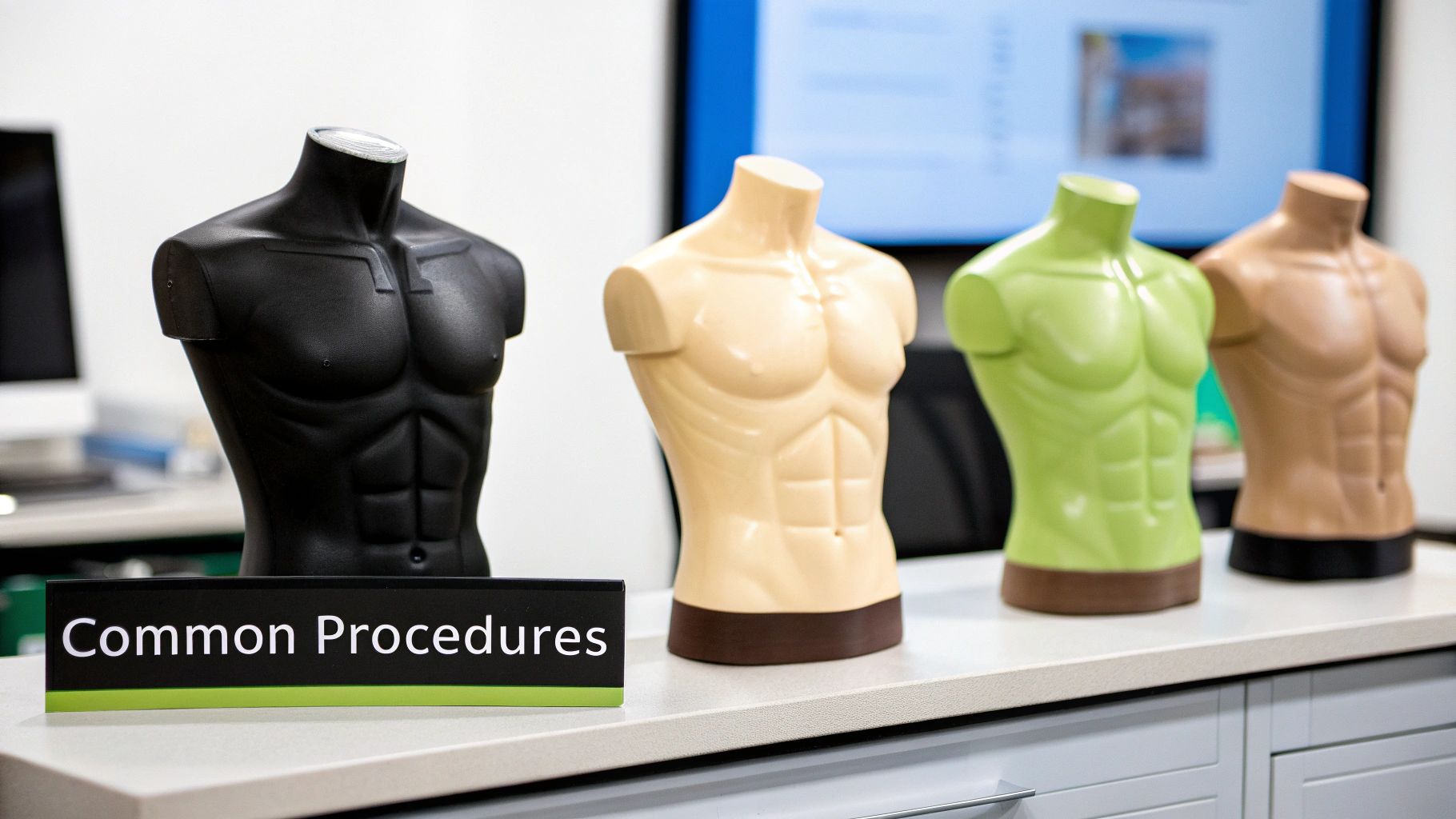
Body contouring isn't a single procedure but a whole suite of them, each designed to tackle a specific concern. Think of a plastic surgeon like a master tailor. Just as a tailor uses different techniques to alter a suit—taking in the waist, slimming the sleeves, or hemming the trousers—a surgeon chooses the right procedure to refine your unique shape.
This customized approach is key. It ensures we're directly addressing your personal goals, whether that means targeting stubborn fat, tightening loose skin, or a little of both. Let’s walk through some of the most common and effective options.
Liposuction is a household name in cosmetic surgery, and for a very good reason. It’s the gold standard for removing those isolated, pinchable pockets of fat that just won't budge, no matter how much you diet or exercise. We often use it to sculpt areas like the abdomen, flanks (what many call "love handles"), thighs, and the back of the arms.
The technique involves a thin, hollow tube called a cannula, which a surgeon uses to gently suction out targeted fat cells. The result is a smoother, more defined shape. It’s crucial to remember that liposuction is for shaping and contouring, not for weight loss. It works best for people who are already close to their ideal weight but need help with specific problem spots.
A tummy tuck, or abdominoplasty, is a more comprehensive procedure than liposuction alone. It’s a game-changer for people who have been left with loose skin and weakened abdominal muscles after pregnancy or significant weight loss.
During a tummy tuck, the surgeon does two main things:
This powerful combination creates a flatter, firmer stomach that endless crunches simply can't achieve.
It's easy to confuse a tummy tuck with a panniculectomy. A panniculectomy is strictly a medical procedure to remove the "pannus," an overhanging apron of skin that causes rashes or other health issues. A tummy tuck is a cosmetic procedure designed to improve the abdomen's overall aesthetic appearance.
When someone loses a massive amount of weight, they often need more extensive procedures to handle the widespread loose skin. These are called "lifts," and they address entire regions of the body to restore a more natural contour.
Each of these lifts is a significant procedure, and the best approach always depends on your individual anatomy and goals. To explore the full range of body procedures offered at Cape Cod Plastic Surgery, you can find more details right here on our site. For many of my patients, these lifts are the final, rewarding step in their journey, at last revealing the healthier body they worked so hard to achieve.
Figuring out if you’re the right fit for body contouring is about more than just checking a few boxes. It’s a serious conversation about your health, your mindset, and what you hope to achieve. We need to make sure everything is aligned for a safe procedure and a fantastic outcome.
The single most important factor is a stable weight. I look for patients who have held their weight steady for at least six to twelve months. Why? Because big swings on the scale after your surgery can undo the very results we worked so hard to create. This is about sculpting, not weight loss.
Beyond weight stability, a few other things tell me a patient is truly ready for this journey. It’s a mix of physical health and mental preparedness that sets the stage for success.
An ideal candidate for body contouring usually has:
Body contouring works best when it's a partnership between your dedication to a healthy life and your surgeon’s expertise. Think of it as the final piece of the puzzle, not the whole picture.
Achieving a healthy, stable weight is often the first step, and it’s critical for getting beautiful, lasting results. You can find helpful information on effective nutrition strategies for weight loss to support this part of your journey.
The consultation is really where it all begins. Here at Cape Cod Plastic Surgery, Dr. Marc Fater fosters a comfortable, collaborative space where you can share your vision and get straight answers. This meeting is a detailed, two-way conversation, not a sales pitch.
During your visit, we’ll go over your medical history, do a physical exam, and have a frank discussion about your goals. Dr. Fater will walk you through which procedures make the most sense for your body and what kind of results you can realistically expect.
This conversation is especially crucial for patients who have lost a significant amount of weight. You can learn more about the specifics of body contouring after weight loss in our detailed guide.
Our personalized approach is designed to make sure you leave feeling confident, informed, and ready to be an active partner in your own transformation.
Knowing what to expect can make the whole idea of body contouring surgery feel a lot less daunting. Think of it as a well-planned journey you take with your surgeon, with clear steps from start to finish. It all breaks down into a few distinct phases, starting long before surgery day and ending with the new shape you’ve been working toward.
Your role in this journey actually begins weeks before the procedure itself. This is the time to get your body in the best possible shape for healing. We’ll give you specific instructions, like which medications to pause, the absolute necessity of stopping smoking, and how to fuel your body with good nutrition. It’s all about building a solid foundation for a smooth and speedy recovery.
Proper preparation is non-negotiable, and it involves a few key steps. To make it easy, your surgical team will give you a detailed checklist so nothing gets missed before the big day.
This list usually covers things like:
The flowchart below gives you a good idea of what we look for when determining if someone is a good candidate for surgery.
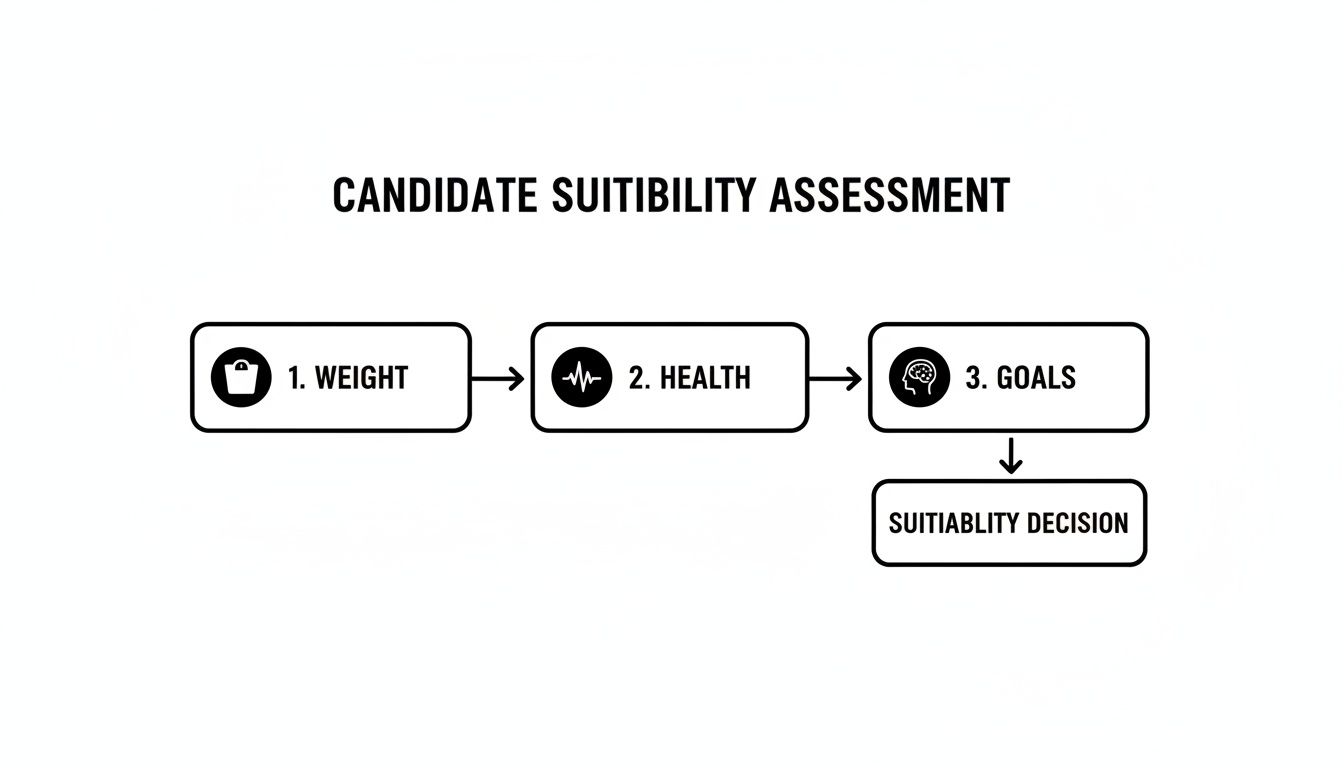
As you can see, a successful result really starts with having a stable weight, being in good general health, and holding realistic expectations.
When you arrive for your procedure, you'll meet with both your surgeon and the anesthesiologist to go over the plan one last time and answer any final questions. Body contouring is almost always done under general anesthesia, so you’ll be completely comfortable and asleep for the entire operation. Afterward, you'll spend some time in a recovery area where our team will monitor you closely as you wake up.
Now, for the recovery. This is a gradual process that requires patience. The first week is all about resting, managing any discomfort with the medication we prescribe, and simply letting your body heal. You can expect swelling and bruising—that’s totally normal and will fade over the next few weeks.
Your most important job during recovery is to follow your post-op instructions to the letter. This means wearing your compression garments, making it to your follow-up appointments, and avoiding any heavy lifting or intense activity until we give you the green light.
Most people feel ready to return to a desk job and other light activities within two to three weeks, but this can vary depending on the procedure you had. More strenuous exercise is usually off the table for at least six to eight weeks. We have a lot more detailed advice on this, which you can find in our post about what to expect during your recovery after plastic surgery.
Finally, a huge part of your long-term success comes down to knowing how to maintain weight loss long-term. Keeping your weight stable is the best thing you can do to protect the investment you’ve made in yourself and enjoy your incredible results for years to come.
It's completely normal for one of your first questions to be about the cost. When you're thinking about body contouring, you need to understand the financial side of things. But the price isn't a simple, off-the-shelf number. It’s a reflection of the skill, safety, and personalized care that goes into creating the results you want.
Think of it this way: you're not just buying a procedure, you're investing in a highly specialized service tailored specifically to you. The final cost will depend on a few key things, like which procedures you're having, how complex your surgery will be, and how much time we'll need in the operating room. A full body lift, for example, is a much bigger undertaking than a small area of liposuction, and the price will naturally reflect that.
We believe in being completely transparent, so you know exactly what your investment covers. Your total surgical quote isn't just one arbitrary figure; it's a careful breakdown of everything required for a safe and successful outcome.
Generally, the cost is made up of three core parts:
Your most important decision is choosing a board-certified plastic surgeon who operates in an accredited surgical center. This is a direct investment in your safety and the quality of your results—something that has value far beyond any price tag.
Most of the time, body contouring is considered a cosmetic procedure, which means it isn't covered by health insurance. There are, however, some specific exceptions. If a large amount of excess skin (often after massive weight loss) is causing documented medical problems—like chronic skin infections, rashes, or getting in the way of normal movement—a procedure to remove it, called a panniculectomy, might be considered medically necessary and could be covered.
But the real value of body contouring often goes way beyond the physical changes. It's an investment in feeling confident in your own skin again, in your emotional well-being, and in your day-to-day quality of life. The demand for these procedures is surging worldwide for a reason. The market is expected to hit USD 2.58 billion by 2029, because more and more people see it as a powerful way to complete their personal journey. You can read more and discover insights into the body contouring market to see the trends. This growth really highlights that for many, there's a profound personal value in finally having their outward appearance match how they feel inside.
When you’re thinking about body contouring, the most important decision you'll make is choosing your surgeon. It’s all about trust. Here at Cape Cod Plastic Surgery, we've built that trust over decades, starting with Dr. Marc Fater.
Dr. Fater is a board-certified plastic surgeon with over 30 years of dedicated experience under his belt. He’s not just a surgeon; he's an artist who combines technical skill with a deep understanding of aesthetics to create results that look and feel completely natural. His entire career has been focused on helping patients achieve outcomes they love.
But top-tier surgical skill is only part of the equation. Your safety and comfort are just as important to us. That’s why we have our own on-site, AAAASF-accredited surgical suite. This isn't just a fancy credential; it's your assurance that our facility meets the highest national standards for safety, equipment, and staffing. It allows us to offer you exceptional care in a private, state-of-the-art environment.
We know that great results come from a great partnership. Your body, your goals, and your story are entirely your own.
We don't believe in a "one-size-fits-all" approach to surgery. Dr. Fater works directly with you, listening to what you want to achieve. He then designs a surgical plan that's meticulously crafted for your specific anatomy and personal vision, ensuring the final result is a true reflection of you.
This blend of proven expertise, rigorous safety standards, and a genuinely patient-focused philosophy is what sets us apart. It’s why so many people on Cape Cod have trusted us with their care. We’re here to support you with honesty and skill, every single step of the way.
When you're thinking about body contouring, it's natural to have a lot of questions. Here are straightforward answers to some of the things we discuss most often with our patients.
The great news is that the results from body contouring can be incredibly long-lasting—even permanent. When we remove fat cells or excess skin, they’re gone for good.
That said, the future is really in your hands. Significant weight fluctuations after surgery can definitely impact your final look. The best way to protect your investment and enjoy your new shape for years is to maintain a stable weight through a healthy diet and consistent exercise.
Typically, body contouring is considered a cosmetic procedure, which means it’s not covered by insurance. Because the main goal is to improve your appearance, insurance companies generally won’t pay for it.
There are, however, some specific exceptions. For example, if massive weight loss has left you with an apron of skin that causes chronic rashes, infections, or gets in the way of daily movement, a procedure to remove it (panniculectomy) might be considered medically necessary. It's always best to talk directly with your insurance provider to understand your specific policy.
There’s no single magic number, but most people who seek out body contouring after weight loss have lost 50 pounds or more. What's more important than the number on the scale, though, is the presence of loose, excess skin that just won’t tighten up, no matter how much you work out.
The most critical requirement is that your weight has been stable for at least 6-12 months before you even consider surgery.
The goal of body contouring surgery is to address the effects of your weight loss, not to be a method of weight loss itself. A stable weight is the foundation for a successful and lasting result.
This period of stability signals that you’ve adopted the lifestyle habits needed to maintain the beautiful results of your procedure.
Ready to see how body contouring can complete your personal transformation? At Cape Cod Plastic Surgery, Dr. Fater and our dedicated team are here to create a personalized plan just for you. Schedule your confidential consultation today.
October 6, 2026
Your Safety Guide: What to Look for When Choosing a Plastic Surgeon
October 5, 2026
Why Our On-Site Accredited Facility Matters for Your Safety

October 2, 2026
Beyond the Calendar: How to Know You’re Truly Ready for Plastic Surgery

Cape Cod Plastic Surgery offers expert cosmetic and reconstructive procedures in a safe, accredited setting. Led by Dr. Marc Fater, we combine advanced techniques with personalized care to help you look and feel your best.
Monday: 9:00 AM – 5:00 PM
Tuesday: 9:00 AM – 5:00 PM
Wednesday: 9:00 AM – 5:00 PM
Thursday: 9:00 AM – 5:00 PM
Friday: 9:00 AM – 5:00 PM