

October 6, 2026
How to Verify Your Surgeon Before Your Cosmetic Procedure
Your Safety Guide: What to Look for When Choosing a Plastic Surgeon
Dec 19, 2025

The plastic surgery consultation is a crucial first step in your aesthetic journey. It allows for a private discussion with a board-certified surgeon about your goals, concerns, and health. Here, the surgeon reviews your medical history, assesses the area of concern through a physical exam, and discusses tailored treatment options. This process helps determine your suitability for the procedure and sets clear expectations regarding benefits, risks, and recovery.
To maximize the consultation's value, come prepared with comprehensive medical information, including medications and supplements, and a list of specific questions. Dressing comfortably, especially in easily removable clothing, facilitates physical examinations. Researching your desired procedure beforehand empowers you to engage actively in the discussion.
An effective consultation emphasizes honest, clear communication. Reviewing before-and-after photos helps shape realistic goals. Surgeons candidly explain potential outcomes, risks, and limitations, ensuring you have a balanced understanding and avoid misconceptions.
Your consultation experience should be welcoming, respectful, and tailored to your unique needs. A skilled surgeon listens carefully, addresses your concerns, and guides you through personalized treatment planning. Patient safety, comfort, and informed decision-making remain central throughout this process, reinforcing confidence and satisfaction.
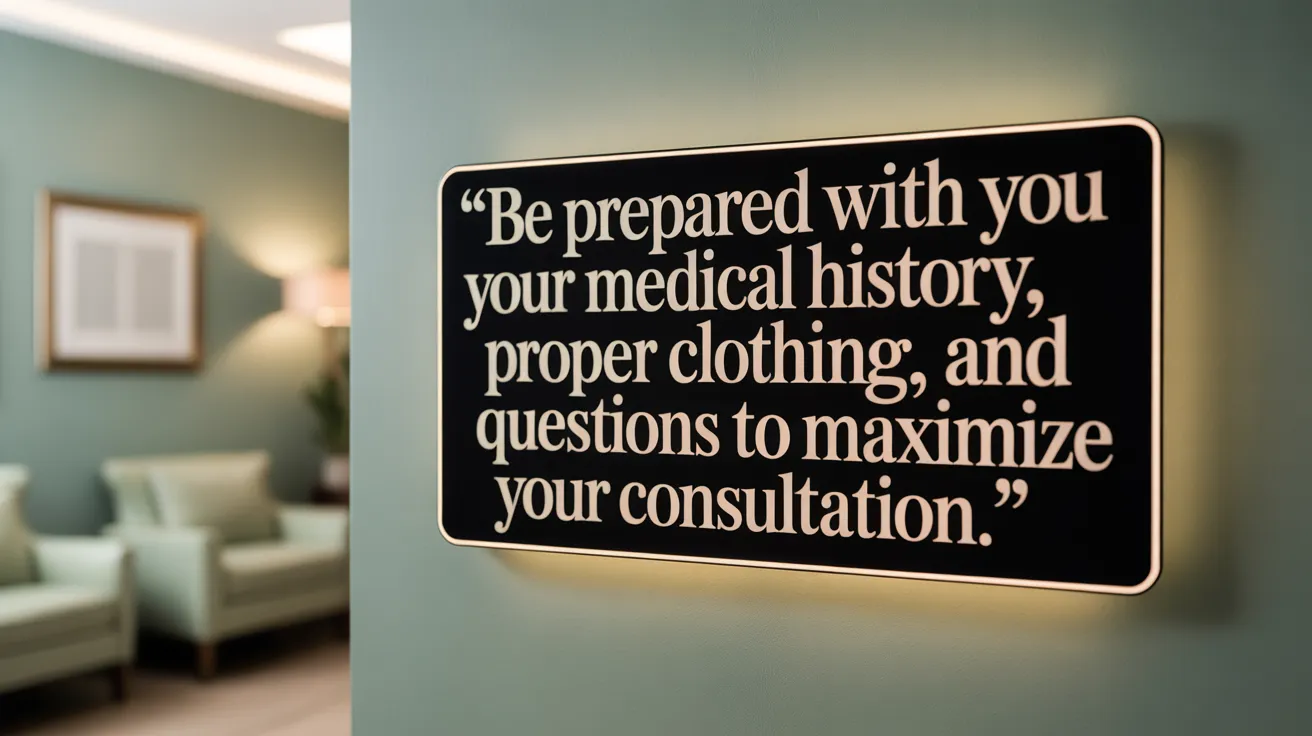
Prior to your consultation, it’s important to research the specific cosmetic procedures you are interested in. Understanding the basics helps you prepare focused questions and clarifies your expectations. This preparation reduces anxiety and empowers you to engage actively in the discussion with your surgeon.
Bring a comprehensive list of your medical history, including past surgeries, current medications, supplements, herbs, and vitamins. Full disclosure is essential for your safety and helps your surgeon tailor recommendations to your health needs. See more on bringing medical history to cosmetic consult.
Wear comfortable, easy-to-remove clothing that allows convenient access to the areas of concern. This is crucial for a thorough physical examination and accurate assessment of your anatomy. For guidance on what to wear to a cosmetic surgery consult and physical examination during consultation, see these resources.
Expect the consultation to last between one and two hours. The process includes check-in, medical history review by staff, a private discussion with the surgeon about your goals, risks, procedure details, and recovery expectations, followed by a physical exam. Photographs or measurements may be taken for surgical planning. For details, visit Plastic Surgery Consultation Duration and Cosmetic Surgery Consultation Overview.
Bringing a trusted support person to your consultation is encouraged. They can help you understand information, ask additional questions, and provide emotional support, ensuring you feel comfortable and informed. This is explained more fully under Bringing Support Persons.
A patient-centered approach focuses on your individual goals and concerns, enhancing communication and trust with your surgeon. When surgeons listen attentively and involve you in decision-making, it builds confidence and satisfaction with both the process and final results. This approach promotes adherence to post-operative care and better overall outcomes, making it a crucial element in your cosmetic surgery journey. Learn more about patient-centered care and personalized treatment.

During your consultation, a thorough dialogue about your cosmetic goals and desired results is essential. The surgeon listens carefully to understand your expectations, evaluating how best to tailor the procedure to your unique anatomy and aesthetic objectives. This personalized approach ensures that your treatment plan aligns with your vision while considering medical safety.
Selecting a board-certified plastic surgeon is critical for your safety and successful outcomes. Board certification through organizations such as the American Board of Plastic Surgery requires rigorous training including medical school, surgical residency, and often specialized fellowships. Surgeons must pass comprehensive exams and perform hundreds of procedures in accredited facilities. Membership in professional societies and hospital privileges further indicate expertise and commitment to high standards.
Your surgeon will clearly outline the potential benefits of your procedure as well as any risks and limitations. This includes discussing the likelihood of complications, recovery challenges, and what realistic results can be expected. Understanding these factors empowers you to make an informed decision and sets appropriate expectations.
Recovery details vary by procedure and individual health but will be explained in detail. You can expect guidance on activity restrictions, wound care, medication management, and follow-up appointments. The surgeon will help you prepare for the recovery period to optimize safety and results, emphasizing the importance of adherence to instructions.
Reviewing before-and-after photos of past patients provides valuable insight into the surgeon’s skill and typical outcomes. This visual evidence aids in setting realistic goals and builds trust in the surgeon’s abilities and aesthetic style.
A single consultation may not suffice for complex decisions. Surgeons often recommend follow-up visits, giving you time to consider information, ask additional questions, and finalize your treatment plan without pressure.
| Topic | Description | Importance |
|---|---|---|
| Patient Goals | Discuss your expectations and desired aesthetic improvements | Personalized care |
| Surgeon Qualifications | Verify board certification, experience, and facility accreditation | Patient safety and expertise |
| Benefits & Risks | Understand realistic outcomes and potential complications | Informed decision-making |
| Recovery & Care | Learn about downtime, aftercare, and support requirements | Smooth healing |
| Before-and-After Photos | Visual examples of previous results | Realistic expectations |
| Follow-up Consultations | Opportunity for further questions and plan adjustments | Patient confidence |

Plastic surgery encompasses a variety of procedures designed to enhance appearance or restore function. Common cosmetic surgeries include breast augmentation and lifts, rhinoplasty (nose reshaping), facelifts, eyelid surgeries, liposuction, tummy tucks, and body lifts. These surgeries are tailored to each patient’s goals and anatomy, with surgeons providing personalized recommendations.
Reconstructive surgeries play an essential role in restoring the body after trauma or medical conditions. Examples include breast reconstruction post-mastectomy and scar revision procedures to improve appearance and function.
Many plastic surgery practices offer effective non-invasive treatments as alternatives or complements to surgery. Popular options include injectables like Botox, which relaxes muscles to reduce wrinkles, and dermal fillers to restore facial volume. Skin resurfacing treatments such as chemical peels and laser therapy improve skin tone, texture, and pigmentation.
Other innovative options include ultrasound-based lifts (e.g., Ultherapy) that tighten skin without surgery, Kybella for permanent fat reduction under the chin, and intense pulsed light (IPL) therapy to address sun damage and redness.
All these treatments are selected and customized during consultation to align with patient expectations and clinical suitability, ensuring safe, effective care with minimal downtime.

Choosing an accredited surgical facility AAAASF AAAHC JCAHO is vital for patient safety. Accredited centers comply with rigorous standards set by nationally recognized organizations such as AAAASF, AAAHC, or JCAHO. These accreditations verify that the facility has proper equipment, qualified staff, and comprehensive safety protocols including infection control and sterilization.
Ensuring that a surgeon is a board-certified plastic surgeon confirms their specialized training and competence. Board certification indicates the surgeon has met stringent education, training, and ethical standards, contributing to safer and more effective surgical outcomes.
Anesthesia should be administered by licensed professionals such as anesthesiologists or certified nurse anesthetists who are experienced in plastic surgery settings. Their expertise in monitoring patient vitals and managing anesthesia ensures comfort and safety throughout the procedure.
Facilities must have clear emergency plans, 24/7 availability of trained staff, and essential life-saving medications and equipment on site. This readiness assures swift responses to any surgical complications or anesthesia-related emergencies, minimizing risks.
Thorough patient assessments during consultation include reviewing comprehensive medical history review, current medications, allergies, and any health conditions. This evaluation helps the surgeon determine suitability for surgery, plan individualized treatment, and reduce potential complications.
These combined standards—accredited facilities, board-certified surgeons, expert anesthesia providers, emergency preparedness, and careful patient evaluation—form the foundation of safe and successful plastic surgery care.

Understanding the full scope of financial obligations is crucial after your consultation. Fees typically include the surgeon’s professional fee, operating room charges, anesthesia costs, and any device or material expenses. These components combine to reflect the overall price you will be quoted. For more details, see surgery pricing details.
Patients are encouraged to discuss payment options openly with their clinic’s financial counselor. Various payment methods and financing plans, such as Care Credit or other installment plans, may be available to ease the financial burden. It is essential to clarify what insurance may cover, especially in reconstructive cases, and any out-of-pocket costs. For comprehensive information, refer to cosmetic surgery payment options and surgery financing options.
A patient coordinator serves as your primary point of contact for scheduling surgery, pre-operative preparations, and post-operative appointments. They provide an ongoing communication link, ensuring your questions are answered promptly and helping coordinate your surgical timeline. Learn more about the patient coordinator role.
You should never feel rushed into surgery immediately after your consultation. Having time to reflect, gather additional information, or even seek a second consultation promotes confidence and satisfaction with your decision. Surgeons often encourage follow-up appointments to address lingering questions or concerns. See taking time to decide and option for a second consultation.
After scheduling, you will receive detailed guidance on preoperative preparations and post-surgical care. This includes medication management, lifestyle recommendations, recovery timelines, and follow-up visit schedules to optimize your outcome and safety. For guidance on preparing for surgery and post-operative care requirements, consult these resources.
A comprehensive consultation educates you about your options, tailored to your unique anatomy and goals. It ensures your safety by reviewing your medical history and discussing benefits, risks, and recovery.
Ask about the surgeon’s experience, facility accreditation, anesthesia, and outcomes. Reviewing before-and-after photos helps set realistic expectations.
Taking time to reflect or seeking multiple consultations enhances confidence and helps avoid rushed decisions.
A trusted surgeon listens carefully, explains clearly, and supports you through every step, fostering informed choices and peace of mind.
October 6, 2026
Your Safety Guide: What to Look for When Choosing a Plastic Surgeon

October 5, 2026
Why Our On-Site Accredited Facility Matters for Your Safety

October 2, 2026
Beyond the Calendar: How to Know You’re Truly Ready for Plastic Surgery
Cape Cod Plastic Surgery offers expert cosmetic and reconstructive procedures in a safe, accredited setting. Led by Dr. Marc Fater, we combine advanced techniques with personalized care to help you look and feel your best.
Monday: 9:00 AM – 5:00 PM
Tuesday: 9:00 AM – 5:00 PM
Wednesday: 9:00 AM – 5:00 PM
Thursday: 9:00 AM – 5:00 PM
Friday: 9:00 AM – 5:00 PM