

October 5, 2026
The Value of an On Site Accredited Facility
Why Our On-Site Accredited Facility Matters for Your Safety
Dec 7, 2025

If you’ve been trying to get rid of that lingering lower belly bulge after having a baby, you’ve probably realized it’s not as simple as just diet and exercise. You're not alone in this frustration. Getting your pre-baby stomach back often means focusing on rebuilding deep core strength to heal abdominal separation, adopting smart nutrition to reduce stubborn fat, and sometimes, looking into professional help.
That persistent bulge in your lower abdomen isn't just "baby weight." It’s a very real, very common physical change that happens to your core muscles and tissues during pregnancy. It’s a sign of the incredible work your body did.
The main reason for this pooch is a condition called diastasis recti abdominis (DRA). Think of your "six-pack" muscles (the rectus abdominis) as two parallel bands running down your stomach. During pregnancy, your growing uterus pushes against them, causing them to separate right down the middle.
This separation stretches the connective tissue between them, the linea alba. When that tissue gets overstretched, it loses its tautness and can no longer hold everything in place. The result? A bulge or pouch that sticks around, even if you’ve lost all the baby weight.
Diastasis recti is almost a universal part of pregnancy. Research confirms that most women have some degree of separation by their third trimester. For many, it starts to resolve in the first few months after giving birth, but for a surprising number, it sticks around.
Studies show just how common this is. While 82.6% of women have DRA late in pregnancy, it still affects 39% of them at 6 months postpartum. That's a huge number! This persistence is exactly why a mommy pooch can linger for years without the right kind of targeted intervention.
This isn't something that just "goes away" on its own for everyone. It requires a specific strategy to heal.
While diastasis recti is the biggest piece of the puzzle, a few other things can make that pooch more noticeable.
To give you a clearer picture, here’s a quick breakdown of what’s going on.
Understanding these interconnected factors is the first step toward fixing the problem. It’s not about finding fault with your body, but about recognizing the specific physical changes it went through. For those who feel they need a more comprehensive solution to address skin, fat, and muscle all at once, learning about what is included in a mommy makeover can offer a complete overview of the available surgical options.
Before you jump into any new core workouts to tackle that "mommy pooch," you need to know what you're working with. A quick self-check for diastasis recti can give you a clear picture of your core's recovery, and it only takes a couple of minutes.
This isn't just about finding a "gap"—it's about understanding the whole system. We'll walk through how to check not just the width of the muscle separation but also the depth and tension of the connective tissue, which is arguably even more important for restoring core function.
Find a comfortable spot on the floor and let's get started.
As those muscles engage, you should feel the two sides of your rectus abdominis muscle hug your fingers. That's the moment of truth.
Okay, now for the important part. You're not just measuring how many fingers fit in the gap. You also need to assess the tissue underneath your fingers. Pay close attention to both width and depth.
A separation of two finger-widths or more is typically considered diastasis recti. But honestly, the depth is just as telling. A shallow gap with good tension is a much better indicator of core function than a narrow but very deep, soft one.

While pregnancy is the main event that kicks this all off, things like your genetics and what you do (or don't do) postpartum have a big impact. Knowing all the contributing factors helps you build a smarter, more effective plan for getting your core back on track.
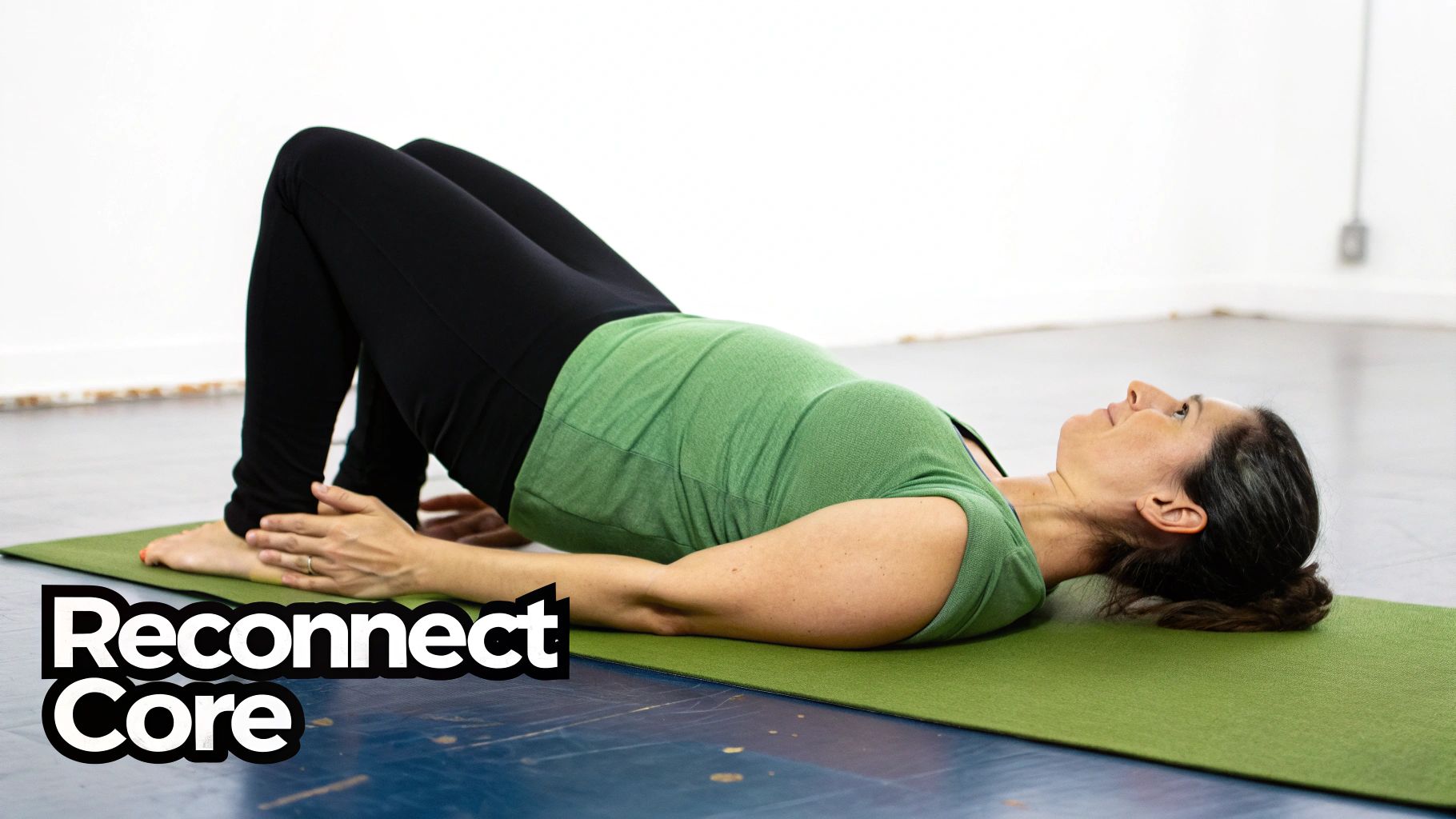
When you're dealing with a postpartum belly, it's tempting to jump right back into aggressive ab workouts like crunches, thinking that’s the fastest way to flatten your tummy. This is one of the biggest mistakes I see women make.
In reality, traditional ab exercises can make diastasis recti worse. They create intense forward pressure on that weakened connective tissue, which can actually make the bulge more noticeable.
The secret isn’t to force your abs into submission. It’s to gently reconnect with and strengthen your deep core muscles from the inside out. True, lasting healing begins with foundational movements that re-establish that crucial mind-muscle connection.
Think of your deep core as your body's built-in corset. The star player here is the transversus abdominis (TVA), a muscle that wraps all the way around your midsection. When it’s working correctly, it pulls everything inward, stabilizes your spine, and helps bring the separated abdominal muscles back together.
For many women postpartum, the TVA has gone "dormant." The first goal of any exercise plan should be to gently wake it up, teaching it to work in sync with your pelvic floor and diaphragm again. This creates a stable, functional foundation for everything else.
The right exercises can make a huge difference. While up to 60% of women have diastasis recti six weeks after birth, that number can drop to around 39-45% by the six-month mark with proper rehab. One study even found that pregnant women who did specific TVA and pelvic floor exercises had a DRA rate of only 12.5% postpartum. This was in stark contrast to the 90% rate in the non-exercising group. That’s a powerful testament to how effective the right movements can be.
It’s time to forget the “burn” of a thousand crunches. These gentle, controlled exercises are far more effective for healing a mommy pooch. The focus here is on slow, intentional movement.
1. Diaphragmatic Breathing (Belly Breathing)
This is the absolute cornerstone of core recovery. It retrains the coordination between your diaphragm, TVA, and pelvic floor.
2. Pelvic Tilts
This is a small but mighty movement that gently engages the lower TVA and improves your spinal awareness.
3. Heel Slides
Heel slides are great for challenging your core stability without putting any strain on the front of your abdominal wall.
Pro Tip: As you do these exercises, imagine a string gently pulling your belly button down toward the floor. This simple mental cue is fantastic for keeping that deep TVA engagement and preventing your outer abs from taking over.
Exercise is crucial, but it's only half the battle. What you eat directly impacts your body's ability to repair the stretched connective tissue (the linea alba) that causes diastasis recti.
Your body needs specific building blocks to heal. By focusing on these nutrients, you can give your recovery a serious boost from the inside out.
This dual approach of smart, targeted exercise and supportive nutrition is the most effective and sustainable way to address a mommy pooch. As you get stronger, you can explore more comprehensive core exercises to build a truly robust midsection.
For women looking to enhance their results, innovative treatments can also help. For instance, Emsculpt technology offers a non-invasive option that complements your fitness routine by using electromagnetic energy to stimulate thousands of deep muscle contractions, rebuilding strength and tone faster than exercise alone.
Targeted exercises and learning to breathe properly are fantastic first steps for healing your core. But sometimes, a DIY approach just doesn't cut it. If you feel like you’ve hit a wall or you're just not sure you’re doing the movements correctly, it might be time to bring in a professional.
Working with a physical therapist, especially one who specializes in postpartum recovery and pelvic health, can be a total game-changer. They're trained to spot the subtle issues and muscle imbalances that can stall your progress.
You don’t have to wait until something feels seriously "wrong" to get help. In fact, it's better if you don't. Think of a physical therapist as an expert guide for navigating your postpartum recovery.
It’s probably a good idea to book an appointment if you’re dealing with any of these:
Please don't write these symptoms off as just a normal part of being a mom. While they are common, they point to real musculoskeletal issues that a physical therapist is uniquely qualified to help you fix.
For so many women, connecting with a specialist in pelvic floor physical therapy is the key to finally getting results. They can offer a level of personalized assessment and hands-on guidance that you just can't get from a generic online program.
I know the idea of a pelvic health appointment can feel a little intimidating, but it’s truly a supportive and empowering experience. Your therapist’s only goal is to understand how your body is functioning as a complete system so they can help you heal.
Your first evaluation will be really thorough. You can expect it to include:
From there, your physical therapist will build a recovery roadmap just for you. This is the opposite of a one-size-fits-all plan; it’s a strategy tailored to your body’s specific needs. They might use advanced techniques like biofeedback to help you "see" your muscles working or use manual therapy to release tight spots that are getting in the way. This kind of expert guidance makes all the difference, ensuring you’re on the safest, most effective path to healing your core.

Sometimes, no matter how clean you eat or how many core exercises you do, that post-pregnancy pooch just won't budge. It can be incredibly disheartening, but there’s a real, physical reason for it. When you have significant diastasis recti or skin that’s been stretched beyond its ability to snap back, those conservative methods can only take you so far.
This is where it’s helpful to understand what surgery can accomplish. It isn't the first step, but for many women, it's the final, definitive one that truly restores their core function and pre-baby silhouette.
When people think about surgically fixing a mommy pooch, two procedures usually come to mind: an abdominoplasty (the classic tummy tuck) and liposuction. The key is knowing that they solve two very different problems. Getting the right procedure is everything.
Liposuction is purely a fat-removal tool. It’s fantastic for targeting those stubborn, pinchable pockets of subcutaneous fat that diet and exercise can’t seem to touch. But that's all it does. It won't tighten loose skin or repair separated abdominal muscles. If your skin tone is great and your muscles are intact, but you just have some unwanted fat, it could be a fit.
An abdominoplasty, on the other hand, is a more comprehensive fix. This is the procedure designed specifically to address the structural changes of pregnancy. A tummy tuck removes excess, hanging skin, gets rid of stubborn fat, and—most importantly—sutures the separated abdominal muscles back together to flatten the tummy profile.
The most important takeaway is this: A tummy tuck addresses all three culprits—loose skin, separated muscles, and excess fat. Liposuction only targets the fat. For a true mommy pooch, a tummy tuck is almost always the more effective solution.
To make it even clearer, here’s a quick breakdown of how these two procedures stack up.
Choosing the right path depends entirely on your specific anatomy, which is why a one-on-one consultation with a surgeon is so critical.
A tummy tuck can deliver incredible results, but it’s a significant surgery, and it’s not right for everyone. A board-certified plastic surgeon will carefully evaluate a few key factors to make sure the procedure is both safe and will give you the outcome you’re hoping for.
Generally, you might be a great candidate for a tummy tuck if:
The best way to know for sure is to come in for a consultation. In the meantime, you can get a deeper look into what the tummy tuck procedure entails and what to expect from start to finish.
Patience is key when it comes to tummy tuck recovery. Your body has been through a lot, and it needs time to heal properly.
Immediately after surgery, you’ll have temporary drains and will need to wear a compression garment around the clock. This is vital for controlling swelling and supporting your newly tightened tissues.
The first week is definitely the toughest, and you'll need to focus on resting. Most of my patients with desk jobs feel ready to return to work within two to three weeks. You’ll have to hold off on any intense exercise for at least six to eight weeks to give those repaired muscles a solid chance to heal.
The final, fully settled results emerge gradually as all the residual swelling disappears, typically around the six-month mark. It's a real commitment, but for the right person, the renewed confidence and comfort are absolutely worth it.
Even with the best plan, you're bound to have questions. That's completely normal. Figuring out how to deal with a post-baby belly isn't just about following a set of exercises; it's about understanding the unique way your own body is healing.
Let's clear up some of the most common questions I hear from women on this journey. My goal is to give you the clarity and confidence to know you're on the right track.
I get this question a lot, and the simple answer is no—at least, not in the way most people think. There’s a big difference between a supportive postpartum belly wrap, which a physical therapist might recommend, and a restrictive waist trainer.
A proper support band offers gentle compression that can feel good and give your brain some feedback to help reconnect with your core. A waist trainer, on the other hand, just squeezes everything in. That intense pressure can push down on your pelvic floor, potentially making things like leaking worse. It also acts like a crutch, preventing your deep core muscles from firing up and doing their job.
Real healing comes from strengthening your core from the inside out. A supportive wrap can be a helpful tool for comfort in those early weeks, but a tight waist trainer can actually get in the way of proper recovery by restricting the deep diaphragmatic breathing that's so crucial for your core and pelvic floor.
This is the million-dollar question, and honestly, the answer is different for every single woman. It’s so important to be patient with yourself. Your body spent nine months making incredible changes to grow a baby; it’s going to take some time to recover and rebuild.
A few things really influence your timeline:
With consistent effort, most women start to feel a real difference in their core strength and connection within 6-8 weeks. As for visible changes to the pooch itself, you'll likely start to see those become more noticeable in the 3-6 month range. Remember to celebrate the small wins, like feeling stronger when you lift your baby out of the crib.
Absolutely not! This is one of the most encouraging things I can tell my clients. Whether your baby is six months old or you’re six years postpartum, it is never too late to improve your core function and heal your diastasis.
The core principles of reconnecting with your deep abdominal muscles through breathwork and specific exercises work at any stage. Sure, a separation that has been around for a while might take a bit more patience, but your muscles and connective tissues are incredibly resilient. They still have the ability to heal and regain tension.
I've personally seen women a decade after their last child make incredible progress—closing their gap, getting rid of nagging back pain, and finally feeling good about their stomach again. Your muscles haven't forgotten what to do; they just need a reminder.
Yes, and it can be a game-changer for a C-section pooch. When the incision heals, scar tissue can sometimes bind to the layers of muscle and fascia underneath. This adhesion is what often creates that "shelf" look, where the skin above the scar puckers or hangs over the tight incision line.
Gentle massage, often called scar mobilization, helps to break up that stuck tissue.
Doing this consistently helps increase blood flow, soften the scar tissue, and can make a huge difference in the appearance of that overhang by releasing the tethered skin.
If you've been consistent with conservative treatments and still feel like you're not where you want to be, it may be time to explore all your options. At Cape Cod Plastic Surgery, Dr. Fater provides personalized, no-pressure consultations to help you understand if a surgical solution like a tummy tuck could be the right final step for your goals.
October 5, 2026
Why Our On-Site Accredited Facility Matters for Your Safety

October 2, 2026
Beyond the Calendar: How to Know You’re Truly Ready for Plastic Surgery

October 2, 2026
Exploring Your Breast Augmentation Options: Implants, Shapes, and What to Expect

Cape Cod Plastic Surgery offers expert cosmetic and reconstructive procedures in a safe, accredited setting. Led by Dr. Marc Fater, we combine advanced techniques with personalized care to help you look and feel your best.
Monday: 9:00 AM – 5:00 PM
Tuesday: 9:00 AM – 5:00 PM
Wednesday: 9:00 AM – 5:00 PM
Thursday: 9:00 AM – 5:00 PM
Friday: 9:00 AM – 5:00 PM