

September 9, 2026
How to Care for Surgical Incisions Properly
Expert Guide to Proper Surgical Incision Care
Mar 23, 2026
If you're frustrated by that stubborn bit of fat around your underarms, you are far from alone. Many people—even those who are otherwise fit—struggle with this specific area. It’s often called "bra bulge" or, less kindly, "bat wings," and it can be notoriously difficult to get rid of.
So, let's talk about why this area is so tough and, more importantly, what you can actually do about it.
First things first, we need to get a common myth out of the way: you cannot spot-reduce fat. No amount of arm circles or tricep extensions will magically melt fat from your underarms. I wish it were that simple!
Fat loss just doesn't work that way. When you lose weight, your body decides where the fat comes from, and it’s usually a little bit from all over. The places where you tend to gain weight first are often the last places you'll lose it.
So if you can't target it directly with exercise, why does fat seem to love accumulating right there? It usually comes down to a few key factors that are mostly out of our hands.
The primary reasons for underarm fat are often a mix of genetics, hormones, and the natural aging process. Understanding these factors can help you set realistic goals and choose the right path forward.
Here’s a table summarizing the main culprits:
| Factor | How It Contributes |
|---|---|
| Genetics | Your DNA largely determines your body's fat storage patterns. If your relatives tend to store fat in their upper body and arms, you likely will, too. |
| Hormonal Shifts | Changes during puberty, pregnancy, or menopause can shift where your body stores fat. Fluctuating estrogen levels, in particular, often direct fat to the upper arms and chest area. |
| The Aging Process | As we get older, our metabolism naturally slows down. We also start to lose muscle mass (sarcopenia), which can make the overlying skin and fat appear looser and more prominent. |
| Poor Posture | While not a direct cause of fat, constantly slouching or rounding your shoulders can push skin and tissue forward, making any existing underarm fat much more noticeable. |
These elements work together, which is why a simple "one-size-fits-all" approach rarely delivers the results people are looking for.
The most important thing to remember is that underarm fat is influenced by things far more complex than just diet and exercise. This is why a real strategy involves thinking about your body as a whole, not just your arms.
To truly see a change, you need a plan that does two things: reduces your overall body fat percentage and builds lean muscle in your upper body. The first shrinks the fat cells everywhere (including your arms), and the second creates a firmer, more toned foundation underneath. It's this combination that ultimately helps you achieve smoother, more defined arms.
When it comes to stubborn areas like the underarms, lasting change starts with smart, consistent habits. It's so tempting to look for a quick fix, but the most reliable way to reduce underarm fat is a two-part strategy that addresses your body as a whole: a thoughtful nutrition plan working hand-in-hand with a dedicated exercise routine.
This isn't about crash diets or spending hours in the gym. It's about making sustainable changes that encourage overall fat loss while building the lean muscle that gives your arms that toned, sculpted look.
To lose fat anywhere—and that includes your underarms—you need to be in a caloric deficit. It’s a simple concept: you burn more calories than you eat. But a successful plan is about so much more than just counting calories. The quality of what you're eating is what truly fuels your results and helps you feel great while you’re doing it.
I always tell my patients to build their meals around two non-negotiables:
One of the most common mistakes I see is people cutting calories too drastically. This can backfire, causing you to lose precious muscle and slowing down your metabolism. A moderate deficit of around 300-500 calories per day is a much healthier and more sustainable way to achieve long-term fat reduction.
To effectively lose fat, creating a sustainable calorie deficit is paramount. You can explore a dedicated calorie deficit meal plan to get started with structured, nutrient-dense meal ideas that support your goals without leaving you feeling deprived.
By focusing on protein and fiber, you're not just eating less—you're eating smarter. This approach helps ensure the weight you lose is primarily fat, not the muscle that helps keep your metabolism humming. That distinction is key to improving your body composition and getting that firmer look you're after.
Think of your exercise plan as a tag team: cardiovascular activity and strength training. One burns the fuel (fat), and the other builds and strengthens the engine (muscle). If you only do one or the other, you're going to get incomplete results, especially when your goal is to slim down your underarm area.
Cardio is your best friend for burning calories and reducing your overall body fat percentage. Since we can't spot-reduce fat from our arms, a consistent cardio routine is an absolute must. The goal should be at least 150 minutes of moderate-intensity cardio each week, which is the standard recommendation from health authorities.
What does that look like in the real world?
The real secret here is consistency. Find an activity you genuinely enjoy so it doesn't feel like a chore.
While cardio melts away the layer of fat, strength training is what sculpts and defines the muscle underneath. As you build up your triceps, biceps, shoulders, and back, your arms will start to look firmer and more toned as the fat disappears.
For the best results, focus on compound movements that work several muscle groups at once—they give you the most bang for your buck. Here are some of the best exercises for targeting the upper body:
Try to get in 2-3 strength training sessions per week on non-consecutive days. This gives your muscles the time they need to repair and grow stronger. This combination of consistent cardio and targeted strength work is the most powerful lifestyle strategy for getting rid of underarm fat and keeping it off for good.
You’ve been disciplined with your diet and consistent at the gym, but those stubborn pockets of fat under your arms just won’t budge. It’s a common and incredibly frustrating experience. When you've done everything right, these last few inches can feel impossible to lose through lifestyle changes alone.
This is exactly where non-surgical body contouring comes in. These treatments aren’t for large-scale weight loss; think of them more as a finishing touch—a way to sculpt and refine the results you've worked so hard for. They’re designed for people who are already close to their goal weight but need a little extra help with specific, localized spots.
This simple chart shows how non-surgical and surgical options fit into the bigger picture of reducing underarm fat.
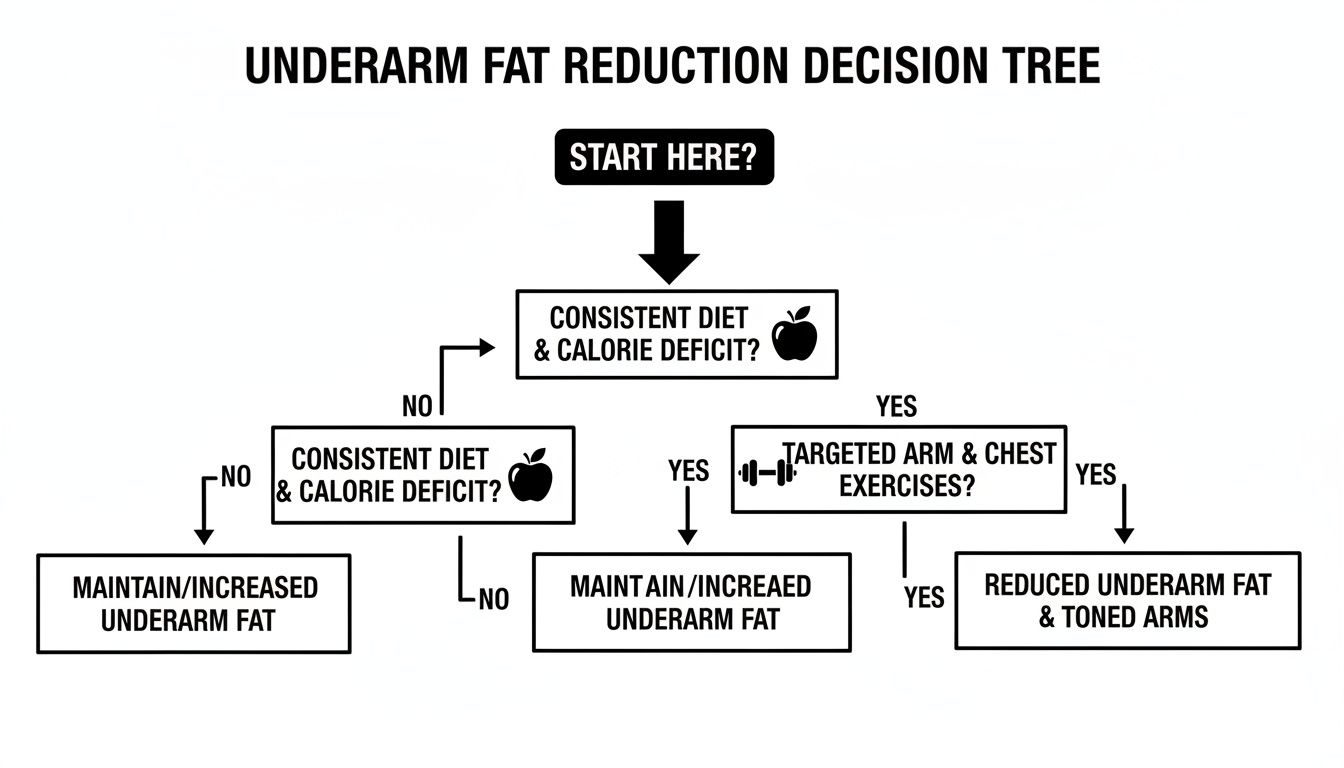
As you can see, healthy habits are always the first step. But when those habits stop giving you the specific changes you want, targeted treatments can bridge the gap.
One of the most popular and trusted non-surgical methods is cryolipolysis, but you probably know it by the brand name CoolSculpting. The science behind it is surprisingly straightforward: fat cells freeze at a higher temperature than your skin and other tissues.
During a treatment, we place a specialized applicator on the target area, like the fat near the armpit. This device uses precisely controlled cooling to chill the unwanted fat cells until they crystallize and die off. Over the next few weeks and months, your body naturally clears these dead cells away for good.
The best part? Those fat cells are permanently gone. Once your body flushes them out, they don't grow back. This leads to a visible reduction in the fat layer and a much smoother, more defined arm contour.
Because the whole process is non-invasive, there are no needles or incisions involved, which means zero required downtime. Many of our patients at Cape Cod Plastic Surgery just lean back and read, catch up on emails, or even take a quick nap during their session.
So, what does it actually feel like? When we first apply the applicator, you’ll feel a combination of strong suction and intense cold as the device gently draws the tissue into the cooling cup. That sensation usually fades within 5-10 minutes as the area becomes numb.
Once the applicator comes off, your provider will perform a quick, two-minute massage on the treated area. Don’t skip this! This step is critical for breaking up the crystallized fat cells and has been shown to improve final results by over 60%.
The results aren't instant, as it takes time for your body to do its cleanup work. Most people start noticing a difference around three weeks post-treatment, with the most dramatic changes appearing after two to three months. A single session might be all you need, but some patients opt for a second round for even more refinement.
Cryolipolysis is a fantastic tool, but it’s not for everyone. The best candidates typically share a few key traits:
This treatment is perfect for targeting that stubborn "bra bulge" or sculpting the upper arm area. If you're curious to dive deeper, our guide on how CoolSculpting works breaks down the entire process. Ultimately, these tools offer a way to achieve the defined look that diet and exercise sometimes can’t deliver on their own.
Sometimes, you hit a wall. You’ve put in the work with diet and exercise, maybe even tried non-surgical treatments, but that stubborn arm fat or loose skin just won’t budge. When you’ve taken lifestyle changes as far as they can go, surgery can offer the most significant and lasting improvement.
This is particularly true if you’re dealing with loose, sagging skin that has lost its ability to snap back. For a truly refined and toned arm shape, we turn to two main procedures: liposuction and the arm lift, clinically known as a brachioplasty. These aren't simple fixes, but they are incredibly effective tools for creating the smooth, contoured arms that exercise alone often can't achieve.
If your main frustration is pockets of fat under your arms but your skin is still firm and has good elasticity, arm liposuction is a fantastic option. Where diet and exercise shrink fat cells, liposuction gets rid of them for good by physically removing them from the area.
This procedure is all about sculpting. It’s perfect for tackling those stubborn fat deposits that seem resistant to everything you do. Using a very thin tube called a cannula, a surgeon can carefully suction out the fat, revealing a slimmer, more defined arm contour.
It's important to think of liposuction as a body contouring tool, not a weight-loss method. The best results are seen in people who are already at a stable, healthy weight but are bothered by specific, localized areas of fat. The aim here is shaping, not shedding pounds.
Because your body doesn't produce new fat cells as an adult, the results are permanent. The cells we remove are gone forever. That said, maintaining a stable weight is key. The remaining fat cells in your arms—and everywhere else—can still get bigger if you gain a significant amount of weight later on. You can learn more about liposuction and see how it works on different parts of the body.
Recovery from arm liposuction is fairly quick. You can expect some swelling and bruising for a few weeks, and you’ll wear a compression garment to help manage the swelling and support your arms as they heal into their new shape.
For many people, the problem isn't just fat. It's also loose, drooping skin—the result of major weight loss, genetics, or simply the aging process. This creates the classic "bat wing" appearance that no amount of push-ups or triceps dips can ever fully correct. When loose skin is the primary issue, an arm lift, or brachioplasty, is the definitive solution.
An arm lift tackles both problems in one procedure:
The trade-off for such a dramatic change is a scar. For a standard arm lift, the incision runs along the inside of the arm, from the armpit to the elbow. A skilled plastic surgeon like Dr. Fater is meticulous about placing this incision so it’s hidden as much as possible when your arms are resting at your sides. For those with less skin to remove, a "mini" arm lift might be possible, which involves a smaller scar contained within the armpit.
Combining liposuction with an arm lift is a proven and highly effective approach. Clinical research backs this up, showing major improvements, especially for patients after massive weight loss. One study found the procedure resulted in a significant decrease in arm circumference—an average reduction of 12.8% near the armpit and 15% farther down the arm. Every patient in the study saw clear improvements and reported being very happy with their new arm contour. You can read more about the study findings on arm contouring surgery here.
Recovering from a brachioplasty takes a bit more time than liposuction alone. You’ll need to wait about 4-6 weeks before getting back to heavy lifting and intense exercise. Following your surgeon's post-op care plan to the letter is the best way to ensure a smooth recovery and get the beautiful results you’re looking for.

When you’re ready to consider professional procedures for underarm fat, your most crucial decision isn't the treatment itself—it's the expert you choose. You're not just looking for a doctor; you're looking for a partner who truly gets your goals and has the skill to bring them to life safely and beautifully.
A truly great surgeon doesn't just see a patient; they see an individual. They'll listen to your specific frustrations, whether it's stubborn fat, "bra bulge," or loose skin after weight loss, and craft a plan that actually fits your body and lifestyle. If you ever feel like you're getting a "one-size-fits-all" pitch, that's a major red flag.
Your first filter should always be board certification in plastic surgery. This isn't just a piece of paper. It’s a guarantee of extensive training, deep knowledge, and a commitment to the highest ethical and safety standards in the field. Think of it as a non-negotiable benchmark for quality.
But certification is just the starting point. Real-world experience is what separates a good surgeon from a great one. A surgeon like Dr. Marc Fater, for example, brings over 30 years of expertise to our practice here at Cape Cod Plastic Surgery. That kind of experience means he has honed his techniques over thousands of procedures, mastering the artistic subtleties needed to sculpt natural, smooth arm contours.
The surgeon you choose directly impacts your safety and your results. A seasoned, board-certified plastic surgeon has seen it all, equipping them to handle your unique anatomy with precision and artistry.
An experienced expert knows that removing underarm fat isn't just about taking something away—it's about sculpting what remains. They can predict outcomes more accurately, manage your expectations realistically, and handle any potential challenges with confidence. We offer more detailed guidance on what to look for in our guide on finding a plastic surgeon.
The where is just as critical as the who. Top-tier practices, including ours, often invest in their own private, on-site surgical suites. This gives you a level of privacy, comfort, and personalized attention that a busy hospital environment simply can't match.
More importantly, you must confirm that the facility is properly accredited. Any on-site surgical center should be accredited by the American Association for Accreditation of Ambulatory Surgery Facilities (AAAASF). This is the gold standard, signaling that the facility meets strict national requirements for everything from equipment and operating room safety to staff credentials.
Choosing a practice with an AAAASF-accredited suite is your assurance that you're in an environment where your safety is the absolute top priority. It's a clear sign of a practice's dedication to excellence, from your first meeting to your final follow-up.
You've explored the options, and now you're likely wrestling with a few key questions. It's completely normal. We see patients work through these same considerations every day. Let's tackle some of the most common ones to give you a clearer picture of what to expect.
This is the big one, and the honest answer is: it takes time and consistency. If you stick to a solid nutrition and workout plan, you’ll probably start feeling better and seeing overall changes in your body within 4-6 weeks.
But when it comes to seeing a real difference in a stubborn spot like the arms, you're looking at a longer game—often several months of steady, full-body fat loss. Toning exercises can give you a head start, though. Building up your triceps and biceps creates a firmer, more sculpted foundation, which improves the look of your arms even while you’re still working on reducing the fat layer on top.
This almost always comes down to a single, crucial factor: the quality of your skin.
It’s a question of fat versus skin.
Liposuction works wonders if your main issue is pockets of stubborn fat but your skin still has good elasticity. In this case, we can remove the fat, and your skin is able to shrink down smoothly over your new, slimmer contour.
An arm lift (brachioplasty) is the solution when significant loose skin is the problem. This is very common after losing a lot of weight or simply from the aging process, resulting in what many call "bat wings." Liposuction alone won't fix this—we need to surgically remove that excess skin to restore a tight, smooth shape.
There’s no substitute for an in-person evaluation. During a consultation, a board-certified plastic surgeon can physically assess your skin's tone and the amount of excess fat to tell you definitively which approach will give you the results you’re hoping for.
Yes, the results are permanent in the sense that the treated fat cells are gone for good. When fat cells are removed with liposuction or destroyed through freezing with cryolipolysis, your body does not grow them back.
The Bottom Line: Fat cells removed through liposuction or destroyed via cryolipolysis are gone forever. The key to making these results last a lifetime is maintaining a stable weight, as the fat cells that remain in the area can still expand if you gain weight.
Think of it as having fewer "containers" for fat in that area. If you gain a significant amount of weight, the remaining fat cells in your arms—and everywhere else—can still get bigger. This is why maintaining a healthy, stable weight is so crucial for protecting your investment and enjoying your new arm contour for years to come.
If you're ready to move forward and find out what's possible for you, our team at Cape Cod Plastic Surgery is here to help. The next step is a personal conversation. Schedule your consultation today to get expert guidance from a board-certified plastic surgeon you can trust.
September 9, 2026
Expert Guide to Proper Surgical Incision Care
Master dermal fillers aftercare with do's and don'ts, swelling tips, activity limits and warning signs to protect your results and heal smoothly.

September 8, 2026
Ensuring Safety: Why Your Surgeon's Credentials Matter Most
Cape Cod Plastic Surgery offers expert cosmetic and reconstructive procedures in a safe, accredited setting. Led by Dr. Marc Fater, we combine advanced techniques with personalized care to help you look and feel your best.
Monday: 9:00 AM – 5:00 PM
Tuesday: 9:00 AM – 5:00 PM
Wednesday: 9:00 AM – 5:00 PM
Thursday: 9:00 AM – 5:00 PM
Friday: 9:00 AM – 5:00 PM