

September 9, 2026
How to Care for Surgical Incisions Properly
Expert Guide to Proper Surgical Incision Care
Jan 1, 2026

Tackling a double chin isn't a one-size-fits-all situation. The best approach usually involves a combination of smart lifestyle choices and, in many cases, professional treatments. Think of it as a two-pronged attack: using diet and exercise to manage overall body fat while exploring procedures designed to zero in on that stubborn fat and loose skin under your chin.
But before you jump into any solution, you have to know what you're up against. Figuring out the real reason behind your double chin is the absolute first step.

It’s easy to assume a double chin—what we in the medical field call submental fullness—is just about gaining a few pounds. But honestly, it's rarely that simple. A handful of different factors, often working together, are usually at play.
Getting to the bottom of this is key. Why? Because it dictates your treatment plan. If your genes are the main culprit, for instance, you could diet and exercise for months and still not see the profile you want.
You can thank your family tree for this one. Genetics largely determine where your body decides to store fat. If your parents or grandparents had a double chin, there's a good chance you might be predisposed to one, too, even if you’re at your ideal weight.
Your natural facial structure matters just as much. Someone with a softer, less defined jawline or a chin that's set back a bit (a recessed chin) will naturally have less framework to support the skin and fat in that area. I see this all the time—incredibly fit people who are frustrated by that one spot they just can't seem to change.
As the years go by, our skin's natural support system starts to weaken. The body's production of collagen and elastin—the proteins that keep skin tight and bouncy—slows down. This causes skin to lose its elasticity, and the area under the chin is often one of the first places to show it.
Think of it like a rubber band that has been stretched too many times—it loses its ability to snap back into place. This sagging can create the appearance of a double chin, even if there isn't a significant amount of fat present.
On top of that, the platysma muscle, a thin sheet of muscle that runs from your collarbone up your neck, also loses tone over time. This weakening contributes to that less-defined, "turkey neck" appearance and can make a double chin look more prominent.
While you can’t fight your DNA or turn back the clock, there are a few lifestyle habits that can definitely make a difference.
Once you pinpoint which of these factors are contributing to your situation, you’re in a much better position to choose the right solution from the options we’ll explore next.

While things like genetics and aging are big players, you absolutely have some control right at home. You can take proactive steps to improve the look of a double chin by combining targeted exercises with a few smart lifestyle changes. Think of it as strengthening the underlying muscles while reducing the factors that make a double chin more prominent.
Let's be realistic, though. These methods won't melt away significant fat deposits or fix severely loose skin. What they can do is create noticeable, gradual improvements and provide a fantastic foundation to support the results from any professional treatments you might consider.
Think of this as a workout for your jawline. The idea is to wake up and tone the platysma—that broad sheet of muscle running from your collarbone to your jaw—and other muscles in your lower face. Consistency is everything here. Try to work these into your daily routine, maybe while you're waiting for your coffee to brew or winding down at night.
1. The Chin Lift
This is a classic for a reason—it really targets the muscles in your neck and jaw. Sit or stand up straight, tilt your head back, and look toward the ceiling. Now, pucker your lips like you're trying to kiss the ceiling. You should feel a definite pull under your chin.
2. The Jaw Jut
Here's another great move for engaging those under-chin muscles. Look straight ahead and gently push your lower jaw forward until you feel a light stretch along your jawline.
3. The Neck Stretch
This one just feels good, but it also helps tone the muscles on the sides of your neck. From a forward-facing position, gently lean your head toward your right shoulder. You can use your right hand to add a very slight, gentle pressure on your head for a deeper stretch.
These exercises are a solid starting point, but a holistic approach is always best. If you want to explore more, our guide on how to tighten neck skin without surgery has some extra non-invasive techniques.
You’d be surprised how much your daily habits affect your neck and jawline. Making small, consistent tweaks to your diet, posture, and hydration can really add up.
A balanced diet is a big piece of the puzzle. Focusing on whole foods, lean proteins, and vitamins while cutting back on processed junk, sugar, and too much salt helps prevent water retention and manage your overall weight. If weight management is part of your goal, checking out some practical weight loss tips can provide a helpful roadmap.
Staying well-hydrated is another simple yet effective tactic. Drinking plenty of water helps flush out toxins and can reduce bloating, which sometimes contributes to facial puffiness.
Finally, check your posture. We're all guilty of "tech neck"—that constant head-down position while scrolling through our phones. This habit can weaken neck muscles and encourage skin to sag over time. Make a conscious effort to hold your phone at eye level and sit tall with your shoulders back. It's not just better for your spine; it elongates your neck and instantly sharpens your profile.

So, you’ve been consistent with diet and exercise, but that stubborn submental fat just won't budge. It’s a common story. The good news is, you don’t have to jump straight to surgery to get a more defined jawline.
We now have some truly effective, FDA-approved non-surgical treatments that can deliver impressive results with little to no downtime. These procedures are perfect for people dealing with moderate fat under the chin who want a direct solution. They work by either melting fat cells away or encouraging the skin to tighten itself up from within.
Kybella has become a household name for a reason—it’s the only FDA-approved injectable that specifically targets and destroys fat cells under the chin. The secret is its active ingredient, a synthetic form of deoxycholic acid. This is a molecule your body already uses to break down and absorb fat from your diet.
When we inject Kybella into the chin area, it goes to work rupturing the membranes of fat cells. Once those cells are gone, they're gone for good. Your body’s natural cleanup crew then gradually flushes out the remnants over the next several weeks, leaving behind a slimmer profile.
Most people see the best results after a series of two to four treatment sessions, spaced about a month apart. You can expect some swelling and tenderness for a few days, but the appointment itself is fast—usually less than 20 minutes.
If needles aren't your thing, CoolSculpting offers a powerful, non-injectable alternative. This technique, officially called cryolipolysis, uses controlled cooling to literally freeze and kill stubborn fat cells without harming the skin or surrounding tissues. It's a fantastic choice if your double chin is caused by a distinct pocket of fat.
During the treatment, a special applicator gently suctions the area and cools it to a precise temperature. The targeted fat cells crystallize and die off. Just like with Kybella, your body takes care of the rest, naturally processing and eliminating the dead cells over the following months.
Many of our patients see a 20-25% reduction in fat in the treated area from just one or two sessions. If you want to dive deeper into how it all works, our guide to CoolSculpting for chin fat has all the details.
Sometimes, the issue isn't just fat but also loose skin. As we get older, our collagen production naturally declines, which can lead to sagging under the chin. That's where energy-based treatments like radiofrequency and Ultherapy really make a difference.
Both of these options are fantastic because they use your body's own healing response to create gradual, natural-looking results with virtually no downtime. While these in-office treatments are highly effective, some people also look into complementary medical strategies for overall fat reduction, like peptide therapy for weight loss, to support their body composition goals.
Choosing the right path really comes down to your unique anatomy and goals. Is it mostly fat? Is it skin laxity? Or a little of both? This table gives a quick side-by-side look at the leading non-surgical options to help you see which treatment aligns with your goals, budget, and lifestyle.
Ultimately, there's no substitute for professional advice. A one-on-one consultation allows a qualified provider to properly assess your chin profile and create a personalized plan. This ensures you get the best possible treatment to achieve that sharp, defined jawline you're looking for.
When diet, exercise, and even non-surgical treatments haven't given you the sharp, defined jawline you’re after, it might be time to consider a surgical solution. For those seeking the most dramatic and permanent change, surgery is truly the gold standard.
These procedures go beyond what other methods can do by physically removing excess fat and, if needed, tightening the underlying muscles and skin. This is how we create that crisp, well-defined angle from the jaw to the neck. Let's walk through the two most effective and popular options: submental liposuction and the neck lift.
I often describe submental liposuction as a beautifully straightforward and highly effective procedure. Its one job? To get rid of that stubborn fat pocket right under the chin. This is usually the perfect fix for people who have a distinct bulge of fat but whose skin is still firm and elastic. If your skin has enough "snap" to bounce back once the fat is gone, lipo alone can work wonders.
The procedure itself is quite minimal. A surgeon makes one or two tiny incisions, usually tucked away in the natural crease under your chin where they’ll be hard to spot. A small, thin tube called a cannula is then used to gently suction out the unwanted fat cells. Because those fat cells are gone for good, the results are considered permanent—as long as you maintain a stable weight, of course.
The demand for this specific procedure has really taken off. In 2022 alone, plastic surgeons performed 22,285 submental liposuction procedures just for the double chin area. That kind of increase speaks volumes about its effectiveness and how happy patients are with their results. You can dig into the numbers yourself in the American Society of Plastic Surgeons' annual statistics report.
Liposuction is a powerhouse for fat, but it can’t do anything about loose skin or weakened neck muscles. That’s where the neck lift, or platysmaplasty, comes in. This is the go-to solution when we're dealing with a combination of issues: excess fat, sagging skin, and those vertical bands that can appear on the neck.
A neck lift is a much more comprehensive approach. The surgeon not only removes fat but also tightens the underlying platysma muscle and trims away any droopy, excess skin. Incisions are carefully placed, typically around the ears and under the chin, so they’re as hidden as possible once everything heals.
By addressing all three elements—fat, muscle, and skin—a neck lift can essentially reset the clock on an aging neck. It restores a smooth, youthful, and sharply defined contour that will last for years to come.
So, how do you know which surgery is the right one for you? It almost always boils down to the condition of your skin and the underlying structures of your neck.
It's also quite common for surgeons to combine these procedures. For instance, I might perform liposuction first to remove the bulk of the fat, then follow up with a neck lift to tighten the remaining skin and muscle. This combined approach often delivers the most complete and satisfying results for patients with more than one concern.
Understanding the recovery process is a crucial step, and it's important to set realistic expectations. While both procedures are very safe and routine, they are still surgery.
Liposuction Recovery:
Neck Lift Recovery:
No matter which procedure you choose, following your surgeon's post-op instructions to the letter is essential for a smooth recovery and the best possible outcome. Your final, sculpted jawline will gradually reveal itself as all the swelling disappears over the next few months, leaving you with a permanent and beautifully defined new profile.
Deciding to move forward with a cosmetic procedure is a big step. It’s completely normal to feel a mix of excitement and nerves. My goal is to help you replace that uncertainty with confidence by walking you through what to expect, from our first conversation to your final results.
That first meeting is more than just an appointment; it's the start of a partnership. It’s where we sit down and talk about your goals—what you see in the mirror and what you hope to see. I’ll listen, take a look at your specific anatomy, and then we’ll discuss which route makes the most sense for you, whether that's a non-surgical touch-up or a surgical procedure.
To get the most out of our time together, it helps to do a little thinking beforehand. The clearer you are on your goals, the more productive our chat will be. For a deeper dive, we’ve put together some tips for preparing for your plastic surgery consultation.
Recovery isn’t one-size-fits-all; it really depends on the treatment you choose. Let's break down the typical healing process for both non-surgical and surgical options so you know exactly what’s ahead.
For Non-Surgical Treatments (like Kybella or CoolSculpting):
For Surgical Procedures (like Liposuction or a Neck Lift):
This decision tree gives you a good idea of how a surgeon thinks when recommending the right path for your specific concern.
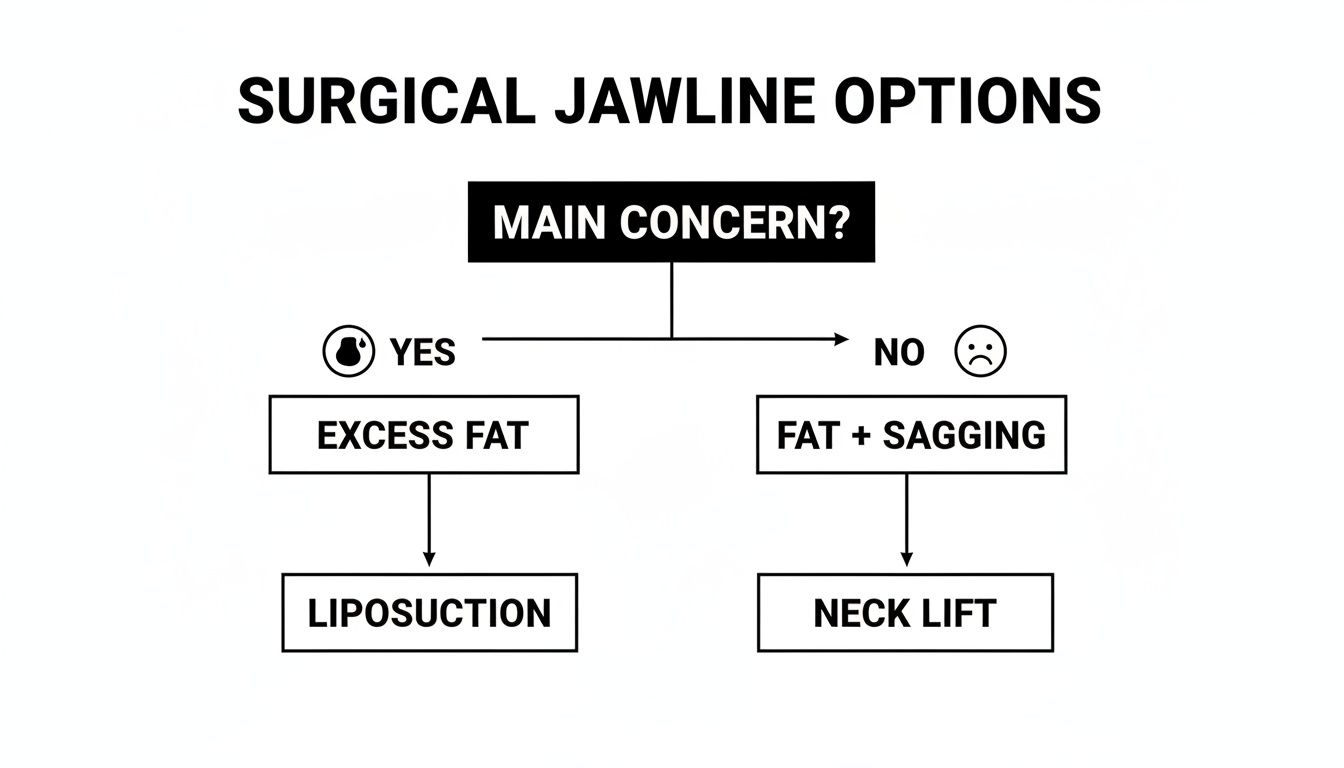
As you can see, if the issue is mainly a pocket of stubborn fat, liposuction is often the go-to. But when there's also loose skin involved, a neck lift is usually the better choice for a truly sculpted result.
Having guided countless patients through this process, I can tell you that what you do after surgery is just as important as the procedure itself. A few simple things can make all the difference in your healing.
First and foremost, follow your post-op instructions to the letter. I know it sounds obvious, but it’s the number one rule for a great outcome. That includes wearing your compression garment exactly as we tell you to—it’s key for minimizing swelling and helping your skin adapt to its new contour.
Next, focus on nourishing your body. Drink plenty of water and eat healthy, protein-rich meals to give your body the fuel it needs to repair itself. Once you get the okay from us, start taking short, gentle walks. It's great for circulation and can help speed things along.
A crucial piece of advice: Be patient with swelling. It can hide your final results for weeks, sometimes even months. It’s a totally normal part of healing, so trust the process and don't judge your results too soon.
When fat removal alone isn’t enough, the neck lift has become a premier solution. It’s no surprise that its popularity continues to climb. The 2023 Plastic Surgery Statistics Report shows a 2% increase in procedures, with 22,007 performed in 2023. People are realizing its power to tighten both skin and the underlying muscle for a sharp, lasting jawline. Plus, with a return to most routines in just one to two weeks, it's a powerful option with manageable downtime.
It's completely normal to have a lot of questions when you're thinking about aesthetic treatments. Before you decide on anything, you want clear, straight-up answers. This is where we'll tackle those lingering questions and bring everything we've talked about into focus.
Think of this as the final part of our conversation, where we address the most common things patients bring up during their consultations. My goal is to give you the straightforward information you need to feel confident about whatever you decide to do next.
This is usually the first thing people ask, and the answer is refreshingly good. For treatments that actually get rid of fat cells—like liposuction, Kybella, and CoolSculpting—the results are permanent. Once those fat cells are destroyed or removed, they don't grow back.
But there's a small catch. The fat cells that remain in the area can still get bigger if you gain a significant amount of weight down the road. And for skin-tightening treatments like RF or Ultherapy, you’ll likely need a maintenance session every so often to keep up with the natural aging process.
The bottom line? The best, most lasting results come from maintaining a stable weight and a healthy lifestyle. It’s the best way to protect the investment you've made in yourself.
Figuring out whether you need liposuction or a neck lift really boils down to your skin's quality. It's the classic "fat vs. laxity" dilemma, and knowing which one is your primary issue is the key to getting the results you want.
Here’s a simple way to think about it:
Honestly, the only way to know for sure is to come in for a consultation. A board-certified plastic surgeon can physically examine your neck and jawline and tell you which procedure will give you the outcome you're hoping for.
There’s really no magic number here. The right time for any procedure is when the issue starts to bother you, and it depends entirely on your anatomy and goals. We see patients of all ages, and everyone’s needs are different.
For instance, plenty of people in their 20s and 30s have a double chin due to genetics, but their skin is still firm and tight. They make perfect candidates for liposuction. On the other hand, patients in their 40s, 50s, and older often benefit more from a neck lift because it also addresses the skin laxity that naturally comes with age.
What matters most is that you're in good health and have a clear, realistic idea of what the treatment can do for you.
Absolutely. In fact, it’s a smart and very common way to approach things. Combining procedures means you can tackle several aesthetic goals at once with just one recovery period. A procedure to reduce a double chin is very often paired with other facial surgeries to create a more balanced, harmonious result.
Some of the most popular combinations include:
When you come in for a consultation, don't be shy about discussing everything you're hoping to achieve. A good surgeon will help you put together a single, cohesive plan that addresses all of your concerns, saving you time and simplifying your recovery.
Ready to explore your options and find the perfect solution for your unique goals? At Cape Cod Plastic Surgery, Dr. Fater and our expert team are here to guide you with personalized care and over 30 years of experience. Schedule your consultation today by visiting us at https://ccplasticsurgery.com.
September 9, 2026
Expert Guide to Proper Surgical Incision Care
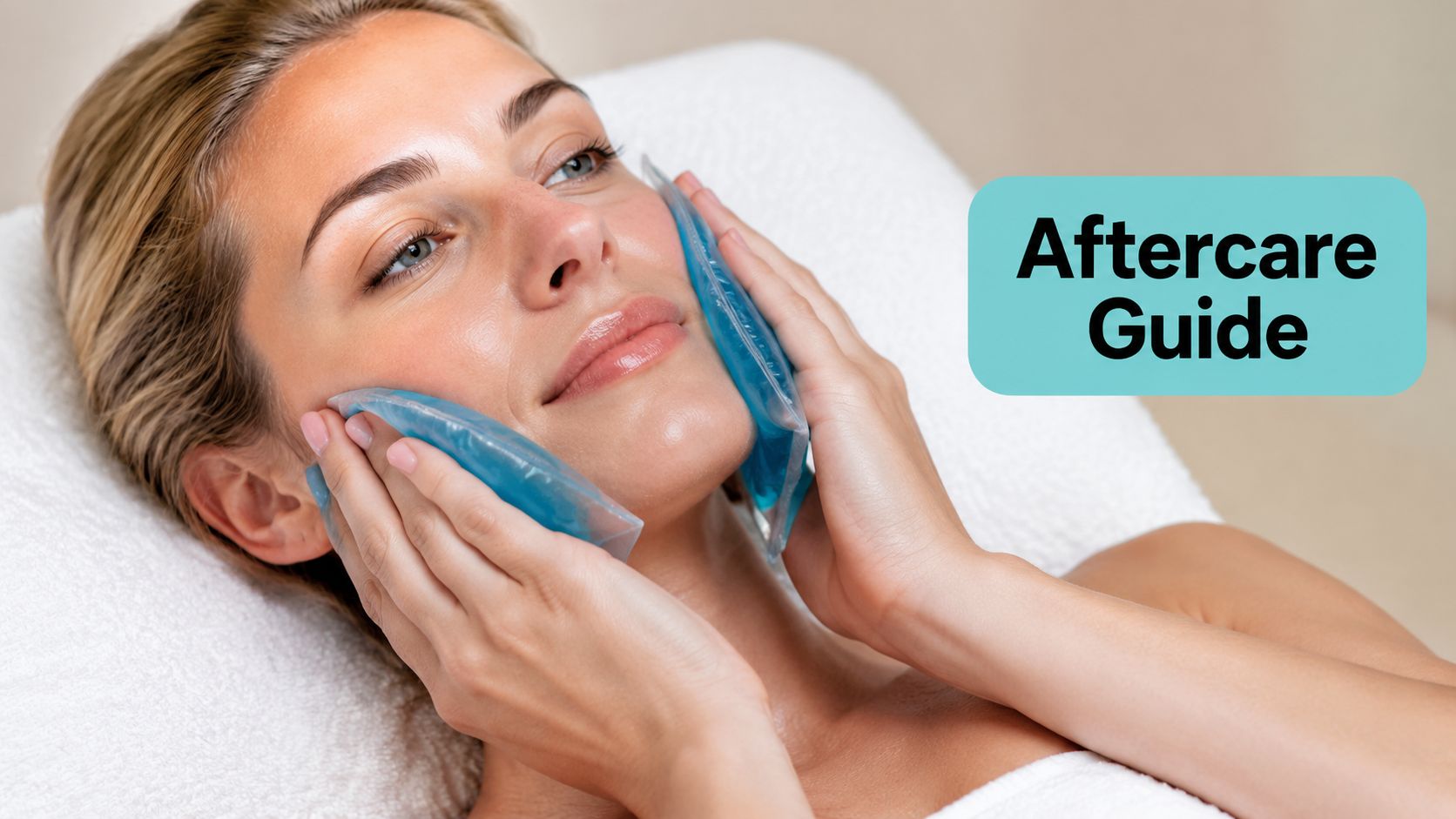
Master dermal fillers aftercare with do's and don'ts, swelling tips, activity limits and warning signs to protect your results and heal smoothly.

September 8, 2026
Ensuring Safety: Why Your Surgeon's Credentials Matter Most

Cape Cod Plastic Surgery offers expert cosmetic and reconstructive procedures in a safe, accredited setting. Led by Dr. Marc Fater, we combine advanced techniques with personalized care to help you look and feel your best.
Monday: 9:00 AM – 5:00 PM
Tuesday: 9:00 AM – 5:00 PM
Wednesday: 9:00 AM – 5:00 PM
Thursday: 9:00 AM – 5:00 PM
Friday: 9:00 AM – 5:00 PM