

October 5, 2026
The Value of an On Site Accredited Facility
Why Our On-Site Accredited Facility Matters for Your Safety
Jan 4, 2026
When it comes to getting rid of age spots, you have two main roads you can travel. The first involves using powerful topical ingredients like retinoids to gradually fade the spots over time. The second is the fast lane: professional procedures like laser therapy and chemical peels that deliver quicker, more noticeable results. The right choice for you really boils down to how prominent your spots are, your budget, and how quickly you want to see a change.
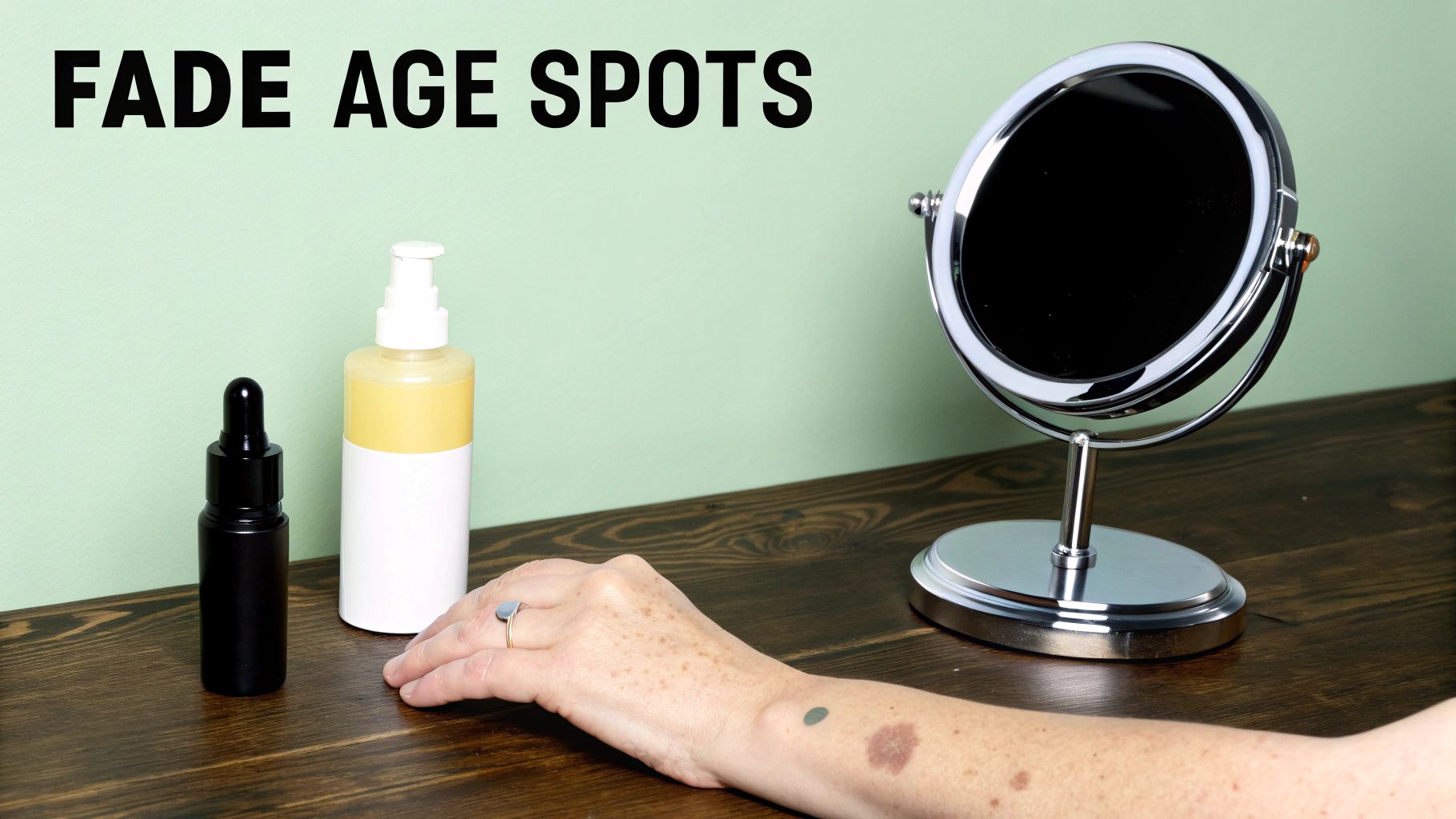
If you've started noticing more of those little brown spots popping up on your hands, face, or chest, you’re certainly not alone. Medically, they’re called solar lentigines, and while they're a common sign of a life spent enjoying the sun, they can still be a real nuisance.
The great news? We've moved way beyond old wives' tales. Today, you have access to some incredibly effective options that deliver real, visible results. This guide is designed to be your roadmap, breaking down everything from potent at-home ingredients to the advanced in-office procedures that can truly restore your skin’s clarity.
The pursuit of an even skin tone is a huge driver in the skincare world. In fact, treatments for age spots now make up a massive 37.11% revenue share of the entire hyperpigmentation market. This isn't surprising, especially when you consider that the World Health Organization projects the population over 60 will hit 2.1 billion by 2050. As people live longer, healthier lives, they want their skin to reflect that vitality.
Before jumping into treatments, it helps to know exactly what you’re dealing with. This guide will walk you through everything, so you can feel confident in your decisions. We'll explore:
This journey is about more than just erasing spots; it’s about restoring that healthy, radiant glow to your skin. When you understand the science behind the treatments, you're empowered to make the best choices for a clearer, more confident you.
We'll start by digging into the biology behind solar lentigines. Once you have that foundation, choosing the right path forward becomes much clearer. For a deeper dive into tackling uneven skin tone, which shares many of the same treatment principles, check out this great resource on Korean Skincare for Hyperpigmentation.
If you want to know how to get rid of age spots, you first have to understand what they are—and what they aren't. These flat, brown, or black marks are medically known as solar lentigines. That name tells you a lot, because "solar" means sun. They aren't actually caused by getting older; they're the direct result of your skin's long history with sunlight.
Think of it this way: your skin has a memory. Every single time it’s been exposed to the sun, from those long beach days in your youth to the daily drive to work, it remembers. The sun's ultraviolet (UV) light wakes up your pigment-producing cells, called melanocytes. Their job is to create melanin, the very thing that gives your skin its color and creates a tan as a way to protect itself.
After years of this cycle repeating, some of those melanocytes get overworked. They start producing way too much melanin, which then clumps together in the top layer of your skin. That concentrated pigment is what you see as an age spot. It’s no surprise they pop up most often on the areas that see the most sun: your face, hands, shoulders, and arms.
It's easy to confuse age spots with other types of skin discoloration, but telling them apart is the first step toward finding a treatment that actually works. What you're dealing with dictates the best path forward.
While they all involve extra pigment, the "why" behind them is totally different. That means the way we treat them has to be different, too. For age spots, the main culprit is UV damage, which gives us a very specific target to aim for.
Ever wonder why you might have more spots than a friend who’s the same age? A few things are at play here. First, genetics have a lot to do with it. If age spots run in your family, there’s a good chance you’ll see them, too.
Your natural skin tone is another huge piece of the puzzle. If you have fair skin (what we call Fitzpatrick skin types I and II), you have less natural melanin to begin with. This makes your skin much more vulnerable to the sun's damaging rays, often leading to more spots, sooner.
The most important thing to remember is that age spots don't just appear overnight. They are the sum total of years and years of sun exposure. That’s why sun protection isn’t just about prevention—it’s the foundation of any plan to treat the spots you already have.
When you're ready to tackle age spots, your own bathroom counter is the perfect place to begin. A consistent, targeted skincare routine is the absolute foundation for seeing real, lasting change. This approach is a marathon, not a sprint, but with dedication, you can achieve brighter, more even-toned skin.
The entire game plan revolves around using ingredients that are scientifically proven to work on the mechanisms behind hyperpigmentation. We're looking for compounds that can do one of three things: interrupt melanin production, speed up skin cell turnover to shed discolored cells, or protect against future damage.
Let's dive into the powerhouse ingredients that form the core of an effective at-home strategy. These are the very components clinicians, myself included, often recommend as the first line of defense.
If one ingredient has truly stood the test of time in dermatology, it's retinoids. This family of vitamin A derivatives is a game-changer because it accelerates your skin's natural exfoliation process. Think of it as gently encouraging old, pigmented surface cells to make way for the fresh, new cells underneath.
This increased cell turnover is what helps to visibly fade the appearance of existing spots. But retinoids also go a step further by helping to regulate pigment production, which can prevent new spots from becoming quite so dark.
Vitamin C is another cornerstone of any routine aimed at fading discoloration. As a potent antioxidant, it works in two critical ways. First, it acts like a shield, neutralizing the free radicals from UV exposure that trigger excess pigment in the first place.
Second, it directly interferes with tyrosinase, the enzyme responsible for creating melanin. By putting the brakes on this process, it helps both lighten existing spots and prevent new ones from forming. A daily dose of vitamin C serum is one of the best proactive steps you can take for clearer skin.
Key Takeaway: The combination of a retinoid at night and a vitamin C serum in the morning creates a powerful synergy. The retinoid works on cell turnover while the vitamin C provides daytime protection and pigment inhibition.
Consistency is completely non-negotiable here. You won't see results from using these products sporadically. They need to be applied diligently over several months to produce a noticeable difference.
Beyond those two main players, several other ingredients can offer excellent support and enhance your results. Adding one or two of these can create a more comprehensive approach to tackling stubborn pigmentation.
Below is a quick reference table I put together to help you understand some of the most effective over-the-counter options available.
Choosing the right combination from this list depends on your skin's unique needs and tolerance. The goal is to attack the problem from multiple angles without causing excessive irritation.
If your at-home routine just isn't delivering the results you're after, don't get discouraged. It might simply be time to consider professional options that can offer a more significant impact. Understanding the differences between treatments like microneedling vs chemical peels can help you decide on the next level of care.
When your at-home skincare routine has hit a plateau, or you’re just ready for more dramatic results, it’s time to look at what we can do in the clinic. Professional treatments are designed to deliver a much more powerful and targeted impact on stubborn pigmentation than anything you can use at home. They operate on a completely different level, using advanced energy or chemical agents to break down those stubborn clusters of melanin that form age spots.
This is where you can achieve significant, lasting clearance of discoloration, often in just a handful of sessions. I like to tell my patients to think of their daily skincare as the essential foundation—the maintenance and protection—while these advanced treatments are the specialized tools we bring in to correct deeper issues. When over-the-counter products just aren't cutting it, professional anti-aging treatment services can provide the powerful solutions you need.
The demand for these procedures is booming for a reason: they work. The market for hyperpigmentation treatments, which heavily features solutions for age spots, expanded from USD 7.50 billion and is on track to hit USD 12.89 billion by 2031. This growth is fueled by treatments that consistently show 70-90% efficacy in clinical studies, offering people real, visible change they can count on.
One of the most popular and effective go-to treatments for age spots is Intense Pulsed Light, or IPL. You might have heard it called a "photofacial," and it’s absolutely fantastic for targeting the brown pigment in solar lentigines without harming the surrounding skin.
Unlike a laser that uses a single, focused beam, IPL uses a broad spectrum of light delivered in short, intense flashes. This light is specifically absorbed by the melanin within the age spot. That light energy instantly converts to heat, shattering the pigment into tiny particles. From there, your body’s own clean-up crew—the immune system—clears away these fragments, causing the spot to fade away.
Think of a patient with a spray of distinct brown spots across their hands and forearms from years of sun. Retinoids might have softened their appearance, but IPL is the treatment that can truly make them disappear.
IPL is a fantastic option, especially for people with lighter skin tones (Fitzpatrick types I-III) who have well-defined, dark spots.
For more extensive sun damage, or if you're hoping to tackle fine lines and texture issues at the same time as your spots, laser resurfacing is an incredible tool. These devices use a highly focused, single wavelength of light to either precisely remove the outer layers of damaged skin or target pigment deep within the dermis.
We generally group resurfacing lasers into two main categories:
A key conversation we'll have is about downtime. An ablative laser treatment might mean a week or more of recovery as your skin heals. In contrast, a non-ablative laser might just leave you looking a bit red for a day or two. The right choice really comes down to your specific goals, skin concerns, and how much recovery time you can fit into your life.
For example, I might have a patient with age spots on their cheeks who is also bothered by fine lines and a generally dull, sun-damaged texture. For them, a fractional non-ablative laser could be the perfect fit. It will break up the pigment while also stimulating collagen to improve overall skin quality—all with just a few days of looking a bit sunburned. You can explore the specific hyperpigmentation treatments we offer here at Cape Cod Plastic Surgery to get a better sense of the possibilities.
To make things a bit clearer, I've put together a simple table to compare the core differences between these powerful in-office options.
Here’s a quick overview of the top in-office procedures for age spots, breaking down how they work and what you can expect.
Ultimately, choosing between these treatments is a collaborative process. We’ll sit down together and consider your skin type, the specific nature of your pigmentation, and your personal goals to create a plan that will deliver the results you're looking for, both safely and effectively.
With so many options out there, figuring out where to start with age spots can feel a bit overwhelming. But finding the right path forward is actually pretty straightforward. It all begins with taking a good, honest look at your skin. Are we talking about a few light, scattered spots? Or are they darker and more concentrated?
That simple assessment is your first decision point. As a general rule, I always recommend starting with a consistent, high-quality at-home routine using the powerful ingredients we covered earlier. Give it a dedicated three to six months. If you’re not seeing the results you’d hoped for by then, that’s when it’s time to think about calling in a professional.
This simple guide can help you visualize that first step.
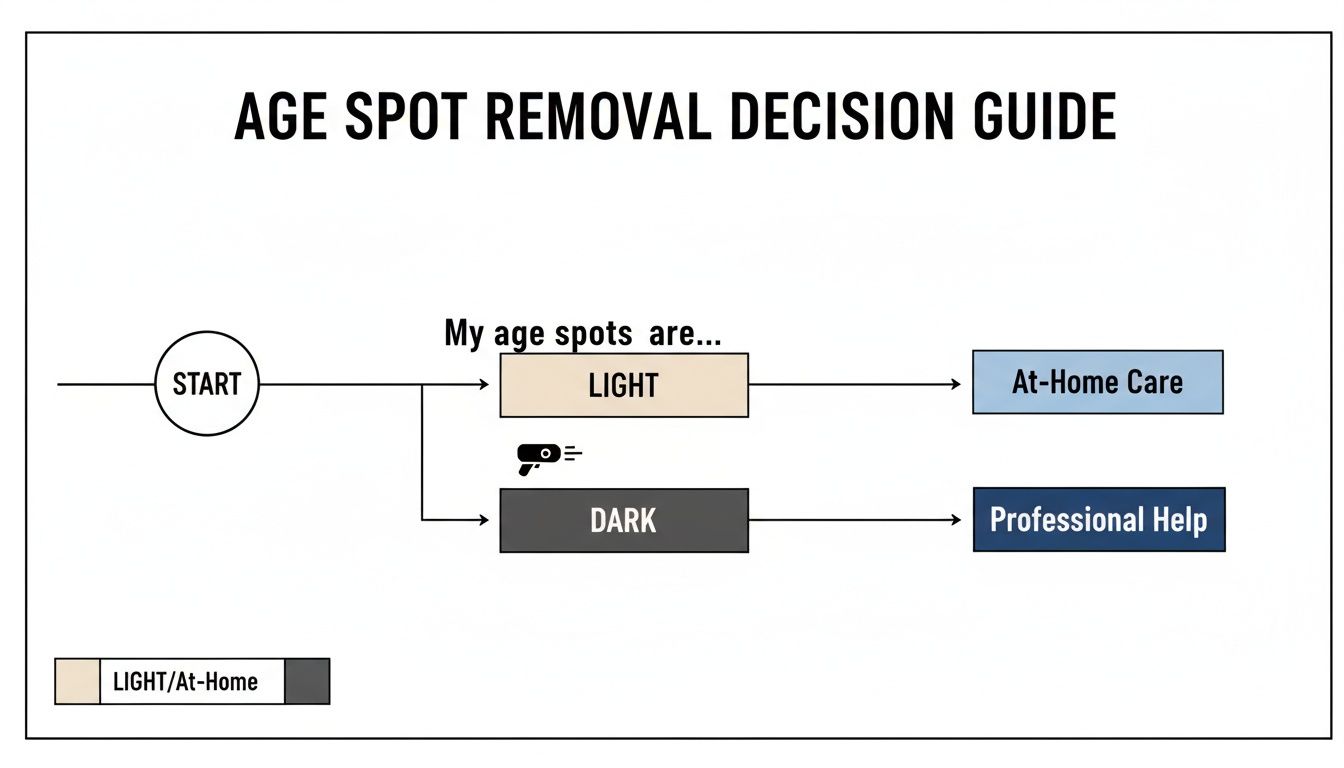
As you can see, the severity of the pigmentation really dictates whether you should start with at-home care or jump straight to a professional consultation.
Beyond just what your spots look like, the best treatment plan has to fit your life. It’s about finding a solution you can actually stick with.
Let’s put this into perspective. A busy executive with stubborn, dark spots might choose a few IPL sessions spaced out over the fall. The minimal downtime fits perfectly into her demanding schedule. On the other hand, someone with lighter spots and a more limited budget might achieve fantastic results by diligently applying a quality retinol and vitamin C serum every single day.
Think of it as a partnership. The best treatment is the one that aligns with your realistic expectations and that you can commit to without turning your life upside down.
When you get to the point of considering in-office procedures, it's crucial to understand the nuances. The differences between lasers and chemical peels, for example, can seem subtle, but they matter.
For a deeper dive into two of our most popular options, our guide on laser resurfacing vs. chemical peels is a great resource. It really breaks down who is a better candidate for which procedure and what you can expect from each.
The goal here is to empower you to make a smart decision. By assessing your skin, thinking through your lifestyle, and understanding what each treatment truly involves, you can create a clear, personalized strategy to get the results you want.

Getting rid of existing age spots is a huge win, but the work doesn't stop there. Think of it as just half the battle. To protect that investment and stop new spots from forming, you need an ironclad commitment to sun protection.
Without it, you’re leaving the door open for UV radiation to stir up new pigment clusters. Even the spots you’ve successfully treated can darken and return. In my experience, prevention is truly the most powerful tool we have against hyperpigmentation.
This proactive approach is catching on. The global market for age spot treatments was already USD 478.7 million in 2023, but now we're seeing a major trend toward preventive care. Younger clients are coming to us to get ahead of sun damage before it becomes more pronounced and harder to treat. You can read more about the anti-aging market sizing to see just how significant this shift is.
The only way sun protection truly works is if it's consistent. This isn't just for beach days. It needs to be as automatic as brushing your teeth—every single morning, rain or shine, whether you’re heading to the office or staying indoors.
To properly defend against the UV rays that cause age spots, your daily sunscreen must check a few boxes:
One of the biggest mistakes I see is people applying sunscreen once in the morning and assuming they're covered all day. Protection degrades. You absolutely must reapply every two hours if you're outdoors, sweating, or even just sitting by a bright window.
Sunscreen is your first line of defense, but adding a daily antioxidant serum is like giving your skin a second shield. Ingredients like Vitamin C are fantastic for neutralizing the free radical damage that can slip past your sunscreen.
Here’s an easy way to think about it: sunscreen is the armor that blocks the UV attack. Antioxidants are the medics that clean up any damage that manages to break through.
Using them together gives your skin the most complete protection possible against the environmental triggers that cause pigmentation and premature aging. This two-pronged strategy is the key to keeping your skin clearer for much, much longer.
When you're thinking about treating age spots, a lot of questions probably come to mind. It's completely normal. Let's walk through some of the most common concerns we hear from our patients every day, so you can move forward with confidence.
One of the biggest questions is, "Will my age spots just come back after treatment?" The short answer is yes, they can. While a laser or IPL session can do an incredible job of clearing away the existing pigment, it can't erase past sun damage or prevent future spots from popping up. Think of it this way: the treatment clears the slate, but keeping it clear is up to you. That's why daily sun protection isn't just a suggestion—it's essential for maintaining your results.
People are often curious about what the treatments actually feel like. It's a fair question! Most patients say professional treatments like IPL feel like a quick, hot snap, kind of like a rubber band against the skin. It's over in a flash and most people handle it just fine. We always prioritize your comfort throughout the entire process.
Another big topic is the timeline. "How long until I see a real difference?" The answer really depends on the path you take.
When should I be concerned about a dark spot? This is easily the most important question. If you ever spot a lesion that's changing in size, shape, or color, has an uneven border, or starts to bleed or itch, don't wait. It's crucial to have it checked by a professional right away to rule out skin cancer.
Your health and safety always come first. Any new or suspicious spot needs a proper diagnosis.
Ready to explore what's possible for your skin? The team here at Cape Cod Plastic Surgery can create a personalized plan to address your concerns and help you achieve clearer, more even-toned skin. Schedule your consultation with us today.
October 5, 2026
Why Our On-Site Accredited Facility Matters for Your Safety

October 2, 2026
Beyond the Calendar: How to Know You’re Truly Ready for Plastic Surgery

October 2, 2026
Exploring Your Breast Augmentation Options: Implants, Shapes, and What to Expect

Cape Cod Plastic Surgery offers expert cosmetic and reconstructive procedures in a safe, accredited setting. Led by Dr. Marc Fater, we combine advanced techniques with personalized care to help you look and feel your best.
Monday: 9:00 AM – 5:00 PM
Tuesday: 9:00 AM – 5:00 PM
Wednesday: 9:00 AM – 5:00 PM
Thursday: 9:00 AM – 5:00 PM
Friday: 9:00 AM – 5:00 PM