

September 9, 2026
How to Care for Surgical Incisions Properly
Expert Guide to Proper Surgical Incision Care
Dec 27, 2025

When patients ask me how to speed up their healing after surgery, I always tell them it’s not about finding one magic bullet. It’s about a smart, dedicated approach that starts even before the procedure. Think of it as actively participating in your own recovery—combining the right foods, meticulous care for your incisions, and a careful balance of rest and movement.
Taking charge of these elements is what truly sets the stage for a smoother, faster healing process with fewer bumps in the road.
Your final result from cosmetic or reconstructive surgery isn't just created in the operating room. So much of your success is determined by what you do after you go home. It's a common misconception to see recovery as a passive waiting game. The truth is, your actions in the days and weeks following your procedure have a direct impact on how quickly and how well you heal.
This guide will walk you through the essential pillars of an accelerated recovery, giving you a clear, actionable roadmap. We’ll cover everything from getting ready beforehand to the nitty-gritty of daily care.
After the stress of surgery, your body is in full-on repair mode, and it needs the right resources to do its job effectively. These are the non-negotiables you’ll need to focus on:
This timeline gives you a great visual breakdown of the recovery journey, showing you what to prioritize at each step.
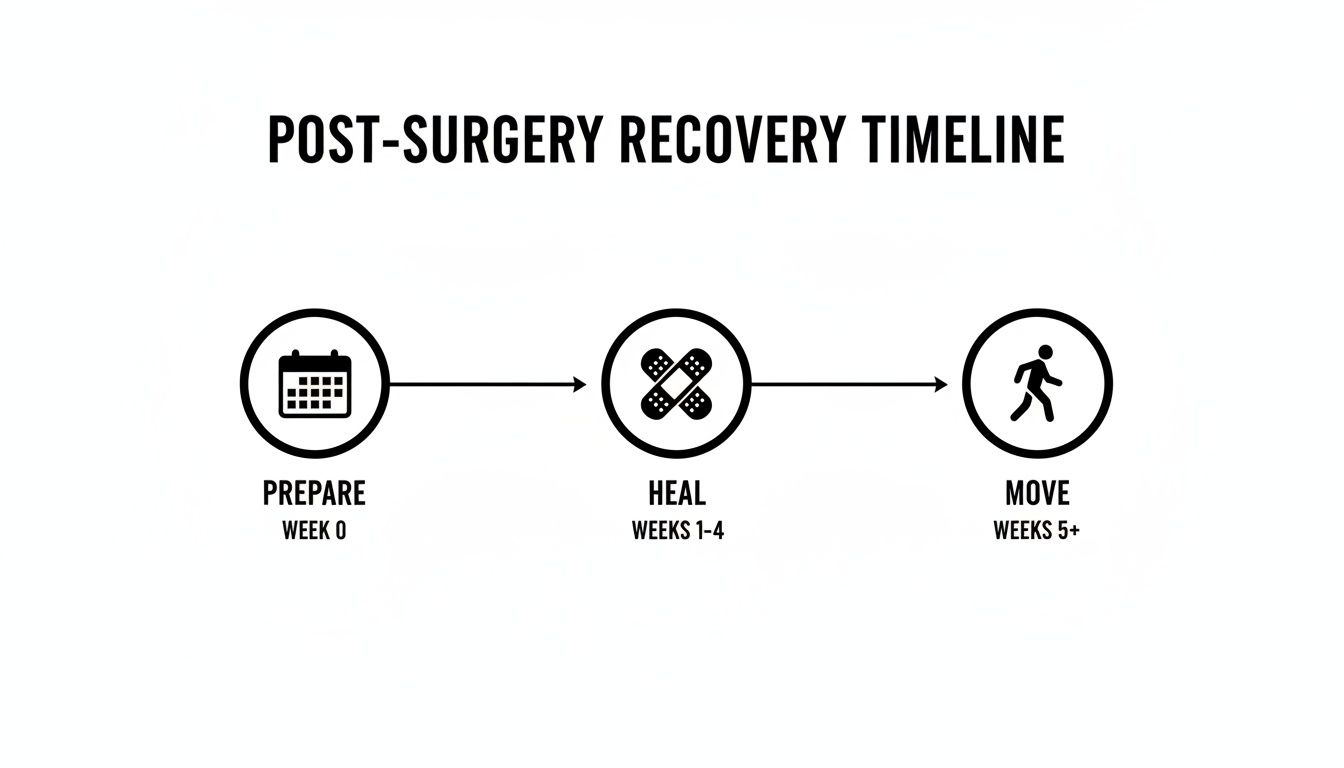
As you can see, recovery is a progression. It moves from preparation to active healing and, finally, back to movement and normal life.
To give you an even clearer picture, here’s a quick-glance table of what to expect and what to focus on during those first few weeks.
This table outlines key focus areas and goals for each phase of your initial recovery period to help you stay on track.
Keeping these milestones in mind can help you feel more in control and aware of your progress as you heal.
You don't have to—and shouldn't—go through this alone. While your surgical team is here for all the medical guidance, the practical support you have at home is just as vital. Line up help for things like cooking, cleaning, and taking care of kids or pets. Freeing yourself from these daily duties lets you focus 100% on what matters: resting and healing.
Your recovery space should be your sanctuary. The single best thing you can do for your healing is to remove daily stressors and have a solid support system in place. It ensures you can follow your post-op plan without any distractions.
Planning for this support is key, which might even include looking into temporary home care after surgery if your procedure is more involved. By taking control of these practical details, you empower yourself to have the best recovery possible.
The best recoveries don't start after surgery; they begin weeks before you even walk into the operating room. Think of it this way: you wouldn't run a marathon without training. Preparing for surgery is no different. The time leading up to your procedure is a crucial window to get your body and mind in the best possible shape for healing.
This isn't about a single magic bullet. It’s a thoughtful approach that combines smart nutrition, important lifestyle changes, and a calm, prepared mindset. By taking these steps, you’re giving your body a head start, equipping it with everything it needs to handle the procedure and bounce back strong.
What you eat in the weeks before your surgery is one of the most powerful tools at your disposal. You're essentially stocking your body's pantry with the raw materials it will need to rebuild tissue, fight off infection, and reduce inflammation.
Let's focus on the nutritional heavy hitters:
Beyond your diet, a few habits can make or break your recovery. Your surgeon will give you a very specific list of dos and don'ts—follow it to the letter. These aren't just suggestions; they're medically proven instructions designed to keep you safe and improve your results.
The single biggest change you can make? If you smoke, you must stop. Smoking constricts your blood vessels, which chokes off the supply of oxygen and nutrients to your healing tissues. The data is clear: smokers face a much higher risk of complications, from infections to poor wound healing. Quitting, even for just a few weeks before and after your surgery, can have a massive impact.
Your surgeon will also give you a list of medications and supplements to stop taking before your procedure. Things like blood thinners, certain herbal supplements (ginkgo biloba), fish oil, and even high doses of vitamin E can increase bleeding risk. It is critical to be 100% honest with your surgical team about everything you take, no matter how minor it seems.
For a more exhaustive checklist, we've put together a resource that covers all the bases. You can learn more about how to prepare for surgery in our detailed guide, which walks you through everything you need for a smooth experience.
Don't underestimate the power of your mind in this process. It’s perfectly normal to feel nervous before a procedure, but getting a handle on that anxiety can genuinely help you heal. High levels of the stress hormone cortisol can suppress your immune system and slow down recovery.
Find a stress-reduction practice that works for you. It could be a few minutes of daily meditation, deep breathing exercises, or just unplugging with a good book and some calming music. The aim is to walk into the surgical center feeling as relaxed and positive as you can.
Setting realistic expectations is also a huge part of mental prep. Recovery is a journey, not a light switch. You'll have good days and not-so-good days. Knowing this ahead of time helps you stay patient and focused on the end goal. By preparing both your body and mind, you become an active partner in your own success.
The first three days after your procedure are, without a doubt, the most intense and important phase of your recovery. Think of this initial period as setting the foundation for your entire healing journey. Your only jobs are to rest, manage your comfort, and follow your surgeon's instructions to the letter. How you handle these first 72 hours will have a huge impact on swelling, pain, and how quickly you get back on your feet.
This doesn't mean you should be completely bedridden. It's about smart, intentional rest. Your body has just been through a major event and needs to pour all its energy into healing. So, clear your schedule, let friends and family help you, and make sleep your top priority.

I know it sounds counterintuitive when you're feeling sore, but getting up and moving a little is a cornerstone of modern recovery. We often refer to this as Enhanced Recovery After Surgery (ERAS). This isn’t a workout—we’re talking about simple, short walks.
Getting up to walk to the bathroom or taking a slow lap around your living room a few times a day is crucial. This light activity is your best defense against dangerous blood clots, and it gets your circulation going to reduce swelling. It can even help with that post-anesthesia gas and bloating.
The science on this is solid. A massive analysis of 74 clinical trials with over 9,000 patients showed that protocols including early movement cut hospital stays by an average of 1.9 days. Even more impressive, complications dropped by about 30%. You can explore the data yourself and see just how powerful these simple actions are on jamanetwork.com.
Getting a handle on your discomfort isn't just about feeling better; it’s about enabling the rest and gentle movement you need to heal. When pain isn't controlled, you might breathe more shallowly, feel more stressed, and be reluctant to move at all—a trio that slows down recovery.
Key takeaway: Staying ahead of the pain is far easier than playing catch-up. Take your prescribed medication on schedule, especially for the first 48 hours, even if you’re starting to feel okay. This keeps discomfort from ever getting out of hand.
A multi-pronged strategy works best. This means we attack the pain and swelling from different angles to maximize your comfort while minimizing side effects.
This combination approach will keep you much more comfortable and alert, often reducing the need for heavy reliance on opioid medications. For a deeper dive, read our complete guide on pain management after surgery.
It’s really important to know what’s normal and what to expect when you look in the mirror. During these first 72 hours, you will see swelling and bruising reach their peak. This is a completely normal part of your body's healing response as it rushes resources to the surgical site.
Don’t be alarmed if the swelling seems to get a little worse before it starts getting better—that’s exactly what’s supposed to happen. The bruises will also put on a bit of a show, likely changing from dark purple to shades of green and yellow as they start to fade over the next week.
Finally, one of the easiest but most powerful things you can do is stay hydrated. Drinking plenty of water helps your body flush out the lingering anesthesia and byproducts of inflammation, which helps bring that swelling down. Your goals are simple but vital: rest, move a little, manage your pain, and drink water. Get these right, and you'll give your body the absolute best start on its path to a full recovery.
What you eat and drink after your procedure is one of the most powerful tools you have to influence how well and how quickly you heal. Good nutrition isn't just a "nice to have"—it's an absolute necessity. Think of it as providing the raw materials your body needs to rebuild tissues, ward off infection, and get its energy back. Your post-op diet is just as critical as your medications.
After surgery, your body goes into overdrive. Its metabolic rate can jump by 15-20%, meaning it’s burning through calories and nutrients faster than usual. If you don't give it the right fuel, the healing process can really slow down.

Your diet should revolve around a smart balance of protein, healthy fats, and the right kind of carbohydrates. Each plays a crucial, distinct role in helping your body mend itself.
Protein Is Your Top Priority
If there’s one MVP nutrient for recovery, it’s protein. The amino acids in protein are literally the building blocks for repairing your incision, regenerating muscle, and creating new skin. Skimping on protein can directly translate to slower wound healing and a higher risk of infection.
I tell all my patients to include a high-quality, lean protein source at every meal and snack. Some of the best options are:
Embrace Healthy Fats
Fats often get a bad rap, but the right ones are your allies. They are fantastic for taming inflammation and are essential for absorbing key vitamins. They also provide a dense source of energy, which is a big help when your appetite might not be at its peak.
Look for ways to work in monounsaturated and omega-3 fatty acids from sources like:
Choose Your Carbs Wisely
Carbohydrates are your body's primary energy source. Getting enough of them allows your body to use that precious protein for tissue repair instead of just burning it for fuel. The trick is to stick with complex carbs that are also high in fiber. This helps you avoid the uncomfortable post-anesthesia constipation many patients experience.
Good choices include oatmeal, quinoa, brown rice, and whole-wheat bread.
While the "big three" macros are the framework, vitamins and minerals are the skilled crew making sure the repair work gets done right. A few are especially important after surgery.
Your immune system is your first line of defense against post-operative infection. Fueling it properly with key nutrients gives your body the best possible chance to heal without complications.
A strong immune response is vital for clean, efficient healing. That’s why understanding effective immune support supplements can be a game-changer for your recovery.
Let's break down the key players:
Never, ever underestimate the power of water. Staying hydrated is fundamental to your recovery. Water helps shuttle all those important nutrients to your cells, flushes anesthesia and toxins out of your system, and can even help minimize swelling.
Being dehydrated, on the other hand, can make you feel fatigued, cause headaches, and worsen constipation—making a tough recovery feel even harder.
Your goal should be at least eight large glasses of water a day, maybe more if you’re thirsty. Steer clear of sugary sodas and too much caffeine, which can actually dehydrate you. Plain, simple water is your best friend.

After surgery, your first instinct is probably to curl up and not move a muscle. It’s a natural urge, and while rest is absolutely a cornerstone of healing, the old-school advice of total bed rest is a thing of the past. The real secret to a faster, smoother recovery lies in a delicate dance between restorative rest and gentle, purposeful movement.
Think of it this way: your body needs to conserve energy to repair itself, but it also desperately needs good circulation to bring healing nutrients to the surgical site and clear away waste products. A little bit of smart movement is what gets that vital circulatory system humming. We're not talking about a workout here—it’s about preventing stiffness and getting your blood flowing.
Before you can even consider moving comfortably, you have to get a handle on pain and swelling. Unmanaged pain makes everything feel impossible, from getting a good night's sleep to taking those first few crucial steps around your room. The trick is to stay ahead of the pain, not chase it after it’s already peaked.
A multi-pronged attack is always best. Relying on just one method is never as effective as combining a few simple, powerful techniques to keep yourself comfortable.
Managing your comfort is about more than just feeling better. When you're comfortable, you're able to do the gentle movements that are so critical for preventing dangerous complications like blood clots and truly speeding up your recovery.
The thought of getting up and walking so soon after an operation can be intimidating, but it is one of the single most important things you can do. And again, we’re not talking about a power walk. Simply getting up to use the restroom, walking to the kitchen for a glass of water, or eventually taking a slow lap around your living room is all it takes.
This concept, known as early mobilization, is a fundamental part of modern surgical recovery for one simple reason: it works. Gentle movement gets your blood flowing, which significantly lowers the risk of deep vein thrombosis (DVT), a potentially life-threatening blood clot. It also helps wake up your digestive system and prevents the deep muscle stiffness that sets in when you stay still for too long.
The evidence for this is overwhelming. One study of 490 surgical patients demonstrated that inpatient physical therapy plays a huge role in shortening recovery time. It's also worth noting that while opioids can sometimes slow healing due to sedation, alternatives like NSAIDs can manage pain without getting in the way of your mobility. On a global scale, recovery protocols that get patients moving sooner can slash complication rates by 30% and cut hospital stays by two days on average. For a deeper dive into this research, you can learn more about the study's conclusions.
Knowing what to do—and when—is everything. Pushing yourself too hard, too soon can set you back just as much as being too sedentary. This is a general guide, but your surgeon’s specific instructions for your procedure are the ones to follow to the letter.
Weeks 1-2: The Gentle Start
Your only physical goal right now is light walking inside your home. Avoid anything that puts the slightest strain on your incisions. That means no lifting anything heavier than a carton of milk, no bending over, and no reaching for things on high shelves. The focus is purely on promoting circulation.
Weeks 3-4: Increasing Your Range
You can usually start taking longer, slow-paced walks outside now. Your body is your best guide—if you feel any pulling, tightness, or sharp pain, it’s a clear signal to scale it back. This still isn’t “exercise,” it’s just about gradually building back your daily stamina.
Weeks 5-6: Easing Back In
Once your surgeon clears you, you can often start reintroducing low-impact activities. Think stationary cycling or a more brisk walk. This is the phase where you carefully transition from simple mobility back to a more active lifestyle, always listening to your body’s signals and prioritizing your healing.
After surgery, it's totally normal to have a million questions running through your head. Knowing the answers ahead of time can make all the difference, helping you feel less anxious and more in charge of your own healing. Let's tackle some of the most common things patients ask.
While every surgery is unique, the fundamentals of a smooth recovery often look very similar.
Think of your body as a construction site right now. It's working around the clock to repair tissue, and the food you eat is the raw material for that job. Giving it the right fuel is one of the most powerful things you can do.
Your meals should be packed with these healing essentials:
What you don't eat is just as important. Processed foods, sugary junk, and too much salt can actually stoke inflammation, which is the exact opposite of what you want. Stick to whole, real foods—you'll be giving your body the best shot at a quick, clean recovery.
By choosing an anti-inflammatory diet, you're not just a passenger in your recovery—you're in the driver's seat. You're giving your body the specific tools it needs to mend itself well.
This isn't just about eating healthy; it's a strategic move that can genuinely shorten your healing time and improve your final result.
This is probably the question I get asked most often, and for good reason—it's critical for preventing infection. The final word always comes from your surgeon, as their instructions are tailored to your specific procedure.
That said, there's a pretty standard timeline. Most surgeons will ask you to wait 24 to 48 hours before taking that first shower. This short pause gives the incision enough time to form an initial seal, which is your body’s natural barrier against bacteria.
When you do get the all-clear, how you shower is key:
Following these steps carefully is one of the single most important things you can do to avoid an infection.
Let’s be clear: pain, bruising, and swelling are completely normal after surgery, especially in that first week. It’s a sign that your body is sending a flood of healing cells and fluids to the area to do its repair work. The trick is knowing the difference between what’s normal and what’s a red flag.
You need to call your surgeon’s office right away if you experience any of these warning signs.
Warning Signs to Watch For
At the end of the day, trust your gut. You know your body better than anyone. If something just doesn't feel right or you’re worried, it is always, always better to make the call. Getting reassurance or guidance from your surgical team is what we're here for.
At Cape Cod Plastic Surgery, Dr. Fater and our entire team are here to guide you through every single step, from our first chat to seeing your beautiful, final result. If you’re thinking about a procedure and want expert care that’s truly personal, we invite you to schedule a consultation with us today.
September 9, 2026
Expert Guide to Proper Surgical Incision Care

Master dermal fillers aftercare with do's and don'ts, swelling tips, activity limits and warning signs to protect your results and heal smoothly.

September 8, 2026
Ensuring Safety: Why Your Surgeon's Credentials Matter Most

Cape Cod Plastic Surgery offers expert cosmetic and reconstructive procedures in a safe, accredited setting. Led by Dr. Marc Fater, we combine advanced techniques with personalized care to help you look and feel your best.
Monday: 9:00 AM – 5:00 PM
Tuesday: 9:00 AM – 5:00 PM
Wednesday: 9:00 AM – 5:00 PM
Thursday: 9:00 AM – 5:00 PM
Friday: 9:00 AM – 5:00 PM