

October 5, 2026
The Value of an On Site Accredited Facility
Why Our On-Site Accredited Facility Matters for Your Safety
Jan 6, 2026

When it comes to treating marionette lines, we have a whole spectrum of options, from diligent at-home skincare to sophisticated clinical procedures. For those very early, faint lines, top-notch ingredients like retinoids and hyaluronic acid can certainly help improve skin texture. But let's be realistic—once those creases deepen, dermal fillers become the workhorse. They are hands-down the most effective non-surgical way to restore that lost volume and provide the structural support the area needs.
Of course, for more advanced volume loss and skin laxity, we might start looking at energy-based treatments or even surgical solutions like a facelift.
Before we can effectively treat marionette lines, we have to know what we're up against. These lines aren't just simple wrinkles; they’re the visible result of some pretty complex changes happening deep beneath the skin. Think of them as a roadmap of aging, genetics, and lifestyle choices.
The development of marionette lines is a story of structural collapse. As we get older, the architecture of our face changes. Those plump fat pads in the cheeks that give us a youthful contour? They start to shrink and slide south. At the same time, our body's collagen and elastin factories slow way down.
This double-whammy—less volume from fat and less support from collagen—creates the perfect setup for sagging. Gravity is always at play, and without that internal support structure, the skin begins to fold on itself, creating those distinct grooves that run from the mouth to the chin.
Genetics plays a huge part in this. Some people are just programmed to lose facial volume or have less resilient skin earlier than others. If your parents had prominent marionette lines, there's a good chance you'll be more susceptible to them, too.
Then you have the muscles. The depressor anguli oris (DAO) is the specific muscle that pulls the corners of your mouth down when you frown or express disappointment. After decades of contracting, this muscle can start to "win," helping to etch those lines in permanently and contributing to that resting sad or angry look.
So, where do you fall on the spectrum? Taking a moment to evaluate your own lines is the best first step. It gives you the language to use during a consultation and helps ground your expectations in reality. This little decision tree I've put together can guide you through a quick self-check.
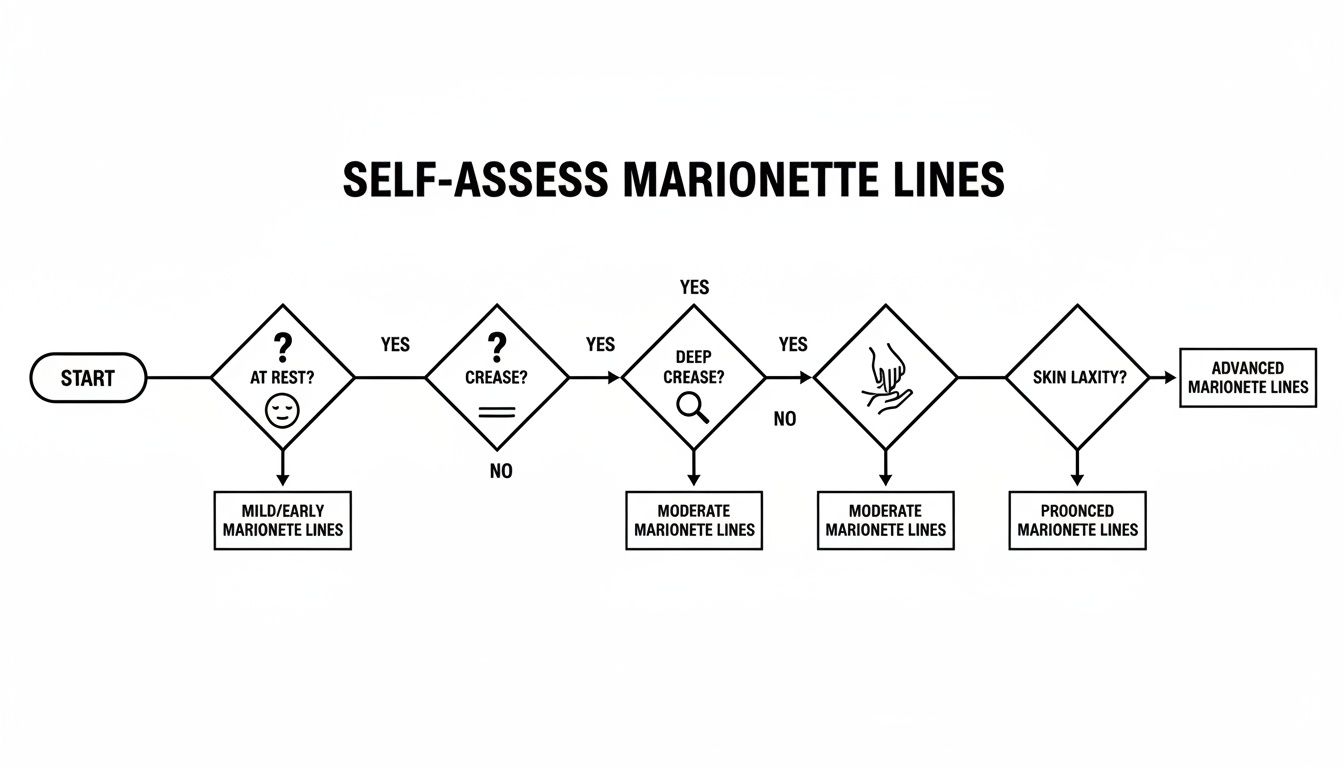
Use this to figure out if your lines are still dynamic (only showing up when you move your face) or if they've become static creases you can see all the time. Knowing this helps pinpoint where you are in the aging process and sets the stage for a much more productive conversation about the right treatment path for you.
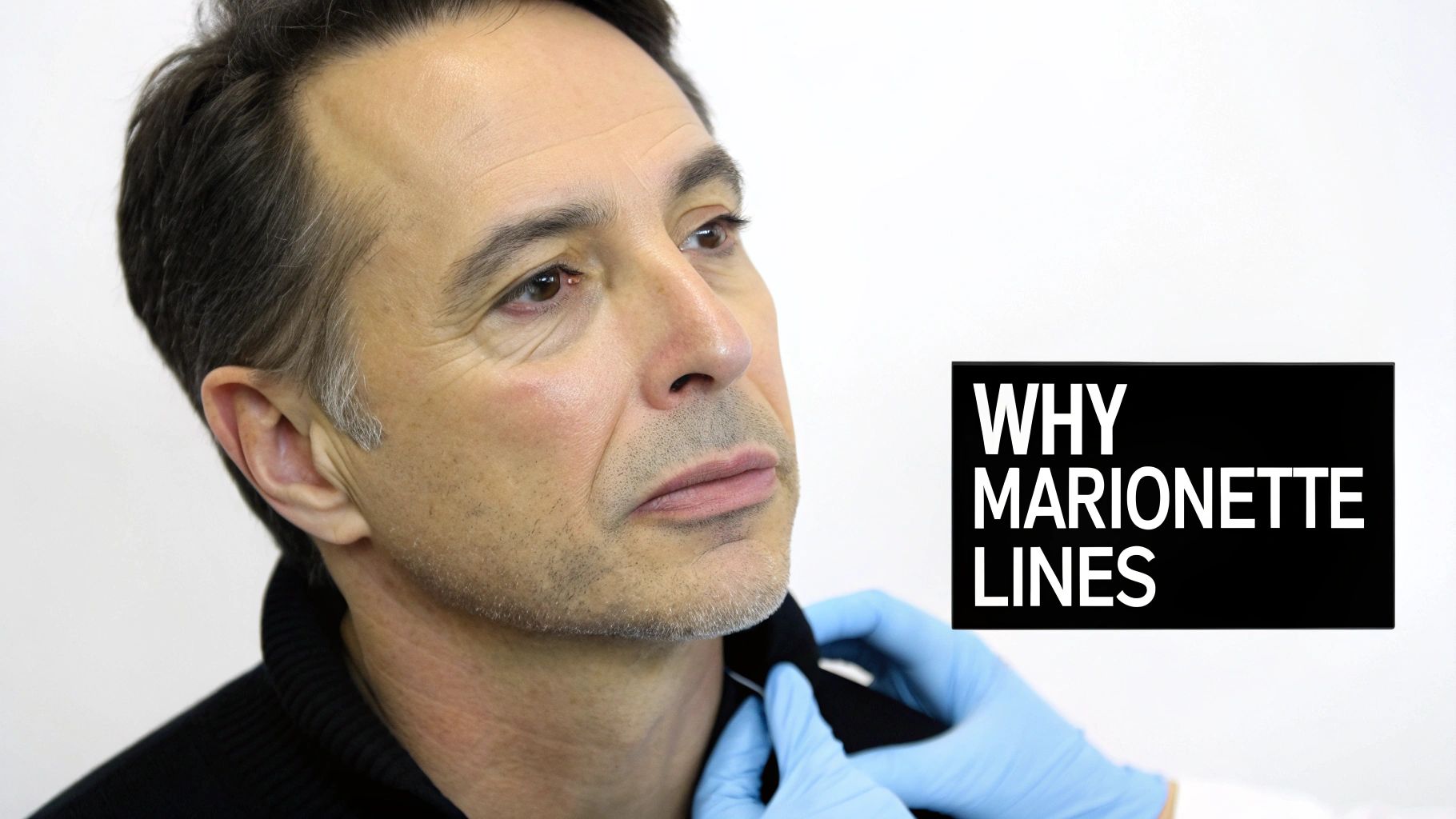
When topical treatments no longer cut it for marionette lines, non-surgical injectables are the most powerful and effective next step. These treatments work where creams can't—deep beneath the skin's surface—to tackle the two main culprits: volume loss and overactive muscles.
The results can be impressive, all with minimal disruption to your life. Our goal isn't to erase every sign of aging, but to soften those stubborn folds and restore a smoother, more refreshed look to your lower face.
By far, the most common and impactful approach involves dermal fillers. These hyaluronic acid gels are the cornerstone of modern marionette line treatment, offering a direct solution to the lost volume and structural support that causes these lines in the first place.
Think of fillers like Juvéderm and Restylane as a way to quite literally "fill in" the hollows that create shadows and creases. A youthful face has ample volume and support, like a well-structured tent. With age, the underlying support—bone and fat pads—diminishes, causing the skin to sag and fold. Fillers essentially rebuild that internal scaffolding.
When we skillfully inject filler along the marionette lines and into adjacent areas like the prejowl sulcus, we can achieve several things at once:
This is where an injector’s skill truly comes into play. It's never just about filling a line. It’s about understanding the face's three-dimensional architecture. An experienced practitioner like Dr. Fater assesses your unique anatomy to place filler precisely where it will create a natural-looking lift, avoiding that dreaded "overfilled" look.
Expert Insight: The secret to a beautiful, natural-looking result often lies in indirect support. By first placing filler in the mid-cheek or along the jawline, we create an anchor that lifts the entire lower face. This often means we need less product directly in the lines themselves, leading to a more elegant and balanced outcome.
Dermal fillers have become the gold standard for marionette lines for a reason—the clinical evidence is solid. For example, one 12-month study on a specific hyaluronic acid filler found that 69.9% of participants saw a measurable improvement in their marionette lines just one month after treatment.
While patient satisfaction naturally tapered over the year, it was exceptionally high at the outset, underscoring the immediate impact these treatments can have. The study also confirmed what we see in practice: side effects like temporary swelling or tenderness are typically mild and resolve quickly. This reinforces why fillers are such a safe, predictable option.
Fillers handle the volume loss, but what about the muscle movement? That's where neuromodulators like Botox and Dysport come in.
The depressor anguli oris (DAO) muscles are the small but mighty culprits that pull the corners of your mouth downward. Over time, this constant pull contributes to a permanently downturned expression and deepens the marionette lines.
By injecting a tiny, precise amount of a neuromodulator into the DAO, we can gently relax those muscles. This releases the downward tension, allowing the corners of the mouth to return to a more neutral or even slightly lifted position. It not only softens the existing lines but also helps prevent them from getting worse with every frown.
To help you and your patients understand the different roles these injectables play, here's a quick comparison.
While each has its place, the real magic often happens when we use them together.
For many patients, the ultimate strategy is using both fillers and neuromodulators. It’s a dual-pronged attack that addresses the problem from every angle for a much more comprehensive and natural-looking rejuvenation.
This synergy creates a result that looks more balanced and often lasts longer. It’s a key part of what many people call a "liquid facelift"—a non-surgical procedure that uses a combination of injectables to lift, contour, and refresh the entire face. If a broader facial rejuvenation is of interest, you can learn more about the liquid facelift concept in our detailed guide.
By tackling both the anatomical cause (volume loss) and the muscular cause (downward pull), we aren't just putting a band-aid on a symptom. We're actively working against the forces that create the lines in the first place. During your consultation, we’ll determine if this powerful combination is the right path for you.
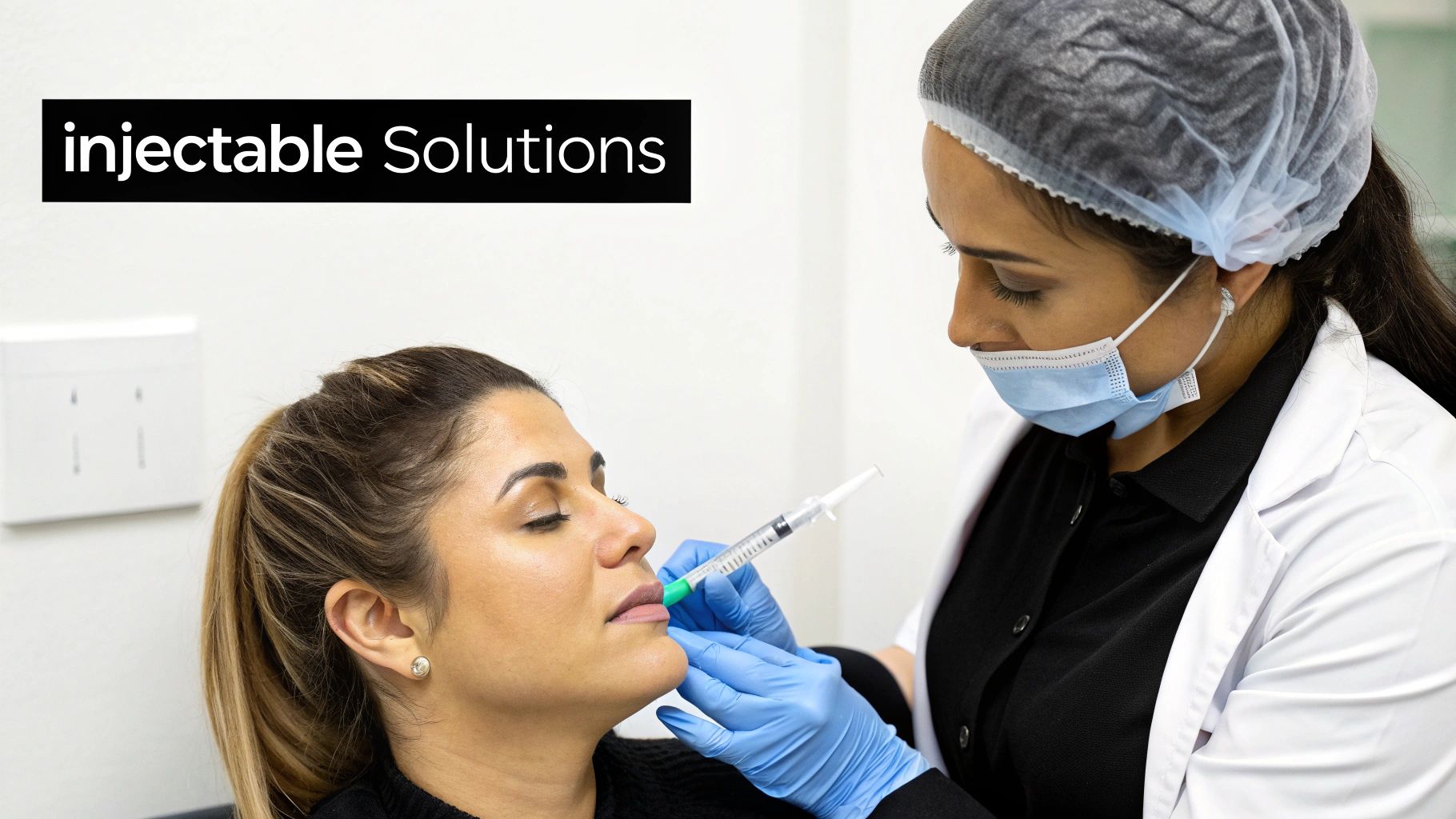
While injectables can work wonders for early to moderate marionette lines, some patients just need a more powerful approach. When we're dealing with significant skin laxity or deeply etched folds, it's time to look at treatments that address the root structural causes of aging.
These advanced options move beyond simply filling a line. They focus on tightening skin, restoring deep volume, and physically repositioning sagging tissues for a much more profound and durable correction.
One of my favorite strategies for sagging skin is to get the body to rebuild its own support system. That’s exactly what energy-based treatments like radiofrequency (RF) microneedling and ultrasound therapy are designed to do. They work by delivering precisely controlled heat into the deeper layers of the skin.
This thermal energy kickstarts the body’s natural healing cascade, signaling it to produce new, healthy collagen and elastin. Over the next few months, you’ll notice the skin becoming firmer, tighter, and more resilient. It’s a subtle but powerful lift that softens marionette lines from the inside out.
These are fantastic options for patients who aren’t quite ready for surgery but need a bigger boost than fillers alone can offer.
A Quick Note on Treatment Trends: The desire for effective marionette line solutions is part of a much bigger picture. As aesthetic medicine has evolved, patients are increasingly drawn to minimally invasive procedures with minimal downtime. In fact, global search interest for 'Botox' has shot up by 98% since 2016. This trend has pushed practitioners like us to develop multi-faceted plans that combine injectables, energy devices, and other techniques to achieve the most natural and comprehensive results.
Another great option that bridges the gap between injectables and surgery is the thread lift. In this procedure, we strategically place dissolvable sutures made of polydioxanone (PDO) just beneath the skin's surface.
These threads are designed with tiny, microscopic barbs that gently grip the tissue, allowing me to manually lift and reposition sagging skin in the jowls and lower face. This gives you an immediate, visible lift that can dramatically soften the appearance of marionette lines.
But the magic doesn't stop there. As the threads gradually dissolve over several months, they stimulate a fresh wave of collagen production, creating a secondary firming effect that extends the results. A thread lift can be the perfect temporary solution before a big event or for anyone who wants to "try on" a more lifted look.
When we're up against significant skin laxity, prominent jowling, and deep-set marionette lines, nothing beats the effectiveness and longevity of a surgical solution. These procedures don't just skim the surface; they fundamentally correct the underlying anatomical changes that cause these signs of aging in the first place.
Fat grafting is a powerful and natural technique. We take a small amount of your own body fat—usually from the abdomen or thighs—purify it, and then meticulously inject it into the face. This acts as a living, permanent filler to restore deep volume around the mouth and cheeks, providing structural support that can beautifully soften marionette lines.
However, for advanced aging in the lower face, the facelift (rhytidectomy) is the definitive treatment. A modern facelift isn't about just pulling the skin tight. The real artistry lies in lifting and repositioning the deeper muscle and connective tissue layer known as the SMAS (Superficial Musculoaponeurotic System). By restoring this foundational structure to a more youthful position, we can completely smooth away jowls and marionette lines for a refreshed, natural appearance that can last a decade or more.
If you're curious to learn more, take a look at our in-depth guide to facelift surgery techniques and recovery.
When a patient is considering how to treat their marionette lines, they're looking for more than just a procedure. They need a realistic picture of the entire journey—from the initial results to the recovery time and total investment.
This is where our expertise comes in. We need to help them weigh the immediate, subtle lift of fillers against the profound, long-lasting correction of a facelift. It’s about matching the right treatment to their aesthetic goals and their lifestyle.
How long will the results last? This is one of the first questions patients ask, and the answer depends entirely on the chosen treatment. Non-surgical options are fantastic for significant improvement, but they're a subscription, not a one-time purchase. Surgery, on the other hand, offers a more permanent fix by addressing the underlying anatomy.
Here’s a practical breakdown of what to expect:
A Note on Fillers: Fillers are a cornerstone in my practice for treating these lines, and for good reason. They work. Clinical data shows an impressive 94.4% success rate for marionette line treatment even after 18 months. And patient satisfaction? One study found 97% of patients were happy with their facial balance post-treatment. For a deeper dive into the data, check out this in-depth medical study on filler efficacy.
A patient’s ability to press pause on their life is a huge factor. Minimally invasive options are popular precisely because they let people get back to their routines quickly. Surgery, however, requires a real commitment to the healing process.
With dermal fillers, downtime is almost a non-issue. Most patients just have some minor swelling, tenderness, or bruising right at the injection site, which usually fades within a few days. They can head back to work the same day.
Energy-based treatments might leave the skin red and a bit swollen for a day or two, almost like a mild sunburn.
A facelift is a different ballgame. It's major surgery, and patients need to plan for a dedicated recovery period. Expect about two weeks before they feel comfortable being out and about socially, with the final, settled results appearing over several months. To help set clear expectations, we often share our guide on what to expect during recovery after plastic surgery.
Let’s talk about the investment. The cost of treating marionette lines can vary dramatically, and it's important to frame it in terms of both the initial outlay and any long-term maintenance.
Here's a general comparison to help guide the conversation:
Non-surgical treatments have a lower price of entry, but the costs add up over time with repeat appointments. A facelift is a significant upfront investment, but for the right patient, it can eliminate the need for years of filler appointments in that area. The best path forward always comes down to balancing the patient's budget with their desire for a temporary refresh versus a lasting solution.
Every effective treatment starts with a simple conversation. When you come into Cape Cod Plastic Surgery for your initial consultation, you'll sit down one-on-one with Dr. Marc Fater. This isn't just an appointment; it's a dedicated discussion where we move past the general information you find online and focus entirely on you.
We begin with a thorough facial analysis. Dr. Fater will look beyond the marionette lines themselves to assess your entire lower face. We're talking about skin elasticity, any volume loss in the cheeks, and even the strength of the muscles that pull down the corners of your mouth (the depressor anguli oris, or DAO). This holistic view is crucial because effectively treating these lines is rarely about just filling a crease—it's about understanding the full anatomical picture.
Once Dr. Fater has a clear sense of your facial structure and what you hope to achieve, we'll start mapping out a plan together. I've always found that the best results come from a partnership, where you're an active voice in the decision-making process.
We'll walk through all the viable options, from the immediate lift you can get with dermal fillers to more definitive surgical solutions if they make sense for your situation. Dr. Fater will lay out the real pros and cons of each approach as they apply to you, ensuring you feel completely informed and confident. For instance, a patient with only mild volume loss but a strong downward muscle pull might get the best outcome from a strategic combination of filler and a neuromodulator.
Your safety and comfort are non-negotiable here. We're proud to have an on-site, AAAASF-accredited surgical suite, which is the gold standard for outpatient surgery facilities. This accreditation isn't just a plaque on the wall; it's a guarantee that our practice meets the highest national standards for equipment, operating room safety, and staff credentials. It’s peace of mind, whether you're coming in for a quick injectable treatment or a more involved procedure.
At Cape Cod Plastic Surgery, our philosophy is simple: create results that are both beautiful and authentic. The goal is to soften the signs of aging in a way that respects your natural features, leaving you looking refreshed and rejuvenated, never "done."
To make sure everything goes smoothly, we provide detailed instructions for before and after your treatment. Following this guidance is the key to getting the best possible results and having an easy recovery.
Every part of our process is designed to be as comfortable and predictable as possible, paving the way for a result you'll genuinely love.
Knowing the "what" and "how" of treating marionette lines is one thing. Discovering the right path for you is what truly matters. We invite you to schedule a private consultation with Dr. Fater to explore your options in a professional and welcoming setting. Together, we can build a plan that aligns perfectly with your goals for a more youthful, confident appearance.
When you’re considering any cosmetic treatment, you're going to have questions. That's a good thing. Making an informed choice is the first step toward a result you’ll love, and we find that many of our patients walk in with similar concerns about marionette lines.
Let's clear up a few of the most common questions we hear in our practice. Understanding what to expect around results, prevention, and timing helps set you up for a great conversation during your consultation.
This is almost always the first question asked, and for good reason. Hyaluronic acid fillers aren't permanent, but they do provide impressively long-lasting results. For marionette lines, you can generally expect fillers to last anywhere from 9 to 18 months.
So, what accounts for that range? It really comes down to a few variables:
The secret to long-term success is consistency. We usually advise scheduling a follow-up visit when you first notice the lines starting to reappear. A small touch-up treatment, often using less product than your initial session, can keep the area smooth and prevent you from going back to square one.
While you can't halt the aging process entirely, you can absolutely slow it down and protect your skin. Think of it as proactive maintenance. A smart approach combines a disciplined skincare routine with healthy lifestyle habits.
First things first: daily sun protection is non-negotiable. Sun exposure is the top culprit behind collagen and elastin breakdown, which is what leads to sagging skin in the first place. Use a broad-spectrum sunscreen with an SPF of 30 or higher every single day—no exceptions.
Expert Tip: Level up your skincare with powerful active ingredients. A good vitamin C serum applied each morning acts as an antioxidant shield against environmental damage. At night, a retinoid is your best friend for encouraging cell turnover and stimulating new collagen, which builds more resilient skin over time.
Don't underestimate the impact of your lifestyle, either. Staying hydrated, eating a diet full of antioxidants, and avoiding smoking are all fundamental for maintaining your skin's health and integrity from the inside out.
There’s no magic number. Candidacy for treating marionette lines is all about your individual anatomy and what you see in the mirror, not your age. I've consulted with patients in their late 30s bothered by the first faint etchings and patients in their 60s looking to address more significant volume loss.
The real determining factor is whether the lines are static—meaning they are visible when your face is completely at rest. If you look in the mirror with a neutral expression and see those grooves from the corners of your mouth, you're likely a good candidate.
The best time to act is simply when the lines start to bother you. In my experience, addressing them earlier on is often easier, requires less product, and can help prevent those creases from becoming deeply set into the skin.
At Cape Cod Plastic Surgery, we focus on creating a plan that is unique to your facial structure and goals. If you're ready to see what's possible, we invite you to learn more and schedule your personal consultation at https://ccplasticsurgery.com.
October 5, 2026
Why Our On-Site Accredited Facility Matters for Your Safety

October 2, 2026
Beyond the Calendar: How to Know You’re Truly Ready for Plastic Surgery

October 2, 2026
Exploring Your Breast Augmentation Options: Implants, Shapes, and What to Expect

Cape Cod Plastic Surgery offers expert cosmetic and reconstructive procedures in a safe, accredited setting. Led by Dr. Marc Fater, we combine advanced techniques with personalized care to help you look and feel your best.
Monday: 9:00 AM – 5:00 PM
Tuesday: 9:00 AM – 5:00 PM
Wednesday: 9:00 AM – 5:00 PM
Thursday: 9:00 AM – 5:00 PM
Friday: 9:00 AM – 5:00 PM