
September 9, 2026
How to Care for Surgical Incisions Properly
Expert Guide to Proper Surgical Incision Care
Jan 24, 2026
So, you’ve just had Botox and are already thinking about getting that sun-kissed glow. I get it. But before you head to the beach or book a tanning session, let's talk timing. The short answer is: yes, you absolutely need to wait.
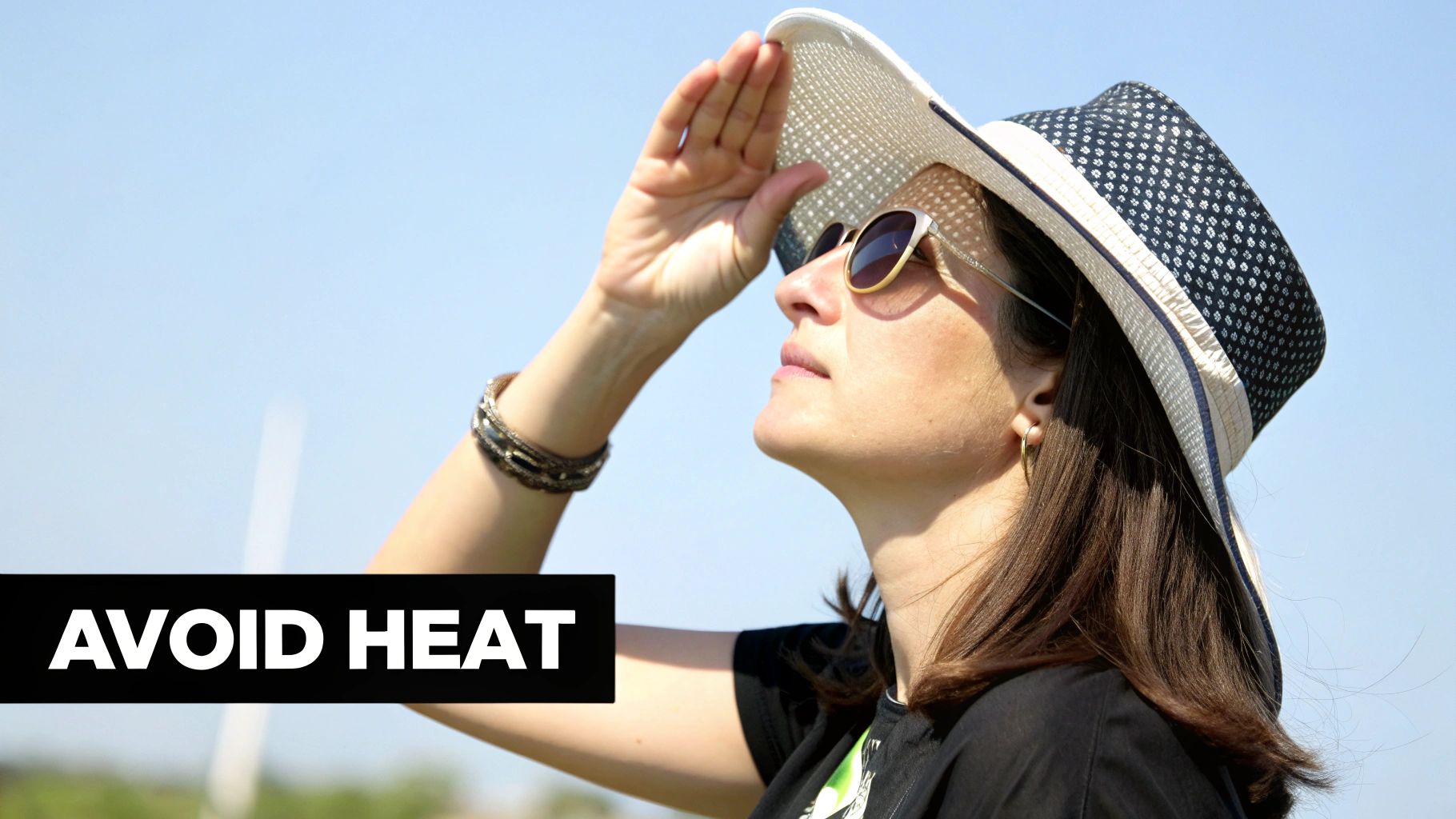
Jumping the gun and exposing your skin to heat and UV rays too soon can throw a wrench in your results. It can increase swelling, make bruising worse, and even cause the Botox to spread where you don't want it. Most of us in the field strongly recommend waiting at least 48 hours before any direct sun or tanning bed exposure.
Think of the first two days after your injections as a crucial settling-in period. During this time, the Botox is working to bind to the specific muscles we targeted. Anything that ramps up blood flow and heat to your face can mess with this delicate process.
This is exactly why your practitioner gives you a list of "don'ts" for aftercare—and avoiding heat is always high on that list. Heat from the sun or a tanning bed makes your blood vessels expand, which not only aggravates swelling but also carries the risk of the Botox migrating to nearby muscles. That’s how unwanted side effects, like a droopy eyelid, can happen. To help visualize this, here's a simple timeline.
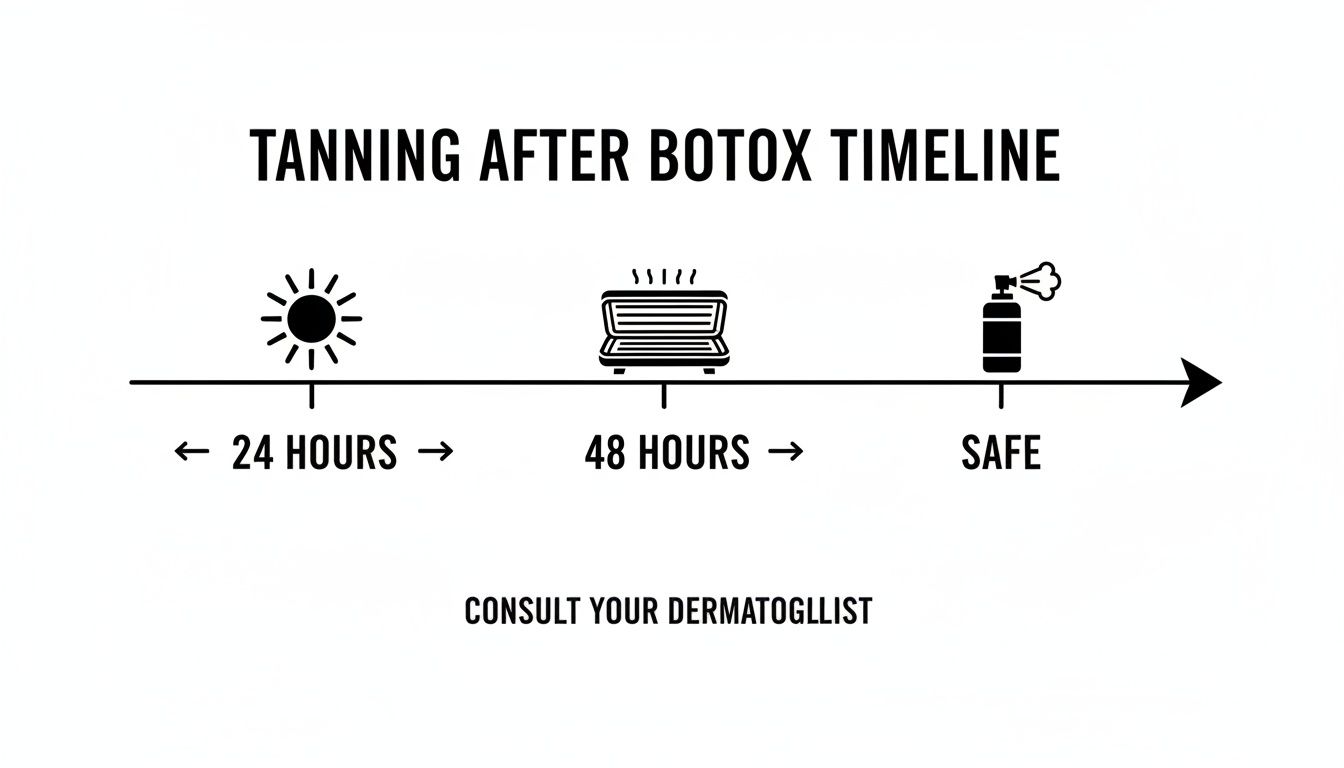
As you can see, something like a spray tan is okay much sooner because it doesn't involve heat. Understanding why these rules exist is just as important as knowing the timelines themselves. It also helps to have a clear picture of how long before Botox kicks in to appreciate why this initial window is so important.
For a quick and easy reference, the table below summarizes the recommended wait times for the most common tanning methods.
This table provides a summary of the minimum recommended waiting periods for various tanning methods after receiving Botox injections to ensure safety and optimal results.
Following these guidelines is the best way to protect your investment and ensure you get the beautiful, smooth results you were hoping for.
To really get why you need to hold off on tanning, it helps to understand what’s actually happening under your skin right after your appointment. Think of the Botox your practitioner just injected as a very precise, very delicate liquid that needs to stay exactly where it was placed.
It needs time to settle in and get to work, binding to the nerve receptors in the targeted muscles. This initial window, usually the first 24 to 48 hours, is what we call the critical "settling phase." Anything you do during this time that might disrupt this delicate process can mess with your final results.
The biggest things to avoid are activities that dramatically increase blood flow to your face. We’re talking about strenuous exercise, saunas, hot yoga, and yes, tanning. The heat from the sun or a tanning bed causes the blood vessels in your skin to dilate, sending a rush of circulation to the area.
Here's a good analogy: Imagine you’ve just placed a drop of ink on a piece of paper. If you blow on it or tilt the paper, the ink will spread. The increased blood flow acts just like that, creating the risk that the Botox could "migrate" or diffuse away from the intended muscle.
When Botox moves, it can lead to unwanted side effects, like a droopy eyelid or an uneven brow. So, protecting this initial settling period is really the single most important thing you can do to make sure the product works precisely where we want it to.
It’s not just about heat. Physical pressure and even the position of your body can make a difference. Hopping into a tanning bed and lying flat right after your treatment can put a subtle but steady pressure on the injection sites, especially around the forehead and eyes.
This pressure, especially when combined with the intense heat, can physically interfere with how the Botox settles into the muscle tissue. It’s the same reason we tell you to stay upright for at least four to six hours after your injections. When you understand these simple mechanics, you’re not just following rules—you’re actively protecting your investment and ensuring you get the fantastic, natural-looking results you came in for.
You’ve invested in your results, so let's talk about how to protect them. Tanning right after your Botox appointment might seem harmless, but heat and UV exposure can genuinely interfere with the outcome. Whether you prefer the sun or a tanning bed, there are a few key dangers to be aware of.
First and foremost is the risk of Botox migration. I often tell my patients to think of freshly injected Botox as a liquid that needs a little time to set and bind to the target muscle.
Heat from any source—the sun, a tanning bed, even a hot tub—ramps up blood circulation. That increased blood flow can literally "wash" the neurotoxin away from the precise injection spot before it has a chance to do its job. When Botox diffuses like this, you can end up with unwanted side effects like a droopy eyelid or an asymmetrical brow.
Heat doesn't just move the product around; it can also turn minor side effects into a bigger problem. It’s perfectly normal to see a bit of swelling, redness, or even light bruising at the injection sites. These are just temporary signs that your skin is healing.
But when you expose those sensitive spots to intense heat, you're dilating the blood vessels. This can make that initial swelling and bruising much more pronounced and cause it to stick around longer than the typical day or two. It essentially delays your big reveal.
Side effects like bruising, swelling, redness, or itching affect roughly 10-20% of patients, with the severity often depending on skin type and the specific treatment plan. Heat is a known intensifier of these temporary issues. Discover more insights about Botox aftercare on drschusterman.com.
Beyond the immediate concerns in the first 48 hours, there's the bigger picture. The whole point of Botox is to achieve smoother, more youthful-looking skin. UV radiation from the sun and tanning beds does the exact opposite.
UV rays create what's known as oxidative stress, which actively breaks down the collagen and elastin that keep your skin firm and bouncy. So, while Botox is busy relaxing the muscles causing dynamic wrinkles, tanning is simultaneously damaging your skin's underlying structure and speeding up the aging process. You're essentially working against yourself.
This principle of protecting your skin isn't unique to Botox. Learning the key facts and safety tips for tanning after laser hair removal shows a similar need for caution. Procedures like BBL laser treatments also demand strict sun avoidance to get the best results. At the end of the day, steering clear of UV exposure is a cornerstone of maintaining not just your Botox results, but your overall skin health.
We've covered the immediate risks of heat on fresh Botox, but what about the long game? It turns out that a lifestyle heavy on sunbathing or tanning can actually shorten the lifespan of your results. What you hoped would be a three-to-four-month treatment might turn into a much shorter-lived luxury.
Think of it this way: your body is always in a state of flux, breaking things down and building them back up. There's some evidence suggesting that significant UV exposure can ramp up your metabolism. A faster metabolism could mean your body breaks down and flushes out the neurotoxin more quickly, letting those dynamic wrinkles creep back in ahead of schedule.
This isn't just a hunch; we see it in practice. One fascinating study really drives this point home. Researchers compared two groups of women receiving Botox: one group in a sunny climate during summer, and the other in a cooler climate during winter.
The findings were pretty clear. The group in the sunny climate needed a higher average total dose of Botox (29.2 units vs 27.3 units). They also required more for touch-ups to get the look they wanted (2.24 units vs 1.98 units). It's a strong indicator that a sun-filled lifestyle can mean needing more product, more often.
The bottom line is that chronic sun exposure might not just shorten how long your Botox lasts, but it could also increase the amount of product you need over time. Suddenly, sun protection becomes a financial decision, not just a health one.
Beyond its potential effect on the neurotoxin itself, UV radiation is the number one cause of premature skin aging. It wages a relentless war on your skin's support system, breaking down precious collagen and elastin.
Here's how that directly undermines your Botox treatment:
Ultimately, protecting your skin from the sun is one of the single best things you can do to get more mileage out of your treatment. For a deeper dive into what you can typically expect, our guide on how long Botox lasts offers some great context. Making daily sun protection a non-negotiable habit is the key to maximizing your investment and enjoying those beautiful results for as long as possible.
So, you love that sun-kissed look but don't want to mess with your new Botox results. Good news: you don't have to pick one or the other. It’s all about shifting your strategy away from UV tanning and embracing fantastic sunless options that give you that beautiful color without any of the risks.
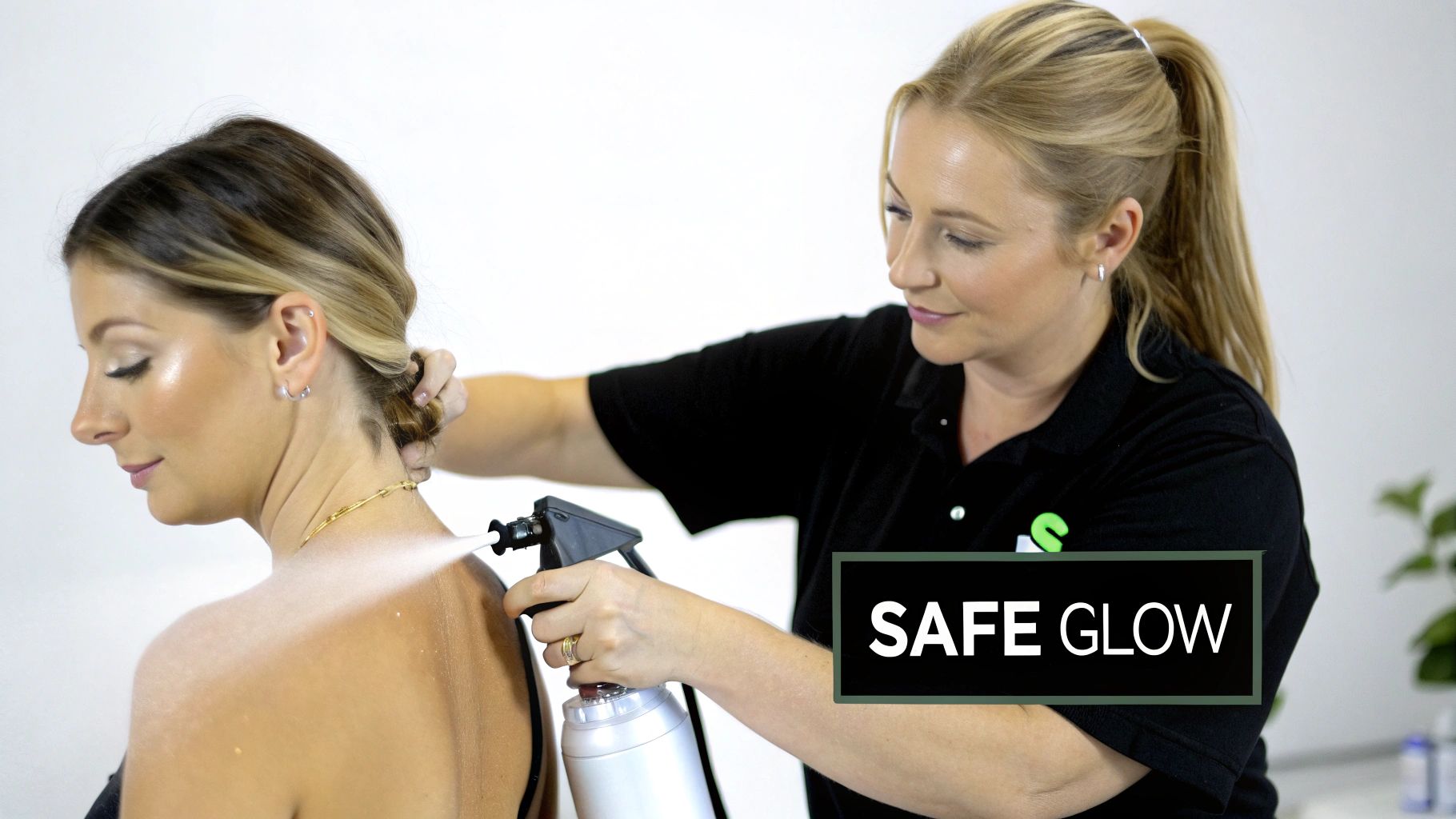
Spray tans and self-tanning lotions are going to be your new best friends post-treatment. Unlike lying in the sun or hopping into a tanning bed, these methods don't heat your skin or ramp up blood flow. This means there's zero risk of causing your Botox to shift from where it was carefully placed. The color simply develops on the top layer of your skin, leaving the muscles and tissue underneath completely undisturbed.
Even though faking your bake is the safest route, a little bit of timing and technique still goes a long way. The most important thing is to let the tiny pinprick spots from your injections heal up first. This is a non-negotiable step to avoid any chance of irritation or, worse, an infection.
You'll want to wait at least 24 hours before applying any self-tanner or heading in for a professional spray tan. This gives those little injection sites enough time to fully close up, creating a protective barrier on your skin.
Once you get the green light, follow these tips for a flawless finish:
Following these simple steps lets you rock a gorgeous, even tan that perfectly complements your smooth, refreshed skin. It’s about making sure all your aesthetic treatments work together beautifully.
Of course, smart skincare is a daily habit. As you explore safer ways to get a glow, finding the best Japanese face sunscreen can give you powerful, elegant options for everyday UV protection. This is key to protecting not just your Botox investment, but the long-term health of your skin.
Think of protecting your Botox investment as more than just a short-term, 48-hour sprint—it's a long-term commitment to smarter skincare. If you want to get the most out of your treatment and genuinely improve your skin's health, a solid sun protection strategy is your best bet.
You can view daily sun protection as an insurance policy for your smooth, wrinkle-free skin. Consistent exposure to UV rays, whether from the sun or a tanning bed, actively breaks down the collagen that gives your skin its firmness and bounce. When that structure gets damaged, wrinkles can start to creep back in much faster, even while the Botox is still busy doing its job relaxing the muscles underneath.
Your first line of defense against UV damage should be woven right into your daily routine. It doesn't have to be a complicated, multi-step process. Consistency is what really matters.
The easiest place to start is by making a broad-spectrum sunscreen with at least SPF 30 a non-negotiable part of your morning. And yes, that means every single day. UVA rays, the ones responsible for premature aging, are out in full force whether it's sunny, cloudy, or even raining.
Beyond sunscreen, don't underestimate the power of physical barriers. They offer fantastic, reliable protection:
Sticking to these habits does far more than just shield your skin from damage. You're actively creating the perfect environment for your Botox to work its magic for as long as possible.
While UV exposure won't cause Botox to "wear off" directly, it absolutely accelerates the return of wrinkles by attacking your skin's underlying structure. Sunbeds and natural sunlight trigger collagen breakdown, which works completely against the muscle-relaxing effects of your Botox treatment.
Basically, you're fighting a battle on two fronts. The Botox is smoothing lines (which usually lasts three to four months), while the sun is busy creating the very conditions that form them. This is precisely why a high SPF is so crucial, long after you’ve passed the initial waiting period for tanning after botox. If you're curious to learn more about how sunbeds specifically impact your results, you can get more details on that topic.
By making sun protection a non-negotiable part of your daily life, you’re ensuring your investment continues to pay dividends for months to come.
Even after going over the basics, it’s natural to have a few more specific questions pop up. Let's tackle some of the most common things people ask so you can feel completely confident about your aftercare.
It's best to hold off on applying any self-tanner or getting a spray tan on your face for at least 24 hours. This little bit of patience gives the tiny injection points a chance to close up completely.
Giving them that time is a simple way to sidestep any potential skin irritation or, in rare cases, infection. When you do go to apply your tanner, just be gentle and pat it on rather than rubbing the treated areas too hard.
While a single trip to the tanning bed a week later isn't as bad as going right away, I still advise against it. Tanning beds blast your skin with intense UV radiation, which is a fast track to breaking down collagen and speeding up the very aging process you're trying to address.
Think of it this way: you're working against the fantastic effects of your Botox. Regular exposure will almost certainly shorten how long your smooth results last.
Sunscreen is your best defense long-term, but avoiding intense heat right after your appointment is also essential for optimal results.
First, don't panic. If you accidentally spent too much time in the sun right after your appointment, your immediate focus should be on cooling and hydrating your skin.
Reach for a gentle, soothing moisturizer—something with aloe vera is perfect. Steer clear of any harsh scrubs or exfoliants for a few days. Keep an eye on the area for any unusual redness or swelling, and if you have any concerns at all about your results or notice something like asymmetry, don't hesitate to call your provider for advice.
Sunscreen is absolutely your non-negotiable best friend for protecting against UV damage, but it doesn't solve the whole puzzle in the first 48 hours. The heat from direct sun exposure is the other part of the equation.
That heat can ramp up blood flow to your face, which could potentially cause the Botox to spread a bit from its intended spot or just increase swelling. So, slather on that high-SPF sunscreen, but also stay out of the direct sun for a couple of days.
At Cape Cod Plastic Surgery, our commitment is to help you get beautiful, lasting results in the safest way possible. If you're ready to talk about your aesthetic goals with an expert, book a consultation with us today. Learn more at ccplasticsurgery.com.
September 9, 2026
Expert Guide to Proper Surgical Incision Care
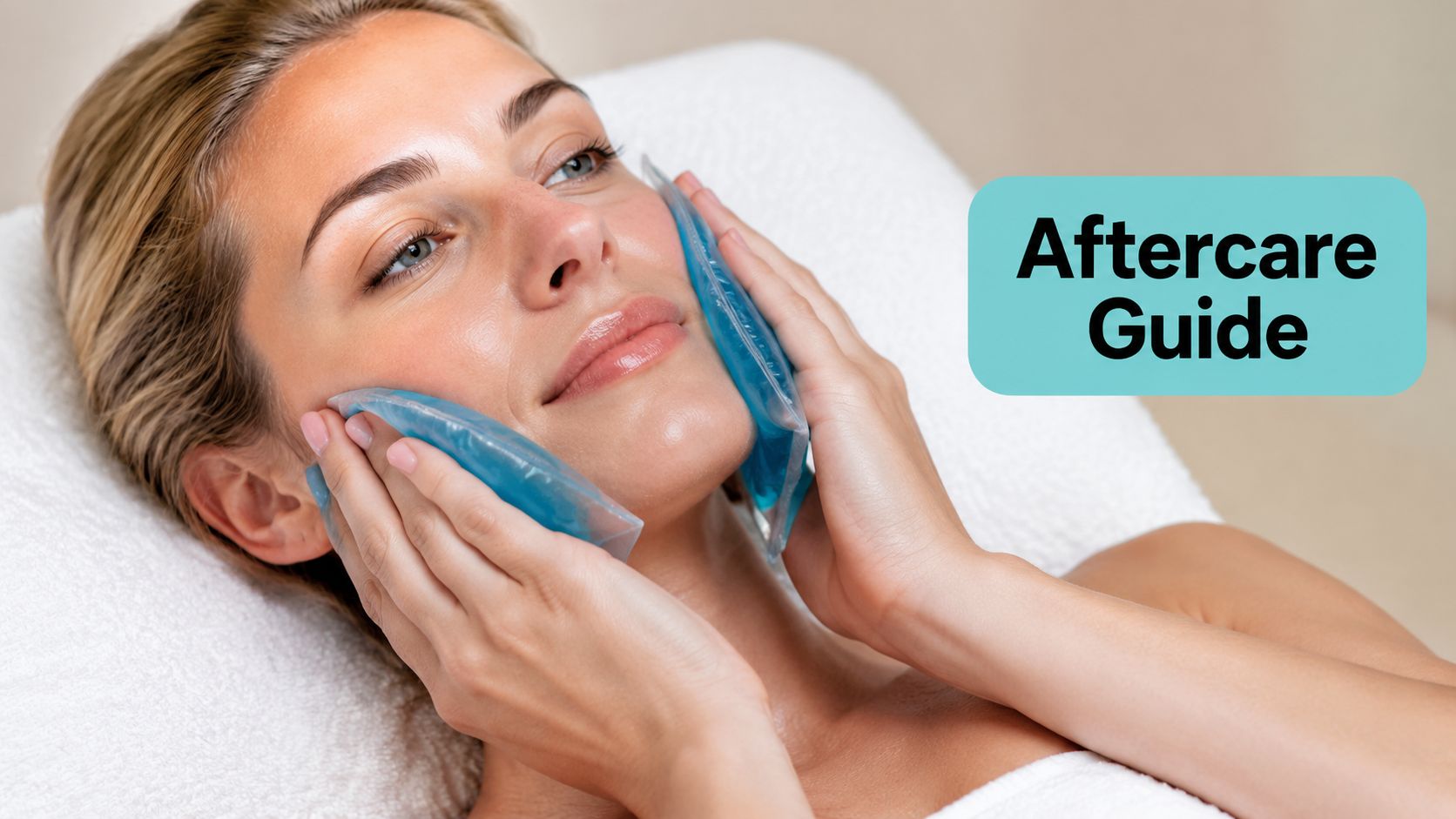
Master dermal fillers aftercare with do's and don'ts, swelling tips, activity limits and warning signs to protect your results and heal smoothly.

September 8, 2026
Ensuring Safety: Why Your Surgeon's Credentials Matter Most

Cape Cod Plastic Surgery offers expert cosmetic and reconstructive procedures in a safe, accredited setting. Led by Dr. Marc Fater, we combine advanced techniques with personalized care to help you look and feel your best.
Monday: 9:00 AM – 5:00 PM
Tuesday: 9:00 AM – 5:00 PM
Wednesday: 9:00 AM – 5:00 PM
Thursday: 9:00 AM – 5:00 PM
Friday: 9:00 AM – 5:00 PM