

October 7, 2026
What to Expect During Your Breast Surgery Recovery
A Practical Guide to Healing After Breast Surgery
Jan 19, 2026
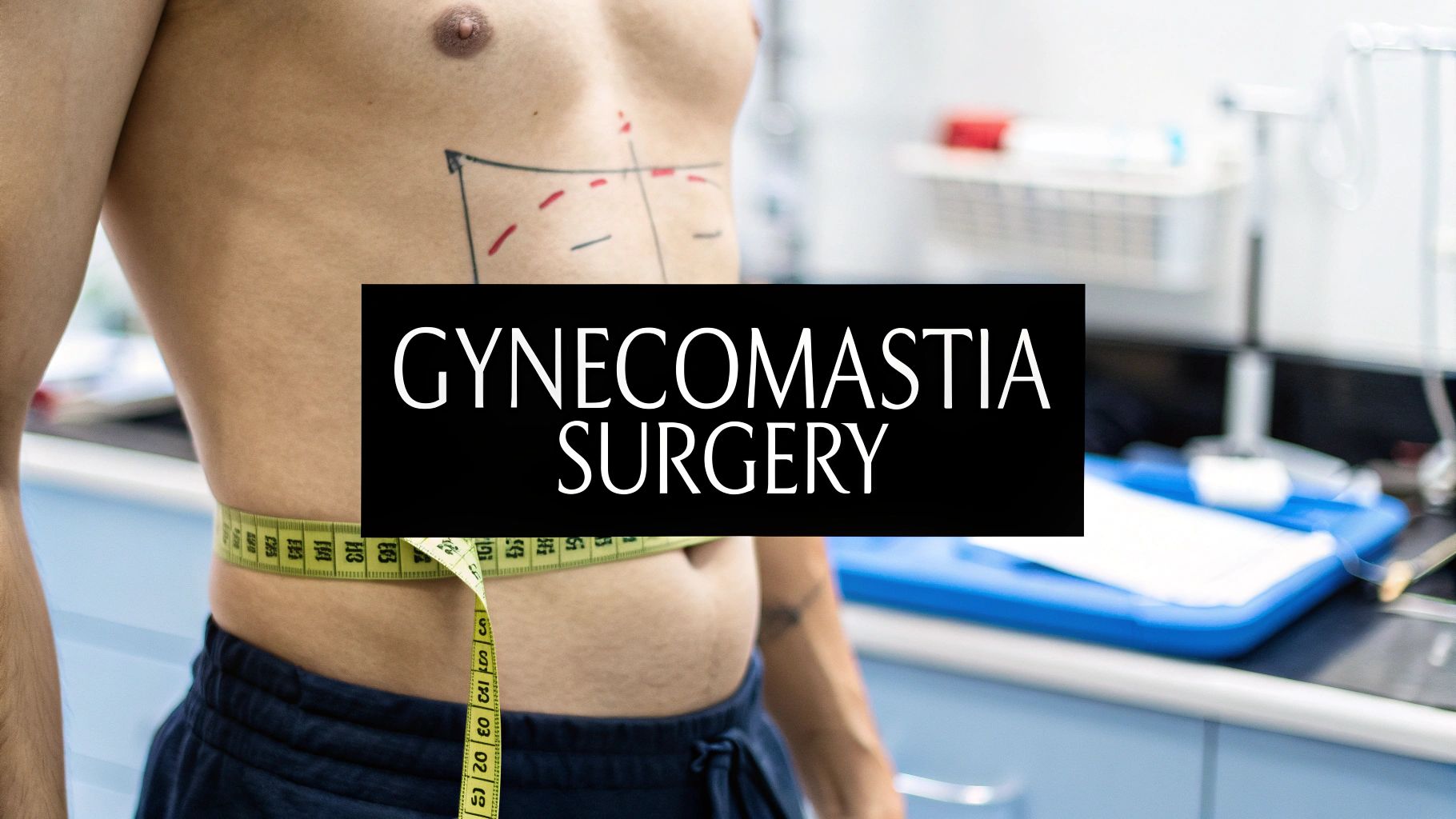
Gynecomastia surgery is a procedure that reduces enlarged male breast tissue to create a flatter, more defined, and masculine-looking chest. For many men struggling with this condition, it’s the definitive answer when diet and exercise just aren't enough to solve the problem.
Before we can even talk about surgery, the first and most important step is figuring out the root cause of the enlarged chest. Think of it like a car mechanic—they don't just start replacing parts. They diagnose the problem first. For men, this means determining whether the issue is true gynecomastia or a similar-looking condition called pseudogynecomastia.
This distinction is everything because it determines the right surgical game plan.
In reality, many men have a combination of both. Only a board-certified plastic surgeon can make an accurate diagnosis during a physical exam.
Use this quick comparison to understand the difference between glandular tissue and fatty tissue, which is the key to determining the right surgical approach.
Getting the diagnosis right is the foundation for a successful outcome. It tells us exactly what techniques will be needed to achieve the best results.
The type of tissue we're dealing with directly shapes the surgical plan. Firm, dense glandular tissue can't be suctioned out—it has to be surgically removed (excised). On the other hand, soft fatty tissue responds very well to liposuction. This is central to what we do in body contouring surgery—we use the right tools for the job. By correctly identifying the tissue, your surgeon can create a tailored procedure that delivers natural, lasting results.
For so many men, the emotional burden of gynecomastia is immense. This surgery is about so much more than a physical change; it's a powerful step toward reclaiming confidence and feeling truly comfortable in your own skin.
The procedure's effectiveness in addressing both the physical and emotional sides of this condition is reflected in its growing popularity. According to the International Society of Aesthetic Plastic Surgery (ISAPS), an incredible 352,302 gynecomastia procedures were performed worldwide in 2023. That’s a 15.4% increase from the year before, which really highlights how effective this solution is for men seeking a flatter, more sculpted chest. If you're interested in the data, you can read the full ISAPS global survey here.
Figuring out if gynecomastia surgery is the right move for you goes beyond simply wanting a flatter chest. It's really a conversation—first with yourself, and then with a qualified surgeon—about your health, your lifestyle, and what you hope to achieve. The best outcomes happen when you and your surgeon are on the same page, ensuring the procedure is both safe and successful.
Generally speaking, the best candidates are men who are in good overall health. This means you don't have any serious illnesses or medical conditions that could make surgery risky or complicate your healing. Your body needs to be ready for the recovery process.
Another big factor is having a stable weight. If your weight tends to yo-yo, it can really affect the long-term results of the surgery. Gaining a significant amount of weight after the procedure can cause any remaining fat cells in the chest to grow, potentially compromising the new contour we've created. That’s why we usually advise patients to be at or close to their ideal body weight before scheduling surgery.
While every patient's situation is different, there are a few key things plastic surgeons look for during an evaluation. These traits typically point to a smoother recovery and results that you'll be happy with for years to come.
So, who is the perfect fit for this procedure?
Doing your homework online is a fantastic first step, but it can never take the place of a face-to-face consultation with a board-certified plastic surgeon. This meeting isn't just a quick check-up; it's an in-depth, strategic discussion where we map out a surgical plan tailored specifically to your body and your goals.
During your visit, your surgeon will do a full physical evaluation of your chest. They'll need to feel the tissue to figure out the ratio of firm glandular tissue to softer fatty tissue. This hands-on assessment is absolutely essential, as it tells us which surgical approach will give you the best result—whether that’s liposuction, direct excision of the gland, or, most commonly, a combination of the two.
A consultation is the cornerstone of a successful surgery. It's where your goals meet medical expertise, allowing the surgeon to craft a procedure that is not only safe but also perfectly suited to your body's unique needs.
We'll also take a close look at your skin quality and review your entire medical history. It's crucial to be open and honest about any previous surgeries, medications you're taking, and your lifestyle habits. Full transparency allows us to anticipate any potential risks and put a plan in place to keep you safe, paving the way for the best possible outcome.
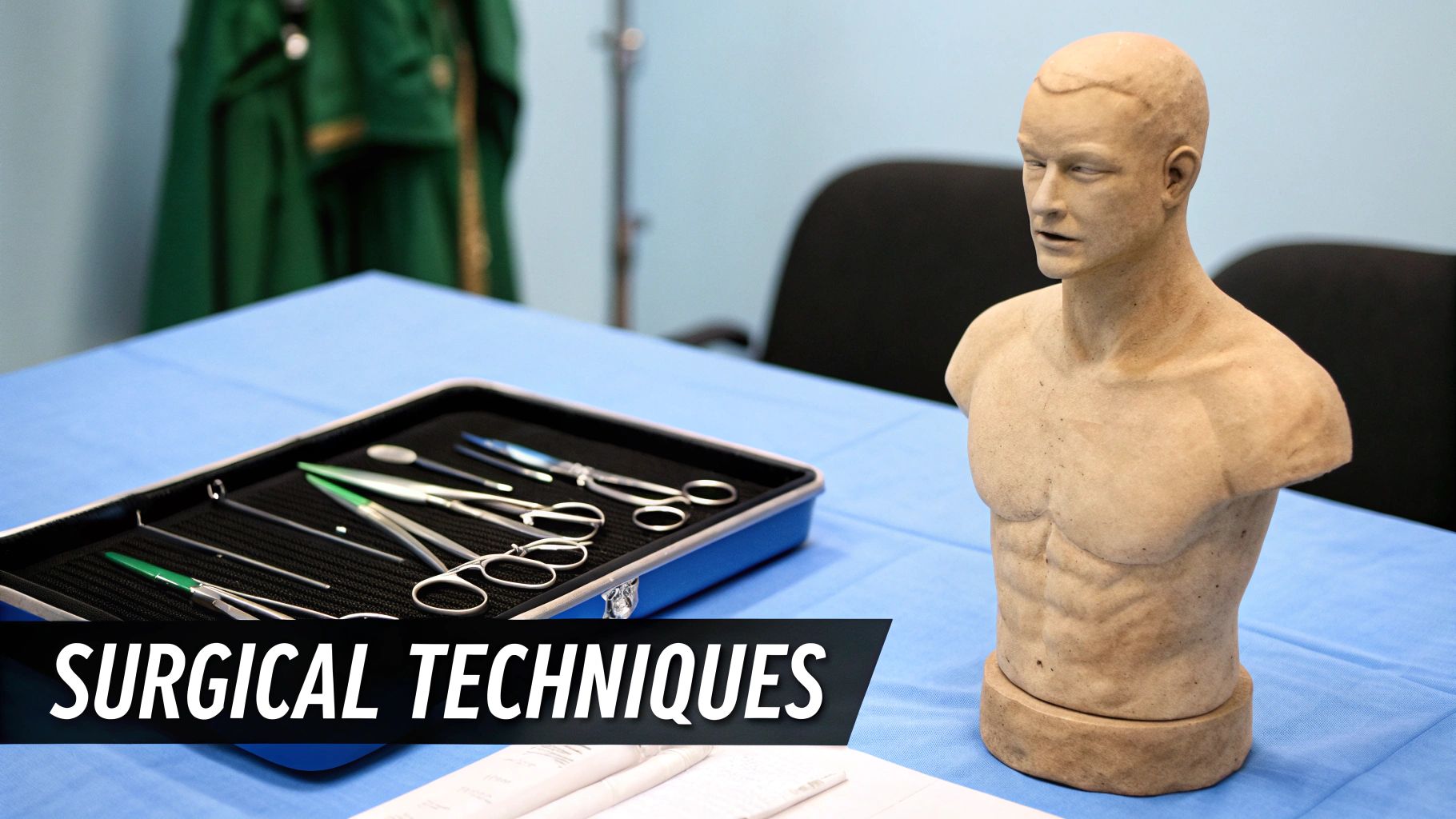
Gynecomastia surgery is never a one-size-fits-all solution. A skilled plastic surgeon acts like a sculptor, carefully choosing the right tools and techniques to achieve your desired outcome. The specific approach we take is entirely dictated by your unique anatomy—namely, how much fatty tissue versus dense glandular tissue needs to be removed to create a flatter, more masculine chest.
Essentially, there are three primary techniques in our arsenal: liposuction, direct gland excision, or a combination of the two. Let's break down how each one works.
Think of liposuction as a way to sculpt soft clay. When the issue is primarily excess fatty tissue (pseudogynecomastia), we can gently remove and re-contour it to get the shape just right. This is the perfect tool for soft, pliable fat.
The procedure itself is minimally invasive. I make a few tiny incisions, just millimeters long, tucked away in less noticeable spots around the chest. Through these small openings, I insert a thin, hollow tube called a cannula to carefully break up and suction out the unwanted fat.
While highly effective for refining the chest's overall shape, liposuction has its limitations. It simply can’t remove the firm, rubbery glandular tissue that defines true gynecomastia. You can get more details on how the procedure works on our page about liposuction.
Now, imagine that same piece of clay has a hard, dense stone embedded right in the center. No amount of gentle suction will get it out; you have to remove it directly. This is the perfect analogy for glandular excision.
True gynecomastia involves this dense breast gland tissue, which often feels like a firm disc right behind the nipple. It’s impossible to remove with liposuction alone. The only way to address it is to surgically excise it.
To do this, I make a small incision, usually along the lower border of the areola where the scar will be incredibly well-hidden once it heals. This gives me direct access to carefully remove the glandular tissue. In cases with a significant amount of excess tissue, different incision patterns might be needed to achieve the best possible contour.
For the vast majority of my patients, the best results come from combining both techniques. This hybrid approach is the gold standard because it allows a surgeon to tackle every component of an enlarged male chest, leading to the most complete and natural-looking outcome.
It’s really a two-step artistic process. First, I use liposuction to remove the surrounding fatty tissue, essentially "debulking" the entire area. This is like clearing away the excess material to reveal the fundamental shape underneath.
Then, with the fat removed, I perform the glandular excision to take out that stubborn, firm tissue that remains. This is the crucial fine-tuning step that ensures the central chest is perfectly flat and contoured.
By combining these powerful techniques, a surgeon can do more than just remove tissue—we can meticulously sculpt the chest for a defined, aesthetically pleasing, and truly masculine appearance.
This dual method is the most common and effective solution because it addresses both soft fat and firm gland. It gives us maximum control to create a smooth, natural transition across the entire chest, avoiding any divots or irregularities and delivering the best possible result. The final decision on the right technique for you is always made during your consultation after a thorough physical exam.
Knowing what to expect from start to finish can make all the difference, replacing anxiety with confidence. Your gynecomastia surgery isn’t just a one-day event; it's a carefully mapped-out journey. It begins well before you arrive at the surgical suite and is designed to ensure your safety, comfort, and the best possible outcome.
Think of the pre-operative phase as laying the groundwork for a successful project. The better the preparation, the stronger and more reliable the final result will be. Your surgeon will give you a detailed list of instructions to follow in the weeks and days before your procedure.
Following these steps is crucial for a smooth surgery and an even smoother recovery. It’s all about getting your body into the best possible shape for healing.
While your pre-op instructions will be tailored to you, most patients preparing for male breast reduction can expect some common guidelines.
Taking these preparations seriously is vital. It's no surprise that male breast reduction is becoming more common, as men are increasingly aware of how effective it can be. The global market for gynecomastia procedures was valued at about USD 810.8 million in 2022 and is expected to nearly double by 2030. This growth makes sense when you consider that up to 65% of men deal with some degree of gynecomastia. For more details on this trend, you can explore the full gynecomastia procedures market report.
When surgery day arrives, our entire focus is on you—your safety and your comfort. You'll come to a fully accredited surgical facility, a controlled environment that meets the highest standards of patient care. This is non-negotiable for a safe and positive experience.
After you check in, you'll meet with the surgical team, including your anesthesiologist. This is a great time to ask any last-minute questions that might be on your mind. The anesthesiologist will go over your medical history and explain how they'll keep you comfortable and safe throughout the procedure.
The use of anesthesia ensures that your gynecomastia surgery is a comfortable experience. You will be completely pain-free during the procedure, allowing the surgical team to focus on achieving the best possible aesthetic result.
Most gynecomastia surgeries are done under general anesthesia or IV sedation with a local anesthetic. The best choice for you depends on the complexity of your case and the plan you’ve made with your surgeon. From the moment you're given anesthesia until you're awake in the recovery room, you will be monitored constantly. This is a cornerstone of modern surgical safety, ensuring your vital signs are stable from beginning to end.
The surgery itself is just one part of the equation. Your commitment to the recovery process is what truly cements the final outcome. Think of it like this: the surgery creates the new shape, but the recovery is where your body heals and settles into that new contour. Patience and carefully following your surgeon's instructions are your best tools for getting a smooth, natural-looking chest.
Right after the procedure, the first few days are all about rest and managing any initial discomfort. You'll be sent home in a compression garment, and wearing this is non-negotiable. It’s absolutely essential for keeping swelling down, supporting the healing tissues, and helping your skin adapt to its new, flatter position.
Most men tell us it’s more of a soreness and tightness than sharp pain, which is typically handled well with the medication we prescribe. We encourage light walking around the house to keep your circulation healthy, but that's it. Your body’s main job right now is healing, so you have to let it do its work.
Everyone heals a bit differently, but having a general timeline helps you know what to expect. This whole process is a marathon, not a sprint, and every stage is important for getting the best result.
Weeks 1-2 (The Initial Healing Phase): You'll be wearing your compression garment 24/7 during this period. Most guys with desk jobs can get back to work within 5 to 7 days. Any strenuous activity, lifting anything heavy, or hitting the gym is strictly off-limits. The focus is purely on rest and letting those incisions heal properly.
Weeks 3-4 (Gradually Getting Back to It): We'll likely clear you to start some light cardio, like hopping on a stationary bike or taking brisk walks. It's really important to avoid any exercises that put a strain on your chest muscles. You'll start to see a real drop in swelling, but remember, your final results are still a few months out.
Weeks 4-6 (Returning to Strength): Once you get the green light from your surgeon, you can usually start adding lower-body and core strength training back into your routine. But hold off on the upper-body work, especially chest exercises like push-ups or bench presses, until you're at least six weeks post-op. Rushing this can seriously compromise your results.
Patience is everything during recovery. You'll see the big changes pretty quickly, but the final, sculpted chest you're looking for will take several months to fully appear as the last bits of swelling vanish and scars mature.
This timeline gives you a great visual guide for the entire journey, from the prep phase all the way through your final recovery.
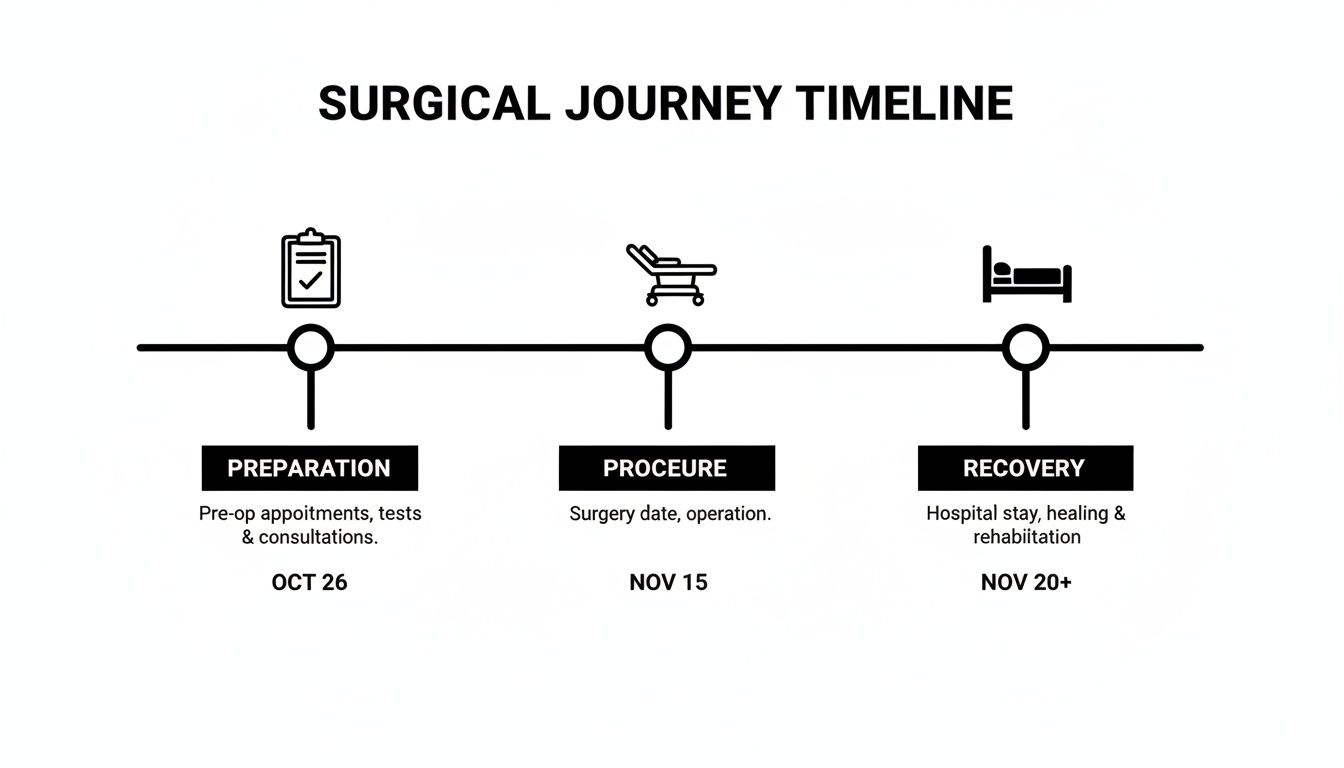
As you can see, the recovery phase is just as structured and important as the surgery itself.
Scars are an unavoidable reality of any surgery, but with today's techniques and good aftercare, we can make them incredibly discreet. We place incisions strategically, often right along the natural border of the areola, to help them blend in seamlessly.
At first, your scars will look red and a little raised—that's a perfectly normal part of healing. Over the next 6 to 12 months, they will slowly fade, soften, and flatten out into thin lines that are much less noticeable.
To get the best possible result, we’ll give you a specific plan for scar care. This usually includes:
Understanding how your body heals is key to managing expectations. You can learn more about the complete wound healing process to get a better sense of your post-op journey. By sticking to the plan, you can achieve that flat, masculine chest you want with very little evidence of the procedure that got you there.
Of all the decisions you'll make, choosing your surgeon is by far the most critical. This isn't just about getting a good result; it's about your safety and ensuring the outcome truly fits your body and goals. A great surgeon is part technician and part artist—they have the skill to perform the procedure flawlessly and the eye to create a natural, masculine contour.
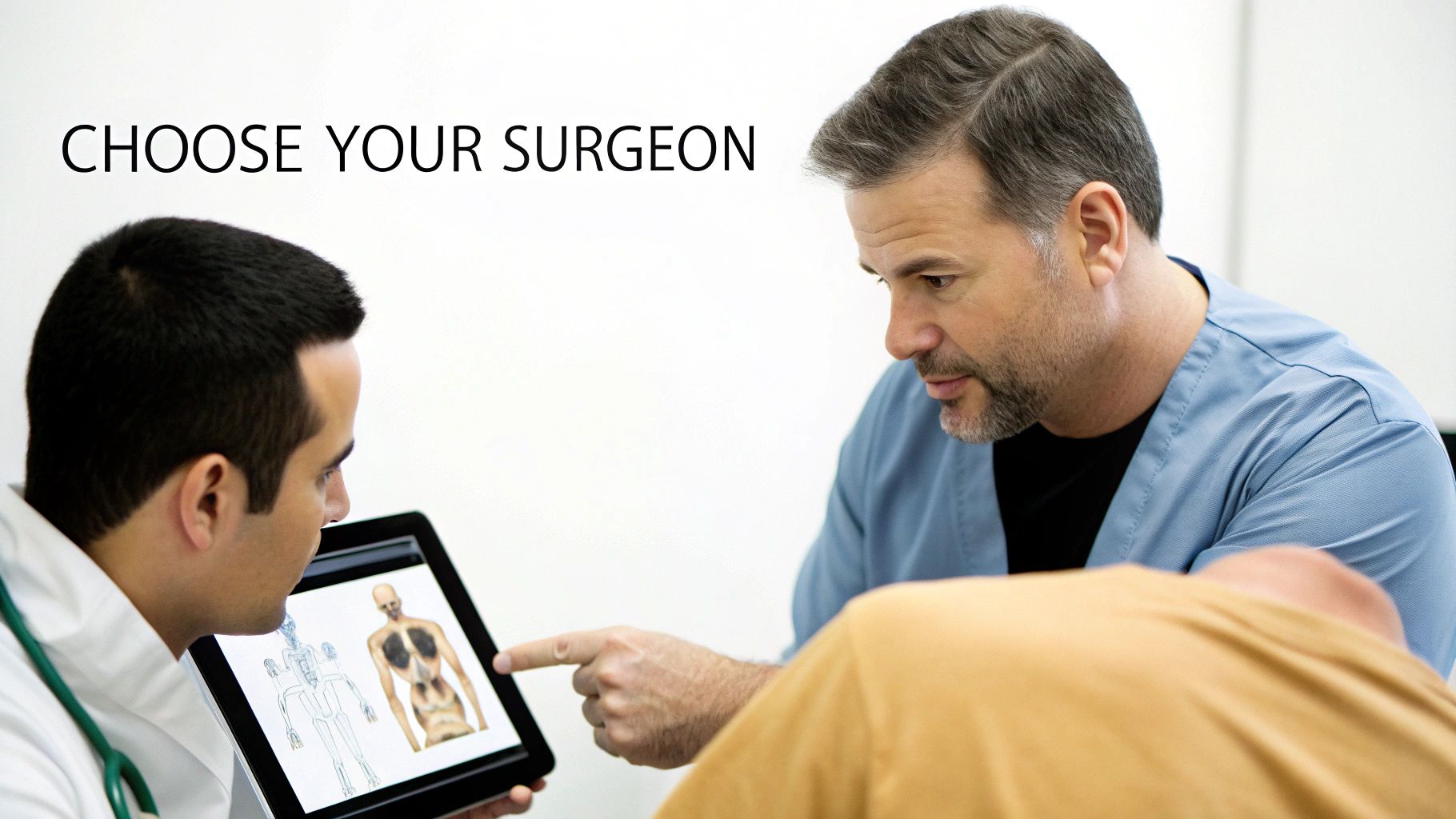
The first thing to look for is board certification from the American Board of Plastic Surgery (ABPS). This is the gold standard, and it's non-negotiable. It tells you the surgeon has gone through years of specialized training specifically in plastic surgery, passed rigorous exams, and is held to the highest ethical and safety standards.
Think of your consultation as a two-way interview. You need to feel confident and comfortable, so don't be shy about asking questions. A skilled surgeon will be happy to walk you through everything and will never make you feel rushed.
Here are a few questions I always recommend patients ask:
A surgeon’s transparency about their experience and their ability to show consistent, high-quality results are strong indicators of their expertise. Look for results that match your aesthetic goals.
Finally, make sure the procedure will take place in a fully accredited surgical facility. An on-site suite that is AAAASF-accredited (or similarly certified) means the facility meets strict national standards for equipment, safety, and staff.
This decision is a big one. For a deeper dive, check out our guide on https://www.ccplasticsurgery.com/blog/how-to-choose-a-surgeon. The principles of finding the right healthcare professional apply here, too—it all comes down to trust, proven qualifications, and a strong personal connection.
It’s completely normal to have a lot of questions when you’re thinking about a procedure like this. Let's walk through some of the most common ones we hear from patients, so you can get a clearer picture of what to expect on your journey.
During the actual surgery, you won't feel a thing—you'll be comfortably under anesthesia. Afterward, what most men describe isn't sharp, intense pain, but more of a deep soreness or tightness across the chest.
This feeling is most noticeable for the first few days, but it’s very manageable with the pain medication we’ll prescribe. Honestly, one of the best things you can do to control discomfort and swelling is to diligently wear your compression garment. It makes a huge difference.
Any surgery leaves a scar, but the art of plastic surgery is hiding it in plain sight. For gynecomastia correction, incisions are typically placed right along the lower border of the areola. This is a fantastic spot because the natural change in skin texture and color helps camouflage the scar as it heals.
At first, the scars will be pink or red, but they fade beautifully over 6 to 12 months, eventually settling into a fine, pale line. Sticking to your surgeon’s scar care plan is your a-game for making sure they heal as discreetly as possible.
The entire goal is to give you a natural-looking chest, not one that screams "I've had surgery." It all comes down to strategic incision placement and good post-op care.
Yes, they are. The breast gland tissue and fat cells we remove are gone for good—they don't grow back. That means the flatter, more masculine contour you get from the surgery is built to last.
Now, there is a catch. You have to do your part by maintaining a stable weight. Significant weight gain can cause any remaining fat cells in the area to expand, which could affect your results. It’s also critical to avoid things known to cause gynecomastia, like anabolic steroids. Think of it this way: a healthy lifestyle is the best way to protect your investment in yourself.
This is the million-dollar question, and unfortunately, the answer is usually no. Most insurance carriers consider gynecomastia surgery a cosmetic procedure, meaning they don’t see it as a medical necessity and won't cover the cost.
However, there can be exceptions. If your condition is causing documented medical problems like chronic pain, persistent skin irritation, or is the source of significant, diagnosed psychological distress, you might have a case. Your first move should always be to call your insurance provider directly. Ask them about their specific policy and find out exactly what documentation they would need to even consider coverage.
At Cape Cod Plastic Surgery, Dr. Fater and our team believe in clear communication and personalized care every step of the way. When you're ready to talk about your specific goals, schedule your confidential consultation today.
October 7, 2026
A Practical Guide to Healing After Breast Surgery

October 6, 2026
Your Safety Guide: What to Look for When Choosing a Plastic Surgeon

October 5, 2026
Why Our On-Site Accredited Facility Matters for Your Safety

Cape Cod Plastic Surgery offers expert cosmetic and reconstructive procedures in a safe, accredited setting. Led by Dr. Marc Fater, we combine advanced techniques with personalized care to help you look and feel your best.
Monday: 9:00 AM – 5:00 PM
Tuesday: 9:00 AM – 5:00 PM
Wednesday: 9:00 AM – 5:00 PM
Thursday: 9:00 AM – 5:00 PM
Friday: 9:00 AM – 5:00 PM