

October 7, 2026
What to Expect During Your Breast Surgery Recovery
A Practical Guide to Healing After Breast Surgery
Sep 1, 2026
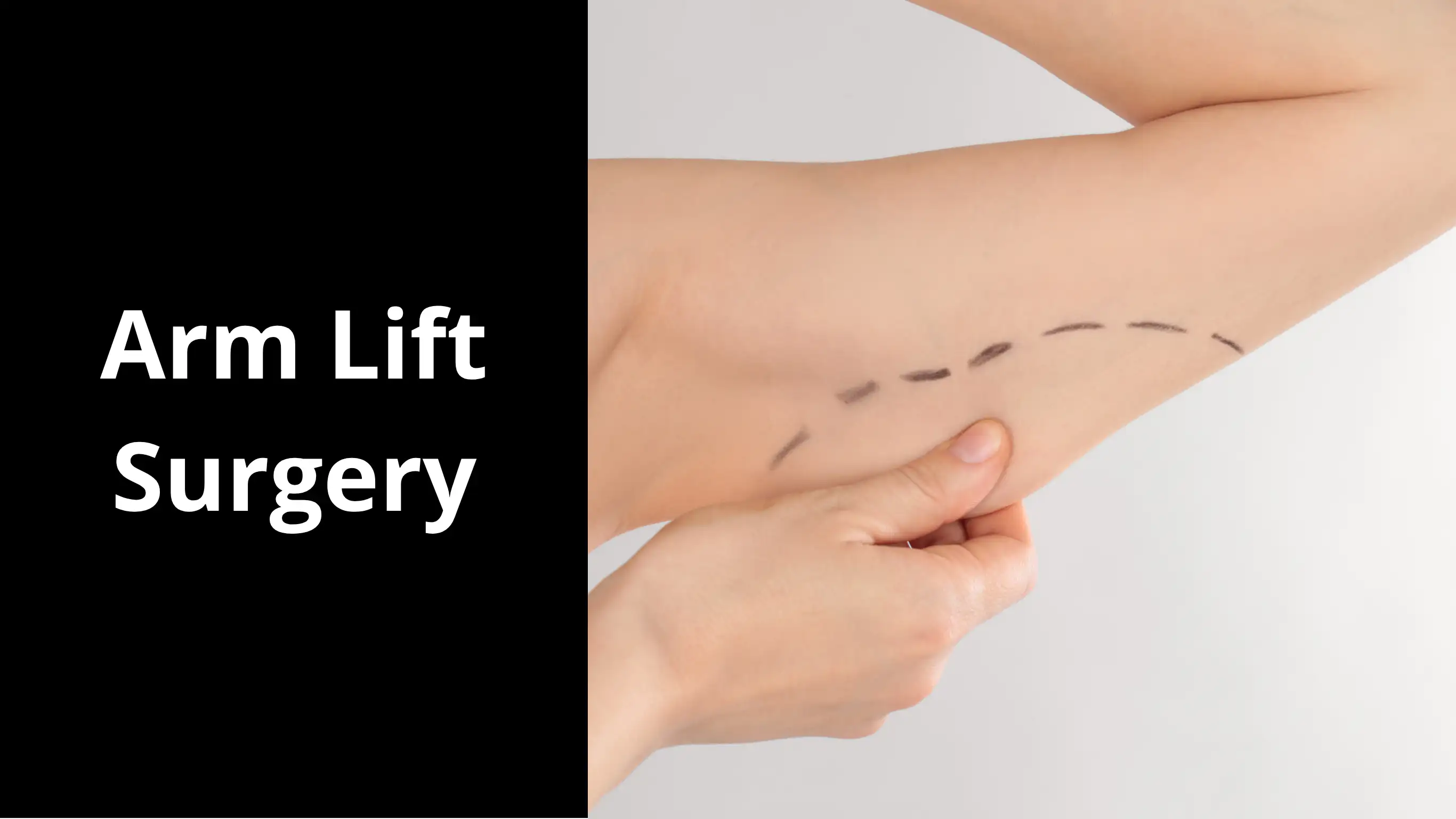
Arm lift surgery, or brachioplasty, removes excess skin and fat from the upper arm to create a firmer, more contoured appearance. In a large review of 1,065 patients, the overall complication rate was 28.9%, with scarring, recurrent laxity, wound separation, and fluid collection among the most common issues.
You may be looking at your arms after significant weight loss, wondering why exercise has changed your strength but not the loose skin. Or perhaps aging, genetics, or years of weight fluctuation have left skin that folds, moves, or rubs in ways you can't correct with diet and exercise. Those concerns are common, and they deserve a practical answer rather than pressure to make a quick decision.
A patient may arrive at a consultation saying, “I've worked hard for my weight loss, but my arms still look as though nothing has changed.” Another may be active, healthy, and relatively young, yet feel uncomfortable in sleeveless clothing because the skin along the upper arm has never tightened properly. Both situations can be valid reasons to explore brachioplasty.
An arm lift surgery reshapes the upper arm by removing skin that has lost its ability to retract. The surgeon may also remove or contour localized fat and tighten supportive tissue beneath the skin. The aim isn't to create an artificial arm. It's to produce a smoother relationship between the upper arm, shoulder, and forearm.
Brachioplasty is most useful when excess skin is the main concern. Exercise can strengthen the muscles underneath, and weight management can reduce fat, but neither reliably removes a substantial fold of loose skin. If the issue is mainly a small pocket of fat and your skin still contracts well, liposuction may be more appropriate than a full arm lift.
People seek this operation after major weight loss, but they don't have to fit that profile. Aging-related laxity, inherited skin quality, and localized changes after ordinary weight fluctuations can also create a problem that nonsurgical efforts can't solve. Some patients also experience rubbing, irritation, or difficulty with clothing, although aesthetic concerns remain a common reason for consultation.
The procedure does involve a trade-off. Removing skin improves the contour, but it requires an incision and therefore a permanent scar. A good consultation should make that exchange explicit, not minimize it.
A surgeon will consider your health, weight pattern, skin quality, and expectations rather than using one feature as a simple pass or fail.
If you're also investigating nonsurgical approaches for loose skin after weight loss, you can review these advanced methods for loose skin before deciding whether surgery matches your goals.
Practical rule: If your weight is still changing substantially, or you hope surgery will replace continued weight management, pause and discuss timing with a qualified plastic surgeon.
The American Society of Plastic Surgeons recorded 9,955 arm lifts in the United States in 2004, with 96% performed on women and 4% on men. That total represented a 2,845% increase from 2000 to 2004, making arm lift surgery one of the fastest-growing body-contouring procedures during that period, as documented in the society's historical statistics (American Society of Plastic Surgeons data). The figures also show that brachioplasty has long served a broad cosmetic population, not only people after massive weight loss.
Brachioplasty isn't one operation with one incision. The technique depends on where the skin hangs, how much fat is present, and how well the skin can contract.
TechniqueUsually considered whenMain trade-offTraditional brachioplastyLoose skin extends along much of the upper armProduces broader correction but leaves a longer inner-arm scarMinimal-incision or mini liftLaxity is concentrated near the armpitLimits scarring, but can't correct extensive skin excessLiposuction aloneLocalized fat is present and skin elasticity remains favorableRemoves fat, not a significant hanging skin fold
A traditional arm lift generally places an incision along the inner arm, often from the armpit toward the elbow. The surgeon removes redundant skin and may contour fat at the same time. This approach suits a patient whose laxity continues down the length of the upper arm.
A mini lift uses a shorter incision near the armpit. It can be useful when the upper portion of the arm has mild or moderate looseness but the lower arm remains relatively firm. The shorter scar is appealing, but choosing it when the skin excess is extensive can leave an incomplete result.
Liposuction is a different decision. It reduces fat volume through small access points, but it doesn't remove skin that has already stretched beyond its elastic capacity. Some patients may also ask about fat reduction injections for small areas, but a qualified clinician must determine whether an injectable approach is suitable for the specific amount and location of arm tissue.
Ask during consultation: “Is my main issue skin, fat, or both?” That answer usually clarifies why a surgeon recommends one technique over another. It also helps you compare recovery expectations without assuming that the shortest incision automatically provides the best correction.
The morning of surgery usually begins with confirmation of the plan, photographs, markings, and a review of your medical history. Your surgeon marks the skin while you're standing, because the pattern of laxity is easier to judge before swelling or anesthesia changes the tissues.
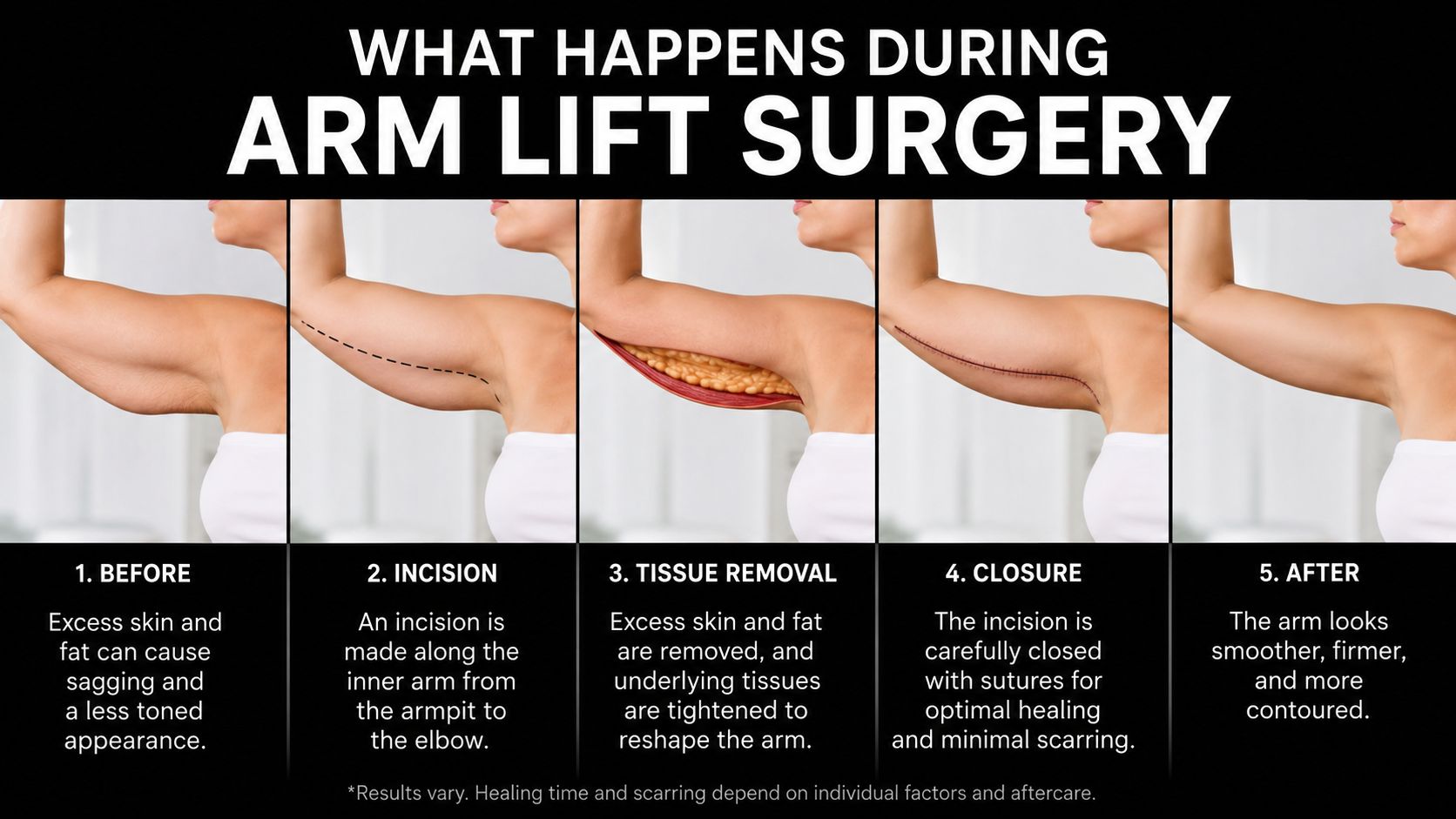
The incision is usually placed along the inner arm, where clothing and the natural position of the arm can help conceal it. The exact length depends on whether you need a limited lift or correction extending toward the elbow.
Your surgeon then removes carefully measured excess skin and, when appropriate, contours fat. The remaining tissue is brought together without creating unnecessary tension, and the incision is closed in layers. This balance matters because taking too little skin may leave laxity, while excessive tension can interfere with healing.
After the operation, the team monitors you as you wake from anesthesia. You may have dressings, a compression garment, and, depending on the surgeon's technique, small drains to remove fluid while the tissues begin to seal.
You'll need an adult to take you home and stay with you according to your surgical team's instructions. Before leaving, ask how to position your arms, when to take prescribed medication, how to empty or record drain output if drains are used, and which symptoms require an immediate call.
The unknown becomes less intimidating when you know what the staff is watching for. Your responsibility begins with following the written instructions closely, protecting the incisions, and attending scheduled reviews.
Arm lift surgery may use general anesthesia or local anesthesia with twilight sedation. The choice depends on the extent of skin removal, whether liposuction or another procedure is added, your health history, and the anesthesiologist's assessment. You should receive a personalized explanation rather than being told that one option is automatically safer for everyone.
Facility standards matter just as much. An AAAASF-accredited surgical suite is evaluated for equipment, staffing, emergency readiness, infection control, and operating procedures. Accreditation doesn't eliminate risk, but it places the operation within a formal safety system instead of treating surgery like a routine office service.
Before scheduling, confirm the surgeon's board certification, the credentials of the anesthesia professional, the facility's accreditation, and the plan for unexpected changes. Preoperative testing also depends on your history and medications. A resource on how to check your health before surgery with Repose can help you understand why clinicians may request blood tests before an elective operation.
A large systematic review of 1,065 brachioplasty patients reported an overall complication rate of 28.9%. The most frequent specific findings were aberrant scarring at 9.9%, ptosis or recurrence at 7.79%, wound dehiscence at 6.81%, and seroma at 5.91%. The same review reported reintervention rates of 7.46% for aesthetic reasons and 1.62% for non-aesthetic reasons (systematic review of brachioplasty complications).
For a broader explanation of anesthesia choices, review anesthesia types for surgery and bring any questions to your consultation.
Recovery isn't a test of toughness. It's a period in which the tissues need protection while swelling settles and the incision gains strength. Your surgeon's instructions take priority, especially if your operation combines a lift with another procedure.
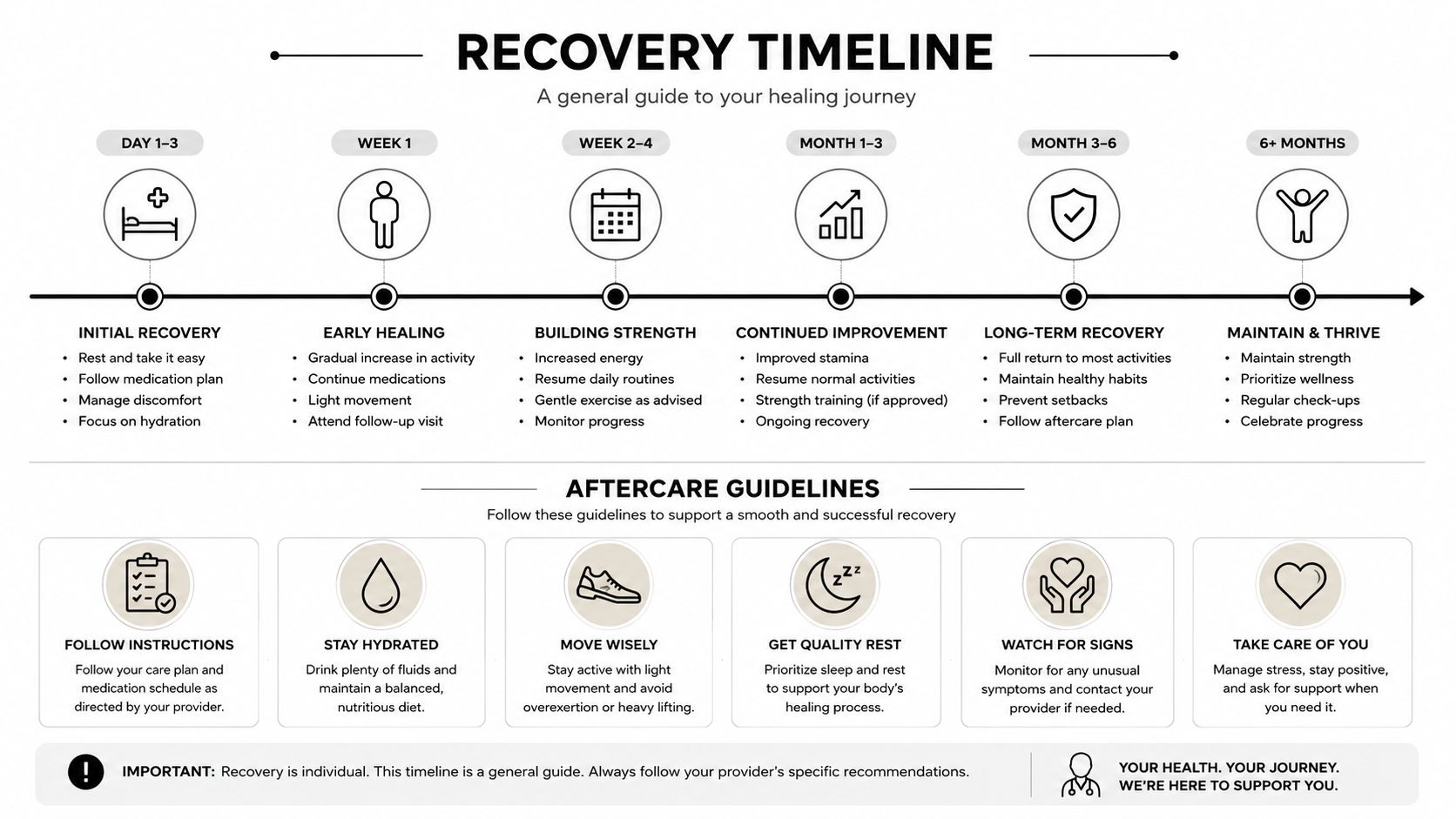
During the first week, expect swelling, bruising, tightness, and soreness. Compression garments may support the arms and limit swelling, while drains may remain until the output is low enough for removal. Keep the incisions clean and dry as instructed, avoid rubbing the area, and arrange help with tasks that require lifting or reaching.
Light walking is often encouraged when your surgeon permits it, because gentle movement supports general recovery. Don't raise your arms repeatedly, push yourself out of deep chairs, lift objects, or drive while taking prescription pain medication or while arm movement remains restricted.
In the second and third weeks, bruising and swelling should gradually improve, although the arms may still look uneven or feel firm. Desk work and light daily activity may be possible for some patients, but the timing depends on your job, healing, and the extent of surgery.
By the following weeks, your surgeon may approve a gradual increase in activity. Upper-body exercise, overhead movement, swimming, and heavier lifting should wait until the incisions are adequately healed and your surgeon gives clearance.
The contour improves progressively rather than appearing instantly. Scars may remain noticeable as they mature, and the final appearance can take patience. Sun protection, silicone-based scar care when recommended, and adherence to follow-up appointments can support better scar management.
For a more detailed discussion of arm lift surgery recovery, use your surgeon's specific restrictions as the final authority.
Swelling can make a good early result look disappointing. Judge the direction of healing, not the mirror on a difficult day.
Call the surgical team promptly for increasing redness, worsening pain, fever, expanding swelling, heavy drainage, wound separation, shortness of breath, or a new concerning sensory change.
The most useful risk discussion separates common local problems from uncommon major events. In the systematic review cited above, the leading adverse outcomes were wound-healing and contour-related, not catastrophic. Aberrant scarring occurred in 9.9%, ptosis or recurrence in 7.79%, wound dehiscence in 6.81%, and seroma in 5.91% (brachioplasty adverse outcomes review).
The same review recorded nerve-related complications in 2.47% of cases and hematoma in 2.06%. These figures aren't a prediction of your personal outcome. They provide a benchmark for a frank conversation about anatomy, technique, aftercare, and the possibility of further treatment.
Tension management is central. A surgeon must remove enough skin to improve the shape while avoiding closure tension that could contribute to wound separation.
Dead-space control helps reduce the area where fluid can collect. Techniques may include careful tissue handling, layered closure, compression, and drains when appropriate.
Hemostasis and monitoring address bleeding risk. You should know how to recognize rapidly increasing swelling, sudden pain, or drainage that differs from the expected postoperative pattern.
Major complications are uncommon but not negligible. In an analysis of 2,294 patients, 3.4% developed at least one major complication, most commonly infection at 1.7% and hematoma at 1.1%. A separate review of 1,065 patients reported nerve injury in 1.5% and surgical revision rates ranging from 0% to 21% (large cohort and literature review).
Ask not only, “What could go wrong?” Ask, “How do you reduce that risk, and what happens if I develop it?”
Your health history changes the discussion. Smoking or nicotine use, medications that affect bleeding, diabetes, previous scars, and plans for further weight loss should all be disclosed before surgery.
If loose skin bothers you when you raise your arms or wear short sleeves, an arm lift can create a smoother, more proportionate upper-arm contour. The trade-off is a permanent scar, often along the inner arm. Its appearance depends on genetics, skin thickness, incision tension, and aftercare, so no surgeon can promise an invisible line.
The improvement can last for many years when your weight stays stable and you maintain your health. Aging still changes skin elasticity, and substantial weight fluctuations may stretch the tissues again. Brachioplasty removes excess skin that exists at the time of surgery. It does not prevent future changes.
Use three questions to compare the expected benefit with the commitment involved:
Technique affects both the result and the fee. A traditional arm lift generally involves more skin removal and a longer incision than a mini lift, while a combined procedure may add liposuction or another operation. Facility requirements, anesthesia, the surgeon's experience, and geographic location also contribute to price differences.
Ask for an itemized estimate that separates the surgeon's fee, facility costs, anesthesia, garments, medications, follow-up visits, and any revision policy. Compare each quote line by line, using equivalent services rather than comparing only the total.
The available verified information does not establish a reliable current price range. Financing may be offered through the practice or an independent medical-credit provider. Review interest, fees, repayment terms, and what happens if recovery takes longer than expected before accepting a payment plan. A lower initial total may exclude services that another estimate includes, so the written details matter as much as the headline price.
Your surgeon selection affects more than the appearance of the final contour. It influences how carefully the procedure is planned, how risks are explained, how anesthesia is delivered, and how quickly concerns are addressed after you return home.
Cape Cod Plastic Surgery in Hyannis, Massachusetts, is led by Dr. Marc Fater, a board-certified plastic surgeon with over 30 years of experience, according to the practice information provided for this guide. The practice performs facial, breast, reconstructive, and body-contouring procedures, including arm lift surgery, and describes a treatment-planning process built around the patient's anatomy and goals.
A consultation should feel like a clinical assessment, not a sales presentation. Ask to see examples of results that resemble your skin excess, learn where the scar would sit, and discuss whether liposuction is necessary or would add little value.
The practice has an on-site AAAASF-accredited surgical suite, which is relevant when you're comparing where an elective operation will take place. You can also review Dr. Marc Fater's background and credentials before your appointment, then ask how his experience applies to your specific pattern of arm laxity.
A personalized plan may include a full brachioplasty, a shorter lift, liposuction, or no surgery if the expected benefit doesn't justify the scar. That willingness to match the procedure to the problem is more important than choosing the most extensive option.
Where will the scar be placed?
For a traditional lift, the scar commonly follows the inner arm from the armpit toward the elbow. A shorter procedure may limit the scar to the armpit area, but the right placement depends on your anatomy and the amount of skin being removed. Scars remain permanent, although their texture and color can change as they mature.
When can I return to normal activities and exercise?
You may resume light activity when your surgeon permits it, but reaching, pushing, lifting, and upper-body exercise require a gradual return. Your work duties and healing progress matter more than a generic calendar. Get specific written restrictions before surgery.
Can arm lift surgery be combined with other procedures?
It can sometimes be combined with other body-contouring or breast procedures, but safety depends on your health, operative plan, anesthesia time, and the total recovery burden. Combining procedures isn't automatically better, so ask what benefit it adds and how it changes risk and aftercare.
How long should I wait after weight loss?
Wait until your weight is stable and you aren't planning substantial additional loss. Otherwise, further weight change may create new laxity and alter the result. Your surgeon can evaluate your weight history, skin quality, nutrition, and overall readiness.
Cape Cod Plastic Surgery offers consultations for patients considering arm lift surgery and other body-contouring options, with treatment planning personalized to individual anatomy and goals. Visit Cape Cod Plastic Surgery to learn more and request a consultation so you can discuss the technique, scar, safety plan, recovery, and full cost before making a decision.
October 7, 2026
A Practical Guide to Healing After Breast Surgery

October 6, 2026
Your Safety Guide: What to Look for When Choosing a Plastic Surgeon
October 5, 2026
Why Our On-Site Accredited Facility Matters for Your Safety

Cape Cod Plastic Surgery offers expert cosmetic and reconstructive procedures in a safe, accredited setting. Led by Dr. Marc Fater, we combine advanced techniques with personalized care to help you look and feel your best.
Monday: 9:00 AM – 5:00 PM
Tuesday: 9:00 AM – 5:00 PM
Wednesday: 9:00 AM – 5:00 PM
Thursday: 9:00 AM – 5:00 PM
Friday: 9:00 AM – 5:00 PM