

October 7, 2026
What to Expect During Your Breast Surgery Recovery
A Practical Guide to Healing After Breast Surgery
Jan 13, 2026
As your cosmetic surgery date gets closer, one question probably looms large: how can I speed up my recovery? It's a common concern, and many patients turn to arnica before surgery hoping to minimize the inevitable bruising and swelling. But while it's a popular remedy, the science is still catching up, and timing is everything.
It helps to think of arnica as just one piece of your recovery puzzle, not a cure-all.
Getting ready for surgery isn’t just about blocking off time on your calendar. It's about preparing your body for a smooth, comfortable healing process. For many, that preparation includes looking into complementary options like Arnica montana, a well-known herb from the sunflower family. It’s built a strong reputation for helping to ease the classic post-op side effects of bruising and swelling.
The logic behind it is straightforward. By taking arnica before your surgery, you’re essentially giving your body a jump-start on managing the inflammation that follows any surgical procedure. This proactive mindset is why many plastic surgeons, including Dr. Marc Fater, often discuss it as part of a comprehensive recovery plan with their patients.
My goal here is to give you clear, practical information without the fluff. We'll look at what arnica actually is, what the studies say about it, and how it can fit into your surgical plan. This guide will give you the foundation you need to have a confident, informed talk with your own surgeon.
We'll cover a few key things:
Ultimately, using arnica is a personal choice you should make with your surgeon. It’s a completely optional supplement, not a mandatory step for a great result.
Knowing the role of any supplement is a huge part of a safe recovery. Dr. Fater’s philosophy is all about a patient-centered, holistic approach where every detail of your care is thought through, from the first meeting to your final follow-up. While arnica is no substitute for skilled surgical hands, for many people, it can be a supportive piece of their overall recovery strategy.
To make things simple, I've put together a table that breaks down the most important points at a glance.
This table sums up the key takeaways for anyone thinking about adding arnica to their surgical prep.
This overview should give you a solid starting point for your conversation with your medical team.
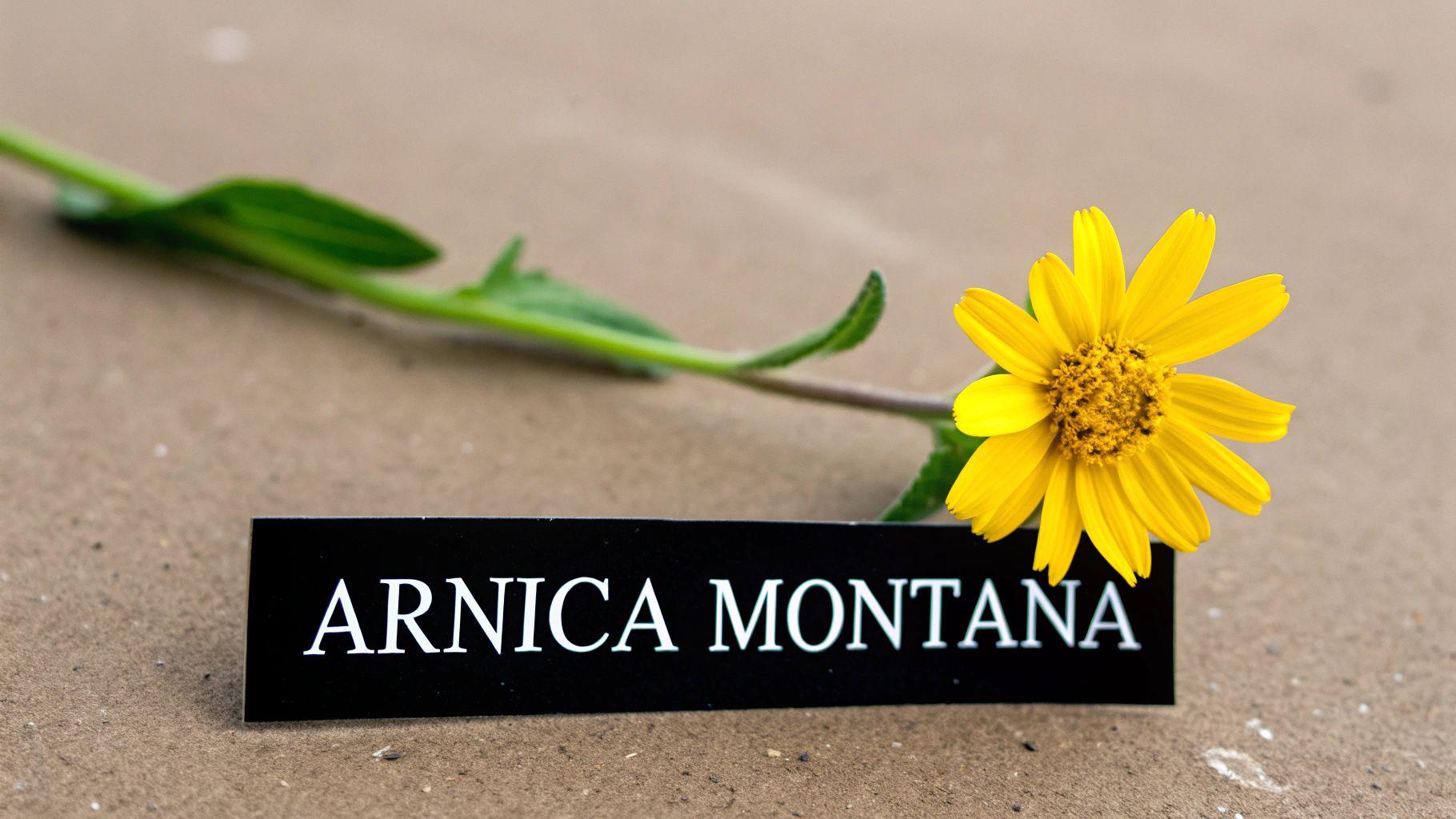
You’ve probably heard people mention arnica, but what is it, really? At its heart, Arnica montana is a perennial herb that loves the mountainous regions of Europe and North America. You might know it by its other name, “leopard’s bane”—a bright yellow, daisy-like flower that’s been a cornerstone of traditional herbal medicine for centuries.
Its reputation was built on its ability to soothe everyday aches and pains like sprains, sore muscles, and most importantly for our purposes, bruising. Some people think of it as an "herbal ice pack." Not because it's cold, but because it’s thought to help the body manage its natural response to the trauma of an injury or, in this case, a surgical procedure.
This natural, plant-based origin is exactly why so many patients ask about taking arnica before surgery. The hope is to give the body a head start in handling the physical stress of an operation, which could lead to a smoother, faster recovery with less visible bruising.
When it comes to using arnica for surgery, it’s absolutely vital to know the difference between its two main forms. Using the wrong one isn't just ineffective—it can be downright unsafe.
Here are the two types you’ll see:
When preparing for surgery, the focus is entirely on homeopathic oral arnica. Topical versions are off-limits until much later in your recovery, and only after your surgeon gives you the green light once your incisions have fully healed.
This distinction isn't just a minor detail; it's crucial for both safety and getting any potential benefit. The oral pellets are designed to work systemically (from the inside out), which is how they are intended to influence post-operative swelling and bruising. Using a cream on a healing wound would completely miss the mark and could cause serious complications.
So, the big question is: does arnica actually work? If you’re considering it before surgery, that’s exactly what you want to know. The answer, based on clinical research, isn't a simple yes or no. It's a bit more complicated, with studies showing everything from fantastic results to no effect at all.
Think of it this way: the gold standard for medical research is a “double-blind, placebo-controlled” study. It’s a fancy term that just means neither the doctors nor the patients know who’s getting the real arnica and who’s getting a sugar pill. This method is the best way we have to cut through personal bias and see what’s really happening.
One of the most encouraging studies out there looked specifically at facelift patients. This was a top-notch trial, and the results were pretty striking. It found that the patients taking arnica had significantly less bruising. How much less? We’re talking between 9.50% and 29.10% less ecchymosis (the medical term for bruising) on key post-op days compared to those who got the placebo. These are the kinds of numbers that make surgeons take notice.
But it’s important to look at the whole picture. For every study like the facelift one, there are others that didn't find such a clear benefit. Some research showed only a tiny, barely measurable improvement, while a few found no difference at all between arnica and a placebo for pain or swelling.
This doesn't automatically mean arnica is a bust. There are a few good reasons why the results can be all over the map:
When you weigh everything, the general consensus is this: while homeopathic arnica isn’t a magic bullet, there’s enough positive evidence to support trying it, especially because it has such a strong safety record.
To get a better sense of how it might work, it helps to look at other ways to reduce inflammation naturally. Arnica is thought to interact with the body's inflammatory response—the very thing that causes the swelling and bruising after surgery. It’s this ability to gently nudge the body’s own healing process in the right direction that keeps it in the toolbox for surgeons like Dr. Fater. They often see it as a "why not?" option: very low risk with a real potential for a more comfortable and faster visual recovery.
When you're thinking about taking any supplement before surgery—and that includes arnica—safety has to be the number one concern. The good news? Homeopathic arnica, which comes in tiny, highly diluted oral pellets, is considered very safe for most people and has a low risk of side effects.
The reason it's so safe comes down to how it's made. The homeopathic process dilutes the active compounds so much that what's left is more of a gentle nudge to your body's natural healing systems than a powerful drug. It's designed to help your body manage its own response to the trauma of surgery.
But there's a crucial distinction to make. This safety profile applies only to the homeopathic form. You should never, ever ingest the raw Arnica montana herb itself. In its undiluted, natural state, the plant is toxic and dangerous to consume.
Even though homeopathic arnica is generally safe, it's not the right choice for everyone. Being completely open with your surgical team is the best way to ensure your recovery is smooth and complication-free. Certain health conditions or medications just don't mix well with arnica.
You absolutely must talk to your surgeon about arnica if you:
Getting the full safety picture is essential, just as it is when weighing patient safety considerations for various aesthetic treatments. Your surgeon needs to know every single thing you're taking, from prescriptions and vitamins to herbal supplements. Some things help, while others can interfere. For instance, we cover another popular supplement in our guide on taking vitamin C before surgery.
The bottom line is simple: always tell your surgeon. Dr. Fater and his team believe in working together with their patients. Open communication about supplements like arnica ensures your treatment plan is tailored for a safe, successful outcome. Your honesty is a critical part of your own safety.
When you're getting ready for surgery, understanding the "how-to" of your prep can make you feel much more in control. With arnica, the process is pretty straightforward, but you need to follow a specific playbook—one that your surgeon must always sign off on.
The most common approach is to use oral homeopathic pellets, not the topical creams or gels you might have seen for everyday bumps and bruises. Think of it this way: you water a plant at its roots (oral pellets) to help the entire plant (your body) become stronger. Just rubbing a cream on the leaves (your skin) isn't going to prepare your internal systems for the stress of a procedure. That's why oral pellets are the go-to for the pre- and post-op period.
For surgical prep, you’ll almost always be looking for homeopathic oral pellets or tablets. These are designed to dissolve right under your tongue for quick absorption into your system.
You'll usually see them labeled with a potency like "30C," which tells you how diluted the preparation is. While 30C is a very common strength many surgeons recommend, it's definitely not a one-size-fits-all situation. The exact protocol will really depend on your surgeon's preference and what kind of procedure you're having done, from a facelift to body contouring. The most important thing is to be consistent and follow their medical advice, not just generic instructions you find online.
This image sums up the golden rules for using arnica safely.
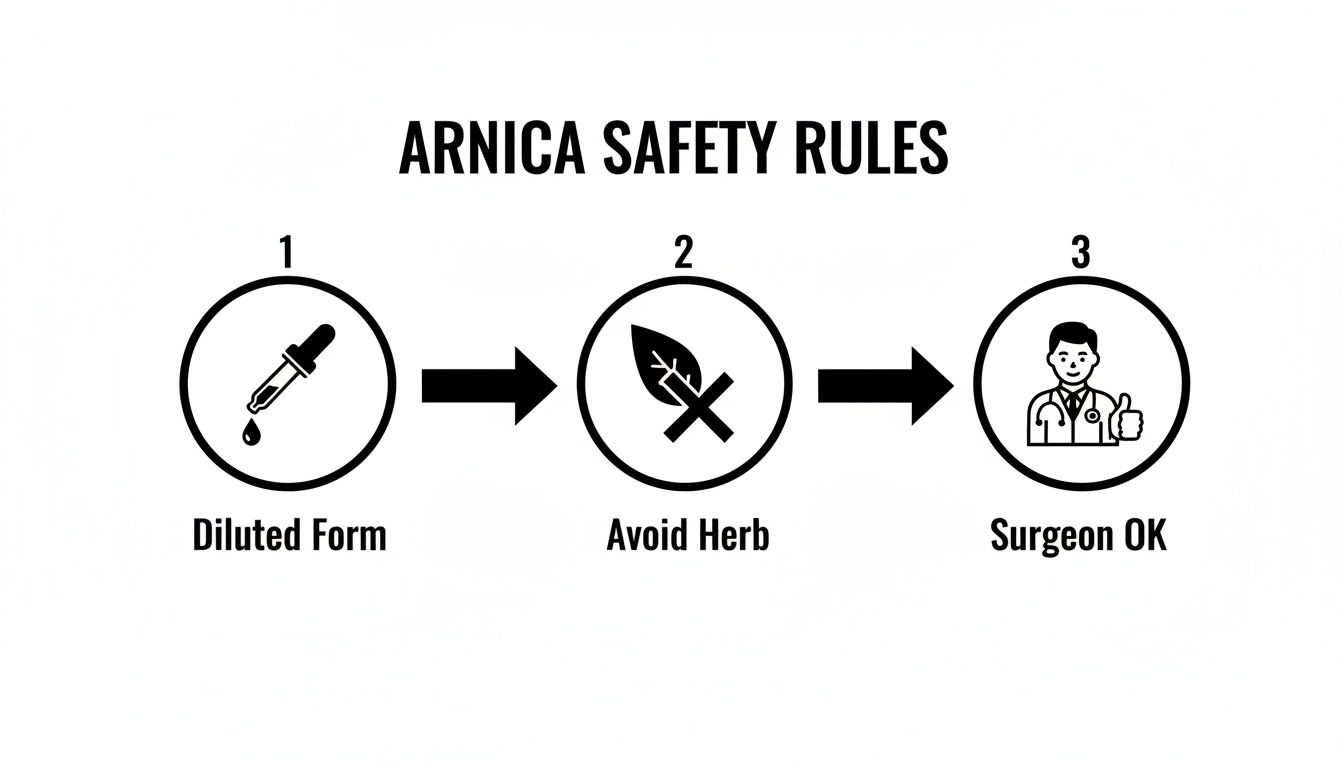
It’s a great visual reminder that you should only use safe, diluted forms, steer clear of the raw herb, and never, ever skip getting your surgeon’s approval.
Your surgeon will give you precise instructions, but a general protocol for using arnica before surgery often looks something like this:
What’s interesting is that the timing really seems to matter. A big meta-analysis that looked at 30 different studies found that while using arnica after surgery showed some real benefits, taking it beforehand as a preventative measure had a much smaller effect that wasn't statistically significant.
Keep in mind, this is just a general guideline. Your own health history and the specifics of your surgery are what truly count. Following the comprehensive advice in our guide on how to prepare for surgery is just as critical as any single supplement you might take. Your surgeon’s personalized plan should always be your primary source of truth.
When you’re thinking about taking any supplement before an operation, it’s always best to get an expert opinion. A board-certified plastic surgeon’s view on using arnica before surgery comes from a mix of clinical data and, just as importantly, years of hands-on experience with real patients. Most surgeons, like Dr. Marc Fater, look at supplements through a lens of evidence-based, holistic care.
From our point of view, homeopathic arnica is what we’d call a "low-risk, potential-reward" option. When used as directed, it has a very strong safety profile, which means there’s virtually no downside for a healthy patient. The potential upside, however, is a smoother recovery with less noticeable bruising, and that can make a huge difference in how a patient feels about their whole experience.
This is especially true for facial procedures—think facelifts or rhinoplasty—where even a little bit of bruising can feel very prominent.
Of course, the final call isn't a one-size-fits-all rule. It's a personalized decision. Before giving a patient the go-ahead, a surgeon will carefully look at a few key things.
This includes:
A surgeon’s job is to weigh the evidence, your health, and your specific procedure to make the safest recommendation. We want you to feel confident and comfortable, and sometimes, a simple supplement can contribute to that peace of mind.
There’s some interesting research that backs up this cautious optimism. A pilot study looking at dental surgery patients, for instance, found that those who took systemic arnica had a 35% relative improvement in their pain scores on the second day compared to those who didn't. While it was a small study, it's another piece of the puzzle that points toward a real, measurable benefit. You can read more about these findings on post-surgical recovery.
At the end of the day, our goal is a safe procedure and a smooth recovery. For the right person, arnica can be a small but helpful part of getting there.
As your procedure date gets closer, it's natural for practical questions about arnica to pop up. Understanding the science is one thing, but knowing the real-world dos and don'ts is another. Let's walk through the most common questions we hear from our patients, with quick, clear answers.
Think of this as your go-to guide for using arnica confidently and safely.
This is a firm and absolute no. Arnica creams, gels, and oils are only meant for skin that is completely intact and unbroken. Putting these products on an open wound or a fresh surgical incision can lead to some pretty nasty irritation, allergic reactions, and could even get in the way of proper healing.
Here’s an easy way to think about it: the oral homeopathic arnica works from the inside out, helping your body manage the trauma of surgery system-wide. Topical products are for surface-level stuff, like a simple bruise you might get from bumping into a coffee table—and only long after your surgical healing is well underway. Your incision is a no-go zone for anything your surgeon hasn't personally approved.
This is a super important distinction, and getting it right is crucial for your safety. They are completely different products and you should never, ever swap one for the other.
From everything we know right now, there are no known negative interactions between properly prepared homeopathic arnica and the standard anesthesia or pain medications we use in cosmetic surgery. Because it’s so diluted, it's highly unlikely to interfere with those more powerful drugs.
But that doesn't mean you should make the call on your own.
Your safety is our absolute top priority. You must get the final green light from both your surgeon and your anesthesiologist before taking any supplements, and that includes arnica. Full transparency isn't just a good idea—it's essential.
When you're buying any kind of supplement, quality is everything. Stick with reputable, well-known brands you can easily find at a pharmacy, health food store, or a major online retailer like Amazon. It's best to steer clear of sellers you've never heard of or products that make wild, over-the-top promises.
A great first step is to chat with your surgeon's office before you buy anything. They can often recommend a specific brand and potency (like 30C) to make sure what you're getting is up to snuff for use around your surgery.
At Cape Cod Plastic Surgery, Dr. Fater and our team are here to guide you through every single step of your surgical journey with care and expertise. To talk about your goals and map out a personalized plan, please schedule a consultation with us.
October 7, 2026
A Practical Guide to Healing After Breast Surgery

October 6, 2026
Your Safety Guide: What to Look for When Choosing a Plastic Surgeon

October 5, 2026
Why Our On-Site Accredited Facility Matters for Your Safety

Cape Cod Plastic Surgery offers expert cosmetic and reconstructive procedures in a safe, accredited setting. Led by Dr. Marc Fater, we combine advanced techniques with personalized care to help you look and feel your best.
Monday: 9:00 AM – 5:00 PM
Tuesday: 9:00 AM – 5:00 PM
Wednesday: 9:00 AM – 5:00 PM
Thursday: 9:00 AM – 5:00 PM
Friday: 9:00 AM – 5:00 PM