

October 7, 2026
What to Expect During Your Breast Surgery Recovery
A Practical Guide to Healing After Breast Surgery
Jul 26, 2026
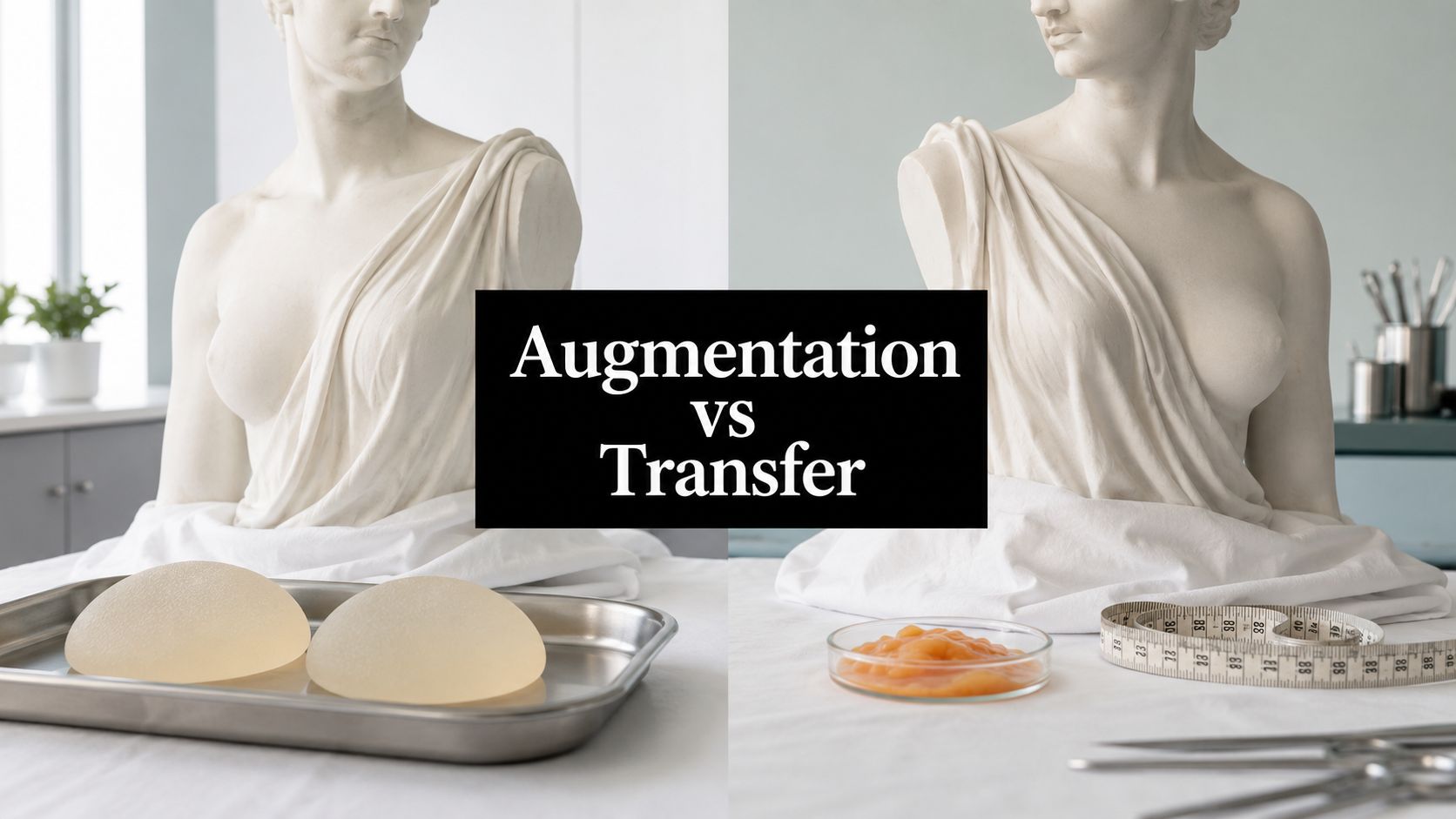
You're sitting in the consult room with a clear feeling but a fuzzy decision. You want your breasts to look better in clothes, maybe feel more balanced after pregnancy or weight change, but you don't want to pick the wrong operation and spend the next few years wishing you'd chosen differently. That's where breast augmentation vs fat transfer stops being a marketing question and becomes a surgical one.
In practice, the decision usually comes down to anatomy and expectations, not ideology. One patient wants a noticeable, predictable size change. Another wants a softer, more natural refinement using her own tissue. Both can be excellent choices, if the procedure matches the body and the goal.
| Criterion | Implants | Fat Transfer |
|---|---|---|
| Size change | Wider range, more predictable | More modest, less dramatic |
| Feel | Depends on implant type and tissue coverage | Uses your own tissue, often feels very natural |
| Scars | Small incisions, but still surgical scars | Tiny liposuction and injection scars |
| Procedure pattern | Usually single-stage | Often staged if a larger change is wanted |
| Maintenance | Long-term device planning | No implant device, but some fat is naturally reabsorbed |
| Imaging | Routine implant follow-up may be part of care | Breast imaging can be affected by graft-related changes |
Practical rule: if the goal is a clear jump in size, implants usually fit better. If the goal is a softer improvement and the patient has donor fat, fat transfer can be the cleaner match.
At Cape Cod Plastic Surgery in Hyannis, this conversation often starts with two very different women sitting down on the same afternoon. One is looking for a fuller breast shape that will hold a bra cup line and stay consistent from side to side. The other wants a subtler change, something that looks like her, just refreshed, and she strongly prefers using her own tissue.
The first patient usually leaves with a plan that favors implants. She's not asking for a whisper of change, she wants a result she can see, plan for, and photograph with confidence. The second patient often leans toward fat transfer because she cares more about softness, modest volume, and avoiding an implant altogether.
That split is how the decision should be made. Breast augmentation vs fat transfer is not really about which operation is “better,” it's about which one solves the actual problem in front of you.
A woman with limited donor fat and a clear size target usually does better with an implant discussion. A woman with enough donor fat, a smaller size goal, and a strong preference for a natural feel may be a better fat transfer candidate. In Dr. Marc Fater's practice, that means looking carefully at body type, skin quality, breast base width, and what the patient means when she says “natural.”
The most honest consultations are the ones where the desired outcome gets translated into surgical reality. A friend's result doesn't matter much if her anatomy and tolerance for staging were completely different.
A good consultation doesn't push one technique. It tests whether the desired result is actually achievable with that technique.
Two patients can ask for “breast enhancement” and end up in completely different operating rooms. One wants a reliable size increase and a breast shape that can be planned with precision. The other wants a smaller change, softer contours, and the use of her own tissue.
That difference starts with the operation itself. Breast augmentation vs fat transfer is not just a matter of preference, it is a matter of what each technique can physically deliver.
Implant-based augmentation uses a manufactured device, either saline or silicone. The surgeon places the implant through a surgical incision and chooses the pocket based on anatomy and the patient's goals, commonly subglandular or submuscular placement. The incision may be in the crease under the breast, around the areola, or in the armpit, depending on the plan.
In an accredited operating suite, this is often a single-stage operation. The implant size and profile are selected before surgery, so the patient and surgeon can agree on the intended change with a fair amount of precision. That predictability is one reason implants remain the more straightforward option for patients who want a clear increase in volume.
Autologous fat grafting starts with liposuction. Fat is removed from an area with extra volume, processed, then injected into the breast in small parcels. That parcel-by-parcel placement matters because the graft has to establish a blood supply in order to survive.
The procedure has three parts, harvest, processing, and reinjection, and each step affects the final result. It can look very natural in the right patient, but it is less direct than implant augmentation, which is why the size change is usually more modest.
Major guidance notes that fat transfer to the breast is generally best suited to about a half-cup to full-cup increase, rather than a large size jump, and is a more modest-volume procedure than implants (American Society of Plastic Surgeons). For readers who want a closer look at candidacy and technique, this practice's overview of fat transfer breast enhancement is a useful companion.
That same size limitation is why I talk about fat transfer as a refinement procedure. It can improve softness and proportion, and in some women it is exactly the right choice. It does not give the same level of control over projection, upper fullness, or total volume that an implant does, and patients should hear that plainly before they choose.
The comparison also extends beyond the breast itself. Because fat transfer depends on donor areas, a patient who is also interested in contouring elsewhere may discuss body contouring options, including buttock enhancement services, as part of a broader surgical plan. That is a different conversation from implant planning, which is centered on breast shape, pocket choice, and implant selection.
| Criterion | Implants | Fat Transfer |
|---|---|---|
| Size change | Wider range, more predictable | More modest, generally half-cup to full-cup |
| Shape control | Strong control over projection and upper fullness | Softer, more natural contour, less dramatic shaping |
| Feel | Depends on implant type and coverage | Uses the patient's own tissue |
| Scarring | Small incisions, still a surgical scar | Tiny liposuction and injection scars |
| Procedure count | Usually one operation | May require staging if a larger result is wanted |
| Predictability | High | More variable because some fat is reabsorbed |
If the patient wants a noticeable size change, implants usually win that conversation. If she wants the softest possible feel and is comfortable with a smaller change, fat transfer often fits better. That's the simplest useful frame, and it's the one patients understand once the emotion of the decision settles down.
Implants are easier when a patient wants a defined upper pole, more cleavage, or a specific bra size target. The surgeon knows what volume is going in, so the result is easier to plan. Fat transfer can improve shape, but it doesn't give the same level of architectural control.
That's why I talk about fat transfer as refinement surgery more than volume surgery. It can improve proportion and softness, but it's not the operation I'd pick for someone who wants a dramatic enlargement.
Fat transfer adds a second surgical site, because liposuction and breast injection are both part of the case. Implants are more straightforward from a body-mapping standpoint, but the operation still comes with standard surgical recovery and long-term planning.
For patients who care about the least obvious footprint, the body's own tissue is a compelling option. For those who care about getting to the goal in one pass, implants usually feel more decisive.
If you want a broader sense of body contouring combinations, buttock enhancement services are sometimes discussed alongside breast enhancement in the same consult, especially when a patient is comparing how much donor fat she has available and where she wants volume added.
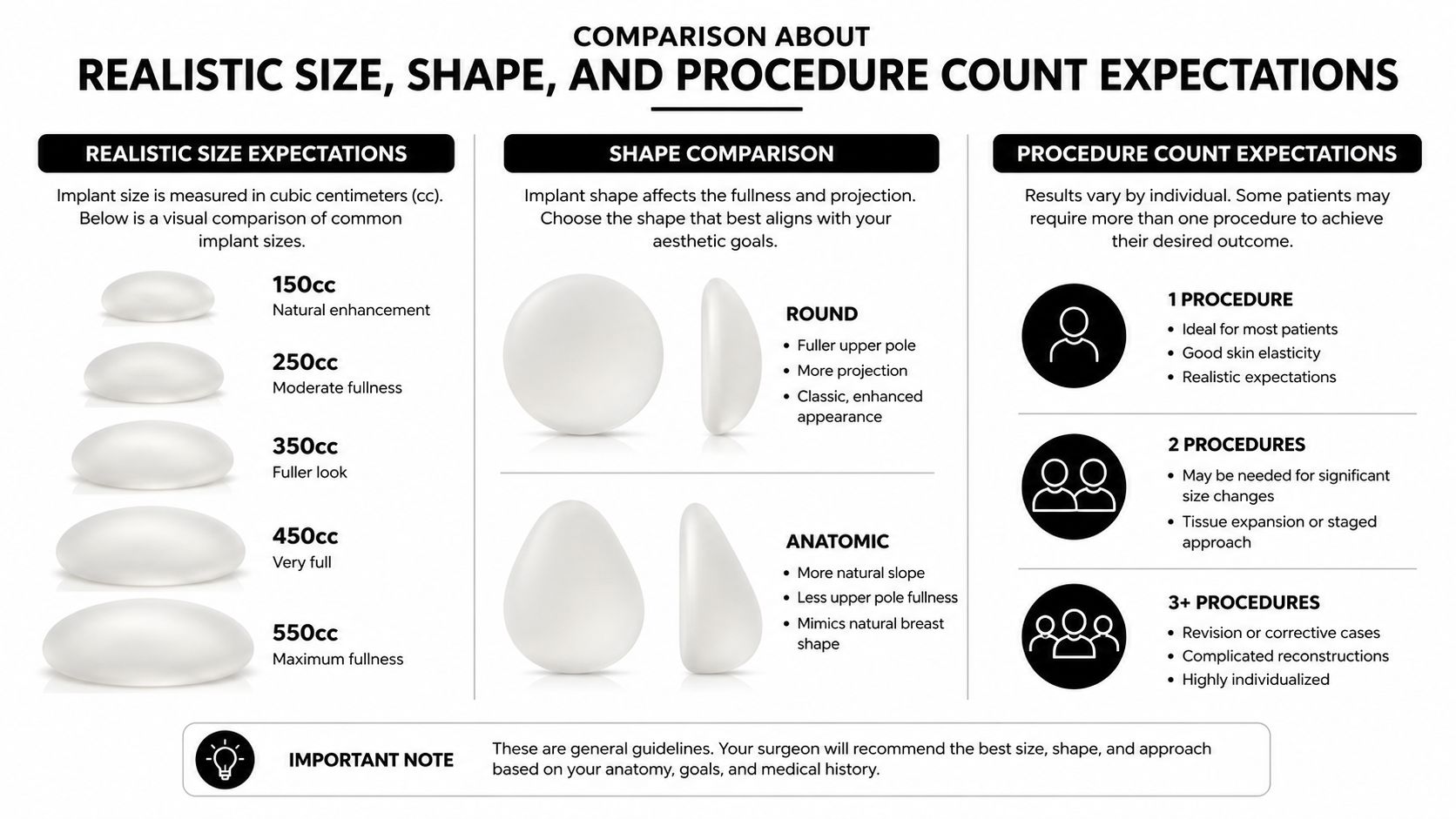
The hardest part of this decision is not the surgery itself. It is matching the operation to the amount of change a patient really wants. A woman may say she wants a natural look, but in the consult that often means she wants modest fullness without an obvious implant edge, not a subtle contour change that other people barely notice.
Fat transfer does not keep every cell that is placed. I explain this plainly in the room, because patients need to hear that a larger breast result may require 2 to 3 procedures, since some of the transferred fat is naturally reabsorbed and reported retention is typically about 50% to 70% (American Society of Plastic Surgeons). The technique works within biology, not against it.
That is why a patient who wants a major size increase should be cautious about treating fat transfer as a full substitute for implants. It can be a good operation for the right goal, but it usually builds volume more slowly and to a smaller endpoint than an implant plan.
A randomized clinical trial from the Netherlands enrolled 193 patients from 7 hospitals and compared autologous fat transfer with implant-based reconstruction (JAMA Surgery). The study found higher BREAST-Q quality-of-life scores in all 5 domains for fat transfer, with statistically significant advantages in 3 of 5 domains, and fewer complications in the fat transfer group. Those findings support what many surgeons see in practice, tissue-based reconstruction can feel more natural to some patients, even when the volume change is more restrained.
The same trial also found that breast volumes remained slightly smaller with AFT, at 300.3 mL versus 384.1 mL for implants, and it reported no evidence of increased oncological risk at 12 months after the last reconstructive procedure (JAMA Surgery). That is the trade-off in plain terms. Some patients will prefer the feel and satisfaction of fat transfer, while others will value the more predictable volume that implants provide.
If you want to compare your own goal with a size chart, this practice's breast implant size guide gives a more concrete way to think through implant volume before the consult. In the same discussion, some patients are also trying to understand body contouring options elsewhere, including how Sculptra butt lift works, because donor fat availability and where they want added volume often shape the final plan.
The right question is not “Which is better?” It is “How much change do I want, and how many steps am I willing to take to get there?”
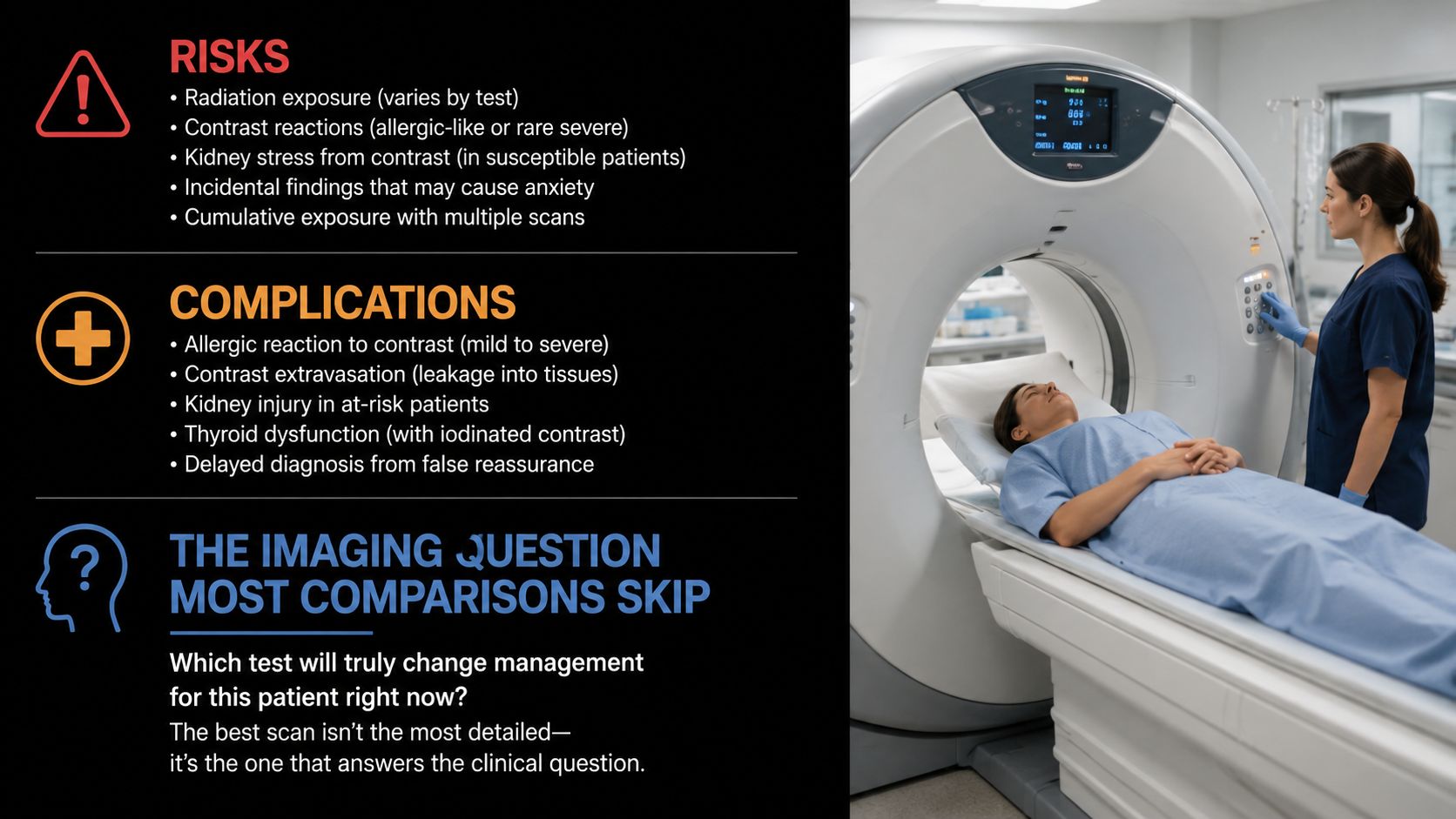
The online comparison usually stops at scars and downtime. In the office, patients ask a more practical question, what happens during future breast imaging? That question matters, because fat transfer and implants create different follow-up issues, and those differences can affect how a radiologist reads the study.
A major academic surgery FAQ notes that fat grafting can affect mammography by causing calcifications, cysts, and redistribution of breast tissue (Washington University in St. Louis). It also says protocols for safe and effective cosmetic breast fat grafting are still being developed. In the same discussion, the American Society of Plastic Surgeons supports fat grafting for reconstruction contouring but does not endorse it for cosmetic augmentation (Washington University in St. Louis).
That does not remove fat transfer from consideration. It means the decision has to include screening, follow-up, and the likelihood that a patient will need imaging interpreted in the setting of prior grafting, especially if she already gets routine breast surveillance.
In the systematic review cited in the medical guidance, the most commonly reported issues were fat necrosis, cysts, and lumps (American Society of Plastic Surgeons). Those findings are often benign, but they can still create diagnostic noise. A radiologist may need more context after fat grafting than after a breast that has not undergone surgery.
Implants bring their own standard concerns, including capsular contracture, rupture, and the simple fact that they are devices, not permanent body parts. Depending on the implant type and the patient's situation, imaging follow-up can also become part of long-term implant care.
Cost planning sits in the same conversation. A practical breast implants price range guide helps patients understand how the device choice can affect the overall financial picture before they ever schedule surgery.
The straightforward answer is as follows. A natural-tissue approach asks patients to accept a different imaging conversation and the possibility of benign changes that need interpretation. An implant asks patients to accept device maintenance and the chance of future revision. In consults, I frame it this way, choose the trade-off you can live with, because both options carry follow-up, just in different forms.
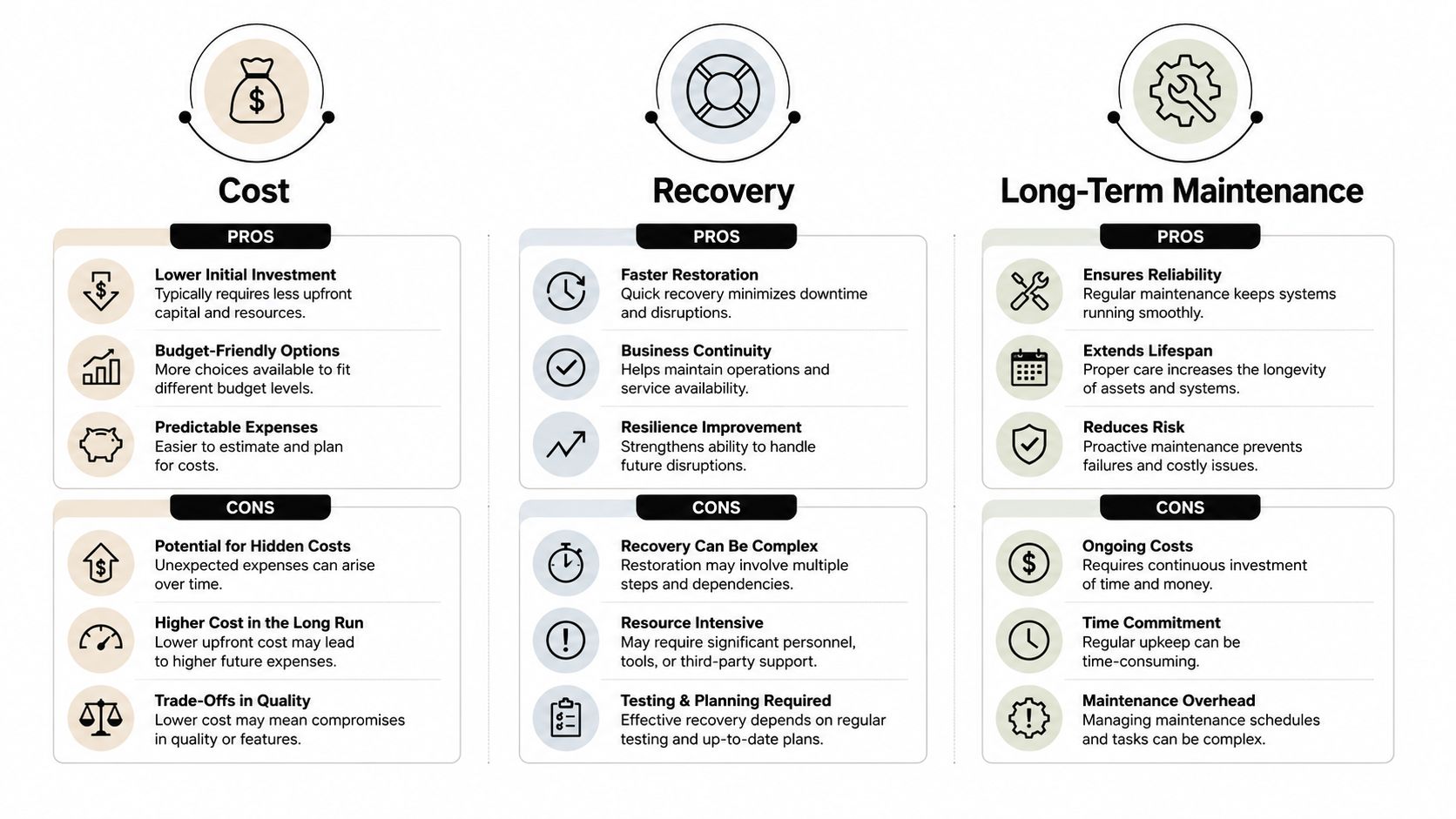
The practical part of this decision is rarely glamorous. Patients want to know how much time they'll lose, how many times they'll be back, and whether they're choosing a device they'll need to think about again later.
Implants are usually the more direct path from surgery to result. Recovery commonly means about a week away from work, with activity restrictions for several weeks, and the long-term understanding that implants are not lifetime devices. Most patients eventually face revision or replacement at some point.
If you want a grounded look at how that planning affects the financial side, this practice's breast implants price range gives context for how patients think about the choice before they ever enter the operating room.
Fat transfer is more complex up front because it combines liposuction with reinjection. The recovery includes both the harvest sites and the breast, so patients have to think about the whole body, not just the chest. If a second session is needed, the total cost and downtime change accordingly.
That's why some patients do the math twice. They compare a single implant operation with a potentially staged fat grafting plan, then decide whether the natural feel and smaller scars are worth the extra procedural layer. For a reader comparing tissue-based augmentation with other regenerative aesthetic options, how Sculptra butt lift works is a useful example of how staged volume strategies are discussed in body contouring.
The useful question is not which option is cheaper in isolation. It's which option fits the amount of change you want without dragging you into more surgery than you're willing to accept.
A patient who is a strong implant candidate usually has one clear goal. She wants a predictable result in a single operation, needs more volume than fat transfer can usually provide, and has limited donor fat to work with. She also understands that an implant is part of a long-term plan, not a one-and-done solution.
A patient who is a strong fat transfer candidate looks different. She has enough donor fat to harvest, wants a modest increase rather than a dramatic size change, and prefers the feel of her own tissue over a larger implant-based result. She also has to accept that one session may not be enough, because some cases need a second round to reach the size and shape she wants.
Many patients fall between those two descriptions. In those borderline cases, I do not decide on anatomy alone. Scarring, tissue feel, follow-up expectations, and a patient's comfort with staged procedures often matter just as much as the exam.
Before the consult, I ask three blunt questions:
Those questions usually frame the decision better than a feature list does. A woman who wants a larger, more immediate change often fits implants better. A woman who wants a smaller change, has enough donor fat, and prefers a softer tissue result often fits fat transfer better.
Cost can also change the conversation, especially if the patient is thinking about a staged plan. If she wants a sense of how those cases are priced, see Spa Black's fat transfer pricing. That kind of comparison helps patients judge whether the extra step of harvesting and reinjection still makes sense for their goals.
If you are unsure, that is normal. The right answer usually becomes clear once the exam, the imaging discussion, and the size goal are all on the table at the same time. Cape Cod Plastic Surgery offers both implant-based augmentation and fat transfer planning, which lets those trade-offs be discussed carefully and in plain language.
If you're weighing breast augmentation vs fat transfer and want a straight answer based on your body, your imaging needs, and the result you want, schedule a consultation with Cape Cod Plastic Surgery. You'll get a candid surgical assessment of what's realistic, what isn't, and which option fits your anatomy instead of someone else's result.
October 7, 2026
A Practical Guide to Healing After Breast Surgery

October 6, 2026
Your Safety Guide: What to Look for When Choosing a Plastic Surgeon

October 5, 2026
Why Our On-Site Accredited Facility Matters for Your Safety

Cape Cod Plastic Surgery offers expert cosmetic and reconstructive procedures in a safe, accredited setting. Led by Dr. Marc Fater, we combine advanced techniques with personalized care to help you look and feel your best.
Monday: 9:00 AM – 5:00 PM
Tuesday: 9:00 AM – 5:00 PM
Wednesday: 9:00 AM – 5:00 PM
Thursday: 9:00 AM – 5:00 PM
Friday: 9:00 AM – 5:00 PM