

October 7, 2026
What to Expect During Your Breast Surgery Recovery
A Practical Guide to Healing After Breast Surgery
Sep 8, 2026
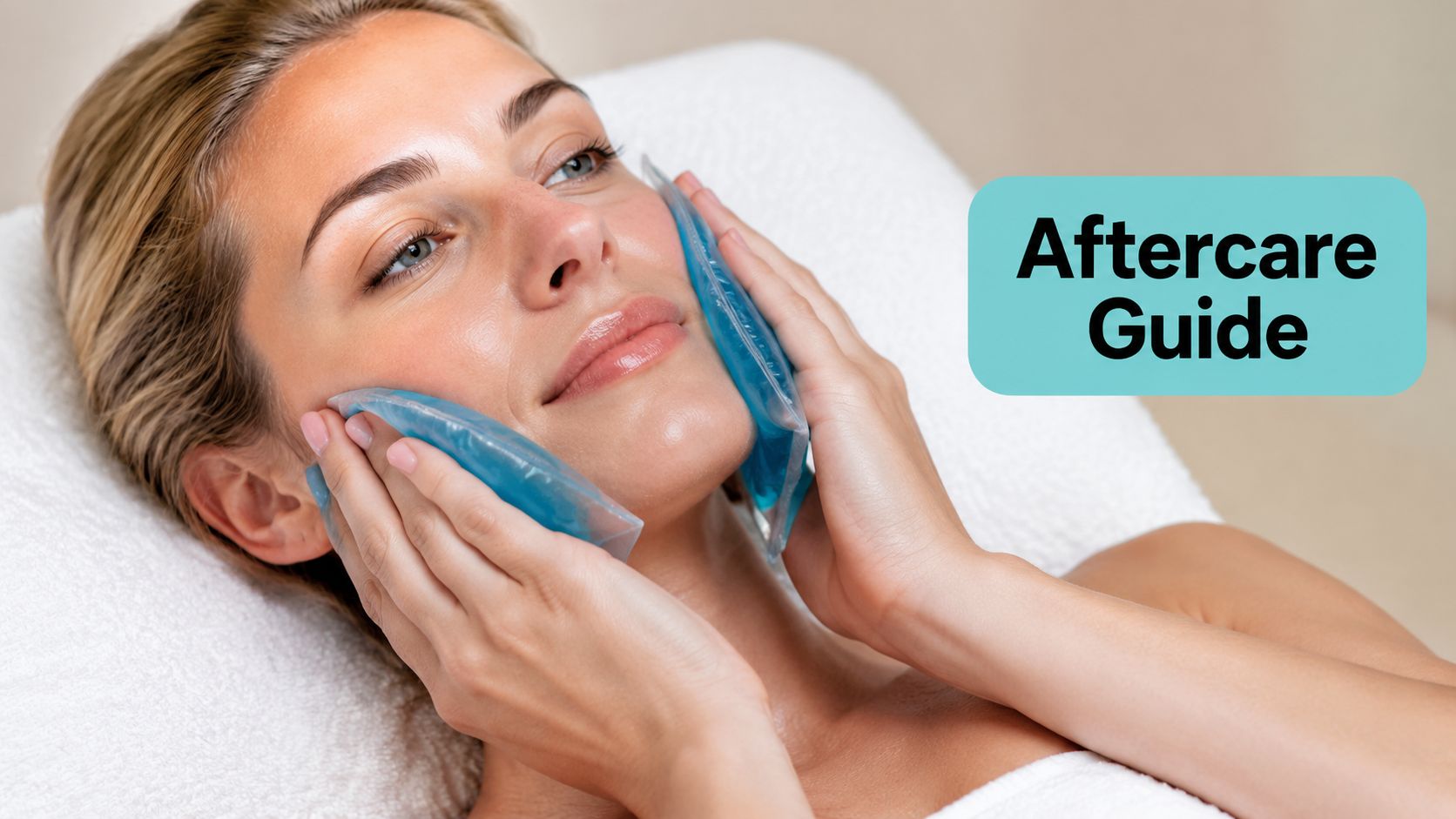
You're in the car after your dermal filler appointment, checking your reflection at every red light. Your lips, cheeks, or jawline may look fuller than expected, one side may appear slightly different, and the injection points may feel tender or firm. That first impression can be unsettling, but early swelling isn't the finished result.
Good dermal fillers aftercare is less about complicated products and more about protecting the treated tissue while it settles. The first 6 hours, the first 24 to 48 hours, and the following two weeks each call for slightly different decisions. You'll need to know what to leave alone, how to reduce ordinary discomfort, and which changes require immediate medical attention.
A patient may leave the treatment room looking polished, then notice more swelling once the local anesthetic wears off. Mild redness, tenderness, bruising, temporary firmness, and unevenness can all occur around the injection sites. Hyaluronic acid fillers also bind water, so hydration can influence how the treated area feels and looks while the product integrates into surrounding tissue.
The early appearance can exaggerate the final volume, particularly in areas that swell easily. A fuller lip or a slightly uneven cheek during the first several days doesn't automatically mean too much filler was placed. The practical mistake is judging the result too soon or trying to correct it by pressing, rubbing, or repeatedly examining the area with your fingers.

During the first day, swelling, redness, and tenderness are usually the most noticeable. Bruising may become more visible before it begins to fade, and a small area of firmness can remain as the filler settles. By the end of the first week, many routine reactions are improving, while residual firmness or asymmetry may continue to soften.
A useful clinical reference is the dermal fillers overview covering types, results, and safety. It's important to remember that healing doesn't stop when the visible needle marks disappear. One post-care instruction sheet notes that hyaluronic acid filler may remain malleable for up to 2 weeks, which is why pressure and manipulation still matter after the initial swelling has eased (post-care instructions for hyaluronic acid filler).
The reason clinicians emphasize simple precautions is grounded in real surveillance data. A U.S. FDA database study covering 10 years identified 3,782 filler-related complications, including reported nodules, infections, inflammation, allergic complications, and vascular complications (FDA adverse-event surveillance analysis). Aftercare isn't cosmetic fussiness. It's a way to reduce avoidable pressure, heat, and inflammation while the tissue is vulnerable.
The first day calls for restraint. Most patients don't need an elaborate recovery kit, but they do need to avoid the habits that create extra swelling, bruising, irritation, or pressure on the treated area.
Leave the area alone for at least 6 hours. Don't poke, pinch, rub, or massage the filler unless your injector specifically tells you to. Feeling a small ridge or firm spot can create an urge to “smooth” it, but unplanned manipulation can irritate the tissue and may affect placement.
Keep the skin clean. If you need to cleanse, use a gentle product and light fingertips around the injection sites. Don't scrub, exfoliate, or use a cleansing brush. Avoid makeup for about 24 hours, particularly while injection points are still fresh.
Use a cold compress correctly. Wrap a clean cold pack in fabric rather than placing ice directly on the skin. Apply it for short intervals, then remove it. Cooling can help with swelling and comfort, but prolonged pressure or intense cold isn't a better treatment.
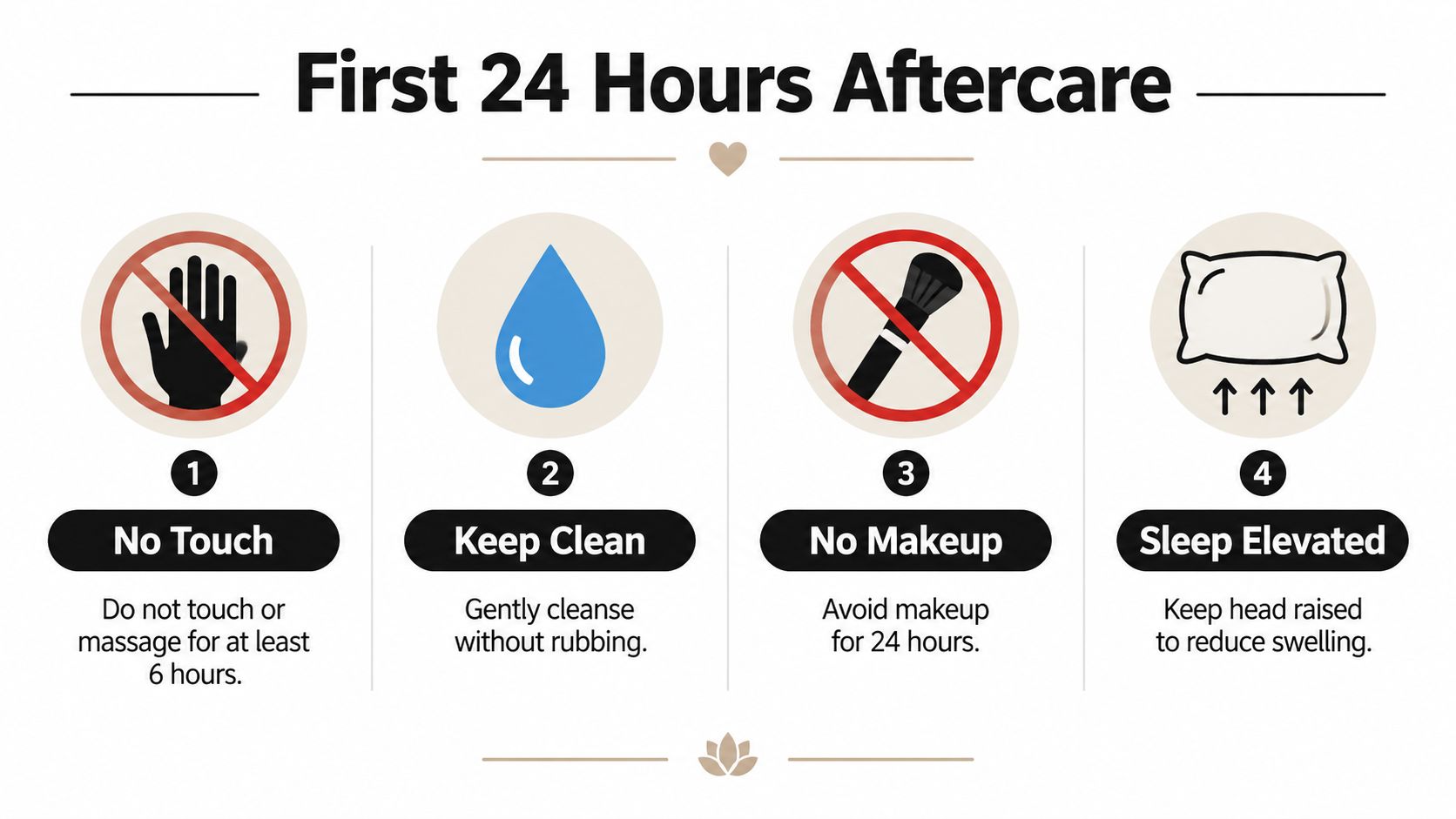
Keep your head raised while resting. Sleep on your back if possible, with your head raised rather than pressed into a pillow. Avoid sleeping face-down or placing direct weight on treated cheeks, lips, or the side of the face.
Skip heat, alcohol, and vigorous activity. Heat from saunas, hot showers, steam rooms, and direct sun can increase blood flow. Alcohol and strenuous exercise can also worsen swelling and bruising, so pause them during the early recovery window.
Practical rule: If an activity makes your face hot, flushed, sweaty, or compressed, postpone it and ask your injector when it's appropriate to resume.
The clinical logic is straightforward. Cold compresses and elevation support comfort, while avoiding touch, heat, alcohol, and exertion reduces the factors that can intensify edema and bruising. Guidance commonly recommends limiting strenuous exercise for 24 to 48 hours and avoiding alcohol for 24 to 48 hours (clinical dermal filler recovery guidance).
Watch the video below for a visual review of basic immediate care.
Swelling often feels more prominent when you wake up, especially after lying flat. Bruising can also deepen in color before it starts to clear. Neither change means you should massage the area or apply aggressive treatments.
Use a cold gel pack wrapped in a clean cloth. Rest it lightly over the area for short intervals, without pressing down on the filler. Keep drinking water, eat normally, and avoid alcohol and activities that significantly raise your heart rate during the early recovery period.

The first night can be uncomfortable if you're used to sleeping on your side or stomach. Prop your head up and try to avoid compressing the treated area. Clean pillowcases can also reduce contact with contaminants while the injection sites settle. For broader guidance on keeping bedding and nighttime skin contact cleaner, this guide by SouthShore Fine Linens offers useful practical context.
Mild tenderness and temporary firmness are expected after injections. Small variations between the two sides may reflect different levels of swelling rather than a problem with the filler itself. Use your provider's instructions for any medication or supplement, and don't add a bruising remedy just because someone online recommended it.
For more targeted advice, see this guide to reducing swelling after lip fillers.
Trying to speed healing by rubbing, kneading, heating, or repeatedly checking the treated area usually creates more irritation, not faster settling.
Call your provider if swelling is getting worse instead of gradually improving, or if tenderness becomes severe. Routine bruising and puffiness should follow a healing pattern. A change that moves in the opposite direction deserves professional review.
A simple calendar is more useful than a blanket instruction to “take it easy.” Light daily activity is usually different from strenuous exercise, and avoiding a hot shower is different from avoiding all washing. The key questions are whether an activity raises blood flow, creates direct pressure, exposes the area to heat, or involves manipulation.
| Activity | Avoid For | Why It Matters |
|---|---|---|
| Strenuous exercise | 24 to 48 hours | Increased blood flow can worsen swelling and bruising. |
| Saunas, steam rooms, hot showers, and direct heat | About 24 to 72 hours | Heat can intensify flushing, edema, and tenderness. |
| Alcohol | 24 to 48 hours | It can contribute to bruising and swelling. |
| Makeup | About 24 hours | Waiting reduces irritation while injection sites settle. |
| Facials, massage, and aggressive skin treatments | At least 1 to 2 weeks, unless your provider advises otherwise | Pressure and manipulation may irritate tissue or affect settling. |
| Dental work, vaccines, or other inflammatory procedures | Commonly 2 to 4 weeks | Mouth and facial manipulation, or another inflammatory trigger, can complicate early recovery. |
| Sleeping face-down or direct facial pressure | Avoid during the early healing period | Compression can irritate treated tissue and may affect areas that remain malleable. |
The up to 2-week malleability window is easy to overlook. A tight mask, a massage appointment, sleeping with one cheek pressed into a pillow, or a dental procedure can create more pressure than patients realize. If you can schedule filler around these events, do so. If you can't, ask the treating clinician for individualized timing rather than guessing.

A short walk is a different choice from running, hot yoga, or heavy lifting. Gentle cleansing is different from a facial massage. You can usually return to ordinary routines gradually, but keep direct heat, intense exertion, and facial pressure out of the plan until the recommended window has passed.
Follow the stricter instruction when your injector gives you a treatment-specific restriction. Lip, cheek, under-eye, and jawline treatments don't all respond identically, and the product, injection depth, and amount of tissue manipulation can change the advice.
Most early filler reactions are mild and self-limited. Swelling, bruising, redness, tenderness, and temporary firmness can be monitored when they remain mild and follow a steady improvement pattern.
Urgent warning signs look different. Severe or escalating pain, especially pain that seems out of proportion to the visible swelling, requires immediate contact with your provider. So does skin that becomes white, blue, gray, or mottled, or an area that appears unusually pale or develops a concerning color change.
Vision changes are an emergency warning sign after facial filler. Blurred vision, partial or complete visual loss, unusual visual disturbance, or associated eye symptoms should never be watched at home while waiting for improvement. A vascular complication can require rapid escalation, so contact the treating practice immediately and follow its emergency instructions.
The dermal filler aftercare guidance from Rixis Dermatology also flags severe pain, white or blue mottling, and vision changes as urgent signs of possible vascular compromise. Don't massage a discolored area or apply heat while trying to fix it yourself.
Other reasons to contact your provider promptly include increasing swelling after the early phase, spreading warmth, drainage or pus, fever, or a firm lump that isn't softening. Delayed inflammatory reactions and infections need assessment rather than online troubleshooting.
Do not wait for a routine follow-up if pain, skin color, or vision changes suddenly worsen.
Persistent nodules or noticeable asymmetry beyond about 2 weeks should prompt reassessment, even if the issue isn't painful. A clinician can distinguish residual swelling, product irregularity, inflammation, infection, or another concern by examining the area directly.
The broader FDA-data record includes 3,782 reported soft-tissue filler complications, while a separate systematic review reported 8,795 complications, 1,076 adverse events, and two severe cases in its dataset (systematic review of dermal filler complications). Those figures don't tell you what will happen in an individual appointment. They do support a sensible approach, remain calm about ordinary reactions, but escalate unusual or severe symptoms quickly.
Filler results evolve rather than appearing all at once. Early volume includes the product itself plus treatment-related swelling. As tenderness, bruising, and edema settle, the treated area generally looks more balanced and natural. Residual firmness or mild unevenness can continue changing through the two-week reassessment point, when persistent concerns should be discussed with your injector.
Long-term care is uncomplicated, but consistency matters:
Most aftercare advice targets common swelling, bruising, tenderness, and irritation rather than guaranteeing protection from rare complications. That distinction matters. Simple precautions are worthwhile, but they never replace prompt assessment when pain, skin color, infection symptoms, or vision changes appear.
For maintenance planning, review how long dermal filler can last. Your treatment area, product, metabolism, movement, and clinical plan all influence when reassessment makes sense.
Cape Cod Plastic Surgery offers personalized consultations, dermal filler treatments, and post-treatment guidance for patients who want clear instructions from the first six hours through the settling period. Visit Cape Cod Plastic Surgery to discuss your goals, treatment options, and an aftercare plan tailored to your face and schedule.
October 7, 2026
A Practical Guide to Healing After Breast Surgery

October 6, 2026
Your Safety Guide: What to Look for When Choosing a Plastic Surgeon

October 5, 2026
Why Our On-Site Accredited Facility Matters for Your Safety

Cape Cod Plastic Surgery offers expert cosmetic and reconstructive procedures in a safe, accredited setting. Led by Dr. Marc Fater, we combine advanced techniques with personalized care to help you look and feel your best.
Monday: 9:00 AM – 5:00 PM
Tuesday: 9:00 AM – 5:00 PM
Wednesday: 9:00 AM – 5:00 PM
Thursday: 9:00 AM – 5:00 PM
Friday: 9:00 AM – 5:00 PM