

September 9, 2026
How to Care for Surgical Incisions Properly
Expert Guide to Proper Surgical Incision Care
Jun 27, 2026
You may be standing in front of a mirror, gently lifting your breasts with your hands and wondering whether there's a way to restore shape and fullness without implants. Maybe your breasts changed after pregnancy, weight change, or with time. Maybe you want enhancement, but you still want to look like yourself in a swimsuit at Craigville Beach or in everyday clothes around Cape Cod.
That's where fat transfer breast enhancement often enters the conversation. It appeals to patients who want a softer, subtler change and who like the idea of using their own tissue instead of an implant. As a surgeon, I find that most confusion comes from one simple question: “How can fat from one place become volume in another?” Once you understand that, the rest becomes much less intimidating.
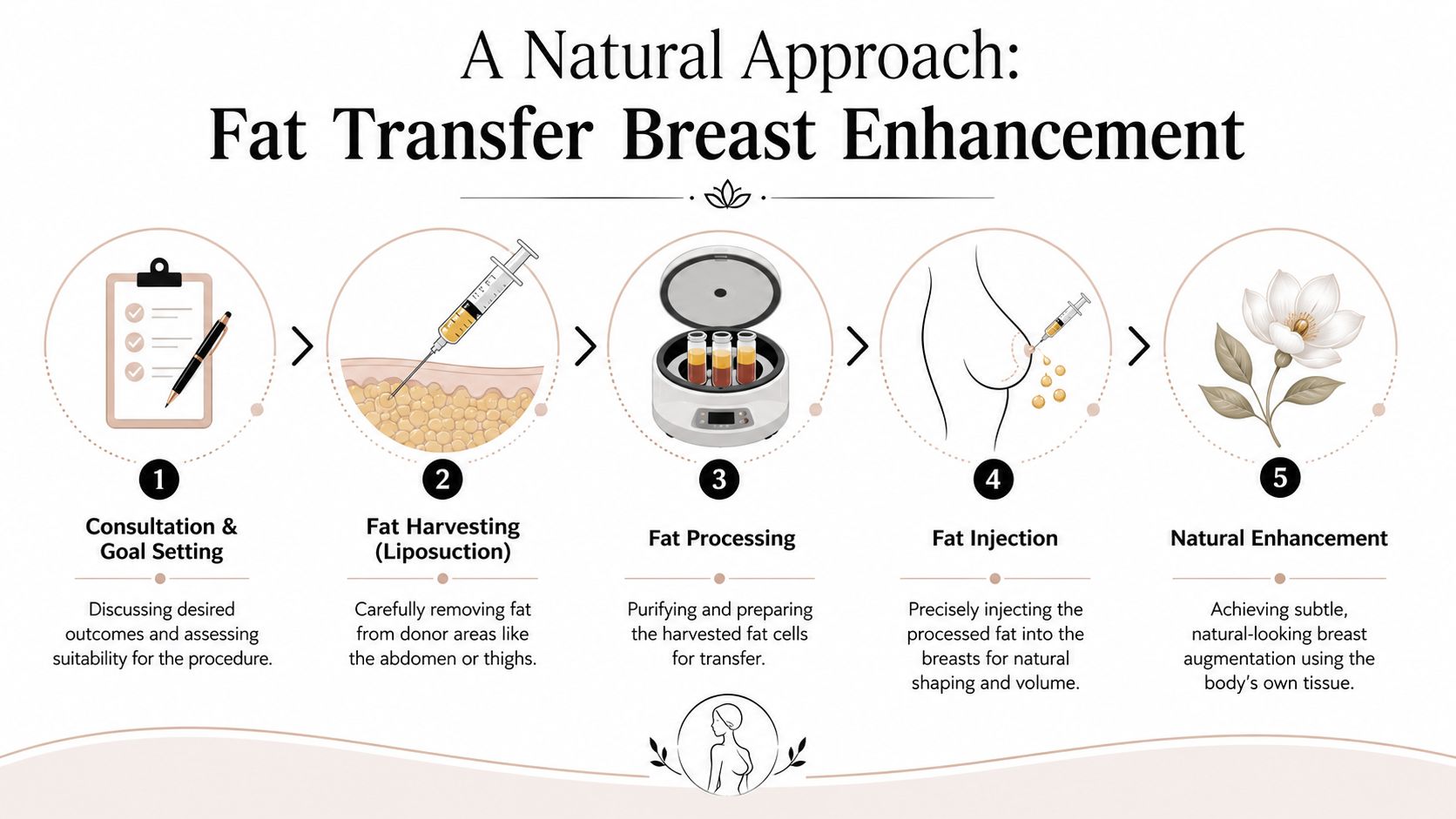
Fat transfer breast enhancement uses your own fat to add shape and volume to the breasts. Fat is removed from an area where you have a little extra, such as the abdomen, flanks, or thighs. That fat is then cleaned, prepared, and carefully placed into the breasts in small amounts.
A simple way to think about it is this: we're relocating your own natural resources. Instead of bringing in a manufactured device, we take living tissue from one area and move it to another area where it can improve contour.
For many patients, that “two-in-one” quality is part of the appeal. The donor area can look more sculpted after liposuction, while the breasts gain soft, natural-looking fullness. The goal usually isn't a dramatic transformation. It's refinement.
Because the transferred material is your own fat, the breasts typically feel like natural breast tissue. There's no implant shell. There isn't a foreign device sitting under the skin. That matters to patients who want a result that blends with their body rather than announcing itself.
This also makes the artistry of the procedure important. A good result isn't just about adding volume. It's about where volume is added, how symmetry is improved, and how the breast shape fits the rest of your frame.
Patients often come in looking for one or more of these benefits:
Fat transfer is often less about making you look different and more about helping you look restored, balanced, and comfortable in your own body.
For many women on Cape Cod, that feels like the right aesthetic. They want to look refreshed in a sundress, bathing suit, or fitted top, not overdone. Fat transfer breast enhancement can be an elegant option when those are the goals.
Not everyone is an ideal candidate for fat transfer breast enhancement, and that's not a judgment. It's anatomy and goals. The best candidates usually have enough donor fat to harvest and want a modest increase in breast volume.
If you're very lean, there may not be enough extra fat to remove and transfer. If you want a much larger change in size, implants may match your goal more closely. Good planning starts with being honest about both your body and your expectations.
A strong candidate usually checks several boxes:
A helpful rule of thumb: the ideal patient has enough donor fat, wants a modest enhancement, and prefers a natural result over a more dramatic size change.
Patients sometimes ask whether they should lose weight first. Usually, I recommend getting close to a stable, maintainable weight before surgery. If you're actively changing your body composition, preserving healthy tissue matters. For people working on that phase of their health journey, guidance on effective muscle preservation techniques can be useful because it supports a steadier foundation before any body contouring procedure.
Fat transfer may be less suitable if:
Another group that needs thoughtful evaluation is patients with significant breast sagging. In some cases, volume alone won't address the shape issue, and a lift may be part of the conversation.
The most satisfying outcomes happen when the surgical plan matches the patient's actual anatomy, not just the wish list in her head.
Surgery day usually feels less mysterious once you know the sequence. The procedure has three main parts: harvesting the fat, preparing it, and placing it into the breasts. Each step has its own purpose, and each one affects the final result.
After anesthesia, the first phase is liposuction. The donor area has already been chosen during your consultation, often based on where you carry extra fullness and where contouring would be welcome. Small access points are used to remove fat carefully with a thin instrument called a cannula.
This is not the same as aggressive fat removal done solely to reduce volume. The technique matters because the surgeon is collecting fat cells that need to remain healthy enough for transfer. In other words, we're not just removing tissue. We're harvesting living cells.
Patients who want a broader overview of shaping areas like the abdomen, flanks, and thighs may find this explanation of how body contouring works helpful, because donor-site planning plays a meaningful role in the final aesthetic.
Once the fat is collected, it has to be purified. The harvested material contains more than just fat cells. It can also include fluid, oil, and other elements that we don't want to inject back into the body.
The goal is to isolate the healthiest, most usable fat. Some surgeons use centrifugation. Others use filtration systems. Either way, the principle is simple: separate what's useful from what isn't.
It's akin to rinsing and sorting seeds before planting a garden. You want the strongest material going into the soil.
The final phase is where the artistry becomes most visible. Fat isn't poured into the breast in one large pocket. It's placed in small, careful layers throughout the tissue. This helps create smooth contour, supports blood supply, and reduces the chance of irregularity.
That layered approach is why surgeon experience matters so much. The procedure is part science and part sculpture. A surgeon has to judge shape, proportion, softness, cleavage, upper-pole fullness, and symmetry while respecting the limits of the tissue.
A beautiful result usually comes from restraint, not excess. The surgeon has to place fat where it will look elegant and where it has the best chance to live.
Fat transfer breast enhancement is usually performed as an outpatient procedure, so patients generally go home the same day. The exact length of surgery varies based on how many donor areas are treated and how much sculpting is involved.
Every cosmetic procedure deserves a balanced discussion. Fat transfer breast enhancement offers meaningful advantages, but it also has limits and uncertainties that patients need to understand before deciding.
The biggest appeal is naturalness. The breasts are enhanced with your own tissue, so the result often looks and feels soft. There's also no implant-related issue such as rupture or capsular contracture, because no implant is used.
Other practical benefits include:
For the right patient, the main benefit is simple: you gain shape with your own tissue, not a device.
The most important limitation is that not every transferred fat cell survives. The success of fat transfer hinges on the survival of the grafted fat cells. While techniques vary, modern procedures typically achieve a fat cell survival rate between 60% and 80%, meaning a predictable portion of the transferred volume becomes permanent according to this review of fat grafting outcomes.
That means your surgeon has to plan for some natural loss during healing. It also means final volume can't be predicted with the same precision as an implant.
Potential downsides can include:
Patients comparing fat transfer with other enhancement procedures sometimes benefit from reading about Brazilian butt lift risks, because it highlights a broader principle in fat grafting: where fat is placed, how it is placed, and who places it all matter for safety.
Recovery from fat transfer breast enhancement involves two treatment areas, not one. Your breasts need time to settle, and the donor sites need time to heal from liposuction. That's why the first days can feel a little more involved than patients expect.
During the first week, swelling and bruising are common in both the breasts and the donor areas. Most patients describe soreness, tightness, and a feeling similar to having done a strenuous workout in the treated regions. Compression garments are usually used for the donor areas to help support healing and contour.
You'll also be asked to protect the newly transferred fat. That often means avoiding unnecessary pressure on the breasts and following activity restrictions closely.
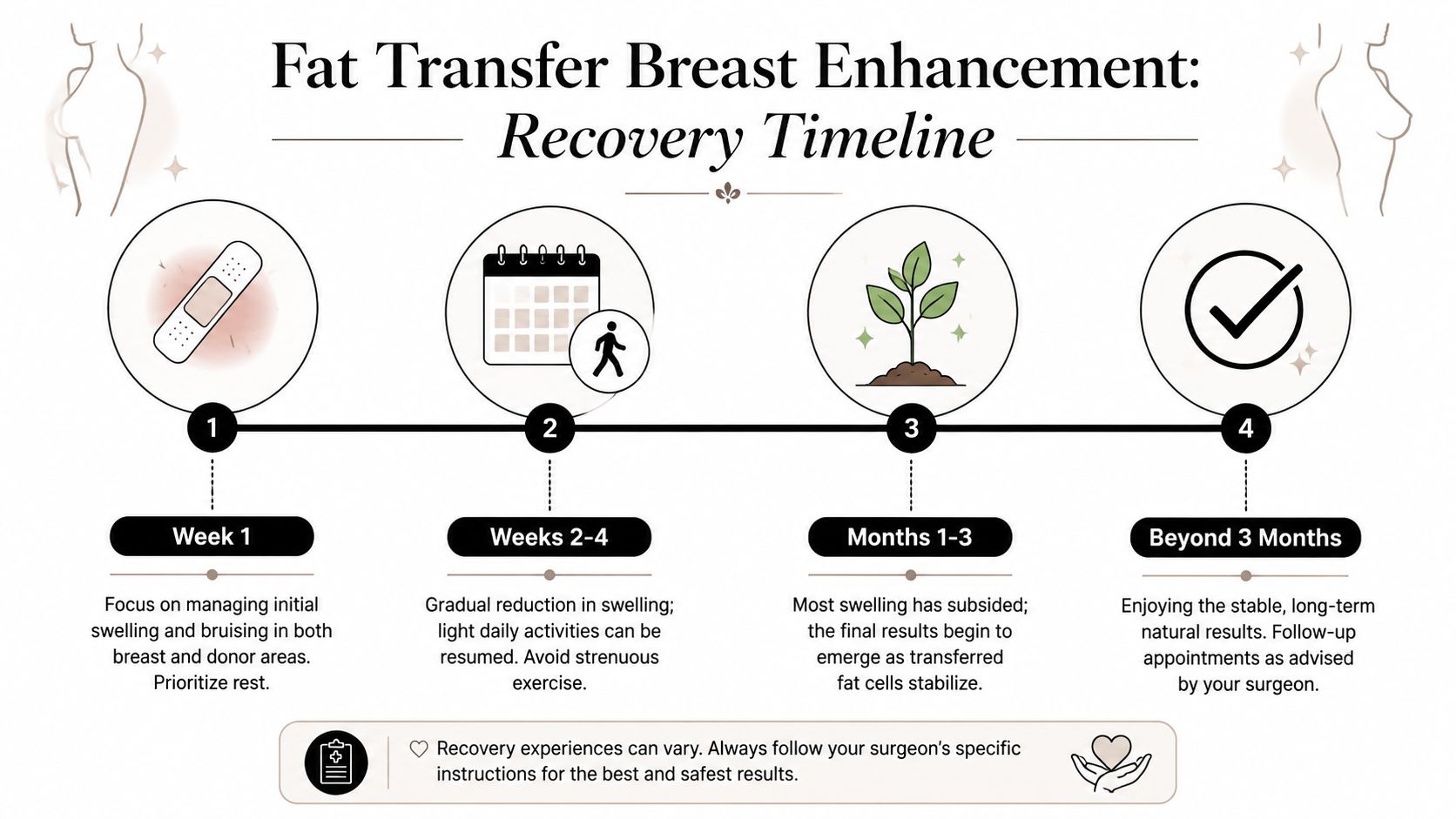
As the early swelling improves, most patients can ease back into light daily routines. More vigorous exercise usually waits until your surgeon feels the tissues are ready. The donor sites often feel firm before they feel smooth, and that can be normal during the healing process.
A simple recovery structure looks like this:
Many patients benefit from keeping their post-op routine calm and sustainable rather than trying to “power through” healing. Even a small ritual, like this 10-minute self-care routine with your robe, can help create moments of rest when your body is asking for gentleness.
The fat cells that successfully establish a blood supply become living tissue in their new location. In plain language, the surviving fat is there to stay. But it still behaves like fat elsewhere in your body.
If you gain weight, your breasts may become somewhat fuller. If you lose weight, they may become somewhat smaller. That's why stable weight helps preserve a stable result.
This decision isn't about which procedure is “better.” It's about which one better fits your anatomy, goals, and comfort level. Some patients value predictability above all else. Others care most about using their own tissue and avoiding implants.
The comparison chart below gives a visual overview.
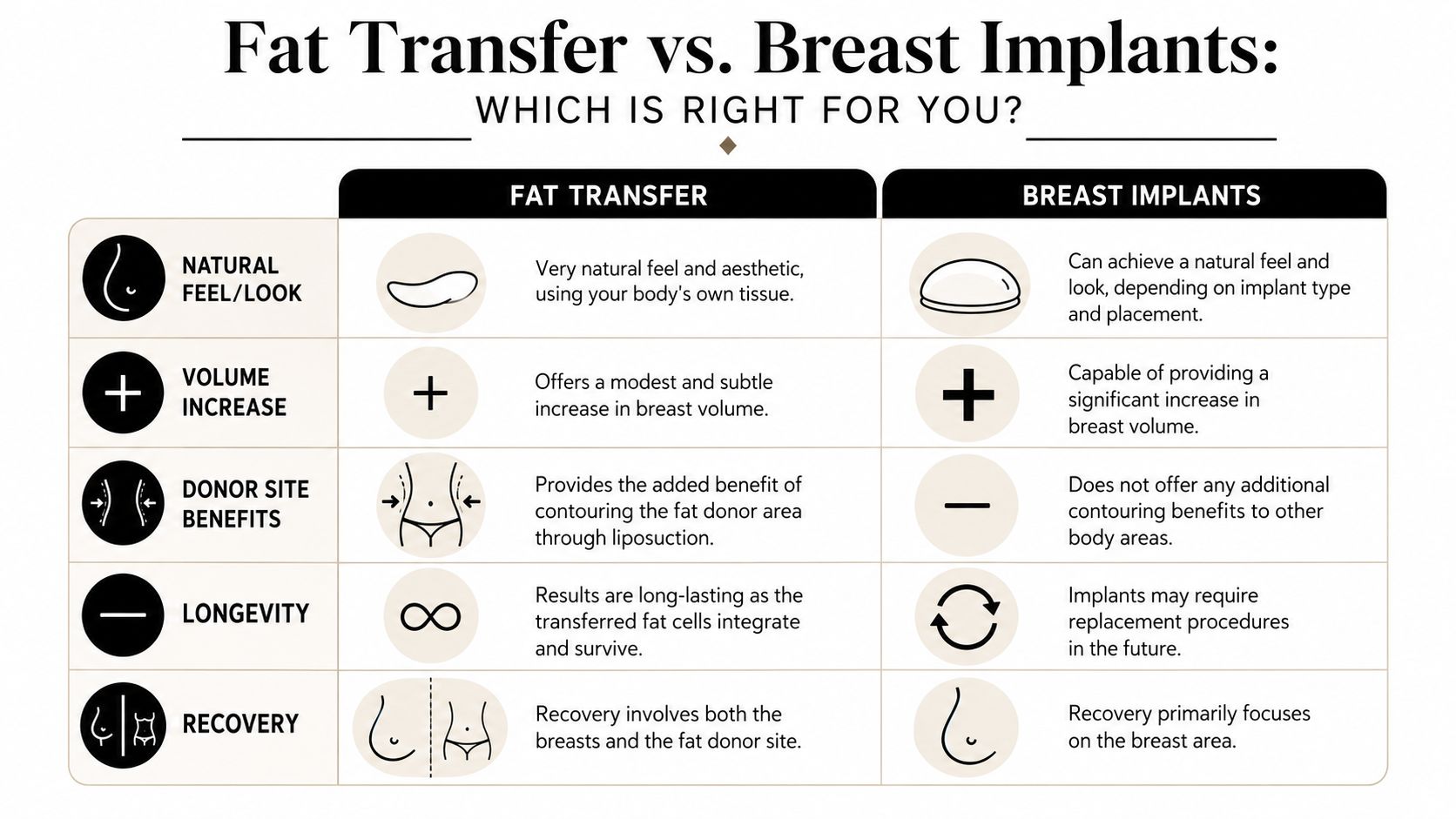
Implants usually offer more predictable volume. Fat transfer usually offers the most natural-feeling enhancement.
That single trade-off helps many patients clarify their choice.
| Feature | Fat Transfer Breast Enhancement | Breast Implants |
|---|---|---|
| Material used | Your own fat | Silicone or saline implant |
| Size change | Best for subtle to modest enhancement | Better for larger and more defined volume change |
| Look and feel | Usually the most natural because it is your own tissue | Can look natural, but depends on implant choice and anatomy |
| Scarring | Small liposuction and injection entry points | Requires breast incisions |
| Body contouring benefit | Yes, from donor-site liposuction | No donor-site contouring |
| Recovery focus | Breasts plus donor areas | Mainly breast area |
| Long-term considerations | Surviving fat is long-lasting, but some volume loss during healing is expected | Implants may require monitoring and possible future replacement |
| Best fit for | Patients seeking a softer, understated result | Patients seeking a more noticeable increase |
For patients who want a visual explanation of enhancement choices, this short video can be a useful starting point.
I usually ask three practical questions:
There's also a middle ground. Some patients are best served by implants with fat grafting for contour refinement. The right answer isn't ideological. It's personal.
Choosing the surgeon matters as much as choosing the procedure. Fat grafting is technique-sensitive. You want a surgeon certified by the American Board of Plastic Surgery, experienced in fat transfer specifically, and operating in an accredited surgical facility with appropriate anesthesia and safety standards.
If you're not sure how to evaluate credentials, this guide on how to choose a plastic surgeon is a practical place to begin. It helps patients ask better questions before committing to surgery.
For patients in the Cape Cod area, Cape Cod Plastic Surgery is one local option to consider. The practice is led by Dr. Marc Fater, a board-certified plastic surgeon with more than 30 years of experience, and the facility includes an on-site AAAASF-accredited surgical suite.

How much fat do I need?
Enough to safely harvest while still leaving a smooth donor area. This is highly individual and depends on your anatomy and your goals.
Will I notice weight loss from the liposuction?
You'll usually notice more of a shape change than a scale change. Patients often appreciate improved contour more than a number.
What happens if I gain or lose weight later?
The surviving transferred fat behaves like fat elsewhere in your body. Weight changes can affect your breast volume over time.
Can this fix asymmetry?
Often, yes. Small differences in shape and fullness can sometimes be improved very nicely with fat grafting.
If you're exploring a subtle, natural-looking breast enhancement and want a thoughtful discussion of whether fat transfer fits your goals, Cape Cod Plastic Surgery offers consultations where you can review your anatomy, donor areas, and options in detail.
September 9, 2026
Expert Guide to Proper Surgical Incision Care
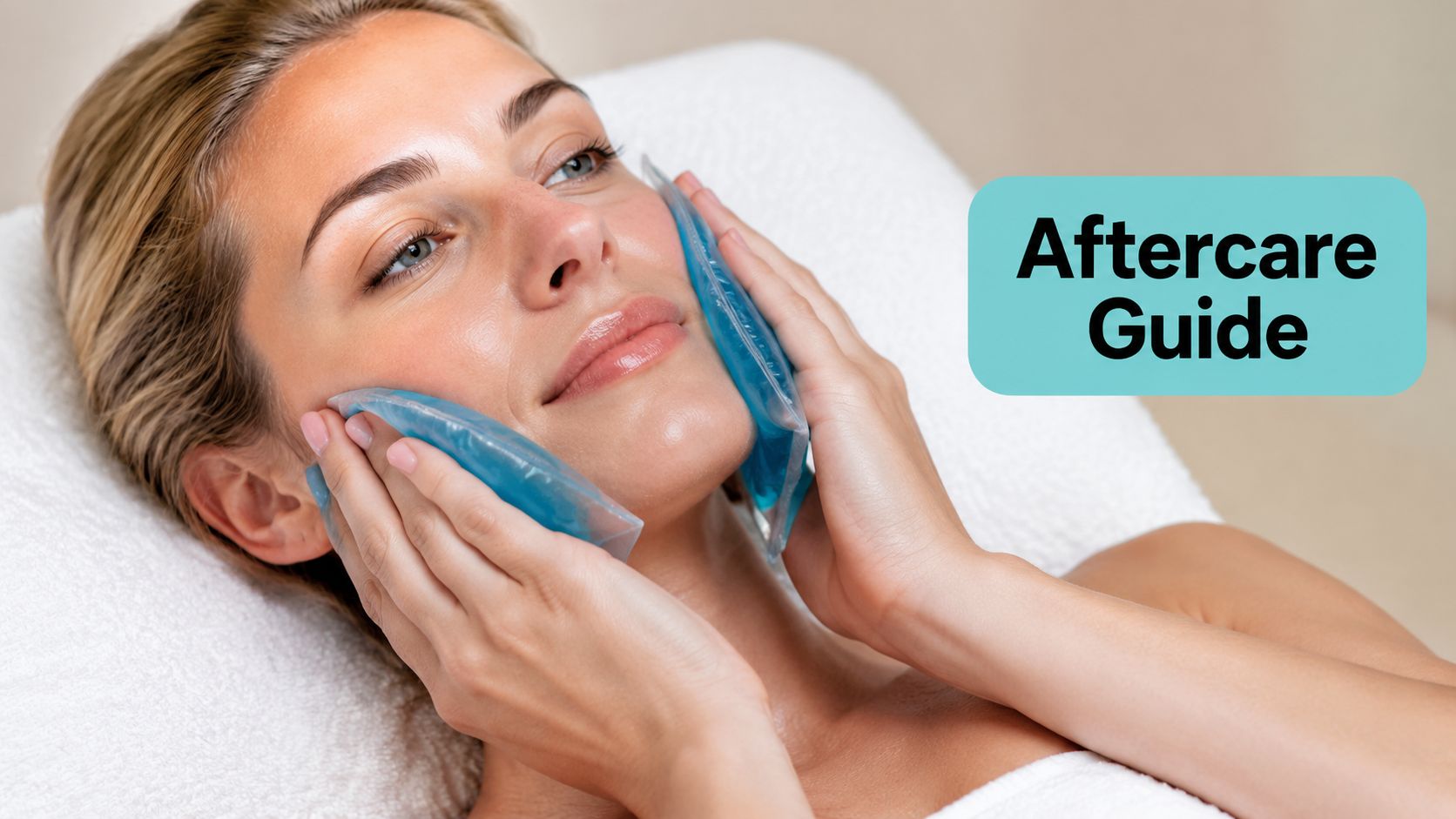
Master dermal fillers aftercare with do's and don'ts, swelling tips, activity limits and warning signs to protect your results and heal smoothly.

September 8, 2026
Ensuring Safety: Why Your Surgeon's Credentials Matter Most
Cape Cod Plastic Surgery offers expert cosmetic and reconstructive procedures in a safe, accredited setting. Led by Dr. Marc Fater, we combine advanced techniques with personalized care to help you look and feel your best.
Monday: 9:00 AM – 5:00 PM
Tuesday: 9:00 AM – 5:00 PM
Wednesday: 9:00 AM – 5:00 PM
Thursday: 9:00 AM – 5:00 PM
Friday: 9:00 AM – 5:00 PM