
September 9, 2026
How to Care for Surgical Incisions Properly
Expert Guide to Proper Surgical Incision Care
Mar 20, 2026
Reconstruction after mastectomy can be performed with implants (saline or silicone), autologous tissue flaps (DIEP, TRAM, latissimus dorsi, thigh‑ or buttock‑based flaps), or a combination of both. You may elect to have the reconstruction immediately at the time of cancer removal, which preserves the native skin envelope and reduces the total number of surgeries, or delay it until after chemotherapy, radiation, or wound healing are complete—often preferred when radiation is planned because autologous tissue tolerates radiation better than implants. Physically, patients typically feel better within 1‑2 weeks, resume light activities by 4‑6 weeks, and achieve full tissue healing by 1‑2 years; implant‑based recovery is generally quicker than flap‑based, which involves two surgical sites. Emotionally, adjustment can take months; counseling, support groups, and peer connections are encouraged to address body‑image concerns and foster confidence as you transition back to daily life.
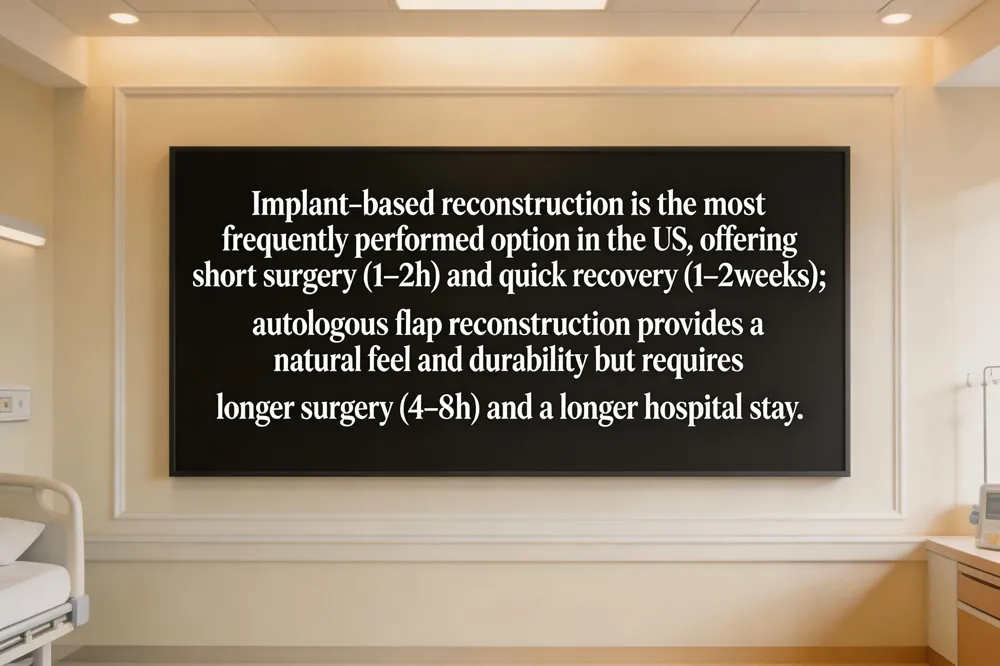
In the United States implant‑based reconstruction is the most frequently performed option after mastectomy, accounting for the majority of cases. Surgeons typically begin with a tissue expander placed beneath the chest muscle or skin; the expander is gradually filled over several weeks to stretch the tissue, then exchanged for a permanent silicone or saline implant. This two‑stage approach is popular because the operation is relatively short (about 1–2 hours per breast), hospital stays are brief, and recovery to the final within 1–2 weeks.
Autologous flap reconstruction—using the patient’s own tissue from the abdomen (DIEP, TRAM), back (latissimus dorsi), or thigh—requires a longer surgery (4–8 hours) and a 1–2‑day inpatient stay for monitoring of blood supply, with full healing taking 3–6 weeks.
Choosing the best reconstruction depends on anatomy, health, radiation plans, and personal goals. Implants offer quicker recovery and no donor‑site scar, while flaps provide a natural feel and durability but need more extensive surgery. A board‑certified plastic surgeon will assess these factors to create a personalized plan that balances aesthetics, safety, and long‑term satisfaction.

Breast reconstruction after mastectomy can be performed immediately or delayed, depending on treatment plans and patient preference. In an implant‑based approach, the first stage is tissue expander placement beneath the chest wall muscles. The expander is inserted through a modest incision, often with a surgical drain to prevent fluid buildup, and the breast is supported with a post‑operative bra.
Gradual expansion begins about two weeks after surgery. During weekly office visits the expander is filled with sterile saline until the desired breast size and shape are achieved; this phase typically lasts 2–6 months. Once expansion is complete, the second stage removes the expander and replaces it with a permanent silicone or saline implant. A final revision—nipple‑areola reconstruction, scar refinement, or contralateral adjustments—may follow 3–6 months later.
Initial postoperative symptoms include bruising, swelling, a heavy chest feeling, and mild to moderate pain managed with prescribed analgesics. Drains are usually removed within 1–3 weeks. Light walking is encouraged early, while heavy lifting, overhead arm movements, and vigorous exercise are avoided for 4–6 weeks. Numbness and tingling may persist for several months as nerves heal, and full implant positioning stabilizes by three months, allowing most patients to resume normal daily activities.

Flap donor sites—abdomen (DIEP, TRAM), back (latissimus dorsi), thigh (PAP, TUG) or buttocks (IGAP, SGAP)—are microsurgically transferred to create a natural breast mound. For a bilateral mastectomy with immediate autologous reconstruction, patients typically stay 1–2 nights for implant‑based cases, but flap procedures often require a 4–5‑day admission. One or two Surgical drains are placed in the chest (and donor site for flaps) and remain 2–3 weeks until output falls below 20–30 mL/day. Light household chores can begin after ~2 weeks; desk‑type work resumes at 4–6 weeks, while more demanding jobs may need 6–8 weeks. Full wound healing and final aesthetic shape develop over 3–6 months, with scar maturation up to a year. Delayed reconstruction follows a 4–6‑week healing interval after mastectomy; light activities resume by two weeks, heavy lifting is avoided for 4–6 weeks, and the final breast contour stabilizes by three months. Persistent hardness may signal capsular contracture (implants) or fat necrosis (flaps) and warrants surgeon evaluation. Adhering to activity restrictions, wearing a supportive bra, and completing prescribed physical therapy promote optimal recovery.

Autologous fat transfer begins with gentle liposuction of excess fat from the abdomen, thighs, or flanks, followed by careful purification and micro‑injection into the breast mound to improve volume, symmetry, or contour after implant or flap reconstruction. Recovery is usually swift: most patients report mild soreness, bruising and swelling that ease within the first one to two weeks. Light, non‑strenuous activities can resume after about two weeks, while heavier lifting, vigorous exercise and demanding work are postponed for at least four weeks to protect the grafted tissue and donor‑site incisions. The breast shape continues to settle as the transplanted fat integrates, and the final contour often becomes evident four to six months post‑operatively.
Recent innovations broaden the reconstructive armamentarium. Pre‑pectoral implant placement with acellular dermal matrix (ADM) spares the chest muscle, reducing pain and accelerating healing. Microsurgical perforator flaps such as DIEP or PAP preserve underlying muscle, offering a natural‑feeling breast for patients lacking abdominal tissue. Robotic assistance and 3‑D‑printed custom implants further refine implant shaping and placement, improving symmetry and operative efficiency.
Nipples are retained only in nipple‑sparing mastectomy (NSM) when the tumor does not involve the nipple‑areola complex; otherwise, they are removed and can be reconstructed later, though sensation may differ from the original.
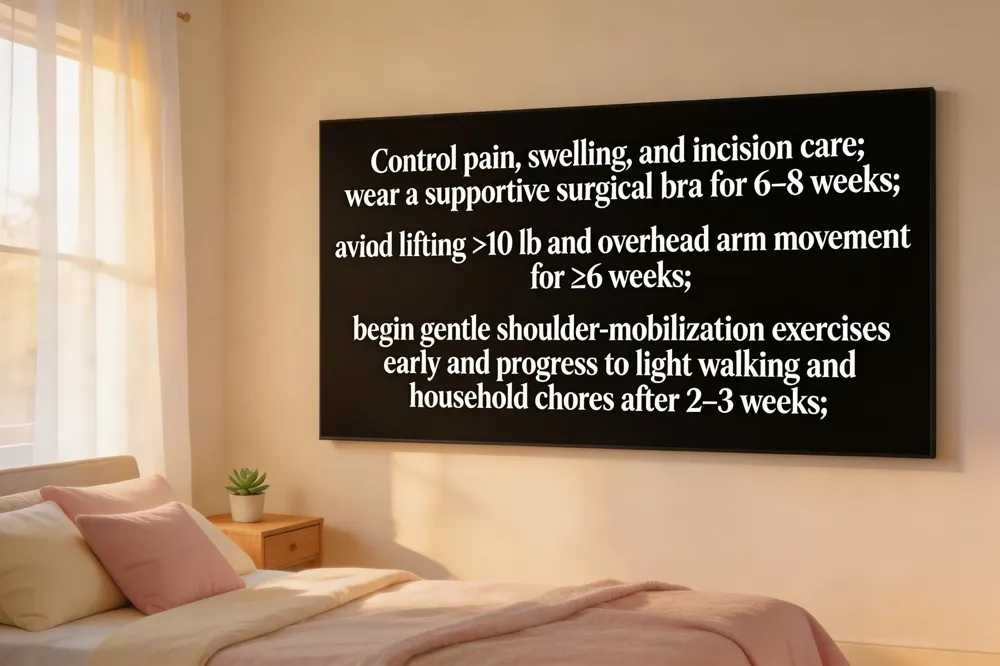
Recovery after breast reconstruction is marked by pain, swelling, bruising, and the need for diligent wound care. Keep incisions clean and dry, change dressings per the surgeon’s schedule, and monitor for infection signs such as redness, pus, or fever. Wear the prescribed supportive surgical bra or compression garment for the first 6‑8 weeks to control swelling and protect the healing tissue; use pillows to prop yourself when sitting or lying down.
Activity guidelines – Avoid lifting more than 10 lb, pulling, or raising the arms above shoulder level for at least 6 weeks. Begin gentle shoulder‑mobilization exercises as directed by your therapist, progressing to light walking and household chores after 2‑3 weeks. Return to a desk job typically in 2‑4 weeks; physically demanding work may require 4‑6 weeks, and flap‑based reconstructions can extend the break to 6‑8 weeks.
Support garments and scar care – Use a non‑underwire surgical bra or camisole, and if a donor‑site flap was performed, wear an abdominal binder for 3‑4 weeks. Follow a high‑protein, high‑fiber diet, stay hydrated, and avoid smoking and alcohol. Record drain output daily; report any sudden increase, foul odor, or worsening pain promptly. Attend all follow‑up appointments for stitch removal, drain checks, and scar‑care advice.

Implant‑related problems and capsular contracture – After mastectomy, implant‑based reconstruction can be complicated by infection (fever, redness, pain, swelling), seroma or hematoma, implant rupture, displacement, and capsular contracture, where scar tissue tightens around the implant, causing hardness, distortion, and chronic pain. Rare but serious issues include breast‑implant‑associated anaplastic large‑cell lymphoma (BIA‑ALCL) and the broader breast‑implant illness, which may require removal and medical management.
Patient dissatisfaction and revision pathways – If you are unhappy with size, shape, asymmetry, scar quality, or capsular contracture, schedule a detailed consultation. Options include implant exchange, capsulectomy with a new implant, fat‑grafting, or conversion to an autologous flap such as a DIEP reconstruction. Psychological counseling and support groups are also recommended to address emotional concerns.
Insurance coverage for corrective surgery – The Women’s Health and Cancer Rights Act of 1998 mandates most group health plans to cover medically necessary reconstruction and revisions, so many patients face only deductibles, copays, or coinsurance. Coverage details vary by plan and procedure (unilateral vs. bilateral), and ancillary costs (garments, imaging) may not be fully covered. Verify benefits with your insurer and request a detailed estimate from your surgeon; financing and assistance programs are available for higher out‑of‑pocket expenses.

After breast reconstruction, surgeons typically place one or two surgical drains to prevent fluid buildup. Drain output is recorded daily; removal is recommended when the volume falls below the surgeon‑specified threshold (often <30 mL per day for two consecutive days). Keep the drainage system clean, avoid pulling on the tubes, and empty the collection bottle as instructed.
Incision care focuses on keeping dressings dry and intact for the first week. You may begin gentle showers 24–48 hours post‑op, using lukewarm water and mild soap while protecting the incision from direct spray. Pat the area dry with a clean towel—do not rub. Submerging the chest in baths, pools, or hot tubs should be avoided until the surgeon confirms complete healing.
Driving clearance depends on pain control, arm mobility, and cessation of sedating medications. Most patients with implant or tissue‑expander reconstruction can resume driving around 2‑3 weeks, provided drains are removed and you can turn your head and reach comfortably. Autologous flap patients often wait 4‑6 weeks due to donor‑site healing. Always follow your surgeon’s individualized timeline.
Breast reconstruction after mastectomy ICD‑10 code: Z42.1 – “Encounter for breast reconstruction following mastectomy.” Additional codes such as Z90.12/Z90.13 for breast absence or C50‑ for active malignancy may be added as needed.
How soon can you drive after mastectomy and reconstruction? Clearance is typically given when pain‑free, off narcotics, with adequate shoulder movement—about 2‑3 weeks for implant reconstructions and 4‑6 weeks for flap procedures. Drains must be removed and output low before driving.
First shower after mastectomy: Gentle showers are safe 24–48 hours after surgery if incisions are protected. Use lukewarm water, mild soap, and pat dry; avoid direct pressure and submerging the wounds until cleared.

Emotional adjustment after reconstruction can take months; many women experience anxiety, body‑image concerns, and occasional regret. Large U.S. studies report overall regret rates of 38.5‑61.5 % after mastectomy, with autologous flap reconstruction showing the lowest regret (~38 %). To support patients, we offer individualized counseling, support groups, virtual meetings, and referrals to mental‑health professionals experienced in cancer survivorship. Pain is usually well‑controlled: regional anesthesia, multimodal oral analgesics, and short‑term narcotics keep discomfort at a mild‑to‑moderate level for the first 2‑3 weeks, with a tight‑chest sensation that eases as healing progresses. Our protocol includes scheduled pain‑assessment visits, clear instructions for medication use, and non‑pharmacologic measures such as gentle shoulder exercises and compression garments. Support resources include on‑site support groups, virtual meetings, and connections to national organizations such as Susan G. Komen and the American Cancer Society. We also provide educational materials on Nipple‑areola reconstruction options, ensuring patients understand that nipple‑sparing mastectomy is possible when oncologically safe, and that reconstructed nipples can be created later for symmetry.
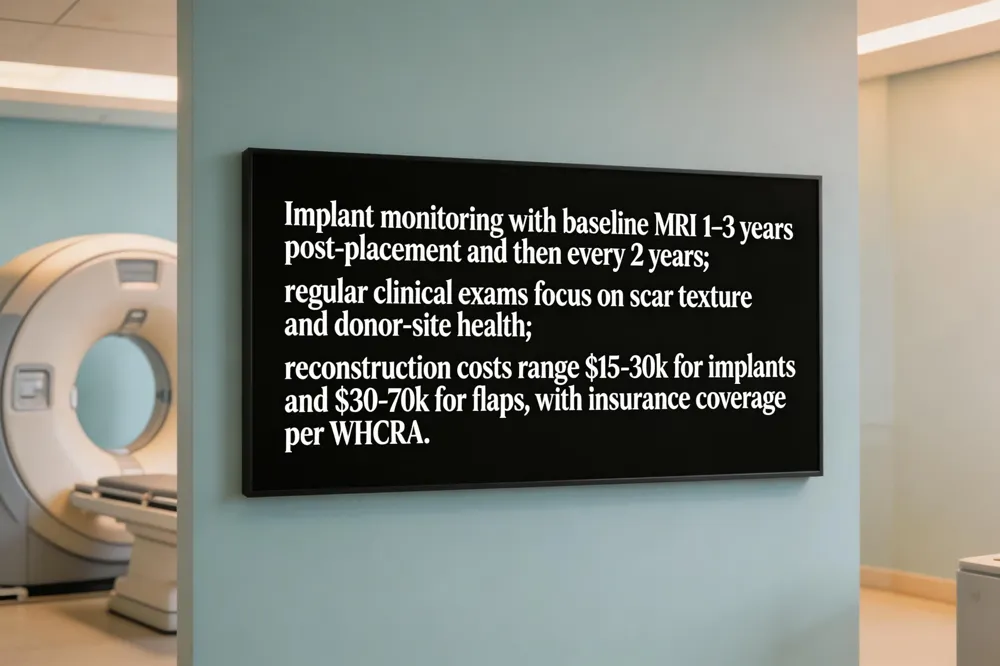
After breast reconstruction, ongoing monitoring is essential for both implant‑based and flap procedures. For silicone or saline implants, surgeons typically recommend a baseline MRI 1–3 years after placement and then every 2 years to detect silent ruptures, while saline implants do not require routine MRI. The reconstructed breast itself is not screened with mammography; instead, regular clinical examinations focus on incision healing, scar texture, and any changes in shape or firmness. Patients should also monitor the donor site (for autologous flaps) for bulging, hernia, or persistent pain. Promptly contact your surgical team if you notice new swelling, pain, lump, skin discoloration, drainage, or any signs of infection.
Breast reconstruction after mastectomy cost – In the U.S., out‑of‑pocket expenses range from $15,000–$30,000 for implant‑based and $30,000–$70,000 for autologous flaps; most insurance plans cover medically necessary reconstruction under the Women’s Health and Cancer Rights Act, leaving patients responsible for deductibles, copays, and ancillary fees. Verify benefits and request a detailed estimate.
First shower after mastectomy – A gentle shower can usually begin 24–48 hours post‑op, using lukewarm water and mild soap, while protecting incisions and drains from direct pressure. Avoid soaking the chest in tubs or pools until cleared by your surgeon.
Time off work – Return to a desk job is possible in 2–4 weeks; physically demanding work may require 4–6 weeks, and autologous flap reconstruction can extend recovery to 6–8 weeks. Follow your surgeon’s individualized timeline.
Recovery after breast reconstruction follows a predictable timeline, yet each patient’s experience is unique. In the first few days, drains and dressings protect the surgical site while gentle ambulation reduces clot risk. By two weeks most women feel enough to resume light household tasks and begin wearing a supportive surgical bra; swelling and bruising usually subside by six weeks, allowing a gradual return to normal activities. Full tissue healing and scar maturation can take 1–2 years, and implants may need MRI surveillance for silent rupture after the first 1–3 years. Regular follow‑up appointments are essential for monitoring wound healing, drain output, and early detection of complications such as infection, seroma, or capsular contracture. Emotional support—through counseling, support groups, and peer connections—helps patients adjust to changes in body image. We encourage you to discuss your personal goals, timing preferences, and any concerns with your surgeon so that your reconstruction plan is tailored to your health, lifestyle, and aesthetic expectations.
September 9, 2026
Expert Guide to Proper Surgical Incision Care

Master dermal fillers aftercare with do's and don'ts, swelling tips, activity limits and warning signs to protect your results and heal smoothly.

September 8, 2026
Ensuring Safety: Why Your Surgeon's Credentials Matter Most

Cape Cod Plastic Surgery offers expert cosmetic and reconstructive procedures in a safe, accredited setting. Led by Dr. Marc Fater, we combine advanced techniques with personalized care to help you look and feel your best.
Monday: 9:00 AM – 5:00 PM
Tuesday: 9:00 AM – 5:00 PM
Wednesday: 9:00 AM – 5:00 PM
Thursday: 9:00 AM – 5:00 PM
Friday: 9:00 AM – 5:00 PM