

October 7, 2026
What to Expect During Your Breast Surgery Recovery
A Practical Guide to Healing After Breast Surgery
Apr 14, 2026
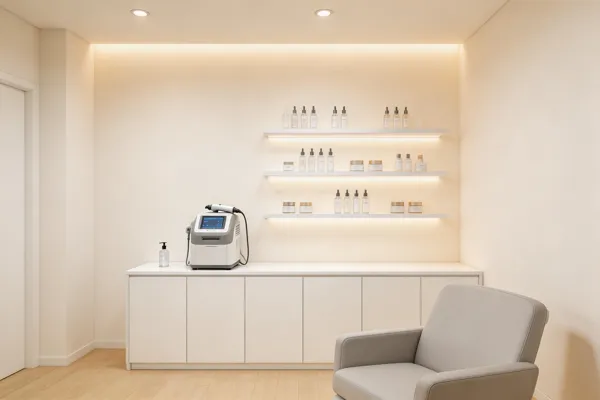
Laser skin tightening is a minimally invasive, nonsurgical treatment that uses infrared light to heat the deeper layers of the skin. The controlled heat contracts existing collagen fibers and triggers new collagen and elastin production, leading to firmer, smoother skin over weeks to months. Many patients prefer this option because it avoids incisions, anesthesia, and the lengthy downtime associated with surgical facelifts, yet still delivers noticeable improvement in mild to moderate laxity on the face, neck, jawline, and abdomen. Successful outcomes depend on several key factors: the patient’s age and baseline collagen levels, skin type and tone, the specific laser technology (ablative vs. non‑ablative, fractional), the number of treatment sessions (typically three to six spaced a month apart), and diligent after‑care—especially daily broad‑spectrum sunscreen and a consistent skincare regimen. When performed by a board‑certified specialist in a safe, accredited setting, laser skin tightening offers a reliable, patient‑centered pathway to enhanced confidence and a more youthful appearance.

Laser skin tightening uses Infrared light or RF energy heats the dermis to a temperature that causes existing collagen fibers to contract immediately and triggers the fibroblasts to produce new collagen and elastin (neocollagenesis). The heat is delivered either via a continuous infrared beam, as in traditional laser platforms, or through RF devices that generate deep‑layer thermal injury without targeting pigment. Modern systems can be fractional—creating microscopic columns of treated tissue surrounded by untouched skin—allowing faster healing while still stimulating robust collagen remodeling. Ablative lasers (e.g., CO₂, Er:YAG) remove the outer epidermis and heat the deeper dermis for dramatic results but require longer downtime; non‑ablative lasers heat the dermis without surface removal offering milder tightening with minimal recovery. Fractional variants of both ablative and non‑ablative technologies combine the benefits of precise micro‑injury with reduced risk of scarring and pigment changes. Safety profiles are favorable across most skin types when the appropriate wavelength and settings are chosen: non‑ablative and fractional lasers are generally safe for darker Fitzpatrick tones, while ablative approaches demand careful adjustment and pre‑treatment sun protection to minimize hyper‑ or hypopigmentation. Proper patient screening and individualized protocols ensure effective tightening while preserving skin integrity.

Laser skin tightening is most effective when patients can see the transformation for themselves. Typical before‑treatment skin conditions include mild‑to‑moderate laxity, fine lines, sun‑damage, and uneven texture on the face, neck, jawline, or abdomen. After a series of 2‑4 sessions spaced a month apart, most patients notice a firmer, smoother surface within 6‑12 weeks as new collagen and elastin remodel the dermis. The change is most evident in areas of mild sagging, where the skin appears tighter and the contour more refined while retaining a natural look.
At Cape Cod Plastic Surgery we maintain a secure, up‑to‑date photo gallery that documents real‑patient outcomes. Each before‑and‑after pair is accompanied by a brief note describing the laser modality used, the number of sessions, and the treating surgeon—Dr. Marc Fater. The gallery showcases results on the face, neck, abdomen, and thighs, illustrating reduced fine lines, smoother texture, and subtle lifts. Reviewing these images helps prospective patients set realistic expectations and feel confident about choosing laser skin tightening as a safe, minimally invasive option for rejuvenation.

In Massachusetts, laser‑based skin‑tightening treatments typically run from about $400 to $2,500 per session, depending on the technology (radio‑frequency, Nd:YAG, fractional CO₂, picosecond, etc.), the size of the treatment area, and the provider’s expertise. Most patients need three to six visits, so total out‑of‑pocket costs usually fall between $1,200 and $15,000.
Factors that drive cost include the laser modality (ablative systems are pricier than non‑ablative), the number of treatment zones (full‑face versus a limited jawline), the clinic’s reputation, and any ancillary fees for facility use or anesthesia.
Typical package totals: a three‑session facial or neck tightening series often totals $3,600‑$12,000; a six‑session body program (abdomen, thighs, arms) can range $4,800‑$15,000.
Cape Cod Plastic Surgery comparison: Dr. Marc Fater’s practice offers RF microneedling packages around $3,000 for three sessions (≈$1,100 per visit) and Laser Genesis at $395 per treatment, with a six‑visit bundle near $1,695. These prices align with regional averages while reflecting the clinic’s board‑certified expertise and personalized care.
Quick answers – "Best laser skin tightening cost Massachusetts" falls between $400‑$2,500 per session; "Full‑face laser skin tightening cost" is $1,200‑$3,500 per session; "Laser skin tightening stomach cost" ranges $800‑$1,800 per session; and for a local option, Cape Cod Plastic Surgery in Hyannis provides customized, FDA‑cleared treatments with transparent pricing and financing options.

Laser skin‑tightening delivers a progressive lift rather than an instant facelift. After the first session many patients notice a subtle firming within 5‑10 days, and the skin feels smoother as collagen and elastin remodel. The most pronounced improvements appear over 6‑12 weeks, with continued tightening for up to 3‑6 months as newly formed collagen matures. Typical outcomes include a reduction of fine lines and shallow wrinkles, a smoother, more even texture, and a firmer, less crepey appearance in treated areas such as the face, jawline, neck, and abdomen. Most patients achieve their best results after a series of 3‑6 sessions spaced roughly a month apart; each session adds incremental firmness and texture refinement. With diligent post‑procedure care—daily broad‑spectrum SPF 30+ sunscreen, gentle moisturizers, and avoidance of aggressive exfoliants—the benefits can last 12‑24 months, and many individuals report lasting firmness for up to three years. Overall, laser skin tightening provides a natural‑looking, youthful lift with minimal downtime, making it an effective non‑surgical option for mild‑to‑moderate skin laxity.

Most patients see an early lift within the first week‑to‑two after a laser‑skin‑tightening session, especially with non‑ablative or fractional devices. The heat‑induced collagen remodeling continues for several weeks, and the full benefit usually appears by 4‑6 weeks; deeper ablative treatments may take up to three months for final results.
Facial skin often shows modest tightening within 5‑10 days, with progressive firmness over 6‑12 weeks. The neck, which has thinner skin and more platysmal bands, typically needs 2‑3 sessions before a noticeable lift, with continued improvement through the next 2‑3 months. Abdominal skin, being thicker and more prone to stretch‑mark‑type changes, may require 3‑4 sessions; initial tightness appears at 3‑4 weeks, with optimal firmness reached around 3 months.
Speed of improvement depends on laser type (ablative vs. non‑ablative), depth of penetration, treatment area, patient age, baseline collagen levels, and adherence to post‑care—especially diligent sunscreen use and gentle moisturization. Consistent after‑care accelerates collagen synthesis and helps maintain the achieved firmness.

Laser skin tightening is generally safe, but patients should expect a few short‑term reactions. Most people experience mild redness, swelling, tingling, or a warm sensation that resolves within a few days; occasional bruising, dryness, or peeling may also occur. Rare complications—burns, scarring, infection, or pigment changes—are minimized when a qualified clinician uses appropriate settings, protective eyewear, and thorough cooling. Long‑term risks are uncommon, but persistent hyper‑ or hypopigmentation can develop, especially in darker Fitzpatrick skin types, and permanent scarring or prolonged erythema are possible but unlikely. To protect the skin and preserve results, patients must avoid direct sun exposure and tanning beds for at least two weeks, wear broad‑spectrum SPF 30+ sunscreen, and refrain from heavy makeup, retinoids, strong exfoliants, vigorous exercise, saunas, hot tubs, or swimming for the first 24‑48 hours. Gentle cleansing, moisturizers, and a clean, protected healing environment further reduce the chance of pigment alteration and infection.

Laser skin tightening is an excellent option for patients with mild‑to‑moderate skin laxity who prefer a non‑invasive, low‑downtime solution. By delivering controlled infrared heat to the dermis, the procedure contracts existing collagen and stimulates new collagen and elastin, producing a gradual lift and smoother texture that becomes most apparent 3‑6 months after a series of 3‑6 monthly sessions. Compared with a surgical facelift, laser tightening offers shorter recovery, no incisions, and a lower price point ($600‑$1,000 per session), but it does not address severe sagging or deep jowls, which still require surgical intervention. When combined with diligent sun protection and a tailored skincare regimen, the results can last 1‑3 years, making laser tightening a cost‑effective bridge or maintenance tool for many patients seeking a natural‑looking rejuvenation without the risks of surgery.
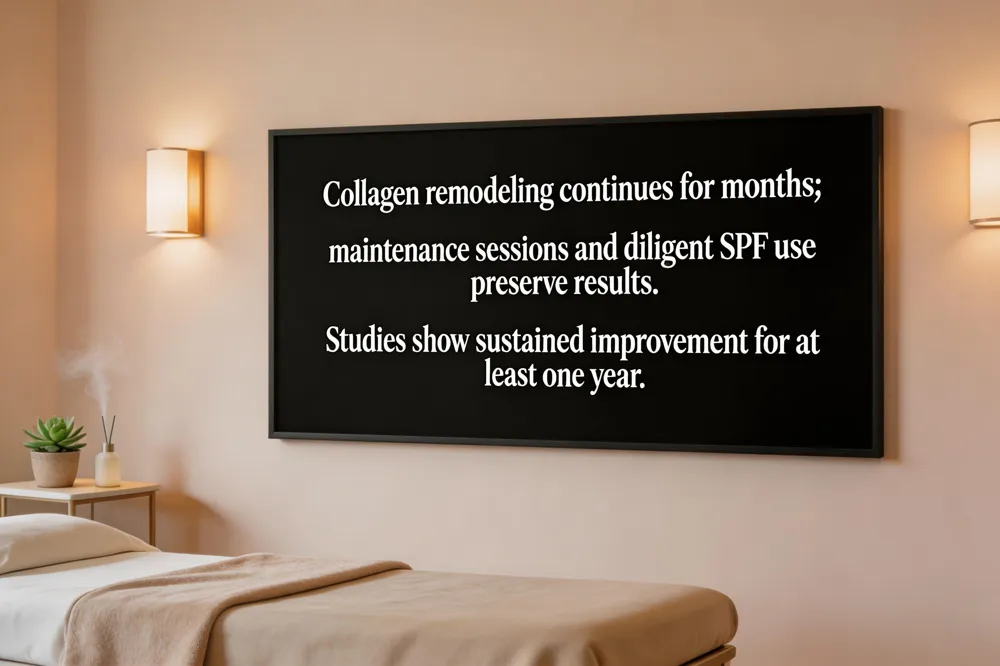
Laser skin tightening results on the neck – Treatment reduces platysmal bands, smooths fine horizontal lines, and sharpens the jawline. Patients often see an initial lift after 2‑3 sessions, with continued collagen remodeling for the next 2‑3 months. Studies of fractional CO₂ and RF lasers show sustained improvement in skin‑laxity scores for at least one year. Recovery is quick, with most returning to normal activities within a few days; mild swelling may linger 3‑5 days.
Is laser skin tightening worth it? – For individuals with mild‑to‑moderate laxity seeking a non‑surgical option, laser tightening offers a safe, low‑downtime solution that stimulates collagen for gradual, natural‑looking lift. Results develop over 3‑6 months and are best upheld with diligent sunscreen use and occasional maintenance sessions. While it cannot replace a surgical facelift for severe sagging, many patients find it a cost‑effective bridge to more dramatic procedures or a long‑term adjunct after surgery.
Laser skin tightening delivers controlled infrared heat to stimulate collagen and elastin, giving gradual firmness that can last 12‑36 months with proper skincare. The procedure is safe for most skin types, with only mild redness, swelling or tingling that resolve in days; rare complications such as scarring or pigment changes are minimized when performed by experienced clinicians. Sessions cost $600‑$1,000 each, and a typical course of three to six monthly treatments is needed for optimal results. Cape Cod Plastic Surgery, led by board‑certified Dr. Marc Fater, combines state‑of‑the‑art laser platforms, individualized treatment plans, and strict pre‑ and post‑care protocols, ensuring high safety and natural‑looking outcomes. Interested patients should schedule a consultation to assess candidacy, discuss goals, and receive a personalized cost estimate.
October 7, 2026
A Practical Guide to Healing After Breast Surgery
October 6, 2026
Your Safety Guide: What to Look for When Choosing a Plastic Surgeon
October 5, 2026
Why Our On-Site Accredited Facility Matters for Your Safety

Cape Cod Plastic Surgery offers expert cosmetic and reconstructive procedures in a safe, accredited setting. Led by Dr. Marc Fater, we combine advanced techniques with personalized care to help you look and feel your best.
Monday: 9:00 AM – 5:00 PM
Tuesday: 9:00 AM – 5:00 PM
Wednesday: 9:00 AM – 5:00 PM
Thursday: 9:00 AM – 5:00 PM
Friday: 9:00 AM – 5:00 PM