

September 9, 2026
How to Care for Surgical Incisions Properly
Expert Guide to Proper Surgical Incision Care
May 13, 2026

You may be in that familiar moment already. You've noticed more scalp in bright bathroom light, more hair in the sink, or a hairline that looks different in photos than it did a few years ago. Then the search begins, and within minutes you're staring at clinic websites, before-and-after galleries, acronyms, promises, and prices that all seem to blur together.
That confusion is normal. Hair restoration sounds simple from the outside. Move hair from one place to another. In reality, the outcome depends heavily on who plans the surgery, who performs the critical steps, and how well they understand both hair loss and facial aesthetics. A transplant can look soft, believable, and age-appropriate. It can also look pluggy, too straight, too low, too dense in the wrong place, or strangely artificial even when the grafts survive.
A good hair transplant surgeon does much more than relocate follicles. That surgeon diagnoses patterns, protects your donor supply, designs for the long term, and creates something that still looks natural years from now. If you're evaluating options carefully, that's exactly the right instinct.
You notice thinning, open three clinic sites, and within ten minutes you are comparing graft counts, FUE versus FUT, and price ranges. That feels logical. It is also the point where many people start in the wrong place.
A hair transplant is not a product you buy off a shelf. It is a surgical design problem built around your face, your pattern of loss, your donor supply, and the way you are likely to lose hair over time. The first decision is not the method. It is the surgeon.
A common starting point is comparing techniques or pricing, but I would reverse that order. An experienced hair transplant surgeon decides whether surgery is appropriate at all, whether medical treatment should come first, how much donor hair can be used safely, and what kind of hairline will still look believable years from now.
That judgment shapes everything that follows.
Two clinics can offer the same procedure name and produce very different results. The reason is simple. Tools do not create a natural result on their own. The surgeon does. This is also why credentials matter in a practical sense, not just on paper. A surgeon with training in facial aesthetics, tissue handling, wound closure, and long-term cosmetic planning often sees details that a less specialized operator may miss. Hair restoration is both microsurgery and visual design. If either side is weak, the result can look unnatural even if the grafts grow.
Practical rule: Before you compare package prices, ask who designs the hairline, who makes the recipient sites, who extracts the grafts, and who is in the room for the critical surgical steps. If the answer is vague, keep looking.
Several points are easier to understand at the beginning than after a bad decision:
Hair restoration works a lot like architectural planning. The visible part is the front of the house, but the outcome depends on the blueprint, the materials, and whether the structure will still make sense years later. A careful surgeon is judging all of that before talking about dates or discounts.
That is the essential first step in your hair restoration journey. Find the surgeon whose judgment you trust to protect both your appearance and your donor supply.
A hair transplant surgeon has two jobs at the same time. One is technical. The other is artistic. If either side is weak, the result suffers.

The technical part is exacting. Follicles are small, delicate structures. They can be damaged during extraction, dried out during handling, or placed poorly during implantation. A skilled hair transplant surgeon protects grafts from unnecessary trauma at every stage.
This includes choosing the donor area wisely, extracting with precision, and creating recipient sites that match the angle and direction of natural growth. The surgeon also has to respect scalp anatomy, blood supply, hair caliber, and the limited nature of donor hair.
Here's where patients often get confused. They assume survival is the whole story. It isn't. Grafts can survive and still be placed in a way that looks wrong.
The artistic work shows up in the mirror. A natural hairline isn't a ruler-straight border. It has softness, variation, and restraint. It fits the face. It fits age. It fits likely future hair loss.
Imagine it as intricate design work. You aren't planting a row of identical shrubs. You're shaping a living edge that should still make sense years from now.
A surgeon with aesthetic judgment pays attention to details such as:
A technically successful transplant can still look unnatural if the design ignores facial harmony.
In this field, credentials become more meaningful. A surgeon with deeper training in plastic surgery or dermatology, plus dedicated hair restoration experience, often brings a different level of judgment to planning. Plastic surgery training supports tissue handling, incision planning, scar management, and aesthetic proportion. Dermatology training adds strong grounding in scalp health, hair disorders, and the biology behind loss patterns.
The best hair transplant surgeon isn't only moving grafts. That surgeon is deciding how much hair to use, where to place it, how to preserve options for the future, and how to create an outcome that doesn't announce itself to the room.
A patient often arrives thinking the main decision is simple: FUE or FUT. In practice, that is like asking whether a carpenter should use a fine saw or a chisel before anyone has looked at the wood. The method matters, but the better question is why a skilled surgeon recommends one approach for your scalp, donor hair, and long-term pattern of loss.

FUE has become the method many patients ask for first. That reflects patient preference and marketing visibility. It does not mean FUT is outdated, and it does not mean FUE gives the best result in every case. The right choice depends on donor density, scalp laxity, hairstyle goals, the number of grafts needed, and how carefully the surgeon is protecting your donor supply for the future.
Follicular Unit Extraction, or FUE, removes follicular units one by one from the donor area with a small punch. Those grafts are then prepared and placed into the recipient area.
The appeal is easy to understand. FUE avoids one long linear scar. Instead, it leaves many tiny dot scars that are usually harder to notice, especially for patients who want shorter hair in the back and sides.
FUE also gives the surgeon flexibility in graft selection. That can help in carefully chosen cases where donor management needs a more selective approach.
Common reasons patients choose FUE:
Follicular Unit Transplantation, or FUT, removes a narrow strip of hair-bearing scalp from the donor area. The strip is then dissected under magnification into individual follicular units for transplantation.
FUT leaves a linear scar. For someone who clips the hair very short, that may be a drawback. Yet FUT remains a strong option for the right patient because it can preserve surrounding donor hair and may be useful when a larger number of grafts is needed in one session.
The surgeon's background matters in a practical way. A surgeon trained to handle tissue precisely and close wounds with attention to tension and scar quality may get better cosmetic healing from FUT than a physician with less surgical training. That is one reason credentials are tied to outcomes, not just paperwork. If you want help evaluating that kind of training history, this guide on how to research plastic surgeons gives patients a useful framework.
| Feature | Follicular Unit Extraction (FUE) | Follicular Unit Transplantation (FUT) |
|---|---|---|
| Harvesting method | Individual follicular units are extracted directly | A strip of donor scalp is removed, then dissected into grafts |
| Donor scar pattern | Tiny dot scars | Linear scar |
| Short-hair flexibility | Often better for very short hairstyles | More limited if the scar may show |
| Donor area feel after surgery | Often less tightness | May involve more tightness from closure |
| Large-session planning | Useful in many cases, depending on donor characteristics | Often considered when higher graft yield in one session is needed |
| Public perception | Commonly seen as the modern default | Sometimes unfairly dismissed, though still appropriate for some patients |
The table helps, but it does not replace surgical judgment.
A good consultation explains what you gain and what you give up with each method. It should also explain how the harvesting choice affects hairline design, crown coverage, future procedures, and the appearance of the donor area years later. Density alone is not the goal. A natural result depends on preserving enough donor hair to create softness, shape, and age-appropriate planning over time.
For a broader patient-friendly overview of candidacy and planning, PRP For HairLoss's hair transplant guide is a useful companion read.
If you want a quick visual summary before consultation, this video is a helpful starting point.
The better method is the one that fits your anatomy and your long-term plan.
Ask a more useful question in consultation: “How does this method protect my donor area while giving me a natural-looking result now and enough options later?” A strong surgeon can answer that clearly. The answer should sound specific to your scalp, not copied from a brochure.
Hair restoration has a serious regulatory gap, and patients need to understand it clearly. The American Hair Loss Association acknowledges that “any licensed physician can legally perform hair transplant surgery without any prior surgical training or accreditation of any kind”, as summarized in this guide on what to look for in a hair transplant surgeon. That single fact explains why qualifications matter so much.
A medical license is not the same thing as specialized training. If you remember one idea from this section, let it be that.
Look for a surgeon with post-graduate training specifically in hair restoration and board certification in plastic surgery or dermatology. Those backgrounds matter because they train physicians to think differently about tissues, healing, skin, aesthetics, and diagnosis.
A general practitioner may legally offer the procedure. That doesn't mean they've built the judgment required for hairline design, donor preservation, scar management, or diagnosing scalp and hair loss conditions correctly.
Use a short verification list and do it yourself.
A helpful companion resource on evaluating physician credibility online is this article on online reputation management for doctors. It won't replace credential verification, but it can help you read reviews and digital reputation signals more critically.
Many clinics look polished online. Good websites, paid ads, and aggressive follow-up systems can create the impression of authority. That's not proof of surgical ability.
For a grounded approach to vetting specialists more broadly, Cape Cod Plastic Surgery also offers advice on how to research plastic surgeons.
If a clinic avoids direct answers about who performs the key parts of surgery, that's not a small issue. It's a warning sign.
Instead of asking only “How many grafts do I need?” ask questions that reveal judgment:
A qualified hair transplant surgeon should answer those without hesitation.
Credentials get you through the first filter. Real-world quality shows up in how the practice runs, how the consultation feels, and how consistent the results look.
Research supports that instinct. According to this review of why surgeon experience matters, 86.6% of 403 surgical studies found that higher surgical volume correlates with better patient outcomes. That same source also notes that team consistency affects graft viability because experienced teams develop synchronized workflows that reduce follicle damage.
A top hair transplant surgeon doesn't rush to quote graft numbers before understanding the problem. The consultation should include a careful look at your donor area, your pattern of loss, your family history, your styling goals, and your expectations.
You should leave with clarity on three things:
If the experience feels like buying a package instead of making a medical decision, step back.
Most patients look only for “more hair.” Look closer.
Study whether the hairline looks age-appropriate. Check whether the lighting and angles are consistent. Look for softness at the front, not a hard edge. See whether the surgeon shows results on patients with hair texture, skin contrast, and loss patterns similar to yours.
A great gallery reveals restraint. Not every good result is dramatic. Some of the best work looks unremarkable because it looks real.
Hair transplantation is not a one-person performance. It's a coordinated surgical process. Graft extraction, sorting, handling, and placement all depend on a team that works smoothly together.
That matters for patients because speed alone isn't the point. Efficient handling can reduce unnecessary graft manipulation and support better viability.
A strong hair transplant surgeon usually has a strong team behind the result. You're evaluating the system, not just the individual.
If you want an example from another industry of how easy it is to mistake marketing strength for service quality, this HearBack guide to contractor marketing is useful in an unexpected way. It shows how polished local visibility can shape perception. In medicine, that's exactly why patients need to separate marketing performance from clinical excellence.
Cape Cod Plastic Surgery also has a useful explainer on the importance of board certification for plastic surgeons, which helps frame why baseline credentials still matter even after you start assessing artistry and results.
Look for these signs during your search:
The process feels much less intimidating when you understand the sequence. Most anxiety comes from not knowing what happens when, what healing looks like, and how long it takes before the final result makes sense.

The first visit should feel like a planning session, not a pitch. You'll discuss your hair loss history, any treatments you've used, your medical background, and what bothers you most when you look in the mirror.
Bring practical information with you:
This is also the time to discuss limitations. A good surgeon won't promise a teenage hairline or unlimited density.
On the day of surgery, patients are usually awake with local anesthesia. The exact flow differs by clinic and technique, but the broad pattern is similar: preparation, donor harvesting, graft management, recipient site creation, and implantation.
What patients often find reassuring is that the day is more methodical than dramatic. It's a long, detail-oriented procedure. Precision matters more than speed.
The best procedure days are quiet, organized, and disciplined.
Online marketing often makes the process seem too simplistic. FUE may be described as minimally invasive, but recovery still needs planning. According to this Nashville hair restoration page, visible redness, swelling, and scabbing can persist for 1 to 2 weeks, and many patients don't feel comfortable in public-facing professional or social settings during that early window.
That doesn't mean something is wrong. It means healing is visible.
During the early recovery period, you may notice:
This is why I advise patients to plan around real life, not brochure language. If your work is client-facing, camera-facing, or socially exposed, think through your schedule in advance.
Hair growth after transplantation requires patience. The newly transplanted hair often enters a shedding phase before steady regrowth begins. That shedding can alarm patients who weren't prepared for it, but it's part of the normal course.
Then the timeline becomes a waiting game measured in small changes. Early growth can be fine and uneven. Maturation continues gradually. Texture settles. Coverage improves. The result becomes more believable over time, not overnight.
Patients are happiest when they expect a process, not a quick cosmetic flip. Satisfaction usually comes from three things working together:
If your surgeon speaks plainly about all three, that's a good sign.
A patient on Cape Cod may narrow the search to a few nearby practices and still feel unsure. The names, credentials, and before-and-after photos can look similar at first glance. The key question is which surgeon has the training and judgment to place grafts in a way that will still look natural years from now.
Applying these principles to a local search on Cape Cod leads to a clear set of criteria. You want a surgeon with formal reconstructive and aesthetic training, a careful surgical setting, and an eye for proportion, hairline design, and restraint.

Dr. Marc Fater fits that profile as a board-certified plastic surgeon with decades of operative experience. That background matters for reasons many guides skip. A hair transplant is not only a matter of moving follicles from one area to another. It also requires control of incision angles, respect for blood supply, thoughtful use of donor hair, and the artistic discipline to build a hairline that matches the patient's age, facial structure, and likely future loss pattern.
Patients who want to review his training and practice history can visit the Cape Cod Plastic Surgery physician page for Dr. Marc Fater. For a procedure where small design choices shape the final appearance, that combination of surgical training and aesthetic judgment carries real weight.
Cape Cod Plastic Surgery also offers an on-site, AAAASF-accredited surgical setting, which adds an extra layer of reassurance for patients who value safety, consistency, and close supervision throughout treatment.
September 9, 2026
Expert Guide to Proper Surgical Incision Care
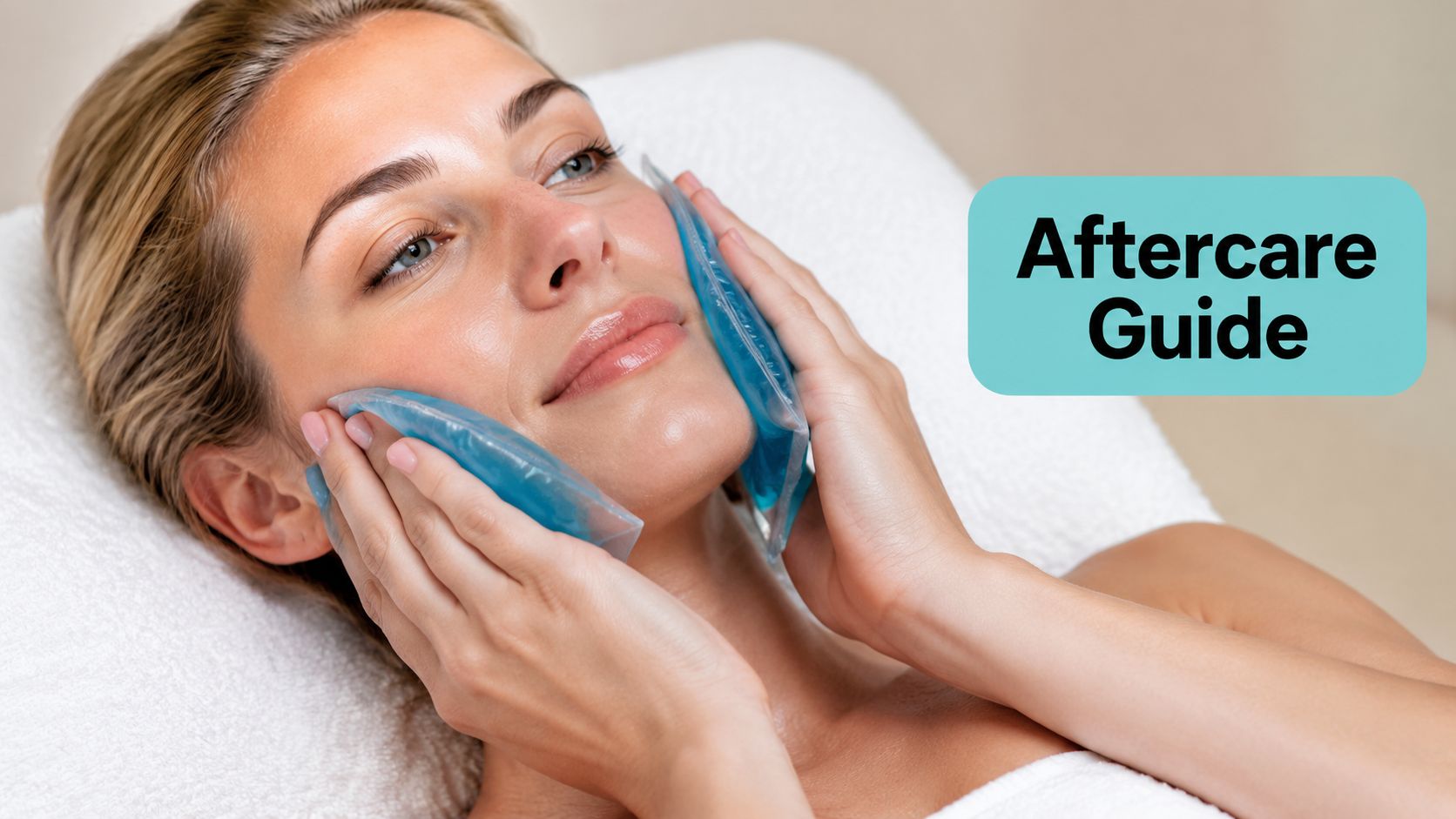
Master dermal fillers aftercare with do's and don'ts, swelling tips, activity limits and warning signs to protect your results and heal smoothly.

September 8, 2026
Ensuring Safety: Why Your Surgeon's Credentials Matter Most

Cape Cod Plastic Surgery offers expert cosmetic and reconstructive procedures in a safe, accredited setting. Led by Dr. Marc Fater, we combine advanced techniques with personalized care to help you look and feel your best.
Monday: 9:00 AM – 5:00 PM
Tuesday: 9:00 AM – 5:00 PM
Wednesday: 9:00 AM – 5:00 PM
Thursday: 9:00 AM – 5:00 PM
Friday: 9:00 AM – 5:00 PM