

October 2, 2026
When Is the Right Time for Plastic Surgery
Beyond the Calendar: How to Know You’re Truly Ready for Plastic Surgery
Apr 3, 2026
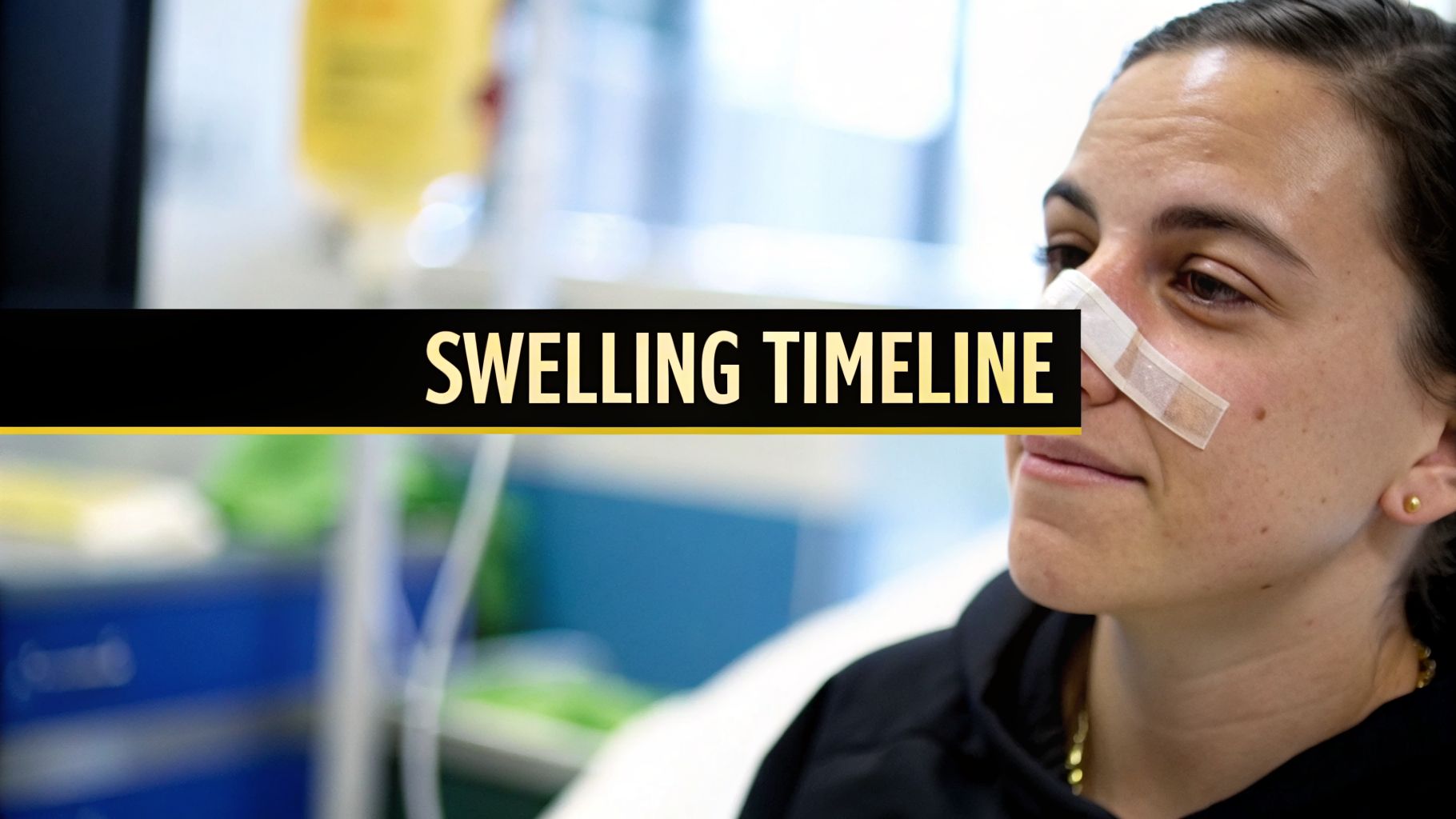
When patients ask me, "How long will the swelling last after my rhinoplasty?" the simple answer is about a year. But that doesn't really tell the whole story. The reality is much more encouraging.
The most dramatic swelling goes down surprisingly fast. In fact, about 90% of the swelling resolves in the first three months. The final 10% is the most subtle, slowly fading over the rest of the year as the last bit of definition appears. I often tell my patients to think of it like a sculpture: the initial work carves out the basic shape, but the final, beautiful details emerge with time and patience.
Understanding your recovery isn't about waiting for a single "reveal day." Instead, it’s a gradual process with distinct phases. Knowing what to expect at each stage helps turn uncertainty into confidence, allowing you to appreciate the refinements as they happen.
This visual timeline gives you a great overview of how your face transforms, from the initial post-op swelling to the refined final result after one year.

As you can see, the most noticeable changes happen early on. The rest of the year is all about watching that final, delicate definition come into focus.
Right after your surgery, your body gets to work healing, and its first response is inflammation. This is completely normal. During these first two days, swelling and bruising will be at their peak. It's common for this to extend into the cheeks and under the eyes.
Your nose will be safe and sound under an external splint, but you’ll definitely feel congested. Your job is simply to rest and let your body do its thing.
Around day seven, you’ll come back to the office for your first major follow-up. This is always an exciting appointment because we’ll remove your external splint and any external stitches. You get the first real look at your new nose!
Be prepared: Your nose will still look quite swollen, wide, and "puffy," especially at the tip. This is not your final result, but just an early preview. Any bruising will have likely started to fade from a dark purple to a lighter, yellowish-green.
This is when things really start to turn a corner. The swelling goes down rapidly during this period, and you’ll see a noticeable difference almost daily. By weeks 3-4, you can expect a 60-70% reduction in swelling.
While your nose isn't fully refined yet, you'll likely feel confident enough to get back to work and your social life. The "boxy" look from week one starts to soften, and the definition along the bridge and upper part of your nose becomes much clearer.
For a more detailed look at this phase, check out our comprehensive guide on rhinoplasty recovery week by week.
To help you visualize your recovery journey, this table offers a quick summary of the swelling reduction timeline. It’s a handy reference for the key milestones you can expect.
| Timeframe | Expected Swelling Level | Key Activity And Milestone |
|---|---|---|
| 0 - 48 Hours | Peak (100%) | Rest is your only job. Swelling and bruising are at their most significant. |
| Week 1 | High | Splint is removed. First look at your new nose, though it will be very puffy. |
| Weeks 2 - 4 | Moderate | Rapid decrease in swelling. Most patients feel ready to return to work. |
| Months 1 - 3 | Mild | 90% of swelling is gone. The nose looks much more refined and natural. |
| Months 3 - 12 | Minimal (Final 10%) | Subtle, residual swelling dissipates, especially at the tip. Final definition appears. |
This table shows that the most dramatic part of recovery happens relatively quickly, with the rest of the year dedicated to the final, subtle refinements.
By the time you hit the one-month mark, a huge amount of the swelling is already gone. Between month one and month three, you’ll see your nose take on a much more elegant and natural shape. This is often when friends and family really start to notice how fantastic your results are.
After three months, the vast majority of the swelling has subsided, but your healing journey isn't quite over. This final, year-long phase is all about that last bit of refinement. The remaining 10% of swelling, which we call "residual edema," will slowly disappear over the next nine months.
This is most apparent at the nasal tip. Because the skin is thickest there, it's always the last area to fully settle. Patience is the key here. The sharp, delicate contours that define your final result will continue to emerge all the way up to the one-year anniversary of your surgery.
To really get a handle on the rhinoplasty recovery timeline, we first need to talk about why swelling happens at all. It’s easy to see it as a frustrating side effect, but from a medical standpoint, swelling isn't a complication—it's proof that your body’s natural healing powers are firing on all cylinders.
Think of your surgery as a very precise, controlled renovation. As soon as Dr. Fater finishes, your body immediately dispatches a biological "construction crew" to the site. We call this the inflammatory response.
This "crew" is a rush of specialized cells and fluids, and the visible result of their arrival is what we call swelling, or edema.
This isn't just useless puffiness. The fluid is actually a sophisticated healing cocktail, bringing exactly what the nose needs to recover. It’s packed with:
In short, swelling is the physical evidence that your body is hard at work repairing and securing the beautiful new shape of your nose. It’s a sign of progress, not a problem.
The intensity of this response is directly tied to the extent of the "renovation." Rhinoplasty is a complex procedure that involves meticulously adjusting the underlying framework of bone and cartilage.
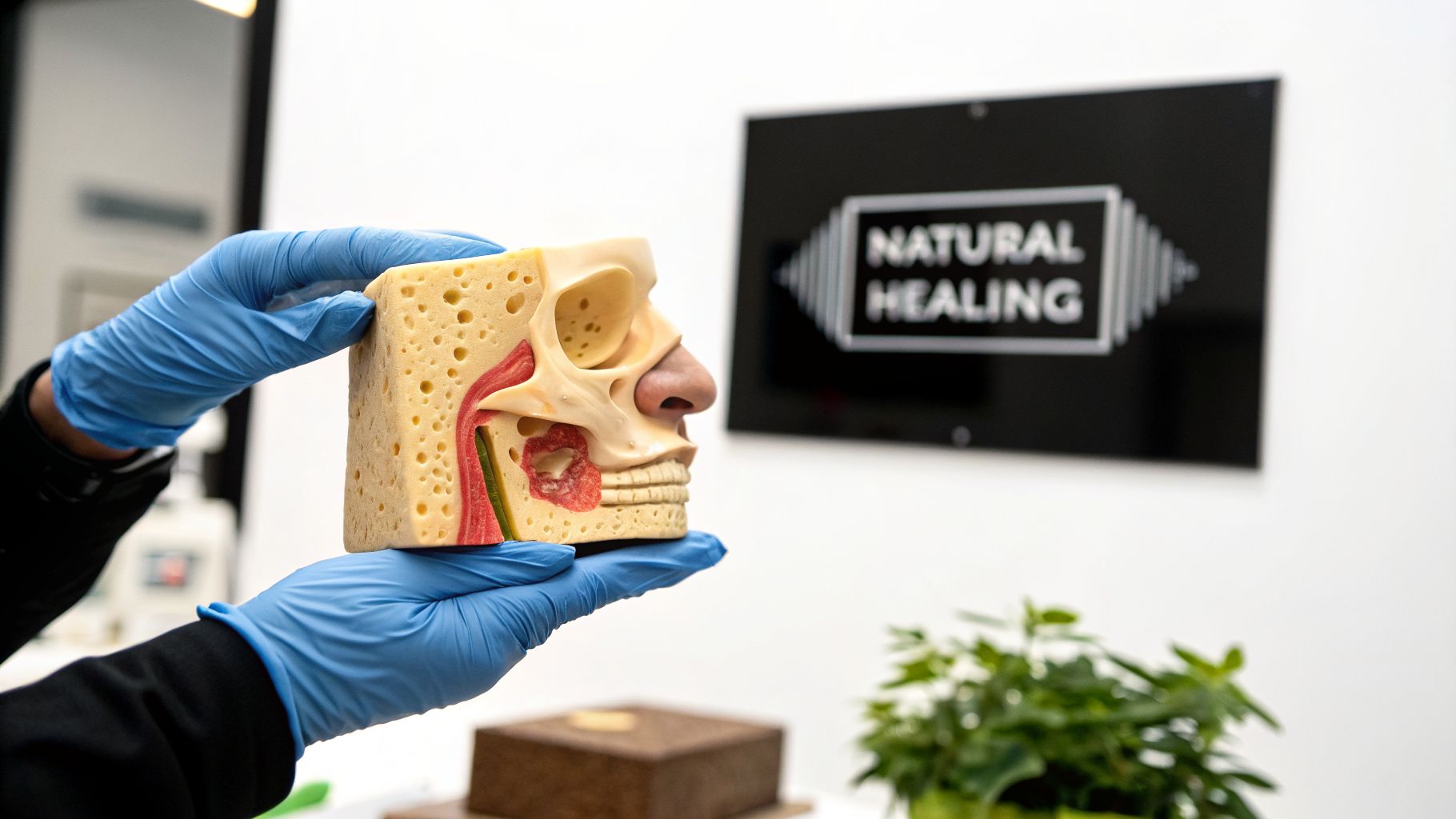
During a rhinoplasty, several types of tissue are addressed, and each heals on its own schedule, contributing to the overall swelling in different ways.
Understanding this process helps reframe swelling from an annoyance into a fascinating and essential part of your transformation. Every day you notice that puffiness, you can rest assured that a complex and perfectly orchestrated rebuilding project is happening just beneath the surface, paving the way for your final, refined result.
While the general recovery timeline is a great roadmap, your path will be your own. The question "how long does swelling last after rhinoplasty?" never has a single answer because so many variables are at play. Understanding what these are will help you set realistic expectations for your own healing journey.
Think of it this way: two people can follow the same recipe, but the final dish might turn out slightly different based on the oven, the quality of the ingredients, and the cook's technique. Your rhinoplasty recovery is much the same—it’s shaped by the surgical approach and your own unique biology.
One of the biggest factors is the surgical technique Dr. Fater and I decide on for your specific case. Each approach serves a different purpose, and that choice directly impacts the initial amount of swelling you'll experience.
Open Rhinoplasty: For this technique, I make a tiny incision across the columella (the small strip of tissue between your nostrils). This gives me a complete, unobstructed view of the nasal structures, which is critical for complex reshaping, especially when refining the nasal tip. The trade-off? This approach temporarily disrupts more of the nasal lymphatic channels, often leading to more noticeable initial swelling that takes a bit longer to fully go away, particularly at the tip.
Closed Rhinoplasty: Here, all incisions are hidden inside the nostrils. Because there's no external cut, the skin and soft tissues are disturbed less. This usually means you'll see less initial swelling and the puffiness tends to resolve faster.
The decision between an open or closed approach is always based on your anatomy and what we need to achieve to get the best result. We'll go over the pros and cons and decide which is right for you during your consultation.
It just makes sense: the more extensive the surgery, the more healing your body has to do. A minor adjustment to the bridge of your nose is like repainting a room—it’s a fairly straightforward project. A full nasal reconstruction, on the other hand, is a complete renovation.
More involved work—like complex tip work, using cartilage grafts to build structure, or straightening a very crooked nose—requires more significant changes to the underlying framework. Your body responds to this "renovation" with a more robust healing process, which naturally includes more swelling that lasts longer.
Your own body plays a massive role in the healing timeline. I’ve seen two patients undergo the exact same procedure and have completely different swelling patterns.
A crucial variable is the thickness of your nasal skin. Thicker, more oily skin tends to act like a denser sponge; it can hold onto fluid for a longer period. Patients with thick skin often find that the final 10% of swelling, especially at the very tip, is the most stubborn and can take closer to 18 months to fully refine.
Other personal factors include:
Finally, it makes a huge difference whether this is your first rhinoplasty or if we are correcting a previous surgery. A revision rhinoplasty almost always comes with a longer and more unpredictable swelling timeline.
The main culprit is scar tissue from the first operation. This scar tissue makes the surgery much more challenging, as it distorts the natural tissue layers and affects the blood supply. Operating in a previously scarred area triggers a stronger and more prolonged inflammatory response from the body. It’s like trying to renovate an old house that’s already had a few clumsy remodels—the work is more intricate, and the cleanup takes longer.
By keeping these factors in mind, you can have a much better understanding of your own healing process and approach recovery with confidence and patience.
While your body has its own timeline for healing, you aren’t just along for the ride. The small things you do in the days and weeks after your rhinoplasty can have a huge impact on how quickly the swelling goes down and how comfortable you feel.
Think of it this way: I build the new structure, but you’re in charge of the clean-up crew. Following a careful post-op plan helps that crew work as efficiently as possible.
At Cape Cod Plastic Surgery, we walk you through every step of this process. The guidelines from Dr. Marc Fater are born from years of experience, and they’re all about minimizing swelling and setting you up for a great result. Here’s what we’ve found makes the biggest difference.
Make gravity your friend. For the first week, this is non-negotiable. When you rest or sleep, prop your head up with two or three pillows so it’s well above your heart. This simple trick prevents fluid from settling in your face overnight.
Use cold compresses smartly. During the first 48 to 72 hours, cold packs are your go-to. But be careful: place them on your cheeks or forehead, never directly on your nose or splint. The cold helps shrink the blood vessels, which tamps down that initial puffiness and feels great, too.
Drink up. Staying well-hydrated is crucial. Water helps your body’s natural drainage system—the lymphatic system—flush away excess fluid and waste from the surgical area.
Watch the salt. Salty foods make you retain water, and that’s the last thing you want right now. For the first few weeks, try to skip the processed snacks, canned soups, and fast food. Stick with fresh, whole foods instead.
Just as important as what you do is what you don’t do. Pushing things too soon can easily cause a setback.
No strenuous activity. Anything that gets your heart pumping and your blood pressure up will make swelling worse. That means no jogging, lifting weights, or even intense house cleaning for a bit. We'll give you a clear schedule for easing back into exercise, usually starting with light walks after week one.
Don’t blow your nose! You’ll be tempted, but for at least two weeks, you have to resist. The pressure can damage the delicate healing work, cause bleeding, and ramp up swelling. If a sneeze is coming, let it out through your mouth.
Keep glasses off your nose. Even the lightest pair of glasses will put pressure right where you don’t want it. That constant pressure can get in the way of healing and could even leave a permanent little dent. I’ll let you know exactly when it’s safe for your glasses to rest on your nose again.
One of the most effective tools in your early recovery kit is the cold compress. Knowing the science behind why we recommend cold—and not heat—in these first few days can be really helpful. If you’re curious, clinical guides on topics like when to ice vs. heat explain how temperature affects tissue inflammation and healing.
Understanding the "why" behind these instructions helps you become a true partner in your own recovery. When you know how to best support the healing process, you'll feel more in control and get that much closer to seeing your final, refined result.
Getting a rhinoplasty is a major step, and we know the process doesn’t just stop once you leave the operating room. Here at Cape Cod Plastic Surgery, your recovery is a journey we take with you. Dr. Marc Fater and our entire team are here for you from that very first post-op check-in all the way until your final results have settled in, a process that can take a full year.
Think of us as your guides. We’ve designed a clear, reassuring follow-up plan so you always know what to expect and can see how your healing—and especially the swelling—is coming along. We want you to feel confident and completely cared for every step of the way.

Your post-op care kicks off right away. One of the biggest milestones happens just one week after your surgery. During this appointment, we'll gently remove your external splint and any sutures. This is always an exciting day—it’s the first time you'll get a glimpse of your new nose! Just remember, there will still be a good deal of swelling, so what you see isn't the final product.
We'll have you come back in for a one-month check-up. By then, a lot of that initial, more dramatic swelling will have gone down. This is an important visit for Dr. Fater to take a close look at how you're healing, check on the internal structures, and make sure everything is on the right track. We’ll also compare your new photos with your "before" pictures, which is often a fantastic way to see just how far you've already come. You can see some of these incredible transformations in our rhinoplasty before and after gallery.
The real refinement happens over months, not weeks. That's why we don't just see you for a month and send you on your way. Our follow-up care is intentionally designed to monitor your progress over the entire first year as your nose settles into its final shape.
Here’s what our typical follow-up schedule looks like after that first month:
This timeline ensures we're with you at every key stage, offering guidance and making sure you feel completely at ease.
Our goal isn’t just a beautiful outcome; it’s making sure you feel supported and safe through the entire experience. We’ll give you clear instructions on how and when to get in touch, so you never have to wonder if you should call.
While a gradual decrease in swelling is the name of the game, we want you to call us if anything feels off. Please get in touch with our office right away if you notice any of these signs:
Your decision to work with Cape Cod Plastic Surgery means you have a dedicated team in your corner. We are here to answer every question and guide you from the initial consultation all the way to your final, stunning reveal. While every surgery is different, you might find this post-surgery recovery guide for another procedure helpful, as it highlights similar principles of healing and the importance of patience.
It's completely normal to have a lot of questions about swelling, even after you have a clear idea of the recovery timeline. It’s easily the most-watched aspect of healing, and getting answers to your specific concerns can bring a great deal of comfort.
Here, we're diving into the most common questions Dr. Fater hears from his patients at Cape Cod Plastic Surgery. These are the real-world concerns that pop up during recovery, and we want to give you the clear, expert answers you deserve.
Not at all. The swelling from a non-surgical "liquid nose job" is in a totally different league—it's much milder and resolves far more quickly.
Think of it this way: a non-surgical rhinoplasty is like having a decorator come in to hang a new picture. The procedure involves carefully injecting dermal fillers, causing only minor disruption. You might see a little puffiness or feel some tenderness where the injections were made, but this usually vanishes within a few days to a week.
A surgical rhinoplasty, on the other hand, is like a full structural renovation where we’re actually moving walls and beams. We're reshaping bone and cartilage, which naturally cues your body's complete healing process. That’s why the swelling is a months-long journey, not a week-long inconvenience.
This is one of the most common things patients notice, and it's a completely normal—if sometimes frustrating—part of the healing process. The tip is always the last holdout, and there are a few good reasons why it takes its time settling down.
Thicker Skin: The skin on the tip of your nose is the thickest on your entire nose. Just like a dense sponge, it can hold onto fluid for longer than the thinner skin over the bridge.
Complex Cartilage: Your nasal tip has an incredibly intricate cartilage structure. Creating a refined, beautiful tip often requires the most detailed surgical work, and more work means a more prolonged healing response in that specific area.
The Effects of Gravity: It's a simple fact of physics. As you go about your day, gravity naturally pulls fluid downward. Since the tip is the lowest point of your nose, that’s where fluid tends to pool, keeping it looking puffy longer than the rest.
When it comes to the tip, patience is truly your best friend. The bridge and mid-section of your nose will look quite defined within three months, but the tip will continue to slowly refine for a full year, and sometimes up to 18 months. This is where the final, delicate details emerge, so it’s worth the wait.
Yes, even several months into recovery, there are a few things you can do to help that last 10% of swelling find its way out. The key here is to get Dr. Fater's explicit go-ahead before trying anything new, as your nose is still maturing.
Once you have the green light, some patients find that a very gentle nasal massage can help. Dr. Fater can demonstrate the proper technique, which involves using light, consistent pressure to encourage lingering fluid to disperse. It's crucial not to be aggressive; you're nudging the healing process along, not forcing it.
Beyond that, your daily habits still make a difference. Sticking to a healthy, low-sodium diet helps prevent your body from retaining excess water. And don't forget sun protection! Shielding your nose from the sun is important, as UV rays can sometimes worsen inflammation in healing skin. These small but consistent efforts give your body the support it needs to finish the job.
Normal healing is a story of gradual improvement. While you'll have good days and bad days where swelling fluctuates a bit, a steady downward trend is what we look for. Certain symptoms, however, are red flags that something else might be going on, like an infection.
You should call our office immediately if you experience any of the following:
Always trust your gut. If something just doesn't feel right or you're worried about how you're healing, we want you to call. Your safety is our top priority, and we are here to make sure your recovery is as smooth and predictable as possible.
At Cape Cod Plastic Surgery, we're here to guide you through every single phase of your journey. If you have more questions or you're ready to see what's possible, we invite you to schedule your personal consultation with Dr. Fater.
October 2, 2026
Beyond the Calendar: How to Know You’re Truly Ready for Plastic Surgery

October 2, 2026
Exploring Your Breast Augmentation Options: Implants, Shapes, and What to Expect
October 1, 2026
Reshaping Your Silhouette: A Guide to Body Contouring
Cape Cod Plastic Surgery offers expert cosmetic and reconstructive procedures in a safe, accredited setting. Led by Dr. Marc Fater, we combine advanced techniques with personalized care to help you look and feel your best.
Monday: 9:00 AM – 5:00 PM
Tuesday: 9:00 AM – 5:00 PM
Wednesday: 9:00 AM – 5:00 PM
Thursday: 9:00 AM – 5:00 PM
Friday: 9:00 AM – 5:00 PM