

October 7, 2026
What to Expect During Your Breast Surgery Recovery
A Practical Guide to Healing After Breast Surgery
Sep 2, 2026

The national average rhinoplasty surgeon fee is about $7,637, while a realistic all-in price for primary rhinoplasty is roughly $8,500 to $20,000. Your final bill depends on surgical complexity, geography, and what the surgeon bundles into the quote.
You may be comparing a polished website estimate with a number that feels far less useful: a surgeon advertises a fee near the national average, but the estimate from the office includes anesthesia, the operating facility, medications, and follow-up care. That difference is where many nose job budgets go wrong.
For patients in Cape Cod and Hyannis, the right question isn't just “How much does a nose job cost?” Ask instead: What will I pay, and which services are included? A primary cosmetic case may sit within a moderate all-in range, while revision surgery or a combined cosmetic and functional operation can move well beyond it.
A prospective patient might see the $7,637 average surgeon fee and assume that amount represents the complete price. It doesn't. The American Society of Plastic Surgeons rhinoplasty cost guide identifies that figure as the surgeon's charge, excluding anesthesia, the operating facility, and follow-up expenses.
For routine primary rhinoplasty, independent pricing guides place the broader U.S. total-cost range around $8,500 to $14,000 in mid-tier metropolitan markets, with complex or high-demand-surgeon cases reaching $15,000 to $25,000 or more according to rhinoplasty cost factors from Rajamohan MD. That range is more useful for budgeting because it reflects the complete surgical package rather than one professional fee.
A thorough estimate commonly identifies:
Prescriptions, special compression garments, additional imaging, laboratory work, and treatment of an unexpected issue may sit outside that package. Ask the practice to mark every included and excluded item in writing. The Cape Cod Plastic Surgery pricing page can serve as a local starting point, but your anatomy and surgical plan determine the personalized estimate.
| Procedure Type | Surgeon Fee Average | Typical All-In Range |
|---|---|---|
| Primary rhinoplasty | About $7,637 | Roughly $8,500 to $20,000 |
| Revision rhinoplasty | Often $15,000 to $20,000 or more | Can exceed $35,000 to $50,000 in difficult cases |
| Reconstructive rhinoplasty | National average of $7,168 | About $4,591 to $12,160 |
The revision and reconstructive figures come from the 2025 to 2026 rhinoplasty pricing guide. Treat any single advertised number as a starting point, not a promise.
A rhinoplasty estimate should read like a complete financial plan. The surgeon's fee is usually the largest line, but it isn't the only one that matters. Independent cost breakdowns commonly place surgeon fees around $3,500 to $12,000, anesthesia around $1,000 to $1,800, and operating-room or facility charges around $800 to $2,500, as detailed by Rajamohan MD's rhinoplasty pricing analysis.
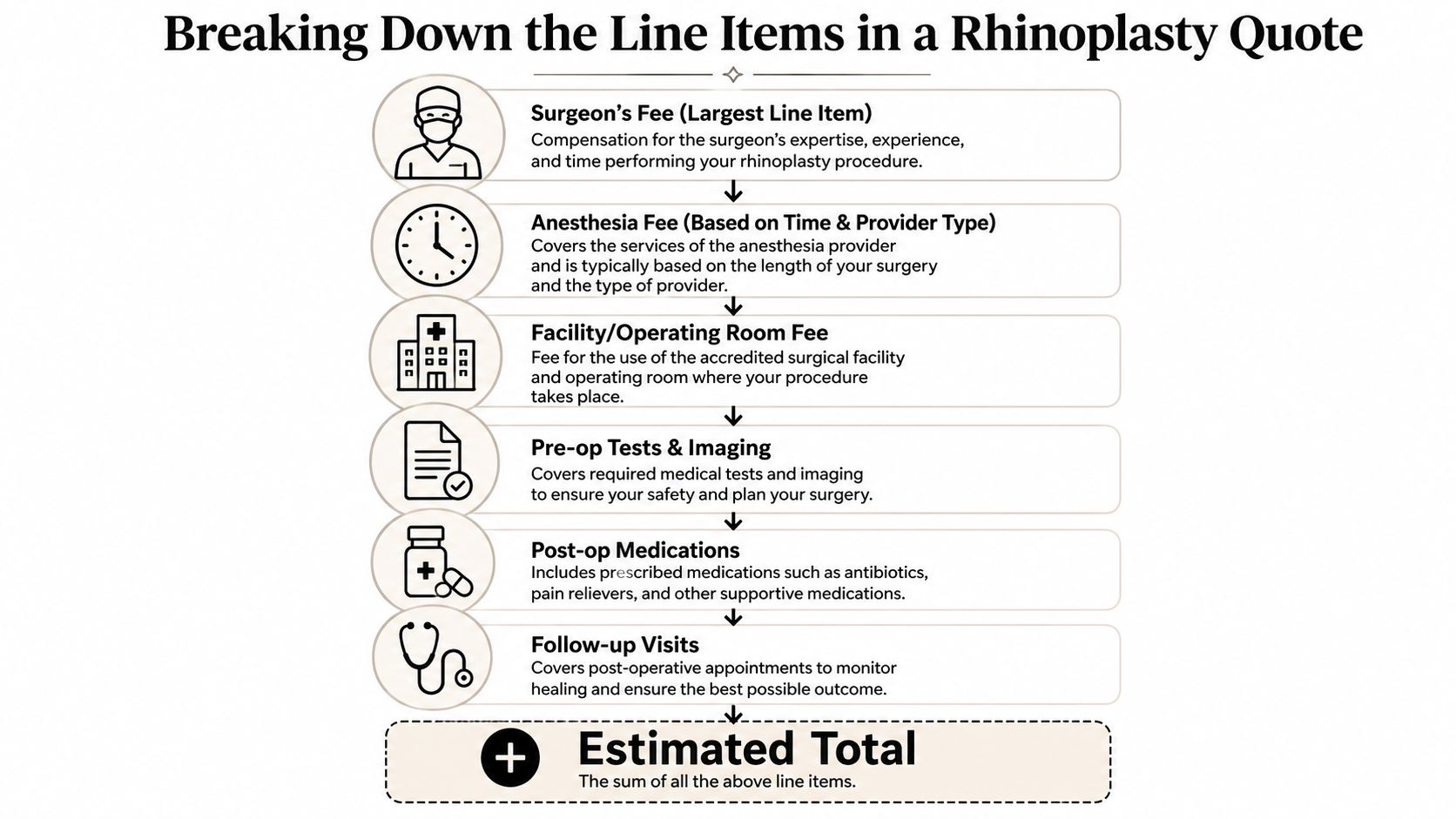
Surgeon fee. This covers the consultation-based surgical plan, operative work, and the surgeon's professional responsibility. A primary procedure may require less reconstruction than a revision, which is why the fee can vary sharply.
Anesthesia fee. Anesthesia pricing reflects the length of the operation and the provider involved. A longer procedure, such as one requiring extensive grafting, can increase this charge.
Facility fee. The operating setting affects the bill. A hospital outpatient department and an accredited ambulatory surgical center have different overhead structures, staffing models, and billing practices.
Grafts and materials. Septal cartilage may be sufficient for one patient, while another may need ear or rib cartilage for structural support. The estimate should state whether graft harvesting and related materials are included.
Preoperative and postoperative care. Medical clearance, laboratory testing, splints, dressings, prescriptions, and follow-up appointments can each appear as separate charges.
Use a hypothetical $10,500 total only as a budgeting illustration, not as a market average. Ask the practice to show how that total is allocated among the surgeon, anesthesia, facility, testing, medications, materials, and follow-up rather than accepting one unexplained figure.
Practical rule: If the quote doesn't identify anesthesia, facility charges, postoperative visits, medications, and grafting materials, you don't yet have an all-in price.
The most common surprises are extra facility time, separate anesthesia billing, prescriptions, additional imaging, replacement splints, and visits outside the standard postoperative schedule. A written question list prevents a low initial quote from becoming a much higher final balance.
Complexity is the strongest clinical driver of rhinoplasty pricing. A small contour adjustment may require less operating time than structural correction involving crooked nasal bones, substantial dorsal reduction, thick skin, airway support, or significant tip reconstruction. The Clineca guide to rhinoplasty cost factors identifies intricacy, revision status, cartilage grafting, anesthesia duration, and facility type as major multipliers.
Revision surgery deserves special attention. Scar tissue changes the normal tissue planes, previous cartilage may be unavailable, and the surgeon may need to rebuild rather than reshape the nose. That combination raises the technical demand and can increase both the professional fee and facility-related charges.
| Factor | Direction of Price Impact | Why It Changes Cost |
|---|---|---|
| Primary cosmetic surgery | Lower relative impact | The anatomy hasn't been altered by prior surgery |
| Revision rhinoplasty | Higher impact | Scar tissue, uncertainty, reconstruction, and grafting add difficulty |
| Open technique | May increase cost | Greater exposure can support more complex structural work |
| Closed technique | May reduce scope | Useful for selected changes, but not appropriate for every goal |
| Ear or rib grafting | Higher impact | Adds graft-harvesting work, materials, and operating time |
| Septoplasty or airway repair | Variable | Adds functional work and may create a separate insurance claim |
| High-demand surgeon | Higher impact | Expertise, demand, and local overhead influence professional fees |
The technique itself shouldn't be chosen to chase a lower price. A closed approach may suit focused changes, while an open approach may provide better access for structural correction. Your surgeon should select the method based on the anatomy and result you want.
Nonclinical factors matter too. Board certification, rhinoplasty-specific experience, operating-room standards, and regional demand all influence pricing. A higher quote may reflect a more experienced surgeon and a safer, more complete package, but you should still demand an itemized explanation rather than paying a premium without clarity.
These three labels describe different surgical problems, and confusing them leads to bad budgeting. Primary rhinoplasty is a first-time operation on an unoperated nose. Revision rhinoplasty addresses residual concerns or complications after prior surgery. Functional rhinoplasty focuses on breathing or structural function, although one patient can need both functional and cosmetic work.
Independent 2025 to 2026 guides place primary cosmetic rhinoplasty commonly around $9,000 to $20,000, while revision cases often start around $15,000 to $20,000 and can exceed $35,000 to $50,000 in difficult cases, according to the Scottsdale Facial Plastics pricing guide.
| Procedure Type | Typical Surgeon Fee | All-In Range | Insurance Eligible? |
|---|---|---|---|
| Primary cosmetic rhinoplasty | Varies with scope and surgeon | About $9,000 to $20,000 | Generally no |
| Revision rhinoplasty | Commonly starts around $15,000 to $20,000 | May exceed $35,000 to $50,000 in difficult cases | Usually cosmetic portions are not |
| Functional or reconstructive rhinoplasty | Reconstructive average of $7,168 | About $4,591 to $12,160 | Functional portions may qualify |
Revision surgery commands a premium because the surgeon may need to release scar tissue, correct weakened support, locate usable cartilage, and rebuild the framework. It isn't a mere second version of primary surgery. Patients considering this category should review a specialized revision rhinoplasty cost guide before comparing quotes.
A primary cosmetic case can also include septoplasty, turbinate reduction, or internal valve repair. In that situation, the office may submit the medically necessary component to insurance while you pay the cosmetic portion directly. Combining related work in one operation can avoid duplicated preparation and recovery, but the billing must clearly separate covered and self-pay services.
Where you have surgery affects the quote through surgeon demand, facility overhead, staffing, and local operating costs. Major metropolitan markets often carry higher prices than smaller regional markets because high-demand practices and expensive facilities raise the total. National benchmarks therefore provide direction, not a Cape Cod-specific guarantee.
Cape Cod and Hyannis patients should compare local estimates with Boston pricing rather than assume the two markets are interchangeable. A Hyannis practice may have different facility overhead and surgeon demand from a major Boston center, but a local quote can still rise when the surgeon handles complex anatomy, revision work, or combined functional surgery.
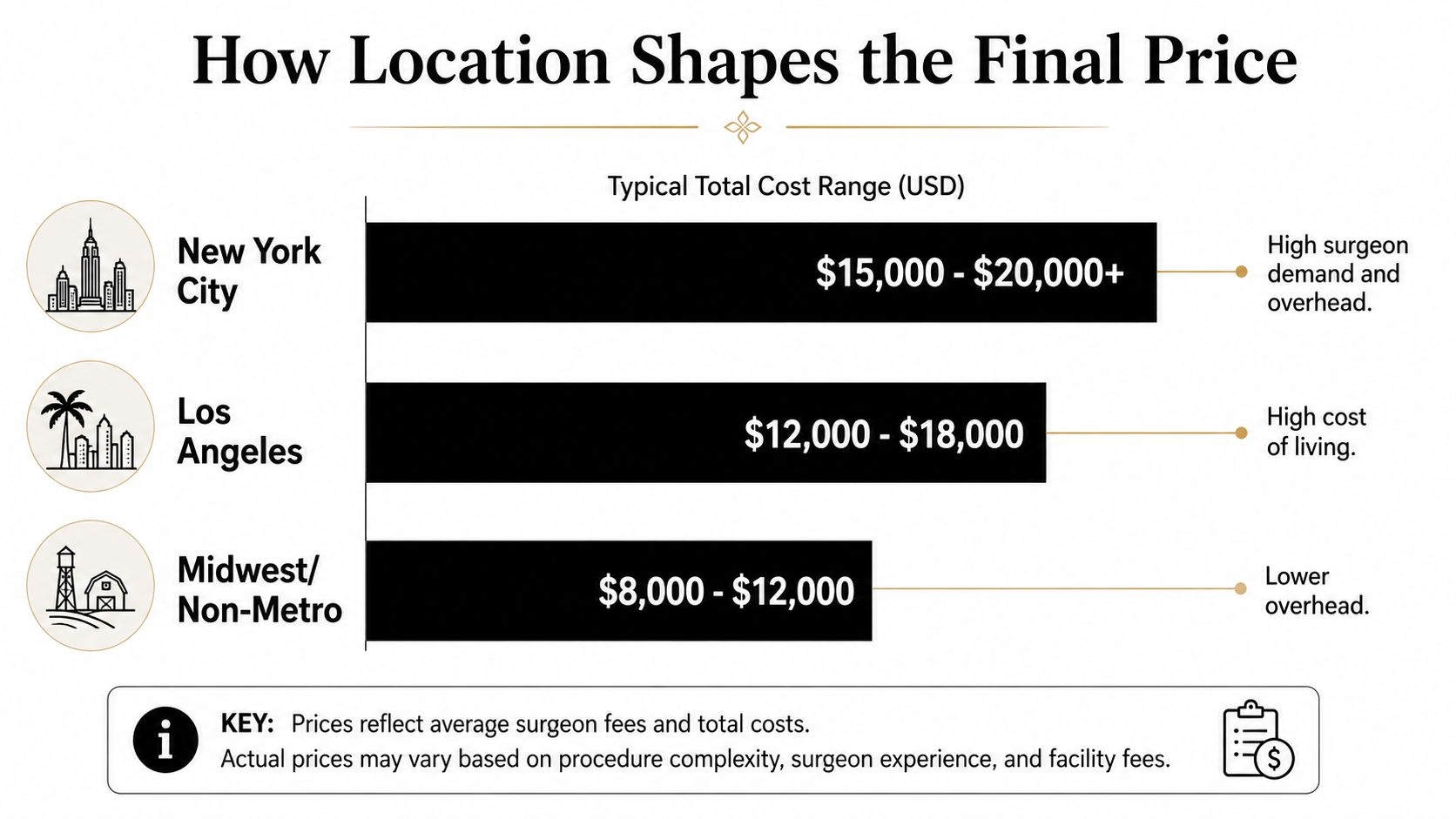
Don't compare a surgeon-only fee in one city with an all-inclusive quote in another. Request the same categories from every office:
Traveling for a cheaper estimate can lose its advantage once lodging and follow-up logistics enter the calculation. You want practical access to your operating team if healing takes an unexpected turn. A lower local price isn't automatically better, and a higher metropolitan quote isn't automatically more thorough.
Use this location comparison video as general visual context, then rely on written local estimates for your actual decision.
Insurance usually separates appearance changes from medical necessity. Cosmetic reshaping is elective and generally isn't covered by standard insurance or Medicare. Functional surgery, such as septoplasty for a deviated septum, may qualify when the insurer accepts documentation showing impaired breathing and medical necessity, as described in the rhinoplasty insurance coverage guide.
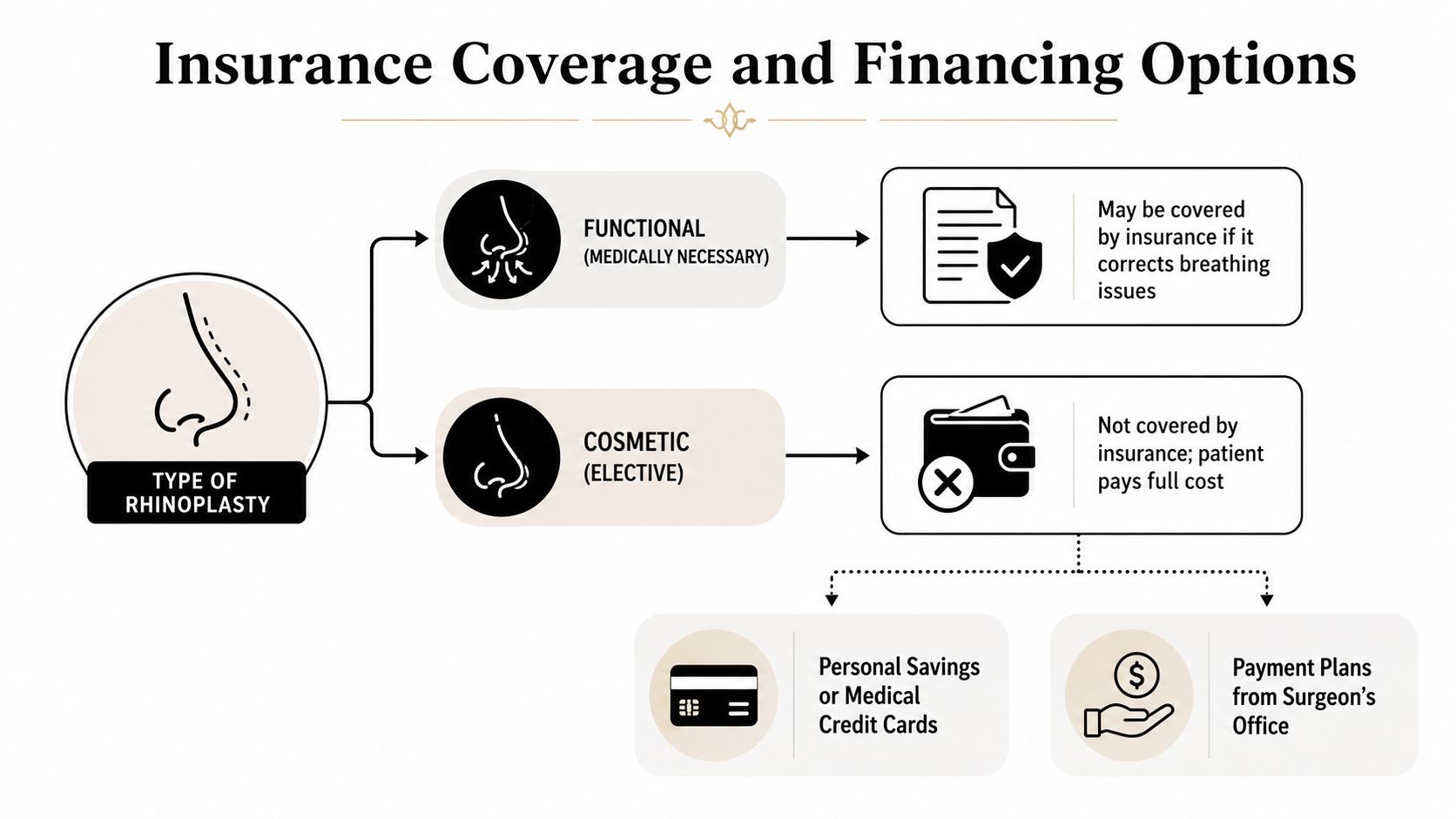
A combined operation may include a medically necessary septoplasty or airway repair plus cosmetic changes to the bridge, tip, or nostrils. The surgeon's office can often submit the functional component for review, while you remain responsible for the cosmetic component and any noncovered balance.
Coverage depends on the plan, documentation, site of service, coding, and insurer approval. Ask for a written breakdown that answers four questions:
Do not schedule based on a verbal assurance that insurance “should cover” part of the surgery. Written pre-authorization gives you a clearer financial position, although it still doesn't replace a final benefits explanation from your insurer.
Common approaches include personal savings, medical credit lines such as CareCredit, practice payment plans, and personal loans. A health savings account may be relevant to an eligible functional component, but patients should confirm the rules with their plan administrator and tax professional. Review interest, promotional terms, credit requirements, and monthly payment obligations before signing.
The plastic surgery financing options guide can help you organize the questions to ask a practice before committing to a payment method.
The cheapest rhinoplasty quote is often the least useful comparison. One office may list only the surgeon's charge, while another includes anesthesia, facility use, splints, postoperative visits, and routine materials. Until those categories match, the lower number doesn't tell you which operation costs less.
Start with credentials and relevant experience. Confirm board certification in plastic surgery or facial plastic surgery, then examine rhinoplasty-specific results involving patients with anatomy similar to yours. A gallery showing only idealized, simple cases tells you little about how the surgeon handles thick skin, crooked bones, airway problems, or prior surgery.
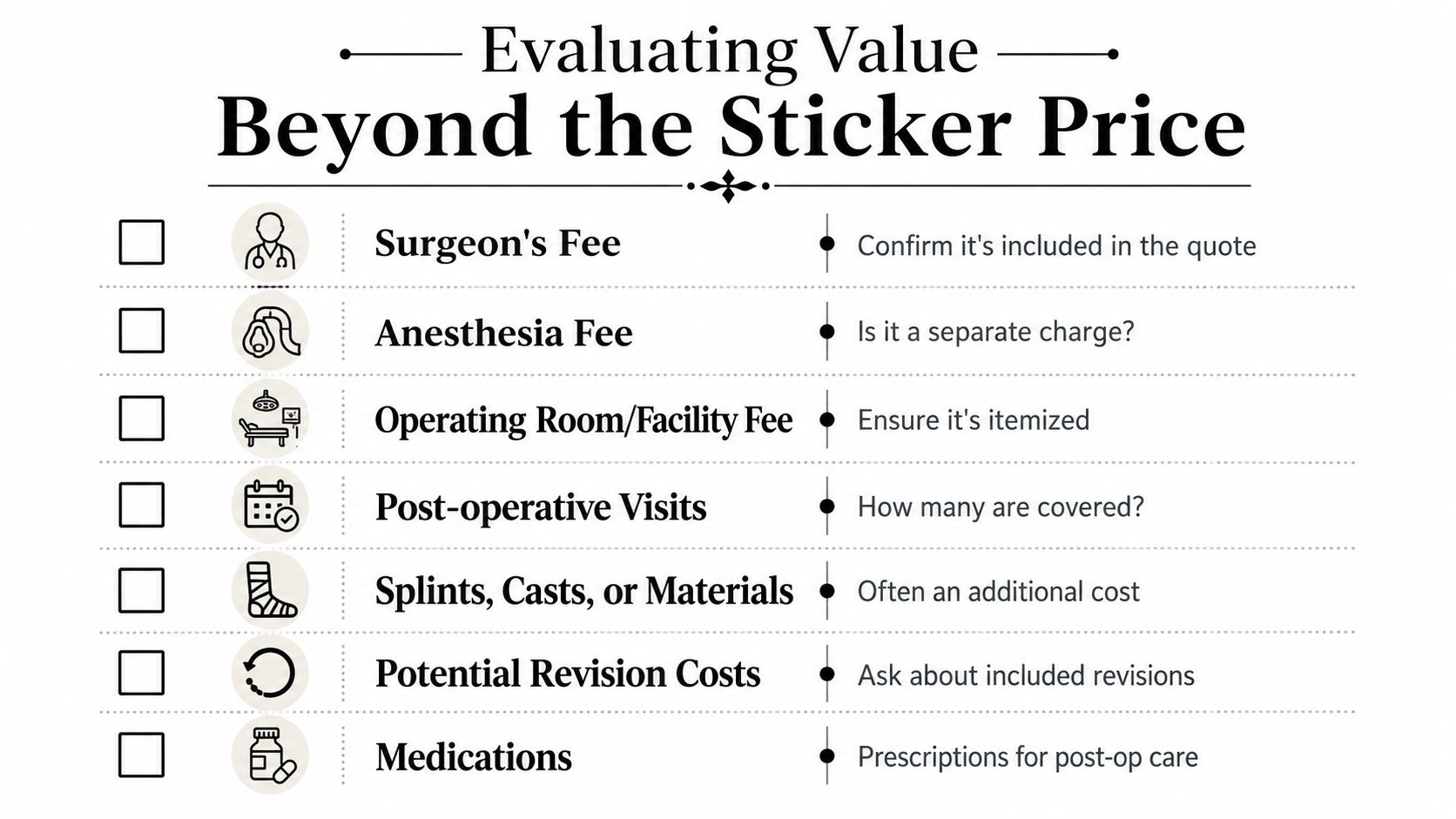
A transparent all-inclusive quote from an experienced rhinoplasty surgeon can offer better value than a low bid filled with exclusions.
Facility accreditation matters because the surgical environment is part of what you're buying. The same applies to postoperative access. A surgeon who explains limitations, recovery, and revision policies clearly is giving you information that a headline discount cannot replace.
For Cape Cod patients, include travel time and local follow-up in the value calculation. A practice such as Cape Cod Plastic Surgery provides pricing information and surgical consultations in Hyannis, allowing patients to ask these questions directly before choosing a plan.
Start with two itemized consultations in the Cape Cod and Hyannis area. Ask each board-certified surgeon to provide a written estimate that identifies the surgeon fee, anesthesia, facility, grafts or implants, medications, and routine follow-up. Don't compare offices until both estimates use the same categories.
Bring a focused list of goals to each appointment. Explain whether your priority is appearance, breathing, or both. Ask to review computer imaging, discuss open versus closed technique, examine before-and-after results for similar anatomy, and receive the revision policy in writing.
Your budget should include more than the surgical estimate:
Financing deserves early attention. Compare CareCredit, Alphaeon Credit, personal loans, and practice payment plans before your preferred surgical date. Look at the full repayment obligation, not just an attractive introductory payment. If breathing surgery is part of your plan, submit the functional documentation to your insurer for pre-authorization before scheduling.
The most productive next step is a consultation, not another search for a national average. A surgeon can examine your nasal structure, determine whether you need primary, revision, cosmetic, functional, or combined work, and turn a broad range into a personalized written estimate.
Cape Cod Plastic Surgery offers consultations and pricing guidance for patients considering cosmetic and reconstructive nasal surgery in Hyannis. Visit Cape Cod Plastic Surgery to request a consultation and discuss an itemized surgical plan for your anatomy, goals, and budget.
October 7, 2026
A Practical Guide to Healing After Breast Surgery

October 6, 2026
Your Safety Guide: What to Look for When Choosing a Plastic Surgeon

October 5, 2026
Why Our On-Site Accredited Facility Matters for Your Safety

Cape Cod Plastic Surgery offers expert cosmetic and reconstructive procedures in a safe, accredited setting. Led by Dr. Marc Fater, we combine advanced techniques with personalized care to help you look and feel your best.
Monday: 9:00 AM – 5:00 PM
Tuesday: 9:00 AM – 5:00 PM
Wednesday: 9:00 AM – 5:00 PM
Thursday: 9:00 AM – 5:00 PM
Friday: 9:00 AM – 5:00 PM