

September 9, 2026
How to Care for Surgical Incisions Properly
Expert Guide to Proper Surgical Incision Care
Mar 18, 2026

If you're looking to address lines on your neck, the solution isn't a single magic potion. It's a combination of smart prevention, a consistent at-home routine, and, when needed, the right professional treatments. The best path for you really depends on where you're starting—are you trying to prevent future lines or correct deeper creases that are already there?

It’s a common story. We spend so much time and effort on our faces, but our necks often get forgotten—until those horizontal lines or vertical bands start to set in. Whether from years of sun exposure, the natural aging process, or the more modern "tech neck" from looking down at our devices, these lines can be a frustrating giveaway of age.
But getting a smoother, more youthful-looking neck is absolutely achievable. The key is moving beyond quick fixes and adopting strategies that deliver real, noticeable results. This guide is here to walk you through exactly that.
So, where do you begin? Understanding all your options is the first step. To truly learn how to get rid of neck lines, you need a complete picture of what works.
We’ll break it all down, covering:
Your neck deserves the same attention as your face. In fact, the skin there is thinner and more delicate, making it even more vulnerable to damage and aging if it's ignored.
With over 30 years of experience in the field, Dr. Marc Fater of Cape Cod Plastic Surgery will be lending his expertise throughout this guide. He'll help demystify everything from the absolute necessity of daily sunscreen to the finer details of what a surgical neck lift actually involves. We want you to feel confident and fully informed, so you can choose the right path for a look you’ll love.
Before we can talk about fixing neck lines, it helps to understand what’s causing them in the first place. These lines aren’t just a random part of getting older; they’re a direct result of how your neck skin is built and the life it’s lived.
The skin on your neck is fundamentally different from the skin on your face. It's much thinner, has fewer oil glands, and is naturally more prone to dryness and damage. This inherent fragility gets a double whammy from the natural aging process.
Deep down, your skin’s firmness and bounce come from two key proteins: collagen and elastin. You can think of them as the internal framework holding everything up. Collagen provides the structure and strength, while elastin lets your skin snap right back after you smile, frown, or stretch.
As we get older, our bodies just don't produce as much of these proteins. With less support, the skin gets thinner, loses its elasticity, and starts to hold onto creases. It’s like folding a crisp new piece of paper over and over—eventually, those folds become permanent marks. That's essentially what happens to skin that’s lost its structural integrity.
What really speeds up this process are the external factors we face every day. Unsurprisingly, one of the biggest offenders is sun damage, or photoaging. The sun’s UV rays are notorious for breaking down collagen and elastin. And since the neck is so often left exposed and forgotten when we apply sunscreen, it can show signs of sun damage long before the face does.
Then there's a very modern problem: "tech neck." Think about how often you look down at your phone, tablet, or laptop. That constant downward gaze creates horizontal creases in the neck. Over time, this repetitive motion etches those lines deeper and can even cause new ones to appear, affecting people at younger and younger ages.
It’s a perfect storm, really. The skin is already getting weaker from the inside due to natural aging, while things like sun exposure and repetitive movements are creating damage from the outside.
Our daily habits absolutely make a difference. Smoking, for example, constricts blood vessels, which chokes off the skin’s supply of oxygen and nutrients and slows down its ability to repair itself. Even the way you sleep can have an impact—side sleepers often find vertical or diagonal creases developing on their neck and chest over time.
A huge factor we're seeing more of now is rapid weight loss, especially with the rise of GLP-1 medications. This effect, sometimes called "Ozempic neck," happens when a large amount of fat is lost quickly. The skin simply doesn't have the elasticity or the time to shrink back, leaving behind loose, saggy skin that makes any existing neck lines look much more severe.
This has caused a massive surge in people looking for solutions. In fact, traffic to content about this on RealSelf shot up by 2080% year-over-year. Surgeons are now reporting that over 10% of all aesthetic spending is going toward fixing skin laxity after major weight loss. You can dive deeper by exploring the full report on recent plastic surgery trends to see just how much this has shifted the landscape.

While professional treatments can deliver impressive changes, your daily habits are truly the foundation for a smoother, healthier-looking neck. Think of it as your first line of defense. A consistent at-home approach is essential for preventing new lines from forming and softening the ones you already see.
I see it all the time in my practice: people with a meticulous facial routine who completely ignore everything below the jawline. This is one of the biggest mistakes you can make. The skin on your neck is incredibly delicate and needs just as much attention as your face. The single most effective change? Extend your entire skincare routine down to your chest. Every single day.
You don't need a complicated, 10-step regimen for your neck. The goal is simple: protect the skin, keep it hydrated, and encourage collagen production. This all comes down to using products with proven, hard-working ingredients.
Your morning and evening routine can be straightforward:
Look for powerhouse ingredients like retinoids to boost cell turnover and build collagen, peptides to help signal skin repair, and hyaluronic acid to draw in moisture and plump the skin from within. Vitamin C is another fantastic antioxidant for fending off environmental aggressors and brightening the skin.
A common question we hear is whether a separate "neck cream" is really necessary. While some are formulated with specific firming ingredients, the most important thing is consistency. Using a high-quality moisturizer packed with great ingredients—whether it's your facial cream or a dedicated neck product—is what truly counts.
The modern world has given us a very modern problem: "tech neck." It's a leading cause of those horizontal neck lines, and it’s no surprise when you consider the hours we spend looking down at our phones and laptops. This repetitive folding of the skin eventually etches permanent creases.
The good news is that correcting your posture is a free and surprisingly effective way to smooth out these lines. Start with small, conscious adjustments. Raise your computer monitor to eye level. When you're on your phone, make an effort to lift the device to your face instead of dropping your head to meet it.
You can also sprinkle in a few simple stretches during your day to release tension:
These small, consistent actions can make a huge difference in preventing the constant creasing that deepens neck lines. For more ideas on tackling skin laxity, our guide on how to tighten neck skin without surgery has plenty of other strategies you can try.
Even how you sleep can carve wrinkles into your neck. If you’re a side or stomach sleeper, your neck and chest skin gets compressed and folded for hours every night. Over time, those temporary sleep marks become permanent.
The best solution is to train yourself to sleep on your back. This keeps your neck in a neutral, smooth position, preventing those creases from forming in the first place. A supportive pillow that cradles your head without pushing it forward can make back-sleeping much more comfortable. It might take some getting used to, but the long-term payoff for your neck, face, and even your spine is well worth it.

So you’ve been diligent with your skincare and posture, but those neck lines are still more prominent than you’d like. This is where we can really start to see significant changes. When at-home efforts hit a plateau, it’s time to consider what professional, non-surgical treatments can do.
These in-office procedures go far beyond what creams can accomplish. We’re talking about targeting the specific muscles causing bands or rebuilding your skin's deep collagen foundation for a genuinely smoother, tighter appearance—all without the extensive downtime of surgery.
You've probably heard of Botox or Dysport for frown lines, but they are one of the best-kept secrets for treating the neck. If you see two vertical bands that pop out when you clench your jaw or speak, you're seeing the platysma muscle at work. Over time, these muscles can create a "turkey neck" appearance.
The fix is surprisingly simple. We place tiny, precise injections of a neuromodulator directly into those bands. This doesn't freeze the muscle; it just tells it to relax. As it releases, the bands soften dramatically, and you can even get a subtle lift along the jawline—an effect we call the "Nefertiti Lift." The whole process is quick, and you'll see the full effect in about a week, with results lasting three to four months.
For the horizontal creases—those "necklace lines" that seem etched into the skin—dermal fillers provide an almost instant improvement. These lines are caused by a combination of collagen loss and the constant folding of the skin from looking down at our phones (hello, "tech neck").
Using a very soft and flexible hyaluronic acid filler, a skilled injector can carefully place the product right within the crease. Think of it less as adding volume and more as smoothing over a crack in plaster. The filler lifts the base of the wrinkle, making the line far less noticeable.
My goal with neck fillers is always subtlety. We aren't trying to make the neck look 'filled'—we're just airbrushing the lines away. When done right, the result is incredibly natural and can last for up to a year.
Beyond injectables, some of the most effective long-term treatments work by kickstarting your skin’s own natural repair system. By creating a controlled healing response, we can get your body to produce brand-new collagen, which is what gives skin its youthful firmness and bounce. This process, called neocollagenesis, tackles texture, fine lines, and laxity from the inside out.
Below is a quick-reference guide to some of the most popular non-surgical options that help rejuvenate the neck by targeting different concerns.
| Treatment | Best For | Average Downtime | Expected Results |
|---|---|---|---|
| Botox | Vertical platysmal bands | None | Softer bands, sharper jawline within 1-2 weeks. Lasts 3-4 months. |
| Dermal Fillers | Horizontal "necklace" lines | 1-3 days of mild swelling/redness | Immediate softening of creases. Lasts up to 1 year. |
| Microneedling | Crepey texture, fine lines | 24-48 hours of redness | Gradual improvement in texture and firmness over a series of treatments. |
| Lasers/Chemical Peels | Deeper lines, sun damage, laxity | Varies from 1 day to 1 week | Smoother, tighter, more even-toned skin. Results are long-lasting. |
Each of these treatments has its own strengths, and sometimes the best approach is a combination tailored specifically to your neck's needs.
Here’s a closer look at the collagen-boosting options:
Microneedling: This is a fantastic workhorse treatment. We use a device with ultra-fine needles to create thousands of tiny micro-channels in the skin. Your body sees these as tiny injuries and rushes to heal them by producing fresh, healthy collagen and elastin. A series of treatments can make a huge difference in crepey texture and fine lines.
Chemical Peels: Don't underestimate the power of a medical-grade peel. By applying a specialized solution, we can remove the dull, damaged outer layers of skin. Lighter peels give you a beautiful glow, but medium-depth peels go further, stimulating collagen for real improvement in texture and sun damage.
Laser Treatments: Lasers are the heavy hitters of skin rejuvenation. For deeper lines and more significant texture issues, aggressive options like ablative CO2 laser treatments can deliver dramatic results by vaporizing old skin and forcing deep collagen remodeling. Milder, non-ablative lasers like Fraxel can achieve similar goals with less recovery time.
Figuring out where to start can be overwhelming, which is why a one-on-one consultation is so important. We can analyze your skin and recommend the specific procedure—or combination of procedures—that will get you the results you’re looking for. You can learn even more about these options in our detailed guide to non-surgical neck skin tightening.
When you’ve been diligent with your at-home care but still aren't seeing the results you want for deep-set lines or significant sagging, it might be time to consider a surgical approach. This is where we see the most profound and enduring transformations. For those bothered by more advanced signs of aging in the neck, surgery isn't just an option; it's the gold standard.
This path is really for people whose main concerns are moderate to severe skin laxity, those prominent vertical bands that can appear, and a general loss of a sharp jawline. Unlike treatments that offer temporary improvement, surgery gets right to the source by addressing the underlying anatomy—tightening muscles and removing excess skin for a crisp, youthful contour that lasts.
The cornerstone of surgical neck rejuvenation is the neck lift, which you might also hear called a platysmaplasty. This procedure is specifically designed to correct the most visible signs of an aging neck. It’s so much more than just a "skin tightening" treatment; think of it as a structural repair that rebuilds the foundation of your neck for a result that looks and feels completely natural.
During a neck lift, a surgeon makes small, well-hidden incisions, usually behind the ears and sometimes under the chin. Through these tiny access points, they can perform a few key maneuvers:
The real artistry of a great neck lift isn't about pulling the skin tight. It's about restoring the underlying framework. This is how a skilled surgeon ensures your result looks refreshed and natural, not "operated on."
The results are truly remarkable and can easily last for a decade or more. If you're curious about the specifics of the procedure, we've broken down how a neck lift surgery works in another article.
For many patients I see, treating the neck in isolation just doesn't make sense. The neck and lower face often age together as a single unit, and addressing one without the other can create a slightly "off" or imbalanced look. This is precisely why a neck lift is so frequently performed alongside a facelift. The combination ensures a beautifully seamless and harmonious transition from the jawline all the way down to the collarbone.
A modern facelift isn't about pulling skin, either. It involves repositioning the deeper foundational tissues of the face, a layer known as the SMAS (Superficial Musculoaponeurotic System). By lifting this layer, a surgeon restores youthful volume to the jowls and mid-face, which also helps the results last much longer. Advanced techniques like a deep plane facelift go even further, releasing and repositioning deep ligaments for an incredibly comprehensive and natural-looking lift.
The power of combining these procedures is clear. In fact, facelifts and neck lifts have some of the highest satisfaction rates in all of plastic surgery. Data shows just how effective they are, especially for patients aged 40-54, in tackling everything from crepey skin to prominent neck bands with incredible success.
Deciding to have surgery is a major decision, and it’s not for everyone. The best candidates are those who meet a few key criteria, which helps ensure both a safe procedure and a happy outcome.
Here’s what typically makes someone a good candidate:
Choosing a board-certified plastic surgeon with extensive experience in facial and neck anatomy is the single most important step you can take. An expert's touch is what makes the difference between a good result and a great one—restoring a sharper, more defined profile that feels completely, authentically you.
Figuring out the best way to treat neck lines isn't about picking a procedure from a menu. It all starts with a one-on-one consultation, a conversation where we can figure out the right approach for you.
This is a big decision, and having an expert guide you through it is key. Here at Cape Cod Plastic Surgery, a surgeon like Dr. Marc Fater begins by simply listening. The first and most important step is understanding what you see in the mirror and what you’d like to change.
Think of the consultation as a collaborative strategy session. Your surgeon will do a careful physical exam to get a clear picture of what’s going on. We’re looking at several things:
This assessment is critical. For instance, if you have great skin tone but those vertical bands are your main concern, a platysmaplasty on its own might be the perfect solution. But if you're also dealing with significant skin sagging and jowls, combining a neck lift with a facelift will likely give you a much more balanced and natural-looking result.
The whole point is to create a plan together. My job is to match your goals with the right procedure—one that fits your anatomy, your recovery timeline, and your budget. You should feel completely confident in the path we choose.
This simple flowchart gives you a glimpse into a surgeon's thought process when narrowing down the options for more significant concerns.
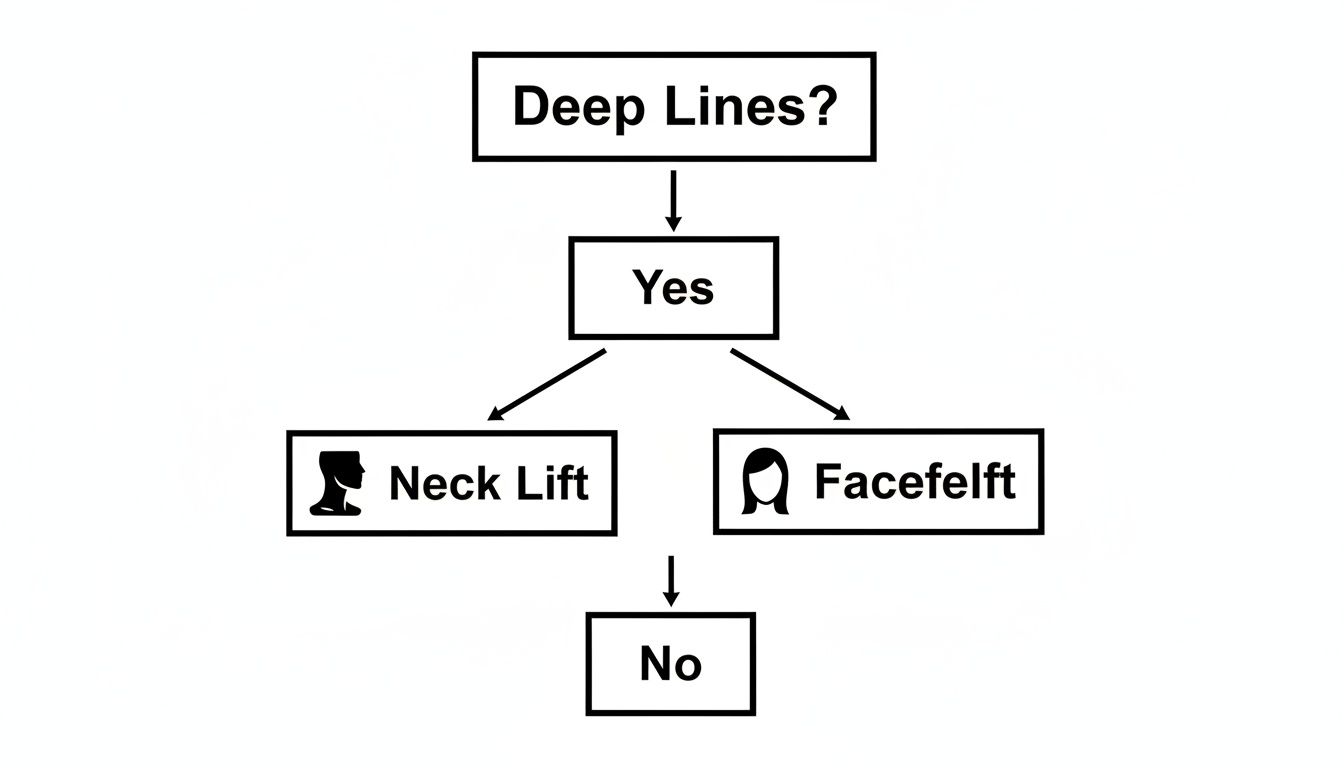
As you can see, for deeper lines, surgical options like a neck lift or facelift are often the most effective. The final recommendation depends on whether your concerns are limited to the neck or are part of the overall facial aging process.
You should walk into your consultation ready to ask plenty of questions. This is your chance to get all the information you need to make a decision you feel great about.
Don't be shy. A good surgeon will welcome your questions. Here’s a checklist to get you started:
You should leave your consultation feeling clear and confident, not confused or pressured. A trustworthy surgeon will spend the time to make sure you understand every detail and feel completely comfortable with your decision.
When it comes to treating neck lines, a lot of questions come up. It's completely normal to want to understand all your options. Here are my answers to some of the most frequent questions I hear from patients.
This is a big one, and the answer might surprise you. We're seeing neck lines appear much earlier these days, sometimes starting in the late 20s or early 30s. A lot of this comes down to modern life—think "tech neck" from constantly looking down at our phones, combined with years of sun exposure that many of us didn't think about when we were younger.
Of course, the more prominent lines tied to the natural loss of collagen and elastin usually become more of a concern in our 40s and beyond.
I get asked about this all the time. While neck exercises are fantastic for toning the underlying platysma muscle, which can create a firmer-looking foundation, they can't actually erase existing wrinkles or fix sagging skin.
Think of it this way: exercises firm up the scaffolding, but they don't repair the surface-level texture or deep-set creases in the skin itself. They are a great supportive measure, especially when paired with a solid skincare routine and professional treatments.
When we talk about a "permanent" fix, it’s important to set realistic expectations. Surgical procedures, like a neck lift, deliver the most significant and long-lasting results. Patients are often thrilled with their appearance for 10-15 years. But even surgery can't stop the clock on aging entirely.
The bottom line is that there's no magic wand. However, a neck lift is the most durable solution available. No matter which path you choose, a healthy lifestyle and diligent sun protection are your best tools for making those results last as long as possible.
Ready to explore a personalized plan for a smoother, more confident you? The team at Cape Cod Plastic Surgery is here to guide you. Schedule your confidential consultation with Dr. Fater today to discuss what you're hoping to achieve and find the right path forward.
September 9, 2026
Expert Guide to Proper Surgical Incision Care
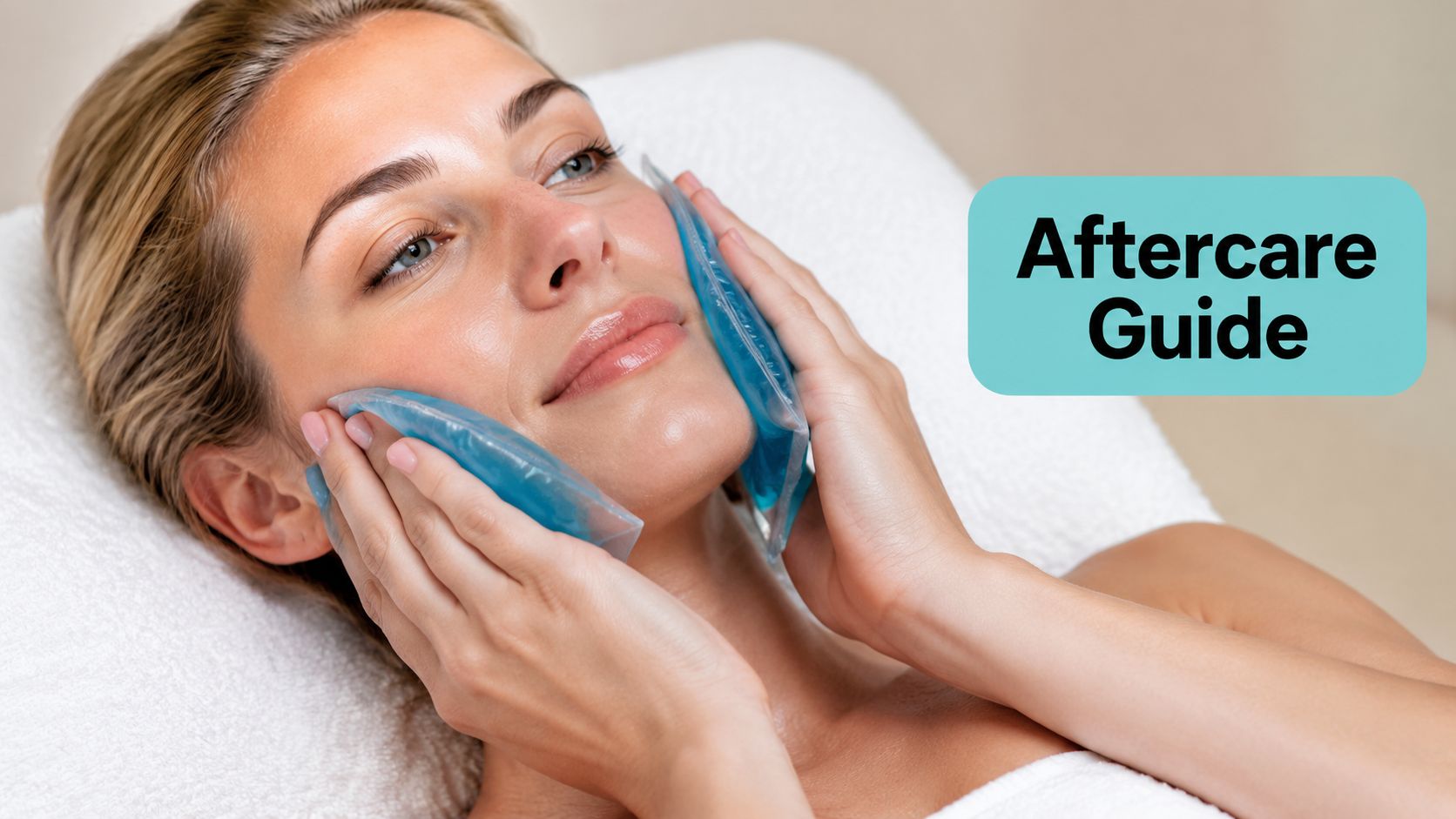
Master dermal fillers aftercare with do's and don'ts, swelling tips, activity limits and warning signs to protect your results and heal smoothly.

September 8, 2026
Ensuring Safety: Why Your Surgeon's Credentials Matter Most

Cape Cod Plastic Surgery offers expert cosmetic and reconstructive procedures in a safe, accredited setting. Led by Dr. Marc Fater, we combine advanced techniques with personalized care to help you look and feel your best.
Monday: 9:00 AM – 5:00 PM
Tuesday: 9:00 AM – 5:00 PM
Wednesday: 9:00 AM – 5:00 PM
Thursday: 9:00 AM – 5:00 PM
Friday: 9:00 AM – 5:00 PM