

September 9, 2026
How to Care for Surgical Incisions Properly
Expert Guide to Proper Surgical Incision Care
Jun 19, 2026

You catch yourself doing it in the mirror, on a video call, or when a photo opens on your phone. You tilt your chin, turn to one side, and wonder why your face looks softer or fuller than you want. For some people, that concern shows up as morning puffiness. For others, it's fuller cheeks, a heavier area under the chin, a wider jaw, or a loss of definition that came with age.
That's why the question of how to make your face look slimmer isn't as simple as “lose weight” or “try contour.” A face can look full for very different reasons, and the right solution depends on the cause. Temporary fluid retention needs a different approach than cheek fat. A strong masseter muscle needs a different plan than skin laxity along the jawline.
A good treatment plan starts with diagnosis, not trends. If you understand whether you're dealing with puffiness, fat, muscle, or loose skin, the path becomes much clearer. For many people, the answer is simple and non-medical. For others, non-surgical treatment or surgery makes more sense.
Wanting a slimmer face usually isn't vanity in the shallow sense people imagine. Most patients are looking for definition, balance, and a face that matches how they feel. They want their cheekbones to show a bit more, their jawline to look cleaner, or their lower face to stop pulling attention in photos.
There's also an emotional piece to this. A fuller face can make someone feel younger than they want, tired when they aren't, or heavier than they are. Cosmetic decisions often sit at the intersection of self-image, confidence, and control, which is why thoughtful decision-making matters. If you're interested in that side of the topic, the psychology of cosmetic surgery and appearance-related choices is worth reading.
Patients often say, “I want my face thinner.” What they usually mean is one of these:
Those are not interchangeable problems. They can look similar in a selfie, but they respond to very different treatments.
A slimmer-looking face is usually the result of better proportions and definition, not just “less volume.”
Some methods create an immediate illusion. Makeup, hair placement, neckline choices, and posing can all narrow the face visually.
Other methods change the anatomy more directly. Lifestyle habits can reduce puffiness and support overall fat loss. In-office treatments can target muscle, submental fullness, or structural imbalance. Surgery can remove or reposition tissue when a lasting change is the goal.
The most useful way to think about facial slimming is this: diagnose first, choose second. That approach avoids wasted money, poor results, and treatments that solve the wrong problem.
If you want a same-day difference, visual strategies matter. They don't reduce fat, but they can absolutely change how your face reads in person and in photos. The key is to create verticality, shadow, and cleaner lines.

Makeup-based facial slimming works by contrast. L'Oréal Paris recommends contour shades one to two shades darker than your skin tone and placement in an “E” or “3” shape at the temples, under the cheekbones, and along the jawline to create depth and shadow, as outlined in its slimmer-face contour guide.
For a more refined result, keep the shadow close to true hollows:
Cream products usually give a skin-like finish. Powders can work well on oilier skin or over a full makeup base. Either way, placement matters more than product type.
If jaw definition is your main focus, this guide on how to contour your jawline effectively can help you avoid the common mistake of drawing one dark stripe around the entire lower face.
Practical rule: Contour should mimic bone structure. If people can see the product before they see the shape, it's too much.
Slimming makeup isn't just about darkening. Light also narrows. L'Oréal Paris recommends concealer one to two shades lighter under the eyes and highlighting the bridge of the nose to help the center of the face appear more lifted and narrow.
That doesn't mean highlighting the full cheek. Too much glow across the widest part of the face can make fullness more obvious. Keep the brightness concentrated in the center.
A simple pattern works well:
Your hairstyle can change facial proportions before any makeup goes on. Side parts, face-framing layers, and styles that add length below the jaw generally elongate the face better than blunt width at cheek level. If bangs are involved, softer or longer shapes usually work better than thick horizontal lines.
Clothing can help too. Open collars and V-necks lengthen the neck and break up visual width below the face. High, closed necklines can sometimes make the face look shorter or rounder by comparison.
For people whose face looks noticeably fuller first thing in the morning, managing temporary swelling helps. If you deal with that pattern regularly, a practical read on how to combat morning facial bloating naturally can add a few useful habits to your routine.
If your face looks full because of puffiness or overall fat distribution, no contour technique will solve the root problem. Addressing this requires focusing on daily habits. These habits don't change your bone structure, but they can change how much fullness your face carries and how sharply your features show.
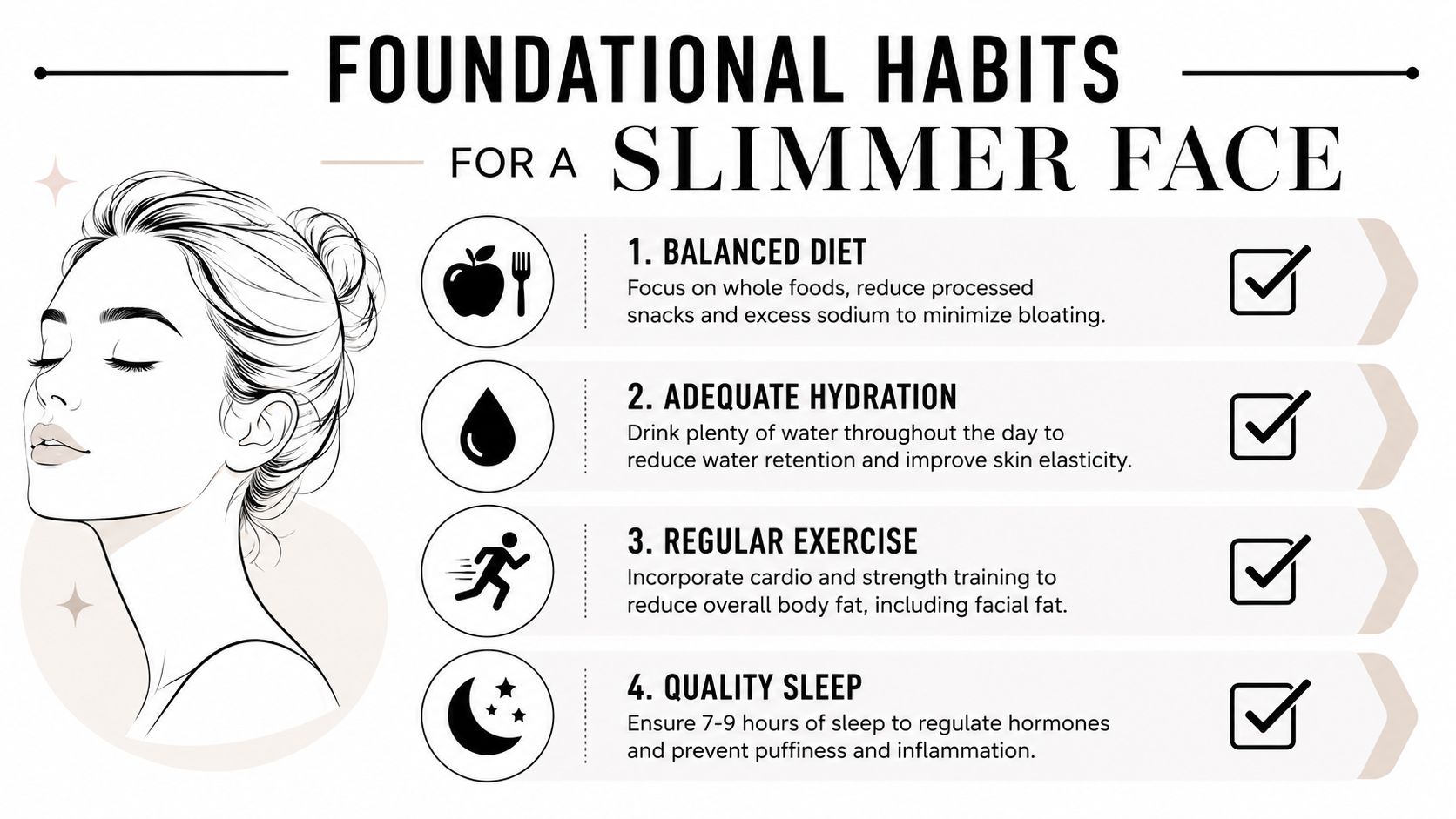
Not all fullness is fat. Fluid retention can make the face look swollen even when body composition hasn't changed much. AARP notes that reducing sodium and increasing water intake can reduce that retained fluid, and it also notes that staying within the WHO's healthy adult BMI range of 18.5 to 24.9 could help the face appear slimmer, as discussed in its guide to losing face fat.
That distinction matters. If your face changes a lot from morning to evening or after salty meals, you're likely seeing a puffiness issue more than a true fat issue.
A few habits tend to help:
There is no exercise that melts cheek fat on its own. That's the blunt truth. If someone tells you a jaw exercise will selectively slim your face, be skeptical.
Overall conditioning does matter, though, because total-body fat loss often changes the face over time. A balanced routine is usually more sustainable than extremes, and if you want a practical way to think about training structure, MONFIT's guide to balanced fitness is a useful overview of combining cardio and strength work.
Here's a simple way to evaluate your own pattern:
| What you notice | Most likely category | First move |
|---|---|---|
| Fuller face after salty meals or poor sleep | Puffiness | Hydration and sodium awareness |
| Face gradually leans out with body changes | Overall fat distribution | Sustainable nutrition and exercise |
| Fullness mainly under the chin | Submental fat or laxity | Clinical evaluation if it persists |
| Cheeks stay full despite being otherwise lean | Cheek fat or anatomy | Consider whether structure, not weight, is the issue |
If under-chin fullness is your concern, this resource on ways to reduce a double chin may help you sort out whether you're dealing with fat, posture, or skin laxity.
A short overview can also be helpful before you change your routine:
Patients ask about facial exercises often. My view is straightforward. They may improve awareness, posture, or muscle engagement for some people, but they don't reliably remove facial fat.
In some cases, repeated overuse of certain lower-face muscles can even work against the look a person wants. If the jaw already appears broad because the masseter muscles are enlarged, adding more forceful jaw work isn't a smart plan. The better question isn't “what exercise slims the face,” but “what tissue is creating the width?”
A patient may describe the same goal in very different ways. “I want my face to look less round.” “My jaw feels too wide.” “I look heavy in photos, especially under the chin.” Those concerns can come from muscle, fat, weak bone support, or mild skin laxity. The treatment works only when it matches the cause.
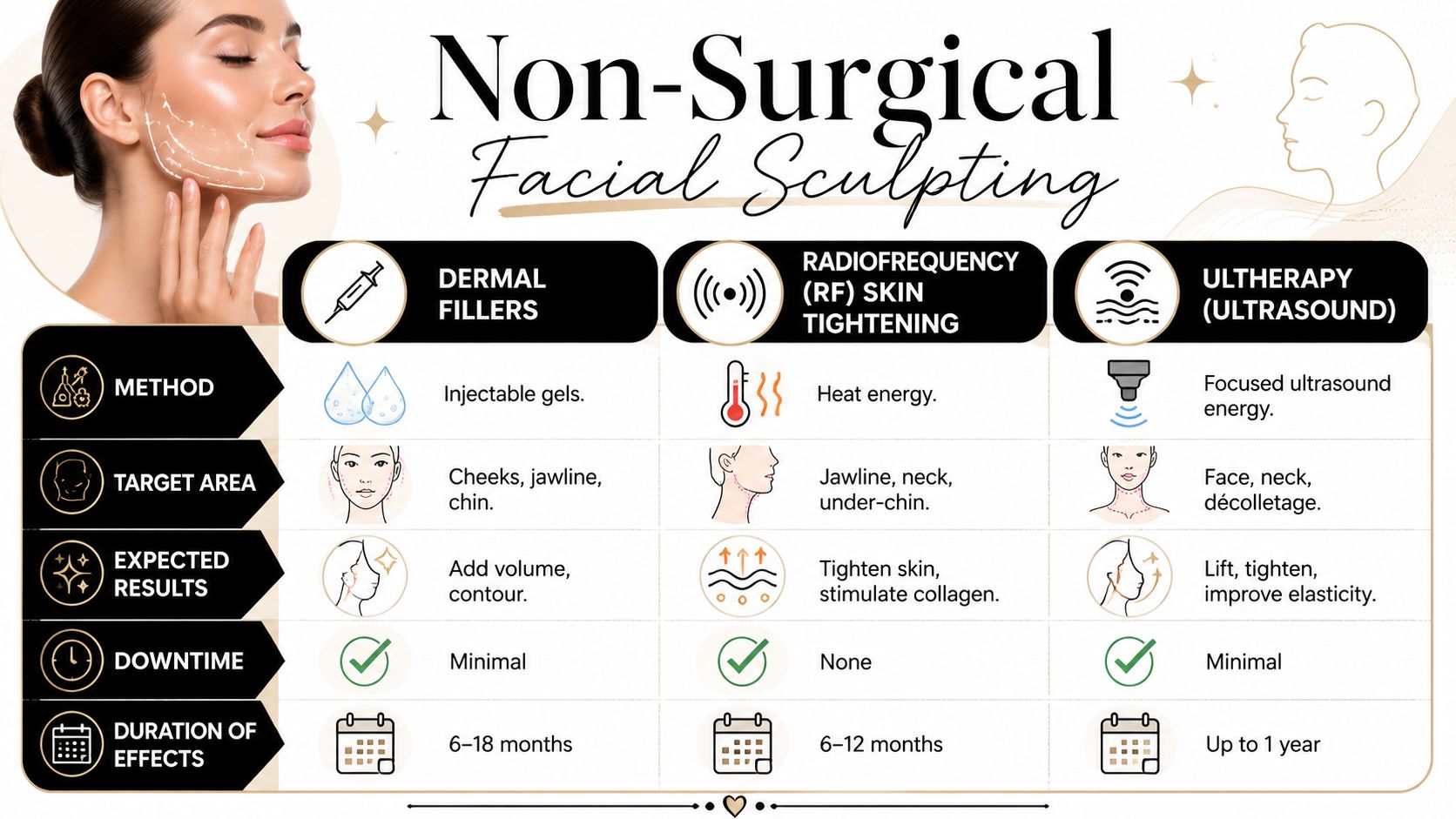
A useful clinical framework is simple. Ask which layer is creating the width or softness.
If the lower face looks square because the masseter muscles are strong, a neuromodulator can reduce bulk over time. If fullness sits below the chin, fat-dissolving injections may help. If the face reads as round because the chin is small or the jawline lacks definition, filler can improve proportions without removing any tissue. If the jawline is blurred by early laxity, ultrasound or radiofrequency may tighten skin modestly.
An outside overview of slimmer-face options makes the same point. Different causes call for different treatments, whether the issue is jaw muscle size, submental fat, or structural definition, as outlined in this overview of slimmer-face treatment pathways.
| Concern | What often causes it | Non-surgical option |
|---|---|---|
| Lower face looks wide or square | Enlarged masseter muscle | Neuromodulator treatment to reduce muscle activity |
| Soft area under the chin | Submental fat | Fat-dissolving injections such as Kybella |
| Face lacks shape more than it looks “fat” | Small chin or weak jawline definition | Dermal fillers to build structure |
| Jawline looks blurred with mild looseness | Skin laxity | Energy-based tightening such as radiofrequency or ultrasound |
Neuromodulators for the jaw help patients whose width comes from muscle, especially those who clench or grind. In that setting, treating fat will miss the problem. The trade-off is timing and subtlety. Results are not immediate, repeat treatment is usually needed, and too much relaxation can affect chewing comfort for a period of time.
Kybella is designed for under-chin fat. It does not tighten loose skin, and it does not correct a recessed chin that makes the neck angle look softer. Swelling after treatment is common, so patients should expect downtime even though it is non-surgical.
Fillers create definition rather than “slimming” the face directly. Adding projection to the chin or sharpening part of the jawline can make the cheeks and lower face look more balanced. This can be very effective in the right anatomy, but filler can also add heaviness if it is used where reduction, not augmentation, is really needed.
Skin-tightening treatments suit mild laxity. They can improve a blurred jawline in selected patients, but the change is usually moderate. They do not remove fat, and they do not replace surgery when jowling or neck looseness is more advanced.
The most common reason non-surgical facial sculpting disappoints patients is simple. The treatment was aimed at the wrong layer of tissue.
If you're also curious about how neuromodulators are used in other facial areas, this overview of Botox treatment for smile lines gives a basic look at how muscle relaxation changes expression lines, which helps illustrate why jaw slimming with neuromodulators is a muscle-based strategy rather than a fat-based one.
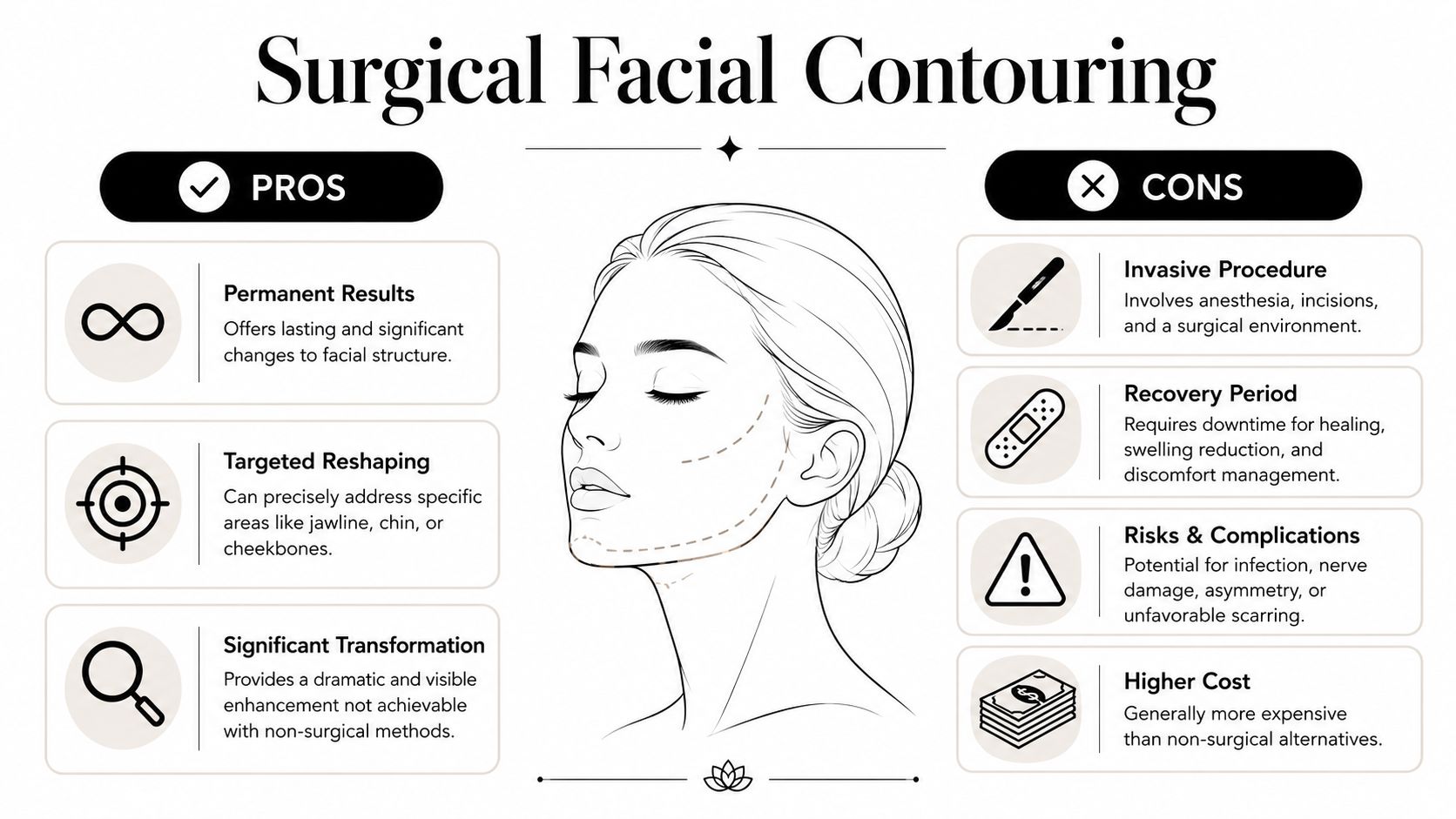
Surgery enters the conversation when the issue is anatomical and persistent, or when someone wants a more definitive change than makeup, lifestyle, or injectables can provide. It's not the first step for everyone. It is sometimes the most logical step.
A slimmer-looking face through surgery usually comes from one of three goals: removing localized fullness, tightening the lower face and neck, or improving harmony so the face reads as more sculpted overall.
Buccal fat removal addresses fullness in the lower cheeks. The ideal candidate is someone whose face still looks round or heavy through the mid-to-lower cheek even when they are otherwise lean, and whose anatomy supports volume reduction without creating a hollowed look later.
This procedure isn't a universal “slimmer face” button. In a face that is already narrow, or in someone already showing age-related volume loss, removing cheek fat can make the face look older or more drawn over time. That's why evaluation matters so much.
The procedure is typically performed through incisions inside the mouth, so there are no visible external scars. Swelling is expected early in recovery, and the final contour takes time to settle.
Good candidates usually have these features:
When fullness sits under the chin or along the upper neck, liposuction often makes more sense than focusing on the cheeks. This is one of the most effective ways to sharpen the cervicomental angle and clean up a jawline that looks obscured by fat.
This option works best when skin quality is still reasonably good. If the skin won't contract well, removing fat alone can leave the area looser than expected. In that setting, adding a skin-tightening or lifting procedure may be the better plan.
The benefit of neck or submental liposuction is precision. The limitation is that it treats fat, not laxity. Patients need to understand that distinction before surgery.
If your neck looks full because of loose skin, removing fat alone may not create the definition you're picturing.
A lower face can look heavy even when fat isn't the main issue. Jowls, neck banding, and skin descent blur the jawline and make the face appear wider and less defined. In that situation, a facelift or neck lift often produces a more appropriate result than liposuction or injectables.
These procedures work by repositioning deeper tissues and improving contour. They aren't just skin-pulling operations when performed well. The goal is a cleaner jawline and a more rested, structurally supported lower face.
Candidates usually notice:
Recovery requires planning. Swelling, bruising, activity restrictions, and a period of social downtime are part of the process. The trade-off is that surgery can address changes that no cream, contour product, or injectable can fully reverse.
Some patients think they need fat removed when what they really need is stronger projection. A small or recessed chin can make the neck look fuller and the lower face look less defined. In selected patients, chin augmentation changes facial proportions enough that the face appears slimmer without removing much volume at all.
The same principle applies to rhinoplasty in certain cases. Reshaping the nose doesn't slim the cheeks or jaw, but it can improve facial balance. When the central features are more harmonious, the entire face may read as more refined.
An experienced surgeon proves their worth by understanding that a plan focused solely on removal can overlook the structural issue driving the look.
Every operation involves trade-offs. Surgery can give a meaningful and lasting change, but it also involves anesthesia, recovery, cost, and real risks. Those include infection, asymmetry, contour irregularity, scarring, unfavorable healing, and in some procedures, injury to important nerves or nearby structures.
No ethical surgeon should treat your face like a menu item. The right operation depends on facial shape, age, tissue quality, and long-term aesthetics. Buccal fat removal that looks appealing on social media may be a poor choice for someone already at risk of looking hollow later. Liposuction may disappoint if skin laxity is the actual issue. A facelift is powerful, but unnecessary in a younger patient whose problem is limited to under-chin fat.
That's why board certification and procedure-specific experience matter. You want a surgeon who can tell you when not to operate, or when to choose a different operation than the one you came in asking for.
A strong consultation should answer these questions clearly:
If those answers feel vague, keep looking.
The right answer to how to make your face look slimmer depends on what's creating the fullness. If the issue is temporary puffiness, small habit changes can make a visible difference. If it's mostly visual, contouring, hair, and styling can help immediately. If the problem comes from jaw muscle size, under-chin fat, weak chin projection, or lower-face laxity, then targeted medical treatment or surgery may be the more honest solution.
What matters most is avoiding the one-size-fits-all approach. A full cheek, a broad jaw, and a soft jawline may look similar in photos, but they are not the same diagnosis. Treating them as if they were leads to frustration.
A good plan should feel clear. You should understand what tissue is involved, what each option can and can't do, and what trade-offs come with temporary versus permanent change.
Confidence usually comes from alignment. Your reflection feels more like you. Your photos bother you less. You stop chasing random tips because you finally know which category your concern belongs to.
If you're considering a professional evaluation, Cape Cod Plastic Surgery offers consultations to help determine whether your concern is puffiness, fat, muscle, skin laxity, or structural balance, and which treatment category fits that anatomy most appropriately.
September 9, 2026
Expert Guide to Proper Surgical Incision Care
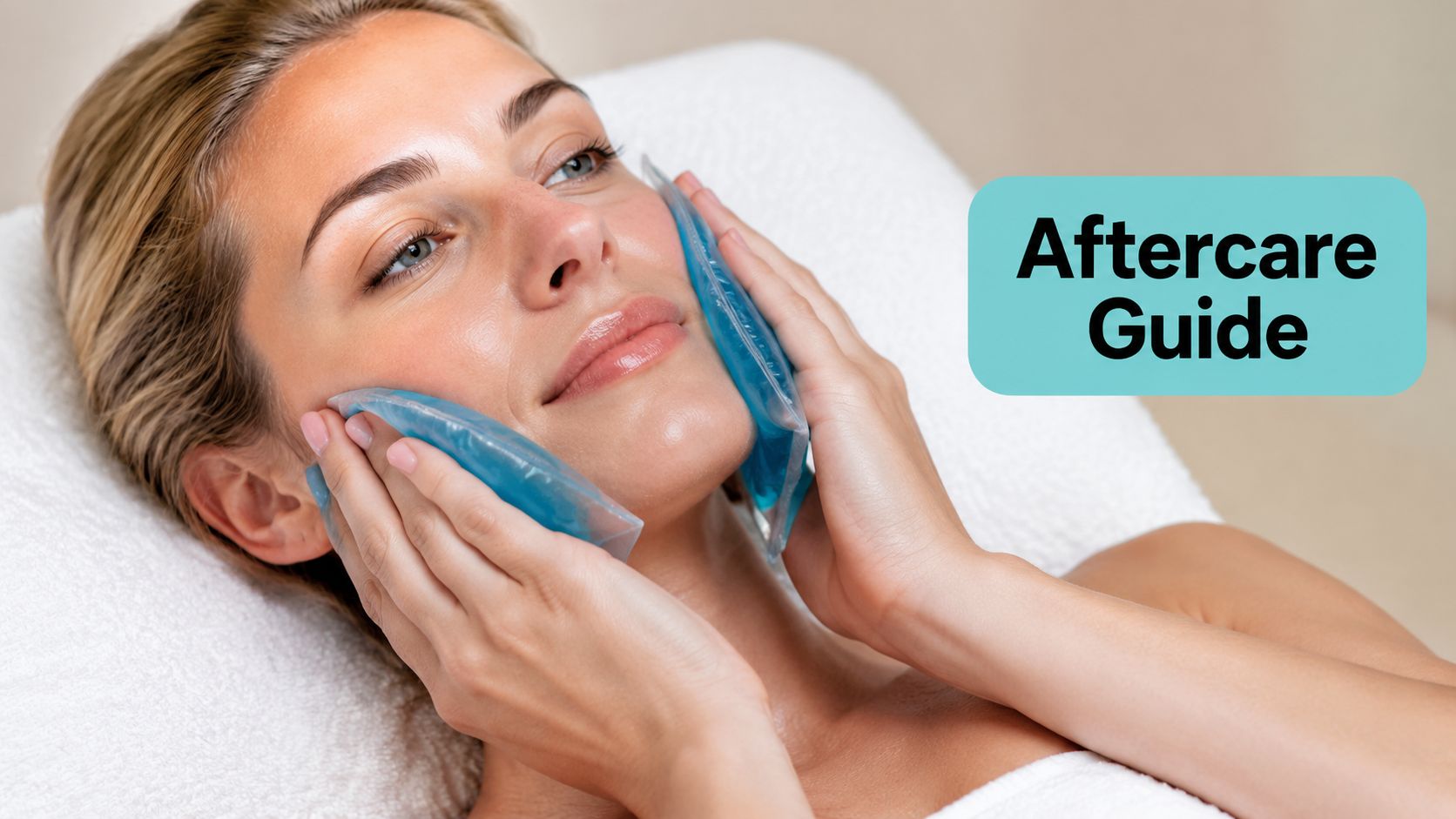
Master dermal fillers aftercare with do's and don'ts, swelling tips, activity limits and warning signs to protect your results and heal smoothly.

September 8, 2026
Ensuring Safety: Why Your Surgeon's Credentials Matter Most

Cape Cod Plastic Surgery offers expert cosmetic and reconstructive procedures in a safe, accredited setting. Led by Dr. Marc Fater, we combine advanced techniques with personalized care to help you look and feel your best.
Monday: 9:00 AM – 5:00 PM
Tuesday: 9:00 AM – 5:00 PM
Wednesday: 9:00 AM – 5:00 PM
Thursday: 9:00 AM – 5:00 PM
Friday: 9:00 AM – 5:00 PM