

October 6, 2026
How to Verify Your Surgeon Before Your Cosmetic Procedure
Your Safety Guide: What to Look for When Choosing a Plastic Surgeon
Feb 22, 2026

It’s completely normal to see some bruising after your surgery—in fact, it’s one of the most common things patients experience. While it might look a little alarming, it’s simply a visible sign that your body has begun the natural healing process.
Understanding what’s happening beneath the skin can make all the difference in feeling confident about your recovery.
Even the most delicate and precise surgery involves disrupting tissues to achieve your beautiful new result. Think of it as a controlled injury. As we work, tiny blood vessels, known as capillaries, are inevitably disturbed.
When these small vessels leak, blood pools in the surrounding tissues just under the skin’s surface. This trapped blood is what we see as a bruise, technically called a contusion. The size and color of the bruise really just depend on how much blood has collected and where it is.
One of the most fascinating parts of healing is watching a bruise change colors. This isn't random; it's a predictable sequence that tells you your body is hard at work cleaning things up.
Here’s what you can expect to see:
This whole process is a fantastic example of your body’s built-in repair system. Since inflammation plays a big role in bruising, exploring proven strategies to reduce inflammation can be a great way to support your body's efforts during recovery.
You’ve probably noticed that everyone bruises differently, and the same is true after surgery. Several key factors come into play.
The type of procedure matters. A facelift or eyelid surgery, for example, happens in areas with a rich blood supply, so you can expect more bruising there compared to other parts of the body.
Your age and skin are also a factor. As we get older, our skin thins and we lose some of the cushiony fat layer underneath. This makes blood vessels a bit more fragile and any bruising that does occur much more visible.
Your personal health history plays a part. Things like medications, supplements, and your body's natural clotting ability all influence your inflammatory response and how easily you might bruise.
Bruising is incredibly common, especially with cosmetic injections. Studies show it affects anywhere from 19% to 68% of patients getting treatments like dermal fillers or Botox. Here at Cape Cod Plastic Surgery, Dr. Fater and our team are meticulous about using techniques designed to keep bruising and downtime to an absolute minimum, so you can enjoy your results sooner. You can learn more about the research on bruising after cosmetic procedures.
Your journey to a smoother recovery and less noticeable bruising actually starts weeks before you ever step foot in our surgical facility here on Cape Cod. How you prepare your body beforehand can make a huge difference in how it responds to the procedure. It all comes down to being mindful of what you put into your body, as some very common substances can directly affect how much you bruise.
The main goal is simple: avoid anything that thins your blood or gets in the way of its natural ability to clot. When blood is thinner, even the tiny, unavoidable disturbances to capillaries during surgery can lead to more bleeding under the skin. The result? Larger, darker, and longer-lasting bruises.
To give you a clearer picture, we've put together a quick guide on the common supplements and medications you'll need to discuss with Dr. Fater. Honesty and transparency here are non-negotiable for your safety.
Supplements and Medications To Discuss With Your Surgeon
Again, never stop a prescribed medication without explicit instructions from your prescribing doctor and Dr. Fater. This conversation is an absolutely critical safety step.
Just as some things should be avoided, others can be strategically added to give your body a head start on healing. To proactively manage bruising and swelling, many patients benefit from incorporating natural anti-inflammatory supplements. In our practice, we often see great results with two in particular: Arnica Montana and Bromelain.
This infographic gives you a good look at how a bruise actually forms after surgical trauma, from the initial impact to the final stages of healing.
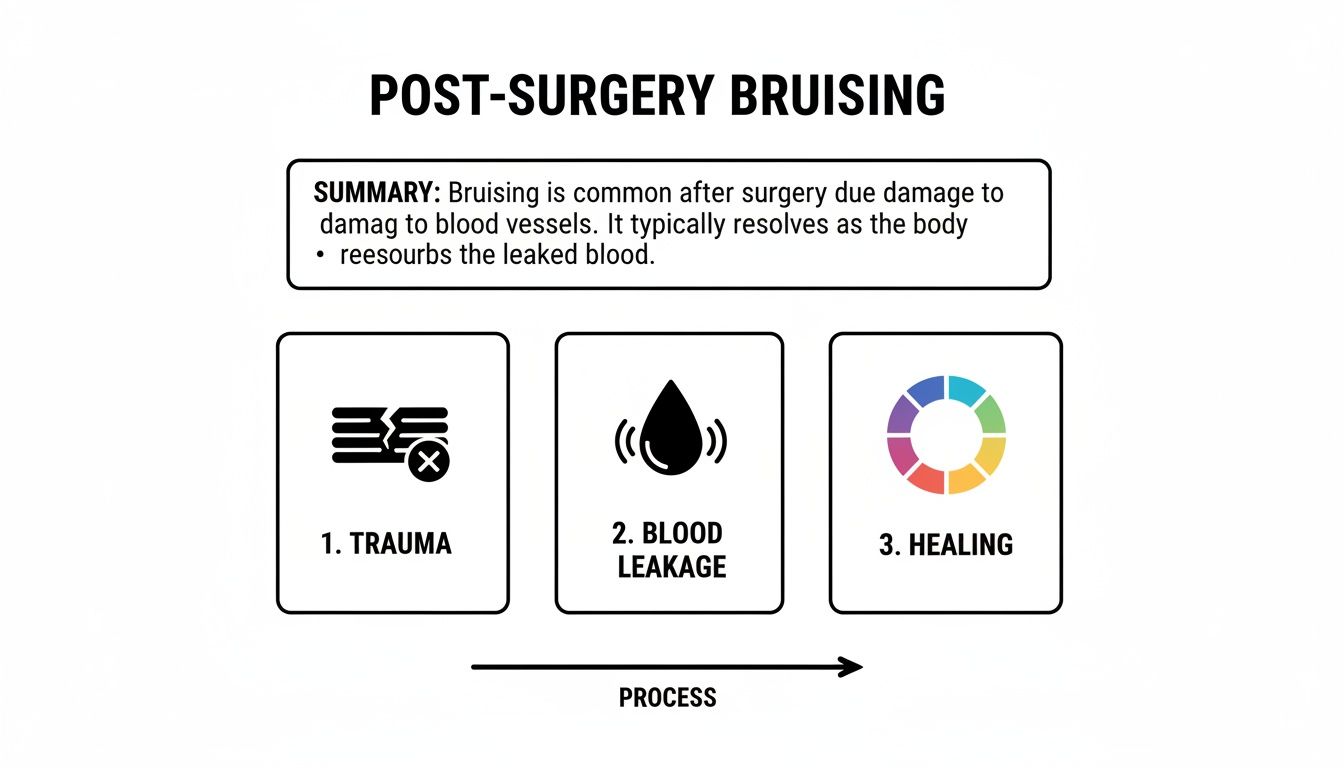
Understanding this sequence really highlights why preparing your body ahead of time to manage inflammation and strengthen blood vessels can be so effective.
We often recommend patients start taking oral Arnica Montana a few days before their procedure and continue for a bit afterward. We also suggest Bromelain, a powerful enzyme found in pineapple, which is a fantastic anti-inflammatory. Starting it a few days pre-op can help manage that initial post-surgical swelling.
For a deeper dive into how to use these supplements safely and effectively, you can check out our detailed guide on the topic: https://www.ccplasticsurgery.com/blog/arnica-before-surgery
Never underestimate the power of your diet. In the weeks leading up to your surgery, focus on eating whole, nutritious foods packed with vitamins and minerals that support tissue repair and strong blood vessels.
Here’s what to load up on:
Finally, hydration is non-negotiable. Keeping your body well-hydrated makes your skin and tissues more resilient and helps them heal more efficiently. Drink plenty of water every day, and be sure to avoid alcohol for at least a week before your surgery—it’s dehydrating and can thin your blood. Taking these simple steps helps set the stage for a much smoother, more comfortable recovery with far less bruising.
The first 48 hours after your procedure are your golden window for getting ahead of bruising. Think of this as your most critical mission: a few simple, deliberate actions right now can make a world of difference in your recovery. The goal is to calm the surgical area, gently constrict blood vessels, and give your body the peaceful environment it needs to start healing.
Here at Cape Cod Plastic Surgery, we walk our patients through a time-tested strategy known as R.I.C.E.—Rest, Ice, Compression, and Elevation. It’s more than just a handy acronym; it's a proven approach for managing your body's natural response to surgery, leading to a faster, more comfortable healing process.

Right after your surgery, cold packs are your best friend. The cold temperature constricts the tiny blood vessels in the area, which helps stop any residual seepage under the skin—the very thing that causes bruising to form in the first place.
The trick is to use cold therapy correctly. We recommend a 20-minutes-on, 20-minutes-off cycle. This rhythm is essential. Keeping cold on for too long can risk skin or nerve damage, but taking those regular breaks allows healthy blood flow to return, keeping the tissues safe.
A quick but important tip: never put ice or a frozen gel pack directly on your skin. Always wrap it in a thin towel to create a protective barrier. I often tell my facial surgery patients that a bag of frozen peas is an amazing tool because it molds perfectly to the contours of the face.
Gravity can work for you or against you. Let's make it work for you. Keeping the surgical site elevated above your heart is a simple but incredibly effective way to prevent fluid from pooling. This reduces both swelling and the internal pressure that can make a bruise look much worse.
Here’s how to do it right:
By keeping the treated area elevated, you’re basically giving fluid a downhill path to drain away from the surgical site. This simple act of positioning can make a huge difference in how much swelling and discomfort you wake up with.
After your procedure, Dr. Fater will likely have you in a special compression garment or bandages. This isn't just for comfort—it's an active tool in your healing. That gentle, constant pressure serves a few key purposes.
First, it physically limits the amount of space where fluid can collect, which is a direct line of defense against swelling. Second, the pressure helps close off the tiny capillaries that might still be oozing, stopping a bruise before it even starts. Following our instructions for wearing your garment is one of the most important things you can do. For more on this, you can check out our expert tips for effective post-surgery recovery and care.
This might be the most important part of the R.I.C.E. plan. Surgery is a major event for your body, and healing takes an enormous amount of energy. For these first 48 hours, your only job is to recover.
That means:
By keeping your movement to a minimum, you also keep your heart rate and blood pressure down. This reduces the force of blood pumping through those delicate, healing vessels. This quiet, restful state gives your body the perfect conditions to manage inflammation and start building the foundation for a beautiful result with the least amount of bruising.
Once you’ve passed that initial 48-hour mark of rest and ice, your body's healing process shifts into a new gear. The initial "damage control" phase is over. Now, the focus turns to actively clearing away bruises and rebuilding tissue. This is where you’ll start to see some real changes in your daily routine as we introduce warmth, targeted nutrition, and gentle movement.

You’ll likely notice the classic "rainbow" of colors appearing as the bruises begin their journey of breaking down. This is a great sign! It means your body is hard at work, and your job is to give it the tools it needs to keep up the momentum.
After the first 48 to 72 hours, it’s time to say goodbye to the ice packs and hello to gentle warmth. While cold therapy was crucial for constricting blood vessels and limiting the initial spread of the bruise, warmth now plays the opposite—and equally vital—role.
Applying a warm compress encourages vasodilation, a fancy term for widening the blood vessels. This boost in circulation acts like a clean-up crew, helping to whisk away the trapped, old blood that’s causing the discoloration. It essentially speeds up your body's natural process of breaking down and absorbing the bruise.
A Crucial Word of Caution: We mean gentle warmth, not heat. The skin around your surgical site will be sensitive and may even have some numbness, which makes it frighteningly easy to get a burn without realizing it. A warm, damp washcloth is all you need. Never use an electric heating pad, and always test the temperature on an un-numbed part of your body first, like your inner wrist.
What you eat during these two weeks is more than just comfort food; it's a powerful tool in your recovery toolkit. The right nutrients provide the literal building blocks your body needs to repair tissue, strengthen blood vessels, and keep inflammation in check.
Here are the nutritional superstars to focus on:
And don’t forget to keep drinking water! Staying hydrated is still a top priority. It helps flush out metabolic waste and keeps your skin and tissues healthy. On the flip side, try to keep your sodium intake low, as too much salt can lead to fluid retention and make swelling worse.
While you’re definitely not ready for the gym, incorporating some light movement into your day is incredibly helpful at this stage. Your body is out of that initial shock phase, and gentle activity is now one of its best allies.
Short, slow walks around your house are perfect. This simple act gets your blood circulating, which not only helps reduce overall swelling but also clears bruising more quickly. Just as importantly, it significantly lowers the risk of developing blood clots—a serious concern after any surgery.
The key is to find a comfortable balance: move for a bit, then rest. Your body is the best expert here, so listen to it. If something pulls, strains, or causes pain near your incisions, stop. This isn't about pushing yourself; it’s about gently encouraging blood flow to speed up healing and help you feel a little more like yourself each day.
While bruising is a completely normal—and expected—part of the healing process, it's still crucial to be an active participant in your own recovery. Knowing the difference between what’s typical and what might signal a problem will give you peace of mind and help keep your recovery on track.
Think of it this way: the vast majority of bruising follows a predictable path. It shows up dark and intense, then slowly fades through a whole rainbow of colors over the course of about two weeks. This transformation is actually a great sign that your body is doing its job, breaking down and clearing away the old blood.
Your postoperative instructions are your most important roadmap during this time. Part of that guidance is knowing exactly when you should pick up the phone and call us. At Cape Cod Plastic Surgery, your health and safety are our absolute priorities, and we are always here to answer your questions.
A typical bruise has a life of its own. Understanding its stages can help you track your progress and feel confident that those changing colors are a sign of healing, not a new issue.
Of course, this timeline can shift a bit depending on the extent of your surgery and your personal healing abilities, but the color progression itself should stay consistent.
A key takeaway is to watch the trend of your bruising. Each day, it should look a little bit better—or at least no worse—than the day before. It's the overall pattern of improvement that really matters.
While most bruising is just part of the deal, certain signs can point to a potential complication, like a hematoma (a larger, more significant collection of blood) or an infection. These are uncommon, but they do require prompt medical attention.
Please contact our office immediately if you experience any of the following symptoms.
Knowing these warning signs isn't meant to make you anxious. It’s about empowering you. By understanding what to look for, you can rest easy knowing your recovery is going smoothly and feel confident about when to reach out for the professional guidance you deserve.
Even with the best recovery plan, you’ll likely have questions as you heal. Every patient's journey is a little different, and it's completely normal to wonder about the specifics of what you're seeing. This is where we can clear up some of the most common questions our patients ask during their follow-up visits.
Think of this as your practical guide for navigating those final stages of healing, with direct answers based on Dr. Fater’s years of clinical experience.
Yes, you can, but timing is everything. You absolutely must wait until your incisions are fully closed and healed, or until Dr. Fater gives you the explicit go-ahead. Putting makeup on too soon can introduce bacteria to a vulnerable area and seriously increase your risk of infection.
Once you get the all-clear, the right products work wonders. Look for a high-coverage, color-correcting concealer palette. A little bit of color theory goes a long way here:
Always use a clean brush or sponge—never your fingers—and be incredibly gentle when you apply and remove it. The last thing you want to do is irritate that sensitive, healing skin.
It certainly does. The location and extent of your surgery are probably the biggest factors in how much bruising you can expect. Procedures in areas with a rich blood supply and delicate tissue are naturally going to show more discoloration.
For example, facial procedures like a facelift, rhinoplasty (nose surgery), or blepharoplasty (eyelid surgery) involve dense networks of tiny capillaries, which almost always leads to more noticeable bruising. Liposuction can also cause widespread, though often lighter, bruising from the movement of the cannula through the tissue layers.
During your consultation, Dr. Fater will give you a realistic idea of what to expect for your specific procedure. This way, you’re prepared and know that what you're seeing is a normal part of the process.
It's also not uncommon to see more bruising on one side of your body than the other. This can be due to minor anatomical variations or the specifics of the surgical technique on each side and is usually not a cause for concern.
For most of our patients, the entire life cycle of a post-surgical bruise wraps up in about 10 to 14 days. You’ll watch it go through that classic color evolution—from dark purple to green, then yellow, and finally fading away. This progression is a great sign that your body is actively cleaning things up.
That said, after more extensive surgeries, it's possible for a faint yellowish or brownish shadow to linger for a few extra weeks as your body absorbs the very last remnants of pigment. Patience is key. Following all the pre- and post-op advice we've given you is the best way to support your body's natural timeline.
In some cases, yes. While at-home care is the foundation of a good recovery, we do have other tools at our disposal. If you have a specific reason to be concerned about bruising—like an important social event or a public-facing job—certain in-office treatments can help speed things along.
Vascular lasers, like a Pulsed Dye Laser (PDL), or Intense Pulsed Light (IPL) therapy can be used to target and break down the pooled blood more quickly. These technologies deliver light energy that gets absorbed by the blood pigment, causing it to fragment so your body can carry it away faster. We also find that topical creams containing Vitamin K can provide a modest benefit by supporting the local clotting process.
If resolving bruises quickly is a priority for you, be sure to bring it up during a follow-up visit. We can discuss whether these options might be a good fit for your situation.
At Cape Cod Plastic Surgery, our commitment to you extends far beyond the operating room. We are dedicated to supporting you through every step of your recovery, ensuring you feel confident and informed. If you have more questions or are ready to begin your aesthetic journey, we invite you to schedule a consultation with Dr. Fater. Explore your options at https://ccplasticsurgery.com.
October 6, 2026
Your Safety Guide: What to Look for When Choosing a Plastic Surgeon

October 5, 2026
Why Our On-Site Accredited Facility Matters for Your Safety

October 2, 2026
Beyond the Calendar: How to Know You’re Truly Ready for Plastic Surgery

Cape Cod Plastic Surgery offers expert cosmetic and reconstructive procedures in a safe, accredited setting. Led by Dr. Marc Fater, we combine advanced techniques with personalized care to help you look and feel your best.
Monday: 9:00 AM – 5:00 PM
Tuesday: 9:00 AM – 5:00 PM
Wednesday: 9:00 AM – 5:00 PM
Thursday: 9:00 AM – 5:00 PM
Friday: 9:00 AM – 5:00 PM