

October 2, 2026
When Is the Right Time for Plastic Surgery
Beyond the Calendar: How to Know You’re Truly Ready for Plastic Surgery
Feb 17, 2026
So, you’ve just had your Botox treatment and you're wondering about that massage you have scheduled. Let's cut right to the chase: getting a massage right after Botox is a definite no-go. It’s crucial to wait to protect your investment and ensure you get the results you're looking for.
Think of freshly injected Botox like wet paint on a canvas. It needs time to set perfectly in place. Any rubbing, pressure, or manipulation can smudge the artwork, potentially ruining the final, beautiful result.
This guide, drawing on the expertise of Dr. Marc Fater at Cape Cod Plastic Surgery, will walk you through exactly what you need to know about your post-Botox care. We'll cover the science behind the waiting period, lay out a clear aftercare timeline, and give you the essential do's and don'ts. Our goal is simple: to give you the confidence and knowledge to achieve a flawless, natural-looking outcome.
The consensus among leading medical experts is crystal clear—timing is everything. For example, the highly respected Mayo Clinic advises patients to avoid rubbing or massaging the treated areas for a full 24 hours. This one simple step is probably the most important thing you can do to prevent the neurotoxin from spreading to nearby muscles where it wasn't intended to go.
Protecting your results is about more than just avoiding direct pressure. It’s about creating the perfect environment for the Botox to settle in and start working its magic on those targeted muscles. In those first few hours, the product is busy binding to the nerve receptors. Any activity that dramatically increases blood flow or puts physical stress on the area can disrupt this delicate process.
This is exactly why your aftercare instructions will include specific guidance on:
At Cape Cod Plastic Surgery, we always tell our patients that what you do in the first 48 hours is just as important as the skill of the injector. Meticulous aftercare is the secret to achieving the beautiful, refined results you came for and making them last.
When it comes down to it, a little bit of patience goes a very long way. By following these simple but vital rules, you're not just following instructions—you're actively safeguarding your investment and setting the stage for a smooth, successful, and stunning outcome.
To make things even clearer, here is a quick summary of the waiting periods for common activities after your Botox appointment.
Following this timeline helps ensure the Botox works exactly as intended, giving you the best possible results from your treatment.
To really get why a massage after Botox is a definite no-go, you have to picture what’s happening on a microscopic level. It helps to think of Botox less like a filler that adds volume and more like a super-specific messenger that has to arrive at a very precise address.
When an expert injector like Dr. Fater places Botox, it goes into the specific little muscles that cause dynamic wrinkles—those lines you see on your forehead or between your eyebrows when you make an expression. Once it’s there, Botox starts its most important job: binding to the nerve receptors.
Think of it like a key finding its one and only lock. The Botox molecule is the key, and it has to find and fit perfectly into the nerve’s receptor, which is the lock. This connection is what blocks the nerve signal telling the muscle to contract. The muscle relaxes, and the skin on top smooths out. But this whole process is delicate and, crucially, it takes time.
Applying any kind of real pressure—whether it's from a deep-tissue massage, an aggressive facial, or even just resting your face in a massage cradle—can physically shove the Botox around. Instead of a key carefully finding its lock, it’s more like jiggling a whole handful of keys near a bunch of different locks at once.
This pressure can push the Botox out of its intended zone and into neighboring muscles. We call this Botox migration, and it’s behind most of the side effects you hear about.
The whole point of Botox is precision. We're targeting very specific, small muscles to achieve a look that's refreshed and natural. Any outside force applied too soon messes with that precision and gambles with your results.
Beyond just spreading it around, pressure and massage also ramp up blood flow to the area. Normally, that’s great for healing, but it's the last thing you want right after getting injections.
All that extra circulation can act like a current, washing the Botox away or diluting it before it gets the 24 to 48 hours it needs to fully latch onto those nerve receptors. The result? Your treatment might not be as effective, or it might not last nearly as long as it should have.
It's actually helpful to think about treatments where pressure is the goal. For instance, understanding What Is Trigger Point Therapy, which involves applying focused pressure to release tight muscle knots, really puts it into perspective. One therapy uses pressure to make a muscle let go, while post-Botox care demands a completely hands-off approach to let the product work.
At the end of the day, the rule is simple: just let the Botox settle in and do its job. Protecting your investment means being patient and hands-off. Avoid anything that pushes, rubs, or puts pressure on the treated spots for at least the first couple of days.
Knowing what to do in the days following your Botox treatment is simple once you have a clear roadmap. Think of this timeline as your personal guide to protecting your investment. The goal is to let the neurotoxin settle exactly where we placed it, ensuring you get those smooth, natural-looking results you’re looking for.
This visual guide gives you a great snapshot of how Botox works its magic over time, from the moment of injection to when it fully settles into the nerve.
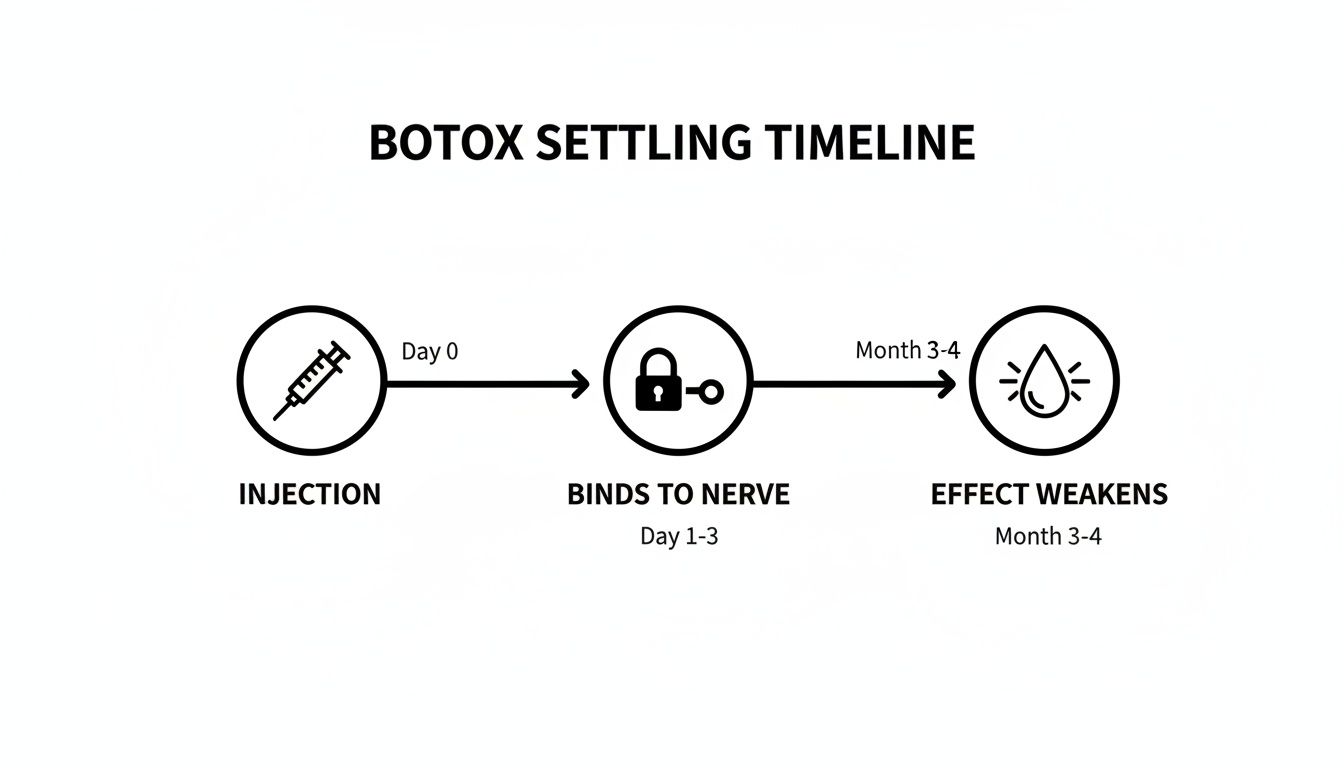
The big takeaway here is that Botox needs time to lock into place without being disturbed. That’s precisely why we have a few ground rules for what you do right after your treatment.
Immediately after you leave our office, your main job is incredibly simple: stay upright. This means no lying down, no bending over to tie your shoes, and definitely no afternoon naps for a few hours.
Keeping your head elevated allows gravity to work for you, not against you. It helps keep the Botox localized right in the target muscles and prevents it from drifting somewhere we don't want it. You can even gently make the facial expressions we were targeting—like frowning or raising your eyebrows. These tiny movements can actually help the product start to work its way into the right muscles.
This window is the most critical part of your aftercare. The number one rule is to avoid any kind of pressure, rubbing, or intense heat on the treated areas. A strict aftercare plan is the key to getting the best results, a principle that holds true for many aesthetic procedures. For instance, the detailed general aftercare instructions for lash lifts also emphasize how crucial the initial post-treatment phase is.
Here’s a quick list of your do's and don'ts for this period:
At this point, the Botox has fully bonded to the nerve receptors, and you'll be starting to see your final, beautiful results take shape. The risk of the product migrating is now incredibly low, so you can safely get back to most of your normal routine.
You can typically resume your regular skincare, including gentle exfoliation. However, I’d still hold off on more intensive facial treatments like microdermabrasion or a deep-tissue facial for a full two weeks just to be safe. If you're curious about the science behind this waiting period, we have a guide that explains in detail how long it takes for Botox to fully kick in.
After that two-week mark has passed, you're in the clear. Feel free to schedule your facials and body massages without any worry. Just be sure to let your massage therapist or esthetician know you’ve recently had Botox—it's always good practice to keep all your practitioners in the loop.
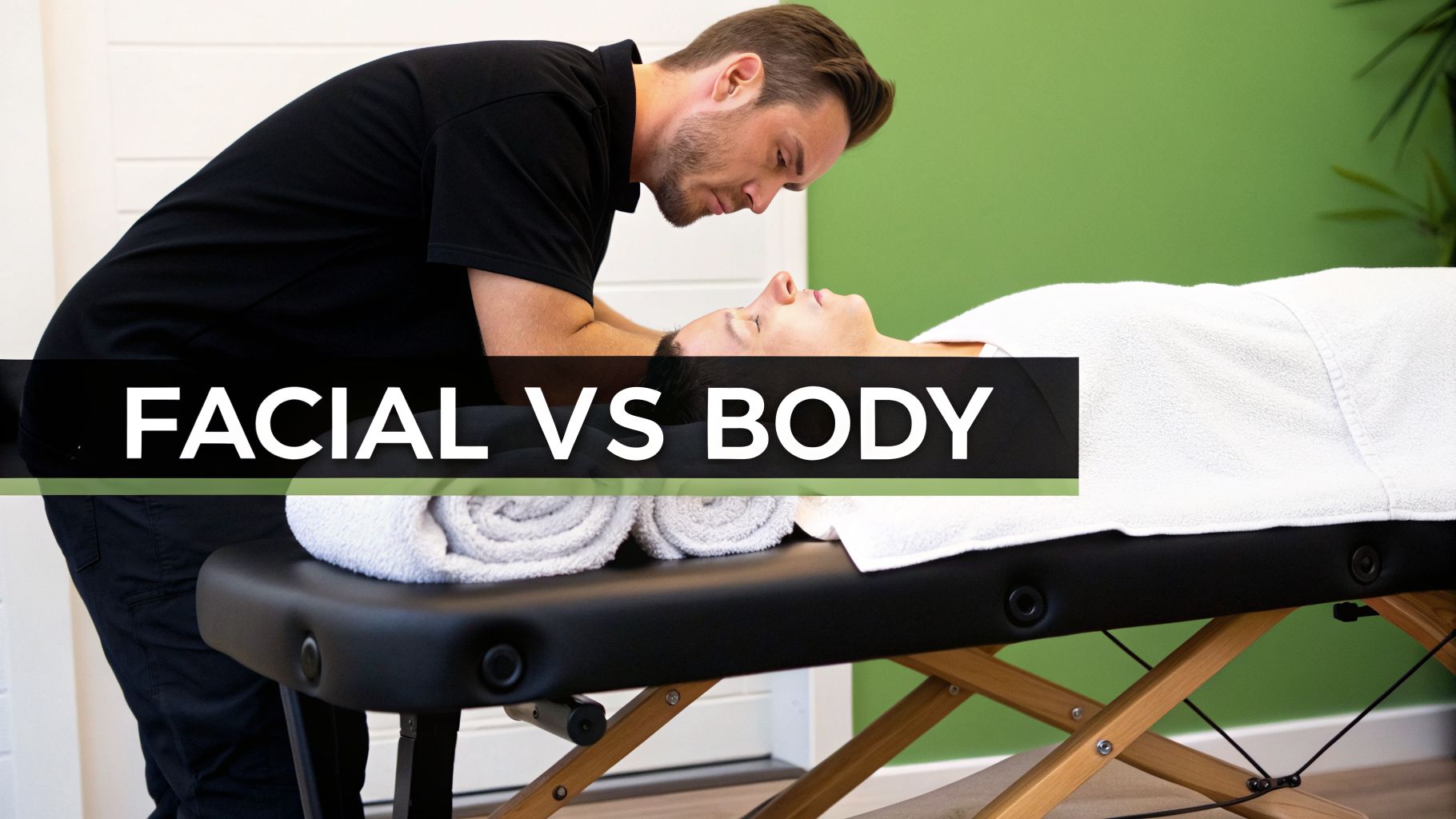
When we talk about getting a massage after Botox, it’s critical to realize we're not talking about one single activity. A gentle shoulder rub is a world away from a deep-tissue facial, and the location of that pressure is what really matters for protecting your investment.
The biggest concern is any direct handling of your facial muscles. This is where the risk of Botox migration skyrockets, as too much pressure can physically push the product away from its intended target before it has a chance to settle in. It’s also why it's so useful to understand the differences between various injectables; if you want to learn more, our guide comparing Botox vs. Dermal Fillers breaks it all down.
Any treatment that involves direct, intentional pressure on the face is firmly in the high-risk category. You’ll want to postpone these for at least one to two weeks after your injections to give the Botox plenty of time to bind where it’s supposed to.
High-risk treatments to put on hold include:
Think of it this way: If the main purpose of the treatment is to manipulate the skin and underlying tissue on your face, it’s best to wait. The precise, delicate work of Botox needs a calm, undisturbed environment to do its job effectively.
So, what about that deep-tissue body massage you've been looking forward to? The good news is the risk is dramatically lower because the pressure isn't being applied directly to the treated facial areas.
However, there's one small catch: the face cradle.
Lying face down in a typical massage cradle puts sustained, direct pressure right on your forehead and brow area—some of the most common spots for Botox. This is exactly the kind of pressure we want to avoid, as it could potentially interfere with your results.
But that doesn't mean you have to cancel your appointment. There's a simple workaround. We recommend waiting at least 48 to 72 hours after your Botox session. When you go for your massage, just have a quick chat with your therapist beforehand.
Ask them to skip the face cradle entirely. They can easily use a rolled towel to support your neck while you lie on your back, or have you lie on your side. This one small adjustment keeps your face free from any unwanted pressure, ensuring your Botox results stay exactly where you want them.
Let's break down the key differences and waiting times.
The type of massage you're planning makes all the difference. This table clarifies the waiting periods for facial versus body massages to ensure your Botox results are protected.
Ultimately, a quick conversation with your massage therapist can make your body massage perfectly safe. For anything involving the face, though, patience is key.
It's not just about standard facials and deep tissue work. Many of our patients ask about specialized treatments, particularly Lymphatic Drainage Massage (LDM), and when it’s safe to have one after getting Botox. LDM is known for being incredibly gentle and fantastic for reducing swelling, but even its light touch can be too much in the immediate aftermath of an injection.
The same rules we've discussed still apply here. Because we want to avoid any risk of pressure interfering with the Botox as it settles, it's best to wait at least 7-14 days after your appointment before getting lymphatic drainage. This gives the product all the time it needs to bind properly to the nerve receptors, so the delicate, sweeping motions of LDM won't disrupt your final results.
Many people love to pair Botox with other treatments like microneedling, laser therapy, or chemical peels to get the most out of their aesthetic journey. This is a great strategy, but timing is everything. The golden rule? Always, always tell every practitioner you see about all your recent treatments.
This kind of open communication is what keeps you safe and ensures you get the outcome you want. For example, getting a chemical peel too soon after your injections could easily irritate the injection sites and potentially interfere with the Botox. If you're curious about what other treatments pair well, take a look at our guide to nonsurgical cosmetic procedures we offer here at Cape Cod Plastic Surgery.
The secret to a successful cosmetic plan is simple: communication. When your injector, esthetician, and massage therapist are all aware of your full treatment schedule, they can collaborate to build a plan that maximizes the benefits of every procedure, safely.
While we've focused on the risks of immediate massage, it's worth noting that lymphatic drainage can be a fantastic tool for recovery after that initial settling period has passed. In fact, clinical evidence supports its use in cosmetic healing. Research highlighted by the National Institutes of Health shows MLD can help reduce fibrosis and improve healing after procedures—all without disturbing Botox that has already settled. You can learn more about these MLD findings here.
At the end of the day, honesty is your best policy. Just make it a habit to tell any professional you’re working with—whether for a laser session, a facial, or a massage—that you’ve recently had Botox. This empowers them to adjust their technique and timing, creating a cohesive and safe treatment plan that’s built just for you.
Let's finish up by tackling some of the questions we hear most often from our patients. Getting clear, straightforward answers can make a world of difference in feeling confident and at ease after your treatment. This advice comes directly from the hands-on experience of Dr. Fater and our team here at the practice.
First thing's first: don't panic. If you accidentally rubbed your face or had a massage after Botox, the main concern is that the product could migrate to a nearby muscle where we didn't intend it to go.
What does that look like? It could cause a temporary, unwanted effect, like a droopy eyelid or a slightly uneven smile. The best thing to do is simply watch the area for the next few days. If you spot any unusual weakness or asymmetry, give our office a call. While these side effects almost always resolve on their own, Dr. Fater can take a look and give you professional advice. Honestly, a little bit of minor pressure rarely causes an issue, but it's always better to be safe and let us know.
When it comes to any treatment that involves hands-on manipulation of your face—like a professional facial, microdermabrasion, or even using a jade roller or gua sha at home—our strong recommendation is to wait at least one to two weeks.
This buffer gives the Botox plenty of time to fully settle in and bind to the nerve receptors without being pushed around. Booking a facial too soon is one of the most common ways people accidentally mess with their results, so a little patience really pays off. And when you do go for your facial, always let your esthetician know you’ve recently had injections.
“Think of the two-week mark as your golden rule for facials. It’s the sweet spot that ensures the Botox has completely settled, letting your esthetician work their magic without any risk to your beautifully refreshed results.”
Yes, absolutely—just be gentle. For the first 24 hours after your appointment, you’ll want to avoid any aggressive scrubbing or rubbing right around the injection sites.
When you wash your face, use a light touch and soft, upward strokes. The same goes for makeup; try dabbing or tapping it on instead of pressing and blending it into the skin. The whole point is to avoid firm, sustained pressure while the Botox is getting situated. You can get back to your normal routine the very next day.
It’s best to hold off on any strenuous exercise for at least 24 hours after your treatment. We're talking about anything that really gets your heart pumping, like running, a spin class, heavy lifting, or hot yoga.
Why? This simple precaution helps keep potential bruising and swelling to a minimum. It also helps ensure the Botox stays exactly where Dr. Fater placed it, rather than getting dispersed by a big increase in blood flow. A light walk is totally fine, but taking one day off from the gym is a small sacrifice for a great outcome.
If any other questions pop up or you'd like advice tailored specifically to you, the team at Cape Cod Plastic Surgery is always here to help. Contact us today to set up a consultation with Dr. Marc Fater and take the first step toward a refreshed, natural look.
October 2, 2026
Beyond the Calendar: How to Know You’re Truly Ready for Plastic Surgery

October 2, 2026
Exploring Your Breast Augmentation Options: Implants, Shapes, and What to Expect
October 1, 2026
Reshaping Your Silhouette: A Guide to Body Contouring

Cape Cod Plastic Surgery offers expert cosmetic and reconstructive procedures in a safe, accredited setting. Led by Dr. Marc Fater, we combine advanced techniques with personalized care to help you look and feel your best.
Monday: 9:00 AM – 5:00 PM
Tuesday: 9:00 AM – 5:00 PM
Wednesday: 9:00 AM – 5:00 PM
Thursday: 9:00 AM – 5:00 PM
Friday: 9:00 AM – 5:00 PM