

October 7, 2026
What to Expect During Your Breast Surgery Recovery
A Practical Guide to Healing After Breast Surgery
Jan 12, 2026
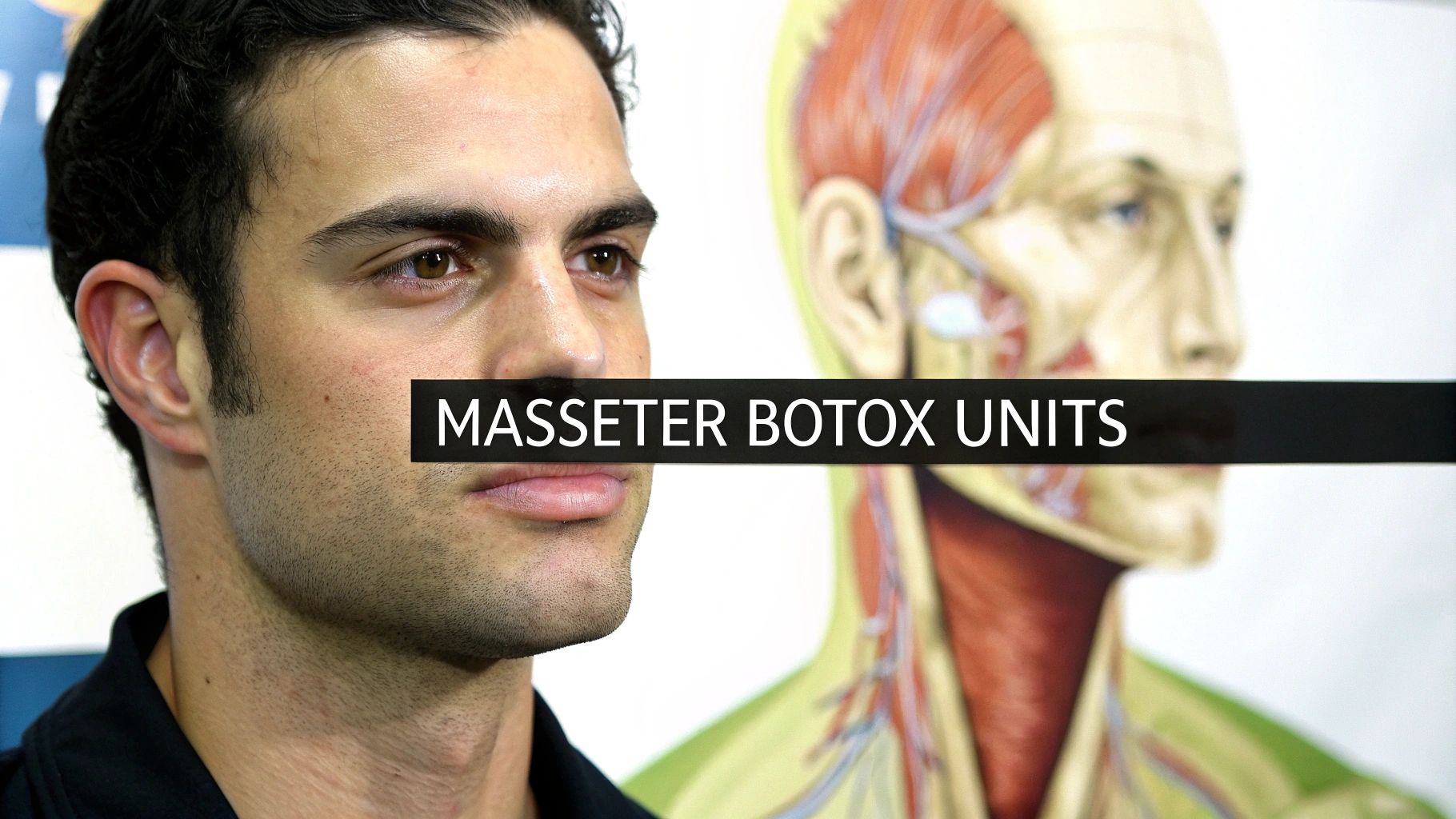
When most people hear "Botox," they immediately think of smoothing out forehead lines and crow's feet. But that’s just scratching the surface. One of its most effective and life-changing applications is in the jaw, specifically for the masseter muscles.
Masseter Botox is a game-changer for anyone dealing with a wide or square-looking jawline, chronic teeth grinding, or persistent jaw pain. By targeting these powerful chewing muscles, we can achieve a subtle facial slimming effect while delivering serious therapeutic relief.
Think about any muscle you work out at the gym. The more you train it, the bigger and stronger it gets. Your masseter muscles—the ones that clench when you chew—are no different.
Constant, unconscious teeth grinding (a condition called bruxism), habitual gum chewing, or even just clenching your jaw from stress is like an endless workout for your masseters. This overactivity leads to muscle growth, or hypertrophy, which can create a wider, heavier, and more masculine jawline.
Masseter Botox gets right to the source of the problem. It uses a highly purified protein, botulinum toxin, to gently relax these overworked muscles.
When we inject Botox directly into the masseter muscle, it works by interrupting the nerve signals that tell the muscle to contract. It’s not about "freezing" the muscle or stopping you from chewing; it's more like turning down the volume on those constant, involuntary clenching commands.
The goal isn't to paralyze the muscle, but to weaken it just enough. This controlled relaxation gives the masseter a much-needed break, which is the secret behind both the cosmetic and medical benefits.
Over the next few weeks, because the muscle isn't working as hard, it begins to shrink naturally—a process known as atrophy. It’s the same thing that happens when a weightlifter stops training a specific muscle group. The result? A softer, slimmer jawline that creates a more balanced, V-shaped facial contour. If you want to dive deeper into the treatment process, this is a great resource on Botox for jaw clenching and TMJ relief.
The incredible thing about relaxing the masseter muscle is that the benefits go far beyond just appearance. For many of our patients, the primary reason for treatment is to find relief from painful conditions caused by an overactive jaw.
The same mechanism that slims the face also works wonders to alleviate debilitating symptoms.
Here’s what it can help with:
Getting familiar with how injectables work is the first step to feeling confident in your treatment. You can learn much more by reading our guide, which breaks down Botox results, safety, and longevity. It's a true dual-action treatment, improving facial harmony while making a real difference in your day-to-day comfort.
Figuring out the right number of masseter Botox units is the single most important step to getting the results you want, whether that’s a slimmer jawline or relief from grinding your teeth. There’s no magic number here; it’s a dosage that has to be carefully calculated for your specific facial anatomy and goals.
Think of it less like a standard procedure and more like a custom prescription. The dose has to be just right for you to be effective and, most importantly, safe. A skilled injector will take several factors into account before ever picking up a syringe.
For most people, a typical treatment starts with 20 to 30 units per side, putting the total for a session somewhere between 40 and 60 units. This is generally considered the sweet spot for relaxing the masseter muscle enough to see a difference, without affecting normal functions like chewing or talking.
But remember, this is just a starting point. Your unique situation will determine if you land on the lower or higher end of that range—or maybe even outside of it. The goal is always to use the smallest effective dose to get the best possible result.
The infographic below gives a nice visual of how your goals might influence the starting dose.
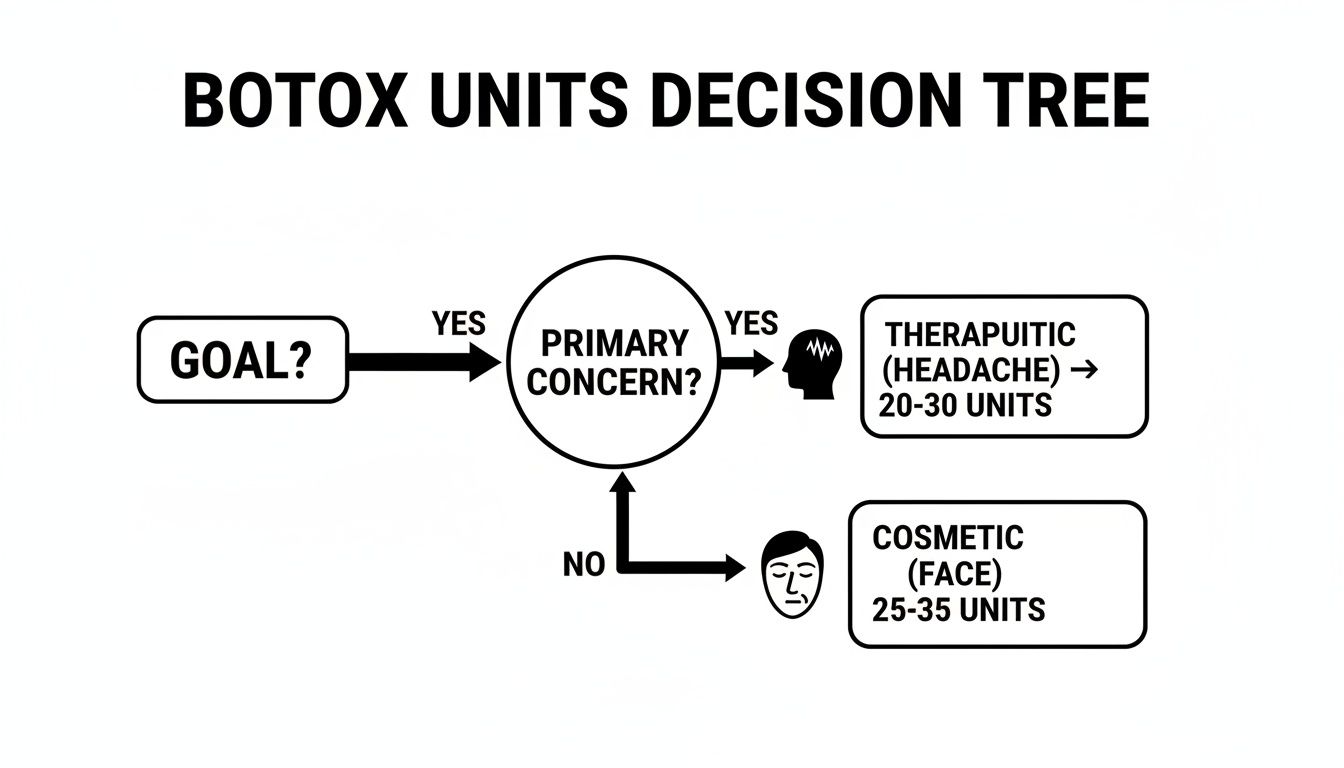
As you can see, the unit ranges for therapeutic and cosmetic goals often overlap, but treatments focused purely on aesthetics might begin with a slightly higher dose to ensure a visible slimming effect.
So, what exactly determines your personal dose? During your consultation at Cape Cod Plastic Surgery, Dr. Fater will look closely at a few critical factors to map out your treatment.
Muscle Size and Strength: This is the biggest one. If you have naturally large, strong masseter muscles—either from genetics or years of clenching—you'll simply need more units to get them to relax. Men, for example, often have greater muscle mass and may need 30-40 units per side or more.
Severity of Bruxism or TMJ: If you’re seeking relief from pain, the intensity of your symptoms is key. Severe teeth grinding and jaw clenching mean you have a very overactive muscle, which usually needs a stronger initial dose to really break that cycle of tension.
Desired Aesthetic Outcome: What are you hoping to see in the mirror? A subtle softening of your jawline requires a different approach than a more dramatic V-shape transformation. The more significant the slimming effect you're after, the more units it will take to reduce the muscle's bulk.
Facial Asymmetry: It’s completely normal for one masseter to be bigger or stronger than the other (usually on the side you chew with most). In these cases, we'll use a different number of units on each side to create a more balanced and symmetrical look.
It's also worth noting that anatomy isn't the same for everyone, and this can influence dosing strategies. While clinical research confirms the 20–30 units per side range is a great baseline, studies also show variations.
For instance, in many Asian populations where a V-shaped jawline is a common aesthetic goal, dosage can range anywhere from 10 to 45 units per side depending on the muscle’s size. For patients with very bulky muscles, higher doses of 40 units or more per side have been shown to deliver more dramatic and longer-lasting results. You can read more about these dosing protocols and findings from recent studies.
An expert injector doesn't just inject; they analyze. They feel the muscle while you clench, observe its size, and discuss your goals to calculate the perfect dosage. This detailed assessment is the difference between a good result and a great one.
To give you a clearer picture, here’s a quick guide to how different factors might influence the unit count.
This table provides a general overview of recommended Botox units per side based on patient goals and muscle characteristics.
Keep in mind, this is just a guide. Your actual dosage will be determined during your in-person assessment.
Ultimately, deciding on the number of masseter Botox units is a collaborative process between you and your provider. That initial consultation is the most important step we'll take together to make sure your treatment is safe, effective, and perfectly aligned with what you hope to achieve.
Knowing what to expect from your masseter Botox treatment can make all the difference, helping you feel relaxed and confident from start to finish. Think of it less like a procedure and more like a partnership between you and your provider, all centered on achieving your goals safely and effectively.
It all starts with a conversation. That initial, one-on-one consultation is honestly the most important part of the entire process—it’s where we build the blueprint for your success.

When you come into Cape Cod Plastic Surgery, the first thing we’ll do is simply listen. Are you here because TMJ pain and teeth grinding are running your life? Or is your primary goal a softer, slimmer, more V-shaped jawline? Your story helps us map out the perfect treatment plan.
Next, your provider will do a quick physical assessment. They’ll ask you to clench and relax your jaw so they can feel the masseter muscles. This helps them gauge their size, strength, and whether one side is more developed than the other. Based on this hands-on evaluation and your personal goals, we'll determine the exact number of masseter Botox units needed for the best outcome. It’s a completely personalized approach—no one-size-fits-all solutions here.
Once we've tailored your plan, the actual treatment is surprisingly fast. In fact, the entire injection process usually takes less than 15 minutes. It’s the definition of a "lunchtime procedure."
Your injector will start by cleaning the area and might make a few small marks on your jaw to guide the injections. Using a tiny, ultra-fine needle, they'll place the Botox directly into the masseter muscle on each side. Most people say it feels like a few quick, tiny pinches. Any discomfort is minimal and over in seconds.
It's completely normal to feel a little nervous before any procedure. Knowing there are strategies for overcoming patient anxiety during medical procedures can help ensure your experience is as calm and comfortable as possible.
Afterward, you can get right back to your day with zero downtime. We'll give you a couple of simple aftercare tips, like avoiding a heavy workout or massaging the area for about 24 hours, and you’ll be good to go.
With masseter Botox, a little patience goes a long way. The results don't appear overnight; they emerge gradually, and the timeline depends on what you're trying to achieve.
Here’s a breakdown of what you can expect:
Understanding this timeline helps set the right expectations. For a deeper dive into how neurotoxins work, check out our guide on how long before Botox kicks in. Sticking to your follow-up appointments is the best way to ensure your amazing results are maintained long-term.
One of the best things about masseter Botox is that it pulls double duty, offering both a noticeable aesthetic improvement and some serious therapeutic relief. The results are subtle enough to look completely natural but significant enough to make a real difference in how you look and feel.
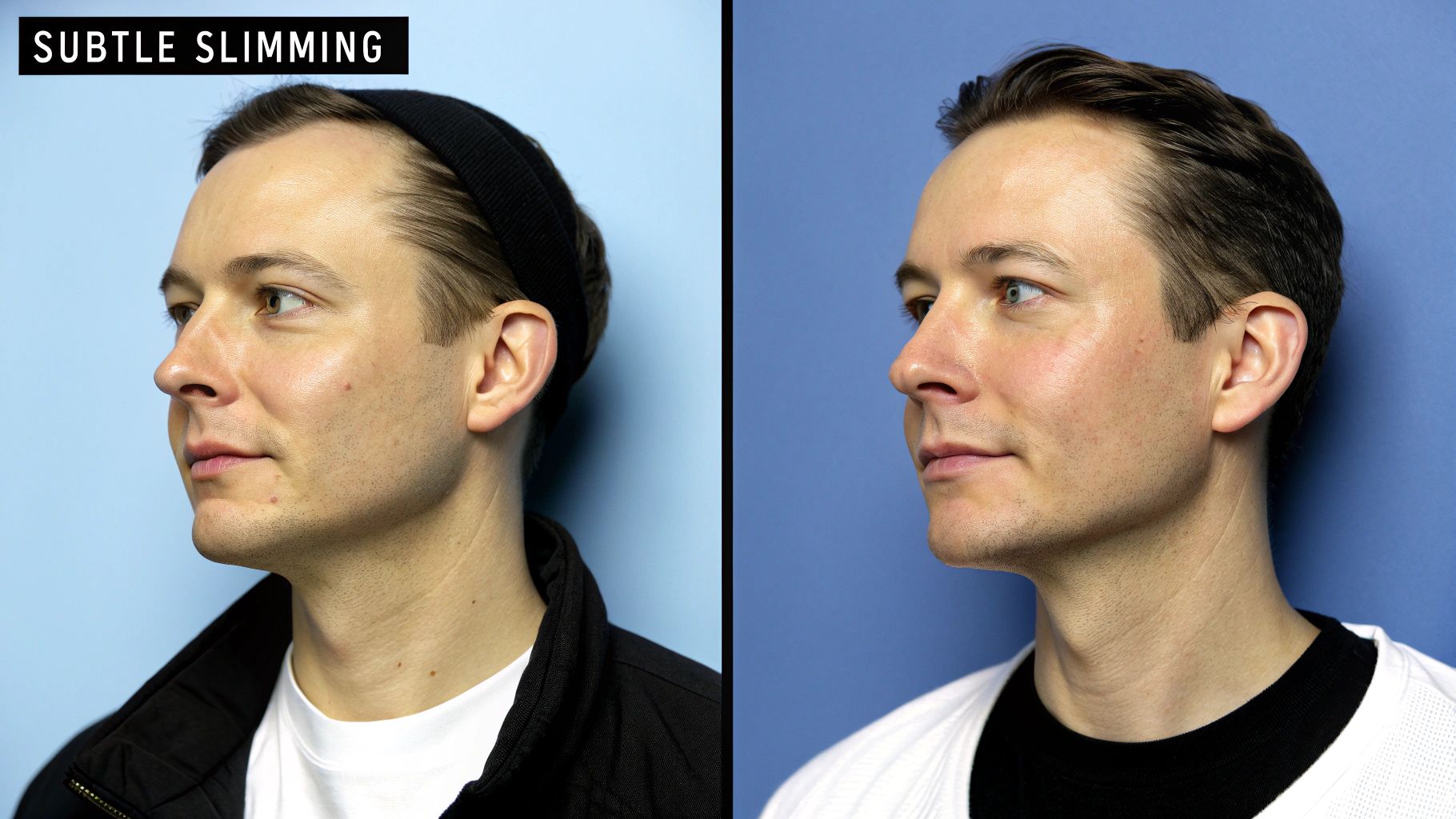
From a cosmetic standpoint, the treatment is all about softening a strong, square jawline. As those overworked masseter muscles relax and their bulkiness subsides, the lower face slims down. This creates a more balanced, oval or heart-shaped facial silhouette that enhances your natural features without looking artificial.
The main aesthetic goal here is facial harmony. When the masseter is overdeveloped, it can make the lower face look wide or heavy. A few carefully placed injections can bring everything back into proportion, creating a much more graceful contour.
Here’s what you can look forward to:
These cosmetic changes don't happen overnight. They gradually appear over the course of four to six weeks as the muscle slowly reduces in size, which is exactly why the transformation looks so natural.
Beyond the aesthetics, the therapeutic benefits can be genuinely life-changing for anyone dealing with jaw clenching or TMJ issues. By getting that powerful masseter muscle to relax, the treatment tackles the root cause of chronic discomfort. Patients often report a huge reduction—and sometimes a complete stop—to symptoms that have bothered them for years.
The relief you can expect includes:
This relief usually kicks in much faster than the cosmetic changes. Most people start to feel a real improvement within just one to two weeks after their appointment.
The results from masseter Botox are long-lasting but not permanent, typically sticking around for six to nine months. The exact duration really depends on your personal metabolism and how many masseter Botox units we use in your treatment plan. Getting the dose just right is key to making your results last as long as possible.
There's solid science to back this up. In a major clinical trial, participants treated with BOTOX® Cosmetic saw a 5.2mm greater average reduction in facial width compared to those who received a placebo.
The same study also underscored how effective the treatment is, particularly within Asian populations where a slimmer jawline is a common aesthetic goal. You can dive into the complete clinical trial data on facial slimming to see the proven impact for yourself.
With consistent treatments, the masseter muscle tends to weaken over time. This is great news, as it often means you can go longer between appointments or may need fewer units to maintain that beautifully sculpted and pain-free jawline.
When you’re considering any cosmetic or therapeutic treatment, understanding the cost is always a big piece of the puzzle. With masseter Botox, the pricing is straightforward and transparent: you pay based on the exact number of units needed for your treatment.
This isn't a one-size-fits-all service. The cost is calculated per unit, so your investment directly reflects what’s required to achieve your personal goals. Most patients typically need between 40 and 60 total units, which gives you a solid starting point for budgeting. The final number, of course, will be settled on during your private consultation.
Thinking of masseter Botox as just another expense doesn't quite capture the full story. It’s really an investment in your long-term comfort and confidence. With regular treatments, those overworked masseter muscles gradually learn to relax, soften, and even shrink a bit.
This process, known as muscle atrophy, is where the real value kicks in. As the muscle gets smaller and less powerful, many of our patients discover they can start spacing their appointments further apart.
Over time, you may find that you require fewer units per session to maintain your beautiful results. This not only makes the treatment more cost-effective in the long run but also delivers sustained relief and lasting aesthetic improvements.
So, that initial investment starts paying off down the road. You’re not just getting temporary relief; you're effectively retraining the muscle for more manageable and affordable maintenance.
The per-unit pricing model is the industry standard for a good reason—it’s the fairest and most precise way to charge for treatment.
Here’s a simple breakdown of how we calculate the cost:
If you want to dive deeper into how this works for other areas, our guide on how much Botox costs offers a great overview of the value you get from neurotoxin treatments.
While we can talk about general ranges all day, the only way to know your exact cost is to come in for a one-on-one consultation. Here at Cape Cod Plastic Surgery, Dr. Fater will sit down with you to personally assess your masseter muscles, listen to your goals, and give you a precise quote.
This initial meeting is the most important step. It’s our chance to make sure your treatment plan is safe, effective, and fits comfortably within your budget. We’re here to build a partnership with you, making sure you have all the information you need to feel confident and excited about your decision.
It's completely normal to have a few lingering questions, even after you've learned the basics. Let’s walk through some of the most common things patients ask us before they decide to move forward. We want you to feel totally confident and informed about your decision.
Honestly, most people find the treatment very manageable. The sensation is usually described as a quick, tiny pinch—like a little pinprick that’s over in a second. We use an incredibly fine needle, and the actual injections only take a few minutes from start to finish.
Afterward, you might feel some mild tenderness or see a little bit of swelling or bruising right where the injections were made. This is totally normal and temporary, usually fading on its own within a few days. The most important factor for a comfortable experience is having an injector who truly knows their way around facial anatomy.
This is a great question and a common concern. When done correctly by a skilled injector, masseter Botox absolutely should not impact your smile or your ability to chew normally. The treatment is very precise, targeting only the masseter muscle to reduce its bulk and stop that involuntary grinding.
You might notice a slight difference at first when chewing something particularly tough, like a steak or very crusty bread, but this sensation is temporary. Your ability to enjoy your favorite foods will be just fine. Crucially, the muscles that create your smile are located in different areas of the face, so your expressions will stay just as they are.
The timeline really depends on why you're getting the treatment. If you're looking for relief from TMJ pain or jaw clenching, you'll likely start feeling a difference within the first one to two weeks as the muscle begins to relax.
The cosmetic slimming effect takes a bit longer to show up. Because we're waiting for the muscle to actually reduce in size, the visible change in your jawline typically becomes noticeable around the four-to-six-week mark.
The benefits of a single masseter Botox treatment usually last for six to nine months. Many patients find that by keeping up with regular treatments, they can go longer between appointments or even need fewer masseter botox units over time as the muscle gradually weakens.
This is a fantastic option for a lot of different people. Essentially, if you're looking to soften your jawline for a more V-shaped look or you need real relief from the pain of teeth grinding and TMJ issues, you could be an ideal candidate.
This often includes people who:
Of course, candidates should be in good overall health and have a clear understanding of what the treatment can achieve. The best way to know for sure if this is right for you is to sit down for a one-on-one consultation with an experienced provider.
Ready to see if masseter Botox could be the answer you've been looking for? At Cape Cod Plastic Surgery, Dr. Fater and our expert team are ready to design a plan that's all about you. Schedule your consultation today and take the first step toward feeling more comfortable and confident.
October 7, 2026
A Practical Guide to Healing After Breast Surgery

October 6, 2026
Your Safety Guide: What to Look for When Choosing a Plastic Surgeon
October 5, 2026
Why Our On-Site Accredited Facility Matters for Your Safety

Cape Cod Plastic Surgery offers expert cosmetic and reconstructive procedures in a safe, accredited setting. Led by Dr. Marc Fater, we combine advanced techniques with personalized care to help you look and feel your best.
Monday: 9:00 AM – 5:00 PM
Tuesday: 9:00 AM – 5:00 PM
Wednesday: 9:00 AM – 5:00 PM
Thursday: 9:00 AM – 5:00 PM
Friday: 9:00 AM – 5:00 PM