

October 7, 2026
What to Expect During Your Breast Surgery Recovery
A Practical Guide to Healing After Breast Surgery
Jan 15, 2026
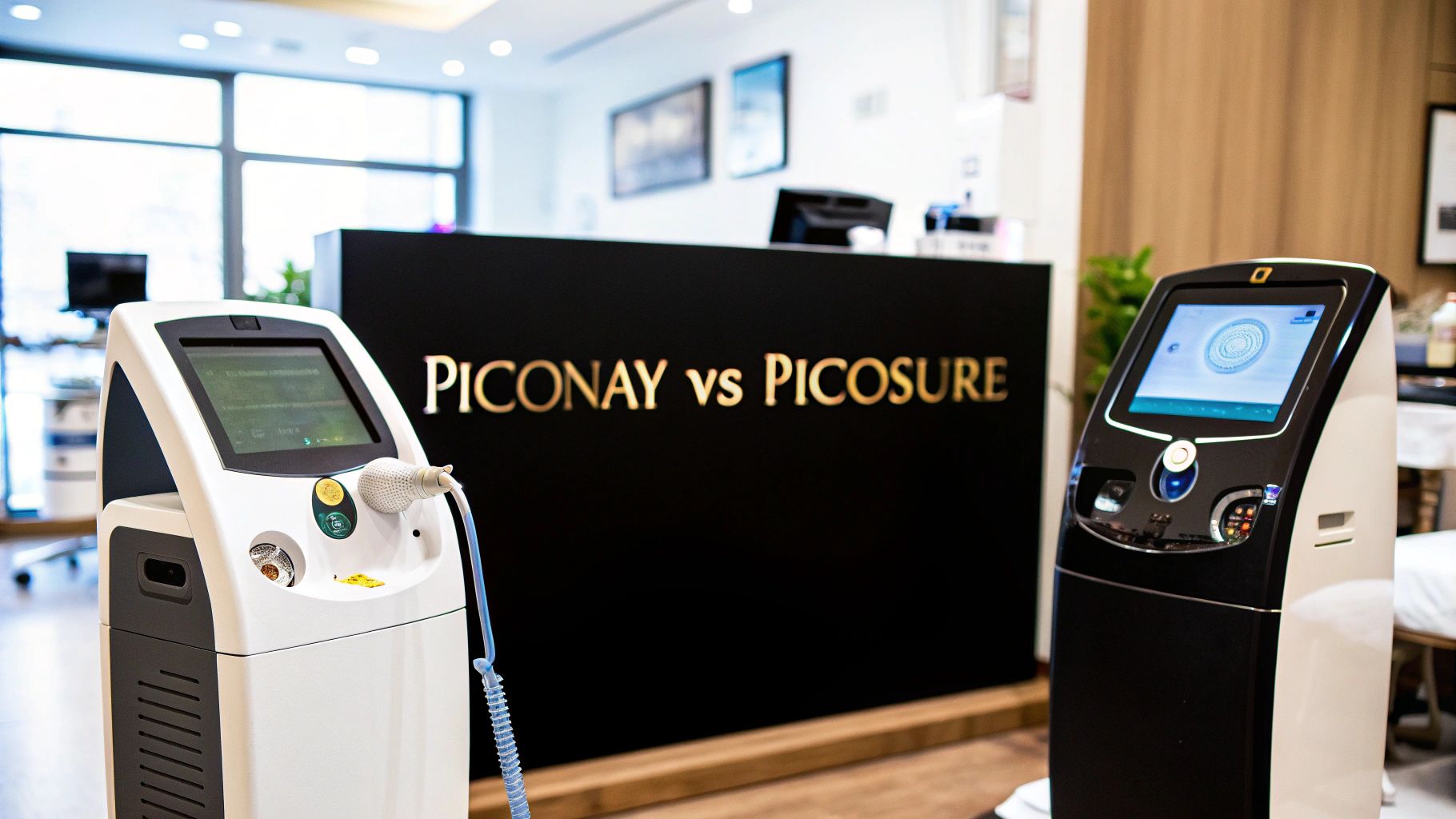
When it comes to PicoWay versus PicoSure, the right choice really boils down to your personal goals—what you want to treat, your skin type, and, if it's a tattoo, what colors are involved. Think of PicoWay as the versatile workhorse, especially brilliant for multi-colored tattoos with tricky reds and yellows. It's also a safer bet for a broader range of skin tones.
On the other hand, PicoSure is the specialist for stubborn blues and greens, particularly on lighter skin.
Diving into advanced laser treatments can feel overwhelming, but once you grasp the core differences between PicoWay and PicoSure, the path forward becomes much clearer. Both are top-tier picosecond lasers, a massive step up from older nanosecond technology. Instead of using intense, slow-burning heat, they fire ultra-short energy pulses that literally shatter pigment with a photoacoustic effect. This means far less damage to the surrounding skin and minimal downtime for you.
This evolution in laser tech brought incredible efficiency. For tattoo removal, PicoWay often gets to 90% clearance in about 4 sessions. To put that in perspective, traditional lasers might need 10 to 12 sessions to achieve just 50% clearance. That's a huge difference, representing a 60-70% reduction in the total number of treatments needed. Understanding the med spa marketing strategies for aesthetic treatments can also provide context on how clinics present these advanced options, helping you become a more informed patient.
To help you see the key distinctions quickly, here’s a straightforward comparison. This table breaks down the fundamental differences between the PicoWay and PicoSure systems we use at our practice.
This chart gives you a solid starting point, but the nuances of your skin and treatment goals are what truly matter.
Ultimately, nothing replaces a one-on-one professional consultation. Our experts here at Cape Cod Plastic Surgery will sit down with you, assess your unique situation, and guide you to the most effective of our available laser treatments to deliver the results you're looking for.
To really get into the PicoWay vs. PicoSure conversation, you first have to understand the incredible technology that makes them both so effective. Both are picosecond lasers, which was a huge jump forward from the older nanosecond technology you’d find in Q-switched lasers. The name comes from how incredibly fast the laser pulse is—a single picosecond is just one trillionth of a second.
That mind-boggling speed is the secret to why they work so well and are so much safer. Instead of using slow, intense heat to essentially burn away pigment, picosecond lasers create what’s known as a photoacoustic effect.
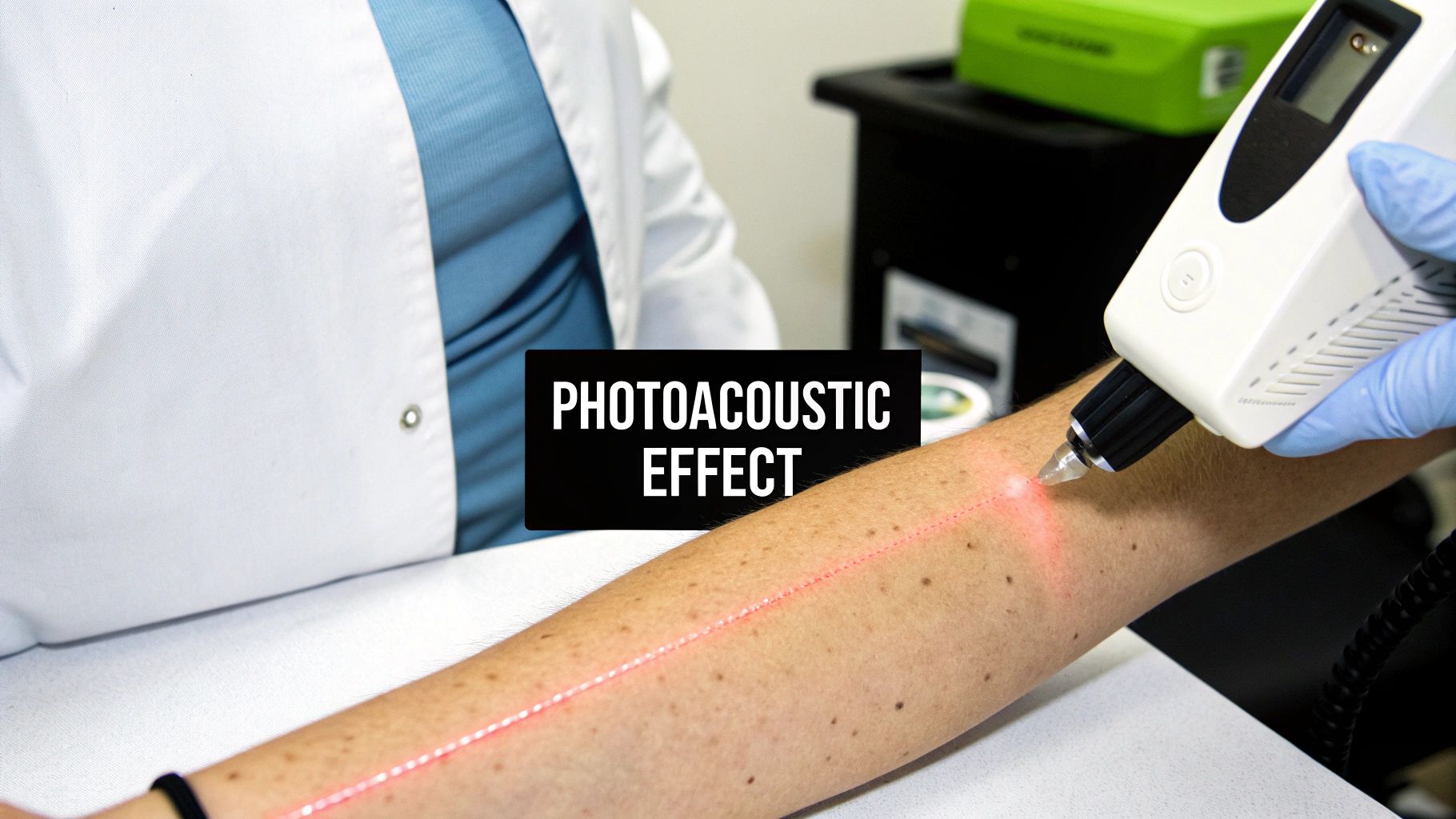
Think of it like this: imagine tapping a crystal so quickly and precisely that it shatters into dust without damaging the table it’s sitting on. That’s pretty much what these lasers do to tattoo ink and unwanted pigment in your skin. The super-short pulse sends a powerful shockwave through the pigment, breaking it into tiny, microscopic particles.
Key Takeaway: The real genius of the photoacoustic effect is its precision. By using mechanical force instead of raw heat to shatter pigment, we dramatically lower the risk of burns, scars, and hyperpigmentation, which is especially important for patients with darker skin tones.
This is a much more elegant approach than the photothermal effect used by older lasers, which basically just cooked the pigment. That method created a lot of collateral heat damage to the surrounding healthy skin, leading to longer recovery times and a higher risk of side effects.
So, while both lasers use picosecond pulses, the real difference lies in their wavelengths—the specific "color" of light they emit. Different tattoo inks and skin pigments absorb different colors of light. This is where the choice between PicoWay and PicoSure becomes less about which is "better" and more about which is the right tool for your specific situation.
PicoWay is really the jack-of-all-trades, built for versatility with multiple wavelengths to go after a whole spectrum of colors. Its main wavelengths are:
PicoSure, on the other hand, primarily uses a single 755nm Alexandrite wavelength. This wavelength has been around for a while and has a stellar reputation. It's exceptionally good at targeting very specific colors, absolutely excelling at breaking down stubborn blue, green, and purple inks. For those colors, it can often work more efficiently than other systems.
Understanding this difference is everything when it comes to setting the right expectations. We don't just pick a laser; we match the technology to the task at hand. It’s like a mechanic reaching for the right wrench—you need the perfect fit.
If you walk in with a multi-colored tattoo—say, one with black outlines and vibrant red and yellow details—PicoWay’s dual wavelengths give us a huge advantage. We can literally switch between the 1064nm and 532nm handpieces in the same session, targeting each color with its most effective light energy. That adaptability makes it a phenomenal choice for complex, colorful tattoos.
But let's say your main problem is an old blue or green tattoo that just won't budge, even after treatments with other lasers. In that scenario, PicoSure’s highly specialized 755nm wavelength might be the knockout punch we need. Its energy is fine-tuned to shatter those specific pigment colors.
This is exactly why a one-on-one consultation here at Cape Cod Plastic Surgery is so important. It lets us get up close, analyze your specific ink or pigment, and choose the laser that’s best equipped to get you the results you want, safely and effectively.
When we move past the technical specs and look at real-world results, the PicoWay vs. PicoSure debate gets a lot more interesting. Both systems are fantastic, but they have distinct clinical strengths. The right laser for you depends entirely on your goals—whether that’s clearing an old tattoo, erasing sun damage, or just improving your skin’s overall texture.
This is where a detailed, side-by-side comparison really shows its value. We can break down performance across the most common aesthetic concerns, from stubborn tattoo ink to unwanted pigmentation and the classic signs of aging.
The magic of picosecond lasers in tattoo removal boils down to a simple principle: how well a specific wavelength of light is absorbed by the ink. This is why the colors in your tattoo are the single most important factor in choosing between PicoWay and PicoSure. It’s not about one laser being "stronger," but about using the right tool for the job.
PicoWay is the clear winner for a broader color palette, especially when it comes to warm tones and deep blacks. Its dual wavelengths give it a huge advantage here:
PicoSure, on the other hand, is the specialist for cool-toned inks. Its 755nm Alexandrite wavelength is perfectly calibrated to shatter blue, green, and purple pigments. If your tattoo is dominated by these shades, PicoSure can often achieve clearance faster and more efficiently than other systems.
Real-World Scenario: A patient comes in with a vibrant, multi-colored tattoo featuring black outlines, red roses, and green leaves. We would recommend PicoWay. Its versatile wavelengths allow us to switch between the 1064nm handpiece for the black lines and the 532nm for the red petals, providing a complete treatment solution in one platform.
Both lasers are highly effective at tackling unwanted pigmentation, but they have different strengths when it comes to specific conditions like sunspots (lentigines) and melasma. The key difference often lies in how each laser's wavelength interacts with melanin—the very pigment we're trying to correct. That’s why we carefully tailor every hyperpigmentation treatment to your unique skin.
PicoWay’s photoacoustic effect, which shatters pigment with sound waves instead of intense heat, makes it a fantastic choice for a variety of pigmented lesions across all skin types. It's particularly effective for sunspots and age spots, breaking them down with a much lower risk of causing post-inflammatory hyperpigmentation (PIH), especially in darker skin tones.
PicoSure is also a powerhouse for treating sun damage and other benign pigmented lesions, particularly on lighter skin types (Fitzpatrick I-III). Its 755nm wavelength is strongly absorbed by melanin, which allows it to clear spots very efficiently. However, that same characteristic means we must use it with extra caution on darker skin to avoid unwanted side effects.
Beyond just removing what you don't want, picosecond lasers are incredible tools for improving the skin you have. Both PicoWay and PicoSure trigger the production of new collagen and elastin, which leads to smoother texture, fewer fine lines, and a noticeable reduction in acne scars.
PicoSure, especially with its Focus™ Lens Array, has built a reputation for its skin revitalization capabilities. This attachment fractures the laser beam into hundreds of micro-spots, creating tiny treatment zones within the skin. The body’s healing response to these micro-injuries is powerful, building new collagen that improves skin texture and tone with very little downtime.
PicoWay offers its own exceptional skin rejuvenation through the Resolve™ fractional handpiece. It works by creating tiny, invisible spaces deep under the skin, stimulating a natural healing cascade that smooths wrinkles and acne scars without ever breaking the surface. This makes it a great option for patients who want significant improvement with almost no interruption to their daily life.
A crucial part of this comparison is the overall treatment journey. How many sessions will you need, and how does that affect your time and budget? When we analyze efficiency, PicoWay often comes out ahead.
For general skin rejuvenation, PicoWay typically requires 3 to 5 sessions spaced 4 to 8 weeks apart. For similar results, PicoSure might require a few more sessions, especially for certain types of pigmentation. For our patients, this difference can be significant. Single PicoWay sessions can range from $200 to over $700 depending on the treatment area, and fractional laser treatments for texture and tone can run from $500 to $1,000.
While PicoSure excels at removing tough tattoo colors like green, blue, and black, the reduced treatment frequency of PicoWay often means fewer total appointments and a lower overall cost to get you to your goal. Interestingly, clinical data shows that both treatments yield similar satisfaction rates at the 12-week mark—with 45% of patients reporting greater than 50% improvement regardless of the system used. The true benefit often emerges over longer treatment courses, where PicoWay's efficiency really shines.
Beyond the clinical results, how you feel during and after the procedure is what truly shapes your experience. We know that comfort, safety, and a quick return to your life are top priorities. The journey itself—from the sensation of the laser to how quickly your skin recovers—is a critical part of comparing PicoWay and PicoSure. Both are designed for minimal disruption, but the way their technology works creates subtle differences in what you can expect.
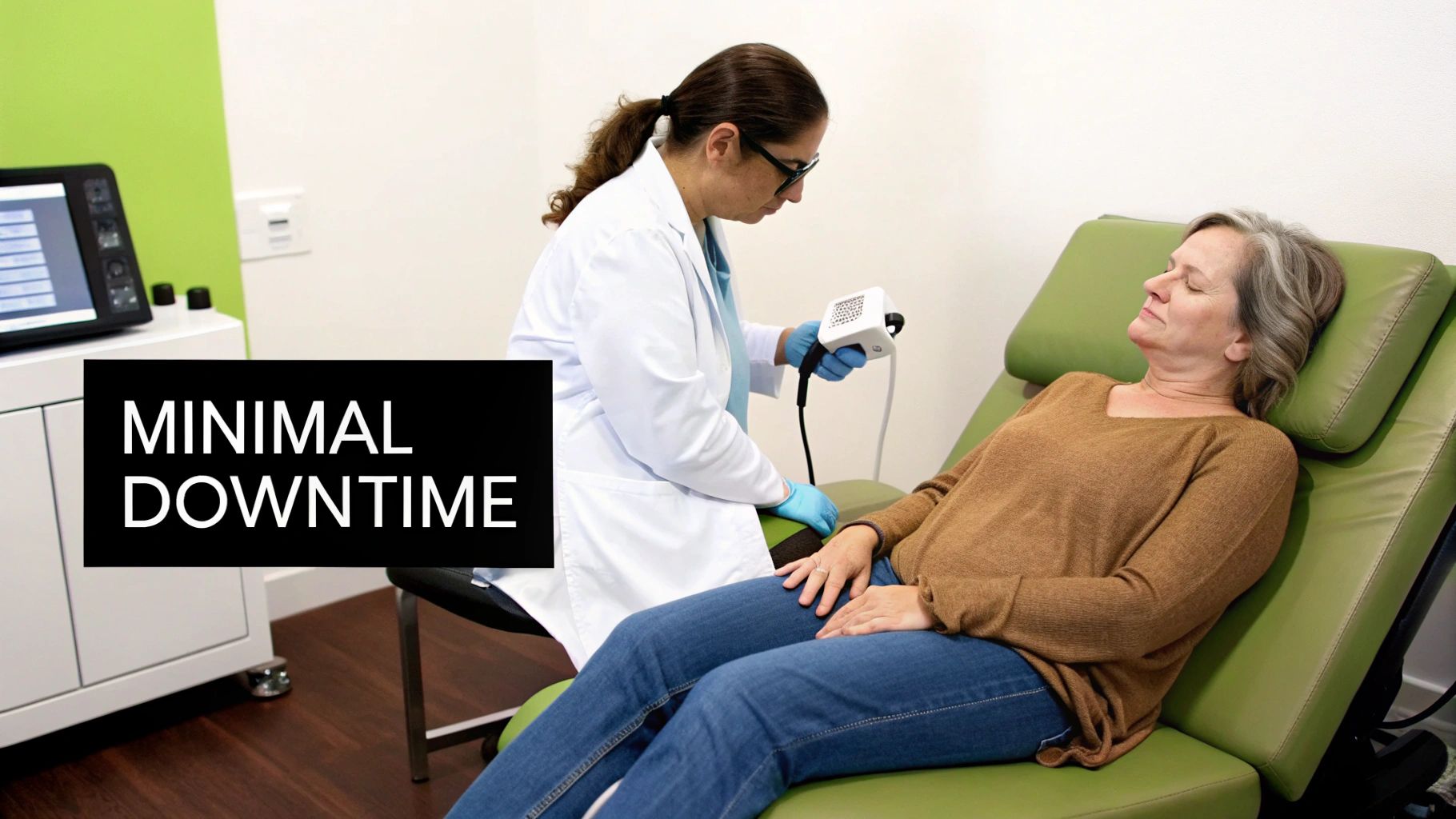
Our primary goal is to deliver beautiful, healthy skin. While modern picosecond lasers are exceptionally safe, understanding how each one interacts with different skin types is the key to minimizing risks and ensuring a smooth, predictable outcome.
One of the first questions we always get is, "Will it hurt?" Most people describe the sensation as a quick, light snap against the skin, almost like a tiny rubber band. It’s a feeling that is very manageable, especially since sessions are incredibly fast—often just 10 to 20 minutes.
PicoWay is known for its incredibly short pulse duration, which generates a powerful photoacoustic effect with almost no heat. For many, this translates into a more comfortable session because there's less thermal energy being delivered to the skin. PicoSure also uses this "shattering" effect but incorporates a gentle thermal element, which can feel slightly different.
To make sure you're comfortable, we can always apply a topical numbing cream before we begin. It's a simple step that significantly minimizes any sensation, allowing you to relax during your appointment.
Safety is our non-negotiable, especially when we're treating the beautiful diversity of skin tones we see at our clinic. We use the Fitzpatrick scale—a system that classifies skin based on its reaction to UV light—to guide our laser choices. This is where the technological differences between PicoWay and PicoSure really matter.
PicoWay's multi-wavelength platform gives it a major advantage in versatility. While PicoSure’s primary 755 nm wavelength is excellent, PicoWay offers multiple options to perfectly match a patient's skin type and concern. In fact, studies show its 1064 nm wavelength is highly successful at clearing pigmented lesions like Cafe-Au-Lait Macules in patients with Fitzpatrick types II, III, and IV with minimal side effects. For those with darker skin, PicoWay is widely considered the safer choice because it generates less heat, which dramatically reduces the risk of post-inflammatory hyperpigmentation.
The Bottom Line on Safety: PicoWay's 1064nm wavelength is absorbed more by the target pigment and less by the surrounding melanin in the skin. This makes it an exceptionally safe and effective choice for treating patients with darker skin tones (Fitzpatrick IV-VI).
PicoSure’s 755 nm wavelength is fantastic, but it has a greater affinity for melanin. This makes it an incredible tool for lighter skin types (Fitzpatrick I-III), but it requires an expert hand and extreme caution when used on darker skin to avoid complications.
Both lasers are famous for their minimal downtime, letting you get right back to your routine. But there can be slight differences in the recovery timeline.
Common Post-Treatment Expectations:
Because PicoWay treatments involve such minimal heat, patients often find that these initial side effects resolve a little faster, with most redness gone within a day. Following any laser treatment, your skin will be more sensitive, so understanding the healing process is important. You can get a good idea of what to expect by reading about the day-by-day healing process after a BBL laser treatment, which follows similar aftercare principles.
PicoSure's recovery is also very quick, though its gentle thermal effect might mean the redness lingers just a bit longer for some people. Either way, diligent aftercare—especially consistent, daily use of sunscreen—is absolutely essential to protect your skin and get the best possible results. Here at Cape Cod Plastic Surgery, we’ll send you home with detailed aftercare instructions tailored to you, ensuring your recovery is as smooth and swift as possible.
So, how do you decide between PicoWay and PicoSure? It really comes down to a simple partnership: your aesthetic goals and our clinical expertise. Both of these lasers are at the very top of their game, but their small differences in how they deliver energy make them specialists for certain jobs. The right choice isn't about which laser is "better" overall, but which one is the perfect tool for your skin, your goals, and your specific situation.
This is where we move from understanding the technology to applying it to you. The easiest way to do this is to look at a few real-world examples that show where each laser truly shines.
The best way to start is by pinpointing your main concern. Are you trying to get rid of a tattoo with lots of different colors? Or are you stuck with stubborn blue and green ink that nothing else has touched? Maybe your goal isn't tattoo removal at all, but revitalizing your skin to soften fine lines or clear up sun damage.
Here are a few clear-cut scenarios to help you see the difference:
For the Colorful Tattoo: If your tattoo is a rainbow of reds, oranges, and deep blacks, PicoWay is almost always the answer. Its multiple wavelengths—the 1064nm for blacks and the 532nm for warm tones—let us target a full spectrum of colors with incredible precision, all from one machine.
For Stubborn Blues and Greens: Is your biggest headache a tattoo filled with resilient blues, greens, or purples, especially if you have lighter skin? This is where PicoSure can often deliver faster results. Its specialized 755nm Alexandrite wavelength is a magnet for those cool-toned pigments, breaking them apart more efficiently.
For Pigmentation on Darker Skin: When we're treating sunspots, age spots, or other pigmentation issues on Fitzpatrick skin types IV-VI, safety is our top priority. PicoWay is the gold standard here. Because it relies less on heat and its 1064nm wavelength penetrates deeply, we can break up pigment with a much lower risk of causing unwanted darkening.
For General Skin Revitalization: Honestly, both lasers are fantastic for waking up collagen and improving skin texture. PicoSure's Focus™ Lens Array does a beautiful job of smoothing fine lines and evening out skin tone. On the other hand, PicoWay’s Resolve™ handpiece works wonders on acne scars and wrinkles with almost zero disruption to your skin's surface. The best choice often comes down to your skin type and any other secondary concerns we identify.
While these guidelines give you a great head start, they're no substitute for a one-on-one assessment with a trained professional. A laser is a powerful medical device, and the results depend just as much on the person operating it as on the technology itself. That’s why an in-person consultation is the single most important step in this entire process.
During your consultation at Cape Cod Plastic Surgery, we do more than just look at your skin. We talk about your medical history, your lifestyle, and what you hope to achieve. This helps us build a plan that’s not just effective, but also safe and realistic for you.
This detailed evaluation allows us to consider every variable, from how deep your tattoo ink is to the subtle undertones of your skin. We can even perform a small patch test to see how your skin reacts, giving you a real preview of the results and a better estimate of how many sessions you'll need. This personalized approach is truly the only way to ensure you get the best possible outcome.
Your journey to clearer, more vibrant skin is yours alone. Let us provide the expert guidance you need to choose confidently between PicoWay and PicoSure. Schedule your personalized assessment with our team at Cape Cod Plastic Surgery today, and let’s start creating a plan to bring your vision to life.
Even after comparing the details, it's completely normal to have a few more questions before deciding on a treatment. Here, we tackle some of the most practical concerns we hear from our patients, giving you clear, straightforward answers to help you feel confident about your next steps.
We'll cover everything from what the treatment feels like to cost and how to get ready for your first appointment. Think of this as the final piece of the puzzle in your decision-making process.
This is easily the most common question we get, and for good reason. Most people describe the feeling of either laser as a very quick snap against the skin, kind of like a tiny rubber band.
It's a sensation that is over in an instant, and treatments themselves are incredibly fast—often lasting just 10 to 20 minutes.
Because PicoWay’s ultra-short pulse creates very little heat, some patients find it a bit more comfortable. But honestly, comfort is subjective. Our main priority is making your session as easy as possible, no matter which laser we use. We typically apply a topical numbing cream beforehand to take the edge off and minimize any sensation.
Melasma is a tricky condition that requires a very delicate touch. While both PicoWay and PicoSure can be used to treat it, the right choice really comes down to a patient’s skin type and the specific characteristics of their pigmentation.
More often than not, we lean toward PicoWay for treating melasma, especially for people with darker skin tones. Its primary effect is photoacoustic—it shatters pigment with sound waves, not heat. This is critical because heat can actually make melasma worse. That makes PicoWay a much safer and more predictable option for managing this condition.
PicoSure can also deliver great results for melasma, but its gentle thermal effect means it has to be handled by an expert to make sure it doesn't accidentally trigger more pigmentation.
A little preparation goes a long way in ensuring your treatment is both safe and effective. It all starts with your initial consultation, where we'll walk you through a personalized plan.
In the time leading up to your appointment, just follow these simple guidelines:
Following these steps helps the laser do its job properly and gives you the best possible outcome.
The investment for PicoWay and PicoSure treatments is often very similar, but the final cost really depends on a few things. The total price is influenced by the size of the area we're treating, what we're treating (like a tattoo versus fine lines), and how many sessions you'll ultimately need.
As a general guideline, a single session with either laser can run from $200 to over $700. More comprehensive fractional treatments for skin texture and rejuvenation typically fall between $500 and $1,000 per session.
While the cost per session might be nearly identical, the total investment could vary. For instance, if PicoWay can clear a red ink tattoo in fewer sessions than PicoSure, its overall cost will be lower, even if the price per visit is the same. We'll give you a completely transparent and detailed cost breakdown during your consultation so there are no surprises.
This decision tree helps visualize where we start when it comes to tattoo removal, based on the main colors in the ink.
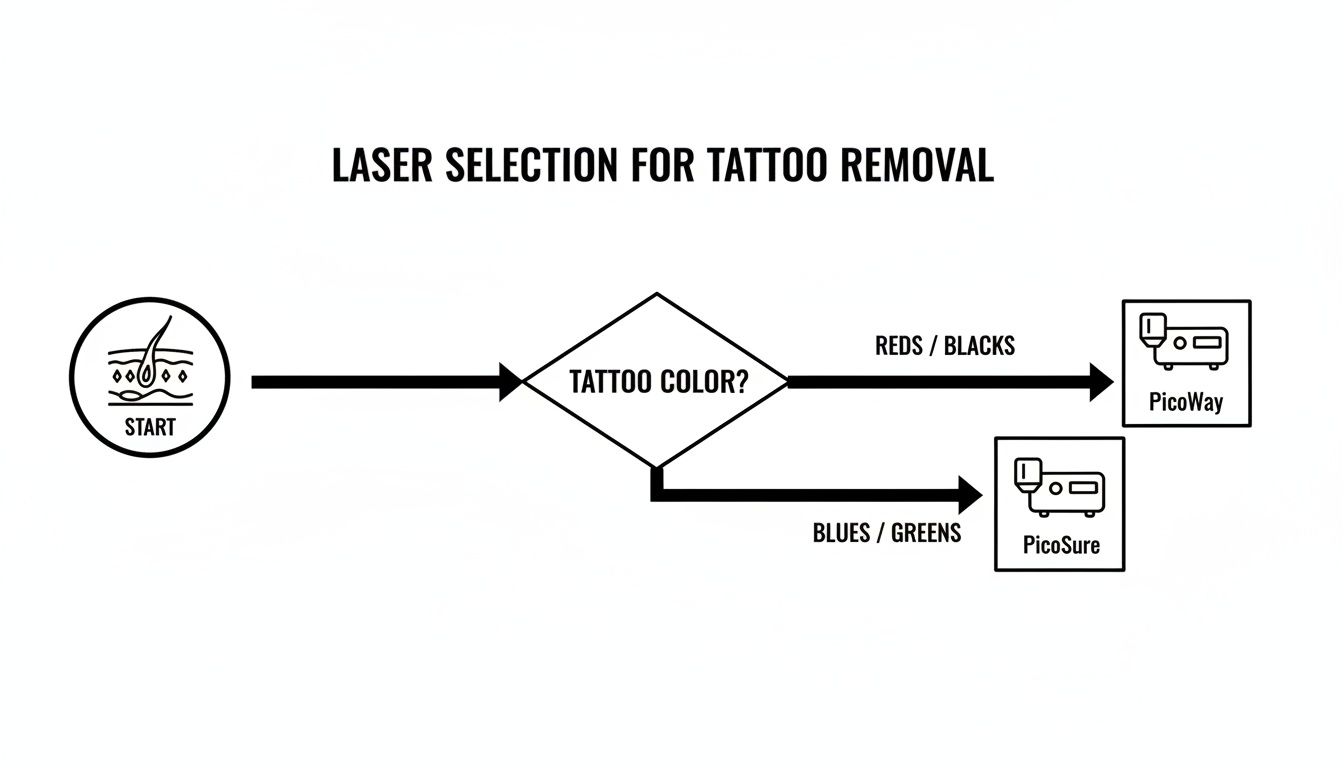
As the flowchart shows, PicoWay’s different wavelengths are perfect for warm tones like reds and blacks, while PicoSure's specific wavelength is the go-to for cool tones like blues and greens.
That's a very valid concern, especially for anyone looking to remove an old microblading or eyebrow tattoo. The good news is that both PicoWay and PicoSure are designed with incredible precision to target only the pigment in the tattoo ink.
The lasers use wavelengths that are absorbed by the ink particles, leaving the surrounding skin and—most importantly—the hair follicles completely unharmed. In almost every case, your natural eyebrow hair will continue to grow just as it always has throughout the removal process.
Expert Insight: The photoacoustic effect of picosecond lasers is what makes them so safe for delicate areas. By shattering pigment with a shockwave instead of burning it with heat, we protect sensitive structures like hair follicles. This ensures a safe removal process and gives you a clean slate.
At Cape Cod Plastic Surgery, we believe an informed patient is an empowered one. If you have any other questions or you're ready to figure out which laser is the right choice for you, we invite you to schedule a personalized consultation with our team. Let us help you reach your goals with the most advanced technology on the market.
October 7, 2026
A Practical Guide to Healing After Breast Surgery

October 6, 2026
Your Safety Guide: What to Look for When Choosing a Plastic Surgeon
October 5, 2026
Why Our On-Site Accredited Facility Matters for Your Safety

Cape Cod Plastic Surgery offers expert cosmetic and reconstructive procedures in a safe, accredited setting. Led by Dr. Marc Fater, we combine advanced techniques with personalized care to help you look and feel your best.
Monday: 9:00 AM – 5:00 PM
Tuesday: 9:00 AM – 5:00 PM
Wednesday: 9:00 AM – 5:00 PM
Thursday: 9:00 AM – 5:00 PM
Friday: 9:00 AM – 5:00 PM