

September 9, 2026
How to Care for Surgical Incisions Properly
Expert Guide to Proper Surgical Incision Care
Mar 20, 2026

Post‑operative care is the cornerstone of a smooth, complication‑free healing process. By following your surgeon’s specific instructions—medication schedules, wound‑care protocols, and activity limits—you protect the incision, reduce infection risk, and support optimal tissue repair. Key principles include keeping the incision clean and dry, staying well‑hydrated, consuming a protein‑rich diet with plenty of fruits, vegetables and healthy fats, and managing pain with prescribed analgesics and gentle ice therapy. Early, doctor‑approved movement such as short walks promotes circulation and prevents blood‑clot formation, while rest and adequate sleep allow the body to focus on healing. In the first 24‑48 hours you may experience swelling, mild bruising, and fatigue; monitor temperature, drainage and pain, and contact your surgeon promptly if fever exceeds 101 °F, redness spreads, or drainage becomes excessive. Adhering to these guidelines accelerates recovery and helps you achieve the best aesthetic outcome.

Effective recovery after cosmetic surgery hinges on four key practices. Incision cleaning and dressing management – Keep the surgical site clean and dry; if a clear plastic film dressing was placed, a gentle shower is permissible after 24 hours, otherwise maintain a dry dressing for the first 48 hours. Apply a thin layer of bacitracin or the prescribed antibiotic ointment twice daily, and change dressings only as your surgeon directs. Medication adherence – Take every prescribed pain reliever, antibiotic, and other medication exactly on schedule; scheduled dosing prevents breakthrough pain and supports infection control. Positioning and elevation – Elevate the head or the operated area while sleeping and resting to reduce swelling, and avoid strenuous activity, heavy lifting, or driving until cleared by your surgeon. The 5 P’s framework – 1. Pain – Manage with prescribed analgesics, limiting NSAIDs when advised. 2. Position – Keep the area elevated or supported. 3. Personal Hygiene – Follow surgeon‑specific cleaning steps. 4. Periphery – Watch surrounding skin for redness, warmth, drainage, or bruising. 5. Pump – If a drain is present, empty and record output as instructed. Together, these steps create a safe, comfortable, and efficient healing environment.

A successful plastic‑surgery recovery hinges on four evidence‑based pillars. Protein‑rich nutrition and supplements – Prioritize lean meats, fish, eggs, beans, Greek yogurt and vitamin‑C‑rich fruits; a surgeon‑approved vitamin C or zinc supplement can further boost collagen synthesis. Rest, sleep, and activity restrictions – Aim for 7‑9 hours of quality sleep each night, keep the incision site protected, and avoid heavy lifting or strenuous tasks for the first 2‑3 weeks as directed. Smoking cessation – Nicotine narrows blood vessels and impairs tissue repair; stop all tobacco and second‑hand exposure throughout the healing period. Gentle movement and circulation – Short, doctor‑approved walks and ankle‑pump exercises promote blood flow, reduce swelling, and lower the risk of clots without stressing the wound. Together, these steps accelerate tissue repair, minimize complications, and support the best aesthetic outcome.
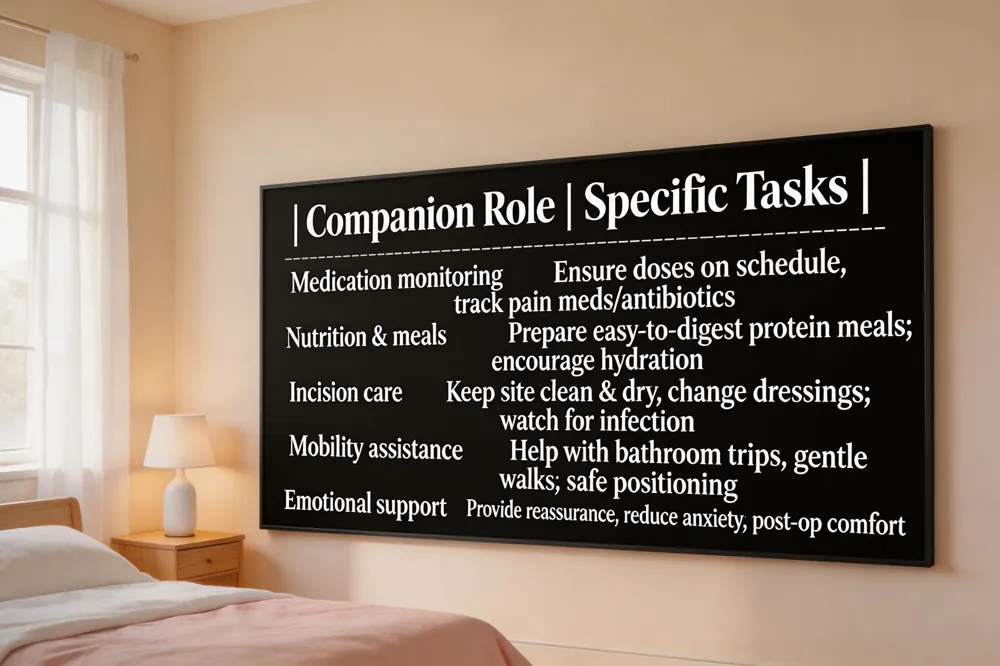
A responsible adult should stay with you for at least the first 24 hours after most outpatient plastic‑surgery procedures. Most procedures are outpatient; patients go home same day. Anesthesia and postoperative medications can cause drowsiness, nausea, dizziness, and impaired coordination, making it unsafe to drive, operate machinery, or manage complex tasks on your own. A companion can help with essential duties such as monitoring medication schedules, preparing easy‑to‑digest meals, keeping the incision clean and dry, assisting with bathroom trips, and providing emotional reassurance. Keep the incision clean and dry, changing dressings as directed and monitoring for signs of infection. If family or friends are unavailable, you can arrange for a professional home‑care nurse or a trained companion through a reputable agency; many clinics also offer postoperative support services. Professional in‑home nursing support can provide medication management, wound care, and monitoring for complications. This supervised assistance not only meets discharge requirements but also reduces the risk of complications, promotes faster healing, and gives you confidence during the critical early recovery period.

After any cosmetic or reconstructive procedure, most patients heal uneventfully, but prompt awareness of warning signs can prevent serious problems.
Infection – Watch for increasing redness, warmth, swelling, foul‑smelling drainage, or a fever above 101 °F (38.3 °C). These indicate bacterial involvement and require immediate contact with your surgeon.
Hematoma and Seroma – A sudden, painful lump or swelling that feels firm may be a collection of blood (hematoma) or clear fluid (seroma). Persistent bruising, tension, or drainage from the incision also signals a wound‑healing issue; drainage may be needed.
Wound Healing Problems – Delayed closure, dehiscence (splitting of the incision), or excessive scar formation should be reported. Keep dressings clean, dry, and change them as instructed.
Nerve Injury – Tingling, numbness, or altered sensation around the surgical site can occur, especially after facial or breast work. Most resolve, but persistent changes merit evaluation.
Rare Systemic Events – Though uncommon, deep‑vein thrombosis, pulmonary embolism, skin necrosis, or fat‑embolism syndrome present with chest pain, shortness of breath, severe pain, or unexplained swelling and demand urgent medical attention.
Answer to: What are common complications after plastic surgery? Most patients recover without issue, but infection, hematoma or seroma, wound healing problems, nerve injury, and rare systemic events such as clotting complications can arise. Prompt reporting of any abnormal signs to your surgical team ensures timely intervention and optimal outcomes.
Most outpatient cosmetic and reconstructive procedures keep patients in the post‑anesthesia care unit (PACU) for about 45 minutes to 2 hours, where nurses monitor vital signs, manage pain and nausea, and ensure the patient can sit up, eat, and be safely escorted home. More extensive surgeries may require a PACU stay of 3–4 hours or an overnight admission before transfer to a regular ward.
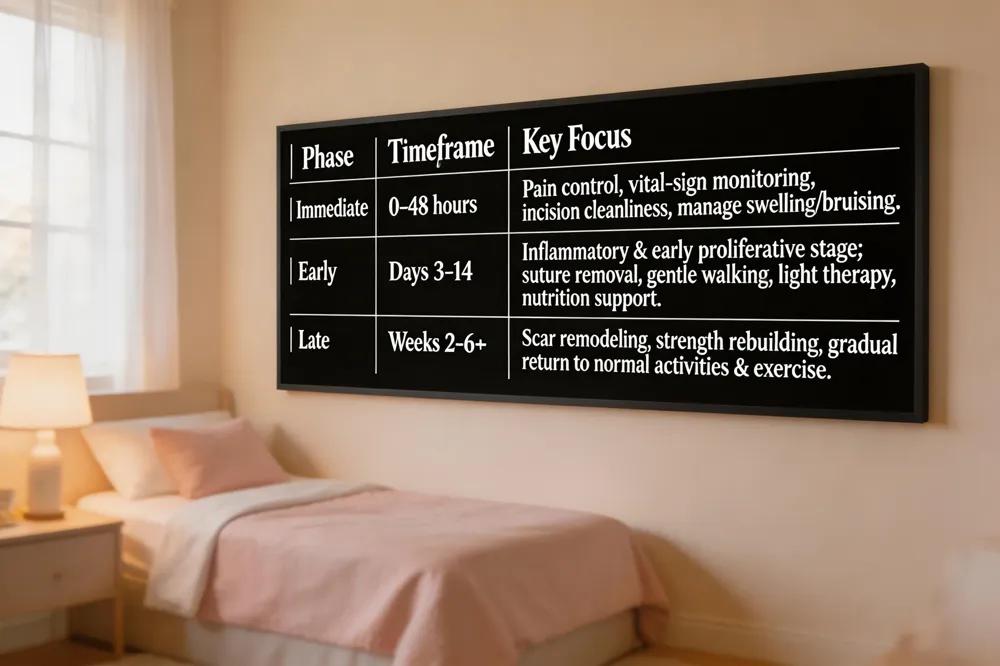
Recovery proceeds in three overlapping phases. The immediate phase (0‑48 hours) focuses on pain control, vital‑sign monitoring, and keeping the incision clean while swelling and bruising are common. The early phase (days 3‑14) marks the inflammatory and early proliferative stages; sutures are removed, gentle walking and light therapy begin, and nutrition supports tissue repair. The late phase (weeks 2‑6 and beyond) involves continued scar remodeling, strength rebuilding, and a gradual return to normal daily activities and exercise. Throughout each stage, adhere to surgeon instructions, stay hydrated, and maintain a protein‑rich diet to promote optimal healing.
Key take‑aways for a successful recovery: follow every surgeon‑provided instruction, keep the incision clean and dry, stay well‑hydrated, and eat a protein‑rich, vitamin‑rich diet to support tissue repair. Use prescribed pain medication on schedule, apply ice as directed, and begin gentle ambulation early to improve circulation and reduce clot risk. When to seek professional help: contact the surgeon immediately if fever exceeds 101 °F, the incision becomes red, warm, swollen, or drains foul fluid, pain worsens despite medication, or you experience shortness of breath, heavy bleeding, or persistent vomiting. Continuing care after the first weeks: maintain balanced nutrition, continue light activity as cleared, protect the scar with sunscreen and moisturizers, attend all follow‑up appointments, and keep a support network for emotional well‑being. These steps together promote optimal healing and lasting results.
September 9, 2026
Expert Guide to Proper Surgical Incision Care

Master dermal fillers aftercare with do's and don'ts, swelling tips, activity limits and warning signs to protect your results and heal smoothly.

September 8, 2026
Ensuring Safety: Why Your Surgeon's Credentials Matter Most

Cape Cod Plastic Surgery offers expert cosmetic and reconstructive procedures in a safe, accredited setting. Led by Dr. Marc Fater, we combine advanced techniques with personalized care to help you look and feel your best.
Monday: 9:00 AM – 5:00 PM
Tuesday: 9:00 AM – 5:00 PM
Wednesday: 9:00 AM – 5:00 PM
Thursday: 9:00 AM – 5:00 PM
Friday: 9:00 AM – 5:00 PM