

October 7, 2026
What to Expect During Your Breast Surgery Recovery
A Practical Guide to Healing After Breast Surgery
Aug 26, 2026
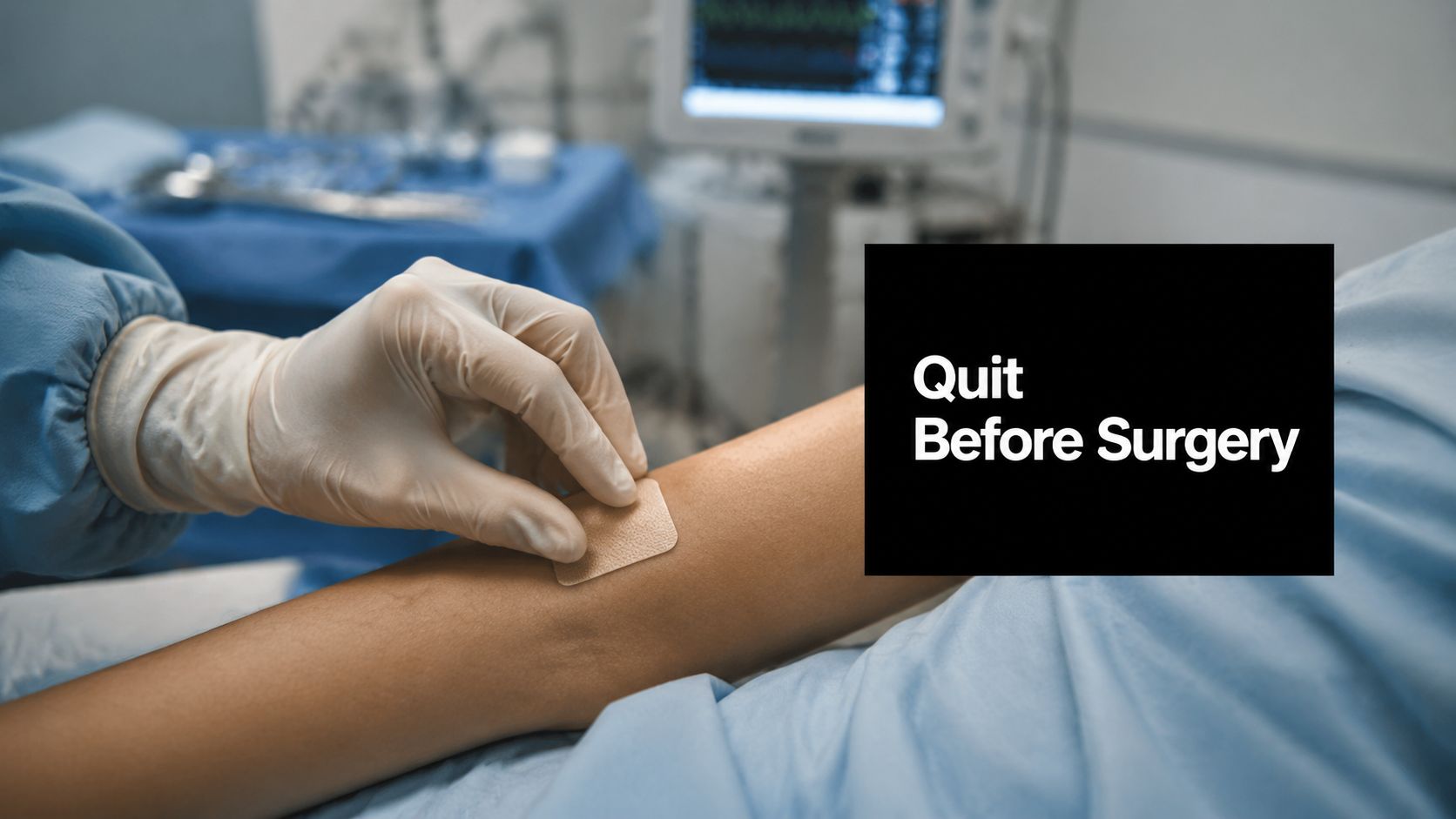
You're sitting in a preoperative consultation, reviewing the final details of a facelift, breast procedure, or reconstruction. When your surgeon asks about tobacco and nicotine, you mention that you vape every day, then add that you use marijuana edibles to sleep. You may not consider yourself a smoker, but both details matter to surgical planning.
Smoking and surgery recovery are connected through circulation, oxygen delivery, immune response, and collagen production. The practical question isn't whether you deserve surgery. It's whether your tissues are receiving the conditions they need to close an incision, resist infection, and protect a flap or graft. This guide separates cigarettes, vaping, nicotine replacement, and marijuana, then turns the evidence into a workable timeline.
A closed incision is only the beginning of recovery. Your body must deliver oxygen and nutrients, control inflammation, limit bacterial growth, move repair cells into the wound, and build collagen. Nicotine, smoke, and other inhaled substances can disrupt these tasks through different pathways.
Nicotine narrows small blood vessels. This vasoconstriction reduces circulation to skin and subcutaneous tissue, where an incision depends on steady blood flow. A facelift, breast lift, tummy tuck, or reconstructive flap may look healthy immediately after surgery while its microcirculation remains vulnerable.
Carbon monoxide creates a separate oxygen problem. It binds to hemoglobin and reduces the blood's capacity to carry oxygen to healing tissue. Nicotine limits delivery, while carbon monoxide limits transport. Together, they make it harder for an incision to receive what repair requires.
The immune response changes as well. Smoking can impair neutrophils and macrophages, which help control bacteria and coordinate repair. It can also alter collagen synthesis and reduce fibroblast migration. Fibroblasts move into the wound and produce the structural material that gives a healing scar strength.
Practical rule: A nicotine history belongs in medical risk assessment, not moral judgment. Tell your surgeon about every product, including cigarettes, vapes, pouches, patches, gum, edibles, and smoked marijuana.
These mechanisms can affect both procedure timing and anesthesia planning. Anesthesia includes airway management, breathing, circulation, and recovery monitoring, not only sleep during the operation. Your surgical team may ask you to review anesthesia types for surgery before your consultation. Vaping and smoked marijuana may create additional airway or pulmonary concerns, while edibles still matter because they can affect medication planning and disclosure.
When I ask about nicotine or marijuana, I am identifying risks that may be reduced before an elective operation. If tissue oxygenation, circulation, or immune function is under avoidable stress, postponing surgery can be safer than proceeding immediately. Timing depends on the substance, amount, procedure, and your overall health, so do not assume that replacing cigarettes with vaping removes the concern.
After surgery, a plan for post-operative care strategies supports the same priorities through wound observation, medication adherence, and activity restrictions. Report increasing redness, drainage, separation, unusual pain, or color change promptly rather than waiting for a routine visit.
A systematic review found postoperative healing complications occur more often in smokers than in nonsmokers, and former smokers may still have worse outcomes than people who never smoked. More recent pooled evidence also supports careful planning when an operation can be scheduled rather than performed urgently. Full disclosure gives your surgeon a clearer basis for choosing the safest timeline and protecting your result.
A smoker may leave the operating room with an incision that looks fine, then develop problems as oxygen delivery, circulation, and immune response affect healing over the following days. “Healing” includes several separate risks, and each requires a different response.
The incision may fail to hold together when reduced blood flow and oxygen delivery weaken repair. Smoking can also alter fibroblast activity, which affects collagen formation. A 2014 meta-analysis reported that preoperative smoking increased wound complication risk by 2.15 times, based on the review of smoking and postoperative wound outcomes.
This risk is particularly concerning when an incision is under tension or when skin circulation is already limited.
Slow epithelialisation leaves the wound exposed longer. Impaired neutrophil and macrophage function may also reduce the body's ability to control bacteria. The same meta-analysis reported increased risks for general infections and general morbidity. A broader review found current smokers had roughly 30% higher odds of surgical site infection and 65% higher odds of wound disruption.
These complications can prolong dressing changes, delay normal activity, and require additional treatment.
Smoking affects the lungs as well as the incision. Irritated, reactive airways can make airway management more difficult and may complicate breathing after anesthesia. The cited meta-analysis associated preoperative smoking with a 1.73 times higher risk of pulmonary complications and a 1.60 times higher risk of ICU admission.
Tell the anesthesia team about cigarette use, vaping, nicotine products, and marijuana. Route and timing can change the perioperative plan.
A flap or graft has limited tolerance for reduced circulation. If tissue becomes ischemic, the result may be partial or complete tissue loss, prolonged wound care, or revision surgery. Surgeons therefore apply particular caution to procedures that depend on delicate skin circulation. Even when the exposure is not a cigarette, nicotine-related vasoconstriction and inhaled irritants may still matter.
| Risk category | Non-smoker rate | Smoker rate | Mechanism |
|---|---|---|---|
| Wound complications | Lower risk | 2.15 times higher risk reported in a meta-analysis | Vasoconstriction, impaired oxygen delivery, altered collagen repair |
| General infections | Lower risk | 1.54 times higher risk reported in a meta-analysis | Impaired immune-cell function and delayed epithelialisation |
| Pulmonary complications | Lower risk | 1.73 times higher risk reported in a meta-analysis | Airway irritation, impaired lung function, reduced oxygen reserve |
| ICU admission | Lower risk | 1.60 times higher risk reported in a meta-analysis | Greater overall perioperative instability |
| Wound disruption | Lower risk | Roughly 65% higher odds among current smokers | Weak closure and delayed tissue repair |
The table presents relative findings from pooled evidence, not a personal prediction. Your operation, medical history, procedure length, and tissue quality all affect individual risk. Blood clots are another perioperative concern, so review blood-clot prevention after surgery as part of your preparation.
These exposures should be assessed separately before surgery. Combustion, nicotine, airway irritation, dose, and product uncertainty create different concerns, so none should be treated as harmless just because it is not a cigarette.
Cigarettes carry the greatest overall concern. Burning tobacco delivers carbon monoxide and oxidizing chemicals alongside nicotine's effects on blood vessels. That combination can reduce oxygen delivery while the incision or surgical flap is trying to establish reliable circulation.
Vaping removes combustion, but not nicotine. Compared with cigarettes, it may reduce exposure to combustion products. Nicotine can still constrict blood vessels, while the liquid, device, and delivered dose vary. A lack of visible smoke does not establish safety for a graft, flap, or incision.
Nicotine replacement differs from smoking. Patches, gum, and lozenges avoid smoke and combustion products, which is a meaningful reduction in exposure. Nicotine itself can still affect circulation, so replacement is a harm-reduction option rather than an automatically acceptable surgical plan. Discuss the specific product and timing with your surgeon and anesthesiologist.
Marijuana requires attention to both the substance and route. Smoking exposes the lungs to combustion products. Vaping avoids tobacco smoke but still creates inhaled exposure, and edibles avoid pulmonary smoke while tetrahydrocannabinol may affect the nervous system and anesthesia planning. Your team should know whether use is smoked, vaped, or edible, along with how recently you used it.
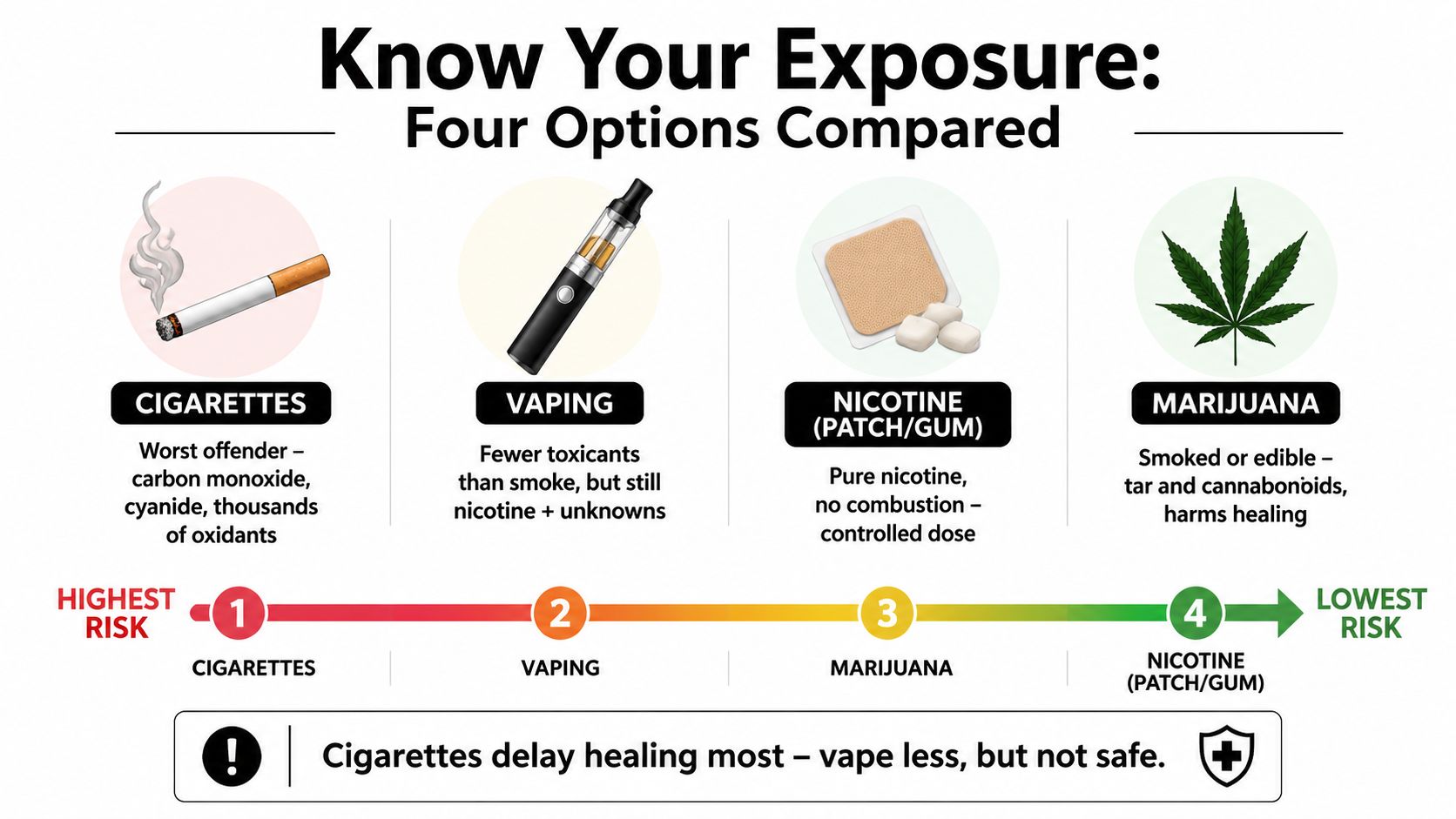
For recovery planning, I use highest concern to lower concern, not “safe versus unsafe”:
This ranking is not permission to vape or use a patch without medical approval. An air purifier that removes smoke odors can make a smoke-free home more comfortable, but it cannot counteract nicotine or other exposures already inside your body.
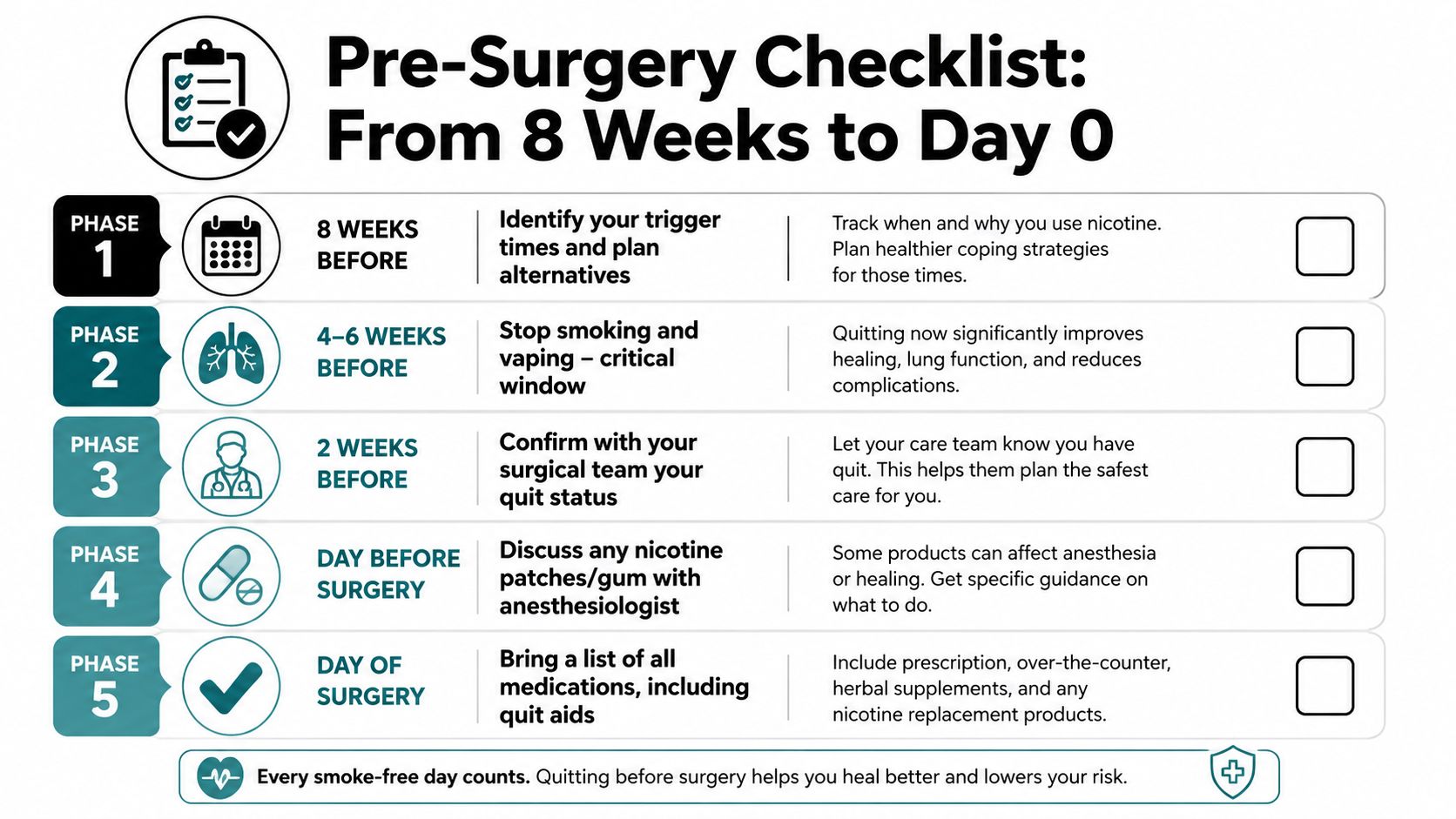
Plan for at least four weeks of cessation before surgery when possible. A 2025 systematic review and meta-analysis covering 24 studies and 39,499 participants found that smoking within four weeks of surgery was associated with 31% higher odds of postoperative complications than quitting for at least four weeks, and 2.83 times the odds compared with never-smokers (2025 perioperative smoking meta-analysis).
This window gives your body time to respond. Evidence reviewed by the World Health Organization indicates that wound-healing benefits generally require about three to four weeks, while respiratory-risk reduction may require four weeks or more. A systematic review found that cessation interventions reduced surgical site infections, although results were not consistent across every healing complication (systematic review of cessation interventions).
The timeline should match the exposure. Stop cigarettes and smoked marijuana at least four weeks before elective surgery when possible, because combustion affects the lungs and circulation. Stop vaping and other nicotine products on the schedule set by your surgeon and anesthesiologist. Nicotine replacement avoids smoke, but it does not remove nicotine's effects on blood flow. Edible marijuana still needs disclosure because tetrahydrocannabinol can affect anesthesia planning.
Earlier cessation gives your lungs, circulation, and inflammatory response more time to recover. If surgery is sooner than four weeks away, stop now rather than waiting for an ideal date.
Avoid tobacco, vaping, marijuana, and nicotine products on the day of surgery unless your anesthesiologist gives individualized instructions. Report any recent cigarette, vape, pouch, patch, gum, smoked marijuana, or edible use. Carbon monoxide may clear faster than nicotine, but recent exposure still matters for anesthesia and surgical planning.
Continue abstinence through early healing. The first one to two weeks matter for tissue perfusion, incision integrity, and flap or graft viability. From roughly weeks two through six, collagen organization and scar remodeling continue, so restarting nicotine or inhaled substances can still undermine recovery.
There is no universal restart date. Your surgeon should set the minimum based on the procedure, wound condition, and whether you have a flap, graft, implant, bone healing, or reconstruction. Use this preparing for surgery guide for broader planning, then follow your surgical team's specific instructions.
Willpower alone is a fragile plan when pain, stress, poor sleep, and routine disruption arrive together. Counseling combined with medication has been shown to improve quitting success compared with willpower alone, and a structured preoperative program gives you more support than a last-minute warning.
Choose a quit date at least four weeks before elective surgery when your schedule allows. Put it on the calendar, remove cigarettes and vaping supplies from your home and car, and identify the moments that trigger use, such as coffee, driving, work breaks, or bedtime.
Tell your surgeon, primary-care clinician, and anesthesiologist exactly what you use. This allows them to distinguish combustion exposure from nicotine exposure and to decide whether your operation should proceed.
Nicotine replacement can reduce withdrawal, but patches, gum, and lozenges still deliver nicotine. A patch provides a steady dose, while gum or lozenges are shorter-acting. Neither should be started, continued, or stopped around surgery without a plan from your surgical and anesthesia teams.
Prescription medications such as varenicline or bupropion may be appropriate for some patients, but they require medical screening and planning. They aren't instant substitutes for cigarettes, and the right start date depends on the medication and your health history.
Vaping and cannabis aren't reliable surgical cessation tools. Switching products may change the exposure, but it doesn't create a risk-free recovery environment. If oral substitutes help with the behavioral ritual, discuss options such as nicotine-free pouch alternatives for quitting with your clinician, especially if you're trying to avoid nicotine itself.
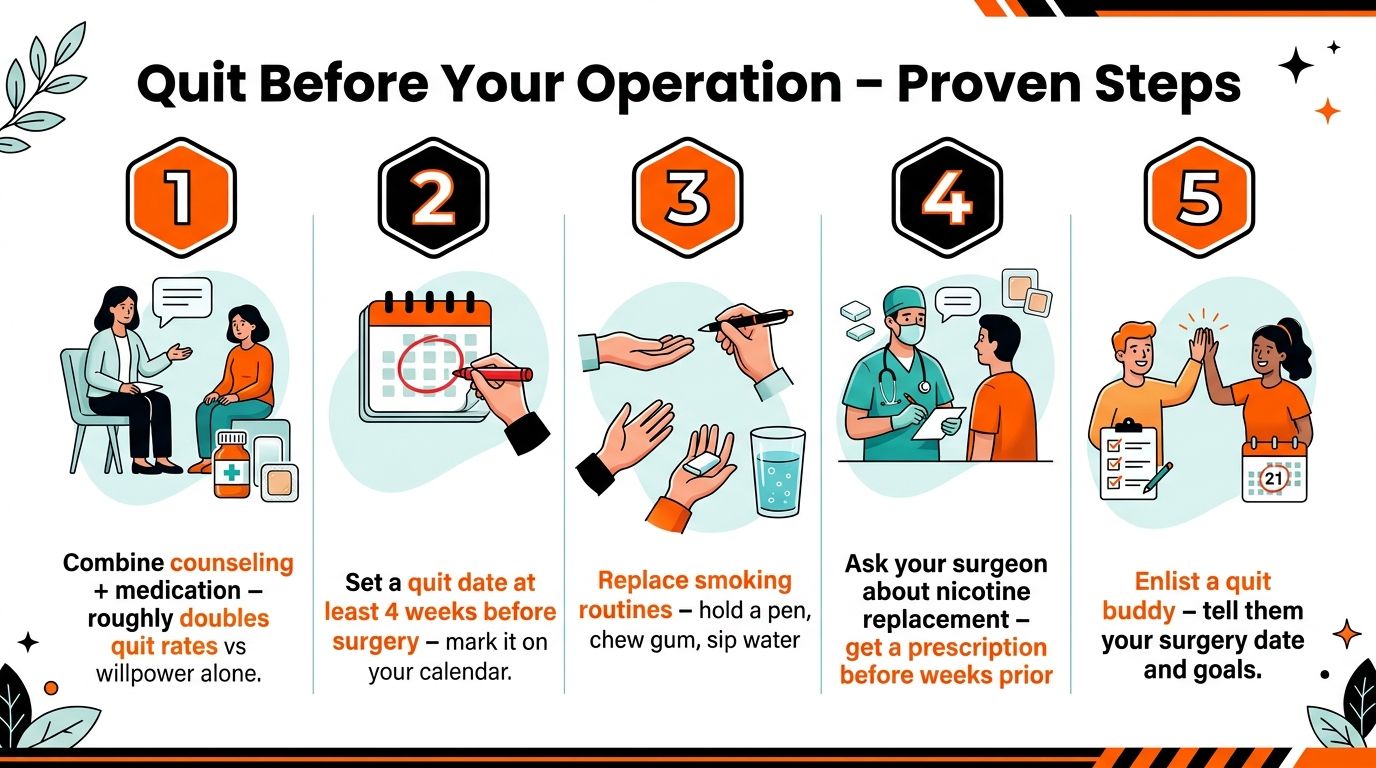
Ask one person to check in with you daily during the first postoperative weeks. Replace the hand-to-mouth routine with water, sugar-free gum, a pen, or a brief walk when your surgeon permits activity. Cravings usually pass more reliably when you delay, change location, and contact someone instead of negotiating with yourself.
The following video can reinforce practical quitting techniques:
Using fewer cigarettes does not make surgical risk disappear. Even occasional exposure can deliver nicotine and combustion products while the operated tissue depends on reliable blood flow. Surgeons should not classify a patient as safe solely because the reported amount is small.
Counterpoint: disclose your actual pattern and work toward complete cessation. There is no dependable daily amount to use as a safety target.
While vaping eliminates combustion, nicotine still constricts blood vessels and product contents vary. Those differences make vaping unreliable as protection for healing tissue.
Counterpoint: treat vaping as its own exposure, separate from cigarettes, and disclose it before surgery. Your surgeon and anesthesia team need to know the device, liquid, frequency, and timing of use.
Edibles avoid smoke entering the lungs, yet cannabinoids still affect the nervous system and may influence anesthesia planning. Questions about immune and platelet function also remain relevant, so the route of administration does not make cannabis irrelevant to surgery.
Counterpoint: tell the anesthesia team what you use, how often you use it, and when you last used it.
Stopping for a week is better than continuing to smoke, but it falls short of the preoperative interval supported by the available evidence. A 2025 pooled analysis found worse outcomes among patients who had smoked within four weeks of surgery than among those who had quit for at least four weeks (pooled evidence on preoperative cessation).
Counterpoint: stop immediately and ask whether postponing the operation would allow you to reach the four-week milestone. The answer depends on the procedure, your health, and your surgeon's policy.
The first postoperative weeks place the incision, flap, graft, and immune response under strain. Resuming nicotine during that period can interfere with the healing processes your surgeon is trying to protect.
Counterpoint: plan continued abstinence before booking the procedure. A promise made after surgery comes too late to protect the earliest stages of recovery.
Bring this list to your consultation and answer each item truthfully. A surgical team can help you solve a disclosed risk, but it can't plan around an exposure it doesn't know about.
Cape Cod Plastic Surgery discusses nicotine cessation as part of preparation for cosmetic and reconstructive procedures, with individualized planning around wound healing, anesthesia, and postoperative monitoring. If you're considering surgery on Cape Cod, visit Cape Cod Plastic Surgery to arrange a consultation and bring your complete nicotine and marijuana exposure history to the appointment.
October 7, 2026
A Practical Guide to Healing After Breast Surgery

October 6, 2026
Your Safety Guide: What to Look for When Choosing a Plastic Surgeon
October 5, 2026
Why Our On-Site Accredited Facility Matters for Your Safety
Cape Cod Plastic Surgery offers expert cosmetic and reconstructive procedures in a safe, accredited setting. Led by Dr. Marc Fater, we combine advanced techniques with personalized care to help you look and feel your best.
Monday: 9:00 AM – 5:00 PM
Tuesday: 9:00 AM – 5:00 PM
Wednesday: 9:00 AM – 5:00 PM
Thursday: 9:00 AM – 5:00 PM
Friday: 9:00 AM – 5:00 PM