

October 7, 2026
What to Expect During Your Breast Surgery Recovery
A Practical Guide to Healing After Breast Surgery
May 26, 2026
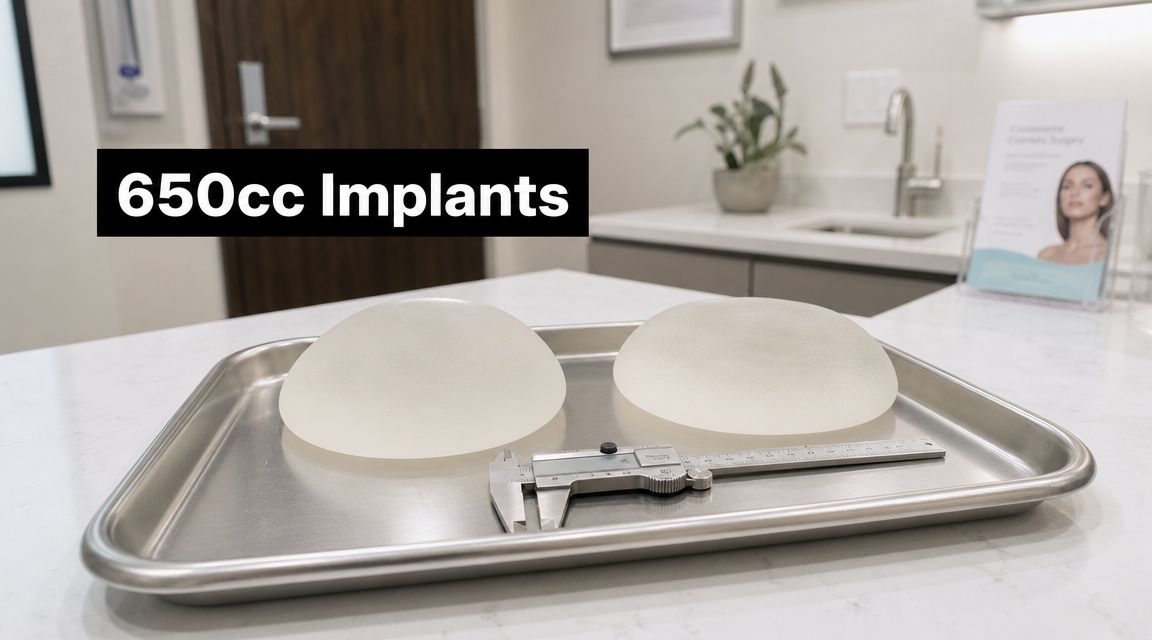
You may be reading this after opening five tabs, comparing implant charts, and trying to answer one stubborn question: Is 650cc too big, or is it exactly what I want? That's a normal place to be. Patients who consider 650cc breast implants are usually not looking for a subtle change. They're thinking about a noticeable shift in shape, fullness, and how their body looks in and out of clothing.
That kind of decision brings excitement, but it also brings real concerns. Will it fit your frame? Will it look proportional? Will it feel heavy? Will you still like the result years from now? Those are the right questions, and they matter more than the number alone.
Breast augmentation is not a fringe procedure. It's one of the most widely performed aesthetic operations in the world. A peer-reviewed review reported 1,862,506 breast augmentations worldwide in 2018, which helps explain why larger implant sizes such as 650cc have become a familiar part of modern consultation conversations (peer-reviewed global breast augmentation review).
That broader context matters because it shows something important. Patients aren't all asking for the same result anymore. Some want restoration after pregnancy or weight loss. Others want stronger upper-pole fullness, more projection, or a distinctly fuller silhouette. A 650cc breast implant sits in the category of choices that usually signal a more dramatic aesthetic goal.
Still, volume is only the headline. It is not the whole story.
A large implant can look balanced and attractive on one patient and look crowded or strained on another. The difference usually comes down to anatomy, implant dimensions, tissue support, and the surgeon's judgment during planning. That's why experienced surgeons don't select size by cup letter alone, and they don't treat implant shopping like ordering from a menu.
A good consultation doesn't start with “What cup size do you want?” It starts with “What does your body safely support, and what look are you trying to achieve?”
Patients often come in convinced that 650cc is either clearly right or clearly wrong. In reality, it's a size that deserves careful analysis. If your chest width, breast base, skin quality, and tissue coverage support it, it may be a reasonable option. If they don't, a different width, profile, or volume may produce a better long-term result.
That is why consultation matters. Not to talk you into a size, but to match your goals with what your anatomy can carry well.
The term 650cc refers to volume. “cc” means cubic centimeters. It tells us how much space the implant occupies, not how it will look on your specific body.
That distinction is where many patients get tripped up. They assume cc is the same thing as cup size. It isn't. Volume tells me one part of the story. Your chest width, implant profile, tissue thickness, and skin envelope tell me the rest.
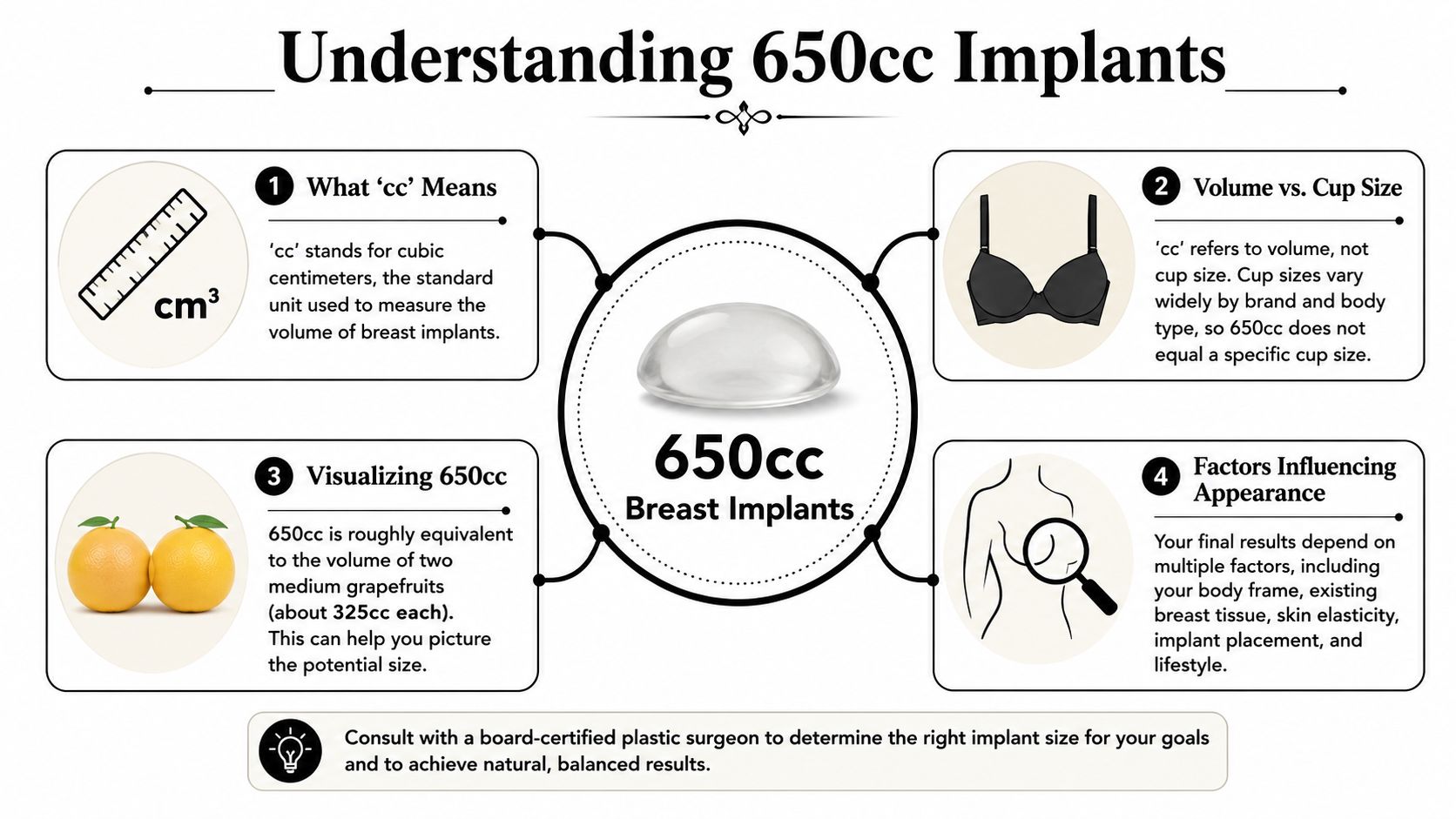
A 650cc implant is a large-volume implant. One clinical sizing discussion notes that a 650cc silicone implant has a base width of 14.4 cm, and the same source places 600 to 675cc in the range associated with about a 3 cup-size increase (clinical sizing discussion of large implant widths and volume range).
That doesn't mean every patient gets the same cup change. It means 650cc is not a middle-of-the-road choice. It is a significant augmentation that needs to be matched to the dimensions of your chest.
If the implant is too wide for your natural breast footprint, you can see problems like:
Two implants can both be 650cc and still look very different.
One may be wider with less forward projection. Another may be narrower with more projection, often called a higher-profile look. Silicone and saline versions can also behave differently in planning because fill method and shell design affect the final footprint.
That's why generic size charts only go so far. If you want a rough orientation before consultation, a Mentor implant sizes chart overview can help you understand how manufacturers organize volume and profile options. But charts don't replace measurements.
Practical rule: A large implant has to fit your chest first, then your aesthetic goal.
Don't ask only, “How big is 650cc?”
Ask these better questions:
Those questions lead to better decisions than chasing a volume number alone. In practice, 650cc is less about “going bigger” and more about whether your anatomy can support a broad, high-impact change without sacrificing shape.
Some patients can wear 650cc beautifully. Others will get a better result with a different implant, even if their goal is still full, round augmentation. Candidacy depends less on desire and more on fit.
When I evaluate a patient for a large implant, I'm not asking whether 650cc sounds appealing. I'm asking whether the body can support it in a stable, attractive way.
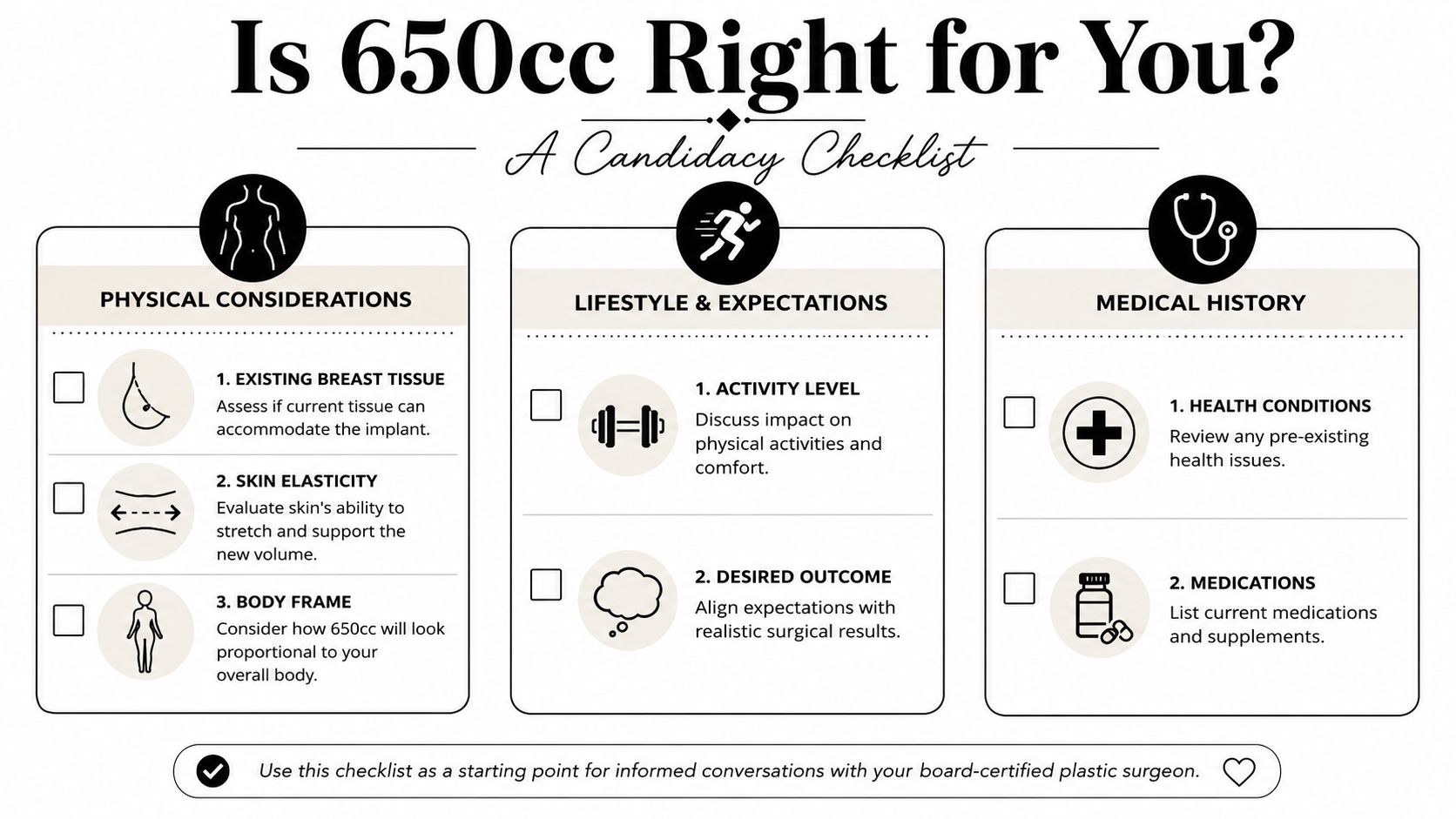
The first consideration is chest width. A broad chest may accommodate a larger implant footprint more naturally. A narrower chest may force the implant outside the natural boundaries of the breast.
The second is existing breast tissue. If you have more natural tissue, it may help camouflage the implant. If tissue is thin, the same implant may look more obvious, especially near the edges.
Then there is skin elasticity. Skin has to stretch enough to accept the new volume, but it also has to support that volume afterward. Loose skin and tight skin create different planning problems, and both require judgment.
A 650cc implant doesn't look “big” in the same way on every person. On one frame, it may create a dramatic but balanced look. On another, it may dominate the torso.
Here are the practical areas I'd assess:
A size that looks proportional in a photo of someone else may not be proportional on your body.
Some patients are technically candidates for 650cc, but their visual expectations don't match what the implant will do. They may want dramatic fullness with a very natural slope. Or they may want large volume without accepting the trade-offs in weight, bra fit, or long-term support needs.
That conversation is part of candidacy too.
A strong consultation should leave you with clear answers to questions like these:
Good planning is collaborative, but it is not guesswork. The best candidates for 650cc breast implants are patients whose anatomy, tissue quality, and goals all point in the same direction.
The question I hear most is simple: “What cup size will 650cc make me?” It sounds straightforward, but it usually leads patients in the wrong direction.
A 650cc breast implant is a large-volume medical device, but there is no reliable direct correlation between cc volume and final cup size. Bra sizing depends on chest width, implant profile, tissue thickness, and band size (expert discussion of why cc does not predict final cup size).
Bra cups vary by manufacturer. Band size changes the meaning of the cup letter. Your native breast shape changes how added volume distributes. The same implant can look round and prominent on one torso and broad and softer on another.
That's why surgeons plan around shape, width, and projection, not just cup letters.
If your goal is “I want to be a D,” that's too vague to plan surgery well. If your goal is “I want fuller upper poles, more side cleavage, and a rounder silhouette,” that's useful.
Profile changes the visual outcome even when volume stays the same. A higher-profile 650cc implant usually creates more forward projection with a narrower base. A lower-profile option can spread the volume over more width and look less projected from the side.
Placement and soft tissue matter too. Thick tissue can soften contours. Thin tissue can make the implant shape more obvious. That's why trying to predict appearance from cc alone often disappoints patients.
Here's a simple comparison framework:
| Volume (cc) | Approx. Weight per Implant (Silicone) | Potential Cup Size Increase | Typical Use Case |
|---|---|---|---|
| Smaller than 650cc | Lighter than a 650cc silicone implant | Often less dramatic than 650cc | Patients seeking fuller shape with less overall volume |
| 650cc | About 1.45 lb | About 3 cup sizes in some sizing guidance, but not a fixed outcome | Significant augmentation with strong fullness and projection potential |
| Larger than 650cc | Heavier than a 650cc silicone implant | May create a more dramatic change | Patients whose anatomy supports a more extreme volume goal |
The table is illustrative on purpose. It's not a substitute for measurements.
If you want a more reliable picture of your result, ask your surgeon to describe:
Those terms are far more useful than a bra letter. With 650cc breast implants, the aesthetic outcome is best understood as a combination of footprint, projection, and body proportion.
Once the size discussion is settled, the next question becomes practical. How is a large implant placed safely, and what does recovery feel like?
With 650cc breast implants, surgery is not just about creating a pocket and inserting an implant. It's about building long-term support. A larger device places more demand on tissue, so pocket design, implant position, and healing discipline all matter.

A major choice in surgery is whether the implant sits under the muscle or over the muscle. Each approach has trade-offs.
Under-muscle placement may offer more soft tissue coverage in selected patients, which can help with edge camouflage. Over-muscle placement may be appropriate in others, especially if tissue coverage is already favorable. The right answer depends on your anatomy and the look you want, not on a one-size-fits-all rule.
With larger implants, support becomes especially important. A 650cc silicone gel implant weighs about 1.45 lb per implant, and a pair adds roughly 2.9 lb to the chest (mechanical planning discussion of implant weight). That added weight affects how tissues behave over time.
Clinical reality: Bigger implants don't just change appearance. They change the mechanical load your tissues carry every day.
Most patients describe the first stretch of recovery as a combination of tightness, swelling, soreness, and pressure. That's especially true when larger implants create a noticeable change in breast volume or tissue stretch.
In practical terms, recovery often includes:
If you want a general orientation before surgery, this breast augmentation recovery timeline outlines the typical stages patients discuss during planning.
Patients usually want to know three things. When will I feel normal? When can I exercise? When will they look finished?
The answer is that recovery happens in layers. You may feel much better before the implants look settled. Swelling improves before the final shape matures. Comfort can return before the breasts soften fully.
A helpful visual overview of the process appears below.
The surgery does not end when the incision closes. Long-term outcome depends on how well the tissues support the implant months and years later.
That's why large-volume augmentation requires discipline from both surgeon and patient. The surgeon has to select dimensions thoughtfully and create an appropriate pocket. The patient has to respect activity limits, wear support as advised, and report any changes during follow-up.
The heavier the implant, the less room there is for careless planning.
A strong breast augmentation consultation should feel less like a sales meeting and more like a fitting session grounded in anatomy. If you're considering 650cc, go in ready to discuss dimensions, support, and long-term realism, not just “big versus small.”
Bring photos that reflect shape, not just cup size. A useful inspiration photo shows upper-pole fullness, side profile, cleavage pattern, and how broad the breast appears on the chest. It also helps to bring a list of medications, supplements, prior surgeries, pregnancies, weight changes, and any history of breast imaging.
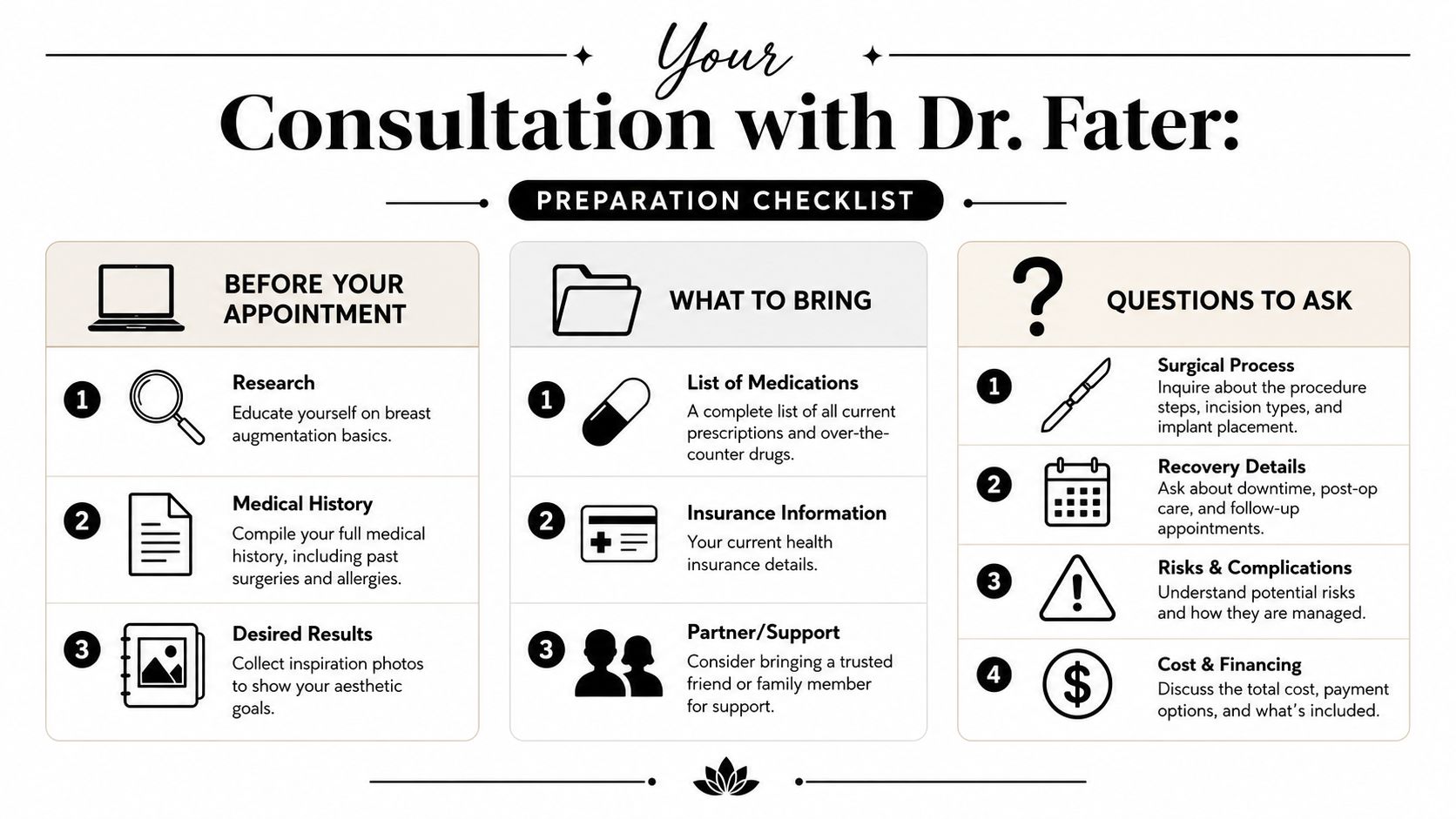
Don't waste your appointment on vague questions. Ask the ones that reveal judgment.
The most helpful consultation answers are specific to your chest measurements, not generic size advice.
If you want to make the appointment more productive, review a guide on how to prepare for breast augmentation. It gives patients a framework for what to gather and what to think through before they sit down for a detailed surgical discussion.
Cost also belongs in the consultation. Not because price should drive implant size, but because you should understand what is included, what follow-up involves, and whether financing is available. A good surgical plan is medical, aesthetic, and practical all at once.
One option patients in this region may evaluate is Cape Cod Plastic Surgery, which offers breast augmentation consultations and surgery in an on-site accredited setting. The important point is to choose a surgeon who measures carefully, discusses trade-offs candidly, and treats size selection as a long-term structural decision.
It can, but it doesn't have to. A conspicuous result usually comes from mismatch, not just size. If the implant is too wide for the chest, too visible under thin tissue, or chosen without regard for profile, the breast can look obviously augmented. On the right frame, with the right dimensions, 650cc can still look balanced.
Many patients notice the change most during exercise, sleeping positions, and the first period of adjustment after surgery. Supportive bras matter more with larger implants because comfort and long-term positioning depend on controlling motion and tissue strain.
Yes. Tops, swimsuits, bras, and dresses can fit very differently after a significant augmentation. Some patients love that change. Others are surprised by how much more structure and support they need in everyday clothing.
For comfort under fitted outfits, some women also look for practical accessories like silicone covers for big busts, especially when bras or seams show through lightweight fabric.
Large implants can place more demand on the tissues over time, so long-term monitoring matters. That doesn't mean revision is inevitable. It means implant choice should reflect not only how you want to look soon after surgery, but how you want your breasts to age on your body.
Sometimes yes, sometimes no. That phrase means different things to different patients. On some bodies, 650cc reads very full and obviously augmented. On others, it can still look proportional. The deciding factor is whether the dimensions and tissue support match the look you're calling natural.
If you're considering a significant breast augmentation and want a measurement-based discussion about fit, shape, support, and long-term expectations, schedule a consultation with Cape Cod Plastic Surgery.
October 7, 2026
A Practical Guide to Healing After Breast Surgery

October 6, 2026
Your Safety Guide: What to Look for When Choosing a Plastic Surgeon
October 5, 2026
Why Our On-Site Accredited Facility Matters for Your Safety

Cape Cod Plastic Surgery offers expert cosmetic and reconstructive procedures in a safe, accredited setting. Led by Dr. Marc Fater, we combine advanced techniques with personalized care to help you look and feel your best.
Monday: 9:00 AM – 5:00 PM
Tuesday: 9:00 AM – 5:00 PM
Wednesday: 9:00 AM – 5:00 PM
Thursday: 9:00 AM – 5:00 PM
Friday: 9:00 AM – 5:00 PM