

October 5, 2026
The Value of an On Site Accredited Facility
Why Our On-Site Accredited Facility Matters for Your Safety
Jul 7, 2026
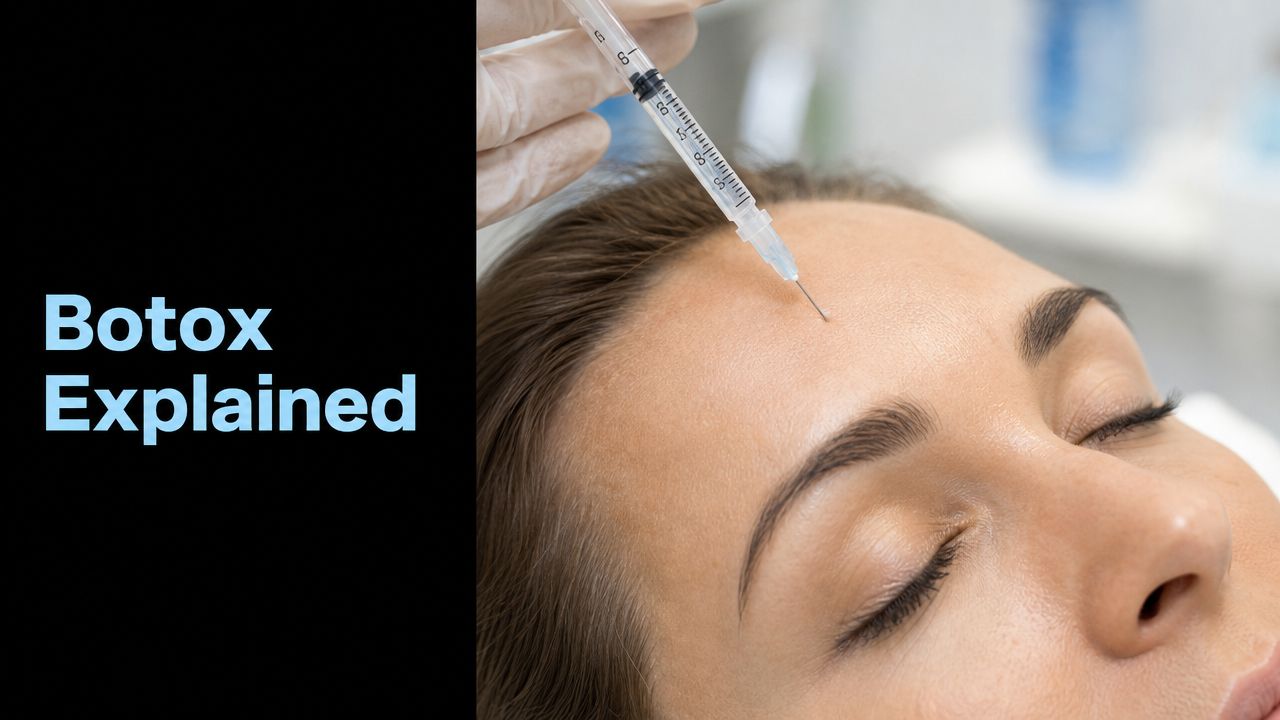
You're probably here because you caught your reflection in a bathroom mirror, lifted your brows, and noticed that the line between them didn't fully disappear when your face relaxed. Or maybe you've heard a friend say Botox “freezes” the face, while someone else swears it helped their migraines. Those mixed messages can make a simple question feel oddly complicated.
The good news is that Botox is easier to understand than it sounds. Once you know what signal it blocks, where it works, and how the timing differs for wrinkles versus migraines, the whole treatment makes much more sense. As a patient educator, I think people feel less anxious when they understand the biology in plain language, not just the before-and-after photos.
A lot of people first think about Botox during an ordinary moment. You wash your face, look up, and see the “elevens” between your brows still sitting there. You smile, and the crow's feet at the corners of your eyes seem to stay a little longer than they used to. That's usually when the question starts. Is this just skincare territory, or is it time to consider something else?
Skincare still matters, of course. If you enjoy learning about routines and ingredients from around the world, it can be fun to discover Japanese beauty secrets and see how different beauty cultures think about prevention and skin support. But skincare works on the skin. Botox works lower down, at the level of the nerve signal that tells a muscle to contract.
That difference is why Botox became so important in both aesthetics and medicine. It isn't just a wrinkle treatment. It's a targeted neuromodulator used to relax specific muscles or affect specific pathways, depending on why it's being used.
People hear the same word, “Botox,” used for very different goals.
Botox isn't a skin filler, and it doesn't work by “plumping” anything. It changes signaling to a targeted area.
Another reason for confusion is the fear factor. Patients often worry they'll look frozen, lose expression, or somehow change their face permanently. Those are reasonable concerns. The approach is more precise. Botox is placed into selected muscles, in selected amounts, for a selected effect. Good treatment aims for less overactivity, not a blank expression.
The simplest way to answer “How does Botox work?” is this. Botox interrupts a message. Your nerve normally sends a signal to your muscle that says, “contract now.” Botox gets in the way of that message, so the muscle relaxes instead of tightening fully.
Here's a visual version of that process.
Think of the meeting point between a nerve and a muscle as a tiny loading dock. The nerve packages a chemical messenger called acetylcholine and releases it toward the muscle. When that messenger arrives, the muscle gets the instruction and contracts.
Botox steps in at that loading dock. It doesn't remove the muscle. It doesn't erase the nerve. It temporarily stops the messenger from being released.
Researchers describe this as a precise multistep process. Botox binds to the nerve terminal, gets internalized, moves into place, and then cleaves SNAP-25, a protein needed for vesicles to dock and fuse so acetylcholine can be released, as described in this review of the botulinum toxin mechanism. In plain language, the “message package” can't leave the nerve ending, so the muscle never receives the full command.
Facial wrinkles often form because some muscles pull the skin in the same pattern over and over. Frown lines are a classic example. Every time you squint, concentrate, or react, that muscle movement folds the skin. Over time, those folds can linger.
When Botox reduces that muscle activity, the skin above it gets a break.
A short video can help make that process feel less abstract.
Practical rule: Botox works best on muscles that are overactive, not on every line on the face. If a line is present even when the face is fully at rest, the approach may need to be more nuanced.
That's also why the phrase “frozen face” isn't very accurate. Skilled treatment doesn't shut down your whole face. It targets specific muscles that are creating more movement than you want.
Botox is widely recognized for its use on lines around the eyes, brows, and forehead. That cosmetic use is straightforward to picture. A muscle contracts less, the skin folds less, and the face looks more rested. It's local and visible.
The migraine story is different. Many patients get confused, because they expect migraine relief to happen on the same schedule as wrinkle smoothing. It usually doesn't.
Here's the simplest comparison:
| Use | Main target | What patients usually notice |
|---|---|---|
| Cosmetic wrinkle treatment | Overactive facial muscles | Smoother expression lines |
| Chronic migraine treatment | Pain signaling pathways | Fewer headache days over time |
| Hyperhidrosis | Sweat signaling in treated area | Less sweating |
| Muscle spasticity | Excess muscle activity | Reduced tightness in targeted muscles |
For cosmetic treatment, the result is tied closely to muscle relaxation. For migraines, the benefit depends on a slower neurologic effect.
Botox for migraine prevention doesn't only work by relaxing scalp or facial muscles. The more important mechanism involves downstream inhibition of trigeminal nerve activation and cortical sensitization, which is a slower process than direct muscle relaxation, according to this patient education summary discussing migraine physiology and treatment response.
That same source notes that 70% of patients with chronic migraines experience a 50% reduction in headache days after 3 months of consistent Botox therapy. That delayed timeline matters. If someone is expecting migraine relief in the same window as a cosmetic forehead treatment, they may wrongly assume it “didn't work.”
Migraine Botox is not just wrinkle Botox used in a different mood. The goal is different, the pathway is different, and the patient experience is different.
This distinction also helps answer another common question. If Botox smooths wrinkles for one person, that doesn't mean they'll automatically get the same kind of benefit for headaches, and the reverse is also true. The effects depend on what's being treated and why.
The actual appointment is usually much calmer than people expect. Most anxiety comes from not knowing the rhythm of the visit, so it helps to walk through it before you ever sit in the chair.
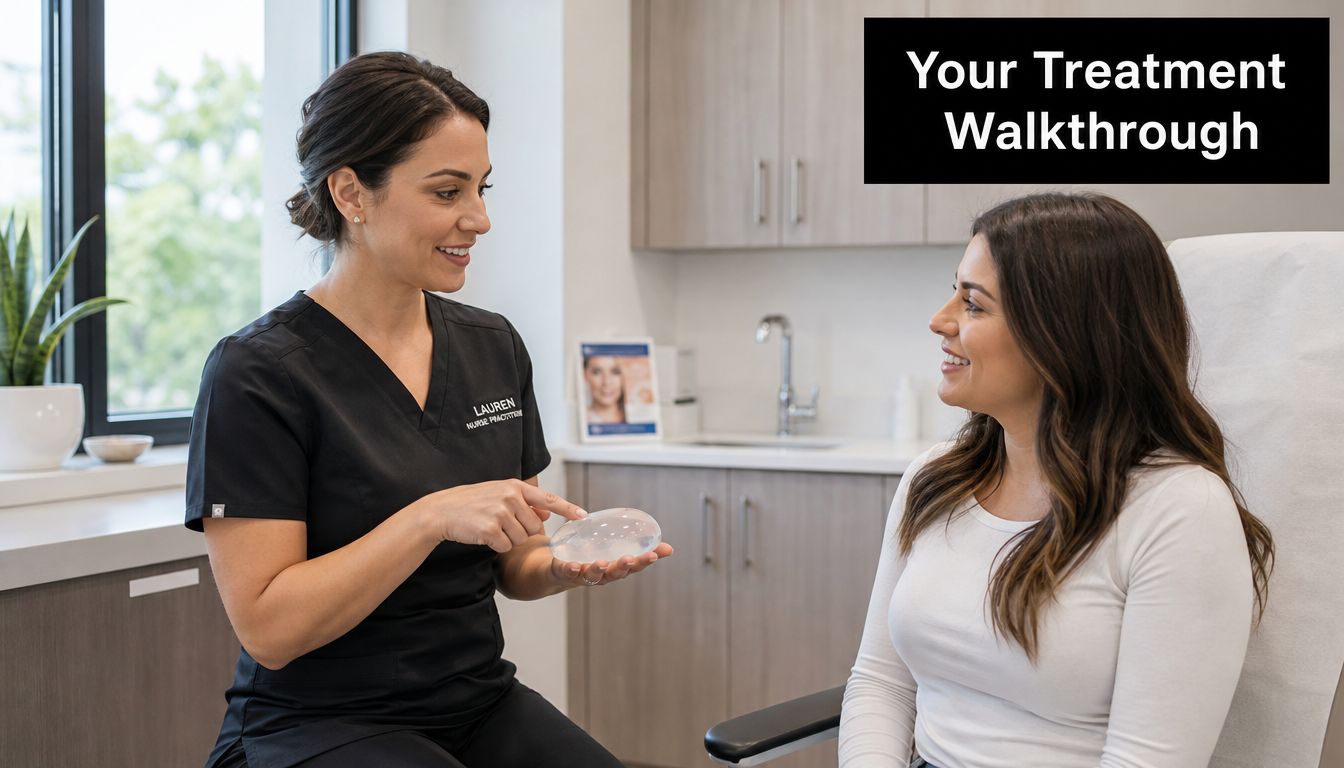
First comes the consultation. Your provider looks at your face at rest and in motion. You may be asked to frown, smile, squint, or raise your eyebrows so the pattern of muscle movement is clear.
This part matters more than patients realize. Good Botox planning isn't based only on where a wrinkle sits. It's based on which muscle is creating it, how strongly that muscle pulls, and how your face balances expression overall.
If you want a more detailed pre-appointment checklist, this guide on how to prepare for Botox can help you know what questions to ask and what to expect.
Once the plan is set, the skin is cleansed. Some providers mark the injection points. Then the Botox is injected with a very fine needle into the selected muscles.
Most patients describe the feeling as quick pinches. The treatment itself is brief. You're not going under anesthesia, and you don't need a long recovery period afterward.
A typical visit often includes:
The appointment often feels more like a focused office procedure than a dramatic cosmetic event.
Afterward, you'll usually be told to keep things simple for the rest of the day. Providers commonly advise avoiding strenuous activity and not lying flat for a period after treatment. The reasoning is practical. You want the product to stay where it was carefully placed and let the area settle.
You may notice tiny bumps, mild redness, or pinpoint marks right away. Those usually pass quickly.
One of the most common questions after treatment is, “When will I see it?” The short answer is that Botox doesn't work instantly, and that's normal.
Clinical data for onabotulinumtoxinA show that initial results appear within 1 to 3 days, maximum muscle paralysis effects occur within 4 to 7 days, and the therapeutic effect typically lasts 3 to 4 months, with follow-up injections spaced at least three months apart, according to this DrugBank summary for Botox. The same source notes that the first cosmetic approval for Botox was in 2002 for moderate to severe glabellar lines.
That timing explains why patients sometimes feel unsure in the first couple of days. You might notice a subtle softening first, then more visible change over the next week.
A helpful way to understand it:
If you want a focused overview of duration, this article on how long Botox lasts is a useful companion read.
Patients often ask whether Botox teaches the muscle to stop working forever, or whether the body becomes “dependent” on it. That's not the best way to think about it.
The better concept is recovery and retraining. The effect is reversible as nerve sproutings progressively reinnervate the muscle fiber, restoring function over time, as noted in the mechanism review cited earlier. So no, the muscle is not permanently turned off.
What can happen with consistent, long-term use is more interesting. According to this discussion of long-term Botox effects and wrinkle prevention, use over 12+ months may lead to muscle atrophy rather than paralysis, meaning the muscle can physically shrink somewhat from reduced activity. The same source states that recent 2025 studies indicate chronic suppression of muscle contraction can reduce the frequency of wrinkle formation by up to 20% beyond the toxin's active window.
Key point: That “preventive training” effect doesn't mean Botox becomes permanent. It means repeated over-contraction may happen less aggressively, which can help keep lines from deepening as fast.
That nuance matters. Botox is temporary, but the pattern of movement can still change over time when a muscle has spent months being less active.
Botox has a strong track record in both cosmetic and medical practice, but safe treatment still depends on proper patient selection and precise injection technique. This isn't a casual beauty purchase. It's a medical treatment.
Most side effects are mild and temporary. Patients may notice redness, swelling, tenderness, or bruising at the injection site. A small number of people can also experience an unwanted effect like temporary drooping, depending on where the product was placed and how their anatomy responds.
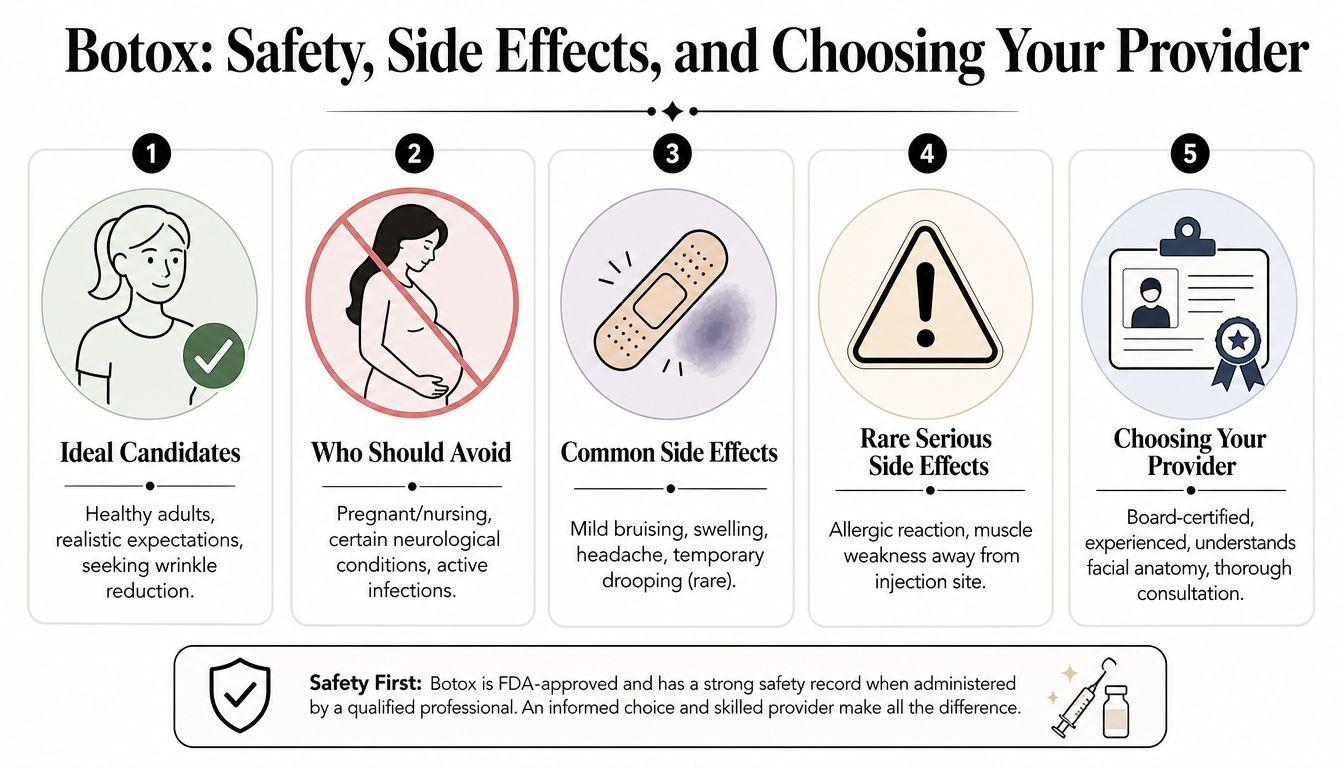
Botox isn't right for everyone. Patients who are pregnant or breastfeeding, have certain neuromuscular disorders, or have an active infection at the treatment site need individualized medical guidance before moving forward.
If your bigger concern is, “What if I don't like it?” this explanation of whether Botox can be reversed can help set realistic expectations.
Botox is technique-dependent. The same product can produce a balanced, natural result in one set of hands and an awkward result in another. That's because the injector has to understand not just where lines appear, but how muscles interact across the whole face.
When you evaluate a provider, look for:
A careful injector aims for movement that looks rested and natural, not stiff.
By the time you understand how Botox works, the next question becomes practical. Who should perform it?
At that point, credentials and setting matter. Dr. Marc Fater is a board-certified plastic surgeon with over 30 years of experience, and the practice includes an on-site, AAAASF-accredited surgical suite. Those details matter because Botox may be quick, but it still requires careful assessment, dosing judgment, and a strong understanding of anatomy.

A personalized consultation is where good outcomes start. Some patients want softening in the glabella without changing their smile. Others want a subtle forehead treatment that preserves brow movement. Others are asking more advanced questions about long-term maintenance and whether repeated treatment might create a preventive effect over time.
That kind of conversation is where a practice such as Cape Cod Plastic Surgery fits in. Botox there is offered as a non-invasive treatment option within a broader facial aesthetics plan, not as a generic menu item. The treatment can be adapted to your anatomy, your expressions, and your comfort level.
If you're looking for natural movement rather than a frozen look, that individualized approach matters a great deal.
If you're ready to talk through your goals, ask detailed questions, and get a treatment plan built around your face rather than a template, schedule a consultation with Cape Cod Plastic Surgery. It's a good next step if you want clear guidance on whether Botox makes sense for wrinkles, prevention, or another concern.
October 5, 2026
Why Our On-Site Accredited Facility Matters for Your Safety

October 2, 2026
Beyond the Calendar: How to Know You’re Truly Ready for Plastic Surgery

October 2, 2026
Exploring Your Breast Augmentation Options: Implants, Shapes, and What to Expect

Cape Cod Plastic Surgery offers expert cosmetic and reconstructive procedures in a safe, accredited setting. Led by Dr. Marc Fater, we combine advanced techniques with personalized care to help you look and feel your best.
Monday: 9:00 AM – 5:00 PM
Tuesday: 9:00 AM – 5:00 PM
Wednesday: 9:00 AM – 5:00 PM
Thursday: 9:00 AM – 5:00 PM
Friday: 9:00 AM – 5:00 PM