

October 7, 2026
What to Expect During Your Breast Surgery Recovery
A Practical Guide to Healing After Breast Surgery
Jun 3, 2026

You're probably here because you want to look fresher, less tired, or a little more defined, but you don't want to look filled, overdone, or unlike yourself. That's the right place to start. The best facial fillers aren't chosen by trend, celebrity name, or the newest brand on social media. They're chosen by anatomy, movement, and how much flexibility you want if you're new to treatment.
Most patients don't come in asking for a specific molecule. They point to under-eye hollowness, flatter cheeks, lip lines, or a jawline that looks softer than it used to. What they really want is a rested, natural version of their own face. In many cases, fillers can do that very well, but only when the product matches the job.
Facial rejuvenation used to be framed too narrowly. Fillers were described as wrinkle fillers, as if every line needed the same solution. In practice, that approach misses the larger issue. Aging changes support, contour, and light reflection across the face. A cheek can flatten, the under-eye can hollow, the lips can lose structure, and folds can deepen because surrounding tissues have shifted.
That's why modern filler treatment is less about chasing one line and more about restoring balance. A patient may think the problem is the fold next to the mouth, but the better result often comes from supporting the midface first. In other words, where filler goes matters as much as which filler is used.
Dermal fillers aren't a fringe treatment. They're a major part of aesthetic medicine, with the global dermal filler market valued at $3.3 billion in 2024, and North America held about 35.7% of the market in 2022, according to dermal filler market trend data. That matters because it reflects how widely accepted non-surgical facial rejuvenation has become.
For some patients, this broader strategy overlaps with what's often called a liquid facelift approach, where injectables are used to restore contour and soften aging changes without surgery.
Good filler work shouldn't announce itself. It should make people think you look rested, healthy, and well.
The question isn't “What is the best filler?” It's “What is the best filler for this part of your face, with this pattern of movement, and these goals?” That's the question worth answering carefully.
Not all fillers behave the same way. Some create immediate volume. Others work more through collagen stimulation. Some are soft and flexible. Others are firmer and more structural. If you understand those differences, consultations become much more productive.
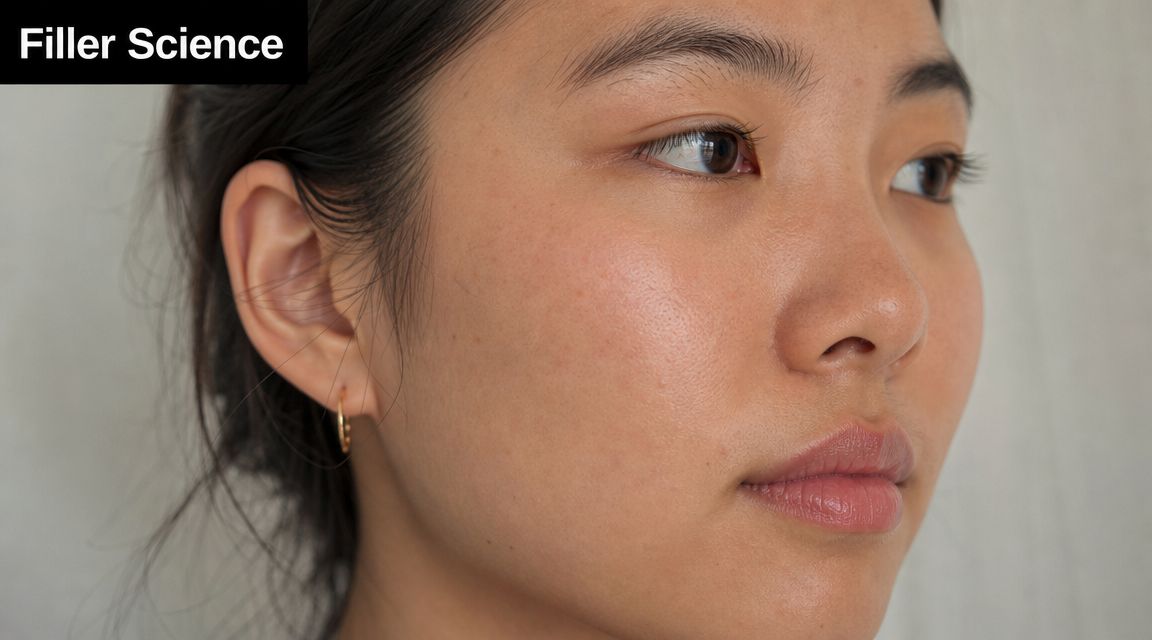
Hyaluronic acid, or HA, is the most familiar filler category. These fillers provide immediate volumization and are commonly used in the lips, nasolabial folds, under-eye hollows, and for facial contouring. A major advantage is reversibility. According to the Mayo Clinic overview of facial fillers, HA fillers are the most common FDA-approved wrinkle fillers, and results typically last 6 to 12 months depending on the product and treatment area.
In practical terms, HA fillers are often the most forgiving option. They can be layered, adjusted, and, when necessary, dissolved. That's one reason they're frequently my first choice for first-time patients and for highly expressive areas.
For patients who want a consumer-friendly overview before a consultation, BotoxBarb's expert filler picks offer a useful summary of how different filler categories are commonly discussed outside the exam room.
Calcium hydroxylapatite, or CaHA, is typically used when more structure is needed. It tends to be better suited to deeper support and areas where a firmer product helps shape the face.
Poly-L-lactic acid, or PLLA, behaves differently. It's not the product I think of for a precise, instant lip refinement or a subtle under-eye touch-up. It's better understood as a collagen stimulator used when the goal is more gradual improvement in diffuse volume loss.
Polymethylmethacrylate, or PMMA, is in a more permanent category of thinking. That makes product selection and placement much less forgiving. Permanent or semi-permanent thinking can work in selected cases, but it raises the stakes.
The FDA approves dermal fillers for specific uses in people aged 22 and older, and it also warns that rare but serious complications can occur if filler is injected into a blood vessel, according to this summary of FDA guidance and filler safety. Those complications can include skin necrosis, stroke, or blindness.
That's why filler choice and injector choice can't be separated. The product matters. Anatomy matters more.
When patients compare the best facial fillers, they often focus first on brand names. That's understandable, but it's not how I'd start. Material class tells you more about what to expect than the label on the box.
| Filler Type | Common Brands | Primary Use | Longevity | Reversible? |
|---|---|---|---|---|
| Hyaluronic Acid (HA) | Juvéderm, Restylane | Lips, under-eyes, folds, contour refinement | Typically 6 to 12 months for HA fillers, depending on product and area | Yes |
| Calcium Hydroxylapatite (CaHA) | Radiesse | Structural support, deeper volume loss | Longer-lasting than temporary HA options in many cases | No |
| Poly-L-Lactic Acid (PLLA) | Sculptra | Gradual collagen stimulation, broader volume restoration | Longer-term, gradual correction | No |
| Polymethylmethacrylate (PMMA) | Bellafill | Longer-duration correction in selected cases | Long-lasting | No |
The most common filler category is hyaluronic acid, and that's not an accident. It offers immediate visible change, a soft-tissue friendly feel, and the option of reversal. The Mayo Clinic facial filler guide notes that HA fillers typically last 6 to 12 months and are commonly used in the lips and under-eye hollows.
Clinical reality: The best facial filler for a first treatment usually isn't the longest-lasting one. It's the one that gives the injector control and gives the patient options.
That reversibility changes the conversation. If someone has never had filler before, or if we're treating a mobile area, a product that can be adjusted is often the smarter choice than a product marketed around duration.
If you want a broader plain-English explanation of filler categories and treatment planning, this guide on types, results, and safety with dermal fillers is a helpful companion read.
CaHA can be useful when a face needs more support than softness. It's often better thought of as a structural product than a finesse product. In the right area, that's an advantage. In the wrong area, it can look or feel too heavy.
PLLA belongs in a different discussion entirely. It's about gradual collagen stimulation, not spot-correcting a specific crease in a highly precise way. Patients who want instant refinement may be disappointed if they choose a biostimulatory product expecting an HA-like result.
PMMA requires restraint. Longevity sounds appealing, but permanence reduces your margin for error.
A related point often gets missed. Patients who invest in fillers also tend to care about overall skin quality, and hydration products can support that broader maintenance mindset. If someone is comparing skin-plumping options beyond injectables, curated affordable hyaluronic acid finds can help clarify what topical HA can and cannot do. It hydrates skin well, but it doesn't replace a filler when structural volume is the problem.
Filler selection requires a more artful and technical approach. The best facial fillers vary by location because each area of the face moves differently, has different skin thickness, and needs a different balance of softness and support.
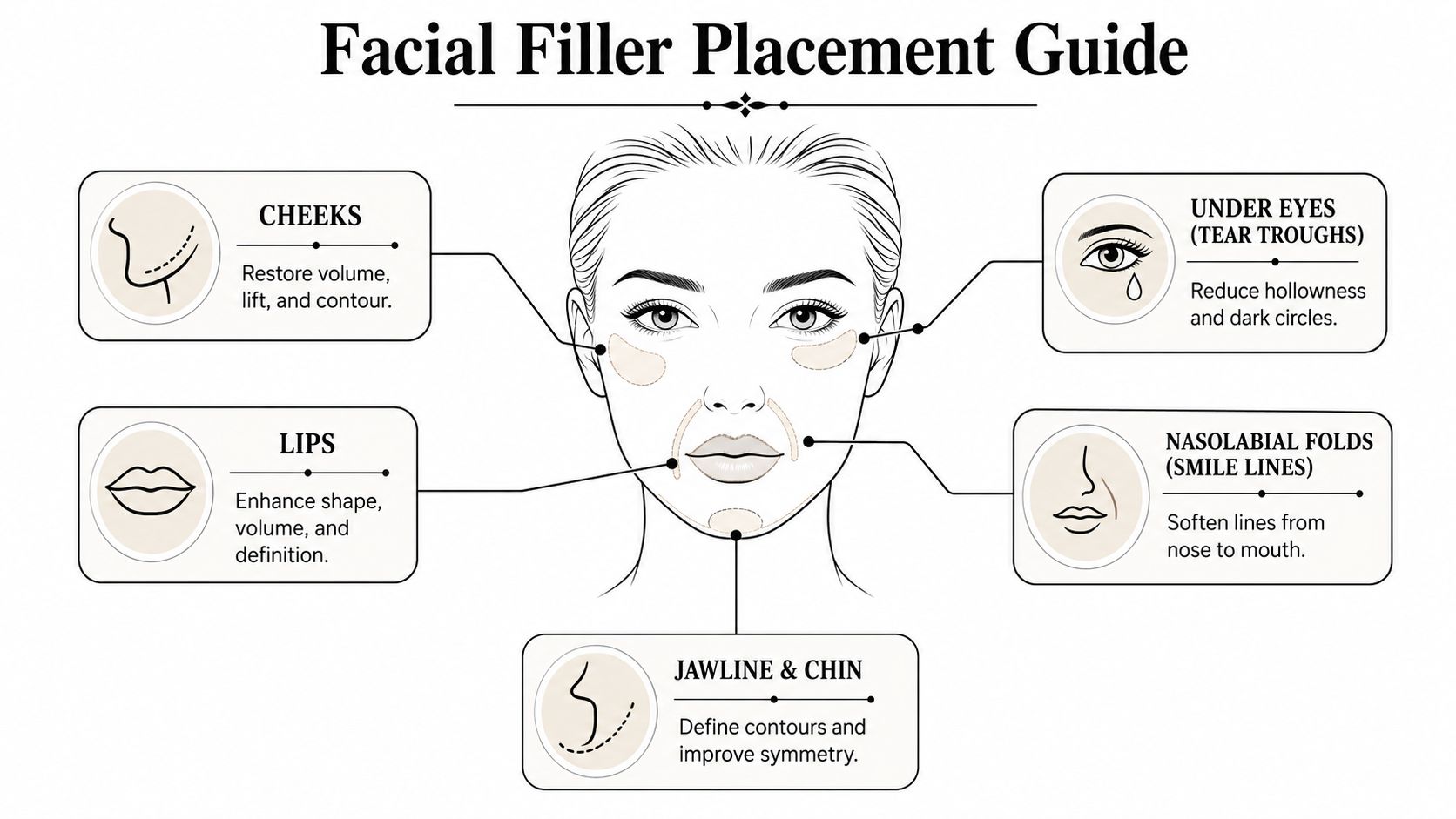
The key principle is simple. Don't choose filler by brand loyalty alone. Choose it by how that area behaves when you smile, talk, chew, and rest. As discussed in Dr. Kopelman's review of filler selection, the best filler choice often depends on facial anatomy and movement, not just the brand, and the most reversible, adjustable filler is often the better recommendation for first-time patients.
Lips are in constant motion. They stretch, compress, roll inward, and change shape with speech and expression. A filler that's too firm can make lips feel stiff or look unnatural, especially at rest.
For that reason, softer HA fillers usually make the most sense in the lips. They allow definition, border support, and volume without fighting the natural movement of the mouth.
A few practical rules matter here:
Cheeks do move, but not like lips. In the midface, filler often has to replace support, not just add softness. A flatter cheek can create shadows below it and make folds look deeper. That's why firmer HA fillers or, in selected patients, CaHA may be more appropriate here.
What works in the cheek usually depends on whether the goal is one of these:
A very soft filler can disappear visually in this area or fail to create enough structure. A more supportive product can restore contour more effectively.
In many faces, treating the cheek first makes the fold beside the mouth look better without putting most of the product into the fold itself.
The tear trough is one of the most unforgiving places to inject. The skin is thin. Swelling is noticeable. Minor irregularities can show easily. This is not an area where “more” helps.
When under-eye filler is appropriate, a smooth HA filler is often preferred because precision and reversibility matter. I'm cautious here, especially in patients with puffiness, skin laxity, or anatomy that won't respond well to filler.
Under-eye improvement depends on judgment more than enthusiasm. Some hollowness improves beautifully. Some doesn't.
Patients often point to the line from the nose to the mouth and ask to fill that exact crease. Sometimes that's reasonable. Often, though, the fold isn't the primary problem. Midface descent or volume loss above it may be contributing more.
That's why direct filling of the fold has to be selective. Overfilling this area can make the center of the face look heavy. In many cases, a combination of cheek support and conservative fold treatment looks more natural than aggressively chasing the line itself.
The lower face asks more from a filler than many people realize. Jawline and chin enhancement work best when the injector thinks in profile, symmetry, and support. A product that's too soft can blur rather than define.
In this zone, firmer HA fillers or other structural options may be chosen depending on the tissue quality and the exact goal. The chin, for example, often benefits from projection and shaping. The prejowl area may need careful smoothing. The jawline may need continuity rather than simple bulk.
Most attractive filler results don't come from putting one product everywhere. They come from choosing different materials for different jobs.
A common pattern in a thoughtful treatment plan may include:
That's the practical shift in modern filler work. The “best” filler isn't one syringe or one brand. It's a plan that respects how each area of the face moves.
Most appointments are straightforward, but they shouldn't feel casual. A good filler visit is deliberate from the first conversation through the follow-up.

A proper consultation starts with your goals, but it shouldn't end there. You should also discuss prior filler history, allergies, medications, previous facial procedures, and whether you want subtle refinement or visible change. The most useful consultation is one where the patient describes what bothers them and the injector explains what anatomy is driving it.
Ask direct questions:
On treatment day, the skin is cleaned and the plan is marked or reviewed. Depending on the area, numbing may be used. The injections themselves are usually brief, but the technique should be careful and controlled, especially in areas with more vascular risk.
You may feel pressure, pinching, or temporary stinging. That's normal. Good technique usually favors precision over speed.
Most patients should expect some combination of swelling, tenderness, or bruising. The exact pattern depends on the area treated, the product used, and individual tissue response.
A few simple habits help:
For a more detailed review of normal recovery versus warning signs, this article on dermal filler side effects is worth reading.
Aftercare principle: Mild swelling is common. Escalating pain, blanching, or marked color change is not something to ignore.
A follow-up matters because filler settles. Small refinements are sometimes part of good treatment, not evidence that something went wrong.
Patients often arrive with a product name in mind. That's fine, but the brand alone won't protect you from poor placement, overfilling, or an unnatural result. The injector's judgment matters more than the logo on the syringe.

An experienced injector evaluates much more than the wrinkle you notice in the mirror. They assess bony support, fat distribution, skin thickness, asymmetry, movement patterns, and whether filler is even the right tool. Sometimes it is. Sometimes a different treatment, or no treatment, is the better answer.
That judgment becomes even more important as filler treatment gets more customized. Recent guidance on filler planning notes that combination treatment is becoming more common, with providers selecting different materials for different zones based on longevity, reversibility, and tissue behavior, as discussed in this 2026 guide to dermal filler types and strategy.
That kind of planning isn't brand shopping. It's facial analysis.
If you're choosing a provider, pay attention to a few basics:
For patients who want to hear more about how facial rejuvenation is approached in a clinical setting, this brief video is useful:
One local option is Cape Cod Plastic Surgery, where Dr. Marc Fater is a board-certified plastic surgeon with over 30 years of experience, and the practice offers dermal fillers as part of non-surgical facial rejuvenation. Those are the kinds of qualifications patients should look for anywhere, whether they're being treated locally or elsewhere.
The most natural filler result usually comes from a provider who treats the whole face, not a single line.
Most patients describe filler treatment as tolerable rather than painful. Some areas are more sensitive than others, especially the lips. Numbing methods and injection technique make a difference.
Cost depends on the product used, how many areas are treated, how much filler is needed, and the injector's training. A cheap syringe can become expensive if it creates a result that needs correction.
In most cases, the treated area gradually returns toward its baseline appearance as the product breaks down. That doesn't mean your face gets worse because you stopped. It means the added support fades over time.
HA fillers can often be reversed, which is one reason they're such a strong option for first-time patients and delicate areas. Non-HA fillers don't offer that same flexibility.
Not necessarily. A longer-lasting filler can be useful in the right patient and the right area, but if the product is less adjustable, the decision needs to be more selective.
If you're considering facial fillers and want a treatment plan built around anatomy, movement, and natural-looking results, Cape Cod Plastic Surgery offers consultations to discuss whether filler is appropriate, which filler category fits your goals, and how to approach treatment safely.
October 7, 2026
A Practical Guide to Healing After Breast Surgery

October 6, 2026
Your Safety Guide: What to Look for When Choosing a Plastic Surgeon

October 5, 2026
Why Our On-Site Accredited Facility Matters for Your Safety

Cape Cod Plastic Surgery offers expert cosmetic and reconstructive procedures in a safe, accredited setting. Led by Dr. Marc Fater, we combine advanced techniques with personalized care to help you look and feel your best.
Monday: 9:00 AM – 5:00 PM
Tuesday: 9:00 AM – 5:00 PM
Wednesday: 9:00 AM – 5:00 PM
Thursday: 9:00 AM – 5:00 PM
Friday: 9:00 AM – 5:00 PM