

October 6, 2026
How to Verify Your Surgeon Before Your Cosmetic Procedure
Your Safety Guide: What to Look for When Choosing a Plastic Surgeon
May 24, 2026
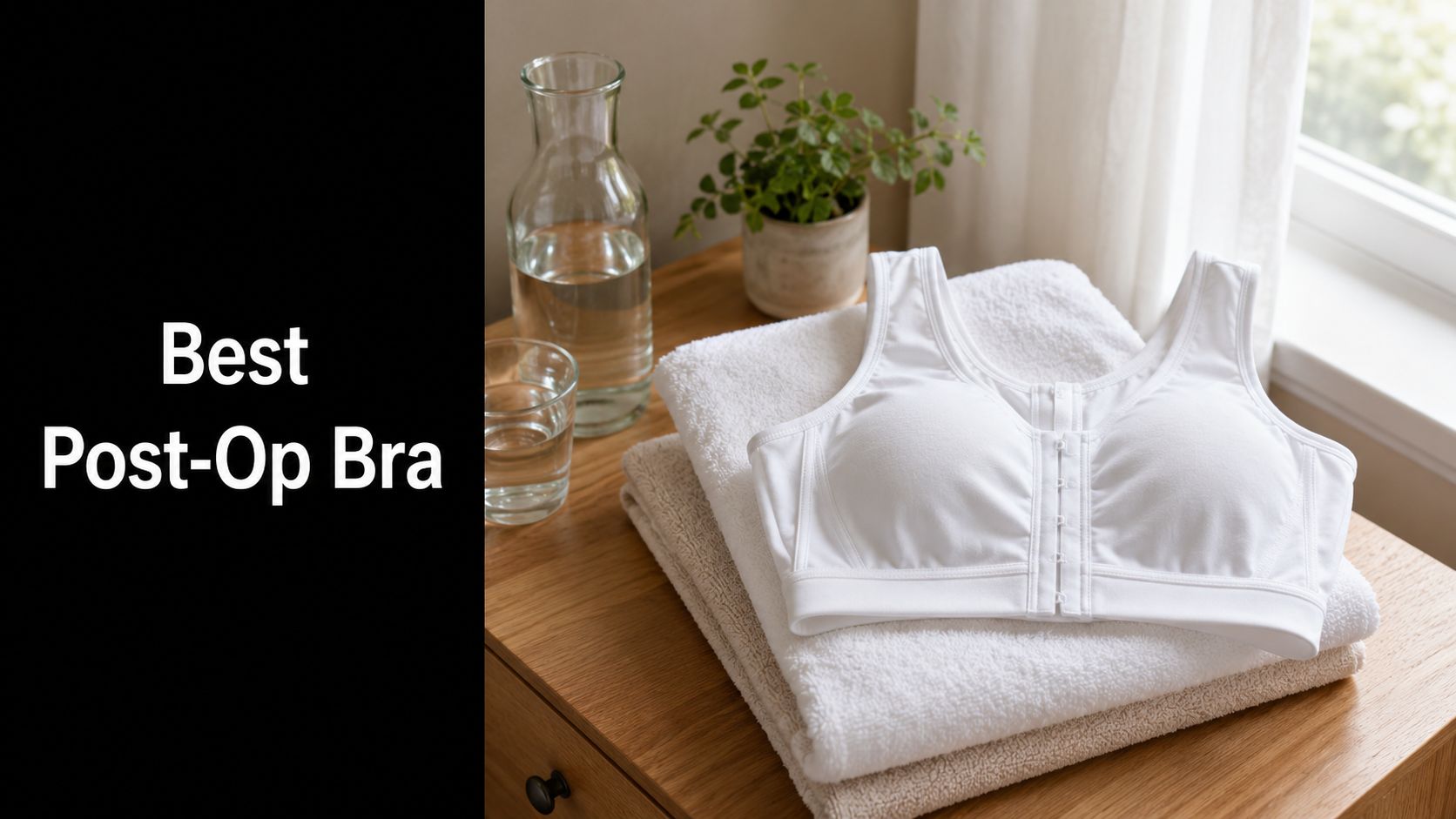
The first day home after breast surgery often feels quieter than expected. The procedure is over, the instructions are on the counter, and then a very practical question shows up fast: what bra am I supposed to wear now, and for how long?
Most patients don't ask because they care about fashion in that moment. They ask because their chest feels tender, swollen, heavy, tight, or unfamiliar. Getting dressed can feel awkward. Reaching overhead may be uncomfortable. A bra that used to feel fine can suddenly feel impossible.
A patient might tell me, “I thought I just needed something soft.” That makes sense, but after surgery, softness alone usually isn't enough. Your bra becomes part of your recovery plan. It helps support healing tissue, reduces rubbing, and gives your body a steadier environment while swelling settles.

Guidance from Cambridge University Hospitals NHS Foundation Trust says it is essential to wear a correctly fitting bra after oncoplastic breast surgery. In practical recovery guidance, surgeons also commonly recommend wearing a post-op bra 24/7 for the first two to six weeks to help minimize friction, control swelling, and protect healing tissue.
That's why the best post op bra usually isn't a single brand or style. It's the bra that matches what your body needs at your current stage of healing. In the earliest phase, that often means more structure and easier closures. Later, it may mean a softer bra with less medical compression.
If you're building your home setup before surgery, it also helps to think beyond the bra itself. A simple guide to recovering from surgery at home can help you prepare your sleep space, clothing, and daily routine so you're not figuring everything out while you're sore.
Comfort tip: If a bra helps you move, breathe, and rest without rubbing your incisions, it's doing important work even if it doesn't look like a “special” garment.
For a broader overview of healing habits, activity restrictions, and incision support, these post-operative care tips for a smooth recovery can help you understand how the bra fits into the bigger picture of aftercare.
A medical compression bra is different from an everyday bra because it's built for a very specific job. It gives your chest a steady, gentle hold while tissues recover from surgery. I often describe it to patients as a supportive hug for your chest. Not a squeeze. Not a vise. Just stable, even support.
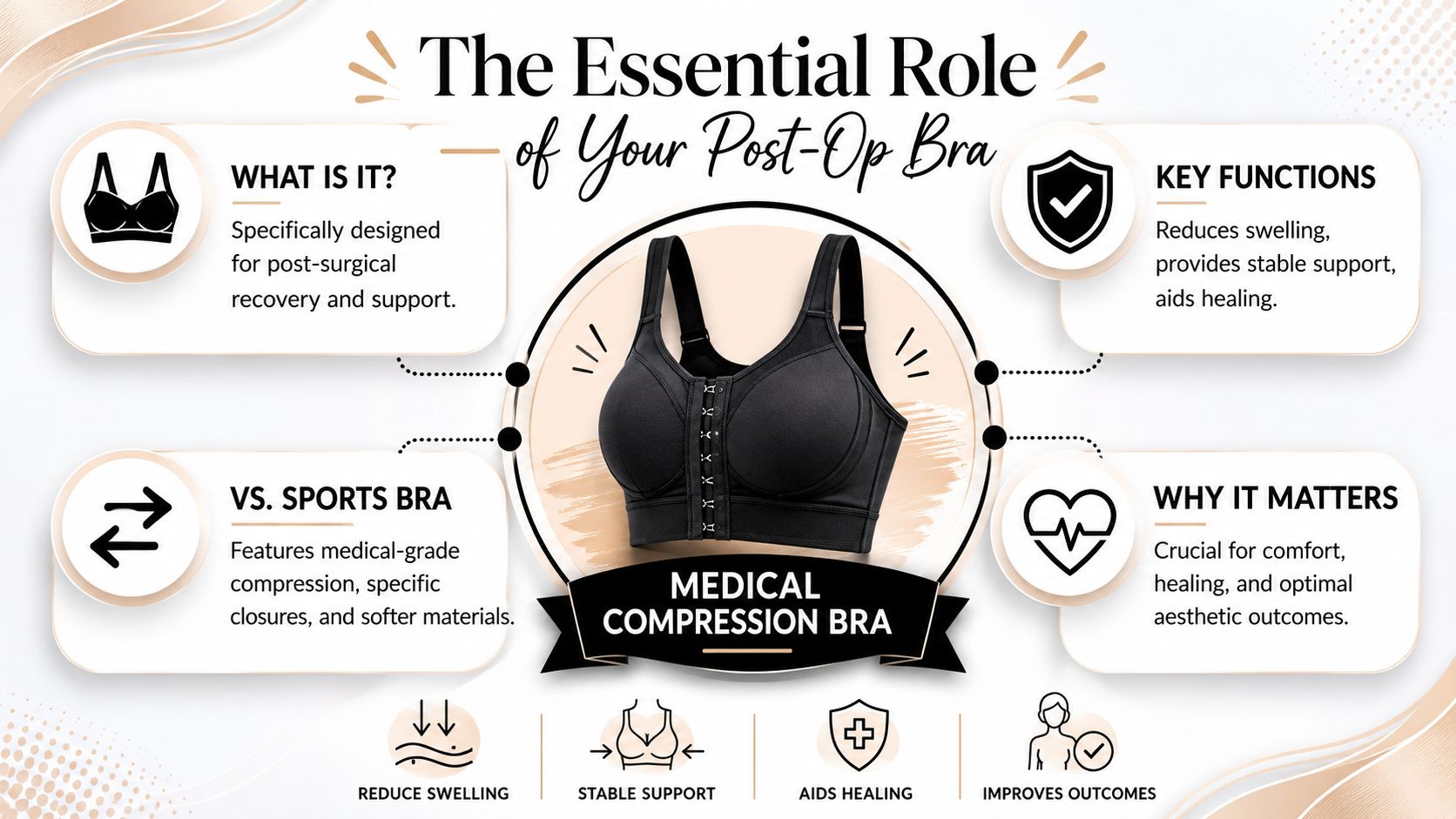
A post-op bra is designed around healing needs. That changes the construction in a few important ways:
Healing breast tissue doesn't respond well to poking, bouncing, or pressure concentrated in one narrow area.
A lot of patients assume a sports bra and a post-op bra are basically the same thing. They aren't. A sports bra is built for exercise support. A medical compression bra is built for post-surgical recovery. Those goals overlap a little, but not completely.
A standard sports bra may be hard to pull on. It may require you to lift your arms. It may also place pressure in the wrong spots, especially if the seams, elastic, or lower band sit directly over areas that are swollen or healing.
According to recovery guidance from Ogée on how a post-surgical bra should fit, an effective post-op bra provides firm but non-constrictive support with wide adjustable straps, a supportive band, and soft flat seams to reduce friction. The same guidance notes that underwire is typically avoided for at least 6 weeks to prevent pressure on vulnerable healing tissue.
A good post-op bra should feel secure enough that your chest isn't shifting when you move, but gentle enough that you can still take a full breath comfortably.
Underwire works well for shaping in everyday life. In recovery, it can create a pressure point exactly where you don't want one. Healing tissue is more sensitive to rubbing and focal pressure. Incisions may also sit close to the lower breast fold or side of the breast, where a wire can irritate the skin.
That's why the safest early choice is usually simple: wireless, supportive, adjustable, and easy to get on and off.
Shopping for a post-op bra can feel surprisingly confusing. Many bras say “supportive,” but that word means very different things depending on who made the garment. A better approach is to ignore the marketing first and look at the features that help during recovery.
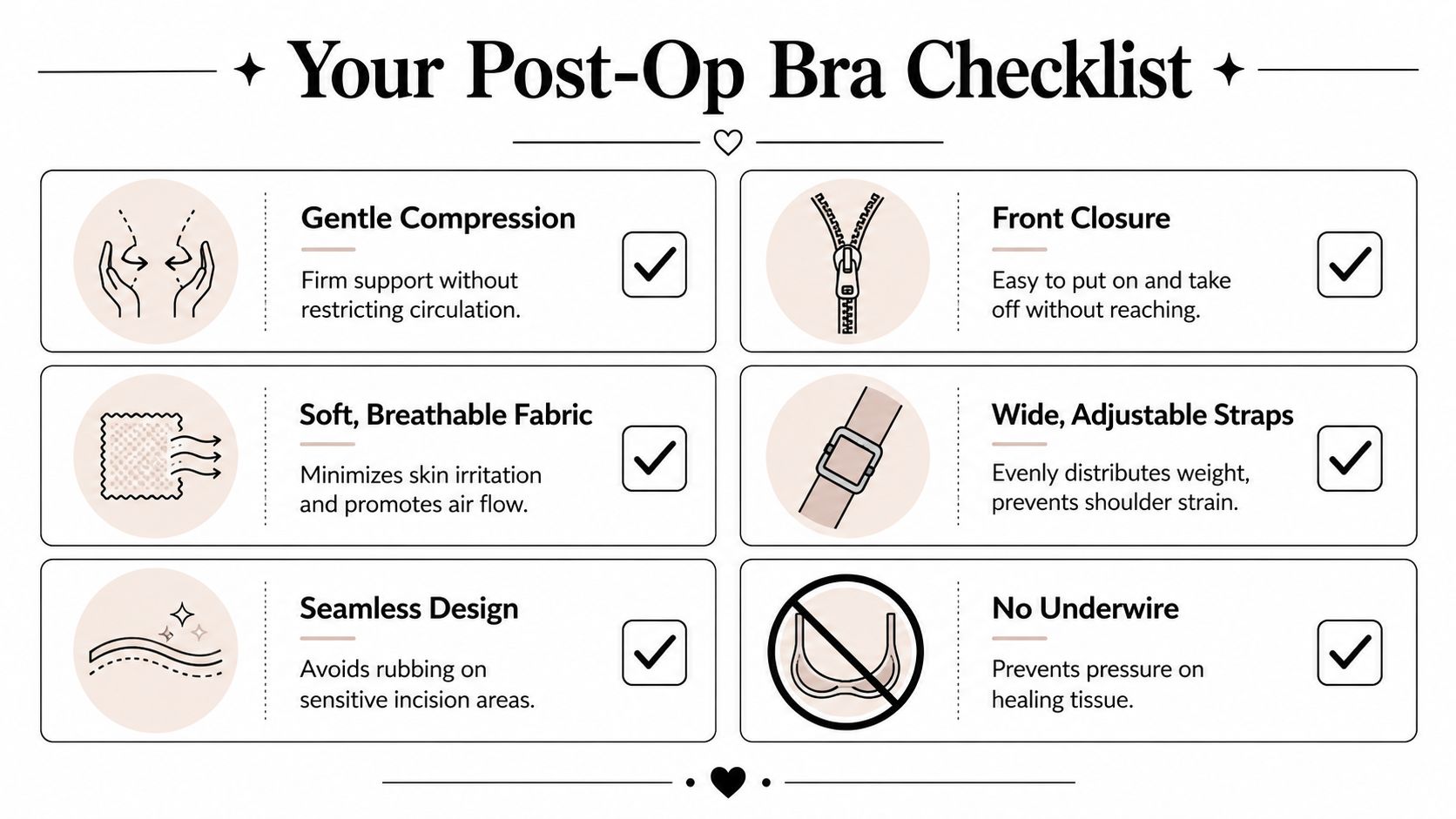
Here's the checklist I'd want a patient to use:
A short visual guide can help when you're comparing options:
These aren't luxury add-ons. They solve common problems patients run into in the first days and weeks after surgery.
For example, front closures help when arm movement is limited. Flat seams help if your skin feels tender or your incisions are close to where a seam would sit. Adjustable straps matter because your chest may not feel the same from morning to evening, or from one week to the next.
One reason this has become such a focus is that patients have clearly said the old options weren't working well enough. A Bezzy article discussing post-surgery bra comfort cites a 2020 study in which 52% of women said they had problems with the bras they purchased after surgery. That helps explain why modern post-op bras put so much emphasis on front closures, soft seams, and thoughtful support.
Practical rule: If a bra looks pretty but makes dressing harder, rubs at the incision line, or leaves you feeling compressed in one spot and unsupported in another, it's not the right bra for recovery.
When you're evaluating bras, think in terms of function:
| What you feel | What it may mean |
|---|---|
| Secure, supported, able to breathe normally | Likely a good early fit |
| Digging under the arms or band rolling | The cut or size may be wrong |
| Pain when fastening or taking off | Too much strain, or the closure style isn't right |
| Rubbing over an incision | Seam placement or fabric is a poor match |
The best post op bra should disappear into your day as much as possible. You should notice relief, not constant friction.
The question isn't only “What's the best post op bra?” It's also “Best for which week of healing?” Your needs change as swelling comes down, your range of motion improves, and your tissues become less fragile.
A common protocol described in this breast augmentation recovery timeline resource and other surgeon guidance is a surgery-specific bra for at least 2 weeks, followed by a soft supportive sports bra, with underwire typically avoided for at least 6 weeks and sometimes up to 3 months depending on the procedure.
This is the earliest recovery window. Your chest may feel tight, swollen, bruised, or heavy. You may also be moving slowly and protecting your arms and shoulders without even realizing it.
At this stage, the bra's main job is stability.
Look for:
You usually don't want to experiment much in this phase. Follow the exact garment and wear schedule your surgeon recommends.
After the first part of healing, many patients still need dependable support, but the bra no longer has to feel quite as medical. Swelling may be improving, but tissues still benefit from steady support.
This is often when a patient transitions into a softer but still supportive bra. The chest may feel less fragile, yet too much bounce or pressure can still be uncomfortable.
Good choices in this phase often include:
Your body may feel “better” before it is fully healed. That's why a comfortable bra is still part of recovery, not just part of the first week.
Later on, many patients want to know when they can go back to their usual bras. This is the phase where patience helps. If you switch too quickly to a rigid, shaped bra, your body may tell you right away that it isn't ready.
In this stage, you're usually looking for comfort, light support, and a fabric feel that works for longer days. Some people do well in a soft wireless everyday bra before they ever return to underwire. Others stay in a supportive non-wire style much longer because it feels better.
| Recovery Stage | Primary Goal | Key Bra Features | Typical Duration |
|---|---|---|---|
| Immediate post-op | Protect healing tissue and reduce movement | Front closure, controlled compression, soft seams, adjustable fit | At least 2 weeks |
| Early healing | Maintain support as swelling improves | Wireless support, soft structure, breathable fabric, stable band | Several more weeks |
| Transition phase | Increase comfort while staying supported | Soft supportive bra, flexible fit, no rubbing, gentle everyday wear | Varies by procedure and surgeon guidance |
The most useful recovery milestone usually isn't a calendar date alone. It's a combination of time, swelling, incision healing, comfort, and your surgeon's instructions. If a bra that looked fine on paper feels wrong on your body, listen to that information. Healing isn't identical from one patient to the next.
Not every breast surgery patient needs the same kind of bra. The support goals after augmentation are different from the goals after reduction, and both are different from the needs of mastectomy or reconstruction.
That difference matters because the “best post op bra” should match what your surgery changed.
After augmentation, the chest may feel tight and high at first. Patients often want support that feels secure without pressing harshly on areas that are still settling. Stability matters. Easy closures matter too, especially early on.
If your recovery also involves changes after implant removal, this after breast implant removal guide can help you think about support needs as your tissues adapt.
What usually helps most:
The main goal is support without unnecessary pressure.
Reduction and lift patients often describe a combination of soreness, swelling, and a feeling of heaviness during the first part of healing. The bra has to support a changing shape while avoiding friction near incision lines.
In these cases, I usually tell patients to pay extra attention to the lower band and side seams. A bra can seem soft overall but still irritate the exact area that needs the most protection.
A helpful way to consider this is:
| Procedure | Bra priority | What to avoid |
|---|---|---|
| Augmentation | Stable hold and easy dressing | Tight pressure points, hard lower edges |
| Reduction or lift | Consistent support with soft contact on incisions | Rubbing at the lower breast fold or side seams |
| Mastectomy or reconstruction | Softness, symmetry support, specialized design | Assuming a standard post-op bra will meet long-term needs |
This group often has the widest range of needs. Some patients need a recovery bra in the short term. Others need a bra solution that keeps working after wounds heal. Pocketed cups, softer materials, and thoughtful shaping can all matter.
According to Heart & Core's discussion of bras for cosmetic surgery and mastectomy-related needs, post-mastectomy bras may require built-in pockets for prostheses and extra-soft materials to accommodate skin sensitivity from radiation. That's very different from the needs of a typical cosmetic augmentation patient.
For mastectomy and reconstruction patients, the right bra may need to solve more than healing support. It may also need to help with symmetry, prosthesis security, and skin comfort over time.
Instead of asking only, “Which bra is best?” ask these questions:
Those answers will guide you better than any generic product list.
Recovery goes more smoothly when patients know what to expect before they get home. The bra question is a good example. If you only start thinking about support garments after surgery, everything can feel harder than it needs to.
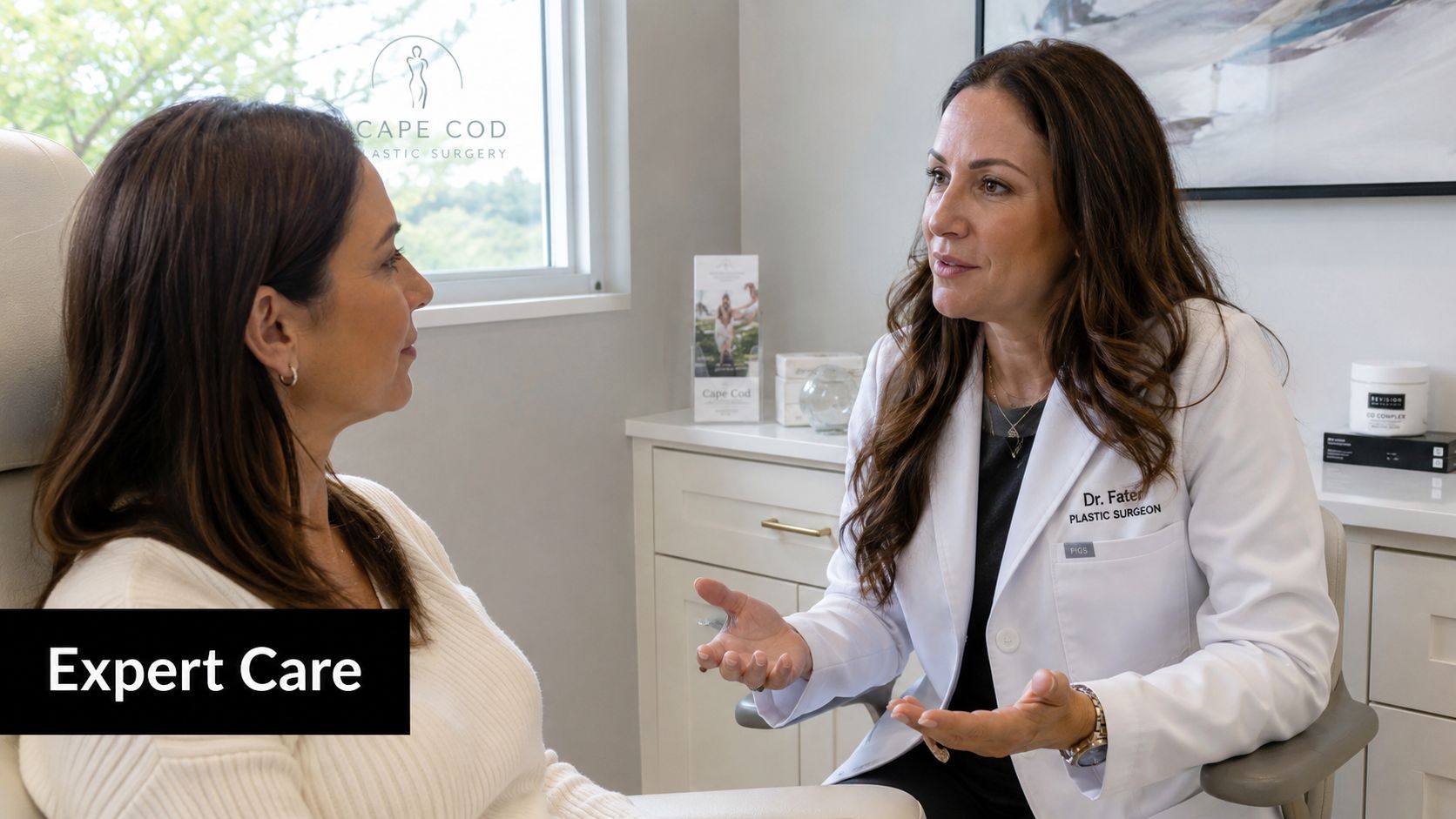
At Cape Cod Plastic Surgery, that conversation can be part of the overall recovery plan. Patients benefit when their surgical team explains what kind of support garment is appropriate, how long it may be needed, and what signs suggest a bra is fitting well or poorly. That kind of guidance is especially useful when swelling changes quickly or when the needs differ by procedure.
Clear aftercare around bras should include practical details such as:
Patients usually feel more confident when those expectations are stated plainly. It turns a vague shopping problem into a recovery task with clear guardrails.
The right guidance can prevent two common problems. One is wearing too little support too soon. The other is staying in an uncomfortable or poorly fitting bra because you assume all recovery bras are supposed to feel bad.
Neither is ideal. Your bra should support healing, not become a new source of worry.
It should feel snug, supportive, and breathable. You want gentle pressure, not pinching. The bra shouldn't dig into your shoulders, leave deep painful grooves, or make it hard to take a full breath.
If the band rolls, the closure pulls, or your skin feels irritated in one specific spot, the fit may be off.
Early on, many patients are told to wear their bra day and night. That's because support still matters when you're sleeping, turning, or getting up from bed. If your surgeon has told you to wear it continuously, follow that plan.
Once you move into a later healing phase, many patients switch to a softer bra for sleep.
If you're waking up because the bra feels scratchy, twisted, or too tight, that's worth addressing. Recovery support should help you rest, not keep you awake.
Most patients do better with more than one. Even if one bra fits well, you'll want a clean backup while the other is being washed. Having a second option also helps if swelling changes and one style feels better on a given day.
Follow the garment's care instructions. In general, gentle washing is usually the safest approach because it helps preserve stretch, closure strength, and fabric softness. A clean bra also matters for skin comfort, especially when you're wearing it for long stretches.
That depends on your procedure and your surgeon's instructions. As discussed earlier, underwire is often delayed until healing is further along. If your skin still feels sensitive, your incisions are tender, or the wire hits the breast fold uncomfortably, your body probably isn't ready yet.
Start with the basics:
If something feels painful, increasingly uncomfortable, or not right, contact your surgeon's office. A small adjustment can make a big difference.
If you're preparing for breast surgery or trying to make sense of recovery after it, Cape Cod Plastic Surgery offers patient education and surgical care designed to help you understand each step, including what support garments may be appropriate during healing.
October 6, 2026
Your Safety Guide: What to Look for When Choosing a Plastic Surgeon
October 5, 2026
Why Our On-Site Accredited Facility Matters for Your Safety

October 2, 2026
Beyond the Calendar: How to Know You’re Truly Ready for Plastic Surgery

Cape Cod Plastic Surgery offers expert cosmetic and reconstructive procedures in a safe, accredited setting. Led by Dr. Marc Fater, we combine advanced techniques with personalized care to help you look and feel your best.
Monday: 9:00 AM – 5:00 PM
Tuesday: 9:00 AM – 5:00 PM
Wednesday: 9:00 AM – 5:00 PM
Thursday: 9:00 AM – 5:00 PM
Friday: 9:00 AM – 5:00 PM