

September 9, 2026
How to Care for Surgical Incisions Properly
Expert Guide to Proper Surgical Incision Care
May 17, 2026

You look in the mirror one morning, smile, and notice that the lines at the outer corners of your eyes don't disappear the way they used to. Or the issue isn't the smile lines at all. It's the crepey texture under the eyes, a tired hollow, or puffiness that makes you look older even when you feel well-rested.
That's the moment individuals start searching for the best wrinkle eye treatment. They usually find the same unhelpful answer: a long list of creams, injectables, lasers, and surgeries with no clear way to decide what fits their face, age, skin sensitivity, schedule, or goals.
The right answer is rarely a single product or procedure. Eye rejuvenation works best as a decision pathway. Some people need a well-formulated eye cream and patience. Some are better served by Botox for expression lines. Others have crossed into structural aging, where surgery corrects what creams and injections can only soften.
A practical way to think about treatment is to place yourself on a spectrum: topical care, minimally invasive procedures, or surgical correction. The most effective choice depends on whether your main concern is fine lines, dynamic crow's feet, skin texture, hollows, bags, or excess lid skin.
The eye area ages differently from the rest of the face. The skin is thinner, the area moves constantly, and small changes in volume or skin quality show up quickly. That's why the same person may have more than one problem at once: crow's feet from smiling, lower lid crepiness from sun damage, and under-eye hollowness from volume loss.
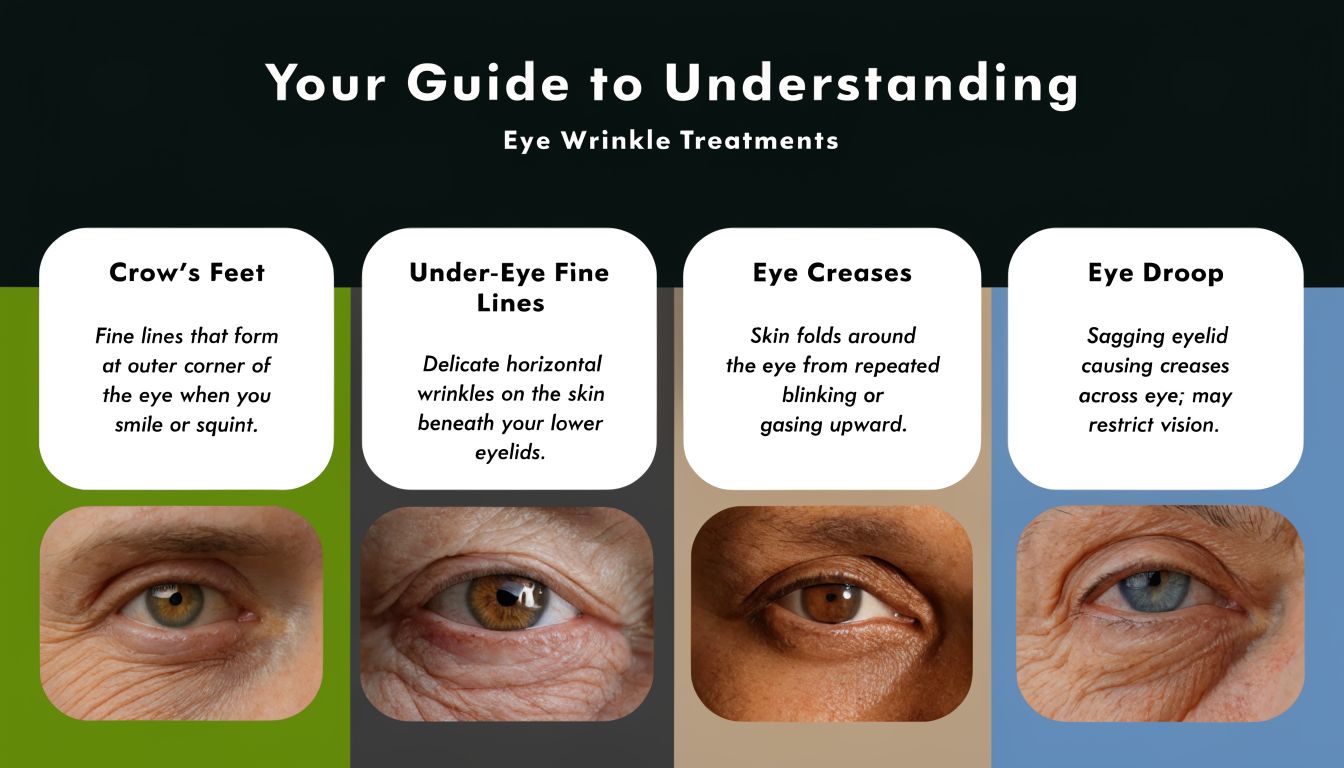
A lot of frustration comes from treating the wrong problem. A cream won't reposition bulging fat pads. Botox won't fix heavy upper eyelid skin. Surgery won't replace the daily discipline needed to maintain skin quality. The best plan starts with naming the issue correctly.
Here's a simple comparison to orient yourself early.
| Treatment | Best For | Cost Range | Recovery Time | Result Duration |
|---|---|---|---|---|
| Topical eye treatments | Fine lines, dryness, early texture changes | Varies by product and regimen | None to minimal | Ongoing use required |
| Botox or similar neurotoxin | Dynamic crow's feet from facial expression | Varies by treatment area and dose | Minimal | Temporary, maintenance needed |
| Dermal filler | Tear trough hollowing and support where appropriate | Varies by product and complexity | Minimal to short | Temporary, maintenance needed |
| Microneedling or laser resurfacing | Crepey texture, fine lines, surface quality | Varies by device and treatment plan | Short to moderate | Often requires a series and maintenance |
| Blepharoplasty | Excess skin, under-eye bags, structural aging | Higher than nonsurgical options | Moderate | Long-lasting |
One reason I encourage patients not to dismiss topical treatment too quickly is that it isn't just cosmetic theater. A 2009 randomized study of periorbital wrinkle products found that women using formulations including ingredients such as niacinamide and peptides had measurable improvement in the eye area within 4 weeks, helping establish topical treatment as a legitimate starting point rather than a marketing claim.
The best wrinkle eye treatment isn't the strongest treatment. It's the one that matches the cause of the aging you see.
Topicals are where the vast majority of individuals should start, especially if the problem is fine wrinkling, dryness, early crepiness, or mild texture change. They're also the baseline that supports every other level of treatment. Even patients who eventually choose Botox, laser treatment, or blepharoplasty usually do better when the skin is cared for properly at home.
Ingredient labels matter more than luxury branding. For eye-area wrinkles, the evidence is strongest for a few categories.
Ingredient rule: If a product doesn't contain a meaningful active, it may moisturize well, but it probably won't change wrinkles in a meaningful way.
Retinoids remain one of the most reliable options for wrinkle improvement. They work by increasing cellular turnover and supporting collagen remodeling over time. The trade-off is irritation, especially around the eyes, where skin is more reactive.
Niacinamide is a practical ingredient for patients who want wrinkle improvement with better tolerance. It supports barrier function and can improve elasticity while being easier to integrate into a daily routine.
Hyaluronic acid doesn't behave like a structural filler in a jar, but it can improve hydration and temporarily plump the look of fine dehydration lines. That makes it useful, especially in layered regimens.
A 2024 review on topical anti-aging ingredients reported that 0.05% tretinoin cream improved fine wrinkles in 3 months. The same review noted that 5% niacinamide improved elasticity, and that hyaluronic-acid-based creams reduced wrinkle depth by about 10% to 20% over a similar period.
That timing matters. The best topical regimens usually produce visible change in weeks to months, not overnight.
For most patients, an eye routine should be simple enough to follow consistently:
If crow's feet are your main concern, this guide on how to reduce crow's feet gives a practical overview of what skin care can and can't do.
Patients get into trouble when they expect creams to solve structural issues. A topical can soften fine lines, improve hydration, and refine texture. It won't remove under-eye bags, lift a hooded upper eyelid, or erase deep expression lines once they're etched in.
If your wrinkles are most visible when you smile or squint, a topical may help the skin quality, but muscle movement is still driving the line.
That's usually the point where the conversation shifts from skin care to procedures.
You may be at the point where your eye area looks older than the rest of your face, but surgery still feels premature. That is often where office-based treatment makes sense. The goal is not to do "more" than skin care. The goal is to choose the least invasive option that matches the problem in front of you.
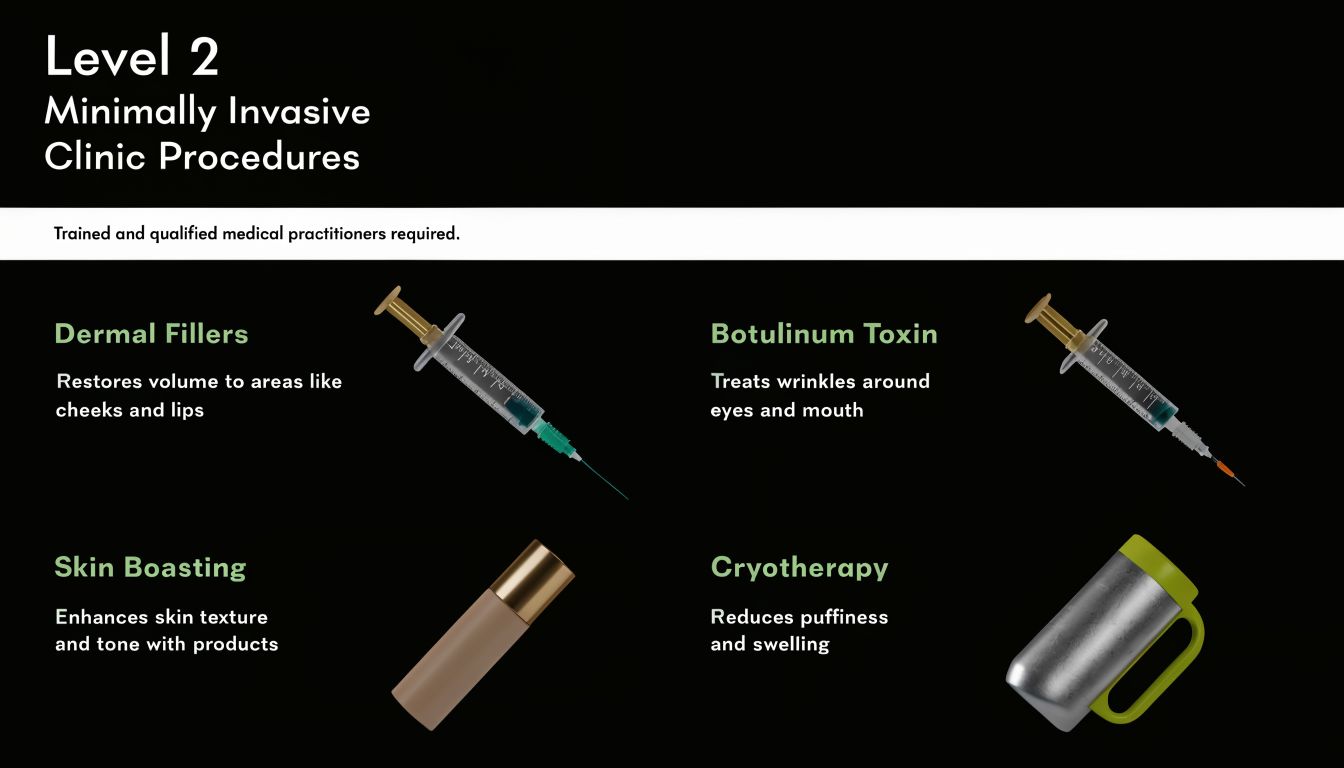
In consultation, I sort eye aging into a few practical categories: lines caused by facial movement, shadows caused by volume loss, and texture change caused by thinning or sun damage. Once that is clear, the next step usually becomes clearer too.
Crow's feet that show up most when you smile or squint usually respond best to botulinum toxin. Botox and similar products reduce the muscle activity that creases the skin at the outer corner of the eye, which softens dynamic lines and can help keep them from becoming more etched over time.
Patients often ask about dosing because treatment around the eyes is not one-size-fits-all. Muscle strength, facial balance, and how much movement you want to keep all matter. This guide to Botox units for crow's feet explains that planning in more detail.
The trade-off is straightforward. Results are temporary, and over-treatment can make the smile look less natural. Good treatment preserves expression while reducing the folding that creates the wrinkle.
Under-eye filler can be very effective in the right patient, and disappointing in the wrong one. It works best for a true tear trough or hollow that creates a tired shadow even when you are well rested. In that setting, precise filler placement can smooth the lid-cheek junction and make the under-eye look less sunken.
It does not correct every lower lid concern. Patients with fluid retention, prominent fat pads, thin lower lid skin, or significant laxity often need a different plan. Filler placed into a puffy or poorly selected under-eye can add weight, worsen swelling, or create an unnatural contour.
That is why under-eye filler should be treated as an anatomical procedure, not a quick fix.
If the main complaint is fine wrinkling, crepiness, or a paper-thin look to the lower eyelid skin, resurfacing is often a better fit than filler. Laser treatments and microneedling target skin quality. They can improve texture and stimulate collagen remodeling, which matters when the issue is on the surface rather than deeper in the lid structure.
These treatments ask more of the patient than injectables do. Recovery may include redness, swelling, dryness, or peeling, and improvement usually builds over a series or over time after treatment. For patients who want brighter, smoother skin and can accept downtime, that trade-off is often reasonable.
Many patients do not fit neatly into one category. A person in their 40s or 50s may have muscle-driven crow's feet, early hollowing, and lower lid crepiness at the same time. In that situation, a single treatment rarely gives the most balanced result.
A practical plan may include:
Cape Cod Plastic Surgery offers both surgical and nonsurgical eye rejuvenation, which matters because treatment planning should stay flexible as your needs change. Some patients do well for years with office procedures. Others reach a point where lid structure, skin excess, or under-eye bags make surgery the more logical next step.
Surgery becomes the best wrinkle eye treatment when the problem isn't primarily the skin surface. It's the structure underneath. Heavy upper lids, protruding lower lid fat, and true excess skin don't respond well enough to creams or injectables to justify pretending otherwise.
For the right patient, blepharoplasty is the most definitive option.
Most good surgical candidates say some version of the same thing. They've tried creams. They may have done Botox or filler. They still look tired, heavy, or puffy, and the mirror shows a problem that seems present even on good skin days.
You may be in this category if you have:
Upper blepharoplasty removes or reshapes excess upper eyelid skin, and in some cases addresses fullness that contributes to a hooded appearance. It's often the most logical choice when patients say they look tired, stern, or closed off even when they feel alert.
Lower blepharoplasty addresses under-eye bags and lower lid contour issues. It's not a wrinkle treatment alone. It's a structural rejuvenation procedure for patients whose anatomy has changed in a way that topical products can't reverse.
For a broader overview of candidacy and recovery, this article on eyelid surgery and blepharoplasty is useful background.
The appeal of surgery is durability. It corrects anatomy rather than temporarily masking it. But it's important to be realistic here too.
Blepharoplasty can:
It doesn't replace skin care, and it doesn't stop the normal aging process. Some patients still benefit from Botox for crow's feet or resurfacing for fine crepey lines after healing.
Surgery is the right answer when the question is structural. It's the wrong answer when the issue is mostly dehydration, early texture change, or movement-based wrinkling.
The happiest surgical patients aren't looking for a different face. They want their eyes to look less tired, less heavy, and more like themselves. That's the right goal. Around the eyes, natural-looking improvement matters more than aggressive change.
Deciding among these options gets easier when you stop asking, “What's the best treatment?” and start asking, “What problem am I treating?”
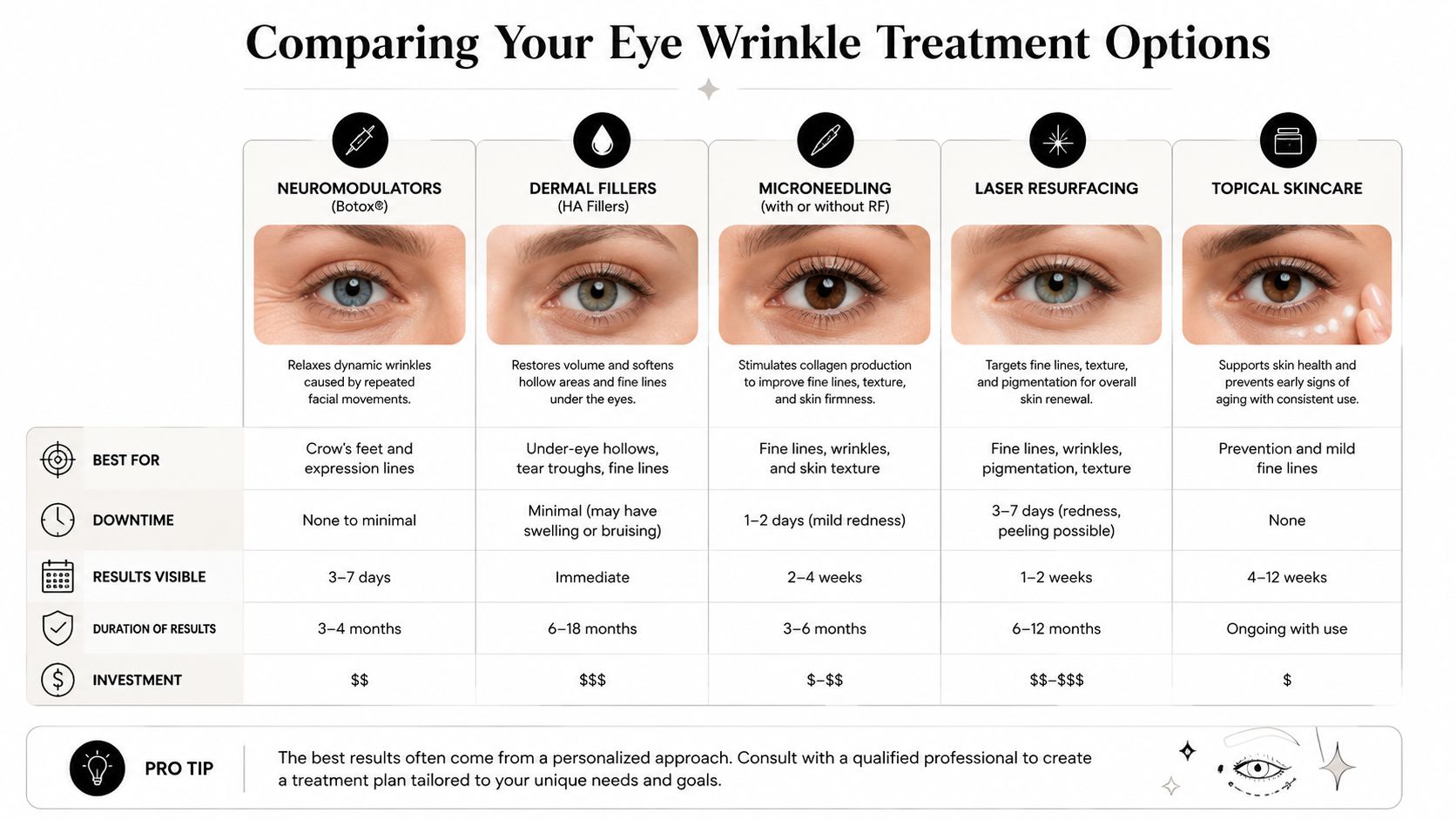
A well-chosen eye treatment should fit four things at once: your anatomy, your tolerance for downtime, your budget, and your patience level.
| Treatment | Best For | Cost Range | Recovery Time | Result Duration |
|---|---|---|---|---|
| Peptide or niacinamide eye cream | Early fine lines, mild texture change, patients who want gentler care | Lower to moderate | None | Requires continuous use |
| Retinol or retinoid eye treatment | Fine wrinkles, skin turnover, patients comfortable with gradual results | Moderate | Minimal to mild irritation possible | Requires continuous use |
| Botox or similar neurotoxin | Dynamic crow's feet | Moderate | Minimal | Temporary |
| Dermal filler | Tear trough hollowing in selected candidates | Moderate to higher | Minimal to short | Temporary |
| Microneedling | Fine lines and texture support | Moderate | Short | Series and maintenance often needed |
| Laser resurfacing | Crepey texture, surface wrinkling, skin quality | Moderate to higher | Short to moderate | Can be long-lasting with maintenance |
| Blepharoplasty | Excess skin, hooding, under-eye bags, structural aging | Higher | Moderate | Long-lasting |
If your main issue is mild wrinkling with dryness, start topical. There's no reason to jump into procedures first.
If your main issue is wrinkles that appear with smiling, Botox usually gives a more direct return than buying stronger and stronger eye creams.
If your main issue is crepey lower lid skin, think in terms of skin quality. That often means resurfacing procedures, with topicals as maintenance.
If your main issue is bags or hooding, surgery moves from optional to logical.
Even inside the topical category, one formula won't fit everyone. Consumer lab testing summarized by Good Housekeeping's eye cream review found that a peptide-based eye cream reduced wrinkle severity by 13% and improved firmness by 28%, while a retinol serum increased firmness by 33%. The practical point isn't that one product “wins.” It's that peptides may suit patients focused on wrinkle smoothing and hydration, while retinol can be stronger when laxity is part of the complaint.
Patients often benefit from seeing the trade-offs in plain language:
There's no prize for choosing the most aggressive option. There is a benefit to choosing the most accurate one.
A good plan can still go wrong in the wrong hands. The skin and soft tissue around the eyes are unforgiving, and subtle errors are visible. That's why provider selection matters as much as treatment selection.

Start with the basics:
You should feel comfortable asking:
A trustworthy provider narrows the plan. They don't sell every option to every patient.
For Cape Cod patients, convenience isn't trivial. Eye treatments often involve follow-up, maintenance, or staged care. Working with a practice that can evaluate the full spectrum, from injectables to blepharoplasty, makes decision-making simpler and safer because the recommendation can be based on what you need, not only on what's available in that office.
According to the publisher information for this article, Dr. Marc Fater is a board-certified plastic surgeon with over 30 years of experience, and the practice includes an on-site AAAASF-accredited surgical suite. Those details matter because eye rejuvenation demands both aesthetic judgment and a strong safety framework.
Start when the concern becomes visible to you, not when it becomes severe. Early treatment usually means topical skin care and sun protection. More advanced changes may call for procedures.
It can help delay worsening by supporting hydration and skin quality, especially when paired with sunscreen. It won't stop expression lines or structural aging on its own.
That's common. A recent discussion of under-eye wrinkle creams noted that gentler retinol options may offer a more favorable tolerance trade-off, including one La Roche-Posay retinol product associated with 5% wrinkle reduction with high tolerance in the source summary from South Lake OBGYN's review of under-eye wrinkle creams. In practice, this is why the best regimen is sometimes the gentlest one you can use consistently.
Not always. Dark circles may come from pigment, shadowing, hollowness, or visible blood vessels. Wrinkles come from skin quality, movement, or structural aging. They often overlap, but they aren't the same diagnosis.
If you're trying to decide where you fall on the treatment spectrum, from topical care to injectables to blepharoplasty, Cape Cod Plastic Surgery offers consultations focused on matching the treatment to the problem. A careful evaluation can help you avoid wasted time on options that won't address the actual cause of your eye aging.
September 9, 2026
Expert Guide to Proper Surgical Incision Care
Master dermal fillers aftercare with do's and don'ts, swelling tips, activity limits and warning signs to protect your results and heal smoothly.

September 8, 2026
Ensuring Safety: Why Your Surgeon's Credentials Matter Most

Cape Cod Plastic Surgery offers expert cosmetic and reconstructive procedures in a safe, accredited setting. Led by Dr. Marc Fater, we combine advanced techniques with personalized care to help you look and feel your best.
Monday: 9:00 AM – 5:00 PM
Tuesday: 9:00 AM – 5:00 PM
Wednesday: 9:00 AM – 5:00 PM
Thursday: 9:00 AM – 5:00 PM
Friday: 9:00 AM – 5:00 PM