

October 7, 2026
What to Expect During Your Breast Surgery Recovery
A Practical Guide to Healing After Breast Surgery
Aug 29, 2026

Liposuction averages roughly $4,400 to $4,700 in surgeon fees, with a typical all-in cost near $9,000 to $10,000. Non-invasive body sculpting generally runs about $600 to $1,500 per session, or $2,000 to $5,000 for a full package, depending on the area treated.
You may be looking at a quote that seems manageable until the facility, anesthesia, garments, and follow-up care appear on a second page. Or you may be comparing a single CoolSculpting visit with a surgical plan that addresses several areas at once, without knowing whether either price represents the complete course of treatment.
For Cape Cod patients, the useful question isn't just, “How much does body sculpting cost?” It's, “What will I pay for the result I want?” The sections below separate surgeon fees from total charges, explain why treatment size changes the price, and show when repeating non-surgical sessions may no longer be the sensible financial choice.
A body sculpture quote can change dramatically between the consultation and the final invoice. A patient may hear an initial surgical figure of $6,500, then discover that facility and anesthesia charges bring the estimate to $11,200. A non-invasive plan may begin with a $1,200 entry price, yet require several visits before the provider considers the treatment complete.
Those examples illustrate the central pricing problem. A headline number usually describes one component, one session, or one treatment area. It may not describe the full plan.
For surgical body sculpture, liposuction is the most useful benchmark. The American Society of Plastic Surgeons reported an average surgeon fee of $4,711 in 2023 and $4,449 in 2024, excluding anesthesia, operating-room costs, and related expenses. The ASPS 2023 procedure-cost report makes clear that the surgeon fee isn't the same as the all-in bill.
Patient-review data cited by RealSelf places the average total liposuction cost at $9,165, with reported prices ranging from $3,500 for a small area to $22,000 for full-body liposuction. That spread reflects treatment size, complexity, and the number of areas included. Non-invasive pricing follows a different model, with common session ranges of approximately $600 to $1,500 for CoolSculpting, $700 to $1,400 for SculpSure, and $750 to $1,000 for Emsculpt. Multi-session packages often total $2,000 to $5,000, based on market pricing summaries for body sculpting.
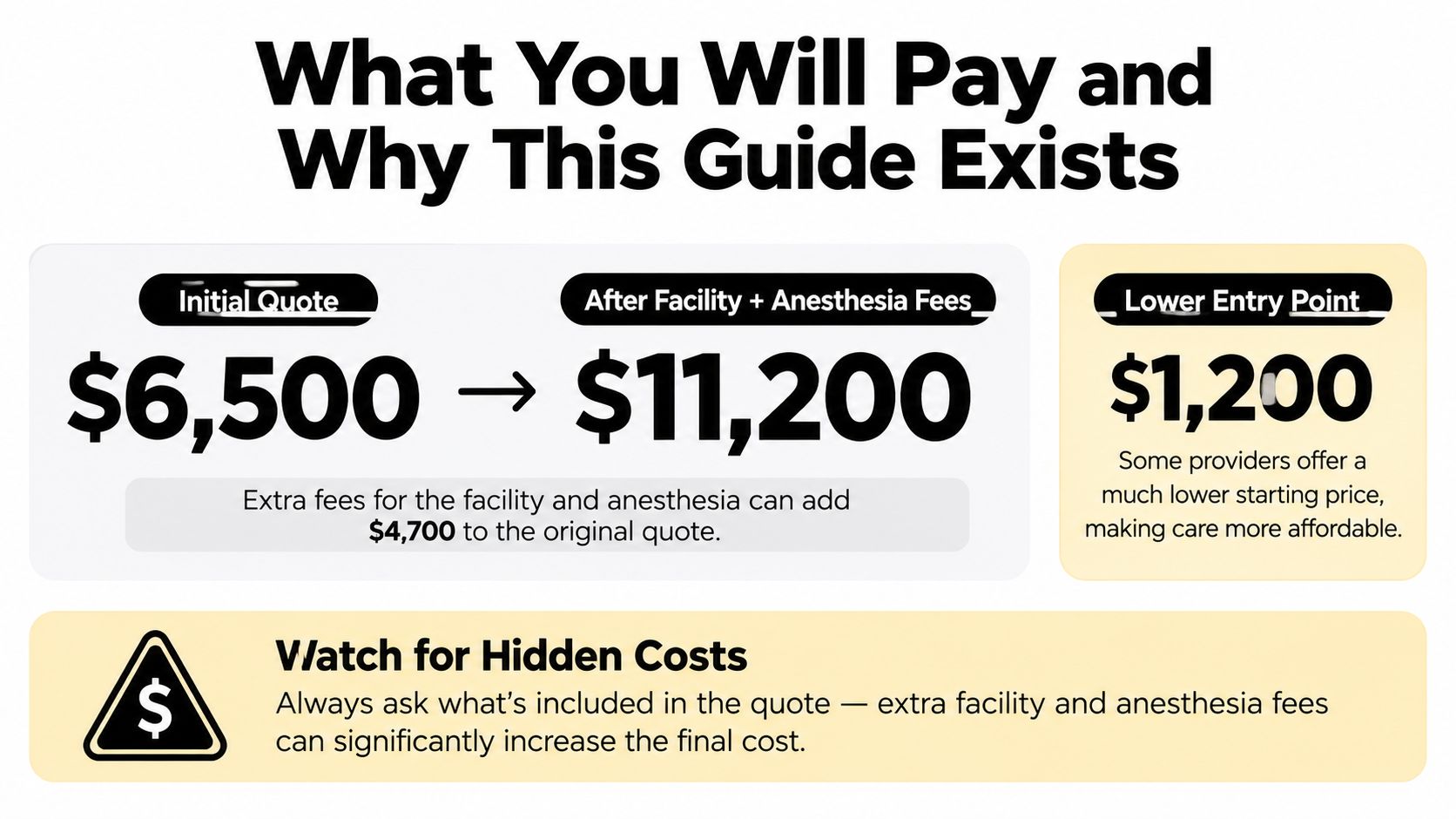
Before comparing providers, ask whether the quoted amount includes:
The price that deserves your attention is the complete plan price, not the lowest figure in an advertisement. Ask for a written estimate that identifies every included and excluded charge, then compare that document with other practices on the same basis.
Body sculpture is an umbrella term for treatments that reshape a specific area of fat, skin, or soft tissue. It generally suits people who are already near a stable weight and want to refine a stubborn bulge, improve proportion, or address loose tissue that exercise alone won't correct.
Weight loss and body sculpture solve different problems. Weight loss reduces overall body mass. Body sculpture targets selected areas after the broader weight change has already happened. A useful comparison is remodeling a house. Weight loss changes the structure of the whole property, while body sculpture gives selected rooms custom finishes.
Surgical body sculpture includes liposuction, which removes fat directly, as well as procedures that remove or reposition skin. A tummy tuck can address abdominal skin and muscle concerns, while an arm lift, thigh lift, or body lift focuses on excess tissue in those regions. These procedures can create a larger contour change, but they involve incisions, anesthesia considerations, recovery, and surgical fees.
Non-invasive options work without traditional incisions. CoolSculpting uses cryolipolysis, SculpSure uses laser energy, Emsculpt uses muscle stimulation, and radiofrequency devices focus on skin tightening or tissue remodeling. Injectables such as Kybella address localized submental fat and belong to the same wider family of contouring treatments, although their treatment method and pricing structure differ.
For a broader explanation of the treatment process, review this guide to how body contouring works.
The first candidacy question is simple: what do you want changed?
Patients often waste money when they choose a device because it sounds easier, even though their main concern is excess skin. For practical ideas about muscle toning and contouring tips, look for guidance that distinguishes muscle development from fat reduction and skin removal.
A patient may see a surgeon fee online, then receive a much larger final bill. The difference usually comes from anesthesia, facility use, garments, medications, and follow-up. Non-invasive treatment quotes work differently. They usually cover a visit, device time, applicators, and staff support, while additional areas or sessions raise the total.
Judge every option by the complete treatment plan, not its lowest advertised entry price. For broader benchmark context, compare these plastic surgery cost statistics by procedure.
| Procedure | Typical Surgeon Fee | Typical All-In Range |
|---|---|---|
| Liposuction | $4,400 to $4,700 | Often several thousand dollars higher after anesthesia, facility, and related expenses |
| Tummy tuck | Requires a personalized quote | Requires a personalized surgical estimate |
| Arm lift | Requires a personalized quote | Requires a personalized surgical estimate |
| Thigh lift | Requires a personalized quote | Requires a personalized surgical estimate |
| Body lift | Requires a personalized quote | Requires a personalized surgical estimate |
| CoolSculpting | Session-based pricing | $600 to $1,500 per session, with packages often $2,000 to $5,000 |
| SculpSure | Session-based pricing | $700 to $1,400 per session |
| Emsculpt | Session-based pricing | $750 to $1,000 per session |
| Radiofrequency contouring | Session-based pricing | Requires a personalized quote based on the treatment area and series |
The liposuction benchmark comes from the American Society of Plastic Surgeons cost report. The non-invasive ranges come from body-contouring market pricing summaries.
Liposuction shows why the surgeon fee and final cost must remain separate. ASPS reported an average surgeon fee of $4,711 in 2023 and $4,449 in 2024, excluding anesthesia and operating-room expenses. RealSelf patient-review data cited in the verified benchmark reported an average total cost of $9,165, with totals from $3,500 to $22,000 depending on scope.
Those figures are reference points, not promises. A small isolated pocket requires less operating time and planning than a broad abdomen and flank plan. Tummy tucks, arm lifts, thigh lifts, and body lifts require a personalized estimate because the amount of skin removal, surgical complexity, and treatment areas vary substantially.
Non-invasive devices use session-based pricing. Providers calculate the applicator, treatment area, treatment time, and number of visits rather than quoting one surgical procedure fee. A package may lower repeated scheduling costs, but it still needs a precise treatment definition.
Before paying a deposit, ask how many sessions, applicators, passes, and areas the package includes. Compare those details with any surgical quote. For a useful example of how medical services can be itemized, review the MedAmerica Rehab Center price guide.
A transparent quote should look like a stack of identifiable charges, not one unexplained total. Start with the professional fee, then ask what the facility, anesthesia, supplies, and follow-up services add.
Practical rule: If the estimate doesn't tell you what is included, it isn't ready for comparison.
Treatment area and number of zones come first. Treating the abdomen, flanks, back, and thighs requires more planning and treatment time than addressing one small pocket. Non-invasive devices also scale by applicator size, surface area, and number of sessions.
Anesthesia can change the bill substantially. Local anesthesia may suit selected treatments, while larger surgical plans may require deeper sedation or general anesthesia. The correct choice depends on the procedure and your safety profile, not merely on price.
Facility selection matters because a hospital and an accredited office-based surgical center have different operating costs. Ask whether the quote covers the full facility charge, recovery-room care, and routine supplies.
Surgeon experience and certification affect the professional fee. You're paying for judgment before the procedure, technical execution during it, and the ability to recognize and manage problems. The lowest surgeon fee isn't automatically the lowest-risk or best-value choice.
Geography and demand influence overhead. Cape Cod pricing may differ from Boston pricing or from a lower-volume market, while seasonal scheduling can affect availability.
Complexity raises the quote when a patient has previous surgery, significant skin laxity, asymmetry, scar tissue, or several procedures planned together. Revision work requires more analysis and can carry different technical demands than primary treatment.
Patients often remember the procedure and forget everything around it. Compression garments may need replacement, follow-up visits may involve additional services, and prescriptions or laboratory work may be separate. Some patients also budget for post-operative lymphatic massage, transportation, lodging, and unpaid time away from work.
Use this checklist before accepting any estimate:
For broader context on how procedure fees are commonly presented, see plastic surgery cost statistics and average prices by procedure. Treat that type of benchmark as a starting point, not a substitute for an examination and written quote.
Non-invasive treatment earns its place when the problem is small, the patient wants minimal interruption, and the expected improvement matches the investment. It stops making financial sense when repeated sessions accumulate without addressing the broader contour issue.
Consider a simple CoolSculpting calculation. At $750 per cycle, four to six cycles represent $3,000 to $4,500 before considering whether additional areas or visits are needed. Those figures come from the provided treatment-comparison benchmark and should be treated as an example of session math, not a guaranteed quote.
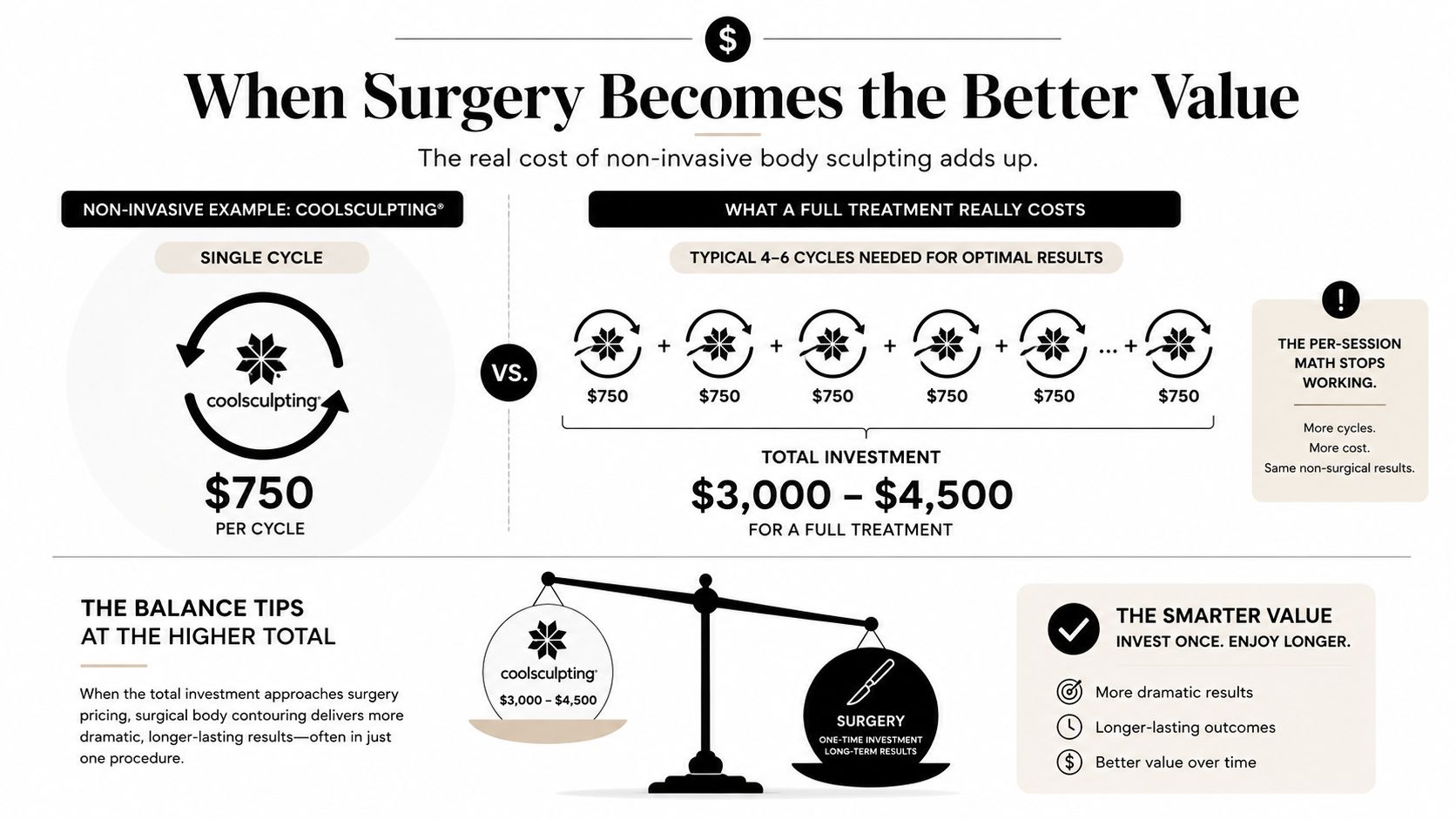
The decision point is reached when cumulative non-invasive spending approaches the surgical estimate, while the non-invasive plan still cannot remove excess skin or create the same degree of contour change. Surgery may offer stronger value for a patient who wants several areas treated or needs skin redraped, even though the initial payment is higher.
Non-invasive treatment remains the better fit for a small pinchable pocket, a patient who can't accept surgical downtime, or someone who wants gradual refinement. It isn't the right tool for significant hanging skin. Removing fat from lax skin can leave the tissue looking less supported, so the consultation must assess skin quality before anyone recommends a device or liposuction.
Choose non-invasive treatment when:
Consider surgery when:
A surgical consultation may include measurements or imaging to plan tissue removal and contouring. Non-invasive consultations often focus more narrowly on device suitability, so ask both providers how they will evaluate your anatomy and define a successful result.
The relevant question isn't whether surgery costs more at the beginning. It's whether the cheaper-looking plan will solve the problem without repeated spending.
A visual explanation of treatment approaches is also available below.
A good price comparison includes the months around treatment, not just the day you pay. Financing, travel, recovery support, and follow-up access can change the practical value of a plan.
Third-party medical lenders such as CareCredit, Alphaeon, and PatientFi may offer promotional periods, including 6, 12, 18, or 24 months at zero interest for qualified applicants. Read the terms carefully. Promotional financing may become expensive if the balance isn't handled according to the agreement, and qualification isn't guaranteed.
Some Cape Cod practices may offer in-house payment arrangements. Patients can also stage treatment, addressing one area first and scheduling another later when finances, work, or family responsibilities make that approach more realistic.
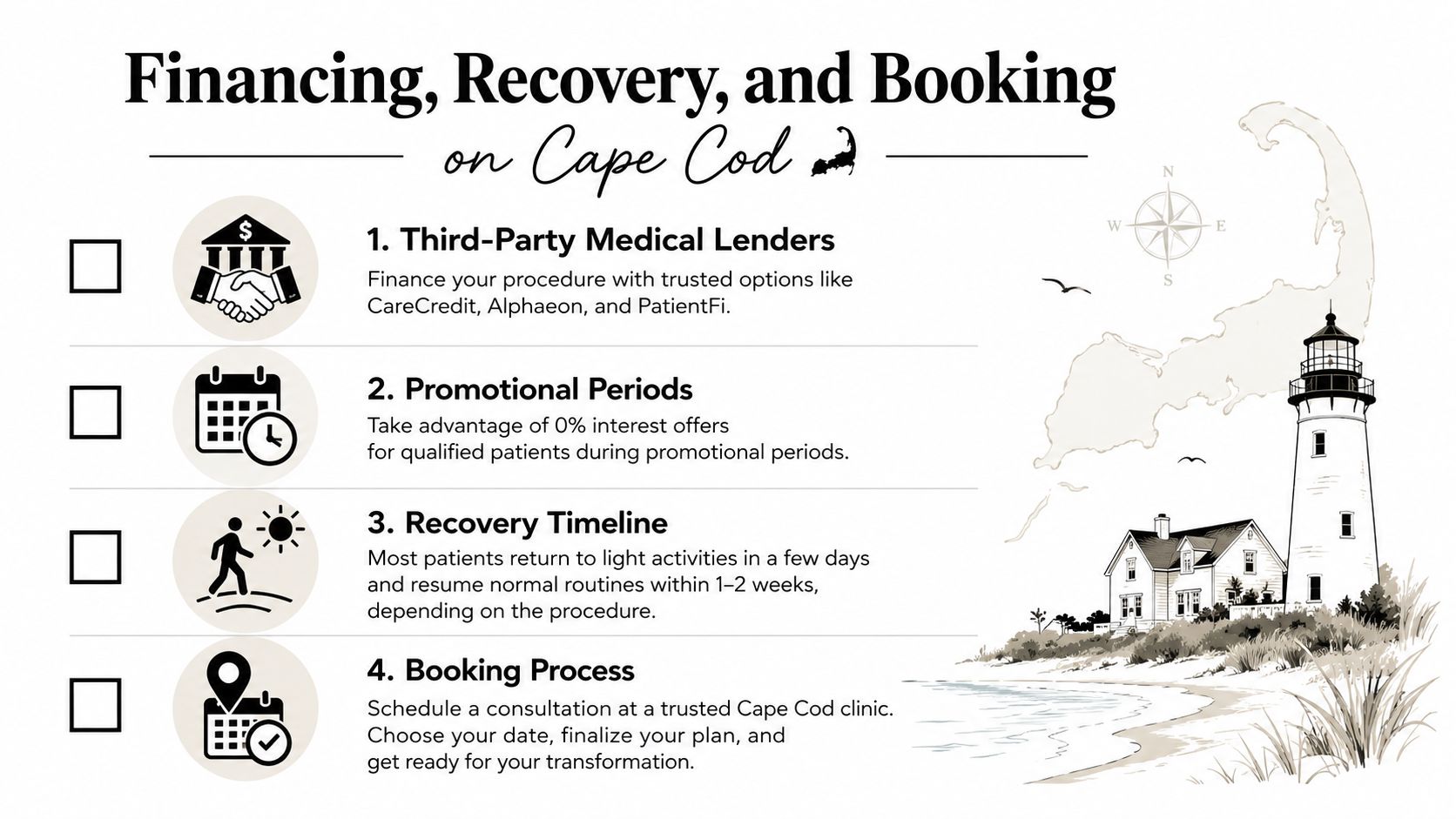
Recovery is part of the cost because time away from work, help at home, transportation, and garments all affect the final commitment. Liposuction commonly requires 5 to 10 days away from work and 4 to 6 weeks before full activity, while a tummy tuck may require 2 to 3 weeks away from work. CoolSculpting generally has no meaningful downtime, but final results may take 8 to 12 weeks. These recovery ranges are planning estimates, not promises, and your provider should tailor them to your treatment.
Cape Cod logistics deserve attention. Seasonal demand can make scheduling more difficult during the busiest spring and summer months. Patients traveling from Nantucket or Martha's Vineyard should plan ferry schedules, transportation after treatment, and a place to stay near the surgical facility when the procedure requires close follow-up.
Local care also has practical value. A nearby relationship can make post-treatment questions, examinations, and unexpected concerns easier to manage than flying back to Boston or another distant city.
Bring a clear list of the areas you want treated, your timing constraints, prior procedures, medical history, medications, and your preferred budget structure. Ask for the complete price, financing terms, expected recovery, follow-up schedule, and the specific result the provider believes each option can deliver.
For more detail on payment options, review this guide to financing cosmetic surgery. Then request a personalized consultation rather than relying on an online estimate.
Cape Cod Plastic Surgery offers surgical body contouring and non-invasive treatment options, including CoolSculpting with flexible payment plans through Cherry. Visit Cape Cod Plastic Surgery to request a consultation, list the areas you want addressed, and receive a quote that separates the treatment fee from the costs surrounding it.
October 7, 2026
A Practical Guide to Healing After Breast Surgery

October 6, 2026
Your Safety Guide: What to Look for When Choosing a Plastic Surgeon
October 5, 2026
Why Our On-Site Accredited Facility Matters for Your Safety

Cape Cod Plastic Surgery offers expert cosmetic and reconstructive procedures in a safe, accredited setting. Led by Dr. Marc Fater, we combine advanced techniques with personalized care to help you look and feel your best.
Monday: 9:00 AM – 5:00 PM
Tuesday: 9:00 AM – 5:00 PM
Wednesday: 9:00 AM – 5:00 PM
Thursday: 9:00 AM – 5:00 PM
Friday: 9:00 AM – 5:00 PM