

September 9, 2026
How to Care for Surgical Incisions Properly
Expert Guide to Proper Surgical Incision Care
May 9, 2026
Liposuction does not remove visceral fat. It removes subcutaneous fat, the layer just under the skin, and research has shown that women who remained inactive after abdominal liposuction had a 10% increase in visceral fat by 6 months, while the exercise group prevented that gain.
That's the part most articles skip.
Patients often ask, “Does liposuction remove visceral fat?” The usual answer is a quick no, but that leaves out the more important issue. If your goal is a flatter abdomen, a healthier metabolism, and results that last, you need to know what kind of fat you're trying to change, what surgery can do, and what surgery cannot do.
A good body contouring plan starts with a simple truth. Not all belly fat is the same. Some of it sits in a layer you can pinch. Some of it sits deep inside the abdomen around the organs, where no liposuction cannula should ever go. Those two fat types behave differently, look different, and matter differently for both appearance and health.
No, liposuction doesn't remove visceral fat.
It removes subcutaneous fat, which is the softer layer between the skin and the muscle. Visceral fat is different. It lies deeper in the abdomen, behind the muscle wall, around structures the surgeon must protect, not disturb.
That distinction matters because many patients use the phrase “belly fat” as if it describes one thing. In practice, it describes at least two very different problems. One is a contour problem. The other is a metabolic problem.
When someone asks whether liposuction removes visceral fat, they're usually asking one of three things:
Those are reasonable questions. They also require a more precise answer than a simple yes or no.
If your lower abdomen has fullness you can grasp between your fingers, liposuction may help shape it. If your abdomen feels firm, rounded, and projects outward even when the overlying fat layer is thin, visceral fat may be playing a larger role. In that situation, liposuction may improve the outer layer but still leave the deeper abdominal contour largely unchanged.
Practical rule: If the issue is what you can pinch, liposuction may help. If the issue is what pushes outward from within, surgery of this type isn't the solution.
A better question is this: What kind of fat is creating my abdominal shape?
That question changes everything. It affects whether you're a strong candidate, how much improvement you should expect, and what you need to do after surgery to protect both your result and your health.
Patients deserve that clarity before they commit to any procedure. A thorough consultation isn't just about where to suction fat. It's about understanding the anatomy well enough to choose the right treatment for the right problem.
The easiest way to understand this is to think of abdominal fat like an iceberg. One part is near the surface and easy to identify. The other is hidden deeper below.
Subcutaneous fat is the visible, pinchable portion. Visceral fat is the hidden portion deeper in the abdomen.
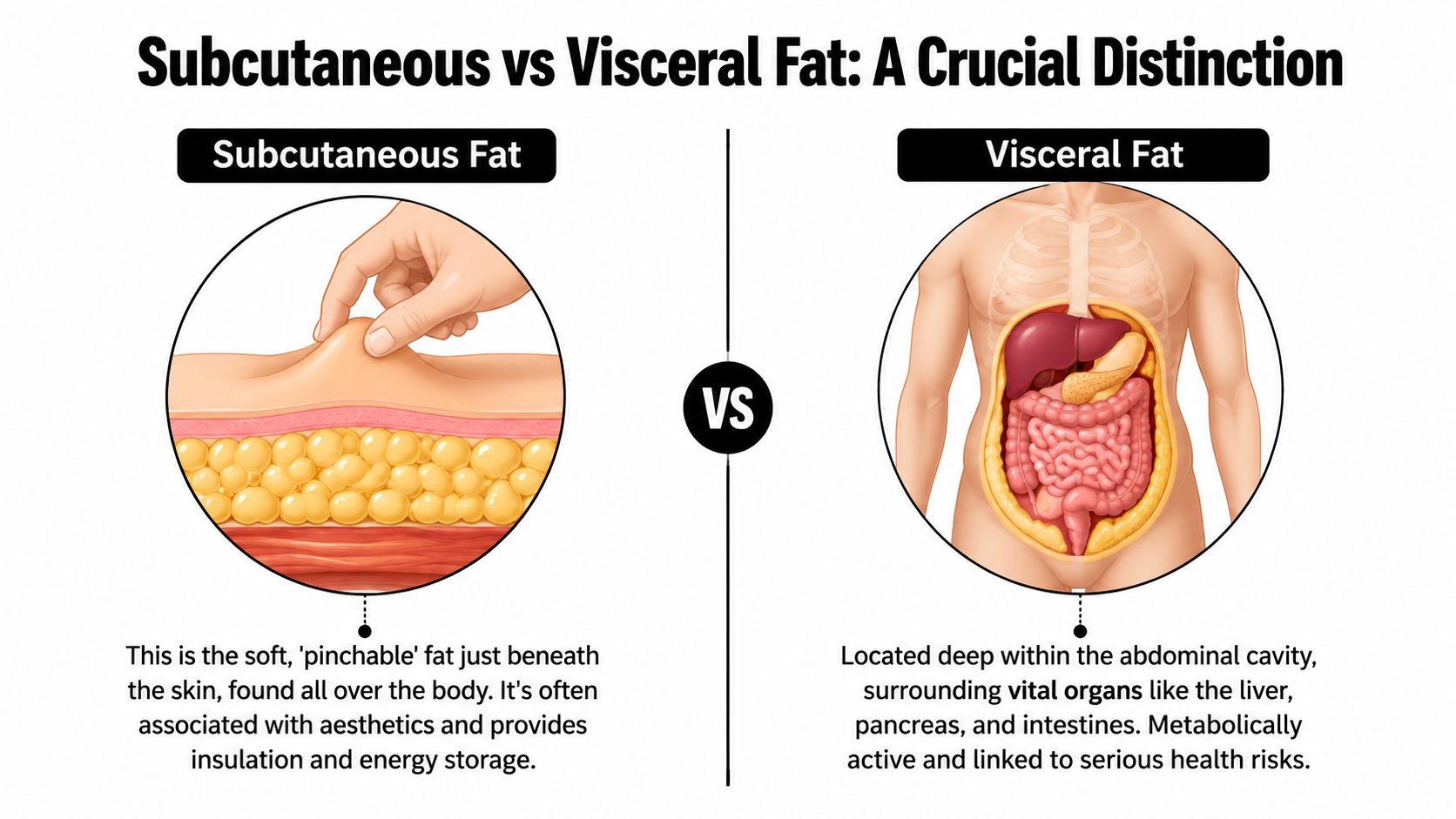
Subcutaneous fat sits directly beneath the skin. It's the layer a surgeon can feel on exam and the layer patients usually mean when they say they have “love handles,” “lower belly fat,” or fullness at the waist.
This fat tends to feel softer. You can often pinch it. It contributes heavily to the body's outer shape, which is why liposuction is designed to target it.
Visceral fat sits much deeper. It occupies space within the abdominal cavity and surrounds internal organs. You can't pinch it because it isn't in the superficial layer.
This fat often creates a different look. The abdomen may seem firm or barrel-like rather than soft. Patients sometimes say, “My stomach sticks out, but it doesn't feel like the kind of fat I can grab.” That description is clinically useful.
Visceral fat is the fat you can't see clearly from the outside, but you can often see its effect on the shape of the abdomen.
| Characteristic | Subcutaneous Fat | Visceral Fat |
|---|---|---|
| Location | Just beneath the skin | Deep inside the abdomen around organs |
| Texture | Softer, often pinchable | Firmer, not pinchable |
| Main concern | Contour and shape | Health risk and abdominal protrusion |
| Visibility | Often visible from the surface | Hidden, but may push the abdomen outward |
| Removal method | Liposuction can remove it | Standard liposuction cannot remove it |
The confusion comes from the fact that both types can enlarge the waistline. From the outside, they may appear to blend together.
But they don't behave the same way. One is an outer layer. The other is internal packing around the organs. If you don't separate those concepts, you can end up expecting liposuction to do something it was never built to do.
Liposuction is a contouring procedure, not an internal abdominal fat procedure.
The surgeon places a cannula into the subcutaneous plane, then removes fat from that superficial layer in a controlled way. It acts as a precision tool working in a specific compartment. It isn't meant to cross into the deeper compartment where the organs and major internal structures are located.
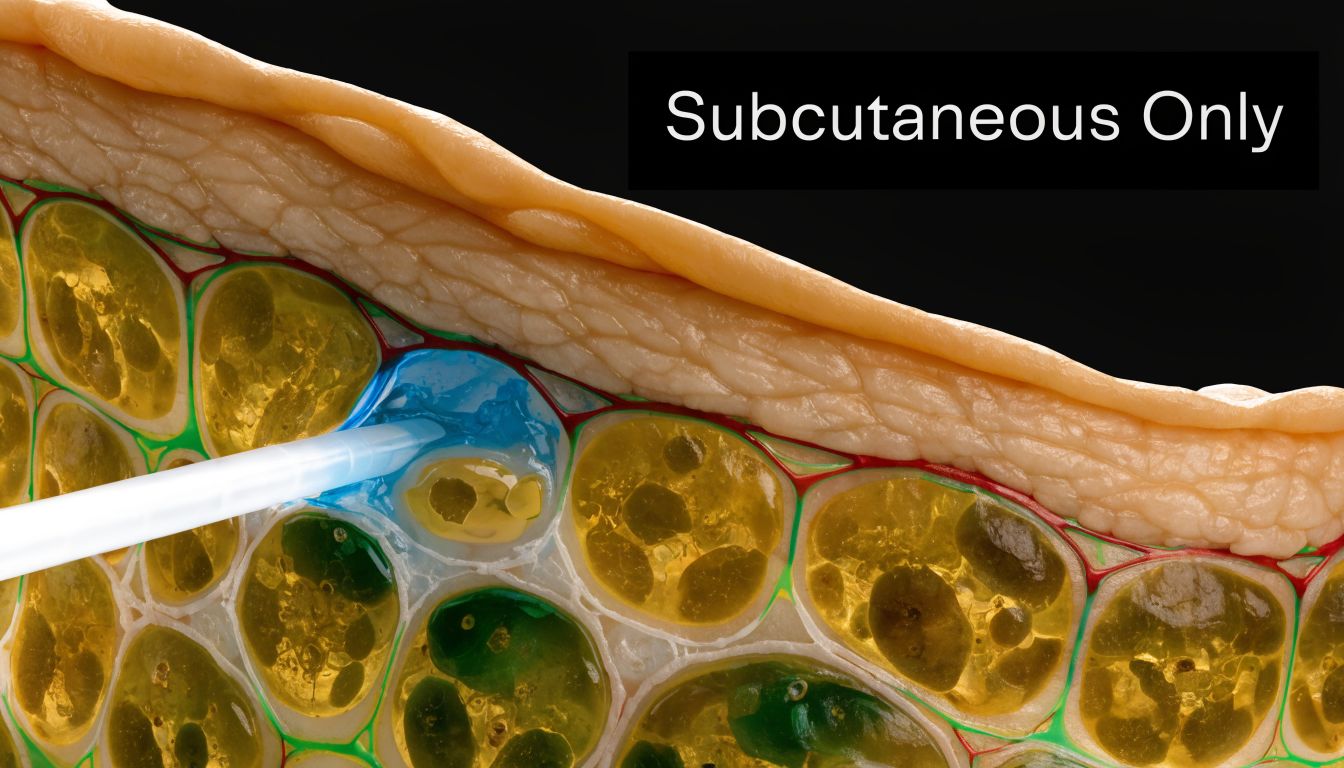
Between the skin and the abdominal contents, there are distinct layers. Liposuction works in the fatty layer above the muscle. Visceral fat sits below that protective muscular wall, deeper inside the abdomen.
That's why asking “does liposuction remove visceral fat” is a bit like asking whether a lawn service can remove a basement foundation by trimming the grass. The tool, the plane of access, and the safety boundaries are entirely different.
A liposuction cannula is designed to move through superficial fatty tissue. It is not designed to operate around bowel, blood vessels, or abdominal organs.
Trying to use standard liposuction to remove visceral fat would violate the basic safety logic of the procedure. The operation is successful precisely because it stays in the correct layer.
A foundational study in Plastic and Reconstructive Surgery showed that liposuction effectively removes a significant share of subcutaneous fat, about 10% to 12%, but does not remove visceral fat, and in some patients the visceral-to-subcutaneous fat ratio increased after treatment, as detailed in the 1998 study on body fat distribution after liposuction.
Liposuction is best understood as a sculpting tool. It reshapes areas where excess fat is stored in the superficial layer. In the right patient, it can refine the waist, abdomen, flanks, thighs, arms, and other regions with excellent precision.
If you're considering the procedure itself, liposuction body contouring options can help you understand where surgery fits into a broader aesthetic plan.
Visceral fat isn't just “deep belly fat.” It's the type of fat most closely tied to metabolic risk.
That matters because some patients assume that if abdominal fat is removed, their health risk must go down as well. That assumption isn't always correct.
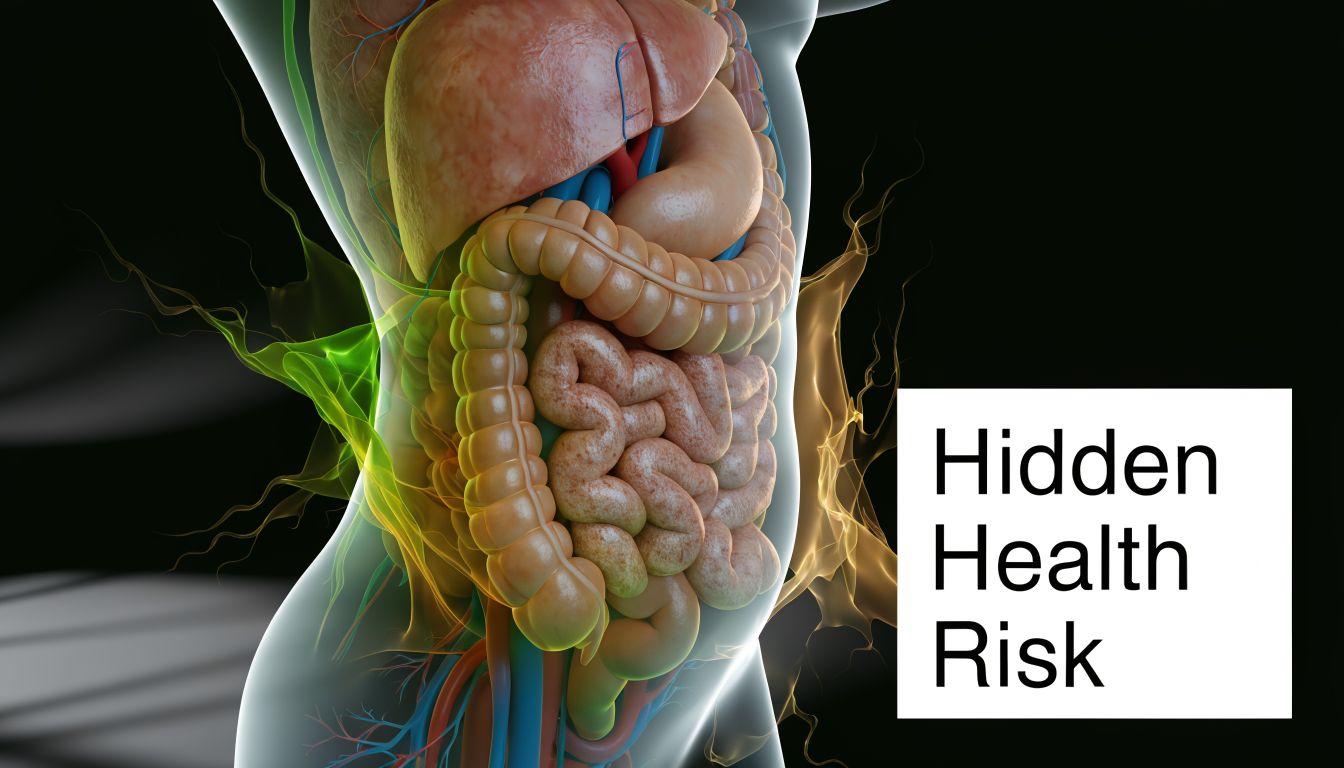
A randomized controlled trial found that after small-volume abdominal liposuction, women who did not exercise had a 10% increase in visceral fat area by 6 months, while the trained group prevented that gain and improved insulin sensitivity, as reported in the 2012 randomized trial on exercise and visceral fat after liposuction.
That finding changes the conversation. Post-operative exercise isn't just a nice lifestyle suggestion. For some patients, it's part of protecting against an unfavorable shift in body composition.
Surgery can improve the outer contour while deeper metabolic risk remains unchanged, or even worsens if recovery leads to inactivity.
Many patients are temporarily less active after surgery. That's understandable. Rest is part of healing. But prolonged inactivity is different from appropriate recovery.
The 2012 study is important because the women who gained visceral fat didn't do so because of obvious changes in diet. That means a patient can look smaller in the mirror, weigh less, and still move in the wrong direction internally if exercise never returns to the plan.
For readers who want a clearer framework for how metabolism works in daily life, this guide can help you understand your body's energy production in practical terms.
If your goal is only to fit into clothing better, liposuction may still be a good option when selected well. But if you're hoping the procedure will automatically improve metabolic health, that expectation needs refinement.
A healthier strategy looks like this:
A short clinical overview may help make the distinction clearer:
A careful exam often tells you more than patients expect.
When I evaluate abdominal fullness, I'm not just looking at how much fat is present. I'm looking at where it is, how it feels, and whether the contour problem is likely to respond to a surface-fat procedure.
The first clues come from inspection and palpation. A soft, graspable fat layer usually suggests a substantial subcutaneous component. A firm abdomen that projects outward, especially when there isn't much pinchable thickness, raises concern for deeper visceral volume.
Patients often find that distinction clarifying. It explains why two people with a similar dress size or pants size may be very different liposuction candidates.
Clinical consensus suggests that pre-operative evaluation can include a waist-to-hip ratio greater than 0.85 in women or an MRI-measured visceral area greater than 130 cm² when deeper fat burden is a concern. The same consensus notes that patients with visceral fat under 10% of abdominal volume see over 90% satisfaction rates, as described in this review of visceral fat and liposuction candidacy.
Those numbers don't replace clinical judgment, but they support something experienced surgeons already know. The more the problem is driven by visceral fat, the less likely liposuction alone is to create the flat result the patient imagines.
Clinical insight: If the belly is prominent but the pinch test is modest, expectations need a deeper conversation before any procedure is scheduled.
Not every patient needs advanced imaging. But in selected cases, MRI or similar body-composition assessment can help settle the question when the exam suggests a mismatch between what the patient sees and what liposuction can realistically change.
That's especially useful for patients who say, “I eat well, I'm close to my goal weight, but my abdomen still pushes out.” Sometimes that pattern reflects skin laxity or muscle changes. Sometimes it reflects visceral fat. The treatment plan depends on telling those apart.
If liposuction isn't the treatment for visceral fat, what is?
The answer is less glamorous than surgery, but more effective for the problem itself. Visceral fat responds to behavioral and medical strategies, not cannulas.

The most important shift in mindset is this. Exercise after liposuction shouldn't be framed as bonus advice for unusually disciplined patients. It's part of treating the deep fat surgery cannot reach.
That doesn't mean every patient needs an extreme routine. It means regular, structured activity has to be part of the plan.
Patients sometimes assume that because liposuction physically removes fat, nutrition becomes less important afterward. In reality, diet becomes more important because it helps determine what happens in the remaining fat compartments.
A sensible visceral-fat strategy usually emphasizes whole foods, adequate protein, high-fiber produce, and fewer highly processed calorie sources. If you want a plain-language companion resource, Blue Haven RX's guide to visceral fat offers a useful overview of practical habits that support reduction of deep abdominal fat.
People often go wrong by using a contouring procedure to solve a metabolic problem, then feeling disappointed when the deeper abdominal projection remains.
For some readers comparing options, body contouring methods such as CoolSculpting and laser liposuction can be helpful to review, but the same core principle applies. Noninvasive and surgical contouring methods primarily address external fat layers. They don't directly remove visceral fat.
A smarter plan usually includes:
For patients with substantial visceral fat and broader weight-related concerns, a medical evaluation may be appropriate. Sometimes the right next step is not cosmetic surgery at all. Good care means saying that clearly.
The best results come from treating abdominal fat as two separate issues.
Liposuction can sculpt the fat you can pinch. Lifestyle and medical management address the fat you can't pinch. Those approaches aren't competing with each other. They solve different parts of the same visual problem.
A strong body contouring plan usually includes realistic expectations before surgery and structured habits after surgery. That second part matters more than many patients realize.
Because visceral fat isn't visible or palpable, and because its post-liposuction accumulation may occur without changes in diet, monitoring with waist circumference or body-composition tracking is an important part of long-term follow-up, as noted in the earlier study on post-liposuction metabolic change.
That is one reason education matters so much. Patients shouldn't have to guess whether their result is only cosmetic, or whether their deeper health is moving in the right direction too.
If you're asking “does liposuction remove visceral fat,” the answer is no. But the more useful conclusion is this: you don't need one solution. You need the right combination of solutions.
If you're exploring how procedures fit into a wider strategy, how body contouring works in practice is worth understanding before you make a decision.
If you're considering body contouring and want a plan based on your actual anatomy, not assumptions, schedule a consultation with Cape Cod Plastic Surgery. A thoughtful evaluation can help you determine whether liposuction is the right tool, whether visceral fat is a major factor, and what combination of surgery, recovery, and lifestyle support will give you the safest and most satisfying result.
September 9, 2026
Expert Guide to Proper Surgical Incision Care

Master dermal fillers aftercare with do's and don'ts, swelling tips, activity limits and warning signs to protect your results and heal smoothly.

September 8, 2026
Ensuring Safety: Why Your Surgeon's Credentials Matter Most

Cape Cod Plastic Surgery offers expert cosmetic and reconstructive procedures in a safe, accredited setting. Led by Dr. Marc Fater, we combine advanced techniques with personalized care to help you look and feel your best.
Monday: 9:00 AM – 5:00 PM
Tuesday: 9:00 AM – 5:00 PM
Wednesday: 9:00 AM – 5:00 PM
Thursday: 9:00 AM – 5:00 PM
Friday: 9:00 AM – 5:00 PM