

September 9, 2026
How to Care for Surgical Incisions Properly
Expert Guide to Proper Surgical Incision Care
May 9, 2026
You've healed from your tummy tuck, your clothes fit better, and your waistline finally matches what you hoped to see. Then a very common question comes up: can you get a belly button piercing after tummy tuck surgery, or re-pierce one you used to have?
The short answer is yes, sometimes. The better answer is that a post-surgical navel is not native tissue anymore, and that changes everything about timing, safety, placement, and healing. A piercing that might have been straightforward before surgery becomes a decision that should be made with the same caution you'd bring to any procedure involving scarred tissue and altered blood supply.
From a surgeon's perspective, the issue isn't whether jewelry looks attractive. The issue is whether your navel can support a piercing without compromising the result you waited so long to achieve. That means understanding what was changed, respecting the healing timeline, and accepting that some navels are excellent candidates while others are not.
Many patients reach this point after they've done the hard part well. They've been through surgery, worn compression, followed restrictions, and watched their abdomen gradually settle. By the time the swelling improves and the scar begins to soften, the navel becomes the focus again.
For some, the question is emotional as much as cosmetic. They had a piercing before surgery and miss that familiar detail. Others never had one, but now that the abdomen looks flatter and more contoured, they want the finishing touch.
That instinct is understandable. It's also where people can get into trouble.
A navel that has been surgically reshaped doesn't heal like an untouched one. The tissue has been lifted, rearranged, and inset. Nerve sensation may be reduced. Blood flow may be slower to normalize. The scar around the umbilicus may look fine on the surface long before it behaves like healthy, stable tissue underneath.
Practical rule: If your belly button looks healed, that doesn't automatically mean it is ready to be pierced.
Patients are often surprised by that distinction. Surgical healing and piercing readiness are not the same milestone. You can be thrilled with your tummy tuck result and still be months away from being a good piercing candidate.
A safer approach starts with three questions:
Those trade-offs matter more than enthusiasm. The best-looking long-term results come from patience, anatomy-based planning, and a willingness to hear “not yet” or sometimes “not advisable.”
A full abdominoplasty changes the navel in a way most patients don't fully appreciate until they see the details. The belly button is not left alone while the skin is tightened around it. It is surgically managed as part of the operation.
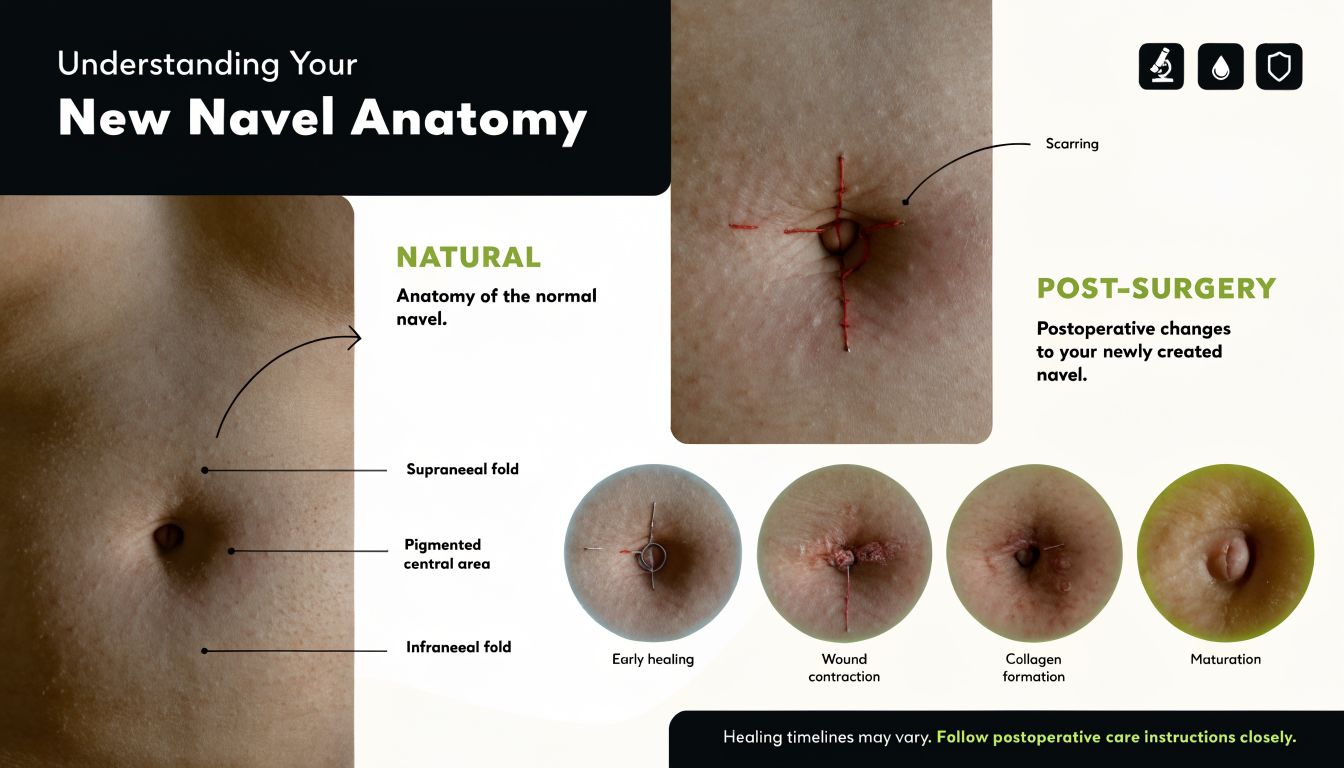
In a full tummy tuck, the umbilicus is surgically reconstructed by detaching it from its stalk and re-insetting it, which alters local vascularity and innervation. Because blood flow needs time to restore, plastic surgeons recommend waiting 12 to 18 months before navel piercing, and microcirculatory deficits can persist up to 18 months, as explained in this discussion of how surgery affects body piercings.
Patients often understand this best with a simple analogy. Replanting a tree serves as a helpful comparison. Even if the tree looks upright right away, the root system still needs time to re-establish itself. A surgically altered navel may look healed on the outside while its circulation and sensation are still catching up beneath the surface.
If you'd like a visual review of how abdominoplasty reshapes the abdominal wall and the belly button, this overview of what a tummy tuck procedure involves is helpful background.
Not every tummy tuck affects piercing decisions in the same way.
A full tummy tuck usually creates the biggest change because the navel is repositioned through a new opening. That means the surrounding tissue has been surgically manipulated and often carries the greatest concern for piercing.
A mini tummy tuck generally preserves the navel's original position. That can make piercing decisions simpler, but not automatically simple. The abdomen has still been operated on, and scar quality still matters.
An umbilical float lowers the navel without the same external re-inset pattern seen in a standard full tummy tuck. Even then, anatomy can change enough that an old piercing site may no longer sit where it once did, and distortion can become part of the cosmetic trade-off.
Here's the clearest comparison.
| Factor | Before Tummy Tuck (Native Tissue) | After Tummy Tuck (Surgical Scar Tissue) |
|---|---|---|
| Blood supply | Natural perfusion supports routine healing | Blood flow may be reduced during scar maturation |
| Sensation | More predictable nerve response | Numbness or altered sensation may persist |
| Tissue flexibility | Softer, more elastic tissue | Firmer tissue with less forgiving mechanics |
| Piercing placement | Standard landmarks often apply | Placement may need to avoid scar lines and distorted contours |
| Healing behavior | Typical navel healing pattern | Slower healing and higher risk if tissue is immature |
| Aesthetic risk | Cosmetic changes are usually localized | A poor piercing can affect the surgical result and scar visibility |
A post-abdominoplasty belly button is not just a “healed belly button.” It is reconstructed anatomy.
That's the reason a surgeon and an experienced piercer should approach it differently.
If you want the safest answer to “when can I get a belly button piercing after tummy tuck,” the practical threshold is simple. Wait at least 12 months. In many cases, more time is better.
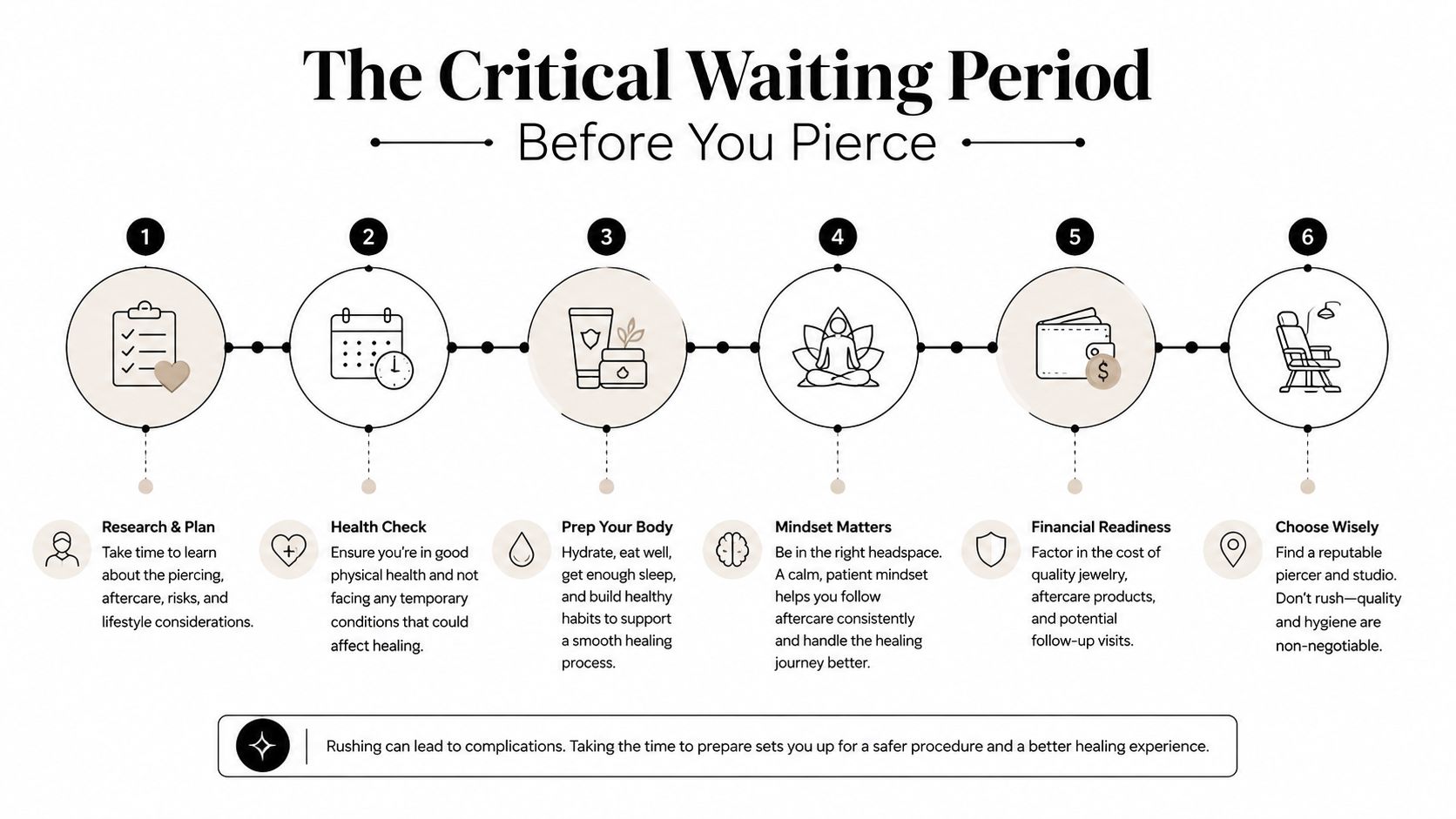
Medical experts recommend a minimum wait of 12 months because abdominal numbness and reduced blood supply can persist long after the incision looks healed. Numbness may last 12 to 18 months, and a regular navel piercing that usually heals in 8 to 10 months can take 10 to 14 months after a tummy tuck, according to this guide on belly button piercing after tummy tuck healing timelines.
This timeline isn't arbitrary. It reflects three things the body needs to do well before you ask it to heal a piercing:
Restore circulation
Piercings need healthy blood flow. Without it, the tissue doesn't defend itself or repair itself well.
Mature the scar
Early scar tissue is reactive and mechanically weak. It may tolerate daily life but still fail when jewelry adds pressure and motion.
Recover sensation
Numb tissue is risky. If the area can't signal irritation properly, patients may miss early warning signs.
Patients often try to use visual appearance as the deciding factor. If the scar is pale, if the swelling is mostly gone, or if they feel “back to normal,” they assume the navel is ready. That approach is unreliable.
What also doesn't work is setting the piercing date first and hoping the body catches up.
Waiting is not lost time. Waiting is what gives the piercing a chance to succeed.
If you are approaching the one-year mark, ask more specific questions than “Does it look healed?” Ask whether the tissue feels soft instead of stiff, whether sensation has returned, whether the navel shape is stable, and whether your surgeon thinks the blood supply is healthy enough for a second wound.
That is the standard. Not convenience, not impatience, and not surface appearance.
The main risks after a tummy tuck are not abstract. They are the predictable consequences of putting jewelry through scarred, surgically altered tissue.

Scar tissue is often firmer to the touch but less forgiving under stress. That combination can be misleading. It may feel strong, yet it can still handle tension poorly.
In post-tummy tuck tissue, piercing too early carries meaningful risk. Rejection rates have been reported as high as 25% at 6 months, dropping to under 2% at 18 months as blood flow and immune response normalize. Healing may extend from 6 to 9 months in native tissue to over 12 months, with a 10 to 15% complication rate, based on this review of piercing through tummy tuck scar tissue.
Migration is the milder version of rejection. The jewelry slowly shifts, the skin bridge thins, and the hole widens. Rejection is the end point. The body pushes the jewelry out.
A surgically altered navel already contains scar. Add a piercing, and you create another healing demand in the same area.
That can mean prolonged redness, a raised rim around the piercing tract, or thickened scar response. If you know you tend to form raised scars, it's worth reviewing a practical resource like this Bournemouth piercing guide to keloid risks so you understand what warning signs to watch for and how irritation can feed scar overgrowth.
For broader scar management principles after any procedure, this article on how to minimize scarring after surgery is useful context.
This is the risk patients tend to underestimate. Even when there is no infection and no dramatic rejection, a poorly chosen piercing can still spoil the look of the navel.
Common cosmetic problems include:
The question isn't only “Can this heal?” It's also “Will this still look good after it heals?”
That's why surgeon clearance matters. A piercing can be technically possible and still be a poor aesthetic decision.
If you've waited appropriately and still want to move forward, treat the process as a coordinated plan, not an impulse appointment.
Before you speak to a piercer, have your navel examined by the surgeon who knows your operative details. A surgically created navel can have hidden limitations that aren't obvious from a mirror.
Surgeons also know when the best answer is no. Belly button piercing after a tummy tuck can inflame scars and make them more visible, and some navels, especially those sculpted to be a deep “innie,” are often better left unpierced so the result isn't disrupted, as discussed in this article on what happens to the belly button after a tummy tuck.
Not every skilled piercer is skilled with reconstructed anatomy. Ask directly whether they have experience piercing post-abdominoplasty navels. If the answer is vague, keep looking.
A good piercer should be willing to inspect the tissue in person before agreeing to proceed. They should assess the depth of the navel, identify scar lines, and explain where jewelry would sit when you stand, bend, and wear clothing.
A practical consumer reference for studio standards and what to look for in navel work is this overview of Fountainhead New York navel piercing standards.
Use the consult to gather real information, not reassurance.
Ask about placement strategy
The piercer should explain how they'll avoid scar-heavy areas and why your anatomy does or doesn't support a traditional placement.
Ask what jewelry they use first
Implant-grade titanium is often the most conservative starting point for sensitive or surgically altered tissue.
Ask what would make them decline
A responsible piercer has disqualifying criteria. That's a good sign, not a barrier.
Ask how they handle follow-up
Post-surgical tissue needs closer observation, especially if the piercing starts to migrate.
Sometimes the right outcome is a modified plan. That may mean a different angle, simpler jewelry, or deciding that preserving the navel's surgical shape is worth more than adding jewelry.
That's not a disappointing result. It's a mature one.
Aftercare for a post-surgical navel should be gentler and more disciplined than standard piercing aftercare. The tissue has less margin for error.
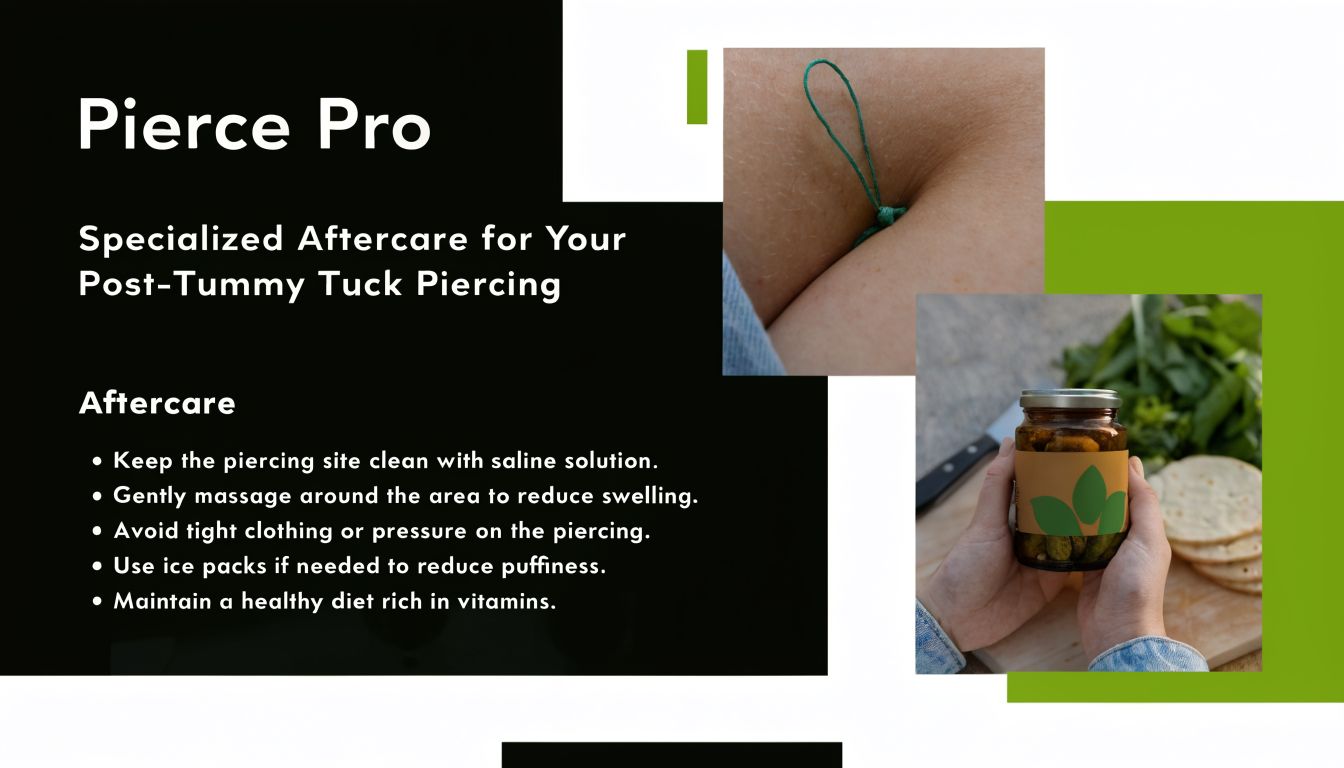
Use sterile saline and clean hands. That's the foundation.
Avoid twisting the jewelry, rotating it “to keep it from sticking,” or using harsh products. Scarred tissue gets irritated faster, and once irritation starts, migration becomes much more likely.
For patients who want to understand jewelry metal options in more detail, this summary of the benefits of 316L stainless steel jewelry is useful background, though many clinicians and experienced piercers still prefer implant-grade titanium for a fresh piercing in sensitive tissue.
Many otherwise careful patients slip up at this stage. The navel sits exactly where waistbands, shapewear, belts, and fitted exercise clothing tend to rub.
High pressure and repeated friction can:
If you're healing a belly button piercing after tummy tuck surgery, low-pressure clothing helps. Loose waistbands help. Leaving it alone helps even more.
For related incision-care habits that reduce unnecessary irritation, this article on how to care for surgical incisions complements the same principle well.
A healing piercing does best in a quiet environment. Movement, pressure, and constant checking all work against you.
Some mild redness can happen. What matters is the direction.
Call your piercer or surgeon if you notice:
Do not ignore subtle changes because the area isn't painful. Post-surgical tissue can give muted signals.
Healing may take longer than patients expect. That isn't failure. It's the biology of scarred tissue.
Sometimes, but not because it used to be there. Your old tract doesn't control the decision anymore. The current anatomy does. If the prior site now crosses scarred or distorted tissue, reusing that location may be the wrong choice.
Listen to that advice. A surgeon may see poor blood supply, a deep inset navel, scar tension, or contour features that jewelry would spoil. Wanting the piercing doesn't change those facts.
For a fresh piercing in a surgically altered navel, the most conservative choice is typically implant-grade titanium. The exact style matters too. Simpler jewelry with the right fit usually heals better than decorative pieces.
If you remember only a few points, remember these:
Patients do best when they treat this as a medical-cosmetic decision, not just an accessory choice. The goal isn't to get pierced alone. The goal is to avoid trading a strong surgical result for a preventable complication.
If you're considering a tummy tuck, healing from one, or wondering whether your navel anatomy is suitable for piercing, Cape Cod Plastic Surgery can help you make a safe, informed decision with guidance specific to your surgical history and long-term aesthetic goals.
September 9, 2026
Expert Guide to Proper Surgical Incision Care
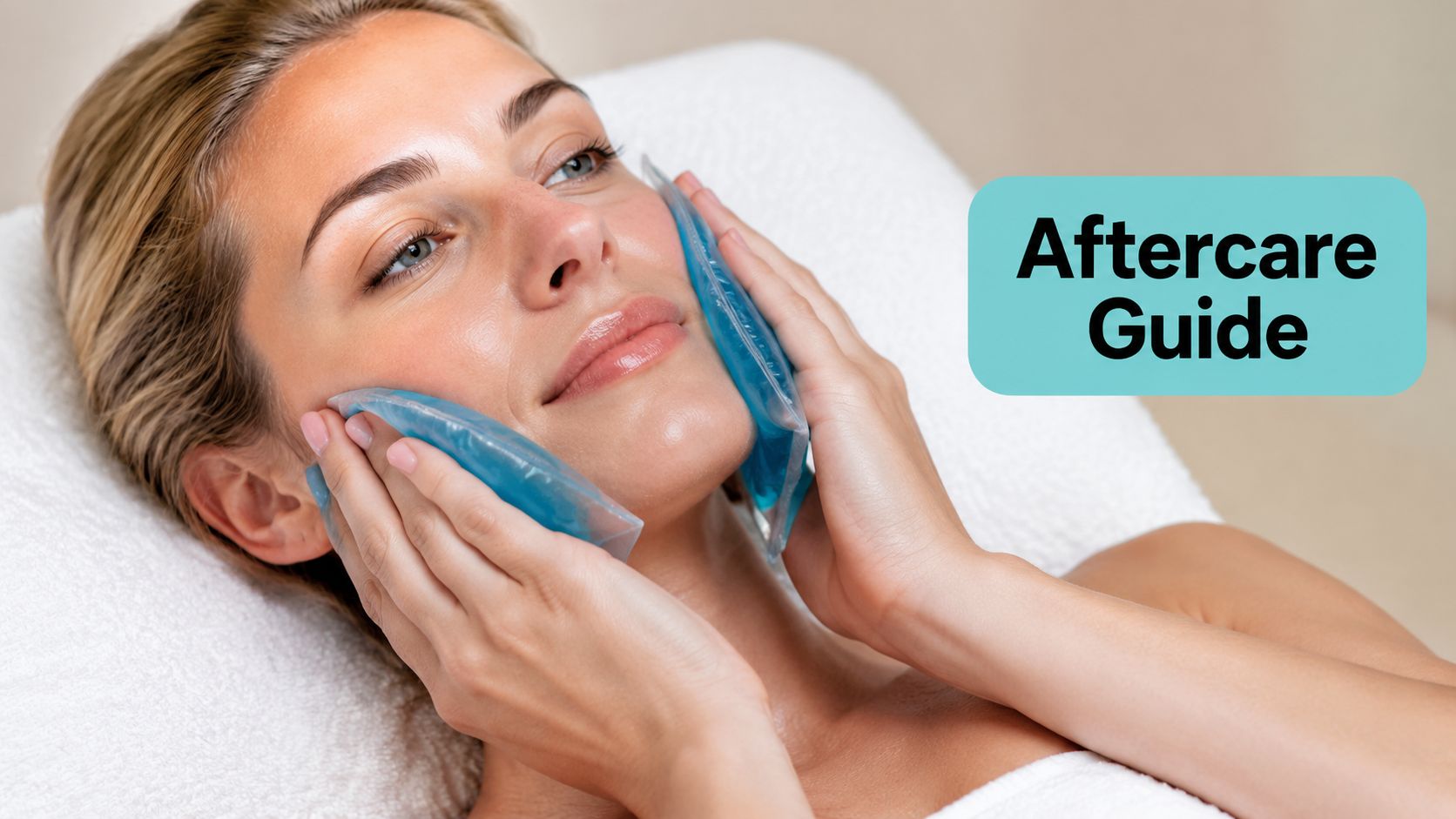
Master dermal fillers aftercare with do's and don'ts, swelling tips, activity limits and warning signs to protect your results and heal smoothly.

September 8, 2026
Ensuring Safety: Why Your Surgeon's Credentials Matter Most

Cape Cod Plastic Surgery offers expert cosmetic and reconstructive procedures in a safe, accredited setting. Led by Dr. Marc Fater, we combine advanced techniques with personalized care to help you look and feel your best.
Monday: 9:00 AM – 5:00 PM
Tuesday: 9:00 AM – 5:00 PM
Wednesday: 9:00 AM – 5:00 PM
Thursday: 9:00 AM – 5:00 PM
Friday: 9:00 AM – 5:00 PM