

September 9, 2026
How to Care for Surgical Incisions Properly
Expert Guide to Proper Surgical Incision Care
Mar 27, 2026
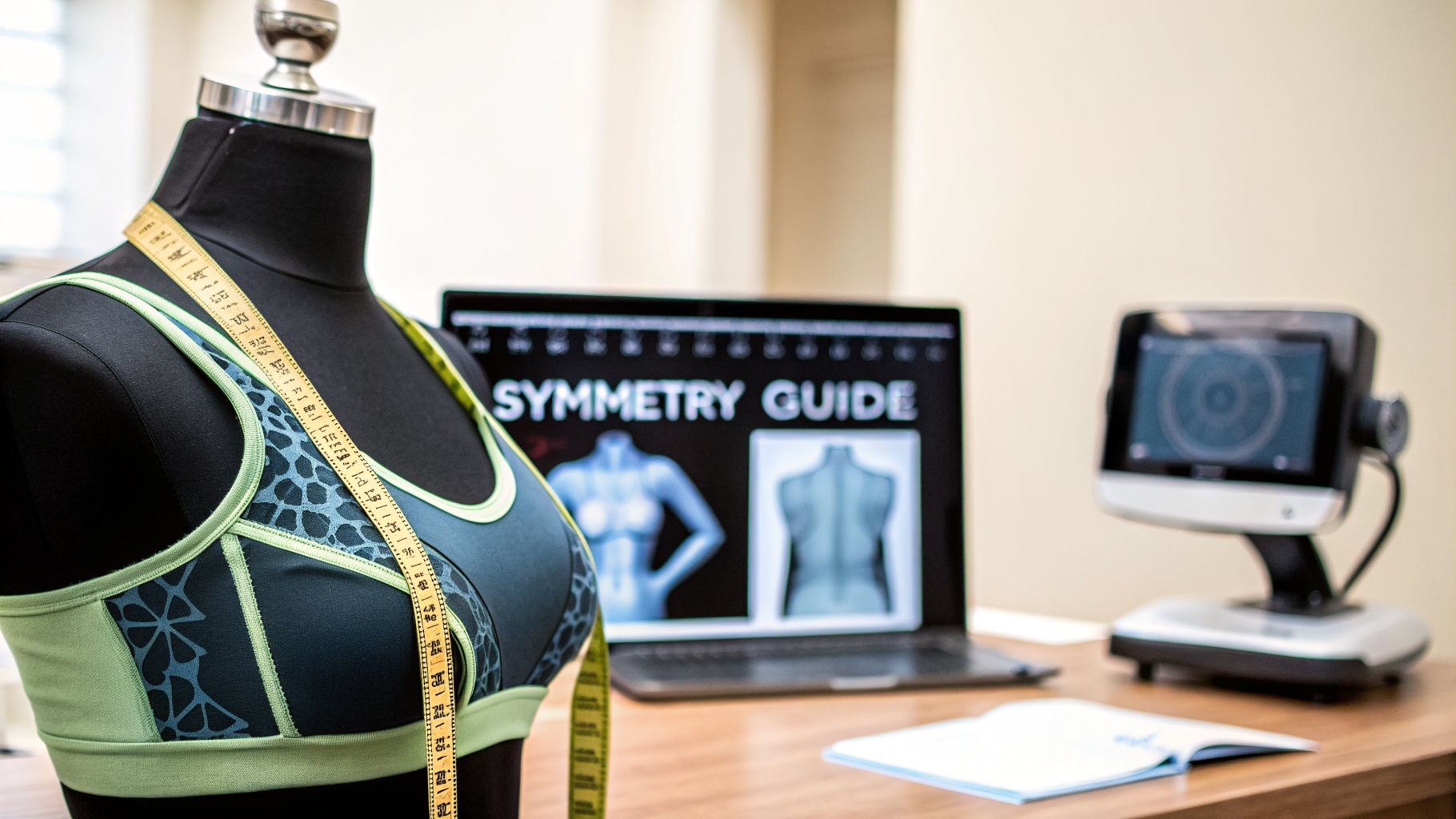
If you’re looking into options for how to fix uneven breasts, you'll find that surgical solutions are often the most effective. These can range from using different-sized implants to achieve harmony, performing a breast lift on just one side, or even reducing the larger breast to create a better match. For more subtle differences, non-surgical approaches like strategic padding or specialized fat grafting can also make a world of difference.
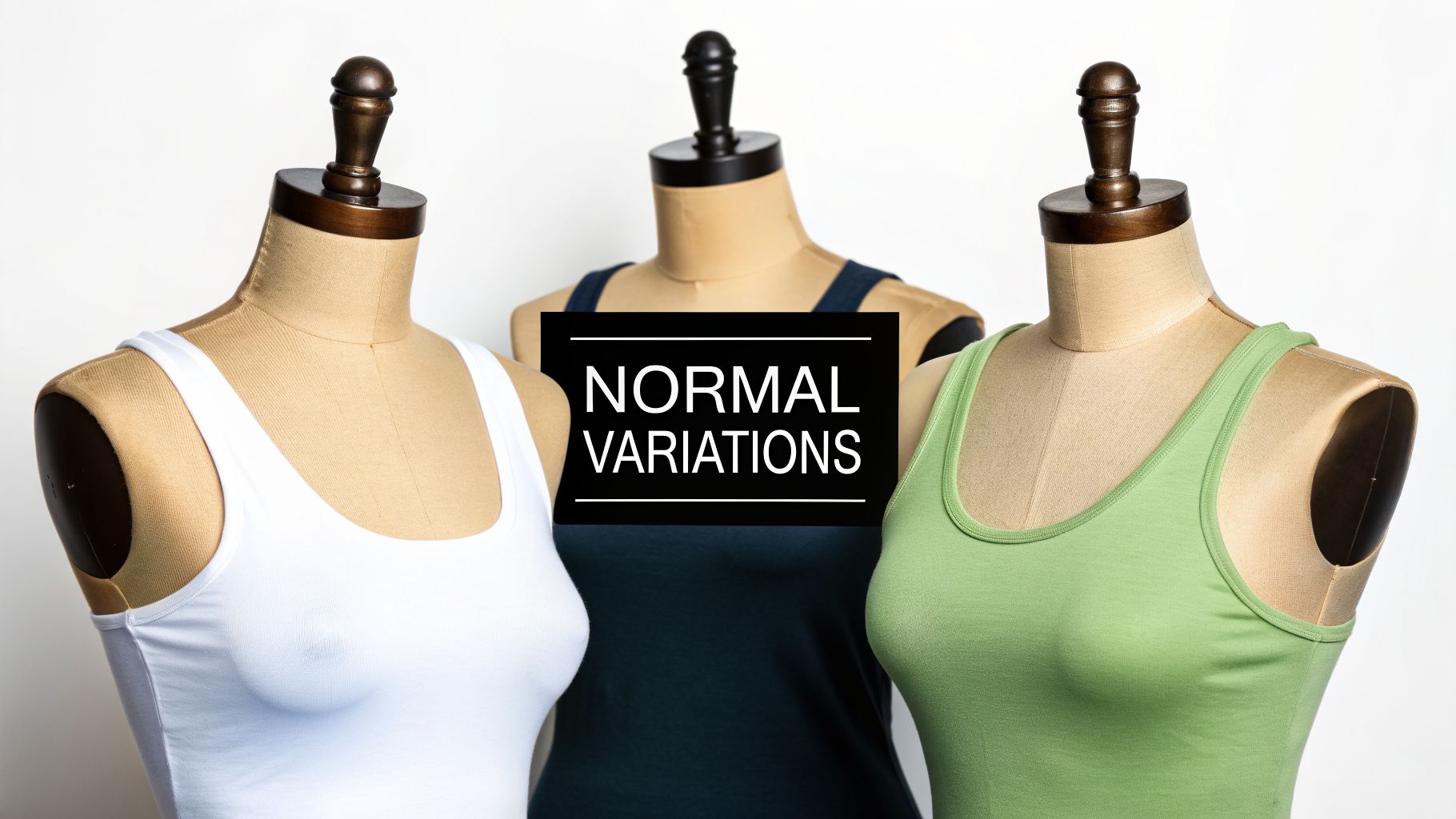
Let's start with a simple truth that surprises many of my patients: perfectly symmetrical breasts are incredibly rare. The idea that breasts should be identical twins is a myth. In fact, some degree of asymmetry is a completely normal part of the human body.
Realizing this is often the first step toward feeling better. It helps shift the perspective from seeing unevenness as a "flaw" to understanding it as a natural variation. From that point, you're in a much better position to decide what, if anything, you want to do about it based on your own aesthetic goals.
Asymmetry isn't just one thing; it shows up in a lot of different ways. Where you fall on this spectrum often determines how you feel about it and which solutions might work best for you.
Most of the time, these differences are just a matter of genetics. During puberty, each breast develops on its own timeline, and it’s very common for them not to end up perfectly matched.
Beyond the way you developed, major life events can also introduce or accentuate breast asymmetry. Hormonal shifts are a huge factor. Any time your hormones fluctuate significantly, your breast tissue is likely to be affected.
Breast asymmetry affects over 50% of women worldwide, making it one of the most common concerns leading many to seek surgical correction for improved confidence and balance. A study by J. Brian Boyd, M.D., estimates that more than half of all women experience some degree of breast asymmetry. While many cases are mild, the emotional distress it can cause is a valid reason to explore solutions. You can explore the findings of this research about breast asymmetry prevalence on pubmed.ncbi.nlm.nih.gov.
Pregnancy and breastfeeding are classic examples. It’s very common for a baby to prefer feeding on one side, which can cause that breast to produce more milk, stretching the skin and tissue differently than the other. Likewise, major weight loss or gain can cause your breasts to change size at different rates, either creating a new asymmetry or making an existing one more obvious.
At the end of the day, while having uneven breasts is biologically normal, how you feel about them is what truly matters. It is completely valid to want a more balanced silhouette. Deciding to explore your options is a personal choice, one aimed squarely at helping you feel more comfortable and confident in your own skin.

Before we can explore how to correct uneven breasts, we first need to understand your unique starting point. This process begins with a simple, private self-assessment to get a feel for the specific nature of your asymmetry.
Take some time in front of a mirror. What do you see? Is it a noticeable difference in volume, where one breast is clearly a different size? Or is it more about the shape—maybe one is round and full while the other seems more tapered? Sometimes, the size is almost identical, but one breast hangs lower than the other, or the nipples don't align. More often than not, it's a combination of these things.
Getting specific about what you see helps you communicate your goals when you’re ready to talk to a professional. Think of it as gathering your notes. Here are the most common things patients notice:
This personal inventory isn’t about self-diagnosis. It’s about arming yourself with information so you can have a truly productive conversation with a surgeon. Knowing exactly what bothers you is the key to finding the solution that will make you happiest.
As helpful as a self-check is, it simply can’t take the place of a professional evaluation. Scheduling a consultation with a board-certified plastic surgeon is the single most important move you can make. This is where your personal observations and aesthetic goals meet years of medical experience.
If you’re feeling self-conscious, know that you are far from alone. In fact, research highlighted by the American Society of Plastic Surgeons showed that over 81% of women have some degree of measurable breast asymmetry. It's an incredibly common reason for women to explore their options.
A great consultation should feel like a collaborative dialogue, not a lecture. It’s your time to share what you’ve observed and what you hope to achieve. A skilled surgeon will listen intently, then perform a thorough physical exam, taking precise measurements to quantify the differences in volume, position, and shape.
This meeting is where the magic really happens. It's where a surgeon combines your aesthetic vision with their technical skill to create a plan that feels right for you. The goal isn’t just symmetry—it’s about achieving a natural-looking harmony that restores your confidence.
In a modern plastic surgery practice, your consultation will be a detailed and interactive experience. We often use advanced 3D imaging technology, like the VECTRA® system, which is a fantastic tool for visualizing what’s possible.
This technology creates a 3D model of your own torso, allowing us to simulate different surgical approaches right in front of you. Want to see how different implant sizes would look? Or how a lift on just one side might change your profile? We can show you. It takes so much of the guesswork out of the process and helps set clear, realistic expectations.
Ultimately, we’ll design a surgical plan that is custom-built for your anatomy and your goals. Your surgeon will walk you through the pros and cons of every relevant option, whether that means using two different-sized implants, performing a breast lift on one side, or combining several techniques. Finding the right surgeon is absolutely central to this process, and for more on that, check out our guide on how to choose a plastic surgeon. You should leave your consultation feeling heard, informed, and truly confident about whatever you decide to do next.
Surgery is a significant step, and frankly, it’s not always necessary. If your breast asymmetry is on the milder side, or if you’re just not ready to think about a surgical procedure, there are some fantastic options that can create a more balanced look without the commitment.
The most straightforward fix is often found right in your lingerie drawer. A high-quality bra with removable pads or inserts gives you an instant, easy way to add a bit of volume exactly where it's needed. Even a well-fitted push-up bra can work wonders, creating enough lift and shape to make subtle size differences unnoticeable under clothes. These are no-commitment solutions that can make a world of difference in your daily confidence.
But what if you’re looking for something more permanent than bra inserts? This is where fat grafting, a procedure I’ve seen deliver consistently beautiful and natural results, comes into play. Also called lipofilling, it’s an elegant technique for correcting mild to moderate volume differences using your body’s own tissue instead of implants.
Here’s how it works in practice. First, we use gentle liposuction to borrow a small amount of fat from another part of your body—often the abdomen, flanks, or thighs. Many patients see this as a "two-for-one" benefit, as we’re slimming down one area while enhancing another.
That harvested fat is then purified right in the operating room to isolate the healthiest, most viable fat cells. Finally, I strategically inject these purified cells in tiny droplets into the smaller breast, meticulously sculpting and adding volume to create a natural, symmetrical contour.
For those curious about the range of non-surgical options available, you can explore more about non-surgical cosmetic procedures on our blog.
The real beauty of fat grafting is that it uses your own living tissue. This means there is no risk of implant-related complications, and the results feel and look completely natural because they are a part of you.
Fat grafting is a game-changer for the right person, but it’s not a universal solution. It’s typically a great fit for patients who:
It's important to go in with realistic expectations. A certain percentage of the transferred fat will be naturally reabsorbed by your body in the first few months. An experienced surgeon anticipates this by slightly overfilling the breast initially to ensure the long-term result is just right.
You might wonder about other injectables, like dermal fillers, which are popular for facial contouring. However, these are not a standard or recommended solution for breast asymmetry due to the large volumes required and safety considerations. For natural, minimally invasive breast enhancement, fat grafting is truly the gold standard. Recovery is also much quicker than with a traditional surgery—most people are back to their normal routines within a week or two.
When you’ve tried non-surgical options but still aren't happy with the balance of your breasts, surgery offers the most definitive and lasting solution. As a surgeon, my approach to correcting asymmetry isn’t about following a rigid formula. It’s about artistry and problem-solving. I see it as a partnership where we develop a surgical plan that’s tailored specifically to your body and what you hope to achieve.
The reality is that no two cases of asymmetry are the same. A difference in volume requires a completely different surgical strategy than a difference in breast position or shape. Let's walk through the primary surgical techniques I use, looking at real-world scenarios to help you understand how a surgeon thinks about creating beautiful, natural-looking symmetry.
This is often the most straightforward solution when one breast is noticeably smaller than the other. By using two different-sized implants, we can effectively equalize the volume and create a much more balanced appearance. It’s a common and highly effective technique.
For instance, I often see patients who have a natural B-cup on one side and an A-cup on the other. If her goal is to be a C-cup, we might place a small implant on the B-cup side and a slightly larger one on the A-cup side. The key is that the implants themselves are intentionally different to make the final result even.
This approach works best for patients who:
Sometimes, the answer isn't to make the smaller breast bigger, but to make the larger breast smaller. A unilateral, or one-sided, breast reduction can work wonders, especially if the larger breast is causing physical issues like shoulder pain or making it hard to find clothes that fit properly.
Think about a woman with one C-cup and one DD-cup. That larger breast isn't just an aesthetic concern; it can be heavy, causing bra straps to dig in and making her feel self-conscious. By performing a reduction on the DD side, we can bring it down to a C-cup to match its counterpart. This not only creates symmetry but also provides significant physical relief.
A surgeon’s job is not to chase perfect mathematical symmetry, which can look unnatural. Instead, the focus is on creating a beautiful, harmonious relationship between the breasts so they appear as balanced, well-matched sisters, not identical twins.
But what if the issue isn't size, but position? It’s very common for one breast to hang lower than the other, a condition we call ptosis. In these cases, the go-to procedure is a breast lift, or mastopexy.
A breast lift doesn't add volume. Instead, it’s all about repositioning. I remove excess skin, tighten the surrounding tissue, and lift the breast and nipple to a higher, more youthful position on the chest wall. We can perform a lift on just one side to bring it up to match the other, or on both sides to different degrees to achieve that final harmony.
This flowchart gives you a good visual summary of how we map a specific concern to the right surgical solution.
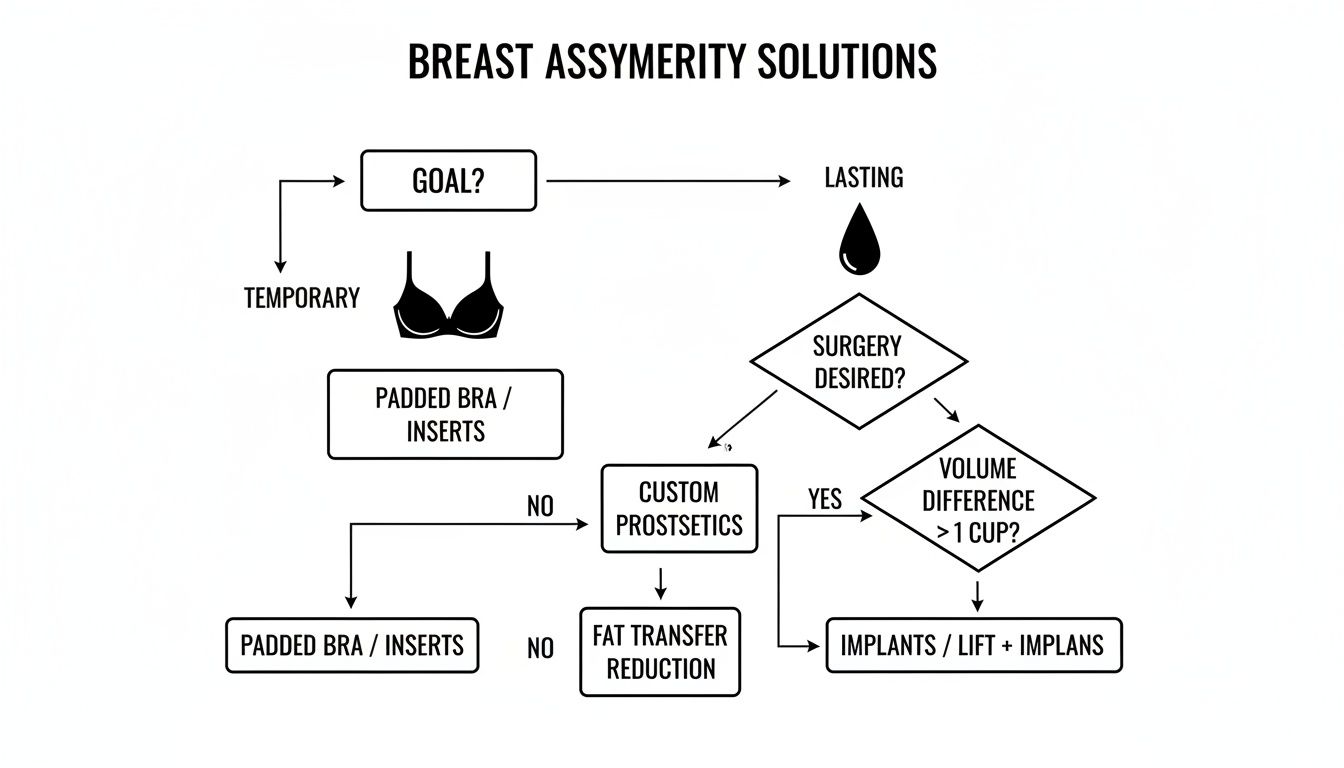
As you can see, the path to a lasting fix involves pinpointing the primary problem—be it volume, position, or a combination—and applying the right surgical tool for the job.
In my experience, the most transformative results often come from combining procedures. Breast asymmetry is rarely a single, isolated issue. It's usually a mix of differences in size, shape, and sagging. This is where a surgeon’s creative and technical skills really come into play.
To give you a clearer picture, here are a few common combination plans I’ve designed for patients:
The following table breaks down these primary surgical options to help you quickly compare their goals and applications.
| Surgical Procedure | Best For Correcting | Primary Goal | Common Combination |
|---|---|---|---|
| Breast Augmentation | Differences in volume (one breast is smaller) | Increase size and create volume equality | Often paired with a lift on one or both sides |
| Breast Reduction | Differences in volume (one breast is larger) | Decrease size for symmetry and relieve discomfort | Paired with a lift on the other breast |
| Breast Lift (Mastopexy) | Differences in position (ptosis or sagging) | Raise and reshape breast tissue and nipple | Paired with implants or a reduction |
| Fat Grafting | Minor to moderate volume and shape differences | Add subtle volume and refine contours | Used to fine-tune results from other procedures |
Each of these procedures can be a powerful tool on its own, but they become even more effective when thoughtfully combined.
Every surgical plan is a unique blueprint, carefully drawn up after a thorough physical evaluation and, most importantly, a detailed conversation about what you want to see when you look in the mirror. While we're on the topic, some patients also have concerns about other breast characteristics, such as an inverted nipple, which is another common physical trait that can be addressed.
Deciding on surgery is a big step, but it offers the most powerful and permanent way to fix uneven breasts. With a skilled surgeon and a carefully considered plan, you can achieve the balanced, proportionate shape that helps you feel confident and comfortable in your own skin.
The surgery is just the first step—your recovery is where the real work of healing happens and your beautiful new shape begins to settle in. Knowing what’s coming up makes the whole process less stressful and helps you focus on what matters most: resting and healing properly.
Everyone’s experience is a little different depending on the exact procedures performed, but there's a general roadmap we can follow. The first 48 hours are all about taking it easy. You're going to feel sore and tired, and that’s completely normal. We’ll make sure you have the right pain medication to keep you comfortable.
Over the first one to two weeks, you’ll start to feel more like yourself, but it's so important not to push it. You can expect some swelling and bruising; this is just your body’s natural response, and it will start to fade. This is when your post-surgical compression bra becomes your best friend.
This isn’t just any sports bra. It's a specialized garment that’s critical for a few reasons:
Following your surgeon's instructions on wearing this garment is honestly one of the best things you can do for your final outcome. At this point, you can usually get back to light daily tasks and desk work, but any heavy lifting or big arm movements are off the table.
The most important piece of advice I can give is this: recovery isn’t a race. Pushing yourself too hard, too soon is the quickest way to cause a setback or compromise your results. Listen to your body and follow our guidance.
As you get past those first couple of weeks, we'll start clearing you to add more activities back into your routine. Most women can ease back into light exercise around the four-week mark. However, high-impact workouts—think running, jumping, or heavy chest exercises at the gym—will have to wait until you get the final all-clear, which is typically around 6 to 8 weeks after surgery.
It's really in these following months that you’ll see the final shape emerge. Swelling can linger for a while, so patience is key as your breasts settle and soften. This is also the time to get serious about scar care.
A skilled surgeon always places incisions as discreetly as possible, but what you do afterward makes a huge difference in how well they fade. We'll give you a full plan, which often includes using silicone sheets or gels once the incisions have completely closed. These products are fantastic for hydrating the scar, helping it become softer, flatter, and much less noticeable over time. For a more detailed look at what to expect week by week, our breast augmentation recovery timeline is a great resource.
Achieving a balanced, beautiful shape is a big deal, and you'll want to protect that investment in yourself. One of the most important things you can do is maintain a stable weight. Big swings on the scale can change the size and shape of your breasts, and that could bring back some asymmetry.
Major life events, especially future pregnancies, can also alter your results. If you’re thinking about having more children, that's definitely a conversation we should have during your consultation. And of course, the natural aging process will continue to have an effect on your skin and tissue over the years.
By following all of our post-op instructions, coming to your follow-up appointments, and living a healthy lifestyle, you're doing everything right. It’s that diligence that paves the way for a smooth recovery and ensures you can enjoy your symmetrical, natural-looking results for years to come.
It’s only natural to have a lot of questions when you start seriously considering surgery for uneven breasts. In fact, it’s a crucial part of the process. Getting real, straightforward answers is what empowers you to make a decision that feels right for you and your body.
Let's walk through some of the most common questions my patients ask as they begin this journey. My goal is to clear up any confusion and give you the confidence you need to take the next step.
This is often the first thing people ask, and the honest answer is: it depends entirely on you. There’s simply no “standard price” because every surgery is tailored to the individual. A procedure to add a bit of volume with fat grafting is very different from a more complex case involving a lift on one breast and a reduction on the other.
You'll receive a detailed, transparent quote during your private consultation. We break everything down—the surgeon's fee, anesthesia, facility charges—so you know exactly what to expect with no hidden surprises.
What about insurance? This is another key piece of the puzzle.
Our team has plenty of experience helping patients navigate these financial details, and we can help you understand where your specific procedure might fall.
The goal is always significant improvement and natural-looking harmony, not mathematical perfection. Honestly, a "perfect" result created by a computer would likely look strange and artificial on a real person. Our bodies have their own inherent, subtle asymmetries, and that’s part of what makes us human.
A surgeon’s real artistry comes from using their technical skill and aesthetic eye to make your breasts look like they belong together—as close to identical in size, shape, and position as possible. The goal is for them to look like sisters, not identical twins.
Remember, your final look will take several months to settle in as all the swelling goes down. What you'll be left with is a beautiful, balanced silhouette that looks and feels completely natural.
This is a critical question for anyone who may want to have children down the road. The answer really hinges on the exact surgical techniques used, because the ability to breastfeed depends on preserving the milk ducts and nerve supply to the nipple.
Here’s a general idea of how different procedures can affect it:
It is absolutely essential that you bring up your family plans during your consultation. A skilled surgeon can often modify their approach to help preserve breastfeeding function as much as possible, finding the right balance between your aesthetic goals and your future plans.
Any surgery has potential risks, and it’s my job to make sure you’re fully aware of them. The general risks are things you’d see with any operation: bleeding, infection, a bad reaction to anesthesia, and scarring.
For breast surgery specifically, we also discuss risks like:
Without a doubt, the best way to minimize these risks is to choose a board-certified plastic surgeon who operates in a fully accredited surgical facility. A properly qualified surgeon has dedicated years to mastering safe techniques and protocols. They will review every potential risk with you, ensuring you feel completely informed and comfortable before moving forward.
Are you ready to explore how to fix uneven breasts and achieve the balanced, confident look you deserve? At Cape Cod Plastic Surgery, Dr. Marc Fater and our dedicated team are here to guide you with expertise and compassion. Schedule your personalized consultation today to begin your journey.
September 9, 2026
Expert Guide to Proper Surgical Incision Care

Master dermal fillers aftercare with do's and don'ts, swelling tips, activity limits and warning signs to protect your results and heal smoothly.

September 8, 2026
Ensuring Safety: Why Your Surgeon's Credentials Matter Most

Cape Cod Plastic Surgery offers expert cosmetic and reconstructive procedures in a safe, accredited setting. Led by Dr. Marc Fater, we combine advanced techniques with personalized care to help you look and feel your best.
Monday: 9:00 AM – 5:00 PM
Tuesday: 9:00 AM – 5:00 PM
Wednesday: 9:00 AM – 5:00 PM
Thursday: 9:00 AM – 5:00 PM
Friday: 9:00 AM – 5:00 PM